


Certain driving habits really can clog a diesel particulate filter (DPF) fast—especially short, low-load trips that never let exhaust heat rise high enough to burn soot. The fix starts with identifying the habits that create soot faster than the filter can regenerate, then switching to habits that support normal burn-off before the restriction becomes a “no power” problem.
Many drivers also feel confused because “DPF problems” can mean two different things: soot loading (often reversible with correct driving and regeneration) versus ash loading (not burnable and eventually requires service). Understanding that difference is the shortest path to saving money and avoiding repeat warning lights.
You’ll also get more control over the outcome when you understand how regeneration works in your vehicle (passive vs active), what conditions it needs, and why certain daily patterns interrupt it—often without the driver realizing anything is happening.
Introduce a new idea: once you can link your driving pattern to DPF loading, you can spot early warning signs sooner and take the right action before the car escalates into limp mode.
What is a DPF, and what does “DPF clogging” actually mean?
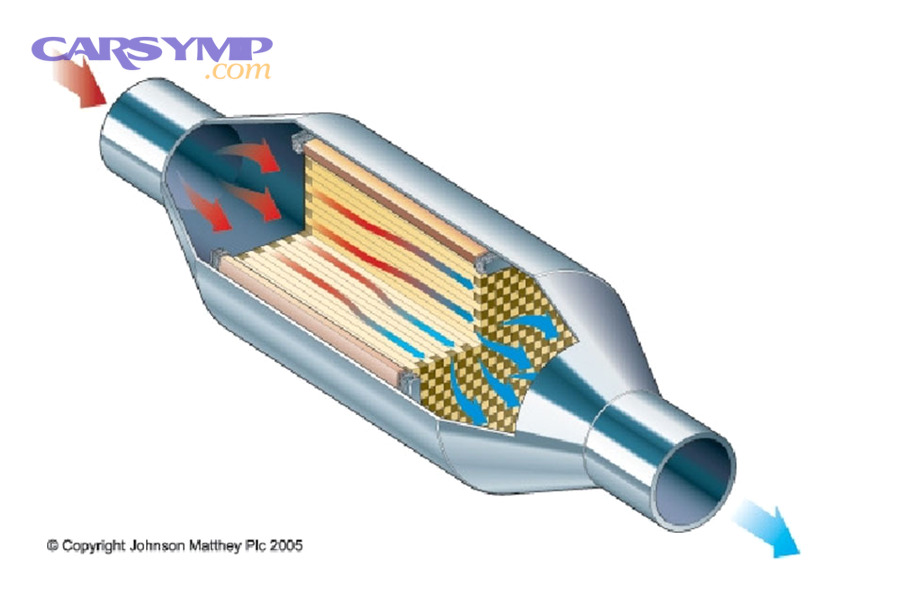
A DPF is an exhaust aftertreatment filter that traps diesel soot (particulate matter) in a honeycomb substrate, then periodically burns much of that soot during regeneration—“clogging” happens when soot/ash accumulation raises exhaust backpressure faster than it can be cleared.
To better understand what “clogging” looks like inside the canister, it helps to picture the filter’s internal channels and how trapped soot builds restriction over time.
What does the DPF trap, and what does it not trap?
A DPF primarily traps soot/particulate matter produced during combustion, along with small amounts of other residue carried in exhaust flow. Over a typical service life, what sits in the DPF falls into two buckets:
- Soot (combustible): carbon-rich particles that can be oxidized (burned off) during regeneration.
- Ash (incombustible): mineral residue largely tied to oil additives/consumption and engine wear debris; it does not burn off in normal regeneration and gradually reduces available filter volume.
That distinction matters because a “clogged DPF” can mean temporary soot loading or long-term ash loading—and the solution is different.
Is “DPF clogging” soot loading, ash loading, or both?
It can be either, but most “happened suddenly” cases are soot loading triggered by interrupted or unsuccessful regeneration, while “keeps coming back every few weeks” patterns often signal ongoing soot production (driving pattern, fueling, EGR issues) and/or ash accumulation.
According to a study by Aristotle University of Thessaloniki from the Laboratory of Applied Thermodynamics, in 2022, active regeneration typically requires raising DPF inlet exhaust temperatures above ~600°C, and the process can increase CO₂ emissions by ~4–14% on chassis dynamometer cycles—highlighting why interrupted/avoided regens can quickly become a soot-loading problem. (psecommunity.org)
Which driving habits clog a DPF quickly?
There are 7 main driving habits that clog a DPF quickly—short trips, low-RPM cruising, frequent idling, stop-and-go at low load, repeated shutdowns during regeneration, “babying” the engine under load, and ignoring early warnings—because they keep exhaust temperature too low or repeatedly interrupt soot burn-off.
Specifically, each habit pushes the system into the same failure pattern: soot accumulates, regen attempts become more frequent, and eventually the ECU limits power to protect the engine and turbo.
To make this actionable, the table below maps habit → why it clogs → what to do instead → what it changes inside the DPF.
| Driving habit that clogs fast | Why it clogs the DPF | Better habit to adopt | What improves in the DPF system |
|---|---|---|---|
| Short trips (5–15 minutes) | Exhaust never heats enough for consistent oxidation | Combine errands; include a sustained higher-speed segment | Higher average exhaust temperature supports soot burn-off |
| Constant low-RPM / low-load cruising | Low turbine/exhaust energy reduces regen success | Use appropriate gear/drive mode for moderate load | Keeps temps stable long enough for regen completion |
| Long idling (warm-up or waiting) | Soot continues; temps often too low to oxidize | Reduce idle; drive off gently after brief stabilization | Less soot production per hour and fewer interrupted cycles |
| Stop-and-go urban driving only | Frequent decel/idle phases interrupt regen | Add periodic steady-speed “maintenance run” | Allows uninterrupted regeneration window |
| Turning off engine mid-regen | Aborts regen; soot stays and can harden | If safe, continue driving until cycle completes | Prevents repeated partial regens and rapid loading |
| Lugging (low RPM, high throttle) | Incomplete combustion can increase soot | Downshift earlier; keep RPM in efficient band | Cleaner combustion, less soot creation |
| Ignoring early warnings | Forces ECU escalation to limp strategy | Respond early: drive pattern correction + diagnostics | Avoids high backpressure and thermal stress |
Do short trips and cold starts clog a DPF faster than highway driving?
Yes—short trips and repeated cold starts clog a DPF faster than highway driving because the engine spends more time in enrichment/warm-up strategies and the exhaust stays cooler, so soot production rises while soot oxidation falls.
A simple rule of thumb is: if your typical drive ends before the engine is fully heat-soaked, your DPF is living on “deposit mode” more than “clean-up mode.”
Does idling (and high-idle) accelerate DPF loading?
Yes—idling accelerates DPF loading because soot production continues while exhaust temperature and flow may not reach the conditions needed for consistent oxidation, and high-idle can raise emissions dramatically.
According to a study by University of California, Davis from the Institute of Transportation Studies, in 2000, raising idle speed and accessory load increased emissions sharply—for example, NOx rose ~2.5× and CO rose ~5× when engine speed was raised from 600 rpm to 1050 rpm with A/C load in their tested modes. (itspubs.ucdavis.edu)
Can low-speed city driving prevent regen from completing?
Yes—low-speed city driving can prevent regen completion because active regeneration often needs a sustained window of adequate exhaust temperature and flow; frequent stops, long traffic lights, and low-load cruising can repeatedly pause or abort the cycle.
When this happens, the ECU may attempt regen more frequently, which can feel like a car that “always wants to regen,” and that pattern alone can increase fuel consumption over time. (psecommunity.org)
Do frequent shutdowns mid-regen make clogging worse?
Yes—frequent shutdowns mid-regen make clogging worse for three reasons: 1) the soot load remains high, 2) the ECU schedules another regen sooner, and 3) repeated partial attempts can increase thermal cycling stress and fuel dilution risk (vehicle-dependent).
If your vehicle indicates regen status (some do via messages, others via fan behavior/idle changes), treating it like “finish the cycle when safe” is often the difference between a warning light that clears and one that escalates.
How should you drive to prevent fast DPF clogging and support regeneration?
The best prevention method is a 4-part driving pattern—reach full operating temperature, create a steady-load window, avoid aborting regen, and periodically validate with symptoms/scan data—so the DPF can oxidize soot at a rate that keeps up with production.
Next, let’s translate “drive it harder” into safe, repeatable habits you can actually follow without guessing.
What driving pattern best supports passive regeneration?
Passive regeneration is most supported by steady, moderate-load driving where exhaust stays hot enough long enough for soot oxidation to occur naturally.
- a consistent speed window (no constant braking/accelerating),
- moderate engine load (not coasting),
- long enough duration to build and hold heat.
Passive vs active regeneration explained: passive happens as a byproduct of normal hot exhaust conditions, while active is deliberately triggered and managed by the ECU to raise exhaust temperature and complete soot burn-off. (psecommunity.org)
When does active regeneration trigger, and how can you avoid interrupting it?
Active regeneration typically triggers when modeled/estimated soot load reaches a threshold and conditions allow the ECU to safely raise exhaust temperature—often through strategies like post-injection and altered EGR operation. (psecommunity.org)
- Don’t shut down immediately if you suspect a regen is underway (when safe).
- Keep driving with steady throttle rather than stop-start.
- Avoid extremely low speeds that force frequent idling.
If you often do short trips, intentionally scheduling a “maintenance drive” can reduce how often the ECU has to attempt active regens.
What are safe “maintenance drive” guidelines for DPF health?
A safe, generalized guideline is: build full operating temperature first, then drive in a steady-speed window long enough for temperatures to stabilize and, if needed, for a regeneration attempt to complete.
- Combine errands so you have one longer drive instead of many short ones.
- Use a route that allows sustained movement (A-road/highway) when possible.
- Keep engine load moderate (avoid long coasts and very low-RPM “barely on throttle” driving).
- If you have a DPF message/light, follow your owner’s manual instructions for the specific vehicle—some are very explicit.
According to a study by Aristotle University of Thessaloniki from the Laboratory of Applied Thermodynamics, in 2022, active regeneration commonly targets exhaust temperatures above ~600°C, and CO₂ emissions can increase ~4–14% during chassis dynamometer cycles—evidence that regeneration is a deliberate, fuel-consuming thermal event that needs a stable window to finish. (psecommunity.org)
What are the early signs your DPF is loading up, and what should you do immediately?
Early DPF loading usually shows up as a warning light/message, reduced power, rising fuel consumption, or frequent fan/high-idle behavior, and you should respond immediately with three actions: confirm the symptom, change driving to support regen, and scan/diagnose if it doesn’t clear quickly.

Then, once you know what “early” looks like, you can stop treating the light like a mystery and start treating it like a threshold you can manage.
What does a DPF warning light typically mean?
A DPF warning light/message typically means the ECU believes soot loading has reached a level where driver action is needed—often “drive to regenerate” guidance—before it escalates to restricted performance.
- First-stage warning: “Help me complete regeneration.”
- Escalation warnings: “Regeneration isn’t working” or “restriction is too high.”
DPF warning light and limp mode guidance: treat the first warning as a time window, not a “someday” reminder—because if backpressure keeps rising, many vehicles will enter a reduced-power strategy to protect the turbo and engine. (en.wikipedia.org)
When will limp mode happen, and what behaviors accelerate it?
Limp mode typically happens when the ECU detects that restriction, temperature, or regeneration failure has crossed a protection threshold.
- continuing only short trips after the light appears,
- repeated key-off mid-regen,
- prolonged idling,
- ignoring additional symptoms like sluggish acceleration or unusual heat/fan behavior.
Even if you can still drive “normally,” the system may be storing data that shows the trend is worsening.
What should you do immediately when you suspect DPF loading?
Do these in order:
- Confirm what you’re seeing.
- Is there a DPF-specific message/light, or a general check-engine light?
- Any simultaneous symptoms (loss of power, smoke, odor, unusual heat)?
- Give the car a real chance to regenerate (when safe).
- Drive long enough at a steady pace for heat to stabilize.
- Avoid stop-start patterns during the attempt.
- Scan for codes and soot/load data if it doesn’t resolve.
- If the warning returns quickly, don’t keep repeating “hard drives” blindly.
- A scan tool (or shop diagnostic) can show whether you’re dealing with regen interruption, sensor faults, or a deeper issue.
Can driving habits alone fix a clogged DPF, or do you need cleaning/repairs?
Driving habits alone can fix light-to-moderate soot loading, but DPF cleaning (service) is often needed for heavy soot restriction or chronic repeat clogging, and repairs are needed when a sensor/engine fault is the real cause.

More specifically: driving is best for soot, while service is necessary for ash or severe restriction, and repairs address the upstream reason soot is being produced too fast.
When can “drive to regen” realistically clear the problem?
“Drive to regen” can realistically clear the problem when:
- the restriction is primarily soot (not ash),
- the system can still reach regeneration conditions,
- no sensor faults are preventing regen logic,
- the vehicle isn’t already in a severe derate/limp strategy.
In other words, it works when you’re still in the early-to-middle stage and you’re giving the system what it needs.
When is professional cleaning, forced regen, or replacement the better path?
Professional intervention is the better path when:
- the vehicle cannot complete regen despite correct driving,
- soot load is too high for a normal on-road regen window,
- ash loading has reduced the filter’s usable capacity,
- there’s evidence of contamination (oil/coolant/fuel issues),
- there are faults in temperature/pressure sensing that invalidate the ECU’s soot model.
According to a study by Aristotle University of Thessaloniki from the Laboratory of Applied Thermodynamics, in 2022, vehicles with aged DPFs (noted in the study discussion as examples above ~170,000 km) can show higher fuel consumption due to ash-related backpressure, reinforcing why ash-driven restriction won’t be solved by “just drive it harder.” (psecommunity.org)
What non-driving factors can accelerate DPF clogging or mimic it?
There are 4 main non-driving factors that accelerate DPF clogging (or make it look clogged): engine oil/ash loading, EGR and intake soot issues, sensor faults (pressure/temperature), and fueling/combustion problems, because they either increase soot formation or disrupt the ECU’s ability to manage regeneration.

In addition, once you’ve corrected driving habits, these factors become the next most common reason a DPF problem returns.
How do oil type, oil consumption, and ash loading affect long-term clogging?
Oil consumption and oil formulation matter because metallic additives and residue contribute to ash accumulation, which stays in the filter and gradually reduces soot-storage capacity.
Over time, less capacity means:
- regens trigger more often,
- backpressure rises faster between regens,
- the system feels “more sensitive” to short-trip driving than it used to be.
Can EGR, turbo, or injector issues look like a DPF problem?
Yes—EGR, turbo, and injector issues can mimic (or create) DPF problems because they change combustion quality and soot production upstream.
- Excessive EGR or EGR faults can raise soot formation and load the DPF faster. (en.wikipedia.org)
- Injector imbalance or poor atomization can increase particulate formation.
- Turbo issues can alter air/fuel balance and raise soot, while also making the vehicle feel underpowered—similar to a restricted exhaust.
Which sensors commonly cause false DPF warnings?
Common culprits include:
- differential pressure sensors (or pressure lines) that read incorrectly,
- exhaust gas temperature sensors that fail or drift,
- software/modeling issues when sensor signals are unreliable.
When sensors lie, the ECU can misjudge soot load, trigger unnecessary regens, or fail to trigger them when needed—either way, the driver experiences “DPF drama.”
Does fuel quality or repeated short-run operation increase soot production?
Yes—fuel quality and repeated short-run operation can increase soot production because combustion efficiency and thermal stability are lower, and deposits can form that worsen spray patterns and airflow over time.
If you’ve fixed driving habits and the issue persists, this is where a structured diagnostic approach saves money: confirm soot/load data, verify sensor integrity, and rule out upstream combustion faults before blaming the filter itself.
Evidence (summary of key sources used): regeneration temperature targets and measurable emission impacts during active regeneration were drawn from a peer-reviewed study with a university lab affiliation. (psecommunity.org) Idling emissions sensitivity to engine speed and accessory load was supported by an Institute of Transportation Studies report from University of California, Davis. (itspubs.ucdavis.edu)