


A clogged DPF is rarely “just a DPF problem”—in many diesel setups, EGR soot loading and turbo control faults can create a vicious cycle that drives DPF restriction, repeated regenerations, and eventually drivability issues or limp mode.
Next, you’ll learn which EGR-related failures most commonly accelerate DPF soot accumulation , because a “cleaned” DPF will clog again if the upstream soot source is still active.
Then, we’ll connect the dots on turbo issues (VGT vanes, actuator, boost leaks) that raise exhaust backpressure and disrupt regeneration conditions, making the DPF look like the main culprit when it’s actually downstream damage from upstream airflow and heat problems.
Introduce a new idea: once you can spot the pattern, the fastest path to a lasting repair is a diagnostic sequence that separates soot-loading causes (EGR/air/fueling) from true DPF capacity problems (ash) so you don’t pay twice.
What does “the vicious cycle” mean between EGR, turbo, and DPF problems?
The “vicious cycle” means EGR faults and turbo faults increase soot and/or backpressure, which loads the DPF faster, forces more frequent regeneration, and the heat/backpressure stress then worsens EGR/turbo performance—repeating the loop.
Next, to better understand why this cycle is so common, it helps to visualize the airflow path and where soot and pressure build up.
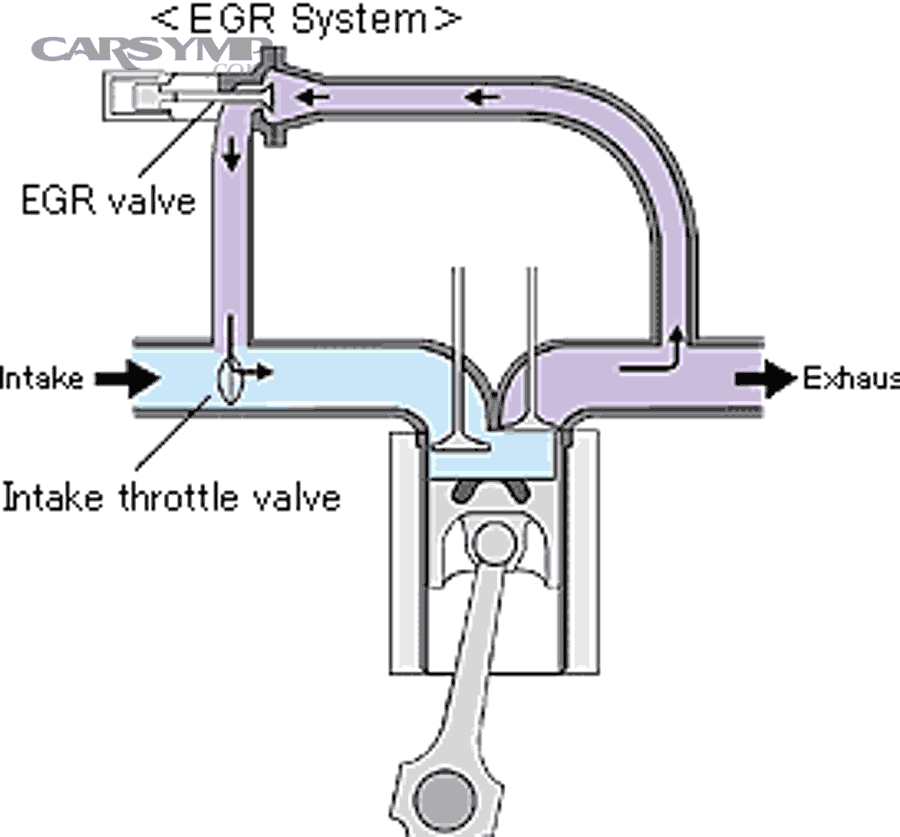
Here’s the cycle in practical terms (what the driver experiences vs. what’s happening mechanically):
- Step 1 (Root cause begins): An EGR valve sticks, an EGR cooler leaks internally, a boost leak develops, or a VGT mechanism starts sticking.
- Step 2 (Soot/backpressure rises): Incomplete combustion and poor air–fuel mixing increase soot output; restricted exhaust flow increases exhaust backpressure.
- Step 3 (DPF loads faster): The DPF traps more soot per mile and the pressure differential rises sooner.
- Step 4 (More regens, more heat): The ECU triggers active regenerations more often (sometimes unsuccessfully), raising exhaust temps and thermal stress.
- Step 5 (Upstream parts degrade faster): Heat/soot accelerates sticking VGT vanes, contaminates sensors, and increases deposits in the EGR/intake tract.
- Result: You see repeating DPF codes, reduced power, poor fuel economy, rising oil level (post-injection dilution in some platforms), and limp mode.
A key insight: DPF restriction is often a symptom amplifier, not the original disease. If you only address the filter, you usually get a short-lived win.
Evidence: According to a study by University of Technology Sydney from the Centre for Green Technology (School of Civil and Environmental Engineering), in 2022, modern DPFs can exceed 99% filtration efficiency, but accumulating PM raises backpressure and can worsen fuel consumption and emissions if regeneration strategy and upstream conditions aren’t healthy. (opus.lib.uts.edu.au)
Which EGR problems most commonly trigger DPF soot-loading and restriction?
Yes—EGR problems can directly trigger DPF restriction, mainly because they (1) increase soot formation, (2) contaminate intake airflow and sensor feedback, and (3) disrupt exhaust temperature conditions needed for stable regeneration.
Next, let’s explore the specific failure modes so you can match symptoms to causes instead of guessing.
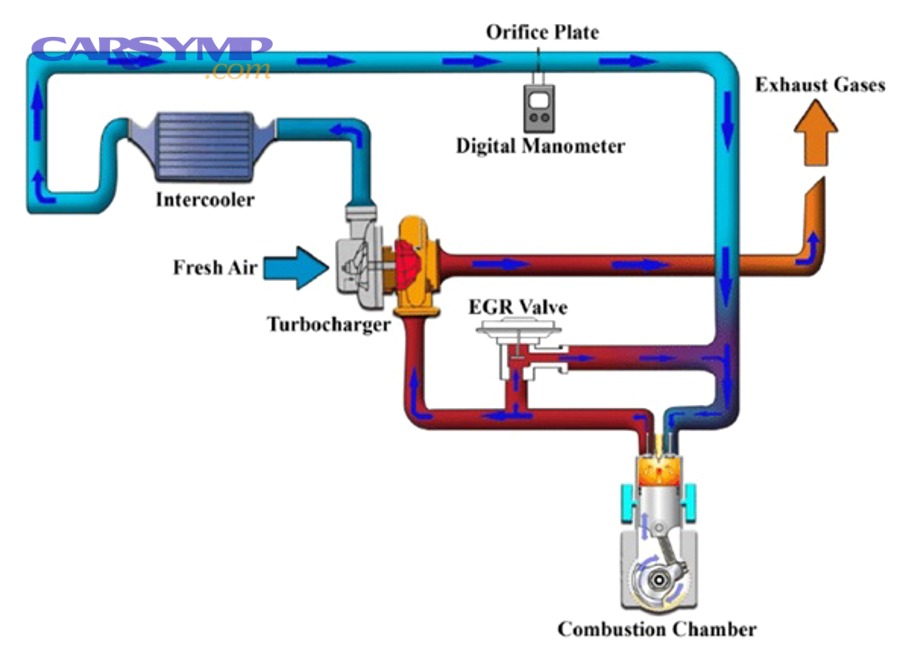
How does a stuck-open EGR valve accelerate DPF clogging?
A stuck-open EGR valve accelerates DPF clogging because it displaces fresh oxygen with inert exhaust gas at the wrong times, reducing combustion efficiency and raising soot output.
More specifically, the engine may run “dirtier” under conditions where it should be clean (light throttle, steady cruise), leading to:
- Higher soot per mile
- Lower exhaust oxygen
- Lower peak combustion temperature (good for NOx, bad for soot if excessive)
- More frequent DPF regens to compensate
You often see a combination of: sluggish acceleration, haze under load, and a DPF that “regens too often.”
How does a stuck-closed EGR valve or blocked EGR path affect DPF behavior?
A stuck-closed EGR valve doesn’t always increase soot directly—but it can still drive DPF trouble because it shifts combustion and NOx behavior and can change how the ECU schedules regen and fueling.
In some calibrations, the ECU expects a certain EGR flow to hit emissions/temperature targets. When EGR flow is missing:
- The system may throw EGR flow codes and enter torque-limiting modes.
- Regeneration may become less consistent if the ECU’s modeled conditions don’t match reality.
- The engine may run hotter (sometimes helpful for passive regen), but not predictably.
Bottom line: stuck-closed EGR is often a control mismatch problem; stuck-open is often a soot-loading problem.
How does an EGR cooler leak contribute to DPF and turbo problems?
An EGR cooler leak contributes because coolant ingestion (internal leak) or abnormal EGR cooling can create unstable combustion and deposits, and the resulting misfire/rough running increases soot and unburned hydrocarbons—both enemies of DPF health.
Typical clues include:
- Unexplained coolant loss
- White steam/sweet odor (platform-dependent)
- Rough idle, misfire codes
- Faster-than-normal DPF loading
This failure can also harm the turbo over time (contaminants, abnormal exhaust energy), which then feeds the vicious cycle.
How do EGR-related sensor and intake deposits “lie” to the ECU?
EGR systems are tightly managed by sensors (MAF/MAP, temp, DP sensors). Heavy deposits can cause the ECU to “see” the wrong airflow or pressure picture, leading to incorrect fueling and incorrect regen timing.
Common outcomes:
- Over-fueling under load → more soot
- Under-boost compensation attempts → higher exhaust temps and stress
- Regen attempts triggered at the wrong soot-loading estimate
Evidence: According to a study by Hubei University of Automotive Technology (School of Automotive Engineering) with collaboration from Jilin University (State Key Laboratory of Automotive Simulation and Control), in January 2026, varying EGR rate and injection parameters measurably changed particulate behavior and combustion metrics—showing that EGR-rate shifts can increase PM under some conditions and reduce it under others, depending on the combined setup. (nature.com)
Which turbo issues are most commonly linked to recurring DPF problems?
Yes—turbo issues are commonly linked to recurring DPF problems, mainly because they (1) reduce available air (raising soot), (2) distort exhaust temperature/flow needed for regeneration, and (3) increase exhaust backpressure that the DPF must fight against.
Next, we’ll break the turbo side into the most common real-world failure patterns.
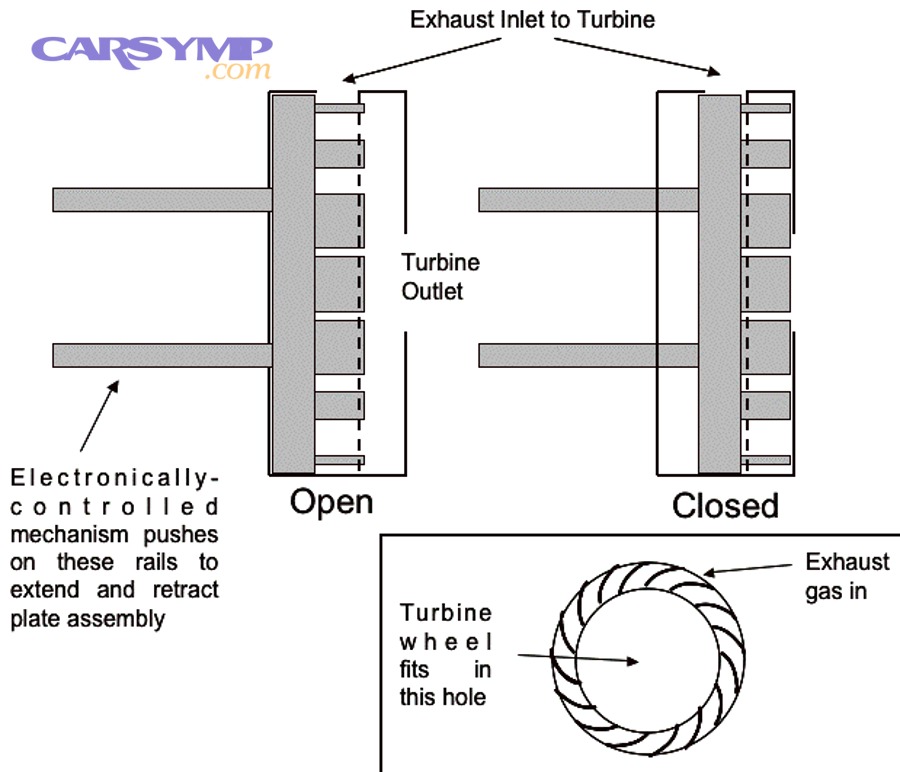
How do sticking VGT vanes (or a failing turbo actuator) lead to DPF overload?
Sticking VGT vanes (or actuator faults) lead to DPF overload because the turbo can’t hit commanded boost across the RPM/load range, and the ECU often responds with fueling strategies that increase soot—plus regeneration conditions become unstable.
What you’ll notice:
- Low-end lag or over-boost/under-boost codes
- Surging under steady throttle
- “Random” regen frequency that feels unrelated to your driving
Mechanically, soot and heat can make vane rings sticky; once control becomes inconsistent, the DPF sees more soot and less reliable exhaust heat.
How do boost leaks increase soot and accelerate DPF clogging?
Boost leaks accelerate clogging because the engine gets less oxygen than the ECU expects, so combustion efficiency drops and soot rises. The ECU may also command more fuel to meet torque demand, which further increases soot.
Common leak points:
- Intercooler end tanks
- Charge pipes/couplers
- Cracked hoses
- Loose clamps
A quick diagnostic hint: if boost leak symptoms coincide with more frequent regens, fix the leak first before condemning the DPF.
How does excessive exhaust backpressure hurt turbo health and DPF regeneration?
Excessive exhaust backpressure hurts turbo health because it increases turbine-side resistance, can raise EGTs, and can reduce the effective pressure ratio across the turbo. For the DPF, high backpressure makes regeneration harder to complete consistently.
This becomes a feedback loop:
- DPF restriction → higher backpressure
- Higher backpressure → turbo operates in a less efficient range
- Less efficient turbo → worse air delivery → more soot
- More soot → faster DPF loading
How do oil leaks and poor crankcase ventilation connect turbo + DPF issues?
Oil leaks into the intake/exhaust path can contribute to both:
- Turbo issues: oil-contaminated compressor/turbine reduces efficiency and can foul sensors.
- DPF issues: oil-derived particulate and ash-like residue can increase loading.
This is especially important when diagnosing “DPF keeps clogging right after cleaning,” because oil sources can make soot accumulation look “mysteriously fast.”
What are the most reliable symptoms that your DPF problem is actually caused by EGR or turbo issues?
There are 4 reliable symptom patterns that strongly suggest your DPF issue is secondary to EGR/turbo faults: (A) abnormal regen frequency, (B) inconsistent boost behavior, (C) airflow/smoke mismatch, and (D) repeating codes after a short interval.
Next, we’ll turn those patterns into a practical checklist you can use before spending money on the filter.

Which “regen frequency” patterns point to upstream soot creation?
Upstream soot creation is likely when:
- Regens happen much more frequently than your normal baseline
- Regens trigger even after mostly highway driving
- You see repeated “regen incomplete” events (platform-dependent)
Frequent regens often mean “too much soot per mile,” not necessarily a bad filter.
Which boost-related symptoms point to turbo control problems rather than a bad DPF?
Turbo control problems are likely when you see:
- Under-boost/over-boost codes that appear before DPF codes
- Surging, hesitation, or inconsistent power delivery
- A mismatch between commanded and actual boost (if you can log it)
If boost control is unstable, the DPF is usually reacting to the combustion/exhaust instability downstream.
Which smoke and drivability clues are most diagnostic?
These clues are high-signal:
- Visible soot smoke under load (especially if it’s new)
- Strong diesel smell during attempted regen events (platform-dependent)
- Rough idle + EGR flow-related codes + DPF loading
Also watch for the “cleaned DPF, same problem returns quickly” pattern—it usually indicates the soot source wasn’t solved.
Which code combinations are most suggestive?
While codes vary by make, combinations that often point upstream include:
- EGR flow/performance codes + DPF soot codes
- Boost control codes + DPF pressure differential codes
- Airflow sensor plausibility codes + repeated regen faults
Treat the DPF code as a downstream alarm, then look upstream for the cause.
What’s the correct diagnostic order to confirm whether EGR/turbo issues are causing the DPF problem?
The correct diagnostic order is a 6-step workflow: (1) confirm DPF state, (2) verify airflow/boost integrity, (3) evaluate EGR function, (4) check sensors and plausibility, (5) validate regen capability, and (6) decide cleaning vs repair vs replacement.
Next, let’s explore each step so you avoid the common trap of replacing parts based on the last code you saw.
Step 1: How do you confirm whether the DPF is soot-loaded vs ash-loaded?
Start by distinguishing soot vs ash behavior:
- Soot load tends to respond to regeneration and driving conditions.
- Ash load (non-combustible residue) does not burn off and builds gradually.
If your platform provides modeled soot/ash values, use them. If not, look for: chronic high pressure differential even after successful regen attempts, plus long service history.
Step 2: How do you rule out boost leaks and turbo control faults early?
Before deep DPF work, rule out air/boost issues:
- Inspect charge plumbing and intercooler connections.
- Check for audible leaks or oily mist around couplers.
- Verify actuator movement (where accessible) and look for sticky VGT behavior patterns.
Fixing a boost leak often reduces soot output immediately—making every other diagnosis easier.
Step 3: How do you test EGR operation without guessing?
Testing EGR depends on the platform, but your goal is consistent:
- Confirm commanded vs actual EGR behavior (if data available)
- Check for stuck positions or slow response
- Inspect for heavy deposits and restricted passages
If EGR is stuck open, expect soot and low oxygen conditions that overwhelm the DPF quickly.
Step 4: How do you validate sensor accuracy (DPF ΔP, MAF/MAP, temp sensors)?
Bad data creates bad decisions. Verify plausibility:
- DPF differential pressure sensor readings at key RPM/load points
- MAF/MAP sanity vs expected airflow
- Exhaust temperature sensors that inform regen control
A drifting DPF ΔP sensor can make a healthy DPF look clogged—or hide a real restriction until it’s severe.
Step 5: How do you confirm regeneration capability the right way?
This is where many misdiagnoses happen.
You want to know:
- Can the vehicle reach and hold regen temperature targets?
- Does regen complete successfully under controlled conditions?
- Are there repeated aborted regens due to upstream faults?
This is also where Passive vs active regeneration explained matters: passive regen relies on normal operating heat and NO2 chemistry, while active regen intentionally elevates exhaust temps through ECU strategies; if airflow and fueling are unstable, active regen can fail or become frequent and costly.
Evidence: According to a study by University of Technology Sydney from the Centre for Green Technology (School of Civil and Environmental Engineering), in 2022, real-driving tests found active DPF regenerations increased trip-averaged fuel consumption by 13% on average and increased PM emission factors by 27 times during a regeneration-affected trip versus a non-regeneration trip—showing why repeated regens are a major “cost signal” and not something to ignore. (opus.lib.uts.edu.au)
Step 6: How do you decide between cleaning, repair, and replacement?
Use decision logic based on cause:
- If soot load is high because of EGR/turbo issues, fix upstream first—then reassess the DPF.
- If ash load is high and pressure remains elevated after upstream fixes and successful regen attempts, consider service limits.
How do you fix the problem permanently (not just clear the DPF code)?
A permanent fix is a 3-part repair plan: (1) remove the soot/backpressure cause (EGR/turbo/air/fueling), (2) restore DPF flow capacity (DPF cleaning or replacement), and (3) verify regeneration works in real driving after repairs.
Next, let’s explore the “do it once” approach that prevents repeat failures.

Part 1: What repairs usually stop the soot source?
Common “root-cause” repairs include:
- Restoring correct EGR operation (clean/repair/replace depending on damage)
- Fixing boost leaks and charge-air plumbing
- Addressing VGT sticking or actuator issues
- Correcting sensor errors that cause over-fueling or unstable control
- Resolving oil ingestion sources (PCV/CCV issues, turbo seal issues where applicable)
This is where you break the vicious cycle.
Part 2: When should you choose DPF cleaning vs regen vs replacement?
Use a tiered approach:
- Regeneration (operational fix): Best when soot is elevated but the system can complete regens and upstream issues are resolved.
- DPF cleaning (service fix): Choose DPF cleaning when the filter is physically intact but flow is restricted due to soot/ash mix and the vehicle history suggests recoverable capacity. Cleaning without upstream fixes is usually temporary.
- Replacement (hard limit fix): When DPF replacement is necessary is typically when the substrate is cracked/melted, the unit has reached ash capacity limits, or repeated failures continue after upstream repairs and validated regen capability.
A practical rule: if you keep paying for the same symptom, you’re likely treating the wrong layer (filter vs source).
Part 3: What post-repair verification prevents comebacks?
After repairs:
- Confirm no boost leaks under load
- Confirm stable turbo control behavior
- Confirm EGR responds correctly (no stuck/open patterns)
- Validate at least one successful regen cycle (as applicable) and monitor frequency afterward
- Re-check pressure differential trends over a consistent route
If the regen frequency normalizes and pressure trends stabilize, you’ve likely solved the cause—not just the code.
Part 4: How do you keep the system healthy long-term?
Long-term prevention is mostly about avoiding chronic soot production:
- Use the correct oil spec (ash matters over time)
- Avoid repeated short-trip patterns without occasional full warm-up (where feasible)
- Address small boost leaks early
- Don’t ignore early EGR/boost sensor codes
When is DPF clogging not soot-related (and why that matters)?
DPF clogging is not soot-related when restriction is driven mainly by ash accumulation, substrate damage, or sensor/installation faults, because soot-based fixes (regens, cleaners) won’t restore capacity in those cases.
Next, let’s explore the micro-level distinctions that prevent expensive trial-and-error.
How can you tell ash loading apart from soot loading?
Ash loading tends to show:
- Gradual long-term increase in restriction
- Less responsiveness to regen attempts
- High restriction even when soot estimates are low (platform-dependent)
Ash comes from oil additives, wear metals, and non-combustibles; it doesn’t burn out during regen.
What failures make “DPF clogged” show up even when the filter isn’t the issue?
False or exaggerated restriction can come from:
- Differential pressure sensor faults
- Cracked or reversed pressure hoses
- Exhaust leaks near measurement points
- Installation sealing issues after prior service
That’s why sensor plausibility checks belong early in the diagnostic order.
What is “uncontrolled regeneration,” and why is it dangerous?
Uncontrolled regeneration refers to overheating events that can:
- Crack or melt the substrate
- Damage the turbo and nearby components
- Turn a serviceable DPF into a mandatory replacement
If you see signs of extreme heat events (odor, discoloration, repeat regen failures), treat it as a warning—not a nuisance.
Video (optional): Regeneration overview
Evidence: According to a review by Guangxi University of Science and Technology (School of Mechanical and Automotive Engineering), in 2023, DPF regeneration strategies are commonly discussed as active, passive, and hybrid approaches, emphasizing that regeneration behavior depends on system design and operating conditions—not just the filter itself. (pmc.ncbi.nlm.nih.gov)