


A rough idle that turns into stalling is often caused by too much exhaust gas recirculation at the wrong time, especially at idle—when the engine needs a clean, stable air/fuel burn. If the EGR valve is stuck open (or the passages effectively “leak” flow), it can dilute the mixture enough to make the engine shake, stumble, and die.
Next, you’ll learn what makes EGR-related rough idle feel “different” from a vacuum leak or ignition misfire, and why the symptoms often show up more when the engine is warm and idling in gear.
Then, you’ll walk through simple confirmation checks you can do at home—what to look for on an OBD2 scan, how vacuum-operated EGR valves behave, and what “excessive EGR” looks like in real driving.
Introduce a new idea: once you can confidently separate EGR problems from look-alikes, the fixes become straightforward—cleaning, correcting control issues, or replacing the right part—followed by verification steps so the stall doesn’t come back.
Is a stuck-open EGR valve a likely cause of rough idle and stalling?
Yes—an EGR valve stuck open is a likely cause of rough idle and stalling because it over-dilutes the intake charge at idle, destabilizes combustion, and can reduce effective oxygen and flame speed enough to make the engine stumble or die. Next, to see why this happens, it helps to picture what the engine expects at idle versus what a stuck-open EGR valve forces it to ingest.
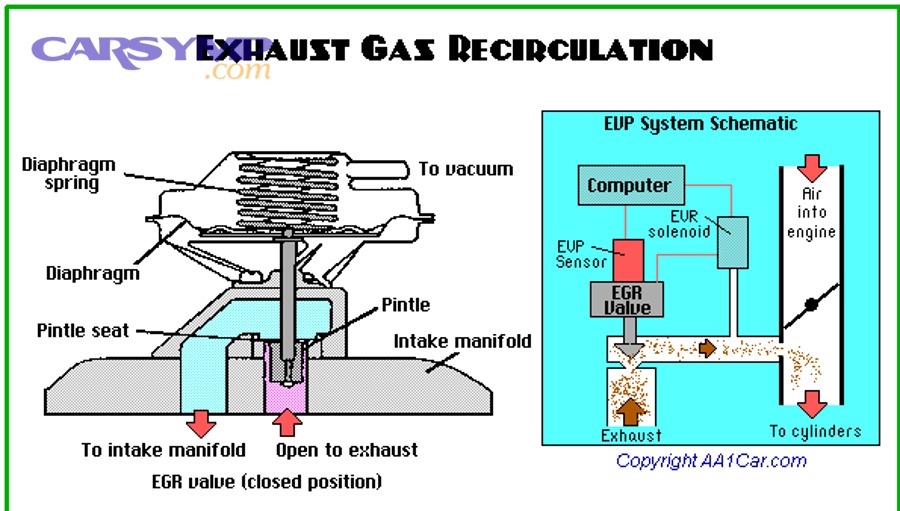
What happens when the EGR valve is stuck open at idle?
At idle, the engine is moving very little air and fuel, and it relies on a stable burn to keep RPM steady. The EGR system is supposed to be mostly closed at idle on many engines because idle combustion is already fragile. When the valve sticks open:
- Inert exhaust gas displaces oxygen in the intake stream.
- The effective mixture becomes harder to ignite and sustain.
- The engine controller tries to compensate with fuel and idle control, but it can hit its limits quickly.
- The result is often a lumpy idle, RPM hunting, hesitation off-idle, and stalling, especially when you add load (A/C on, steering input, shifting into Drive).
Why it can feel worse when warm or in gear
Many drivers report EGR-related stalling is “random” until a pattern appears: it’s more common after warm-up or at stoplights.
- Warm engine + closed-loop fueling: Once the ECU switches to tighter control strategies, an unexpected EGR leak can push trims and idle control into a constant “catch-up” loop.
- In-gear idle load: Automatic transmissions add load at idle; if combustion is already unstable from excess EGR, the extra load can tip it into a stall.
- Carbon behavior: Carbon deposits can expand, shift, or flake when hot, sometimes changing whether the valve seals consistently.
According to a study by Kunming University of Science and Technology from the Yunnan Key Laboratory of Internal Combustion Engine, in 2024, increasing EGR valve opening reduced engine-out NOx, with NOx decreasing by 2.2 g/(kW·h) for each 5% increase in EGR valve opening at 1600 r/min and 25% load—illustrating how strongly EGR flow can change combustion conditions.
What exactly is the EGR valve and what do EGR passages do?
The EGR valve is a metering device in the exhaust gas recirculation system that routes a controlled amount of exhaust back into the intake, using vacuum or electronic control, to lower peak combustion temperature and reduce NOx emissions. To better understand why a fault can cause rough idle, let’s explore what the valve and passages physically do—and where they fail.

Where the EGR valve sits and how it’s controlled
Most setups include:
- EGR valve (vacuum-operated diaphragm or electronic stepper/linear motor)
- EGR feed path from the exhaust manifold (or a crossover pipe)
- EGR passages in the intake manifold or cylinder head
- Sometimes an EGR cooler (common on diesels, some turbo gasoline applications)
- A control strategy that commands EGR mostly during cruise/light load (where dilution is beneficial and stable)
Vacuum EGR systems typically rely on:
- A vacuum solenoid to apply vacuum only when conditions are correct
- A backpressure transducer or feedback sensor on some designs
Electronic EGR systems typically rely on:
- A position sensor (built in) and commanded duty/steps
- ECU logic that monitors airflow changes and EGR response
What EGR passages do (and why they matter as much as the valve)
Even if the valve is fine, passages can create the same symptom:
- Carbon-clogged passages can cause insufficient EGR (often pinging/NOx issues).
- Eroded gaskets, cracked tubes, or mis-seated valves can cause excessive EGR at idle (rough idle/stalling).
- Some engines have tiny metering ports that clog unevenly, so one cylinder gets more dilution than another—creating a “misfire-like” shake without a classic ignition fault.
According to a study by Kunming University of Science and Technology from the Yunnan Key Laboratory of Internal Combustion Engine, in 2024, brake-specific fuel consumption increased as EGR opening increased, consistent with combustion deterioration under higher dilution (a reminder that EGR flow has a measurable impact on combustion quality and stability).
Which symptoms best distinguish EGR-caused rough idle/stalling from other common causes?
There are 4 main symptom patterns that distinguish EGR-caused rough idle/stalling—idle-only instability, off-idle hesitation, load-sensitive stalling, and “excess EGR” code correlation—based on when the engine is most vulnerable to intake dilution. However, because several faults can mimic each other, you’ll get the best results by comparing when symptoms happen and what changes them.

Which symptoms point to too much EGR vs too little EGR?
A fast way to think about it is an antonym pair:
- Too much EGR (excessive flow / stuck open) → rough idle, stalling, bogging, low idle vacuum behavior
- Too little EGR (insufficient flow / clogged) → spark knock/pinging under load (gas engines), elevated NOx tendencies, possible P0401-type logic
With rough idle and stalling, you’re usually in the too much EGR bucket.
How EGR rough idle differs from vacuum leak, ignition misfire, or fuel issues
The table below summarizes the most common “look-alikes” and what typically separates them.
| Suspect cause | What it often feels like | What usually changes it fast | Typical clue |
|---|---|---|---|
| Excessive EGR (stuck open / leaking) | Shaky idle, stalls at stops, bog off-idle | Temporarily disabling EGR flow often improves idle | May correlate with excessive EGR logic/codes |
| Vacuum leak | High/erratic idle, lean stumble, hiss | Spray test or smoke test reveals leak | Fuel trims often strongly positive |
| Ignition misfire (coil/plug) | Rhythmic shake at idle and under load | Load makes it worse; misfire counters rise | Misfire DTCs (P030x) common |
| Fuel delivery (pressure/injector) | Hesitation, loss of power, may stall | Fuel pressure test confirms | Worse under load/high demand |
| IAC/ETC/dirty throttle | Idle hunting, stalls when load changes | Cleaning throttle body can help | Often no EGR-related codes |
A practical “EGR tell” is that the engine can feel like it’s choking or flooding with inert gas right as you come to a stop—especially if it recovers when you restart immediately.
How can you confirm a stuck-open EGR valve or passage issue at home?
You can confirm a stuck-open EGR valve or passage problem with 3 checks—OBD2 code + live data review, a controlled actuator/vacuum test, and a before/after idle response test—aimed at proving unwanted EGR flow at idle. Next, work from least invasive to most direct so you don’t create new leaks while testing.
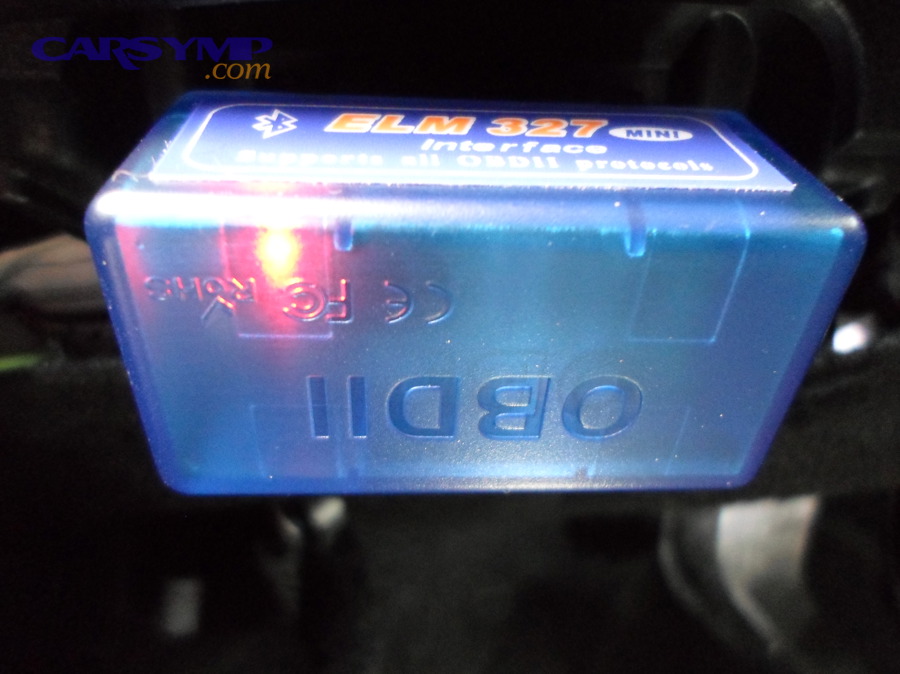
Can an OBD2 scan confirm EGR-related stalling (P0401/P0402)?
An OBD2 scan can strongly support the diagnosis, but it rarely proves it alone.
- P0402 (Excessive EGR flow) is the most on-target for stuck-open conditions.
- P0401 (Insufficient EGR flow) points more toward clogs—less likely to cause stalling by itself.
- Some vehicles will set no EGR code at all if the valve is mechanically leaking but not enough to fail the ECU’s rationality tests.
Use live data to look for:
- EGR commanded vs EGR actual/position (on electronic systems)
- Short-term fuel trim swings at idle
- MAP/MAF changes when EGR is commanded (if your app supports it)
How to test a vacuum-operated EGR valve safely
If your EGR valve has a vacuum diaphragm:
- Locate the valve and identify the vacuum line.
- At warm idle, apply vacuum with a hand pump (or carefully use a known-good vacuum source).
- A healthy system typically:
- Stumbles or nearly stalls when you open EGR at idle (because idle can’t tolerate much dilution)
- Recovers when vacuum is released and the valve closes
What indicates a stuck-open issue:
- The engine already idles poorly, and removing vacuum does nothing (it may already be leaking open).
- The diaphragm doesn’t hold vacuum (ruptured diaphragm can also cause control issues).
- The pintle appears physically stuck by carbon.
How to test an electronic EGR valve with live data and simple behavior checks
Electronic valves often have a position sensor, which gives you a powerful clue:
- If EGR commanded is 0% at idle but EGR position is not near 0, suspect sticking or an electrical/actuator issue.
- If commanded and actual match but idle is terrible, suspect passage routing or airflow measurement errors interacting with EGR.
A simple behavioral confirmation is:
- When you blip the throttle from idle, does the engine hesitate then clear?
- When you lightly hold RPM at ~1500, does it smooth out? (Often it does, because the engine tolerates more dilution above idle.)
A temporary “block-off” confirmation (use caution)
Some experienced DIYers confirm excessive EGR by temporarily preventing EGR flow. If you do this:
- Treat it as a short diagnostic step, not a driving solution.
- Avoid damaging gaskets or creating exhaust leaks.
- If the idle becomes immediately stable, you’ve strongly isolated the EGR path as the contributor.
According to a study by Kunming University of Science and Technology from the Yunnan Key Laboratory of Internal Combustion Engine, in 2024, when EGR valve opening increased, engine air flow rate decreased (for example, at 2100 r/min, airflow dropped by 23.8 kg/h for each 10% increase at 25% load), showing how EGR directly changes the intake charge and can destabilize operation when uncontrolled at idle.
What fixes work best for a stuck-open EGR valve or carbon-clogged passages?
The best fixes are a 3-part approach—restore correct valve sealing, restore passage flow integrity, and verify EGR control—because cleaning alone won’t help if the valve can’t fully close or the control system keeps commanding the wrong thing. More importantly, choosing between cleaning and replacement depends on how the valve failed and how heavy the deposits are.
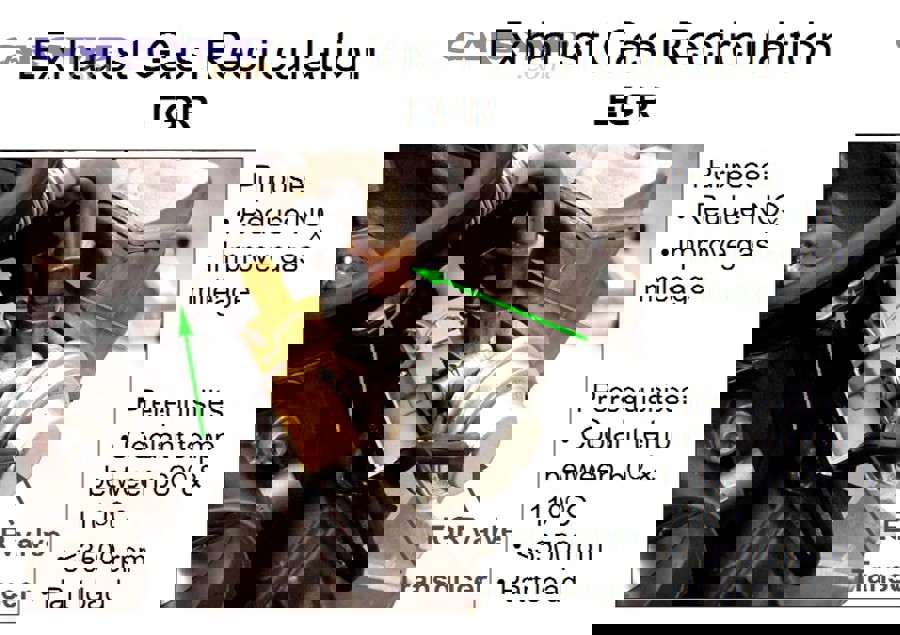
Should you clean the EGR valve or replace it?
Use this rule of thumb for EGR repair:
- Clean it if the valve is mechanically sound, the pintle moves freely after cleaning, and the electrical actuator/position feedback is stable.
- Replace it if:
- The pintle is pitted or worn and won’t seal reliably
- The diaphragm leaks (vacuum type)
- The motor/gear/position sensor is erratic (electronic type)
- The valve repeatedly sticks after cleaning
A thorough EGR repair decision should include the “why”:
- If the valve stuck because of heavy soot, ask what caused it (short trips, oil consumption, PCV issues, rich running).
- If it stuck because of mechanical failure, replacement is usually the only durable solution.
How to clean the EGR valve and passages without creating new problems
Cleaning is effective when done carefully:
- Remove the EGR valve (and note gasket orientation).
- Use an appropriate cleaner for carbon deposits (follow label safety).
- Avoid soaking sensitive electronics on electronic EGR valves.
- Clean the pintle seat area until it can fully close.
- Inspect and clean accessible EGR passages in the intake path.
Also inspect:
- EGR tube for cracks
- Gasket surfaces for erosion
- Intake ports for uneven carbon buildup patterns
What else to check during EGR repair (common supporting parts)
During EGR repair, many repeat failures happen because a supporting part is ignored:
- EGR control solenoid (vacuum systems): can leak vacuum and open EGR when it shouldn’t
- Vacuum hoses: brittle lines can cause unpredictable actuation
- Differential pressure feedback sensors (some systems): can misreport EGR flow
- Electrical connectors/pins: corrosion can cause false positioning or intermittent control
One helpful walkthrough video
According to a study by Kunming University of Science and Technology from the Yunnan Key Laboratory of Internal Combustion Engine, in 2024, brake-specific fuel consumption increased as EGR opening increased (for example, at 1600 r/min, BSFC increased by about 1.0 g/(kW·h) per each 5% increase at 25% load), reinforcing why an unintended EGR leak can degrade idle quality and drivability.
After the repair, how do you verify the idle is fixed and the stall won’t come back?
You verify the fix with 3 steps—idle stability validation, controlled load testing, and post-repair ECU housekeeping—because a cleaned/replaced valve can still act up if trims, codes, or learned airflow values aren’t reset appropriately. Then, you confirm the repair under the exact conditions that used to trigger the stall.

After repair: relearn and code clearing steps
After you complete the mechanical work, don’t skip the ECU side—this is where many “it still stalls sometimes” stories come from.
- Clear diagnostic trouble codes with a scan tool (or follow the vehicle’s procedure).
- If your vehicle requires it, perform an idle relearn (some throttle-by-wire systems need this after airflow-related work).
- Let the engine reach operating temperature and idle for several minutes with all accessories off, then repeat with A/C on.
This is also where you should confirm:
- EGR commanded vs actual returns to normal behavior at idle (usually near closed when idling)
- Fuel trims settle into a stable range rather than swinging wildly
What tests prove the stall is gone?
Repeat the failure conditions deliberately:
- Warm engine fully.
- Let it idle in Park, then in Drive (foot on brake).
- Turn A/C on, then steer at low speed to add load.
- Perform several stop-and-go cycles.
A strong result looks like:
- Stable idle RPM
- No stalling when coming to a stop
- No bogging off idle
- No return of excessive EGR codes
When a shop diagnosis makes sense anyway
Even if you’re comfortable DIYing, get help if:
- The engine stalls unpredictably in traffic (safety risk)
- You have repeated EGR clogging within a short time (underlying cause likely)
- You suspect compounded issues (vacuum leak + EGR, PCV/oil consumption + EGR, etc.)
What else is closely related to EGR-caused rough idle and stalling (codes, variants, and edge cases)?
EGR-related rough idle and stalling is closely tied to 3 clusters—EGR diagnostic codes, drivability risk decisions, and engine-design edge cases—because different systems fail in different ways even when the symptom feels the same. In addition, covering these related angles helps you avoid fixing the right symptom for the wrong reason.

Can you drive with an EGR fault?
It depends, but “Can you drive with an EGR fault” is usually a risk-management question, not a yes/no comfort question:
- If the engine can stall at idle, avoid driving in heavy traffic and treat it as urgent.
- If it only runs rough and never stalls, short trips to a safe location may be possible.
- If the vehicle enters a reduced-power mode or misfires heavily, driving can cause secondary issues (catalyst damage on gas engines, excessive soot loading on diesels).
What codes are most associated with EGR drivability issues?
Common EGR-related codes include:
- P0400 (general EGR flow fault)
- P0401 (insufficient flow)
- P0402 (excessive flow)
- P0403–P0409 (control circuit/position/sensor-related variants)
The key connection for rough idle/stalling is usually excess flow behavior, whether or not the ECU calls it out.
Edge cases that change the diagnosis
Some scenarios shift what “EGR-related” means:
- Diesels vs gasoline: diesels commonly use EGR heavily and may include coolers; faults can show up as soot loading, limp modes, and airflow deviations.
- Turbocharged engines: EGR routing and pressure relationships can be more complex, making leaks or control faults more dramatic.
- Frequent short trips: low exhaust temps and short cycles encourage deposit formation, increasing the chance of sticking.
How to reduce the chance of repeat carbon buildup
If deposits caused the issue, prevention focuses on root causes:
- Fix oil consumption and PCV issues (oil vapor accelerates carbon accumulation)
- Use quality fuel and keep up with maintenance
- Ensure the engine reaches full operating temperature regularly
- Address chronic rich running or misfires that increase soot output
According to a study by Kunming University of Science and Technology from the Yunnan Key Laboratory of Internal Combustion Engine, in 2024, increasing EGR valve opening reduced engine-out NOx while also increasing fuel consumption—demonstrating the trade-off that makes correct, controlled EGR flow beneficial, but uncontrolled EGR flow harmful to drivability.