


Title analysis (Step 1.1):
– Main keyword (focus): can you drive safely with an engine misfire
– Predicate (main action): determine
– Relations lexical used: Antonym (“Drive vs Tow”)
Search intent type from the outline (Step 1.2):
– Primary: Boolean (Yes/No) + decision/triage
– Supporting: Definition, Grouping, Comparison, and action-oriented guidance
Driving with a misfire is sometimes possible for a very short distance, but it is not automatically safe, because the same symptom can range from a mild stumble to a severe fuel-dumping misfire that can rapidly damage your exhaust system.
Next, you’ll learn the exact warning signs that push the answer to “tow it now”—like a flashing check engine light, strong fuel smell, or violent shaking—so you’re not guessing under pressure.
Besides that, you’ll see why continuing to drive can get expensive fast, especially when unburned fuel overheats the catalytic converter and turns a small ignition problem into a major repair. (tceq.texas.gov)
Introduce a new idea: the fastest way to stay safe is to follow a Drive vs Tow decision path first, then move into basic confirmation steps (codes, patterns, and symptom reporting) so you can get an accurate fix without unnecessary parts-swapping.
Can you drive safely with an engine misfire right now? (Yes/No)
No—driving safely with an engine misfire is not recommended in most cases because it can (1) damage the catalytic converter, (2) cause sudden power loss or stalling, and (3) worsen the root fault until the car becomes unsafe in traffic. (tceq.texas.gov)
Next, that “no” becomes even more firm once you understand what your dashboard and senses are warning you about—because misfire severity is what determines whether you should drive gently to service or tow immediately.
A misfire means one or more cylinders aren’t burning the air-fuel mixture correctly. When combustion doesn’t happen as intended, the engine loses smoothness and torque, and the exhaust stream can carry extra oxygen and/or unburned fuel. That’s why the same “rough running” feeling can represent two very different risk profiles:
- A minor ignition stumble that still burns most fuel (lower immediate risk)
- A severe misfire that pushes raw fuel into the exhaust (higher immediate risk)
To make the right call fast, treat the situation like a safety check, not a curiosity test: your job is to identify “red flags” that turn driving into a gamble.
Is it “No” if the check engine light is flashing?
Yes—if the check engine light is flashing, the answer is “No, don’t keep driving,” because (1) it often signals an active misfire, (2) unburned fuel can overheat the catalytic converter, and (3) continued driving can turn minutes into major damage. (tceq.texas.gov)
Then, the key point is urgency: a flashing light is not just “a stored code,” it’s the vehicle telling you the problem is happening right now, under load, at speed, and with heat.
In real driving terms, a flashing light means you should immediately reduce load: gently let off the accelerator, avoid climbing grades, avoid passing, and move to a safe place. If the engine smooths out and you can idle safely, the safest next move is towing or roadside assistance—not “just one more mile.”
The mechanical reason matters because it explains the risk: catalytic converters are designed to complete chemical reactions on the catalyst surface. When a misfire sends abnormal fuel into the exhaust, the converter can try to burn it, which increases heat dramatically. (tceq.texas.gov)
Is it “No” if the car shakes hard, loses power, or smells like fuel?
Yes—if the car shakes hard, loses power, or smells like fuel, the answer is “No,” because (1) drivability can drop suddenly in traffic, (2) raw fuel can overheat the converter, and (3) the underlying fault may be worsening each combustion cycle. (tceq.texas.gov)
Moreover, these symptoms often travel together. A strong misfire can feel like the engine is “bucking,” the steering wheel is vibrating, and the car can’t maintain speed without extra throttle. That is exactly when drivers get trapped in unsafe situations—merging, turning left across traffic, or trying to climb a hill.
Use this quick severity snapshot:
- Hard shaking at idle: likely a consistent cylinder failure or multiple misfires
- Hard shaking under load: risk increases because you need power to stay safe
- Fuel smell / popping in exhaust: possible unburned fuel in the exhaust stream
If you smell fuel inside or around the vehicle, treat it as a stop-and-get-help signal. It may be a misfire, but it can also overlap with other hazards, and you don’t want to normalize that smell while driving.
What does “engine misfire” mean while driving?
An engine misfire is a combustion failure event where a cylinder produces weak or zero power because the air-fuel mixture doesn’t ignite correctly, often triggered by ignition, fuel delivery, air leaks, or compression problems. (publications.lib.chalmers.se)
To better understand the “drive vs tow” decision, you need to connect the definition to what’s happening in real time: misfires are not only about roughness—they’re about lost torque and abnormal exhaust chemistry.
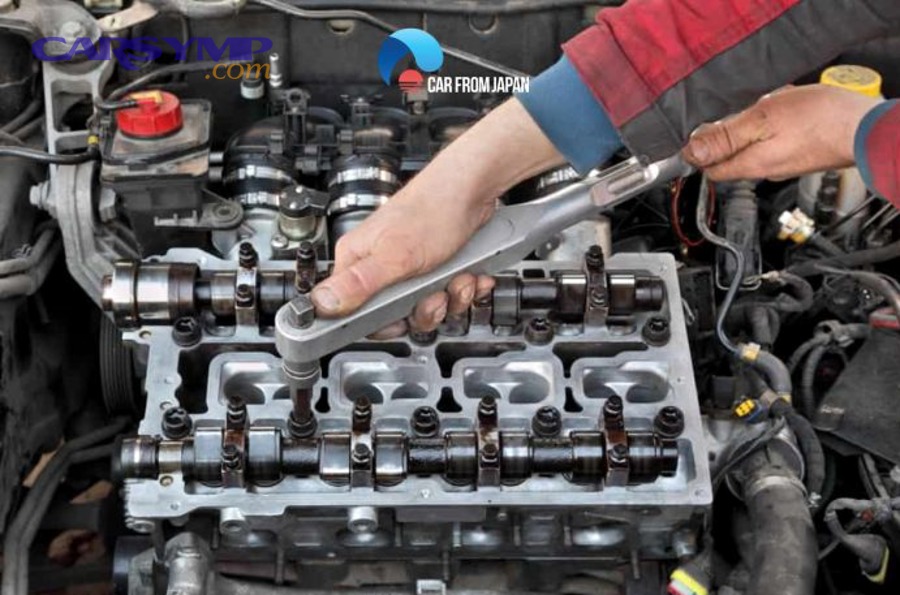
A misfire can come from:
- Ignition failure: weak spark, worn plug, failing coil, poor coil boot connection
- Fuel problems: clogged injector, injector stuck open/closed, low fuel pressure
- Air/vacuum issues: unmetered air from leaks, EGR faults, intake gaskets
- Compression/mechanical issues: burnt valves, head gasket leak, timing issues
Those causes matter because they shape the risk. A small vacuum leak might create a light stumble at idle, while a dead coil can dump unburned fuel into the exhaust.
What symptoms tell you the misfire is mild vs severe?
There are 3 main “severity groups” of misfire symptoms—mild, moderate, and severe—based on drivability stability and heat risk: mild stumble, moderate hesitation/roughness, and severe shaking/power loss with warning-light escalation. (publications.lib.chalmers.se)
Next, use the grouping like a quick field tool:
1) Mild misfire signals (often “limp to service” if no red flags):
- Slight hesitation, mostly at idle
- Stable temperature gauge
- No fuel smell
- Check engine light may be solid, not flashing
2) Moderate misfire signals (minimize driving, avoid highways):
- Noticeable shaking during acceleration
- Intermittent power dips
- Poor throttle response
- May worsen on hills or with A/C load
3) Severe misfire signals (tow is the safer choice):
- Violent shaking at idle or under load
- Flashing check engine light
- Strong fuel smell, popping/backfiring
- Engine feels like it will stall or cannot hold speed
This grouping works because it ties symptoms to two risks: traffic safety (stall/power loss) and hardware safety (converter overheating).
What does a misfire feel like at idle vs under load?
Misfire at idle wins in “noticeability,” under-load misfire is best for revealing root causes, and high-load/high-speed misfire is the most dangerous for driving safety because you need consistent torque to merge, climb, and maintain lane speed. (publications.lib.chalmers.se)
However, the feel is different—and those differences are useful Misfire at idle vs under load clues for engine misfire diagnosis:
- Idle misfire: rough, lumpy idle; engine rocks; may smooth out with slight throttle
- Under-load misfire: hesitation, bucking, loss of acceleration, sometimes a “stutter” near a specific RPM
- High-load misfire: can trigger flashing CEL, limp mode, or sudden inability to maintain speed
When the misfire is load-sensitive, ignition coils, plugs under high cylinder pressure, lean conditions, or fuel delivery limitations become more likely. When the misfire is mostly at idle, vacuum leaks, EGR issues, or small mixture imbalances can move up the list.
When should you tow instead of driving?
Tow instead of driving when a misfire presents immediate safety or damage risk because (1) you may lose power or stall unpredictably, (2) unburned fuel can overheat the catalytic converter, and (3) continued operation can escalate the repair beyond the original fault. (tceq.texas.gov)
Then, make the decision using a simple rule: if the car cannot reliably and smoothly accelerate and maintain speed, or if the dashboard is signaling urgency, towing is the safer and often cheaper outcome.

The table below summarizes practical “tow triggers” versus “short drive only” conditions so you can act quickly without overthinking.
| Condition | What it likely means | Safer action |
|---|---|---|
| Flashing check engine light | Active severe misfire + heat risk | Tow / roadside help |
| Strong fuel smell, loud popping | Unburned fuel in exhaust stream | Tow |
| Violent shaking, major power loss | Multiple or consistent cylinder failure | Tow |
| Temperature rising / overheating | Engine/exhaust heat stress | Stop + tow |
| Mild stumble, stable temp, no fuel smell | Lower immediate heat risk | Very short drive to service, gently |
This isn’t meant to replace diagnosis; it’s meant to keep you safe while you arrange diagnosis.
Which warning signs mean “tow immediately”?
There are 6 main warning signs that mean “tow immediately”: flashing CEL, severe shaking, strong fuel smell, overheating, repeated stalling/near-stalling, and inability to maintain traffic speed based on the combined risks of drivability and exhaust overheating. (tceq.texas.gov)
More specifically:
- Flashing CEL: treat as “active harm possible now”
- Severe shaking: consistent cylinder failure or multiple misfires
- Fuel smell / backfire: raw fuel may be present in exhaust
- Overheating: heat compounds damage and safety risk
- Stalling: creates immediate roadway danger
- Cannot maintain speed: unsafe in traffic, especially highways
If you check any of these boxes, the “drive vs tow” decision should lean strongly toward towing.
Which situations are “short drive to a shop only”?
There are 3 main situations where a short drive may be acceptable: mild intermittent stumble, stable engine temperature, and no fuel smell or flashing light—provided you reduce load, avoid highways, and stop if symptoms escalate. (publications.lib.chalmers.se)
In addition, “short drive” should mean short in both time and stress:
- Choose surface streets with safe pull-off areas
- Avoid steep grades and heavy traffic
- Keep RPM moderate, avoid hard throttle
- Turn off extra loads if the engine is struggling
If the car changes behavior during that short drive—worse shake, flashing light, fuel smell—upgrade the plan immediately to towing.
How far can you drive with a misfire without causing damage?
Driving distance is not a fixed number: short, gentle driving may be survivable in mild cases, highway distance is riskier for heat buildup, and continuing “until it gets worse” is the fastest route to catalytic converter damage and higher cost. (tceq.texas.gov)
Next, think in “heat minutes,” not miles. Misfire damage is strongly influenced by time under load and the amount of unburned fuel reaching the exhaust, not by an odometer threshold.
A useful mental model:
- Mild intermittent misfire: risk rises slowly, but still unpredictable
- Consistent single-cylinder misfire: risk rises faster, especially if fuel is unburned
- Multiple-cylinder or severe misfire: risk rises fast; towing becomes the practical choice
This is why “just making it home” can be a bad bet—home might be farther than the car can tolerate safely in its current condition.
Is short-distance city driving safer than highway driving?
City driving wins for lower sustained load, highway driving is best at keeping steady speed, and the safest option is whichever route minimizes time under load and avoids unsafe merges—because heat and power demands spike on highways. (publications.lib.chalmers.se)
However, city driving has stop-and-go stress. If your misfire worsens at idle, sitting at lights can make the engine shake harder and create more instability. If your misfire worsens under load, highway merges and hills become the problem.
Choose the route that fits your symptom pattern:
- Misfire worse under load: avoid highways and hills
- Misfire worse at idle: avoid long stoplights; pick smoother-flow routes
- Misfire severe everywhere: tow
Is driving slowly and gently less risky than normal driving?
Yes—driving slowly and gently can be less risky because (1) it reduces engine load, (2) it reduces the chance of triggering severe misfire under high cylinder pressure, and (3) it can limit exhaust temperature spikes that accelerate catalyst damage. (publications.lib.chalmers.se)
Then, match “gentle” to specific behaviors:
- Use light throttle and gradual acceleration
- Keep RPM moderate (don’t lug the engine at very low RPM in high gear)
- Avoid towing, steep grades, and aggressive passing
- Stop immediately if symptoms worsen
Gentle driving is a risk-reduction technique, not a guarantee. If the root cause is an injector stuck open or a dead coil, even gentle driving may still push unburned fuel into the exhaust.
What damage can driving with a misfire cause?
Driving with a misfire can damage the catalytic converter, increase emissions dramatically, and strain engine components because the exhaust may contain extra unburned fuel and oxygen, which raises converter temperature and can reduce engine efficiency and stability. (tceq.texas.gov)
Especially, the cost jump comes from secondary failures: a misfire that starts as a plug or coil issue can end as a converter replacement if ignored.
Misfires are also tied to OBD-II regulations for a reason: they can create high hydrocarbon (HC) and carbon monoxide (CO) emissions and can threaten converter durability. (publications.lib.chalmers.se)
According to a study by Chalmers University of Technology from the Department of Applied Mechanics, in 2011, a significant increase in HC and CO emissions was observed at a 2% misfire rate, and sustained converter temperatures above roughly 900–1000°C were linked with irreversible catalyst damage. (publications.lib.chalmers.se)
Can a misfire ruin the catalytic converter?
Yes—a misfire can ruin the catalytic converter because (1) unburned fuel can ignite inside the converter, (2) excessive heat can melt or thermally age the substrate, and (3) repeated overheating reduces the catalyst’s ability to clean emissions. (tceq.texas.gov)
Then, here’s how that looks in the real world. A failing converter may cause:
- Loss of power (exhaust restriction)
- Sulfur/rotten-egg smell (not always present)
- Rattling noises (broken substrate)
- Additional fault codes related to catalyst efficiency
The converter is expensive because it contains precious metals and is engineered for high-temperature chemistry. Protecting it is one of the most practical reasons not to “tough out” a misfire.
Can a misfire damage the engine or spark plugs/coils further?
Yes—a misfire can damage the engine or ignition components further because (1) repeated misfiring can foul spark plugs, (2) unstable combustion can stress coils and mounts, and (3) severe misfire can lead to reduced torque, efficiency loss, and in some cases stalling and fuel-related wear patterns. (publications.lib.chalmers.se)
More specifically, prolonged misfire can:
- Coat plugs with fuel or carbon, making them misfire even more
- Increase vibration, which stresses mounts and can loosen connectors
- Trigger limp strategies that change fueling patterns
This isn’t meant to scare you—it’s meant to show why “drive vs tow” is often a cost-control decision, not just a convenience decision.
What should you do if you must drive with a misfire to get help?
If you must drive with a misfire, use a low-load plan with 6 factors—short route, gentle throttle, moderate RPM, no hills/highways, watch temperature/light behavior, and stop if symptoms escalate—to reduce risk and reach help safely. (publications.lib.chalmers.se)
Next, treat this like an emergency workaround, not normal driving. Your goal is not “getting there fast,” it’s not making it worse while staying safe in traffic.

What is the safest way to drive to a mechanic with a misfire?
The safest way is to drive gently on the shortest, safest route because (1) low load reduces misfire intensity in many cases, (2) shorter time limits heat accumulation in the exhaust, and (3) safer roads give you more exit options if the engine worsens. (publications.lib.chalmers.se)
Then, apply a practical checklist:
- Pick surface streets with wide shoulders or parking lots
- Avoid highways, steep hills, and heavy stop-and-go if possible
- Accelerate slowly; keep following distance larger than normal
- Keep an eye on the temperature gauge and warning lights
- If the check engine light begins flashing or shaking becomes severe, stop and call for help
If you’re in a risky traffic situation (like a short highway stretch with no alternatives), hazards on and steady, gentle throttle can be safer than repeated braking/accelerating—until you reach the next safe exit.
What should you avoid doing to prevent making it worse?
Avoid 5 things: hard acceleration, high RPM runs, towing/hauling, long idling, and “testing” the car with repeated throttle snaps because each one raises load, heat, or fuel flow and can intensify misfire damage pathways. (publications.lib.chalmers.se)
More importantly, avoid the temptation to “see if it clears out.” Some misfires do come and go, but you can’t reliably tell whether the converter is being overheated just by feel.
If you need heat or defrost, use it, but recognize extra load can worsen a borderline misfire. If the engine is struggling, reducing accessory loads can help you maintain stability.
What are the most common causes of a misfire that affect safety?
There are 4 main cause groups of misfire that affect safety—ignition, fuel, air/vacuum, and compression—because each maps to a different risk level for sudden power loss, stalling, or catalytic converter overheating. (publications.lib.chalmers.se)
Next, this is where “engine misfire diagnosis” becomes practical: you don’t need to rebuild an engine in your driveway, but you do need a mental model that connects symptoms to likely cause groups and urgency.
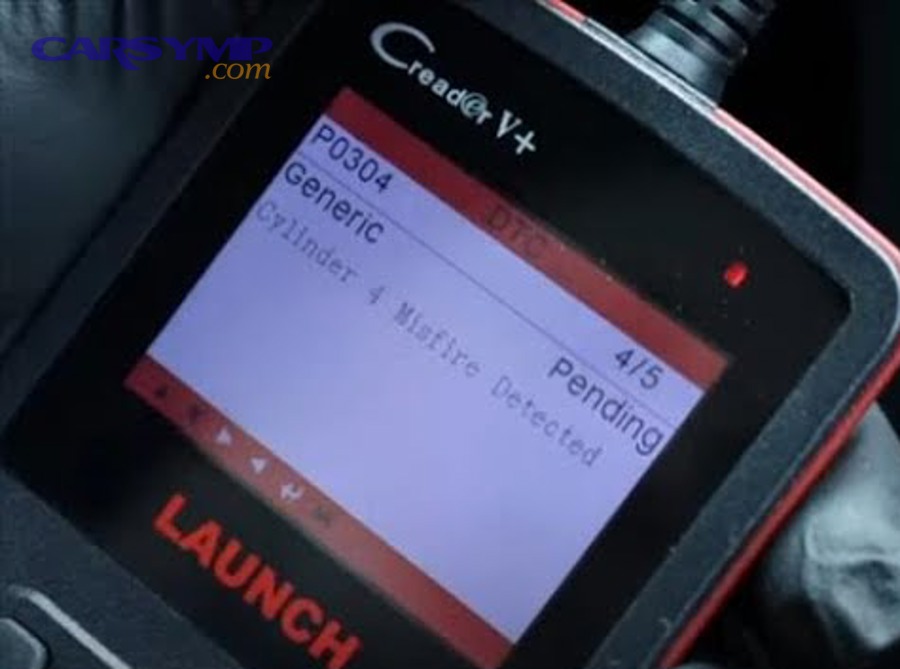
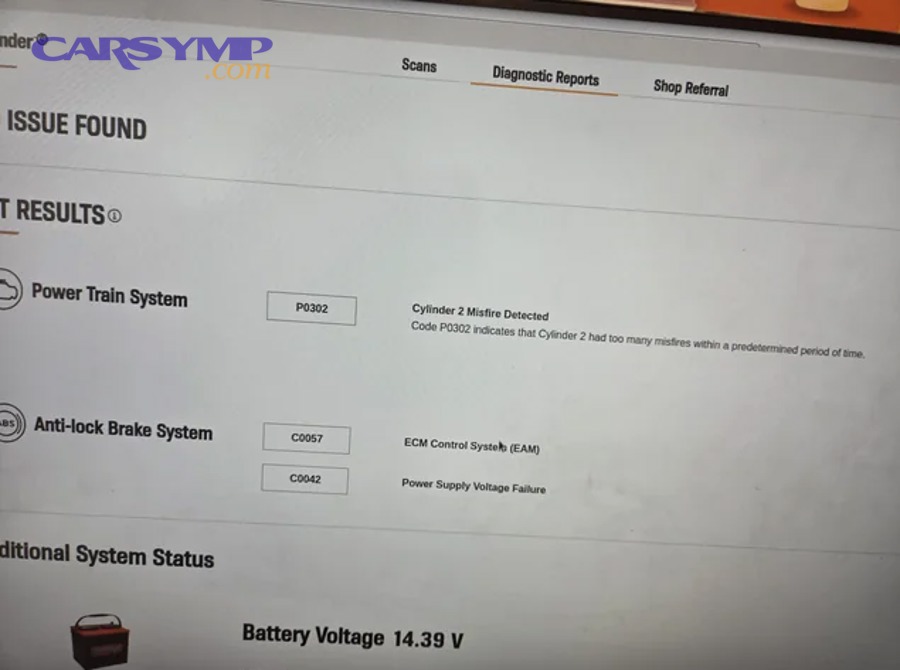
A fast, safe way to start is by reading codes and patterns. That’s where Misfire codes P0300–P030x explained becomes useful: P0300 typically indicates random/multiple cylinder misfire, while P0301–P0308 point to a specific cylinder number. (kbb.com)
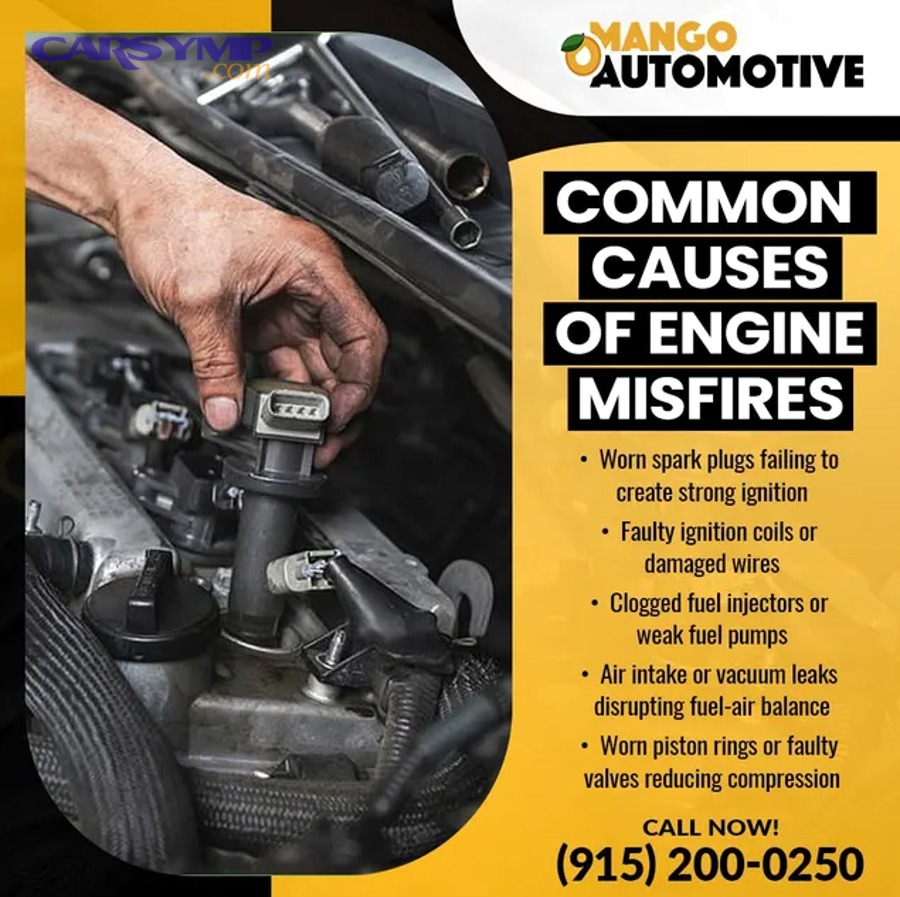
Also remember that vehicles don’t “guess” misfires—they detect irregular crankshaft speed behavior associated with combustion events, which is why misfires are monitored as part of OBD-II requirements. (sae.org)
According to a study by Linköping University from the Department of Electrical Engineering, in 2014, a model-based misfire detection approach evaluated on road data achieved a low misclassification rate even under difficult conditions like cold starts, supporting reliable detection for emissions and catalyst protection. (wcl.cs.rpi.edu)
Which causes are usually “limp-home possible”?
There are 3 common “limp-home possible” causes—minor spark plug wear, a marginal coil/boot connection, and small vacuum leaks—based on the criterion that drivability remains stable without fuel-smell or flashing-light escalation. (kbb.com)
Then, use cause grouping carefully. “Possible” doesn’t mean “safe for long.” It means the car may run well enough to move to service without instantly escalating risk—if the earlier red flags are absent.
Typical patterns:
- Worn plugs: mild stumble, worse under load, often gradual onset
- Weak coil/connection: intermittent misfire, sometimes worse in damp conditions
- Small vacuum leak: rough idle, improves with throttle, may set lean codes
If the misfire becomes consistent or you begin smelling fuel, you are no longer in the “limp-home possible” zone.
Which causes can become dangerous quickly?
There are 4 causes that can become dangerous quickly—dead ignition coil, injector stuck open, severe vacuum/air leak, and low compression/mechanical faults—because they can trigger major power loss, stalling, and higher risk of unburned fuel overheating the catalyst. (publications.lib.chalmers.se)
More specifically:
- Dead coil / no spark on a cylinder: that cylinder may pump fuel/air through unburned depending on strategy
- Injector stuck open: can run extremely rich and overheat the exhaust fast
- Large air leak: can create unstable idle and lean misfire that worsens suddenly
- Low compression: the engine may not respond predictably to throttle, creating unsafe drivability
When these are suspected—or when symptoms match severe misfire—towing is often the safer and more economical move.
How do you confirm and prioritize a misfire fix after you’ve decided drive vs tow?
Confirming and prioritizing a misfire fix is a 4-part process: read codes, match symptoms to operating conditions, verify basics (spark/air/fuel clues), and communicate a clear symptom timeline—so the repair targets the cause instead of swapping parts. (kbb.com)
Next, this is where you shift from “urgent decision” to “accurate repair,” without crossing into risky procedures. Your goal is to produce clear, high-signal information for a technician or for your own next step.
Which OBD-II codes and patterns (P0300 vs P0301–P0308) change the diagnosis path?
P0300 wins for “system-wide randomness,” P0301–P0308 are best for “single-cylinder focus,” and the fastest path is to treat cylinder-specific codes as a targeted ignition/fuel/compression check while treating P0300 as a broader mixture or multi-cylinder event. (kbb.com)
Then, apply the pattern:
- P0301–P0308: start with that cylinder (plug, coil, injector, compression)
- P0300: look for shared causes (fuel pressure, vacuum leak, MAF issues, multiple weak coils, mixture problems)
This is also where “when does it happen?” matters:
- Only at idle → think vacuum/EGR/small mixture imbalance
- Under load → think ignition strength or fuel delivery
- Cold start → think fuel trim adaptation, condensation, coil/plug weakness, or mechanical issues
What quick checks can you do safely before a shop visit (air, spark, fuel clues)?
There are 4 safe quick checks—visual intake/vacuum inspection, connector/coil seating check, obvious exhaust/fuel smell assessment, and basic scan-tool reading—based on the criterion that you do not disassemble pressurized fuel systems or run risky tests. (publications.lib.chalmers.se)
More specifically:
- Vacuum/air: look for disconnected hoses, torn intake boots, loose clamps
- Ignition connectors: ensure coil connectors are fully seated (engine off)
- Smell check: fuel smell at tailpipe or under hood suggests richer misfire risk
- Scan basics: read codes, note freeze-frame data if available, record whether the light was flashing
Avoid risky “internet tricks” like spraying flammables around the engine bay. If you’re unsure, stop at observation and let a professional handle testing.
How much can it cost if you keep driving vs fixing early?
Fixing early wins for low cost (plugs/coils), delayed fixing is best at multiplying costs (converter damage), and the most expensive outcome is driving through a severe misfire until the catalytic converter or engine efficiency is compromised. (publications.lib.chalmers.se)
Then, think in cost tiers, not exact prices (because vehicle and region vary):
- Tier 1 (early): plugs, coil, small vacuum repair
- Tier 2 (mid): injector service/replacement, fuel pressure issues, sensor-related mixture corrections
- Tier 3 (late): catalytic converter replacement, downstream oxygen sensor damage, compounded repairs
This is why the Drive vs Tow decision is often financially smart: towing might cost less than “one more commute” that overheats the converter.
How do you describe symptoms to a mechanic to speed diagnosis?
A clear symptom report should include 6 items—when it happens, idle vs load behavior, whether the CEL flashed, smell/overheat notes, any recent repairs, and the exact codes—because it reduces diagnostic time and improves first-fix accuracy.
Then, use this simple script:
- “It misfires at idle / under load / both.”
- “The check engine light was solid / flashing.”
- “It happens cold / warm / after rain / after refueling.”
- “Power loss is mild / moderate / severe, and it stalls / doesn’t stall.”
- “Codes read: P0300 / P0302 / etc.”
- “Recent work: plugs/coils, intake, fuel, battery, anything related.”
That level of clarity helps the shop prioritize the right tests—starting with the highest-probability causes for your exact symptom pattern—while keeping the repair path efficient and safe.