


If you want a trustworthy labor-time estimate, start with the “book time” idea: most shops price mount jobs by standardized flat-rate hours, then adjust for access, corrosion, and powertrain layout. You can usually get within a realistic range by identifying the mount count, the hardest-to-reach mount, and whether the subframe or major components must move.
Next, you’ll see what “typical hours” really means—because a simple top mount on a roomy bay can be under an hour, while a buried side mount that needs the subframe loosened can take several hours. That difference is why two quotes for the “same job” can both be reasonable.
Then, you’ll learn the biggest time drivers—access difficulty, seized fasteners, supporting the drivetrain safely, and whether the job needs alignment or calibration afterward. Those factors matter more than the mount part itself.
Introduce a new idea: once you understand the logic behind book time, you can build your own fast checklist estimate, sanity-check a shop quote, and convert hours into a realistic total cost.
What does “engine/motor mount replacement labor time” mean in book time or flat-rate hours?
Engine/motor mount replacement labor time is a standardized flat-rate (book) hour allowance that repair guides use to price the work of removing and installing mounts, developed to reflect typical procedures, tools, and access on a specific vehicle.
To better understand this, you need to separate labor time (hours billed) from clock time —because they don’t always match.
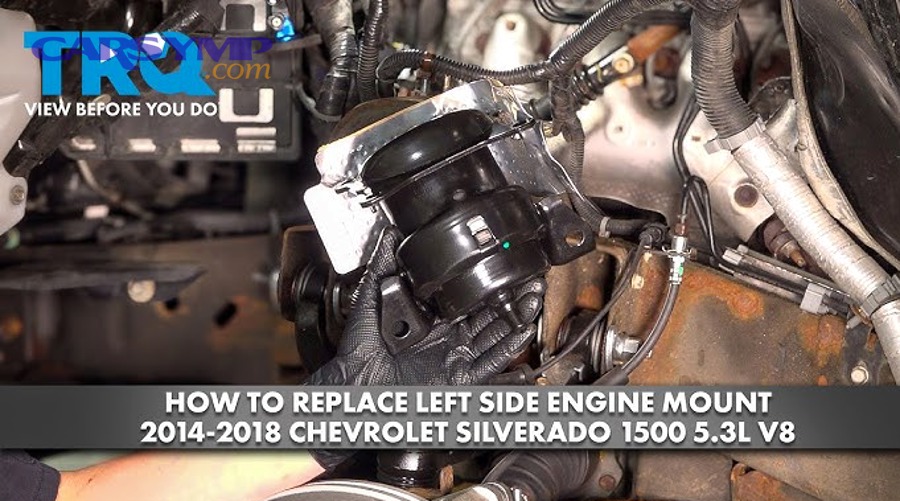
Why “book time” exists (and why it’s not the same as stopwatch time)
Flat-rate systems were created so shops can quote consistently. If a job pays 2.0 hours and an experienced tech finishes in 1.3, the shop still bills 2.0; if rust turns it into 3.2 hours, the shop may still only get 2.0 unless they’ve written in additional justified labor. That’s why your goal as a car owner is not “find the one true hour number,” but find a realistic range and understand what pushes the job to the high end.
Labor time vs. total time in the real world
Even when labor time is accurate, the vehicle might stay longer due to scheduling and bay availability, parts delivery, allowing RTV/adhesive to set (on certain designs), and test drive and recheck. A common consumer-facing rule of thumb is that mount work often lands in the “few hours” zone; for example, Cars.com notes that replacement commonly takes around 3–4 hours in many cases (vehicle-dependent).
What “engine mount” and “motor mount” mean in the same sentence
People use them interchangeably in everyday repair talk. To avoid confusion in this article:
- Engine/motor mount = mount(s) supporting the engine (and sometimes the engine+transmission as a unit)
- Transmission mount = mount supporting the transmission side (often priced similarly, but sometimes a separate line)
How many labor hours does engine/motor mount replacement typically take?
There are 4 common “typical” labor-time ranges for mount work—0.5–1.0 hr, 1.0–2.0 hrs, 2.0–4.0 hrs, and 4.0+ hrs—based on mount location and how much must be removed or loosened for access.
More specifically, you should treat these as planning ranges until you identify the hardest mount and the access constraints.
The table below summarizes what usually pushes a job into each bucket.
| Typical labor-time range | What the job usually looks like | Common scenarios that fit |
|---|---|---|
| 0.5–1.0 hr | One mount is easy to reach, minimal components removed, fastener condition is good | Top mount on some transverse FWD layouts; mount with clear access from above |
| 1.0–2.0 hrs | Moderate access work, needs safe support of engine/trans, may remove small brackets/heat shields | Side mount with tight clearance; mount near accessory bracketry |
| 2.0–4.0 hrs | Tight access or multiple mounts; may loosen subframe, remove undertrays, reposition powertrain | Many common “book time” situations reported for typical vehicles |
| 4.0+ hrs | Major access constraints, corrosion, subframe drop, exhaust/steering rack interference, or multiple mounts with complex steps | Some AWD, some longitudinal layouts, rust-belt vehicles, or vehicles requiring significant disassembly |
Why “how many mounts” does not equal “how many hours”
Replacing three mounts is not always triple the time of one mount because once the engine is supported and the undertray is off, additional mounts can be faster. However, the hardest mount often dominates total labor.
A consumer benchmark for “average cost” (useful when paired with hours)
If you need a sanity-check anchor, RepairPal publishes an average cost band for an engine mount replacement, including a labor-cost range (which implies a typical time window once you know local hourly rates). Use it as a reasonableness check, not a universal truth, because vehicle access and shop rate vary.
What factors most strongly change engine mount replacement labor time?
There are 6 major factors that drive labor time—access difficulty, powertrain layout, mount type/location, fastener condition, required engine support method, and “while-you’re-in-there” add-ons—based on how many components must move safely to free the mount.
Next, let’s break down each factor in a way you can actually apply to your vehicle.
1) Access difficulty (the #1 time driver)
The mount is rarely “hard” to unbolt in theory; it’s hard to reach in practice. Labor climbs when the mount is blocked by air boxes, battery trays, fuse boxes, exhaust heat shields, suspension towers, tight frame rails, and accessory brackets.
2) Powertrain layout: transverse vs longitudinal, FWD vs RWD vs AWD
Transverse FWD layouts often have one mount that’s easy (top) and one that’s buried (side/rear). Longitudinal RWD can be straightforward if there’s room underneath, but some mounts sit behind steering components or near exhaust routing. AWD packaging can add disassembly time because extra driveline hardware limits access.
3) Mount type and location
A hydraulic mount with a bracket that ties into other components can take longer than a simple rubber isolator, not because the mount is “fancier,” but because the bracket stack-up is more involved.
4) Fastener condition and corrosion
Seized bolts, stripped threads, or broken studs can turn a routine job into a major delay. Rust-belt vehicles commonly add time for heat cycles, penetrating oil soak time, chasing threads, and replacing hardware.
5) How the engine must be supported
Supporting the powertrain safely changes the workflow: a support bar from above, a jack and block from below, a subframe-supported approach, or a hoist in rare cases.
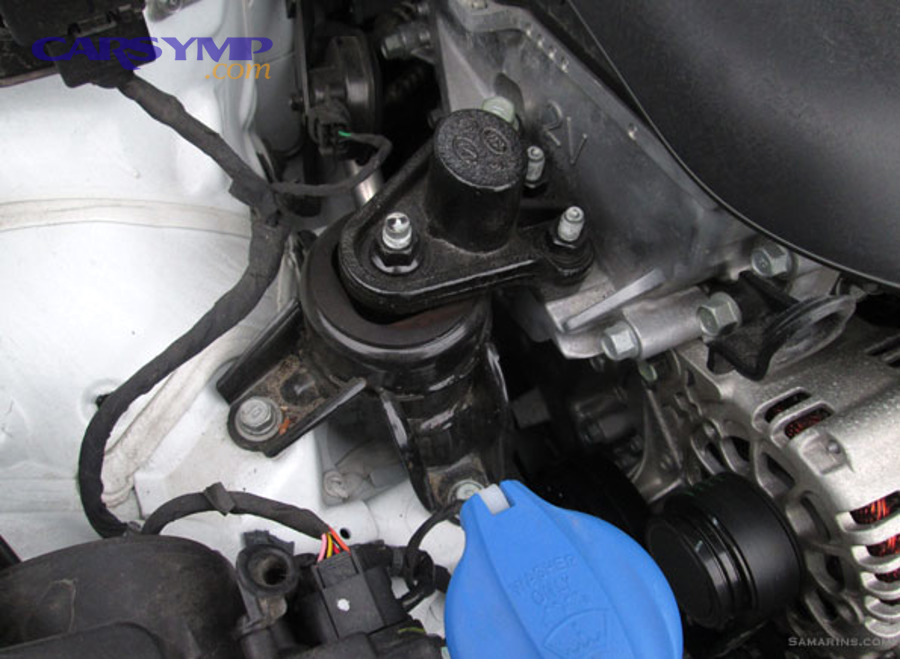
6) Add-ons that can be legitimate (and time-consuming)
A quote may include replacing multiple mounts as a set, replacing torn brackets, alignment after subframe movement, and test drive plus re-torque steps. In symptom-driven cases, the right diagnosis matters; if your complaint is noise, resources such as carsymp.com can help you compare likely causes before committing to a big engine mount replacement.
How can you estimate your own book time using a quick “access difficulty” checklist?
Use a 4-step access checklist—identify mount count, rank the hardest mount, count major components blocking access, and decide your support method—to estimate a realistic book-time range and avoid being surprised by “hidden” steps.
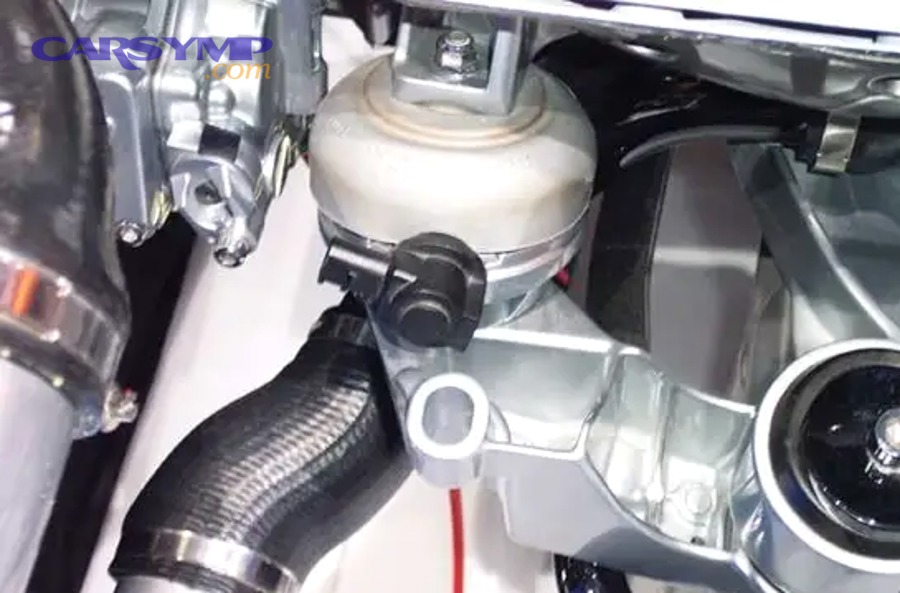
Specifically, this approach works because book time is mostly a proxy for how much must move before the mount can come out.
Step 1: Identify what’s being replaced
Write down the number of mounts being replaced (one vs multiple), whether a transmission mount is included, and whether brackets are included (some mounts come with bracket assemblies).
Step 2: Rank the hardest mount (the “dominant mount” rule)
Ask which mount is most buried. Rear or bottom mounts on some FWD cars often dominate time, and mounts trapped behind exhaust routing can also dictate the labor range.
Step 3: Count blockers (simple scoring)
Score each blocker as 0.5–1.0 labor-hour pressure depending on complexity.
- Top-side blockers: battery tray/fuse box, air intake/air box removal, coolant reservoir relocation
- Bottom-side blockers: undertray/skid plate, exhaust shield/bracket, subframe loosen/drop
- Hard-mode blockers: steering rack interference, axle/suspension interference, tight clearance requiring powertrain repositioning
Interpretation rule: 0–1 blockers often lands around 0.5–1.5 hours per mount (clean fasteners). 2–3 blockers often pushes the hardest mount toward 1.5–3.0 hours. 4+ blockers can push the hardest mount to 3.0–5.0+ hours.
Step 4: Choose your support method (and add time honestly)
Add time if you must set up a support bar carefully, loosen additional mounts to pivot the drivetrain, or re-align components after shifting. These steps are where DIY planning often saves the most time.
Evidence: According to a study by Linköping University from the Department of Electrical Engineering, in 2003, researchers developed a parameterized model of an active hydraulic engine mount valid from zero to about 300 Hz, showing strong agreement with experimental data—highlighting that mount behavior and packaging constraints can influence service complexity.
Is your mechanic’s quote reasonable for engine mount labor hours?
Yes—your mechanic’s labor-hours quote can be reasonable if (1) access is constrained, (2) the quote includes legitimate add-ons like subframe movement or multiple mounts, and (3) the shop’s hours align with flat-rate logic and your vehicle’s known blockers; otherwise, it may be inflated.
However, you can validate it quickly if you compare the quoted hours to your checklist estimate and ask for line-item clarity.
A fast “reasonableness” test you can apply in 2 minutes
A quote is more likely reasonable when the hardest mount is buried (rear/bottom mount, blocked by subframe or exhaust), the quote includes necessary steps (support engine, remove undertray, loosen subframe, test drive), and the scope matches the hours—especially when multiple mounts are included.
A quote is more likely questionable when the mount is clearly top-accessible with minimal blockers and the quoted hours are very high, the quote is vague about whether it includes additional mounts or brackets, or there’s no explanation for extra labor despite a low-rust, roomy bay.
What to ask (without sounding confrontational)
- “Is that time for one mount or all mounts?”
- “Does that include supporting the engine and any subframe movement?”
- “Are any brackets or bolts one-time-use parts on this job?”
- “Will it need an alignment afterward?”
Tie-in to symptoms (so you’re not paying for the wrong fix)
If your core complaint is a knock or clunk, ensure the diagnosis matches mounts. A solid Clunking on acceleration diagnosis checks for excessive engine rock under throttle, mount separation or cracks, and contact marks where the engine bracket hits the frame.
How do you convert labor time into a realistic cost estimate?
Convert labor time into a realistic total by multiplying flat-rate hours by the shop’s posted hourly rate, then adding parts, shop supplies/fees, and any required follow-up (like alignment).
More importantly, you should calculate a low–high range because real-world blockers can add legitimate time.
Step 1: Start with the labor-hours number
Example: 2.5 flat-rate hours.
Step 2: Multiply by hourly rate
If the shop rate is $140/hr, labor is 2.5 × 140 = $350.
Step 3: Add parts and “soft costs”
Include mount price (varies by vehicle and mount type), shop supplies or environmental fees, and taxes.
Step 4: Add legitimate related items (only if applicable)
Consider alignment after subframe movement, bracket replacement, and additional mounts if the shop recommends replacing them as a set.
A reality-check using published estimator ranges
RepairPal lists an average “Engine Mount Replacement” total range and breaks out labor-cost estimates, which you can reverse-engineer using local hourly rates to see whether your computed labor dollars look plausible.
When you combine labor and parts, you get a practical Engine mount replacement cost estimate that matches how shops actually invoice the job.
How long does engine mount replacement take for DIY mechanics, and what risks add time?
DIY engine mount replacement usually takes longer than flat-rate—often 2× to 4×—because setup, tool limitations, and “first-time uncertainty” add time, while risks like mis-supporting the engine or fighting seized fasteners can create major delays.
Meanwhile, the best DIY time savings come from planning access and support before you unbolt anything.
Pro vs DIY time
- Pro (flat-rate hours): optimized procedure, lift access, experience, specialty tools
- DIY (clock time): extra time for safe setup, verifying steps, and troubleshooting
The top DIY time traps
- Improper support plan: risk of drivetrain shift; fix by choosing support method before removing mount bolts
- Not loosening adjacent mounts when needed: mount won’t clear; fix by loosening other mounts slightly for controlled movement
- Seized hardware: risk of broken studs; fix with penetrating oil, correct sockets, patience, and heat when safe
- Misalignment during reassembly: bolt holes don’t line up; fix with micro-adjustments and starting bolts by hand
Safety and “done-right” checks
After installation, verify no hoses or wires are stretched, check clearance around exhaust and fans, and re-torque accessible fasteners after a short drive if the procedure recommends it.
What less-obvious factors can change mount replacement time and results after installation?
There are 4 less-obvious factors—mount settling behavior, bracket stack-up tolerance, drivetrain alignment sensitivity, and post-repair NVH expectations—that can change both labor time and how the car feels afterward, especially on higher-mileage vehicles.

In addition, these factors explain why a “successful” install can still leave a driver unhappy if expectations aren’t set.
1) Mount settling and break-in feel
Some mounts feel stiff or transmit more vibration initially. That can be normal as the mount seats and the drivetrain finds its resting position.
2) Bracket stack-up and tolerance issues
If the job includes brackets, spacers, or layered fasteners, small misalignments can add rework time and create new vibration if the mount is preloaded incorrectly.
3) Drivetrain alignment sensitivity
A small drivetrain shift can change axle angles on some layouts, reduce exhaust clearance, and affect shifter feel. These are subtle issues that often explain why the same “book time” job can feel very different between vehicles.
4) NVH expectations (what “fixed” should feel like)
Mounts are vibration isolators. Replacing a collapsed mount can restore factory isolation, but if other components are worn (CV joints, exhaust hangers, suspension bushings), you may still feel harshness or hear noise afterward.
Evidence: According to a study by Concordia University from the Department of Mechanical and Industrial Engineering, in 2005, researchers modeled a three-degree-of-freedom engine mount system and evaluated performance across a broad excitation range, emphasizing that mount configuration and parameters influence transmitted forces and vibration response—factors that can affect both service approach and post-repair feel.