


You can inspect engine mounts visually by locating each mount, lighting it clearly, and checking for three telltale failure signs—rubber separation, collapse/sag, and fluid leakage—so you can decide whether the mount is “good,” “suspect,” or “failed” before spending money.
Next, you’ll learn how the most common Bad engine mount symptoms connect to what you see, so you can interpret Car Symptoms like shaking, clunking, or harshness without guessing.
Then, you’ll get simple confirmation checks for cases where mounts “look fine” but still cause Vibration at idle from mounts, because subtle failures often show up as movement patterns rather than dramatic cracking.
Introduce a new idea: once you can visually grade the mounts and confirm the pattern safely, you can decide whether to keep driving, book a shop inspection, or plan an engine mount replacement with realistic expectations.
What are engine (motor) mounts and what does “visual inspection” actually mean?
Engine mounts are vibration-isolating supports that bolt the engine/transmission to the vehicle body, originally evolving from simple rubber isolators into hydraulic and controlled designs that reduce shake while limiting movement.
To better understand what you’re inspecting, it helps to separate “what a mount does” from “what you can see.”
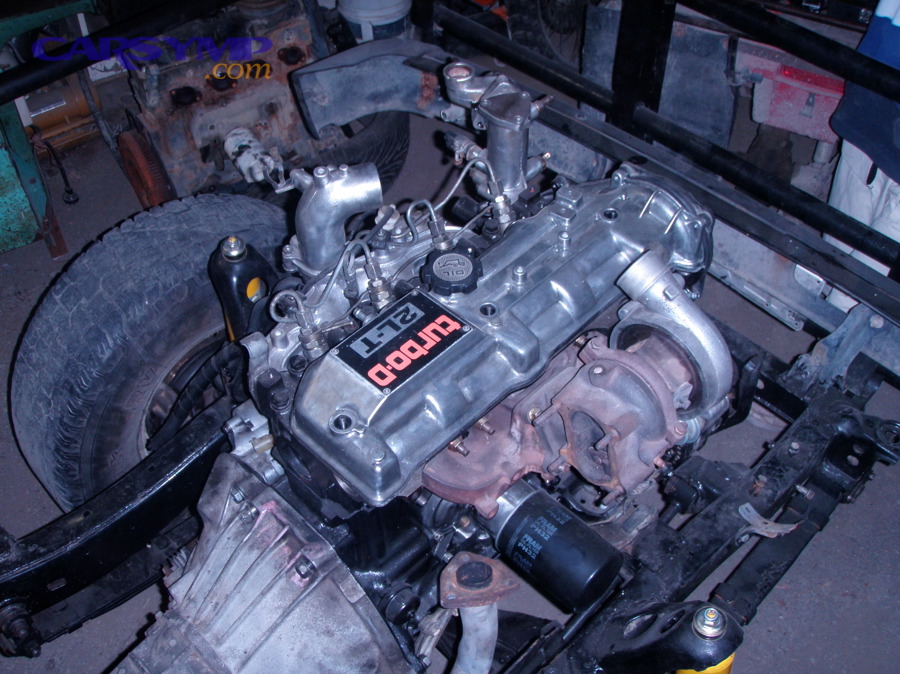
An engine mount is not just a bracket—it’s a system that manages NVH (noise, vibration, harshness) and torque reaction. Most passenger vehicles use a combination of:
- Rubber-and-metal mounts that isolate vibration through elastomer deformation
- Torque struts (dogbone mounts) that control fore-aft rocking under acceleration/braking
- A transmission mount that supports the gearbox side and balances the powertrain
“Visual inspection” means you’re looking for external, observable changes that correlate with internal failure: torn rubber, separated bonding, collapsed geometry, broken fasteners, or fluid escaping from a hydraulic chamber. It’s powerful because mounts fail in predictable ways—but it’s not perfect because some mounts lose stiffness internally before they look dramatic outside.
A practical way to think about it is a 3-level visual verdict:
- Looks OK (no cracks, no sag, no leaks, hardware solid)
- Suspect (minor cracking, small seep, slight sag, shiny contact marks)
- Failed (separation/tears, obvious collapse, active leak, broken bracket/bolt)
That simple grading keeps the rest of the article focused: you’re not trying to “prove” the mount is bad—you’re trying to screen it intelligently and then confirm when needed.
Can you diagnose a bad engine mount by sight alone?
Yes, you can often diagnose a bad engine mount by sight alone because obvious mount failures create visible separation, visible collapse, or visible fluid leakage—and each one directly changes how the engine sits and moves.
However, visuals aren’t always decisive, so the key is knowing when sight is enough and when you need a quick confirmation.
Here’s when visual-only diagnosis is typically reliable (3 reasons):
- Separation is unambiguous: rubber has torn away from the metal shell or bushing sleeve
- Geometry is clearly wrong: the mount is collapsed, sagging, or sitting on a “stop” or bracket
- Hydraulic mounts show wet failure: damping fluid leaks down the mount, subframe, or splash shield
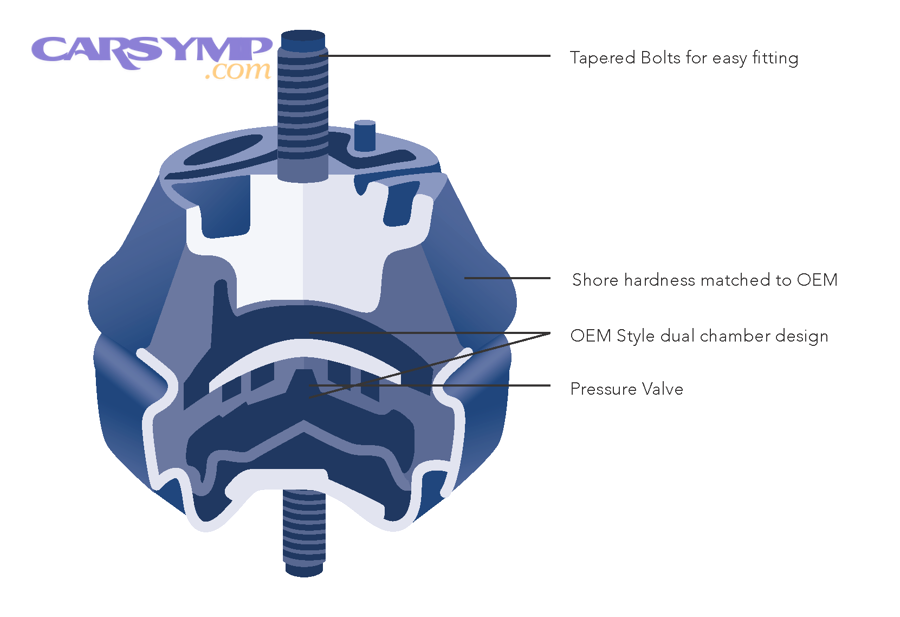
But you can have a mount that “looks fine” and is still weak. That happens when:
- The rubber softens internally (heat + oil exposure)
- The mount’s internal chambers or valves degrade (hydraulic/active mounts)
- The mount is slightly torn in a hidden area you can’t see from above
So the honest answer is: visual inspection is the best first filter, and it’s often enough to justify repair. When it isn’t, you’ll use safe movement-based confirmation later—without turning your driveway into a risky experiment.
What are the most common visual signs of a failing engine (motor) mount?
There are 6 main visual signs of a failing engine mount—cracks/tears, rubber separation, collapse/sag, metal-to-metal witness marks, leaking hydraulic fluid, and shifting/missing hardware—based on the criterion of “visible damage that changes support or damping.”
Next, you’ll use those six signs as a repeatable checklist, because consistency is what prevents misdiagnosis.
A fast checklist you can run in under 10 minutes:
- Look for cracks and tears in rubber
- Look for separation where rubber bonds to metal
- Look for sag or a “low” powertrain stance
- Look for shiny rub marks (contact points that shouldn’t touch)
- Look for wetness on hydraulic mounts or residue trails below
- Look for broken brackets, loose bolts, or elongated holes
Is the rubber cracked, torn, or separating from the metal?
Yes—if the rubber is cracked through the thickness, torn near the bushing sleeve, or separating at the bond line, the mount is likely failing because the elastomer can no longer carry load evenly, so vibration increases and movement spikes.
Specifically, you’re looking for structural cracks, not harmless surface “crazing.”
Use this quick grading:
- Cosmetic surface cracks: fine, shallow lines on exposed rubber; common with age
- Structural cracks/tears: deeper splits you can spread with a fingernail; often near the bushing sleeve
- Bond separation: rubber pulling away from the metal plate or shell; usually a “replace now” sign
Common places cracks hide:
- Under a heat shield
- Behind a bracket lip
- On the backside of the mount facing the firewall
- Inside voids molded into the rubber (use a mirror)
If you see a crack that runs to the bonded edge—or a chunk missing—treat it as a high-confidence failure sign. That’s a visual diagnosis you can trust.
Is the mount collapsed, sagging, or allowing metal-to-metal contact?
Yes—if the mount sits lower than normal, looks “squashed,” or allows metal-to-metal contact, it is effectively failed because the mount’s designed ride height and isolation gap are gone, so vibration and impact transfer directly into the chassis.
To illustrate, collapse is less about “ugly” and more about geometry.
What collapse looks like in practice:
- The rubber looks flattened and bulged outward
- The engine sits closer to a bracket stop
- You see shiny or polished areas where two parts have been rubbing
- Exhaust flex pipe or downpipe sits closer to the body than it used to
A simple comparison method:
- Compare left vs right mount height if both are visible
- Look at the engine tilt relative to the radiator support (a sudden tilt is suspicious)
- Check for “contact witness marks” on the subframe or mount cradle
Collapse is also one of the top causes of Vibration at idle from mounts, because idle vibration has low frequency and the mount’s geometry is critical to isolating it.
Are brackets, studs, or bolts damaged, missing, or shifting?
Yes—if you have damaged, missing, or shifting hardware, the mount system is unsafe because the mount can’t clamp correctly, which lets the powertrain move and can shear remaining fasteners or damage nearby parts.
Moreover, hardware issues are often the “silent” cause behind repeat failures after repairs.
What to look for:
- Missing bolts or bolts backed out (fresh threads exposed, uneven gap at the mount foot)
- Broken studs or stripped threads (mount appears seated but won’t tighten properly)
- Elongated holes in brackets (a sign the mount has been shifting under load)
- Rust trails or shiny arcs around bolt heads (movement “polishing” the metal)
If you see shifting marks, you’re not just dealing with comfort—there’s a safety and collateral-damage risk. This is where you stop “monitoring” and start planning a fix.
What does a fluid leak or oily residue around the mount mean?
Fluid around a mount usually means either a hydraulic mount is leaking its damping fluid or the mount rubber is being contaminated by engine oil, both of which reduce isolation and accelerate failure.
Next, you’ll separate these two causes, because the correct fix depends on which fluid it is.
Hydraulic mounts are designed with internal chambers that control vibration using fluid flow through an orifice. When they leak, the mount may still “hold” the engine up briefly, but it loses damping and can collapse over time.
Oil contamination is different: oil doesn’t “leak from” a standard rubber mount—it leaks from the engine and then soaks the elastomer. That soaking can make rubber:
- swell
- soften
- separate from metal bonding
- tear sooner under torque loads
Is it a hydraulic mount leak or engine oil soaking the rubber?
Hydraulic mount leak wins in “wet origin,” engine oil wins in “source tracing,” and coolant/other fluids are a third possibility—so the best approach is to classify fluid by where it starts, where it collects, and what parts are wet.
However, you don’t need lab tools; you need smart observation.
Hydraulic mount leak cues:
- Wetness concentrated at the mount body
- Fluid trails that start high on the mount and drip down
- A mount that looks “deflated” or uneven after the leak begins
Engine oil contamination cues:
- Oil wetness on surrounding engine surfaces above the mount
- Oil residue on hoses, timing covers, valve cover area, or oil pan seam
- Mount rubber looks swollen or mushy, even if not torn yet
Quick practical rule:
- If the wetness starts at the mount housing, suspect hydraulic failure.
- If wetness starts above and spreads outward, suspect an engine oil leak harming the mount.
This distinction matters because engine mount replacement without fixing the oil leak often leads to a “new mount, same problem” cycle.
Which mounts should you inspect, and where are they typically located?
There are 3 main mount groups to inspect—engine-side mounts, transmission mounts, and torque struts—based on the criterion of which part of the powertrain they support and which direction they control movement.
Then, you’ll learn where they typically sit so you can find them quickly on most vehicles.
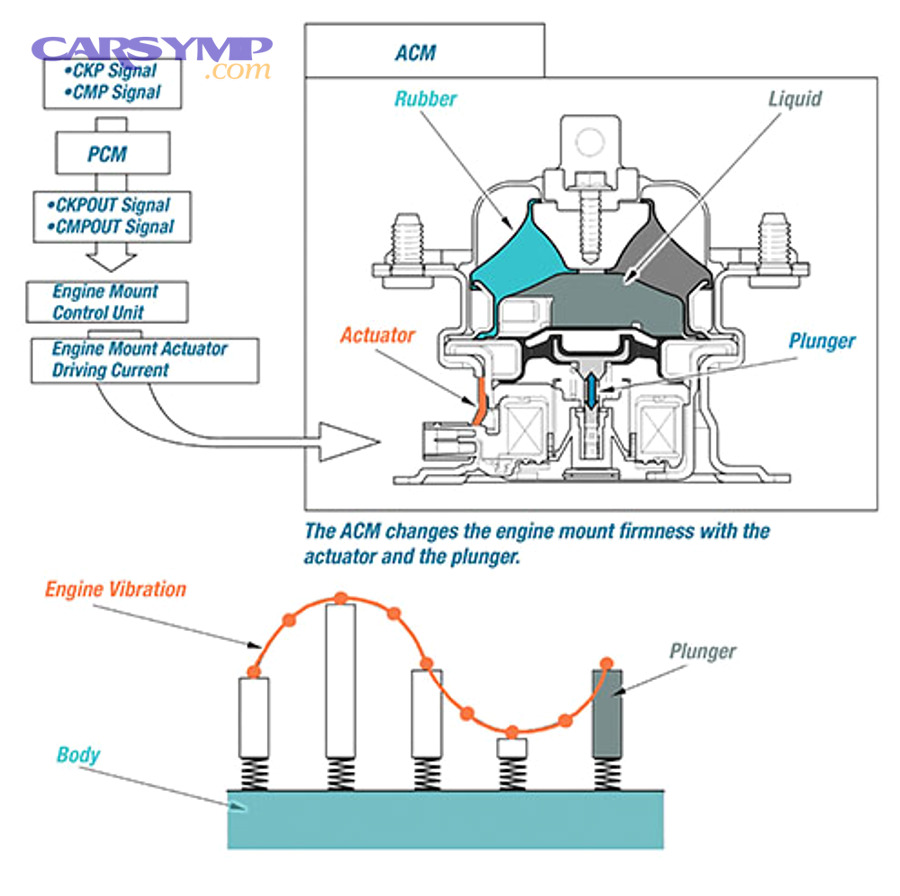
Typical locations by drivetrain layout:
Front-wheel drive (transverse engine)
- One mount near the passenger-side upper engine bay (often called the “top mount”)
- One transmission-side mount on the driver side
- One rear mount low near the firewall side
- One front/torque mount low near the radiator side (often a dogbone)
Rear-wheel drive / longitudinal layouts
- Engine mounts on left and right sides of the engine block
- Transmission mount on the crossmember
- Sometimes an additional torque reaction mount depending on design
Why location matters:
- Upper mounts are easiest to see and often show obvious cracking
- Lower mounts are hardest to access but often control the worst “thump” during shifts
- Transmission mounts frequently contribute to driveline clunks and misalignment feel
Which mount is most likely to show visible damage first?
There are 3 common “first-fail” candidates—torque struts (bushing tearing), hydraulic upper mounts (leaks/collapse), and oil-exposed side mounts (softened rubber)—based on the criterion of heat, torque load, and fluid exposure.
More specifically, the mount that fails first is often the one that lives the hardest life.
Typical patterns:
- Torque strut/dogbone: bushings crack from repeated engine rocking
- Upper hydraulic mount: leaks are visible and lead to sag
- Mount near oil leaks: rubber degrades faster and tears under load
If your Car Symptoms appear mainly during gear changes or throttle blips, inspect the torque strut early. If the symptoms are strongest at idle, start with upper mounts that carry vertical load and isolate low-frequency vibration.
How do you perform a safe visual inspection step-by-step?
A safe visual inspection uses 7 steps—secure the vehicle, locate mounts, light the area, inspect rubber and metal, check for leaks, look for witness marks, and re-check at idle—so you can spot clear failures without unsafe prying or risky revving.
Below is a practical routine designed around DIY mount replacement safety considerations, even if you’re only inspecting today.
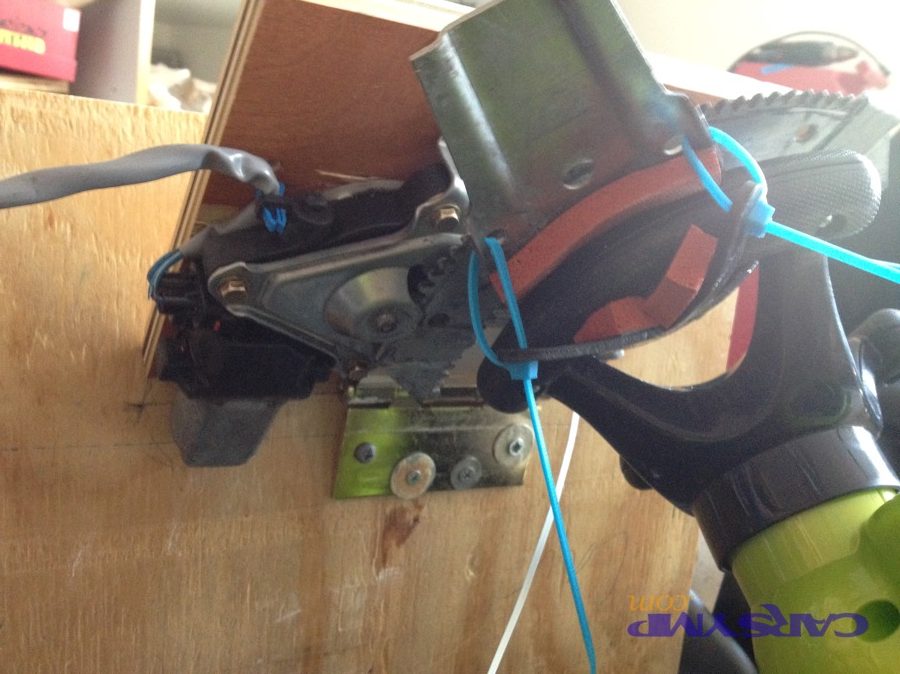
Step 1: Secure the vehicle
- Park on level ground
- Set parking brake
- Use wheel chocks if available
- Let the engine cool if you’ll be near exhaust components
Step 2: Identify mount locations
- Use the “engine side / transmission side / torque strut” map
- Look for brackets connecting the powertrain to the subframe/body
Step 3: Improve visibility
- Use a strong flashlight
- Use a small mirror or phone camera for backside views
- Wipe dirt carefully so cracks and wetness are visible
Step 4: Inspect rubber
- Scan for tears, deep cracks, bulges, separation
- Look around the bushing sleeve and bonded edges
Step 5: Inspect metal and hardware
- Look for broken brackets, missing bolts, shifted bolt head marks
- Check for shiny rub points and fresh metal contact
Step 6: Inspect for fluid
- Identify whether the mount is hydraulic
- Trace wetness upward to find the true origin
Step 7: Observe at idle (safe observation)
- With the hood open, stand clear of belts/fans
- Look for excessive rocking or contact marks while idling normally
Do you need to lift the car to inspect mounts properly?
No, you don’t always need to lift the car to inspect mounts properly because many upper mounts are visible from above, some failures are obvious without lifting, and safe ground inspection avoids unnecessary risk.
However, lifting helps when the suspect mount is low or the torque strut is hidden.
When you can stay on the ground:
- The upper mount is clearly visible and shows cracking or leaking
- You can see the transmission mount from the top on some models
- Your goal is a quick “pass/fail” screen
When lifting becomes worthwhile (with proper jack stands):
- You need a clear view of the lower rear mount or torque mount
- You’re chasing a clunk under load and need to inspect witness marks under the subframe
- You’re planning engine mount replacement and need access anyway
If you’re not confident with safe lifting practices, treat lifting as optional and defer the underbody portion to a shop—your goal is diagnosis, not heroics.
What should you look for with the engine idling (without “testing” aggressively)?
With the engine idling, you should look for abnormal rocking, shifting, or contact points because a weak mount lets the engine’s normal pulses translate into visible motion and vibration transfer.
Specifically, you’re observing the engine’s “resting behavior,” not provoking it.
What “normal” often looks like:
- Slight, smooth movement
- No sudden jolts
- No metal-to-metal taps
What “suspect” looks like:
- A repeated lurch in one direction
- The engine appears to sit low and moves into a bracket stop
- A rhythmic shake that matches idle and produces Vibration at idle from mounts
If idle vibration is strong but movement looks minimal, keep reading—misfires and other issues can mimic mount symptoms, and you’ll compare those later.
How do you confirm what you saw with quick checks when visuals are unclear?
A reliable confirmation uses 3 quick checks—movement pattern observation under light load, repeatable symptom correlation, and contact-mark verification—so you can validate a “suspect” mount without unsafe prying or uncontrolled engine revs.
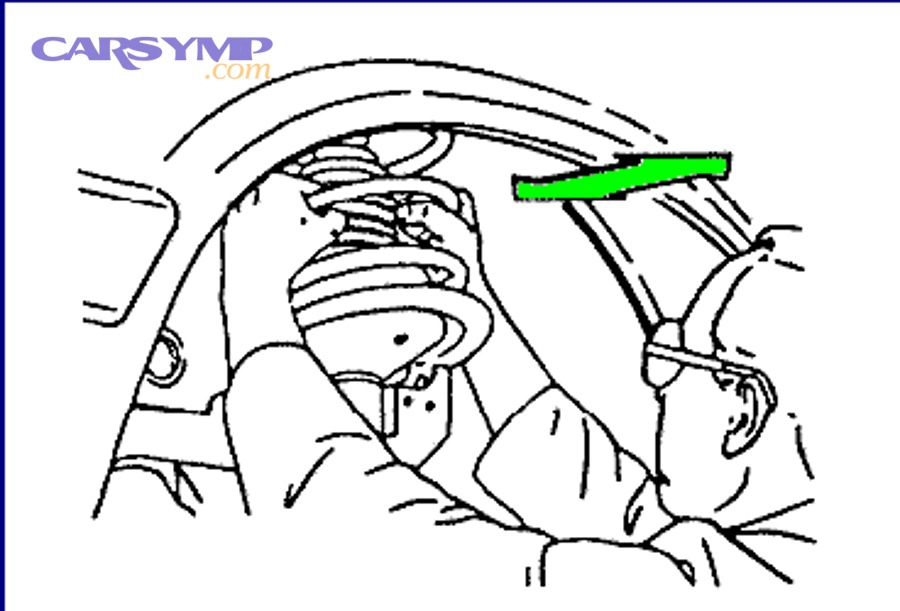
Next, you’ll use these checks to turn uncertainty into a confident decision.
Quick Check 1: Light-load movement pattern
- With a helper in the driver’s seat, you observe from a safe position
- The helper holds the brake firmly and lightly loads the drivetrain (automatic: shift to Drive briefly; manual: gentle clutch engagement without moving)
- You watch for a sharp “jump” or excessive twist
Quick Check 2: Symptom correlation
- Does the clunk happen exactly when the powertrain changes direction (Drive ↔ Reverse)?
- Does the vibration reduce when RPM rises slightly above idle?
- Does it worsen with AC load or idle dip? (this can amplify mount weakness)
Quick Check 3: Contact confirmation
- After a suspected clunk event, re-check for fresh witness marks
- Look for new shiny points on brackets, exhaust, or subframe areas near the mount
If you’re heading toward DIY mount replacement safety considerations, keep the goal narrow: confirm a failure pattern, then stop.
Does excessive engine movement under light load confirm a bad mount?
Yes, excessive engine movement under light load usually confirms a bad mount because healthy mounts limit torque rotation, worn mounts allow a sudden “snap” movement, and repeated over-travel often produces matching clunks or thumps.
However, movement must be interpreted with context.
What counts as “excessive” in practical terms:
- A sharp, sudden lurch instead of a smooth settle
- Movement that ends with a tap (contact with a stop or bracket)
- A consistent direction of over-travel (always forward, always rearward)
What can mimic it:
- A torn torque strut bushing
- A failing transmission mount
- Severe driveline lash or worn CV components (especially in FWD)
If your movement test reveals a hard contact or a loud clunk, stop further testing and treat it as a safety/repair priority rather than something to “double-check” repeatedly.
What problems look like bad mounts but aren’t?
Engine mounts are the top suspect for shake and clunks, but exhaust contact, heat shield rattle, driveline wear, and engine misfires can create similar symptoms—so you need a short comparison checklist to avoid replacing the wrong part.
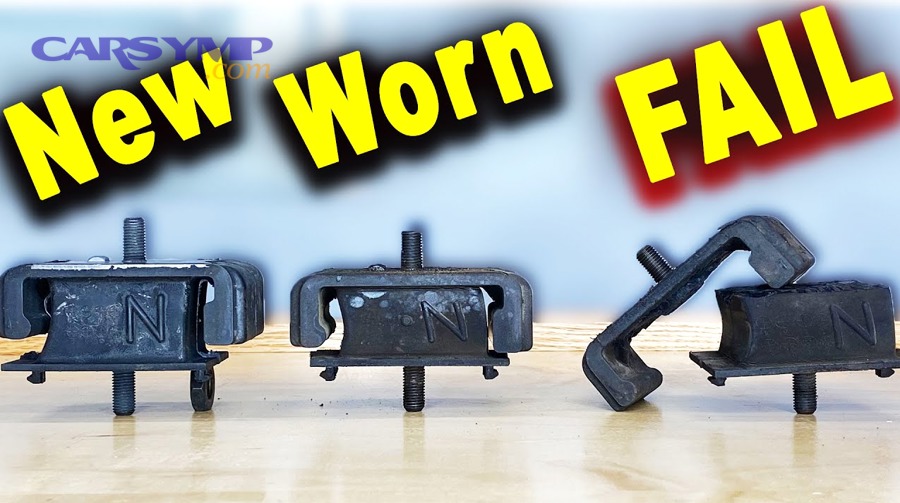
More importantly, misdiagnosis wastes money and leaves the real cause untouched.
A fast “not-the-mount” checklist:
- Exhaust contact: clunk when engine torques; shiny rub marks on exhaust or heat shields
- Loose heat shield: tinny rattle, often RPM-specific, not load-direction-specific
- Misfire/rough idle: shaking that feels like vibration but is actually uneven combustion
- Accessory bracket/pendulum issues: noise near belt area
- CV joint or driveline lash: clunks while turning or during throttle transitions
If your mount looks solid but symptoms persist, shift your thinking from “mount failure” to “symptom source.”
Is vibration always a mount problem, or can engine misfires cause the same symptom?
Engine misfires win for roughness irregularity, mounts win for load-direction clunks, and both can combine—so vibration is not always a mount problem, especially when the vibration changes with RPM or triggers engine fault codes.
Meanwhile, this is where many DIY diagnoses go wrong.
How misfire vibration behaves:
- Often feels “lumpy” or irregular
- Can worsen under load or at specific RPM ranges
- May accompany a check engine light or fuel trim issues
- May change noticeably with ignition load (AC on/off can worsen idle instability)
How mount vibration behaves:
- Often strongest at idle and improves slightly as RPM rises
- Feels more like a steady shake transmitted through the body
- Frequently pairs with clunks during shifts or throttle on/off
- Often pairs with visible engine tilt or contact witness marks
If you have strong Car Symptoms plus a rough idle that varies unpredictably, don’t jump straight to engine mount replacement—confirm whether the engine is actually running smoothly first.
When should you stop driving and seek professional help?
Yes, you should stop driving and seek professional help when mount failure is suspected because broken hardware can let the engine shift dangerously, metal-to-metal contact can damage components quickly, and severe movement can affect steering, axles, hoses, or exhaust clearance.
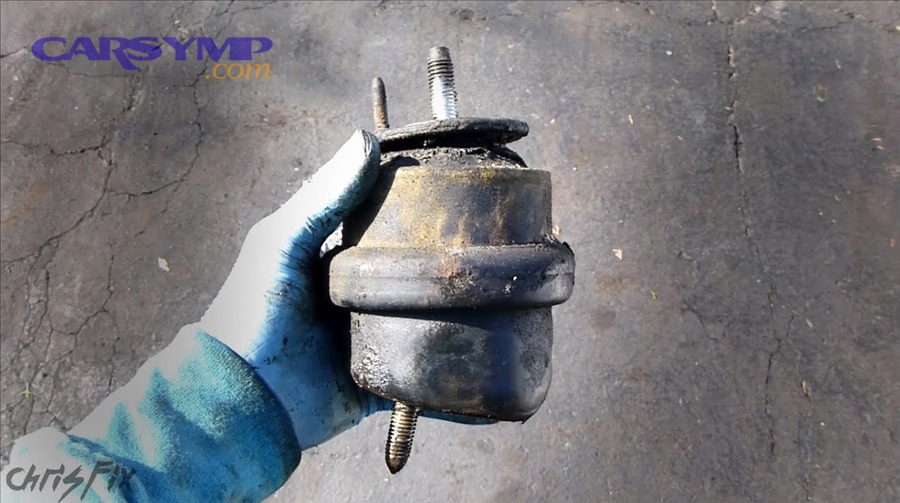
In addition, safety decisions should be based on severity signs, not hope.
Red-flag conditions (stop driving / tow is safer):
- A mount is visibly separated or collapsed onto a bracket stop
- A bracket is cracked or a bolt/stud is missing or broken
- A loud clunk occurs with every shift and the engine visibly jumps
- Hoses, wiring, or exhaust appear stretched, kinked, or contacting
Moderate-risk conditions (drive only short distance to repair cautiously, if unavoidable):
- Mild sagging with no contact marks
- Minor cracking without separation
- Slight seepage on a hydraulic mount without active dripping
- Vibration mainly at idle but no major clunks
If you’re not sure, treat uncertainty as risk: a quick shop inspection is cheaper than secondary damage from a powertrain shifting out of place.
Is it safe to drive with a suspected mount failure?
No, it is not reliably safe to drive with a suspected mount failure because the mount can worsen suddenly, the engine can shift under torque and damage nearby systems, and a failing mount can create unpredictable handling or driveline behavior during acceleration and braking.
However, the real-world answer depends on severity.
If your mount is suspect (minor cracks, no contact, no hardware issues), you may be able to drive gently for a short time while scheduling service:
- Avoid hard launches and abrupt braking
- Avoid potholes and harsh impacts
- Keep RPM changes smooth
- Listen for worsening clunks
If your mount is failed (separation, collapse, leaking heavily, broken hardware), don’t gamble. This is where DIY mount replacement safety considerations become secondary to safety and proper support equipment.
Evidence: According to a study by The Ohio State University from the Department of Mechanical and Aerospace Engineering, in 2017, changing elastomeric mount stiffness shifted system natural frequencies (including a ~16 Hz change in rocking mode across tested stiffness ranges) and altered transmitted forces at 20 Hz, showing how mount properties directly affect vibration transmission.
Contextual border (transition): At this point, you can (1) locate each mount, (2) run the crack/leak/collapse checklist, (3) confirm borderline cases safely, and (4) decide whether driving is safe—so the primary “visual inspection” goal is complete. Next, we’ll expand into mount types and how each design changes what “normal” and “failed” look like.
Which engine mount types exist, and how does inspection differ by design?
There are 4 main engine mount types—solid rubber, hydraulic (fluid-filled), vacuum/active mounts, and torque strut bushings—based on the criterion of how they isolate vibration and control movement, and each type shows failure differently.
Especially if you’re comparing parts for engine mount replacement, mount type changes what you should look for.
What is the difference between rubber mounts, hydraulic mounts, and active electronic mounts?
Rubber mounts win for simplicity, hydraulic mounts are best for broad NVH control, and active electronic mounts are optimal for adaptive damping—so inspection differs by what “loss of function” looks like for each design.
However, the visual logic stays consistent: you’re looking for loss of support, loss of damping, or loss of control.
Rubber mounts (passive)
- What “good” looks like: intact rubber, no separation, stable geometry
- What “bad” looks like: tears, separation, collapse, metal contact marks
- Common clue: steady idle vibration that improves slightly with RPM
Hydraulic mounts (fluid-filled)
- What “good” looks like: dry housing, no wet trails, stable height
- What “bad” looks like: wetness/leak trails, sagging after leak, increased shake
- Common clue: sudden increase in shake after leak begins
Active/vacuum-controlled mounts
- What “good” looks like: intact vacuum lines/wiring, no cracks, no leaks
- What “bad” looks like: disconnected lines, torn diaphragms, fluid leaks (if hydraulic), or visible damage plus persistent vibration patterns
- Common clue: idle vibration changes abnormally with load states or control faults
If you don’t know your mount type, treat any unexplained wetness at the mount body as high priority—because fluid loss is rarely “normal.”
How do torque strut (“dogbone”) mounts fail differently than main engine mounts?
Torque strut mounts fail primarily by bushing tearing and void cracking rather than full collapse, because their job is controlling rotation (torque reaction) more than holding vertical weight.
So you inspect them by focusing on bushing condition and movement direction.
What to look for:
- Cracks through the bushing voids
- Rubber pulling away from the sleeve
- Torn rubber at the edges where the bushing twists
- Witness marks showing the strut contacting its bracket
How symptoms show up:
- Thump/clunk on throttle tip-in or tip-out
- Harsh shift feel (automatic)
- A “rocking” sensation during start/stop transitions
When a torque strut is bad, the engine may look “okay” at idle but clunk during load changes—so you match the inspection to the symptom.
Does OEM vs aftermarket mount design change what “good” looks like?
Yes, OEM vs aftermarket mount design can change what “good” looks like because rubber void patterns, stiffness targets, and hydraulic chamber shapes differ across brands, and a stiffer replacement can transmit more vibration even when it’s not defective.
On the other hand, “bad” still looks like the same three failures: separation, collapse, or leakage.
What to do when comparing designs:
- Compare the mount to the old one for height and bracket alignment
- Expect different rubber shapes and voids (that can be normal)
- Focus on function indicators: dry housing, intact bond lines, no contact marks
This is also why people sometimes report “new mount, still vibrating.” It may be a stiffness/tuning difference, not an installation error—though installation issues do happen.
Can oil contamination or subframe misalignment cause mount failure even if the mount isn’t “old”?
Yes, oil contamination or subframe misalignment can cause mount failure early because oil softens elastomers and breaks bonding over time, and misalignment forces the mount to carry load in a direction it wasn’t designed for, accelerating tearing.
More importantly, these are the hidden drivers behind repeat failures.
Oil contamination clues:
- Rubber looks swollen or glossy
- Cracks appear faster than expected
- The mount tears at the bond line rather than slowly cracking
Misalignment clues:
- Mount sits “twisted” at rest
- Bolt holes don’t line up cleanly during installation
- Witness marks show contact on one side only
If you suspect either condition, treat mount replacement as a system fix: repair the oil leak, verify alignment, then replace the mount—otherwise your next “new” mount may age like an old one.