


Intermittent crankshaft (CKP) or camshaft (CMP) position sensor problems usually show up as random stalling, hard starts, hesitation, or misfires that come and go, because the engine computer briefly loses a clean position signal and then recovers. When that signal drops out at the wrong moment, the engine may cut fuel/spark, stumble, or fail to synchronize—so the “symptoms” often look inconsistent, even though the cause is repeatable.
Next, the fastest way to confirm you’re on the right track is to match your symptom pattern (hot vs cold, idle vs speed, sudden stall vs gradual roughness) with the hallmark behaviors of intermittent CKP/CMP signal loss, instead of guessing based on one check-engine-light event.
Then, it helps to separate what’s more typical of CKP (sudden stall/no-start risk) versus more typical of CMP (rough running and correlation issues) so you can prioritize the right checks first and avoid replacing the wrong part.
Introduce a new idea: once you can recognize the pattern, you can do a few targeted scans and inspections—often in minutes—to decide whether you’re dealing with a sensor, a connector/wiring fault, or a “look-alike” issue like ignition/fuel/charging that only mimics a position-signal problem.
What are crankshaft and camshaft position sensors (CKP/CMP), and what do they control in engine timing?
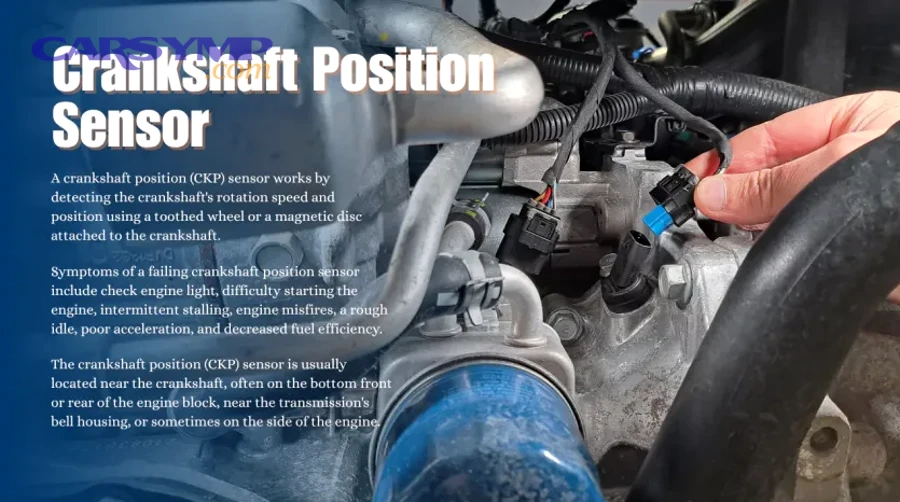
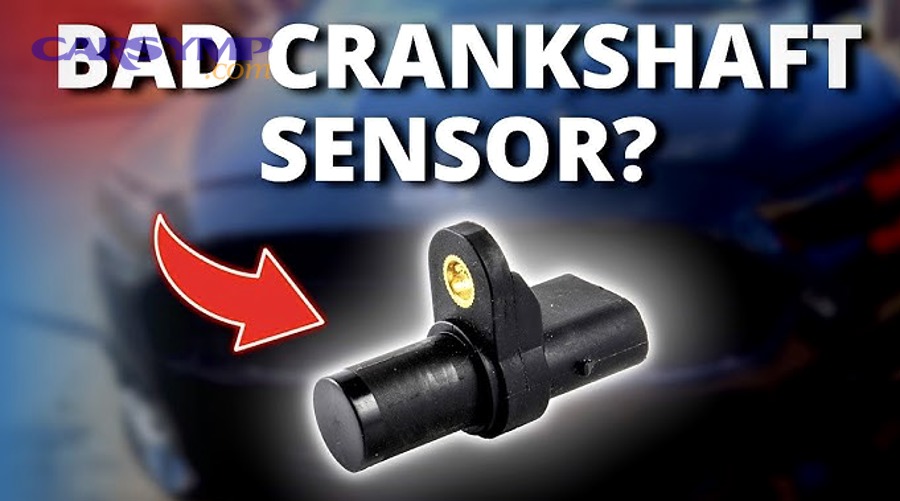
Crankshaft and camshaft position sensors are engine position-tracking sensors that report crank/cam speed and position to the ECU so it can time spark and fuel injection accurately and keep the engine synchronized across every combustion cycle.
To better understand why intermittent failures feel so random, it helps to see what the ECU is actually doing with those signals.
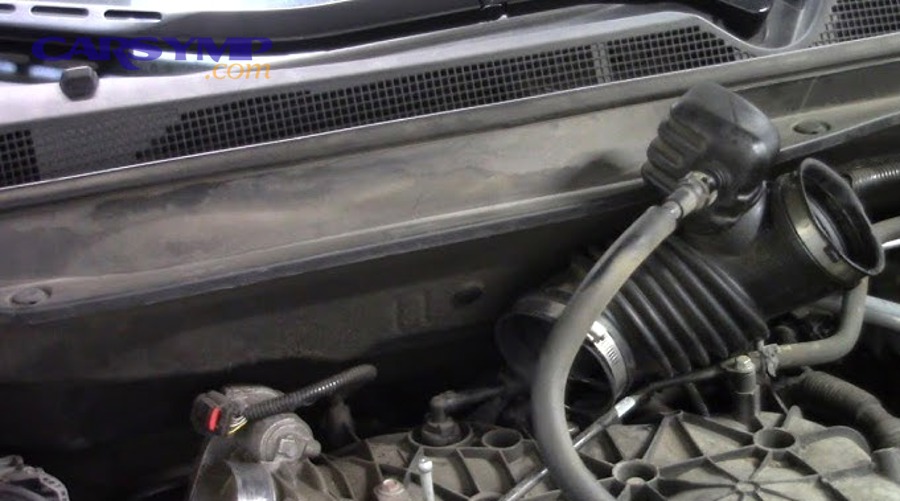
What the CKP sensor does in plain terms
The CKP sensor is the ECU’s primary “heartbeat” reference for engine rotation. It tells the computer:
- How fast the crankshaft is spinning (RPM).
- Where the crankshaft is in its rotation (so the ECU can time ignition and injection events).
- When cylinders should fire relative to crank angle.
When the ECU loses CKP input—even briefly—many vehicles will:
- Cut fuel and/or spark as a protective or control response.
- Lose accurate RPM tracking.
- Struggle to maintain stable combustion (leading to stumble or stall).
This is why CKP faults are often associated with higher-risk behaviors like sudden stall or no-start.
What the CMP sensor does (and why it still matters)
The CMP sensor adds “which stroke is this cylinder on?” context. Depending on engine design, it supports:
- Cylinder identification (compression vs exhaust stroke recognition).
- Sequential fuel injection timing (injector timing per cylinder).
- Variable valve timing (VVT) control and cam/crank correlation checks.
Some cars can run in a backup mode with a weak or missing CMP signal, but may idle rough, hesitate, or set correlation/circuit codes.
Why intermittent faults cause “contradictory” symptoms
A position sensor doesn’t always fail like a lightbulb. Intermittent faults often mean:
- The signal is clean most of the time.
- It drops out for milliseconds (enough to disrupt timing).
- It returns before the ECU stores a stable, obvious code.
That’s why your car can feel “fine” on one trip and suddenly act up on the next.
Are your symptoms consistent with an intermittent CKP/CMP sensor failure?
Yes—your symptoms are consistent with an intermittent CKP/CMP sensor failure if you see (1) on-and-off drivability issues, (2) a stall or hard-start pattern that repeats under similar conditions, and (3) warning-light/code behavior that doesn’t stay constant. (autozone.com)
Next, use the questions below to match your experience to the most common intermittent patterns before you buy parts.
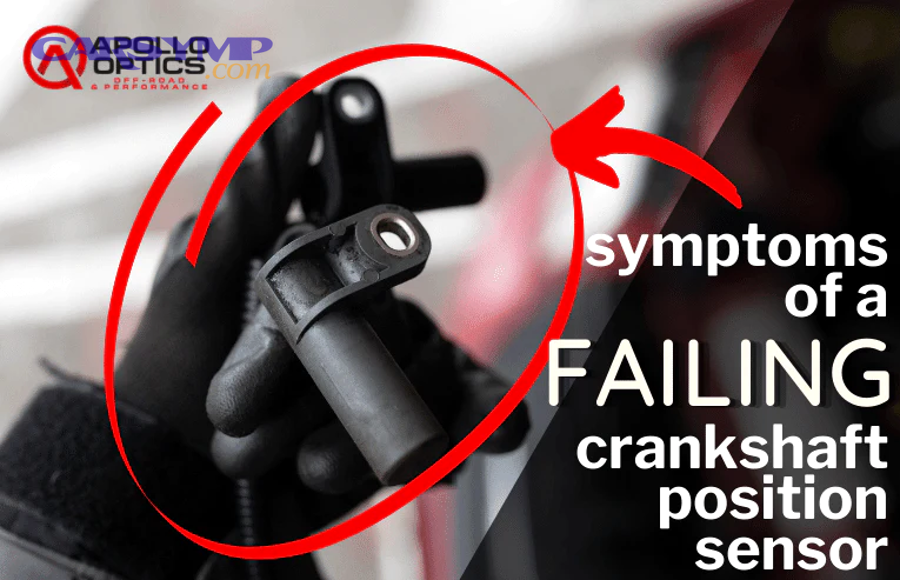
Does the engine stall suddenly and restart after cooling down?
Yes—this pattern strongly fits intermittent position-signal failure because heat and vibration can push a weak sensor or connection over the edge, then it “recovers” after cooling.
Specifically, “fails hot, works cold” usually looks like:
- You drive normally, then the engine cuts out suddenly (not gradually).
- You crank and crank, but it won’t catch—or it catches and dies.
- After 10–30 minutes of cooling, it starts and runs again.
This is also where engine stalls while driving becomes the most dangerous symptom, because a sudden loss of power steering assist and braking boost can happen at speed.
A practical way to think about it is this: heat changes resistance, expands materials, and stresses marginal solder joints or coils. When the sensor signal becomes erratic, the ECU can’t keep ignition/injection timing stable—so it stops the party.
Do you get a crank-no-start or hard start that comes and goes?
Yes—intermittent CKP/CMP issues frequently produce hard starts or crank-no-start events because the ECU can’t reliably synchronize crank position to cylinder events.
More specifically, look for these tells:
- The starter spins normally, but the engine won’t fire.
- The problem appears after a short stop (hot soak) or after a longer drive.
- The issue disappears on the next attempt, which makes it feel “electrical” and unpredictable.
If you see a pattern where starting is normal in the morning but unreliable after errands, it’s worth checking for intermittent circuit codes (covered later). (carparts.com)
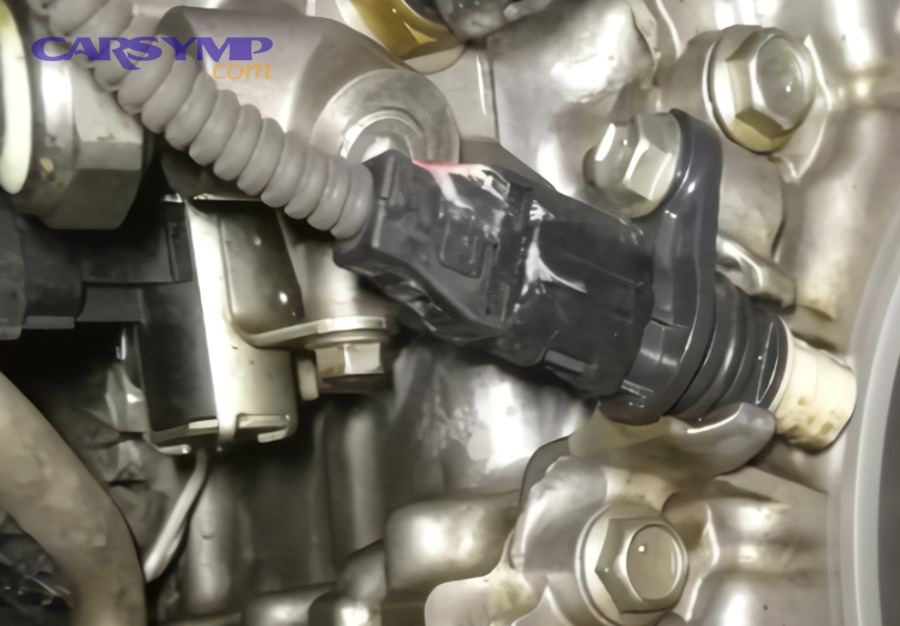
Do misfires, hesitation, or rough idle appear randomly without a clear pattern?
Yes—random misfire-like behavior can happen when the ECU receives an unstable position signal, because timing becomes inconsistent even if fuel and spark components are healthy.
To illustrate, intermittent signal issues may show up as:
- A brief stumble under light throttle.
- Hesitation during acceleration.
- A rough idle that appears for 10–60 seconds, then clears.
This is exactly why many drivers replace coils, plugs, or fuel parts first—because the symptom looks like misfire. The difference is the pattern: position-signal problems often have a sharper “on/off” character.
What are the most common intermittent failure signs of CKP/CMP sensors?
There are 3 main types of intermittent CKP/CMP failure signs—starting/stalling signs, performance signs, and warning-light/code clues—based on how the signal dropout affects engine synchronization.
Then, once you classify your symptoms into one of these groups, you can test smarter instead of chasing every possible cause.
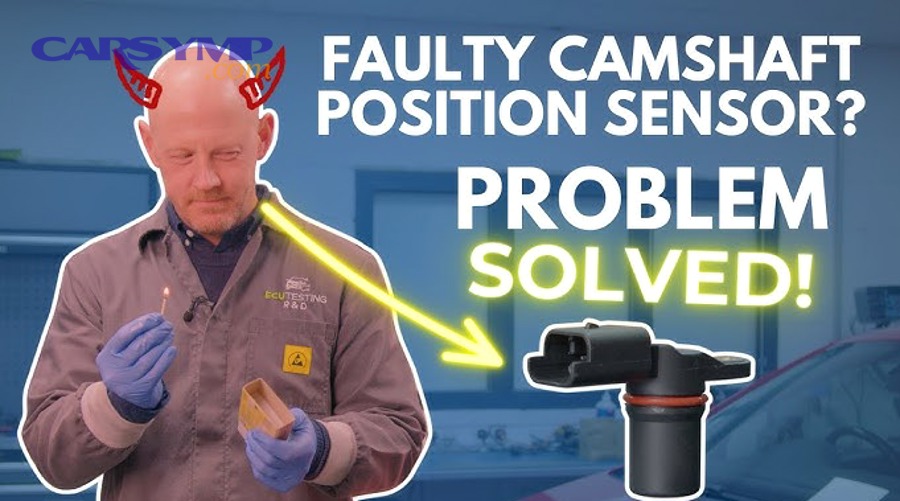
Which starting and stalling signs point to intermittent signal loss?
The clearest stalling-related clues are the ones that happen abruptly and recover without “fixing” anything.
Common starting/stalling signs include:
- Sudden stall at a stoplight with no prior rough running.
- Sudden stall at cruising speed, especially after the engine is fully warm.
- Crank-no-start that resolves after cooling or after repeated attempts.
- The tachometer dropping to zero instantly (on vehicles where tach is tied to CKP signal).
Stall at idle vs stall at speed differences matter because they point to different risk levels and different likely “look-alikes.” Here’s the context and a quick comparison table:
| Situation | What it often feels like | Why it’s significant | CKP/CMP signal dropout fit? |
|---|---|---|---|
| Stall at idle | Engine dies quietly, may restart quickly | Lower immediate safety risk; more time to react | Common (especially with heat soak) |
| Stall at speed | Sudden power loss, steering feels heavy, may not restart immediately | Higher safety risk; requires road-safety actions | Common and more urgent to diagnose |
If your car engine stalls while driving, treat it as a safety-first symptom: even if it restarts, you should diagnose before relying on it for high-speed trips.
Which performance signs (power loss, hesitation, surging) are typical of CKP/CMP glitches?
Performance symptoms show up when the ECU keeps running but can’t keep timing “clean.”
Typical performance signs include:
- Hesitation on throttle tip-in.
- Surging under steady throttle.
- Reduced power or a brief limp behavior.
- Roughness that comes and goes without a consistent cylinder misfire pattern.
If the ECU detects irregular crank/cam signals, it may reduce aggressive timing strategies, especially on engines that rely heavily on cam timing control. That can feel like a soft, “lazy” engine even if it’s not actively stalling.
Which warning light and diagnostic code clues often show up with intermittent failures?
Intermittent position sensor faults often produce:
- A check engine light that appears, then disappears.
- “Intermittent circuit” codes.
- Correlation or plausibility codes depending on the ECU strategy.
Two code families are especially relevant:
- P0339: CKP “A” circuit intermittent—often described as an irregular or missing CKP signal detected by the PCM. (carparts.com)
- P0344: CMP “A” circuit intermittent—often described as a loss of CMP signal detected by the PCM. (carparts.com)
Just as important: some intermittent issues are stored as history/pending codes rather than hard codes, so you may need to check “pending” and freeze-frame information, not only confirmed DTCs.
How do crank (CKP) and cam (CMP) sensor symptoms differ in real-world driving?
CKP wins in stall/no-start impact, CMP is best for rough running and correlation/VVT-related drivability, and overlap is most common when wiring/grounds or timing components confuse the ECU’s ability to trust either signal.
Next, use the comparisons below as guidance—not as absolute rules—because vehicle design and ECU strategies vary.
Which symptoms are more strongly associated with CKP failure than CMP failure?
CKP issues more often show up as:
- Sudden stall without warning.
- Crank-no-start where the engine spins but never fires.
- RPM signal dropping out.
This aligns with the CKP sensor being the ECU’s core rotation reference. When CKP is unstable, the ECU may not have enough certainty to run ignition/injection safely.
A helpful way to apply this: if your worst symptom is engine stalls while driving and the stall is abrupt, CKP jumps higher on the suspect list—especially if it’s heat related. (autozone.com)
Which symptoms are more strongly associated with CMP failure than CKP failure?
CMP issues more often show up as:
- Longer cranking before start (because synchronization takes longer).
- Rough idle and hesitation without full stall.
- Correlation-type faults or bank-specific CMP circuit faults on some engines.
CMP problems can also cause stalling, but when they do, the engine may feel “wrong” first—hesitation, roughness, then stall—rather than a clean cut.
When do CKP and CMP failures look the same, and why?
They can look identical when the real problem is not the sensor element, but the circuit path:
- Shared ground issues affecting multiple sensors.
- A harness rub-through near heat sources.
- Connector pin fitment loosening with vibration.
- A damaged tone ring/reluctor that creates inconsistent pulses.
In those cases, the ECU may store both crank and cam-related codes or show erratic synchronization behavior. That’s why circuit inspection and data checks matter before you replace parts.
What causes CKP/CMP failures to be intermittent instead of constant?
Intermittent CKP/CMP failures are usually caused by heat/vibration stress and marginal wiring/connector conditions that create brief signal dropouts rather than a permanent open circuit.
Moreover, understanding the “why” helps you reproduce the fault on purpose—which is the fastest way to confirm it.
How do heat soak and vibration create “works cold, fails hot” sensor behavior?
Heat soak intermittency typically comes from:
- Internal sensor coil/circuit resistance changes with temperature.
- Micro-cracks or weak internal solder joints that separate when hot.
- Plastic connector bodies or seals expanding and reducing pin contact pressure.
- Proximity to exhaust components baking the sensor and harness.
If your problem appears after a drive, then disappears after cooling, treat it as a classic “intermittent signal integrity” problem—not a fuel-quality issue or a one-time glitch.
A strong real-world clue is when you can trigger symptoms after similar conditions (same trip length, same stop-and-go pattern). That repeatability is diagnostic gold.
How do wiring, connectors, and grounds create intermittent circuit faults?
Circuit intermittency is often simpler than it sounds:
- A wire strand breaks inside insulation and makes contact only sometimes.
- A connector pin corrodes, increasing resistance until vibration re-seats it.
- Oil or coolant intrusion wicks into the connector and changes conductivity.
- The harness rubs through on a bracket and shorts intermittently.
If you want a practical quick-use tool, here’s a Stalling while driving causes checklist you can run before replacing sensors:
- Check battery terminals tight/clean (loose power can mimic sensor issues).
- Inspect CKP/CMP connector locks and pin fitment (wiggle test carefully).
- Look for harness chafing near exhaust, pulleys, and transmission bellhousing.
- Confirm no water/oil contamination in the connector.
- Scan for pending codes and freeze-frame temperature/RPM.
This checklist doesn’t replace deeper testing—but it catches many “cheap fixes” that parts-swapping misses.
What quick checks can drivers and DIY mechanics do before replacing a sensor?
There are 3 quick checks you can do before replacing a CKP/CMP sensor—scan for relevant codes/data, inspect the circuit physically, and rule out look-alike causes—to avoid wasting money and leaving the real fault untouched.
Next, work in that order; it keeps your diagnosis tight and prevents rabbit holes.
Which OBD-II codes and live data patterns support an intermittent CKP/CMP diagnosis?
Start with codes and data that explicitly point to signal irregularity:
- P0339 (CKP circuit intermittent) is a direct clue that the PCM detected an irregular or missing CKP signal. (carparts.com)
- P0344 (CMP circuit intermittent) points to an intermittent CMP signal loss. (carparts.com)
Then look at live data patterns:
- RPM reading flickers or drops unexpectedly while cranking/running.
- Cam/crank sync status toggles (if your scanner shows it).
- Freeze-frame shows the fault occurs at a specific engine temperature or RPM band.
If the check engine light isn’t currently on, check:
- Pending codes
- Permanent/history codes
- Misfire counters (if supported)
Even consumer scan tools can provide enough signal to justify deeper testing.
What physical inspection points catch the most common intermittent faults?
Do a targeted inspection where intermittent faults love to hide:
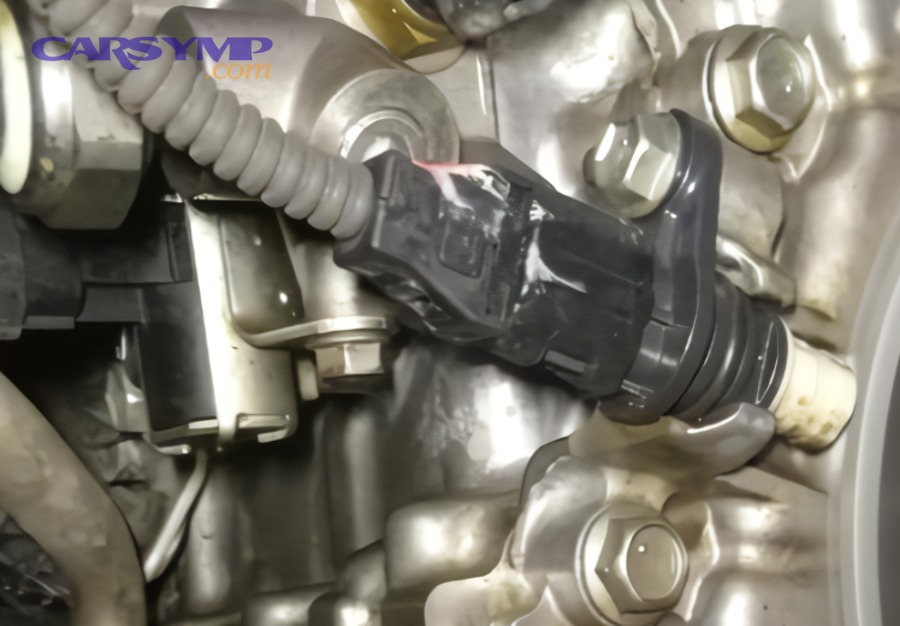
- The sensor connector: broken lock, loose fit, green corrosion, oil intrusion.
- Harness routing: near exhaust manifolds, sharp brackets, and moving pulleys.
- The sensor mounting: loose bolt, damaged O-ring, debris on magnetic sensors.
- The area near the reluctor/tone ring (where visible): damage or metal debris.
If you can safely access the connector, a careful “wiggle test” while monitoring live RPM can reveal a dropout. Do this cautiously—keep hands and tools away from moving belts and fans.
How do you rule out look-alikes (battery, alternator, ignition coils, fuel issues) quickly?
Compare the symptom signature rather than the symptom name.
Fast differentiators:
- Weak battery/charging: slow cranking, dimming lights, multiple electrical oddities—not just stalling.
- Ignition coil misfire: often isolated to one cylinder and more consistent under load; position-signal issues can feel more global and abrupt.
- Fuel delivery: may show long crank times, lean codes, and loss of power under sustained demand; CKP dropout can cause sudden cut-outs with instant recovery.
- Throttle/air issues: may create gradual surging or reduced power but not a clean “off switch” stall.
If your primary symptom is a sudden cut and instant RPM drop, return to the sensor-signal hypothesis first. (autozone.com)
According to a study by University of Žilina from the Department of Road and Urban Transport, in 2022, disconnecting the crankshaft position sensor during fault simulation produced the largest engine power loss—about 50.57 kW (nearly a 50% decrease vs fault-free)—highlighting how strongly CKP signal integrity affects engine operation. (pmc.ncbi.nlm.nih.gov)
What should you do next if you suspect an intermittent CKP/CMP fault?
The best next move is a 3-step plan: prioritize safety, confirm the fault with targeted data/inspection, and escalate to waveform testing or a shop if the issue stays intermittent.
Moreover, this approach prevents the two most common outcomes—getting stranded or spending money on parts that don’t fix the stall.
Can you keep driving with intermittent CKP/CMP symptoms, or should you stop immediately?
No—you should not keep driving normally if the engine is stalling or threatening to stall, because the risk is not the repair cost; it’s losing power at the wrong moment.
Use this safety rule:
- If it has stalled once at speed, treat it as “stop and diagnose.”
- If it only shows mild hesitation, you may drive short distances for diagnosis, but avoid highways until confirmed.
And keep this phrase front-of-mind: Safe actions when engine stalls on road are about controlling risk, not “saving the trip.”
- Signal, move to the shoulder if possible.
- Keep steering steady; braking may require more pedal effort if vacuum assist drops.
- Turn hazards on.
- If you restart, re-enter traffic only when safe; don’t “test drive” in heavy traffic.
How much does crank/cam sensor diagnosis and replacement typically cost (and what changes the price)?
Diagnosis and replacement cost varies mostly by access difficulty and whether the real issue is the sensor or the circuit.
What pushes cost up:
- Sensor buried behind covers, under intake, or near transmission bellhousing.
- Harness repair needed (chafed wire, corroded pins).
- Multiple sensors (bank-specific CMP sensors) on some engines.
What keeps cost down:
- Easy access and clear intermittent circuit code evidence (P0339/P0344) that points directly to signal integrity. (carparts.com)
If you’re choosing between DIY and a shop, remember: the most expensive outcome is repeated parts swapping.
When is an oscilloscope waveform test worth it for intermittent dropouts and noise?
It’s worth it when the fault is repeatable but not obvious, or when replacing the sensor didn’t fix it.
A scope test helps you see:
- Dropouts (missing pulses)
- Noise (signal interference)
- Amplitude changes hot vs cold
- Cam/crank correlation problems
A technician-oriented source notes waveform capture from cam and crank sensors can often be done in under 30 minutes, making it a practical step before invasive mechanical timing checks. (underhoodservice.com)
What problems are the “antonyms” of sensor failure—mechanical timing faults that mimic CKP/CMP symptoms?
The key “antonym” category is mechanical timing or rotating hardware issues, where the sensor is fine but the engine’s physical timing reference is wrong.
Common mimics include:
- Timing chain/belt stretch or jump (correlation faults, rough running, no-start).
- Damaged tone ring/reluctor (missing tooth patterns).
- VVT actuator issues that create correlation errors under certain conditions.
How to separate them from pure sensor/circuit faults:
- Mechanical timing issues often worsen progressively and don’t “fix themselves” after cooling.
- Sensor/circuit intermittency often has sharper on/off behavior and may align with heat soak or vibration.
According to a study by University of Žilina from the Department of Road and Urban Transport, in 2022, simulated crankshaft position sensor disconnection produced a major loss in measured engine power—about 50.57 kW—showing why repeat stalling or severe power loss should be treated as a high-priority diagnosis rather than a “drive and see” issue. (pmc.ncbi.nlm.nih.gov)