


An EVAP leak means your vehicle’s evaporative emissions control system isn’t sealing fuel vapors the way the computer expects—so it sets a code (often P0440–P0457) and turns on the Check Engine Light. The practical goal isn’t just “clear the light,” but to identify the leak size and location so the fix lasts.
Next, you’ll learn the most common EVAP leak symptoms (many are subtle) and how to tell a harmless “light-only” fault from a purge/vent problem that can cause rough running, hard starts after fueling, or fuel odor—so you don’t replace parts blindly.
Then, you’ll get a clear, code-by-code explanation of what the most common DTCs typically indicate (like small leak vs. large leak) and which components—gas cap, purge valve, vent valve, canister, hoses, tank seals—tend to fail first.
Introduce a new idea: once you understand what the system is testing and what each code usually means, you can follow a simple inspection + scan-data workflow and finish with the right verification steps to complete readiness monitors and pass emissions.
What is an EVAP leak and why does it trigger codes?
An EVAP leak is a loss of seal or control in the evaporative emissions system that lets fuel vapors escape (or prevents the system from building/holding the commanded vacuum/pressure), causing the ECU to log a fault code and illuminate the Check Engine Light.
To better understand why the code sets, it helps to connect the “leak” idea to what the ECU actually checks: it runs integrity tests (and flow checks) using valves, sensors, and timed logic to confirm the system can seal, purge, and vent when commanded.
How does the EVAP system prevent fuel vapors from escaping?
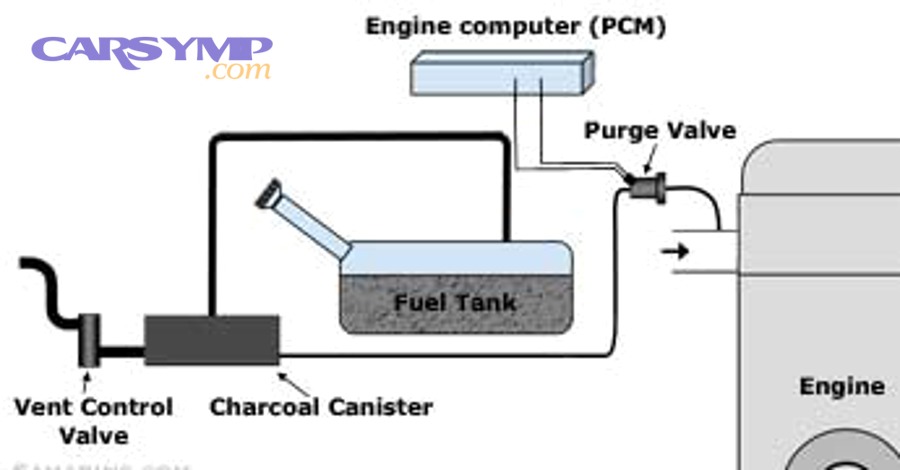
The EVAP system is an emissions “closed loop” for vapors: it captures fuel vapor from the tank, stores it in activated charcoal, then purges those vapors into the engine to be burned under the right conditions.
More specifically, this matters because modern gasoline is volatile—vapors expand with heat and agitation. In real driving, vapor generation increases on hot days, and evaporative emissions can rise with temperature; a well-sealed EVAP system is designed to manage that rather than venting vapors to the atmosphere. (researchgate.net)
Key functions the ECU expects to see:
- Seal the system for leak testing (no unintended air entry).
- Purge vapors at a controlled rate (not too much, not too little).
- Vent safely when needed (prevent tank vacuum/pressure issues).
- Report system behavior via sensors/logic so monitors can pass.
What parts make up the EVAP system?
Most vehicles use the same building blocks, even if packaging differs:
- Fuel tank + filler neck (and seals)
- Gas cap or capless seal (common leak source)
- Vapor lines/hoses from tank to canister to engine
- Charcoal canister (stores vapors)
- Purge valve/solenoid (meters vapor into intake)
- Vent valve/solenoid (lets fresh air into canister during purge; also used to seal system during testing)
- EVAP pressure sensor (or equivalent logic) to verify vacuum/pressure behavior
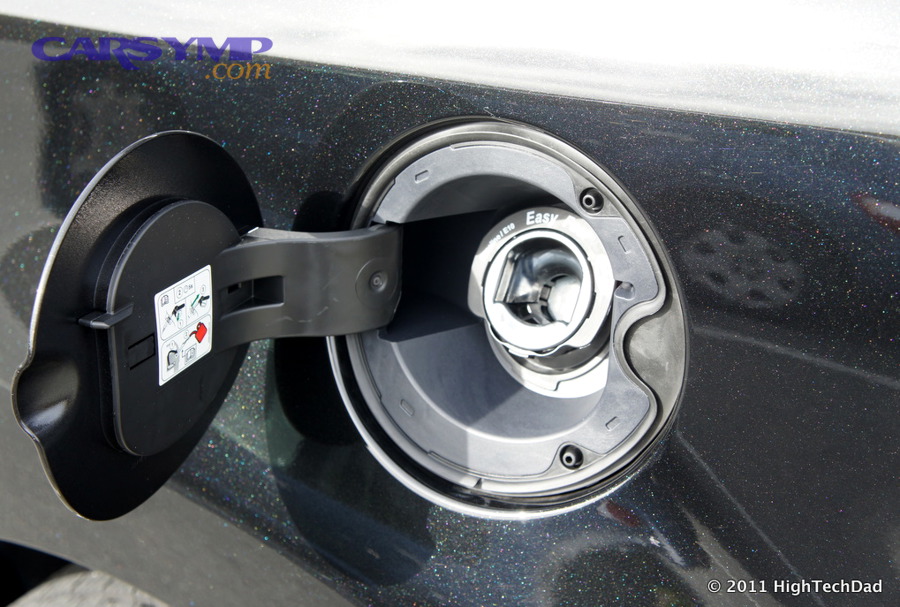
In practice, an EVAP leak code usually means one of three things: 1) a real physical leak (cap/seal/hose/crack), 2) a valve that isn’t sealing or flowing correctly (purge/vent), or 3) a sensor/logic mismatch (pressure sensor, wiring, or monitor conditions not met).
What are the most common EVAP leak symptoms?
The most common EVAP leak symptoms are Check Engine Light + stored codes, sometimes paired with fuel odor, hard start after refueling, rough idle, or reduced fuel economy, depending on whether the issue is a simple leak or a purge/vent control fault.
However, symptoms alone can mislead—so the best approach is to pair what you feel/smell with what the scan tool reports, then confirm with physical inspection and (ideally) smoke testing.
Which drivability symptoms can point to a purge-valve related EVAP leak?
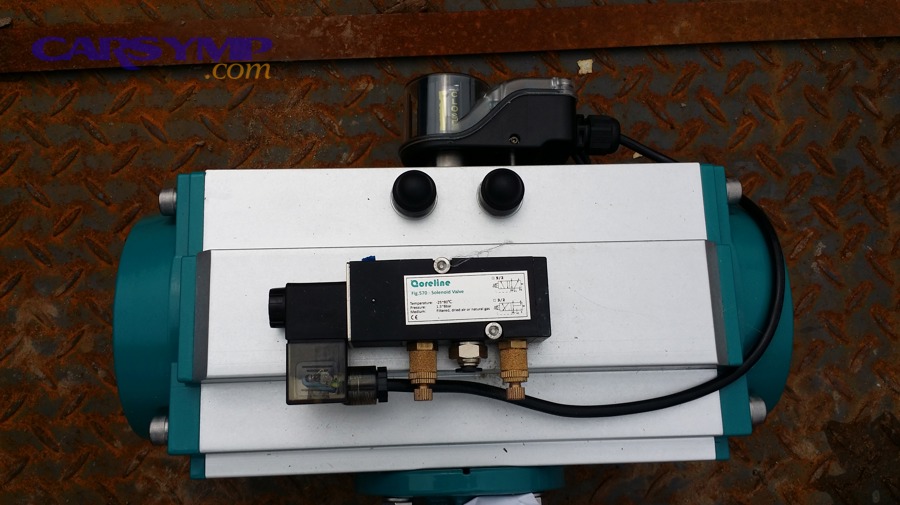
A purge-valve fault is often the reason EVAP codes come with drivability complaints. Specifically, if the purge valve sticks open (or leaks when “closed”), it can act like a vacuum leak and/or flood the intake with vapor at the wrong time.
Common purge-related symptoms:
- Hard start after refueling (engine may crank longer, stumble, then recover)
- Rough idle or unstable idle trims
- Stalling right after filling (less common, but can happen)
- Rich/lean fuel trim swings at idle or during decel
- Fuel smell near engine bay (if purge plumbing leaks)
This symptom pattern aligns with how purge valves work and fail: a stuck-open purge can allow vapor/air flow when the ECU expects the system sealed, triggering EVAP flow and leak codes. (samarins.com)
Which physical signs point to a leak at the tank, lines, or canister?
Physical “leak-style” clues usually show up as:
- Fuel odor near the rear of the vehicle (tank/canister area)
- Cracked/dry vapor hoses (especially near bends and quick-connects)
- Loose/missing cap or damaged sealing surface
- Dust trails around a hose split (a small “witness mark”)
- Saturated canister (strong fuel smell, sometimes after overfilling the tank)
Important nuance: a small leak can produce no smell at all—especially if the leak is at the cap seal or a tiny hose crack that only opens under certain temperatures or tank pressure conditions. That’s why code context matters.
What do EVAP codes mean (P0440, P0441, P0442, P0455, P0456, P0457, P0446/P0496)?
EVAP codes describe what test failed (integrity vs. flow vs. vent control), not always the exact broken part—so you should read them as a diagnosis direction, then confirm with inspection and testing.
To interpret them correctly, follow the same logic the ECU uses: “Can I seal the system?” “Can I create/hold vacuum?” “Does purge flow match expectation?” “Does vent respond correctly?”
What does P0440 mean?
P0440 typically means a general EVAP system malfunction—the ECU couldn’t complete its expected leak/flow behavior, but it’s not confident enough to label it “small” or “large” leak.
This often points to:
- Cap/seal issues
- Hose routing/leaks
- Valve sealing problems
- Sensor/wiring concerns
- Monitor conditions not met repeatedly
Treat P0440 as a “start here” code: do basics first (cap + visual + scan data), then move to smoke testing if it persists.
What does P0441 mean?
P0441 is usually an incorrect purge flow fault—purge is higher/lower than expected when the ECU commands it.
Common causes:
- Purge valve stuck open or stuck closed
- Restricted purge line
- Vent valve issues affecting purge flow
- Canister saturation affecting flow behavior
P0441 frequently pairs with refuel-related drivability issues when purge is leaking at the wrong time. (samarins.com)
What does P0442 mean?
P0442 is typically a small leak detected (often roughly “pin-hole” scale).
Common real-world causes:
- Worn gas cap seal
- Capless filler seal contamination
- Tiny hose cracks
- Slightly leaking vent valve or purge valve
- Leaking canister seams
Because it’s small, it often takes multiple drive cycles to set—and may clear temporarily if conditions change.
What does P0455 mean?
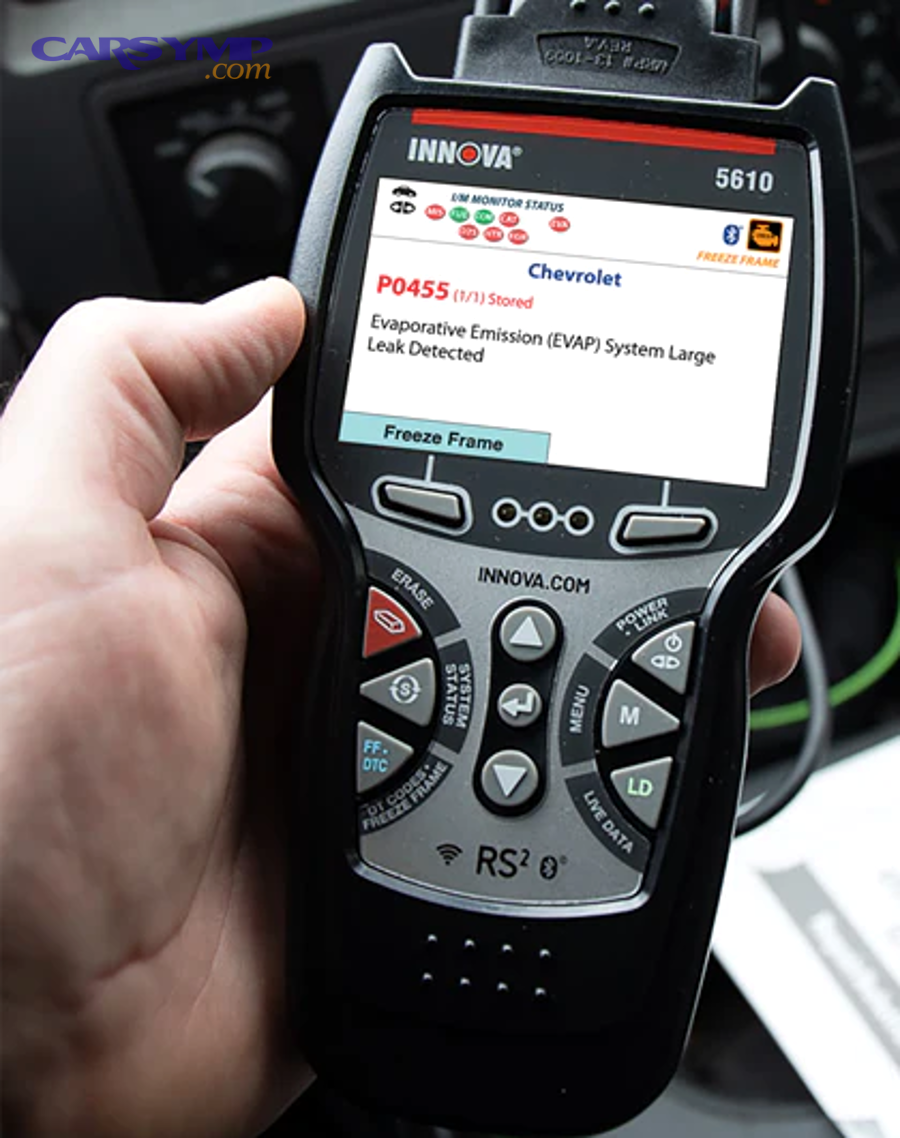
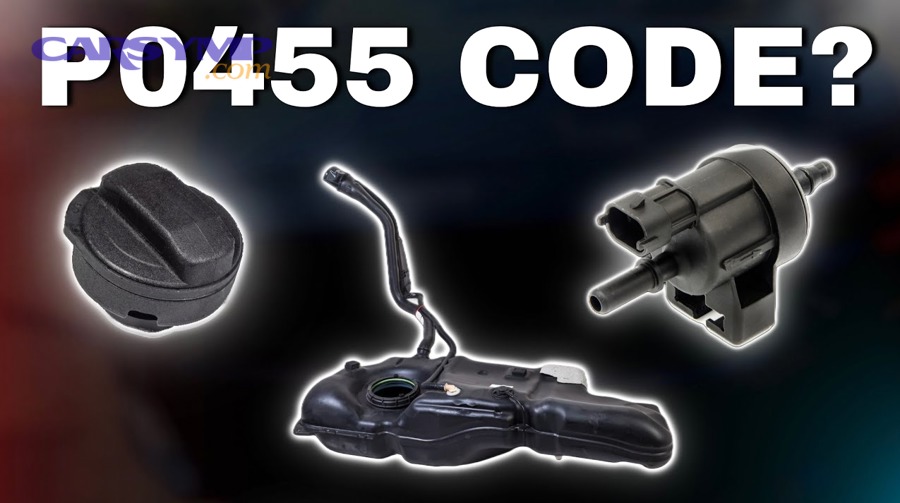
P0455 is typically a large leak detected—the ECU sees the system can’t pull/hold the expected vacuum at all (or it decays too quickly).
Most common “large leak” culprits:
- Gas cap off/loose
- Disconnected EVAP hose
- Broken filler neck seal
- Vent valve stuck open
- Significant crack in canister or line
Large leaks tend to be quicker to find with visual checks and smoke.
What does P0456 mean?
P0456 is usually a very small leak—even more subtle than P0442 on many platforms.
It often comes down to:
- Marginal cap seal
- Slight seep at a quick-connect
- Hairline line crack
- Slight vent valve seal leak
If P0456 repeats after cap replacement, assume you need smoke testing (or at least a careful hose/connection inspection).
What does P0457 mean?
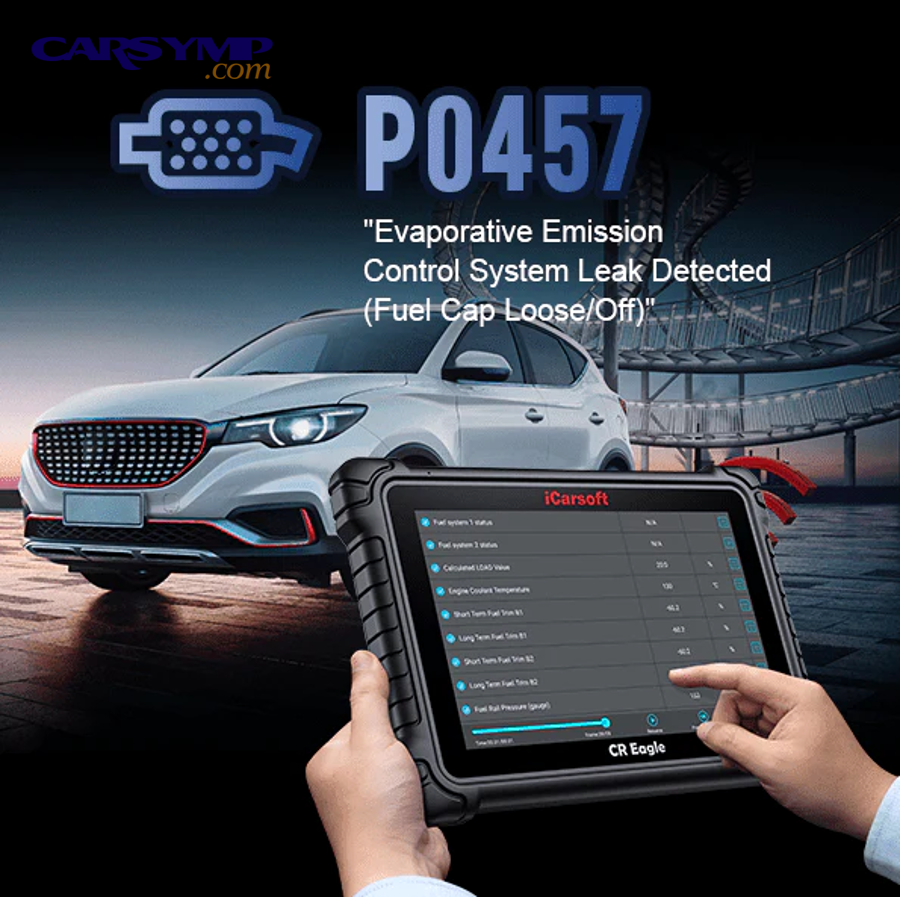
P0457 commonly indicates a fuel cap-related leak (cap missing/loose or seal issue).
Even if you don’t have a traditional cap (capless systems), the ECU can still interpret a leak pattern as “cap equivalent” and set this code. Treat it as: check the filler seal surfaces, debris, and sealing action first.
What does P0446/P0496 mean?
These vary by manufacturer, but broadly:
- P0446 often relates to vent control (vent valve performance, restriction, or control circuit behavior)
- P0496 often points to purge flow when it shouldn’t happen (for example, purge flow detected during a non-purge condition)
These codes are common when a vent valve sticks, a canister is saturated/restricted, or a purge valve leaks internally.
What should you check first when you get an EVAP leak code?
You should start with fast, high-probability checks—cap/filler seal, obvious hose issues, and purge/vent command behavior—because they solve a large share of EVAP codes without unnecessary parts replacement.
Next, treat this like a workflow: quick checks → scan data checks → targeted tests (smoke/pressure) → confirm monitor readiness. This is the most reliable EVAP system repair strategy because it aligns with how the ECU is judging success.
What quick checks can you do before buying parts?
Do these in order (they’re fast and high-yield):
- Fuel cap / capless seal inspection
- Look for cracked seal, hardened rubber, debris on sealing surface
- Tighten cap until it clicks (if applicable)
- Filler neck area
- Check for rust damage, distorted neck, damaged capless flap seal
- Visible hoses and quick-connects
- Look for splits near bends, loose connectors, rubbed-through sections
- Purge and vent valve hoses
- Check for incorrect routing after prior repairs
- Check freeze frame (if available)
- Note fuel level, ambient temp, speed—helps reproduce monitor conditions
If you smell fuel strongly, prioritize the rear of the vehicle: tank top lines, canister area, and vent plumbing.
EVAP repair cost estimate (realistic planning, not guessing)
Costs vary by vehicle and access, but you can plan with a simple “parts + labor” mindset. Here’s a typical planning table (not a quote), so you can decide whether DIY makes sense before you start:
| Component (most common fixes) | Why it fails | Typical parts cost range | Typical labor difficulty |
|---|---|---|---|
| Gas cap / capless seal service | Seal wear, debris | Low | Very easy |
| Purge valve/solenoid | Sticking/leaking | Low–moderate | Easy–moderate |
| Vent valve/solenoid | Sticking, contamination | Low–moderate | Moderate |
| EVAP hose/connector repair | Cracks, loose fittings | Low | Easy–moderate |
| Charcoal canister | Saturation, cracks | Moderate–high | Moderate–hard |
| Fuel tank pressure sensor | Sensor drift/wiring | Moderate | Moderate–hard |
The key point: a “cheap part” can still become an expensive repair if access is difficult (tank drop, shield removal, corrosion). That’s why confirming the fault mode first saves money.
What scan-tool data should you look at?
Use live data and basic bidirectional controls if your tool supports them:
- EVAP pressure (FTP) sensor value: does it respond when you command purge/vent?
- Purge command (%) vs. purge flow behavior: does changing command move trims/pressure?
- STFT/LTFT at idle: an unexpected lean condition at idle may hint purge leakage
- EVAP monitor status / readiness: does it complete? does it fail quickly?
If your tool supports it:
- Command vent valve closed and purge on briefly; watch whether the system can pull vacuum (FTP change).
- Command purge off; vacuum should stabilize (not keep increasing).
Also remember: an official diagnostic trouble code indicates the ECU detected a malfunction that could elevate evaporative emissions. (nepis.epa.gov)
What is the “Small leak vs large leak diagnosis approach”?
The Small leak vs large leak diagnosis approach is a branching method: you use the code’s leak-size signal to choose the fastest confirmation path.
If it’s a “large leak” code (like P0455):
- Start with cap off/loose, disconnected hose, vent valve stuck open
- Visual inspection often finds it
- Smoke test usually shows it quickly (big leak = obvious smoke)
If it’s a “small/very small leak” (P0442/P0456):
- Start with cap seal and filler sealing surfaces
- Assume it may be intermittent (temperature/fuel level dependent)
- Use smoke testing and/or pressure decay testing
- Pay attention to tiny leaks at quick-connects and vent valve sealing
If it’s “purge flow incorrect” (P0441/P0496):
- Treat it as a control/flow fault first
- Test purge valve sealing (does it leak when commanded closed?)
- Verify vent operation and canister condition
Here’s why this works: the ECU’s test is essentially asking “Can I create and hold vacuum?” Large leaks fail that immediately. Small leaks often “almost pass” but decay out of tolerance.
You can learn the smoke method visually here:
Is it safe to drive with an EVAP leak?
Yes—it’s usually safe to drive with a minor EVAP leak, because most EVAP leaks primarily affect emissions, not immediate engine safety; however, you should not ignore it because some EVAP faults can create drivability issues, fuel odor, or failed emissions readiness.
More importantly, “safe to drive” depends on the failure mode: a simple small leak (cap/hose) is different from a purge valve stuck open that can cause rough idle, stalling, or hard starts.
Can an EVAP leak damage your engine or fuel system?
Most small leaks won’t directly damage the engine, but certain EVAP faults can create secondary problems:
- Purge valve stuck open can behave like a vacuum leak at idle and alter fuel trims.
- Overly rich vapor ingestion after refueling can cause stumble/hard start.
- Canister saturation (often from topping off the tank) can lead to recurring valve/canister issues and persistent codes.
So the “damage” risk is usually indirect: poor running, wasted fuel vapor, and persistent MIL that masks new problems.
When should you stop driving and get it repaired immediately?
Stop driving (or at least repair promptly) if you have:
- Strong fuel odor (possible vapor leak near hot components)
- Noticeable rough running, stalling, or repeated hard starts
- Evidence of fuel leakage (liquid, not just vapor smell)
- A code pattern indicating purge flow when it shouldn’t happen plus drivability symptoms (common with P0496-type behavior)
Even though EVAP is “emissions,” fuel vapor is still flammable—so strong odor plus uncertainty is a valid reason to prioritize the repair.
How do you confirm the EVAP fix and clear codes correctly?
You confirm an EVAP fix by verifying the leak is sealed and the monitor completes—not just by clearing the code—using smoke/pressure testing (best) and by completing readiness drive conditions so the ECU reruns and passes its EVAP checks.
Then, you ensure you didn’t create a new issue (misrouted hoses, loose connectors) by rechecking scan data and confirming no pending codes return.
What is the correct drive cycle for EVAP readiness?
EVAP readiness is not one universal drive cycle; it depends on vehicle logic, but the monitor usually needs:
- Fuel level in a certain window (often mid-range, not full/empty)
- A cold start or soak period
- Steady cruising + decel events
- No other faults blocking monitor execution
Practically:
- Don’t top off the tank.
- Drive normally over 1–3 days with mixed city/highway.
- Check readiness and pending codes after each day.
If the monitor won’t run, look for prerequisites: coolant temp, ambient temp, battery voltage, other emissions-related codes, and fuel level.
How do smoke testing and pressure/vacuum tests confirm the repair?
Smoke testing is the fastest “truth test” for EVAP leaks:
- Seal the system (often via commanding vent closed or using adapters)
- Introduce smoke at the correct port/line
- Look for smoke at caps, seams, connectors, valves, canister, tank area
A pressure/vacuum decay test is the same idea in numbers:
- Pull a small vacuum
- Measure how quickly it decays
- Stable = sealed; rapid loss = leak; slow loss = small leak
These methods beat guesswork because they confirm the physical reality: is there a leak path or not?
How to pass emissions with EVAP fixed (what inspectors look for)?
How to pass emissions with EVAP fixed comes down to three things:
- No Check Engine Light (MIL off)
- No stored or pending EVAP codes
- Readiness monitors acceptable for your jurisdiction (some allow limited “not ready,” many do not for EVAP)
To sum up: clearing codes right before the test often backfires because monitors reset. Instead, repair first, verify with testing, then drive enough for readiness to set.
According to a study by University of California, Berkeley from the Department of Civil and Environmental Engineering, in 2006, researchers estimated a 6.5 ± 2.5% increase in vapor pressure-driven evaporative emissions per 1°C rise in maximum temperature—highlighting why a properly sealed EVAP system matters for emissions performance on hot days. (researchgate.net)
Contextual Border: At this point you can diagnose most EVAP leaks with code meaning + a leak-size workflow + confirmation testing. Next are the stubborn scenarios—rare failure modes and deeper scan data—that explain why some EVAP codes keep coming back.
What advanced tests and rare failure modes explain stubborn EVAP codes?
Stubborn EVAP codes usually come from valves that behave intermittently, canister saturation/restriction, or monitor edge cases where the ECU’s test conditions are met only sometimes—so the code appears random even when the fault is real.
More specifically, advanced diagnostics focus on proving whether the system can seal, whether valves move and seal under real conditions, and whether sensor readings and Mode $06 data show a “near fail” trend.
How can vent valves, canister saturation, and ORVR issues mimic a leak?
Three “rare-but-real” patterns:
- Vent valve sticks open intermittently: The ECU can’t seal the system for testing → looks like a leak even if hoses are fine.
- Canister saturation (often from topping off): Fuel vapor storage is compromised; purge/vent behavior becomes abnormal; codes may alternate (leak + flow).
- ORVR-related behavior (on some systems): Refueling vapor routing and valve behavior can cause refuel-related symptoms and repeated codes if components don’t return to their normal positions.
If you see repeating codes after “obvious” fixes, suspect behavior under conditions (heat soak, after refueling, high humidity/dust ingress near vent filter).
What does Mode $06 EVAP test data tell you (and when is it useful)?
Mode $06 can reveal raw monitor results behind some EVAP tests—useful when:
- You want to see if you’re “close to failing” before a code sets
- You want evidence that a valve or sensor is drifting
- You’re comparing before/after repair results
Mode $06 isn’t always beginner-friendly (IDs and limits vary), but it can show whether an EVAP pressure/vacuum test is marginal even when the light is off. (alldata.com)
What if the EVAP code returns after repair—how do you prevent repeat failures?
Prevent repeat failures by treating EVAP like a system, not a single part:
- Verify sealing with smoke after any EVAP system repair
- Replace brittle hoses/connectors you disturb (don’t reuse cracked ends)
- Avoid topping off the tank (reduces canister saturation risk)
- Confirm valve operation (purge and vent) with commands + sensor response
- Re-check for pending codes after 1–3 days of driving
According to a study by University of Naples Federico II from the Department of Industrial Engineering (DII), in 2018, researchers evaluated evaporative behavior using Mini-SHED testing across 18–41°C and multiple fuel fill levels—showing why temperature and operating conditions must be considered when validating an EVAP repair. (researchgate.net)