


Most “blown fuse” problems are not about luck—they’re about matching the fuse type and its rating specs to how a circuit actually behaves. This guide explains the core fuse types you’ll see, what each rating really means (amp, voltage, interrupting capacity), and how those specs work together to protect wiring and components.
Next, you’ll learn how common fuse families (blade, cartridge, glass/ceramic, resettable) differ in construction and behavior, so you can stop guessing and start selecting the right protection for cars, appliances, and electronics.
More importantly, you’ll see how amp rating, time-current behavior, and fault-clearing ability determine whether a fuse opens safely—or fails dangerously—during overloads, motor starts, or short circuits.
Introduce a new idea: once you understand ratings, you can confidently choose the right part and troubleshoot a circuit without “upsizing” fuses and hoping for the best—let’s explore the details.
What are fuse types and ratings?
A fuse is an overcurrent protective device that intentionally melts a calibrated element to open a circuit when current exceeds safe limits, and its “types and ratings” are the standardized specs that tell you how, how fast, and under what conditions it can do that job. (eaton.com)
To better understand why selection matters, start by separating what a fuse is designed to protect (wires, devices, branches) from how a fuse is built (type) and what it can safely handle (ratings).
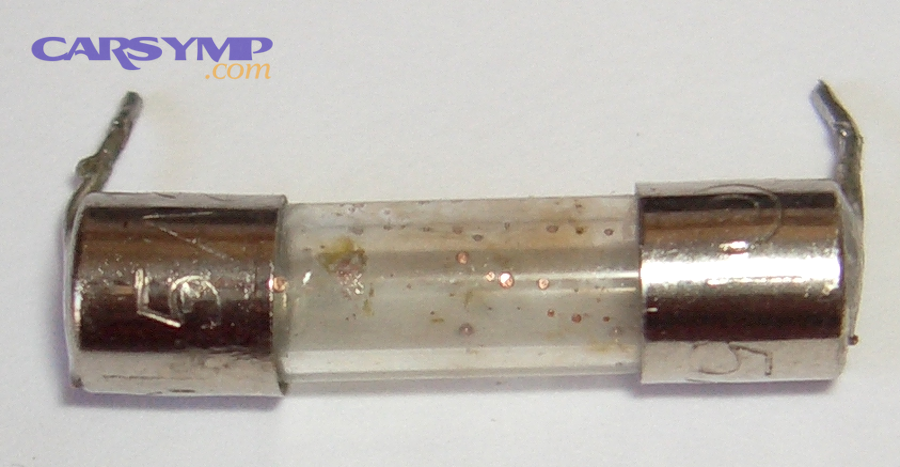
What does a fuse do in a circuit?
A fuse protects a circuit by becoming the weak link that opens first during an overload or fault, limiting heat buildup in conductors and reducing damage to downstream parts. (eaton.com)
Specifically, a properly sized fuse is trying to do two different jobs depending on the event:
- Overload protection (seconds to minutes): Overloads are typically a few times normal current and stay in the normal current path; the goal is to prevent thermal damage to wiring and components. (eaton.com)
- Short-circuit/ground fault protection (milliseconds): Fault currents can be hundreds to thousands of times normal; the goal is to interrupt very fast to limit magnetic forces, arcing, and conductor damage. (eaton.com)
A key insight: “overcurrent” isn’t one thing. A fuse type that is perfect for electronics may be a terrible fit for a motor circuit with inrush.
What information is on a fuse label?
A fuse label (or datasheet) typically encodes the minimum info you need to select safely:
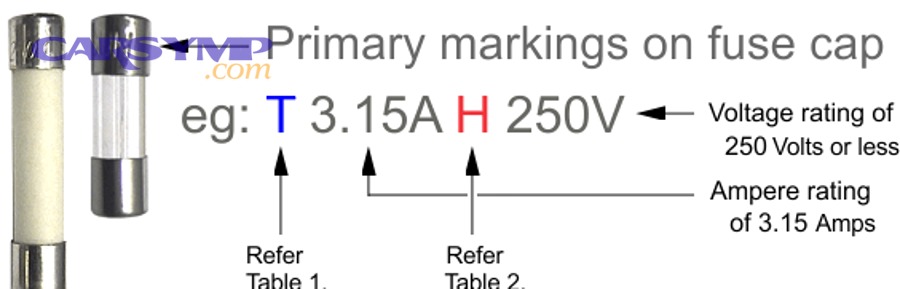
- Amp rating (A): The nominal current the fuse can carry under defined conditions.
- Voltage rating (V): The maximum circuit voltage the fuse can safely interrupt.
- Time-current characteristic (speed): How quickly it opens at different multiples of current.
- Interrupting rating / breaking capacity (AIC): The maximum fault current it can safely interrupt at rated voltage. (eaton.com)
- Physical size / form factor: Blade, 5×20 mm, 6.3×32 mm, Class fuses, etc.
- Approvals/standards: Often references to UL, IEC, automotive standards, and manufacturer series codes.
When you see “T” or “F” markings (common in small cartridge fuses), they often refer to time-lag (slow-blow) vs fast-acting behavior—always confirm with the datasheet if the circuit is safety-critical.
What are the main fuse types you’ll encounter?
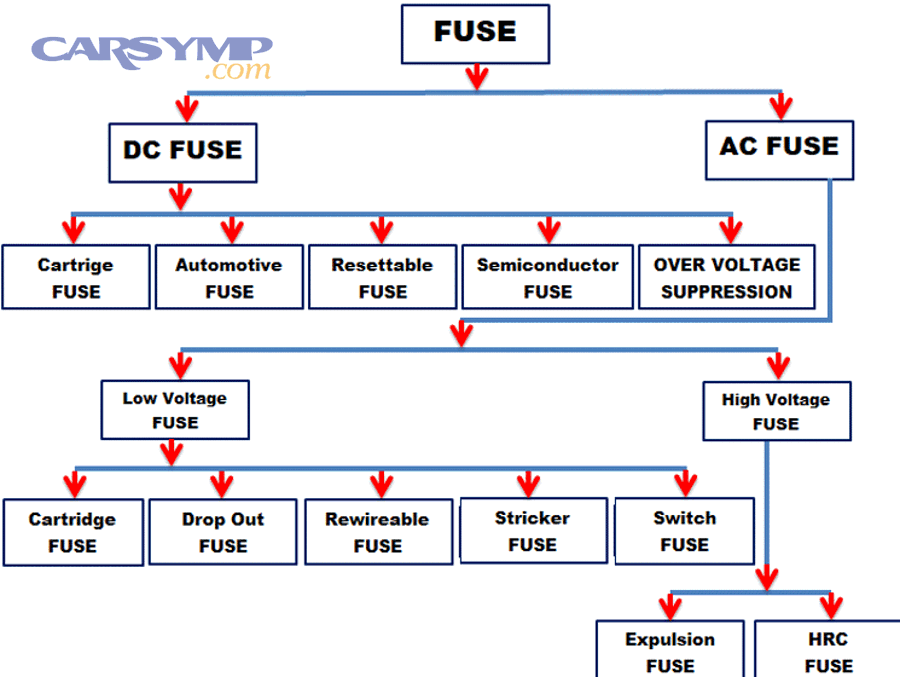
There are 4 main types of fuses you’ll encounter—blade, cartridge, time-characteristic variants (fast vs time-delay), and resettable/electronic protection devices—classified by form factor and operating behavior.
Next, let’s map what each type is best at, and why two fuses with the same amp number can behave very differently.
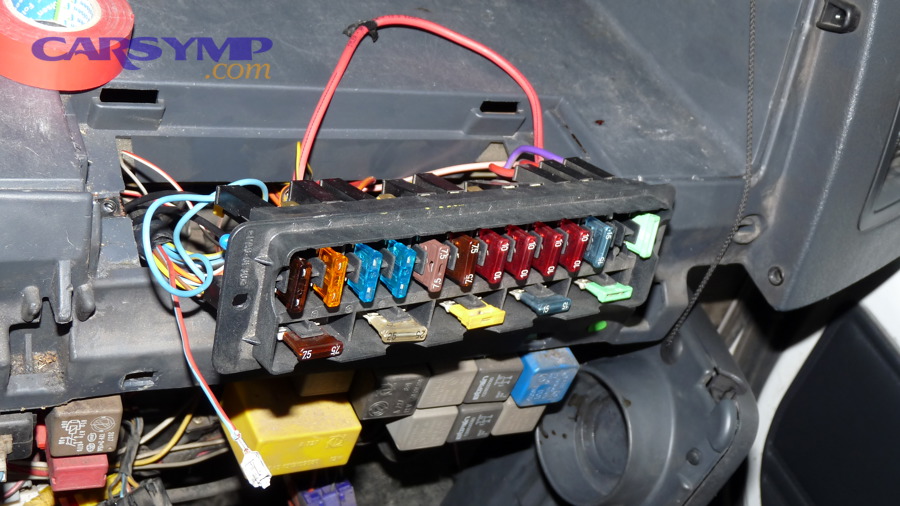
Are blade fuses and cartridge fuses different?
Yes—blade and cartridge fuses differ in how they mount, where they’re used, and often how much fault current they can interrupt.
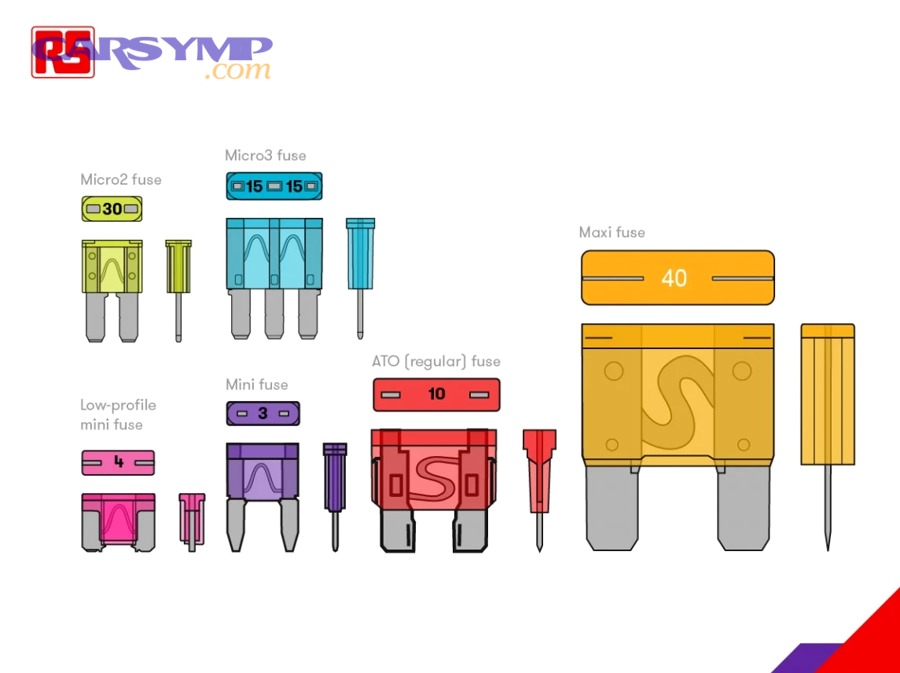
- Blade fuses (automotive):
- Designed for vehicle fuse panels and quick service.
- Usually color-coded by amp rating (common in cars).
- Great for low-voltage DC systems, but the interrupting rating varies by series.
- Cartridge fuses (electronics, appliances, industrial):
- Common sizes: 5×20 mm, 6.3×32 mm, and larger industrial classes.
- Available in glass (often lower breaking capacity) and ceramic/sand-filled (often higher breaking capacity).
- Widely used in power supplies, appliances, test equipment, and distribution.
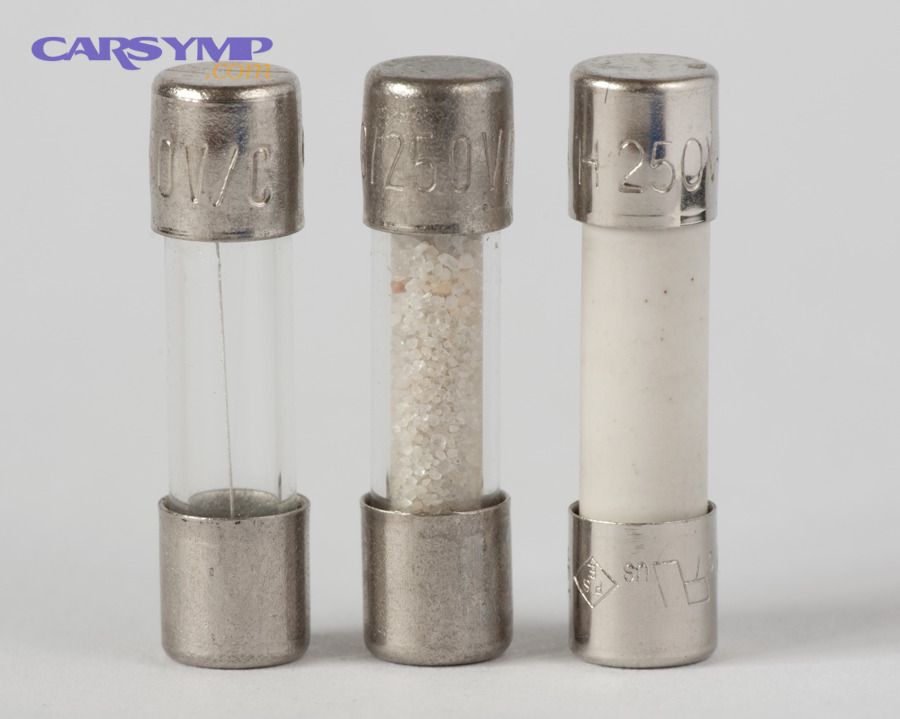
A practical rule: if you’re protecting something with a potentially high fault current (like mains-powered gear), a ceramic/sand-filled cartridge fuse is often chosen because it can quench arcs more effectively than an empty glass tube.
What are fast-acting vs time-delay (slow-blow) fuses?
Fast-acting fuses open quickly on overload and faults, while time-delay (slow-blow) fuses intentionally tolerate brief surges—so fast-acting protects sensitive electronics, and time-delay prevents nuisance openings during normal inrush events. (eaton.com)
More specifically, inrush is why time-delay fuses exist. When inductive loads energize (motors, transformers), current can spike well above running current for a short time. A thesis from University of Southern Queensland reports transformer energization can draw a high starting current “as high as 10–100 times” rated current, then decay to steady state. (sear.unisq.edu.au)
Use this mental model:
- Fast-acting: “Trip quickly to protect components.”
- Time-delay: “Ignore brief surges; trip on sustained overloads or hard faults.”
If your device turns on and instantly pops fuses, it often needs a time-delay fuse—or the circuit has a fault and the “surge” explanation is just masking the real issue.
What are resettable fuses (PTC) and electronic eFuses?
Resettable fuses (PTC/polyfuse) and electronic eFuses are self-resetting or actively-controlled protection devices that limit current instead of permanently opening like a one-time fuse.
- PTC resettable fuse: Heats up under excess current, increases resistance, and “folds back” current; cools down and recovers when power is removed. Good for USB ports, small DC devices, and consumer electronics.
- Electronic eFuse / power switch IC: Uses sensing and MOSFET control to limit current, clamp inrush, and add features like soft-start, thermal shutdown, and fault reporting.
These aren’t drop-in replacements for a traditional fuse in many safety contexts, but they’re common in modern electronics because they reduce service calls and improve user experience.
How do fuse amp ratings work?
No—an amp rating is not “the exact current where the fuse instantly blows”; it’s a nominal carry rating defined by standard conditions, and real opening time depends on how far above rating you go, ambient temperature, and the fuse’s time-current curve.
Then, once you understand the curve, you can stop treating the amp number like a magic threshold and start treating it like a design parameter.
Is it safe to use a higher-amp fuse?
No—using a higher-amp fuse is generally unsafe because it (1) allows wiring to overheat, (2) increases fault energy before opening, and (3) can turn a minor fault into connector, insulation, or PCB damage.
Here’s why each reason matters:
- Wire protection is tied to current. Overcurrent heating is proportional to current squared over time (I²t concept). A larger fuse can let damaging heat accumulate before it opens.
- Fault events escalate fast. Short circuits can be hundreds to thousands of times normal current. A mis-sized fuse may not limit energy effectively. (eaton.com)
- Repeated overheating degrades insulation. Overloads that persist long enough can damage conductors and insulation, increasing the chance of severe fault events later. (eaton.com)
If a fuse “keeps blowing,” the correct response is diagnosis—not upsizing. This is where good fuse replacement practice matters: replace with the same type and rating first, then test the circuit.
How does temperature and derating affect amp rating?
Temperature derating means a fuse will carry less current safely in hotter environments, and may open sooner at the same load because its element starts closer to its melting point.
To illustrate what matters in real use:
- High ambient heat (engine bays, sealed enclosures) pushes fuses closer to their limit.
- Bundled wiring raises conductor temperature; the fuse may be correct but the harness runs hot, or vice versa.
- PCB-mounted fuses can be affected by board copper and nearby heat sources.
If your device runs in a hot compartment, you often select a fuse with the correct time-current behavior and apply manufacturer derating guidance—otherwise you’ll get nuisance openings or, worse, inadequate protection.
What does a fuse voltage rating mean?
Yes—you can usually use a higher-voltage-rated fuse in a lower-voltage circuit (when other specs match), because the voltage rating is primarily about the fuse’s ability to stop an arc and withstand the open-circuit voltage after it melts.
Next, let’s make voltage rating intuitive: fuses don’t “see voltage” during normal operation the way they “see current,” but voltage becomes critical after the element opens and an arc can form.
Can a 250V fuse be used on 12V?
Yes, a 250V-rated fuse can typically be used on 12V if the amp rating, speed, form factor, and interrupting rating are appropriate for the circuit.
However, don’t confuse “voltage rating OK” with “everything OK.” In a 12V automotive system, fault current can be extremely high due to the battery’s low internal resistance—so interrupting rating and the fuse’s intended standard matter.
Why you shouldn’t exceed the voltage rating
Exceeding a fuse’s voltage rating is dangerous because the fuse may melt but fail to interrupt, allowing a sustained arc that keeps conducting current.
According to a study by the University of the Basque Country from the Department of Electrical Engineering, in 2011, analysis of the interruption process describes the electric arc as reaching temperatures above 6000–10000 °C, illustrating how intense and persistent arcs can be if not properly quenched. (researchgate.net)
In practical terms, exceeding voltage rating can lead to:
- Carbon tracking and insulation breakdown
- Fire or explosion risk in enclosed equipment
- Damage far beyond the original fault
So: voltage rating is not optional. It’s part of the fuse’s safety envelope.
What is interrupting rating and why does it matter?
Interrupting rating (breaking capacity/AIC) is the maximum fault current a fuse can safely interrupt at its rated voltage, and it matters because real-world short-circuit current can be enormous—far beyond the fuse’s amp rating. (eaton.com)
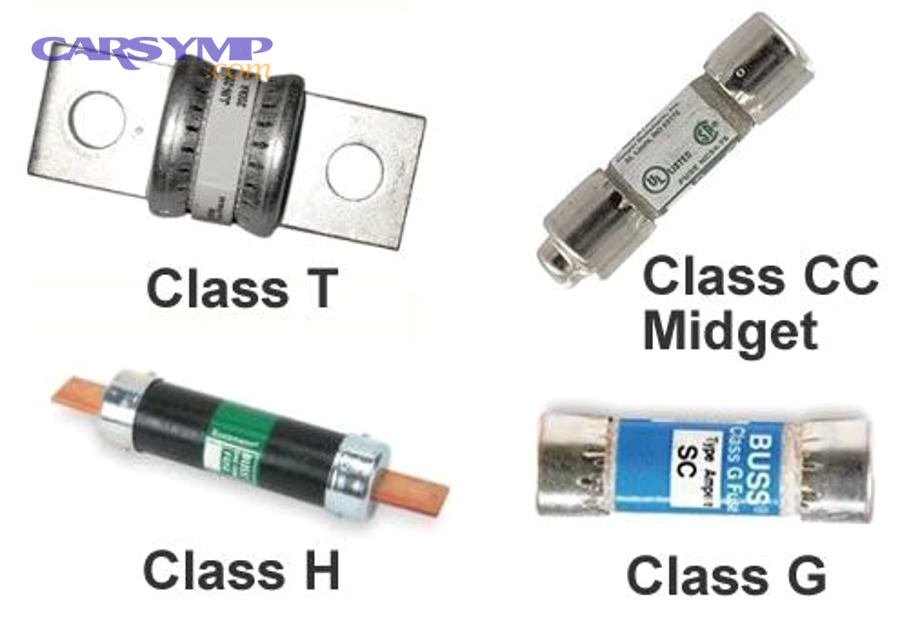
More specifically, a fuse can open in two very different ways:
- Safe clearing: melts, forms a controlled arc, arc is quenched, current stops.
- Unsafe failure: arc sustains, fuse body ruptures, metal vapor and hot gases escape.
How to match interrupt rating to available fault current
To match interrupting rating correctly, you need a reasonable estimate of available fault current at the point of installation:
- Automotive: consider battery capability and wiring length; high current is common close to the battery.
- Residential mains: available fault current depends on service size, transformer distance, and panel location.
- Industrial: fault current can be very high; coordination studies are common.
One practical approach:
- Identify the source (battery, PSU, panel, transformer).
- Estimate or measure prospective short-circuit current (many facilities have this data).
- Choose a fuse with interrupting rating comfortably above that value at the circuit voltage.
For example, Eaton explains that short-circuit currents can be “hundreds to thousands” of times normal, and fault levels may reach tens of kiloamps in distribution contexts—illustrating why interrupting rating is a different class of specification than amp rating. (eaton.com)
What happens if interrupting rating is too low?
If interrupting rating is too low, the fuse may open but not clear safely, leading to violent failure modes such as:
- Fuse rupture and shrapnel risk
- Sustained arcing and fire
- Damage to fuse holders, bus bars, or PCB traces
That’s why professional practice treats interrupting rating as a hard constraint, not a “nice-to-have.” If you are unsure, pick a fuse series specifically designed for higher breaking capacity and verify in the datasheet.
How to find the right fuse for a circuit
You can find the right fuse for a circuit by following 5 steps—(1) define normal load current, (2) quantify surge/inrush, (3) choose the correct time-current behavior, (4) confirm voltage + interrupting rating, and (5) match the package/holder—so the fuse protects without nuisance blowing.
Below, we’ll turn that into a repeatable selection method you can use in the field or at the bench.
How to calculate normal load and surge/inrush
Start with the circuit’s steady-state current, then add a realistic picture of startup and transient current.
- Steady-state: use nameplate current, measured current, or a power estimate (P/V for DC, accounting for efficiency).
- Surge/inrush: identify whether the load is inductive (motor/transformer) or capacitive (bulk input capacitors).
Here’s a simple context table (use it as a selection checklist, not a substitute for a datasheet):
| Load type | Typical startup behavior | Fuse selection implication |
|---|---|---|
| Resistive heater | Small surge | Fast-acting often OK if sized properly |
| DC motor | High inrush at start/stall | Time-delay or motor-rated fuse often needed |
| Transformer | Very high magnetizing inrush | Time-delay common; avoid nuisance openings |
| SMPS input | Capacitor inrush spike | Time-delay or inrush-limited design may be needed |
If your circuit includes a transformer, remember the earlier point: transformer energization inrush can be extremely high relative to rated current in worst cases. (sear.unisq.edu.au)
How to pick fuse speed and I²t for motors/transformers
Fuse “speed” is really a time-current curve, and I²t (energy let-through) is how you translate that curve into protection outcomes.
Use these practical rules:
- Motor circuits: A motor draws high current at startup and even higher at stall. You want a fuse that rides through normal starts but opens on sustained overload or locked-rotor conditions.
- Transformer circuits: Magnetizing inrush can be brief but huge; time-delay behavior helps avoid nuisance openings.
- Semiconductor protection: Very fast/high-speed fuses are used to protect devices like diodes, thyristors, and MOSFETs because they can be damaged quickly by overcurrent.
If you’re between fast and time-delay, don’t guess—look up the device’s inrush profile (or measure it) and compare it to the fuse’s time-current curve.
How to choose the right fuse package and holder
Even perfect electrical specs can fail in practice if the physical installation is wrong.
- Form factor compatibility: The fuse must fit the holder with correct end caps and length.
- Contact quality: Loose clips increase resistance, heat, and nuisance failures.
- Environment: Vibration (vehicles), moisture, and contaminants demand robust holders and proper sealing.
- Serviceability: In cars and machines, blade fuses are favored because field replacement is quick and standardized.
This step is often overlooked, but it’s where many “mystery” fuse failures actually come from—especially in high-vibration environments.
How do you diagnose a blown fuse and decide on fuse replacement?
Yes—you can diagnose a blown fuse reliably and choose the correct fuse replacement by (1) confirming the fuse is open, (2) determining whether it blew from overload vs short circuit, and (3) fixing the root cause before re-energizing.
Next, we’ll connect selection and troubleshooting so you don’t fall into the common trap: replacing fuses repeatedly without solving the failure mode.
How to test a fuse safely
Use a simple, safe workflow:
- Power down the circuit and isolate the source.
- Visual inspection (if transparent): look for a melted element, spatter, or blackening (may suggest a hard fault).
- Continuity test with a multimeter:
- Continuity/beep = likely good
- Open circuit = blown
- Confirm the cause:
- If the fuse blew instantly on power-up, suspect a short or inrush mismatch.
- If it blew after running, suspect sustained overload, heat, or intermittent faults.
Safety note: in mains equipment, discharge capacitors and follow proper lockout procedures. If you’re not trained, involve a qualified technician.
Relay vs fuse troubleshooting basics
Relay vs fuse troubleshooting basics: a fuse opens from overcurrent, while a relay is a controlled switch (often driven by a low-current control circuit), so you diagnose them differently—fuse = why overcurrent happened, relay = why switching logic or contacts failed.
Here’s a practical way to separate them:
- If the system is dead and the fuse is blown, start with the fuse and downstream load (shorts, seized motors, wiring damage).
- If the fuse is good but the load doesn’t energize, test relay control:
- Is the relay coil receiving command voltage?
- Does the relay click?
- Do the contacts pass power under load?
This distinction matters because replacing a relay won’t fix an overcurrent fault, and replacing fuses won’t fix a control-side failure.
What to do if a new fuse blows immediately
If a replacement fuse blows immediately, treat it as a hard fault until proven otherwise:
- Stop replacing fuses (repeated attempts can worsen damage).
- Check for short to ground, pinched wiring, damaged insulation, or a failed component (diode short, MOSFET short, motor stall).
- Verify you installed the exact correct type and rating (fast vs time-delay matters).
- If the circuit includes a motor, confirm it spins freely; a stalled motor can behave like a near-short.
According to a study by the National Institutes of Health (NIH) indexed on the PMC platform, in 2022, increasing overload current on PVC copper wires significantly changed fire-related behavior in tests—highlighting that “just a bit more current” can change thermal and ignition dynamics. (pmc.ncbi.nlm.nih.gov)
That’s why the safest troubleshooting habit is: fix the cause, then replace the fuse once with the correct match.
Contextual border: At this point, you can identify fuse types, interpret amp/voltage/interrupting ratings, select a fuse based on load behavior, and troubleshoot failures without unsafe upsizing. The section below expands into standards and markings so you can decode part numbers and labels faster.
What are common fuse standards and markings (UL, IEC, automotive color codes)?
Fuse standards and markings exist to make ratings comparable across manufacturers, and the most practical ones for everyday work are UL/IEC references, time-characteristic letters, and automotive blade fuse color codes.
Next, we’ll focus on what those markings mean in the real world—so you can read a fuse and confirm it matches your circuit without hunting blindly.
What do UL/IEC part numbers tell you?
Markings tied to UL and IEC generally indicate:
- The fuse was tested to a specific standard for:
- Dimensional interchangeability
- Time-current performance expectations
- Breaking capacity (interrupting rating) requirements
- The fuse series is intended for a particular application class (branch circuits, supplemental protection, semiconductor protection, etc.).
When you’re selecting for safety-critical or mains contexts, standards references are a major part of validating that the fuse is suitable beyond just the amp number.
How automotive blade fuse colors correlate to amps
Automotive blade fuses are often color-coded by amp rating to reduce mistakes during service:
- The same amp value is commonly the same color across many automotive standards, helping fast identification in a fuse box.
- However, don’t rely on color alone—aftermarket assortments and mixed standards can cause mismatches.
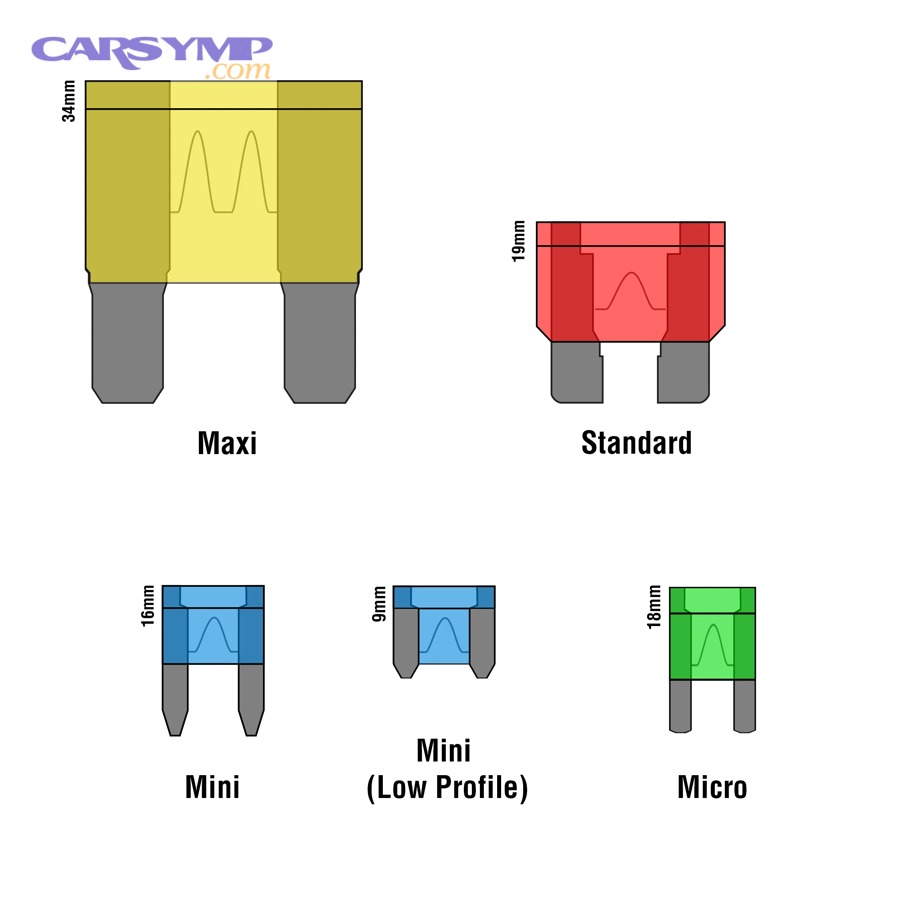
Best practice: verify the number printed on the fuse, confirm the circuit’s specified rating, and ensure the replacement is the same type (standard, mini, micro, etc.) and intended voltage system.
When to use special-purpose fuses (semiconductor, HV)
Special-purpose fuses exist for edge cases where “normal” fuses are too slow, too fragile, or not rated for the environment:
- Semiconductor fuses (high-speed): protect sensitive solid-state devices with low I²t let-through.
- High-voltage fuses: used in distribution and utility contexts; ratings and test requirements differ significantly from low-voltage fuses.
- Photovoltaic (PV) fuses: designed for DC arc behavior and PV string protection needs.
If you’re working outside simple automotive or household circuits, default to the equipment manufacturer’s specified fuse class/series—and treat substitutions as engineering changes, not routine swaps.