


If you’re searching where to find fuse box diagrams, the fastest reliable path is to match your exact vehicle (year + model + trim/engine) and then pull the diagram from three “gold” sources in order: the fuse box cover, the owner’s manual, and a trusted online layout that clearly states the same year/variant.
Next, you’ll want to confirm which fuse box you’re looking at—most cars have at least an interior fuse panel and an under-hood power distribution box, and each has its own diagram and labeling approach.
Besides locating the diagram, you also need to read it correctly so you don’t remove the wrong fuse, misinterpret a relay, or create a new electrical problem while troubleshooting.
Introduce a new idea: once you know where to find the right diagram and how to interpret it, you can work more safely, diagnose symptoms faster, and avoid expensive mistakes that happen during quick “trial-and-error” fuse pulling.
What is a fuse box diagram (fuse panel diagram) and what information should it include?
A fuse box diagram is a labeled map of a vehicle’s fuse panel that shows fuse/relay positions, circuit names, and amperage ratings so you can identify the correct protective device without guessing. (en.wikipedia.org)
With that definition in mind, the real value of a diagram is accuracy—because “close enough” is how people pull the wrong fuse and end up chasing new problems.
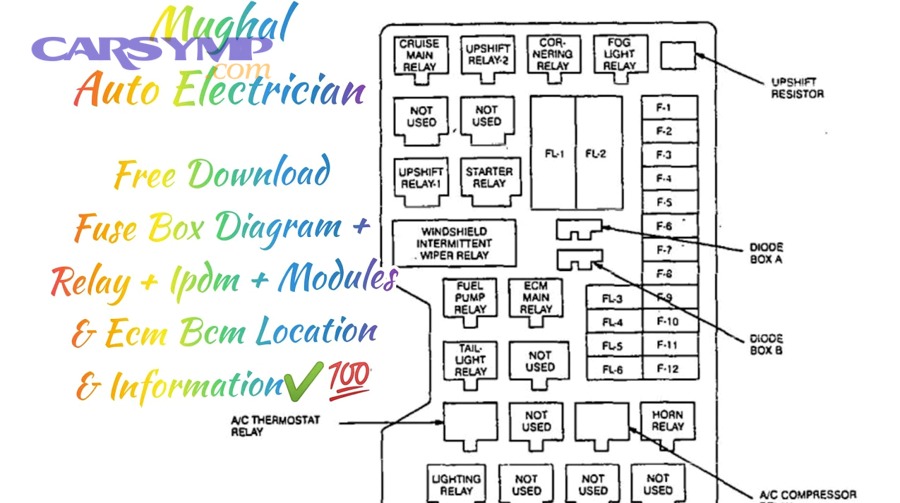
Does every car have a fuse box diagram you can access without tools?
Yes—most cars have an accessible fuse box diagram, because manufacturers commonly provide it on the fuse box cover, inside the owner’s manual, or both; it’s accessible without tools because it supports basic roadside troubleshooting, prevents misidentification, and reduces the chance of incorrect fuse replacement.
More specifically, “accessible” doesn’t always mean “perfectly obvious.” Here are the common scenarios:
- Best case: The underside of the fuse box lid shows a full layout with fuse numbers, circuit labels, and amperage.
- Common case: The lid shows a simplified legend (abbreviations) and you need the manual for full circuit names.
- Annoying case: The lid label is worn, missing, or replaced—so the owner’s manual (PDF) becomes your primary source.
- Rare case: A previous owner swapped the fuse box cover from another trim/year; the diagram exists, but the cover is misleading.
The practical takeaway: even when the diagram is “available,” you should still verify it matches the fuse positions you see before pulling anything.
What do common fuse diagram symbols and abbreviations mean (AMP, IGN, ACC, ECU, BCM)?
Fuse diagram abbreviations are short circuit labels that identify what the fuse protects, and they usually reflect power state (IGN/ACC), module name (ECU/BCM), or system (WIPER/HORN). For example, IGN means ignition-switched power, ACC means accessory power, and BCM refers to the body control module that manages many interior electronics.
To illustrate how this helps in real life, here’s how to read the most common label types:
- Power-state labels
- BATT / BAT: constant battery power (hot at all times)
- IGN: powered when the ignition is on (run/start)
- ACC: powered in accessory mode (radio, some interior systems)
- Module labels
- ECU/PCM/ECM: engine control module / powertrain computer
- BCM: body control module (lighting, locks, interior functions)
- TCM: transmission control module
- System labels
- HORN, WIPER, HVAC, PWR OUTLET, AUDIO, ABS: straightforward system protection
When labels are unclear, treat the diagram like a “map plus legend”: position tells you where, label tells you what, and amperage tells you how much current is allowed.
Where can you find the fuse box diagram on the car itself?
There are three main on-car places to find a fuse box diagram—the fuse box cover, an adjacent legend card, or a panel label near the fuse block—because manufacturers want you to locate fuses quickly based on the physical location you’re already accessing.
Then, once you find the label, your job is to confirm you’re looking at the correct fuse box (interior vs under-hood), because the wrong box can have similar-looking fuses but completely different circuits.
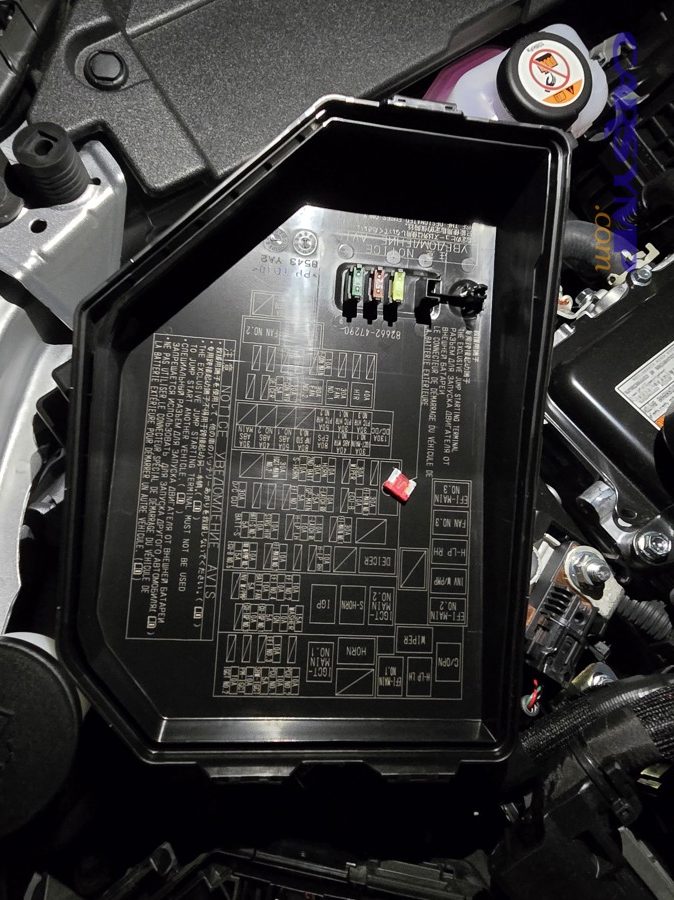
Is the fuse diagram printed on the fuse box cover (and what if it’s missing)?
Yes—many vehicles print the fuse box diagram on the cover, because it’s the fastest reference, it stays physically paired with the correct fuse block, and it reduces incorrect fuse identification during roadside troubleshooting.
However, if the cover label is missing or unreadable, don’t guess. Use this “replacement path” in order:
- Check the other fuse box cover (many cars have more than one, and one may be labeled better).
- Use the owner’s manual (physical book or PDF—usually the most accurate general reference).
- Use an OEM manual portal or reputable diagram database that specifies your year/model/trim.
- Cross-check with a second source (especially if the first source is a forum post or a screenshot).
A simple habit that prevents mistakes: take a quick photo of the fuse panel and lid label (even if partial) before you remove anything. That photo becomes your “before” reference if a fuse gets moved.
Which fuse box is the “interior” fuse panel versus the “under-hood” power distribution box?
The interior fuse panel usually protects cabin and body electronics (lights, locks, infotainment), while the under-hood power distribution box protects higher-current engine-bay systems (fans, fuel pump circuits, ABS power feeds), so the under-hood box often contains larger fuses and more relays. (en.wikipedia.org)
Meanwhile, manufacturers may use different names that mean the same thing:
- Interior fuse panel = cabin fuse block, instrument panel fuse block, passenger compartment fuse box
- Under-hood box = power distribution box, engine compartment fuse box, IPM (integrated power module)
What matters for you is location + layout:
- If it’s under the dash/footwell/side kick panel, you’re likely in the interior panel.
- If it’s near the battery or engine bay, you’re likely in the under-hood distribution box.
Where can you find the fuse box diagram in the owner’s manual (print or digital)?
There are two main ways to find the fuse panel diagram in an owner’s manual—using the index/table of contents or searching the digital PDF—and both work best when you confirm the manual matches your model year and trim.
Next, once you’ve found the “Fuses” section, treat the diagram as a structured lookup tool: identify the fuse box location, then the fuse number/position, then the circuit label and amperage.
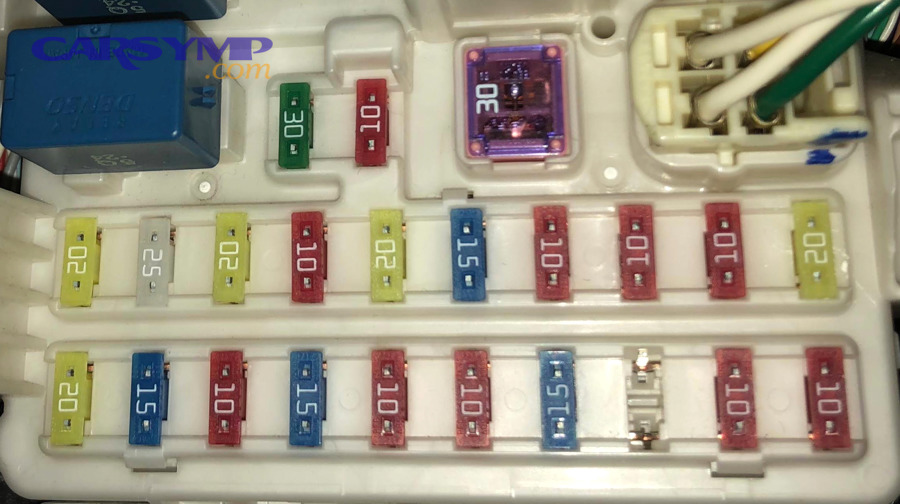
Can you search a digital owner’s manual PDF to find the fuse box layout faster?
Yes—searching a digital owner’s manual PDF is usually the fastest method, because you can jump directly to the “Fuses” section, you can search multiple keywords (“fuse,” “relay,” “power distribution”), and you can avoid flipping pages when the manual covers multiple fuse blocks.
To better understand how to search effectively, use a short keyword set:
- Primary: “fuse”, “fuses”, “fuse box”, “fuse panel”
- Manufacturer-style terms: “power distribution”, “junction box”, “IPM”
- If you suspect a relay issue: “relay”, “relays”
- If you’re diagnosing battery draw: “IOD” (ignition-off draw) on some vehicles (en.wikipedia.org)
Best practice: once you find the diagram page, save it (PDF bookmark or screenshot) and label it with your year + trim so you don’t reuse the wrong version later.
What’s the difference between an owner’s manual fuse diagram and a service manual wiring diagram?
An owner’s manual fuse diagram is designed for quick identification (layout, labels, fuse ratings), while a service manual wiring diagram is built for professional diagnosis (wiring routes, connectors, pinouts, and test procedures), so the owner’s manual is best for “which fuse is it?” and the service manual is best for “why did it blow?” (brakeandfrontend.com)
However, you don’t need a service manual for every situation. Use this decision rule:
- Use the owner’s manual when:
- You’re identifying a fuse for a single failed function (radio, horn, 12V outlet).
- You’re confirming the correct amperage for a fuse replacement.
- You want the location of the correct fuse box.
- Consider a service manual / wiring diagram when:
- A fuse blows repeatedly after replacement.
- Multiple systems fail at once (shared power feed or ground).
- You need connector-level testing (multimeter checks, voltage drop).
Which online sources are best for fuse box diagrams for your exact make/model/year?
The best online source depends on your goal: OEM manuals win for accuracy, diagram databases win for speed and visuals, and forums win for edge-case trims and real photos—but only if you verify the diagram matches your exact vehicle. (en.wikipedia.org)
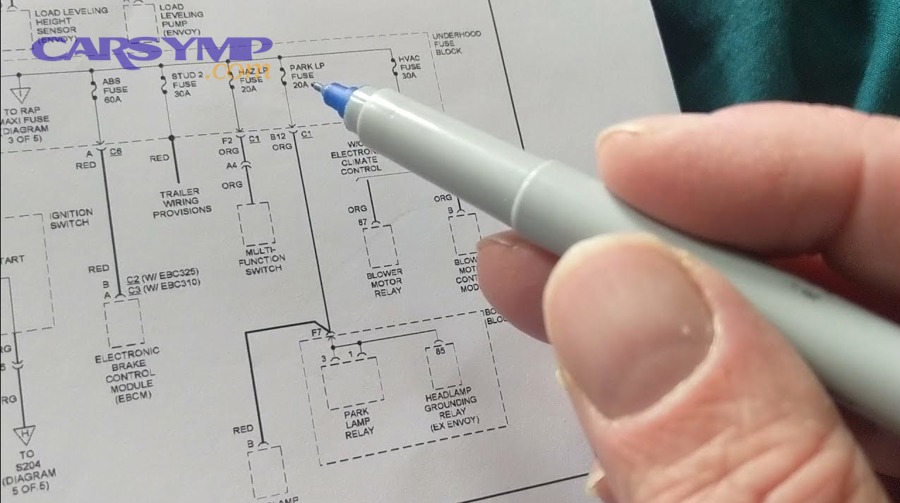
More importantly, online diagrams are only useful when they’re not generic. The best results clearly state year range, trim/engine, and show a layout that matches what you see in the car.
Are OEM owner manual sites more reliable than forums or third-party diagram databases?
Yes—OEM owner manual sites are usually more reliable for fuse box diagrams, because they’re authored by the manufacturer, they follow the vehicle’s official naming and labeling, and they reduce “wrong-year” mix-ups that happen in crowdsourced posts.
That said, third-party sites and forums still have a role when:
- Your fuse box cover label is missing and you need a clear photo-based layout.
- Your trim/package is unusual and the owner’s manual is too generic.
- You need community confirmation for a confusing abbreviation.
The safe approach is not “OEM only,” but “OEM first, then verify everything else.”
What should you compare to confirm an online diagram matches your car (year, trim, engine, fuse box location)?
There are 7 checks you should compare to confirm an online fuse box diagram matches your vehicle: model year, trim/engine, fuse box location, fuse numbering pattern, fuse types/sizes, relay positions, and lid legend consistency.
Then, do the checks in a quick order so you don’t waste time:
- Year and generation: A 2018 and a 2020 can look identical but have different layouts.
- Trim/engine/hybrid vs gas: Different power systems often change fuse assignments.
- Fuse box location: Interior vs under-hood diagrams are not interchangeable.
- Numbering scheme: Some boxes number left-to-right; others group by rows/blocks.
- Fuse type mix: Micro2/Mini/Maxi/JCASE presence should match what you see.
- Relay cluster shape: Under-hood boxes often have a “relay island” that’s easy to visually compare.
- Legend abbreviations: If your lid says “H-LP LH” but the online diagram doesn’t, pause and verify.
If even one of these doesn’t match, treat the online diagram as “unverified” until you find a second matching source.
How do you verify you’re using the correct diagram before pulling fuses?
The safest way to verify the correct fuse box diagram is a 3-step check—match the fuse box location, match the layout pattern, and match the fuse rating/label—so you don’t remove the wrong fuse or trigger avoidable faults.
Next, once you’ve confirmed the diagram, you can move from “finding” to “diagnosing,” which is where most people accidentally create new problems.
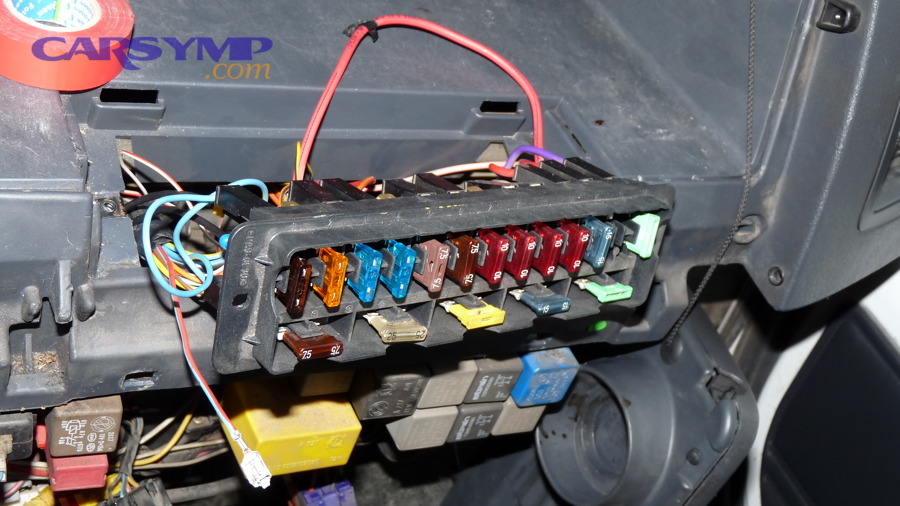
Should you remove a fuse based only on an online diagram without checking the cover/legend?
No—you should not remove a fuse based only on an online diagram, because online diagrams can be mismatched by year/trim, fuse panels can be swapped or modified, and one wrong pull can disable critical systems (or erase settings) you didn’t intend to touch.
Instead, use this safer workflow:
- Ignition off, key out, and lights/accessories off.
- Identify the exact fuse box (interior or under-hood) that matches the diagram.
- Match at least two references:
- lid label ↔ owner’s manual, or
- lid label ↔ verified online diagram
- Pull the fuse using the fuse puller (if available), and confirm the amperage number printed on top.
This is also where Common mistakes that damage electronics show up most often—people rush and do things like pulling fuses with metal tools, forcing oversized fuses into sockets, or swapping relays/fuses across circuits without confirming ratings.
How can you tell the difference between a fuse and a relay on the diagram (and in the box)?
A fuse is a small, usually color-coded overcurrent protector labeled by amperage, while a relay is a larger electrically controlled switch that routes power to loads like fans and pumps, so diagrams typically show fuses as small rectangles (often numbered) and relays as larger blocks (often named). (en.wikipedia.org)
More specifically, use these quick identifiers:
- On the diagram
- Fuse: shows an amperage value (10A/15A/30A) or references a fuse number tied to an amperage list
- Relay: labeled with function (FAN RELAY, A/C RELAY) and often grouped together
- In the fuse box
- Fuse: small blade-style part with visible metal element inside
- Relay: larger cube/rectangle you can grip; usually opaque plastic
If you’re diagnosing a system that clicks but doesn’t run (like a fan), the relay matters; if the system is completely dead, the fuse is often the first check.
To make diagnosis more concrete, the table below summarizes Symptoms of a blown fuse by system so you can connect “what stopped working” to “which fuse group to check first.”
| System | Typical blown-fuse symptom | First fuse box to check |
|---|---|---|
| 12V outlet / power port | No charging, outlet dead | Interior panel |
| Headlights (one side) | Left or right lamp out | Interior or under-hood (varies) |
| Horn | Horn completely silent | Interior panel |
| Wipers | Wipers dead or stuck | Interior panel |
| HVAC blower | Fan won’t run at any speed | Under-hood or interior (varies) |
| Radiator cooling fan | Overheats at idle, fan never runs | Under-hood power distribution |
| Audio/infotainment | Screen/radio dead, no sound | Interior panel |
What are the most common reasons you can’t find the “right” fuse box diagram—and how do you fix it?
The most common reasons you can’t find the right fuse box diagram are year/trim mismatch, multiple fuse boxes, missing cover labels, and prior modifications, and the fix is to verify identity first (vehicle + fuse box), then source the diagram from the most direct reference available.
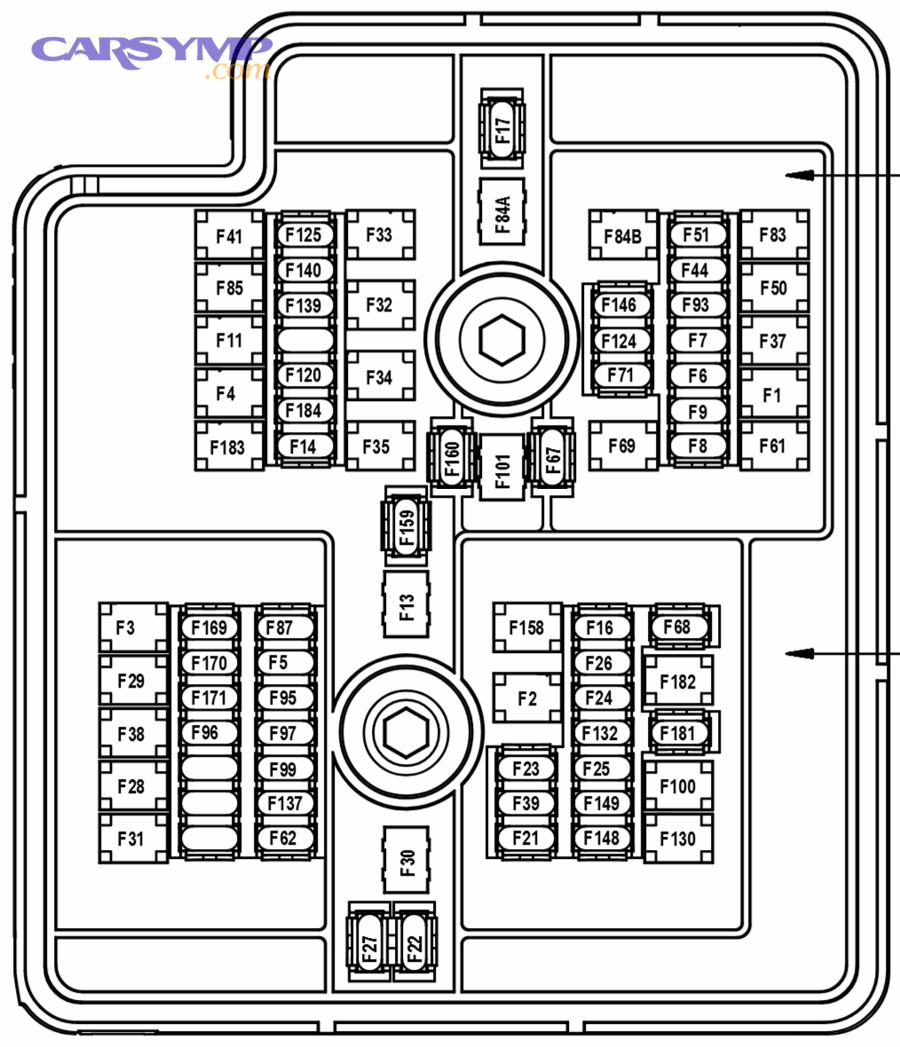
In addition, if you’re already doing fuse replacement, you should assume the fuse blew for a reason—so you’ll want to avoid “replace and forget” when the same fuse keeps failing.
Can the same model have different fuse layouts across years or trims?
Yes—the same model can have different fuse layouts across years or trims, because manufacturers revise electrical loads, add modules for options, change power distribution strategies, and sometimes update fuse box hardware mid-generation.
More importantly, fuse layout changes don’t always come with an obvious exterior difference. These are the most common change triggers:
- New safety features (ADAS modules, radar sensors)
- Infotainment and audio upgrades (amplifiers, additional power feeds)
- Engine variations (turbo vs non-turbo, hybrid components)
- Package options (tow package, heated seats, extra outlets)
So if you’re using a diagram that says “2019–2021” and your car is a late-2021 refresh, treat it as suspicious until your fuse positions match perfectly.
What should you do if your car has more than one fuse box and the diagrams conflict?
When diagrams conflict, you should identify each fuse box by location and name, then match the diagram to the box by layout shape and fuse grouping, because the “interior” and “under-hood” panels can share similar fuse ratings but protect completely different circuits.
Use this conflict-resolution checklist:
- Locate all fuse boxes (interior, under-hood, and any rear/cargo panel if present).
- Photograph each panel and its cover label (if available).
- Label your photos with location: “under-hood near battery,” “passenger footwell,” etc.
- For each box, confirm:
- layout rows/columns match the diagram
- relay cluster matches
- any maxi/JCASE fuses match positions shown
- If still unclear, fall back to the owner’s manual and treat online diagrams as secondary references.
Evidence: According to a study by Independent University, Bangladesh from the Department of Electrical and Electronic Engineering, in 2011, researchers reported that improper fuse wire replacement was widely present in surveyed environments and was discussed as a contributing factor associated with electrical fires—supporting the safety principle that bypassing or “over-fusing” protection increases risk. (academia.edu)
Contextual Border: You now have everything needed to (1) locate the correct fuse box, (2) source the correct diagram, and (3) verify it before touching fuses. The next section expands into less-common scenarios that cause mismatches and confusion.
What special cases make fuse box diagrams confusing ?
Special cases usually come from variation (mid-year updates, option packages, hybrids/EVs) or modification (aftermarket wiring), and the right response is to verify by physical match + documentation rather than trusting a single diagram source.
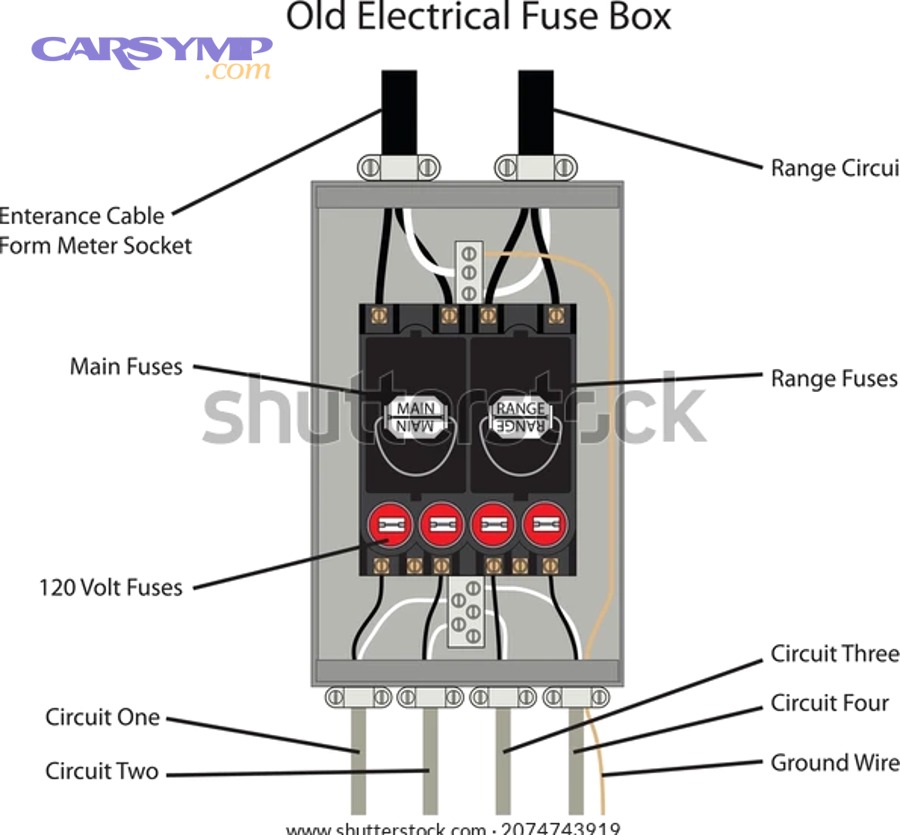
Then, once you recognize a special case, you can avoid the most expensive outcomes: misdiagnosis, repeated blown fuses, or damage caused by the wrong replacement strategy.
How do mid-year changes and “same generation” updates affect fuse box diagrams?
Mid-year changes affect fuse box diagrams because manufacturers can revise power distribution, module feeds, or fuse assignments without changing the overall vehicle generation, so two cars that look identical can have different fuse labels and positions.
To illustrate the practical impact, consider these common “silent updates”:
- A revised infotainment system adds a new fused power feed.
- A redesigned cooling fan module changes relay/fuse assignments.
- A new safety system adds an always-hot circuit that didn’t exist earlier.
How to handle it safely:
- Verify by build date (driver door jamb sticker) when available.
- Prefer diagrams that specify exact year rather than broad ranges.
- Match the cover legend and the physical relay cluster to confirm.
Do hybrids/EVs and towing packages change the fuse layout compared to the base model?
Yes—hybrids/EVs and towing packages often change fuse layouts, because they add power electronics, additional cooling, charging-related systems, and trailer circuits that require dedicated fusing and sometimes additional fuse blocks.
More specifically:
- Hybrids/EVs may add fuses for DC-DC conversion, inverter cooling, electric compressors, or battery management support systems.
- Towing packages may add fuses for trailer lighting, trailer brake controllers, and auxiliary power feeds.
Best practice:
- Use a diagram source that mentions hybrid/EV explicitly when applicable.
- Verify that the fuse box you’re using includes the expected “extra” circuits (often labeled for trailer or DC-DC systems).
Can aftermarket accessories (remote start, alarms, stereo amps) make the diagram inaccurate?
Yes—aftermarket accessories can make the diagram inaccurate, because installers may add inline fuses, use “add-a-fuse” taps, reroute power, or change which circuits supply a device, and those changes won’t appear on factory diagrams.
To better understand what you’re looking at, scan for signs of modification:
- Add-a-fuse adapters plugged into an existing fuse slot
- Inline fuse holders under the dash or near the battery
- Non-factory wire colors, electrical tape splices, or crimp connectors
- Extra relays mounted outside the fuse box
If you suspect modifications and you’re diagnosing repeated fuse failures, stop relying on “diagram-only” logic and trace the added wiring—ideally with a multimeter and a documented power path.
What’s the difference between left-hand-drive and right-hand-drive fuse box locations and diagrams?
Left-hand-drive and right-hand-drive vehicles can place interior fuse panels on different sides of the cabin and sometimes mirror access panels, so a diagram sourced from the wrong market can be correct in labels but wrong in physical placement and layout orientation.
How to handle it:
- Confirm the manual/diagram matches your market region.
- Compare panel location (driver vs passenger side footwell) before trusting an online image.
- Treat “export” diagrams as references only until the fuse positions match what you see.
If a fuse blows and you replace it, replace it with the same amperage and type, and if it blows again, diagnose the circuit instead of repeating fuse replacement. That simple rule prevents the most expensive outcomes and reduces the chance of accidental damage during troubleshooting.