


A blown fuse usually shows up as a specific system suddenly stopping—like one headlight, the power windows, the radio, the wipers, or the HVAC blower—while the rest of the car seems fine. The fastest way to diagnose symptoms of a blown fuse by system is to match the dead feature to its fuse label, then confirm with a quick visual check and a continuity test.
Next, you’ll learn how to tell when your symptoms really point to a fuse (and when they don’t), because not every electrical failure is a fuse—even if it feels like one. Then, we’ll break down the most common symptom patterns by system so you can stop guessing and start narrowing the cause.
In addition, you’ll get a practical confirmation workflow (test light vs multimeter) and a clear way to separate a blown fuse from a bad relay, a failed switch, a worn motor, or wiring damage—so you don’t keep replacing fuses that pop again.
Introduce a new idea: once you can identify the system pattern and confirm the fuse correctly, you can do a safer, faster fix—and avoid repeat failures caused by shorts, overloads, or corrosion.
What does “symptoms of a blown fuse by system” mean in a car?
Symptoms of a blown fuse by system means each electrical system shows a distinct “dead feature” pattern when its protective fuse opens, because that fuse feeds a defined circuit branch (like wipers, power windows, HVAC blower, or a lighting circuit).
To better understand this idea, it helps to separate what a fuse does from what a system looks like when its fuse fails, because those two pieces create the symptom pattern you’re trying to diagnose.
What is a car fuse and what does it protect?
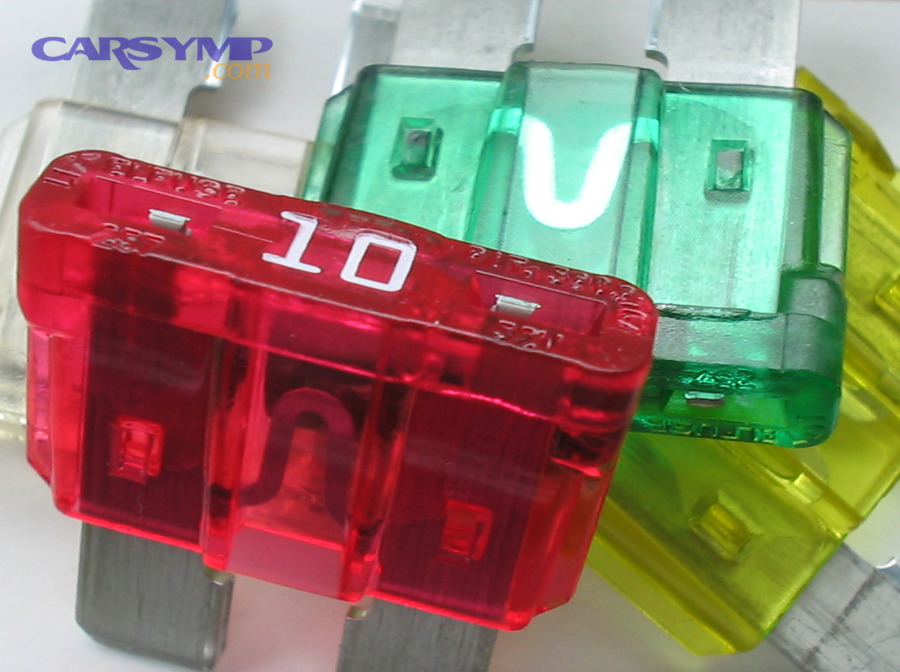
A car fuse is an overcurrent protection device designed to open the circuit when current rises beyond a safe limit, protecting wiring and components from overheating.
- What it protects: the wire run and downstream devices on that circuit (motor, module, socket, lamp, etc.).
- What it does not protect: every electrical problem in the car—only the circuit branch it’s installed on.
- What failure looks like: power stops reaching that branch, so the system function goes dead (or partially dead).
In practical terms, a fuse is “sacrificial.” If something pulls too much current (short circuit, seized motor, damaged wiring), the fuse opens before the wire becomes the heating element.
Why symptoms differ by electrical system (lights vs HVAC vs infotainment)
Symptoms differ by system because circuits are designed differently:
- Lighting circuits may be split left/right, high/low beam, or front/rear—so you might lose one side or one mode.
- HVAC blower circuits often use a high-current blower fuse—so the fan can die while the A/C button and display still work.
- Infotainment circuits can have separate memory/constant power and accessory power—so presets reset, or the unit won’t turn on, depending on which fuse opens.
This “circuit mapping” is exactly why diagnosing by system works: the symptom pattern tells you which branch lost power.
Is a blown fuse the most likely cause of your car’s symptoms?
Yes—a blown fuse is a likely cause when one system suddenly stops working while others remain normal, the failure is immediate (not gradual), and the symptom matches a single circuit branch (like wipers, outlet, radio, or one lighting circuit).
However, the key is knowing when a fuse is the best first bet versus when the symptom points to relays, switches, motors, or wiring—so let’s anchor it with clear indicators.
Yes/No checklist: When does it point to a fuse?
Yes, it points to a fuse if you have at least three of these signs:
- One feature goes dead instantly (not intermittent for weeks first).
- Related features on the same circuit fail together (e.g., multiple interior lights or multiple power outlets).
- The feature returns when you swap in a known-good fuse of the same rating (even briefly).
- There was a trigger event (jump start, accessory plug overload, water intrusion, recent repair).
- The fuse is visibly open (broken element) or fails continuity.
A symptom example: power outlet stops working right after plugging in an air compressor. That failure pattern strongly matches a fuse event.
When it’s probably NOT a fuse (but feels like one)
It’s probably not a fuse when:
- The problem is intermittent and changes with vibration (often a loose connector, worn switch, or ground issue).
- The problem is gradual (slow window, weak blower, dim lights) — that’s more like motor wear, resistance buildup, or low voltage.
- Multiple unrelated systems fail at once (often battery/charging, main ground, or a major power distribution issue).
- A fuse tests good but the system is still dead (look for relay/module/switch faults).
A useful mental rule: fuses usually fail “cleanly and suddenly,” while contact and component failures often get worse over time.
Which symptoms map to a blown fuse in each system?
There are 6 main symptom groups of blown-fuse behavior by system: lighting, power accessories, HVAC, infotainment/12V outlets, engine-management support, and safety/driver-assist—based on which circuit branch loses power and how that branch is segmented.
Next, we’ll map what you see in the car to the system branch most likely protected by a single fuse, so you can locate the correct fuse faster and avoid random pulling.
Lighting system: What does a blown fuse look like (headlights, tail lights, interior lights)?
A blown lighting fuse usually looks like a specific lighting function stops completely—for example, tail lights out while brake lights work, or one headlight circuit dead—depending on how the car splits the lighting branches.
Common lighting-fuse symptom patterns:
- Interior lights don’t turn on (dome/map lights dead)
- Tail lights or parking lights out while other lights still work
- One headlight mode fails (e.g., low beams dead, highs okay)
- License plate lights out along with tail/marker lights (shared branch)
Diagnostic hint: if only one bulb is out, suspect the bulb; if a group of lights drops out together, suspect the fuse or shared feed.
Power accessories: Are windows, locks, mirrors, or seats classic blown-fuse symptoms?
Yes—power accessories are classic blown-fuse symptoms because they’re often grouped by a common accessory feed: windows, locks, mirrors, sunroof, and power seat circuits can be protected by dedicated fuses.
Patterns that strongly suggest a fuse:
- All windows dead (or all on one side dead)
- Power locks stop responding from switches
- Power mirrors won’t adjust
- Seat won’t move at all (not just slow)
But if a single window is dead and others work, suspect that window motor, switch, or door wiring before the fuse.
HVAC & blower: How do you tell a blower fuse from a resistor or motor issue?
A blower fuse failure is usually total blower loss—no fan on any speed—while the HVAC controls may still light up.
Quick differentiation:
- Blower dead on all speeds: fuse, blower relay, power feed, ground, or dead motor
- Blower works only on high: often the resistor pack (or control module)
- Blower is intermittent with bumps: connector, worn blower motor, or relay contact
Because the blower draws high current, it’s also a common circuit to pop a fuse if the motor is failing or jammed.
Infotainment & 12V power outlets: What fuse symptoms are most common?
Infotainment and accessory outlets often show blown-fuse symptoms like:
- Radio won’t power on
- No sound / no display (depending on circuit split)
- Cigarette lighter / 12V socket dead
- USB/aux power dead (in some vehicles)
Some head units have two feeds: a constant “memory” feed and an ignition/accessory feed. If memory power blows, you may see presets reset or clock issues; if accessory power blows, the unit won’t turn on.
Engine management support circuits: When can a fuse cause “no start” or stalling?
A fuse can contribute to no-start or stalling when it powers a support circuit (fuel pump feed, ignition coil feed, ECU/PCM power, injectors, or critical sensors)—but this is less common than accessory fuses and can overlap with relay and module faults.
What it can look like:
- Cranks but won’t start (fuel pump/injector/ECU feed issues)
- Starts then dies (power feed drops)
- No fuel pump prime sound (if applicable)
Because these circuits can be safety-critical and vehicle-specific, confirmation testing is essential before assuming a fuse is the only cause.
Safety & driver-assist: What symptoms suggest an ABS/airbag-related fuse problem?
Safety systems can show fuse-related symptoms as warning lights and disabled features:
- ABS light on, traction control disabled
- Airbag light on (system may be disabled)
- Power steering warning (EPS on some cars)
- No cruise control / lane assist (depending on architecture)
In some real-world cases, manufacturers replace certain module fuses as part of safety remedies when an electrical short could cause overcurrent.
Important: if airbag/SRS lights are on, treat it as a higher-stakes diagnosis—don’t probe connectors in SRS circuits casually.
How do you confirm a blown fuse safely and quickly?
Confirming a blown fuse is a 3-step method: (1) locate the correct fuse, (2) test visually and electrically, and (3) verify the circuit behaves normally after replacement—so you don’t miss a hidden short or overload.
To begin, use a repeatable process that prevents two common mistakes: replacing the wrong fuse and replacing the right fuse without fixing the cause.
How do you locate the right fuse (fuse box labels, owner’s manual, diagrams)?
Use Where to find fuse box diagrams in this order:
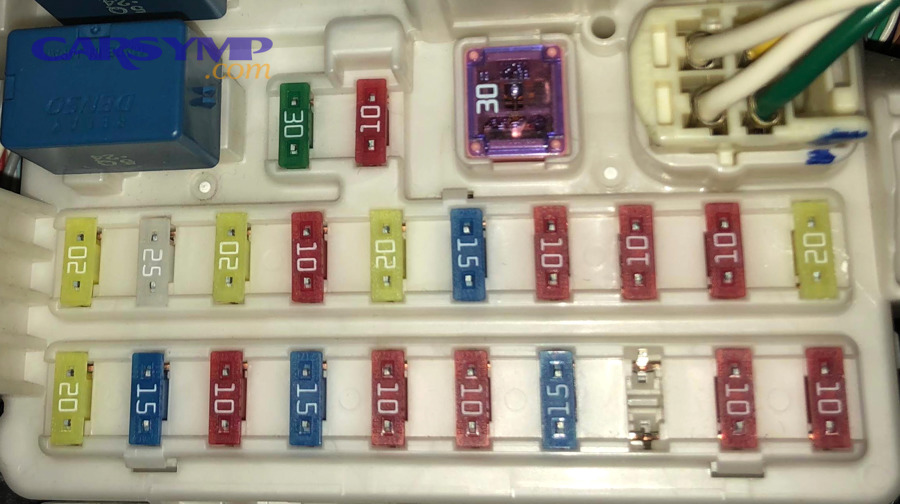
- Fuse box cover diagram (often the fastest; many cars show circuit names and fuse ratings).
- Owner’s manual (lists fuse location + amperage + circuit).
- Service information (OEM service manual or reputable repair database for your exact year/trim).
This is also the practical answer to How to find the right fuse for a circuit: match the failed system to the labeled circuit name and verify fuse rating before pulling anything.
Visual check vs multimeter continuity: Which is more reliable?
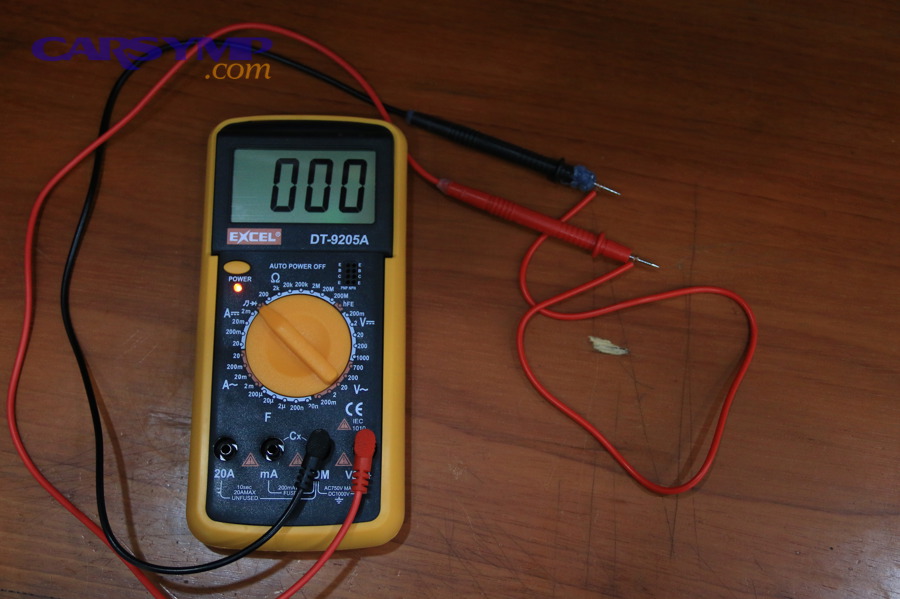
A multimeter continuity test is more reliable than visual inspection because some fuses fail with hairline breaks or heat damage you can’t easily see.
- Visual check: fast for blade fuses (you can often see a broken element)
- Continuity check: confirms electrically whether the fuse conducts
For blade fuses, a continuity check is simple: touch the test points on the top of the fuse or remove it and test across the blades.
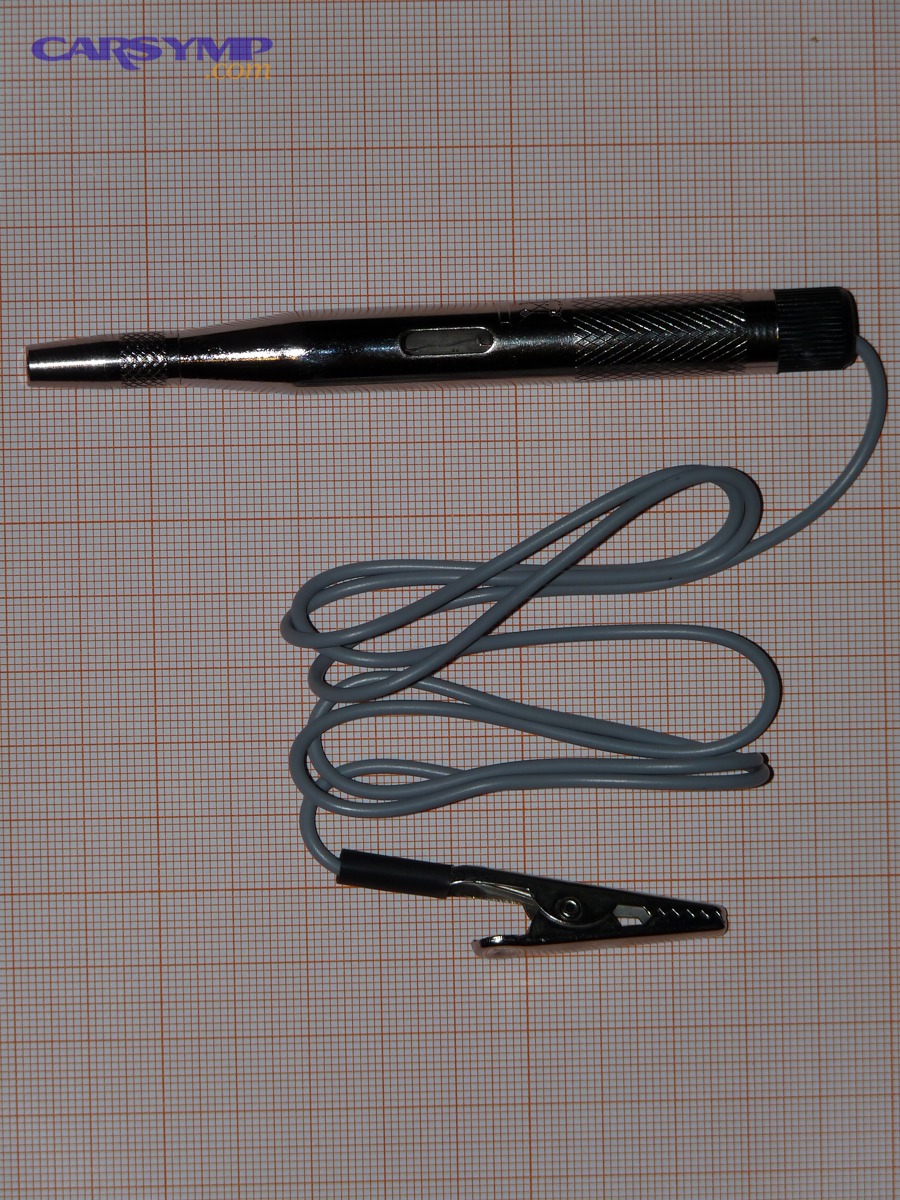
How to use a test light on fuses without pulling them
A test light can check power on both sides of a fuse in place:
- Turn the circuit on (e.g., headlights on, accessory on).
- Clip the test light ground to a known good ground.
- Touch the test points on the top of the fuse.
- Good fuse: power on both sides.
- Blown fuse: power on one side only.
What do you do if the replacement fuse blows immediately?
If the replacement fuse blows immediately, you likely have a short to ground, an overloaded circuit, or a failed component drawing excessive current—and repeated fuse replacement can damage wiring or modules.
At this stage, stop trial swapping and do a controlled isolation:
- Unplug loads on that circuit (motor, socket, accessory) and retry.
- Inspect for pinched wiring, water intrusion, or melted insulation.
- If it’s a high-current system (blower, radiator fan), suspect a failing motor.
According to a study by Chalmers University of Technology from the Department of Energy and Environment (Division of Electrical Power Engineering), in 2008, short circuit faults were identified as the most common electrical fault type in commercial vehicle electrical systems, which is exactly the condition that repeatedly blows fuses.
Is it a blown fuse or another electrical problem?
A blown fuse is the best match when the failure is sudden and circuit-specific, but a relay, switch, connector, ground, or the component itself can create nearly identical symptoms—so the win is comparing failure behavior and test results, not guessing.
However, once you know what differentiates each fault type, you can isolate the cause quickly and avoid replacing parts you don’t need.
Blown fuse vs bad relay: How do symptoms differ?
Fuse failures usually create a clean, complete loss of power to a branch. Relay failures can create intermittent operation (contacts heat up and open), “click but no power” behavior, and a system working sometimes and not others, especially under load.
Quick check: if the circuit has a relay (blower, fuel pump, radiator fan), swap it with an identical relay (only if the fuse is intact) to see if the symptom changes.
Blown fuse vs bad switch: What’s the easiest test?
A bad switch often fails locally (one door window switch, one stalk function), while a fuse usually impacts a whole circuit branch.
Easiest test pattern:
- If a function fails from all control points (driver switch + passenger switch), think fuse/relay/power feed.
- If it fails from one control point only, think switch or local wiring.
Blown fuse vs broken wire/ground: What pattern gives it away?
A wiring or ground issue often shows intermittent behavior with vibration, heat-related changes (works cold, fails hot), and partial operation (dim, slow, weak motor) due to added resistance.
Fuses don’t cause dim or weak very often; they usually cause on/off.
Blown fuse vs component failure (motor, solenoid, module)
Component failures often have leading indicators: blower squealing before failing, window slowing down before stopping, and wiper motor struggling before quitting.
If the fuse is good and power is reaching the component but it won’t run, the component is more likely the culprit.
Here’s a quick-reference table showing what each failure usually “looks like.”
| Symptom pattern you observe | Most likely cause | Why it fits |
|---|---|---|
| Dead instantly, same circuit items fail together | Blown fuse | One branch loses power at once |
| Intermittent, changes with bumps or heat | Relay/connector/ground | Contact resistance varies |
| Gradual slowing, dimming, weak operation | Component wear or voltage drop | Resistance builds over time |
| Fuse blows immediately on replacement | Short/overload | Current exceeds fuse rating fast |
Why did the fuse blow in the first place?
A fuse blows because current exceeded the circuit’s safe threshold, usually due to a short to ground, a failing load (motor or module), wiring damage, or an accessory that overloads the circuit.
More importantly, the reason it blew determines whether fuse replacement is a one-time fix or a repeated failure—so the goal is to identify the overcurrent trigger, not just restore power.
Common root causes: short circuits, overloads, corrosion, water intrusion
Most repeat fuse failures trace back to one of these:
- Short circuit to ground: damaged insulation, pinched wire, rubbed-through harness
- Overload: too many accessories on one circuit (often 12V outlet)
- Component internal fault: motor windings shorting, module internal short
- Corrosion/water intrusion: creates unintended paths and resistance changes, especially in connectors and fuse boxes
According to a study by Auburn University from the Department of Mechanical Engineering, in 2018, fretting corrosion in electrical contacts was shown to increase contact resistance and degrade signal/power transfer, a mechanism that can contribute to intermittent operation, heat, and downstream electrical stress that sometimes precedes protection events like fuse opening.
How to choose the correct fuse rating (and why “bigger is worse”)
Never “upgrade” a fuse to a higher amperage to stop it from blowing. That can let wiring overheat before protection opens.
Practical rule:
- Replace with the same type and same amperage rating specified for that slot.
- If the correct fuse blows again, treat it as an overcurrent problem to diagnose—not a “fuse quality” problem.
This is the core safety principle behind proper fuse selection.
Safe fuse replacement do’s and don’ts for DIYers
Here are Safe fuse replacement do’s and don’ts that prevent common mistakes:
Do
- Do turn the ignition off (and accessory loads off) before pulling fuses.
- Do use a fuse puller or insulated tool when available.
- Do confirm the fuse rating and circuit label before replacing.
- Do keep spare fuses of common ratings (5A–30A) in the glove box.
Don’t
- Don’t install a higher-rated fuse “just to test.”
- Don’t keep replacing fuses that blow immediately—find the cause.
- Don’t probe airbag/SRS circuits casually.
- Don’t ignore heat or melting smells; stop and inspect for shorts.
If you’re tracking repeated issues across multiple circuits, note them as “Car Symp” in your log so you can spot patterns across time (weather, repairs, accessory use).
What rare issues mimic a blown fuse—and how do you spot them?
Some problems mimic blown-fuse symptoms even when the fuse is fine: voltage supply issues, smart power modules, thermal protection behavior, and CAN-module sleep/wake faults—and these require different checks than a normal fuse diagnosis.
Besides the usual fuse-and-relay logic, these edge cases matter because they can waste hours if you keep pulling fuses that aren’t the problem.
Smart junction boxes and electronic fuses: What changes in diagnosis?
Many modern vehicles use smart junction boxes or electronically controlled power distribution that can disable a circuit without a traditional fuse visibly blown.
Clues you’re dealing with this:
- Circuit “shuts down” and later “resets”
- Multiple features on a networked module go offline together
- Scan tool shows body control module faults related to that circuit
In these cases, a scan tool and wiring diagram become more important than visual fuse checks.
Low battery / charging faults: Can they look like “one system died”?
Yes—low voltage can make modules drop out or behave unpredictably.
Signs it’s voltage-related:
- Multiple warnings appear
- Systems behave erratically (not just dead)
- Problem is worse after sitting, better after charging
If several systems misbehave at once, confirm battery health and alternator output before chasing fuses.
Heat-related open circuits: When a fuse tests good but fails under load
Some faults open only under heat or load:
- a relay with failing contacts
- a connector pin that loosens and heats
- a wire that’s nearly broken and opens when flexed
This is when testing voltage at the load while it’s commanded on becomes the differentiator.
Aftermarket add-ons: Why taps and adapters create “mystery fuse” problems
Aftermarket accessories can overload circuits or create shorts: phone chargers, inverters, air compressors (12V outlets), trailer harness wiring, and add-a-fuse taps installed incorrectly.
If fuse issues began after an add-on, isolate by disconnecting the accessory and retesting. This is often faster than dismantling the whole fuse panel.