


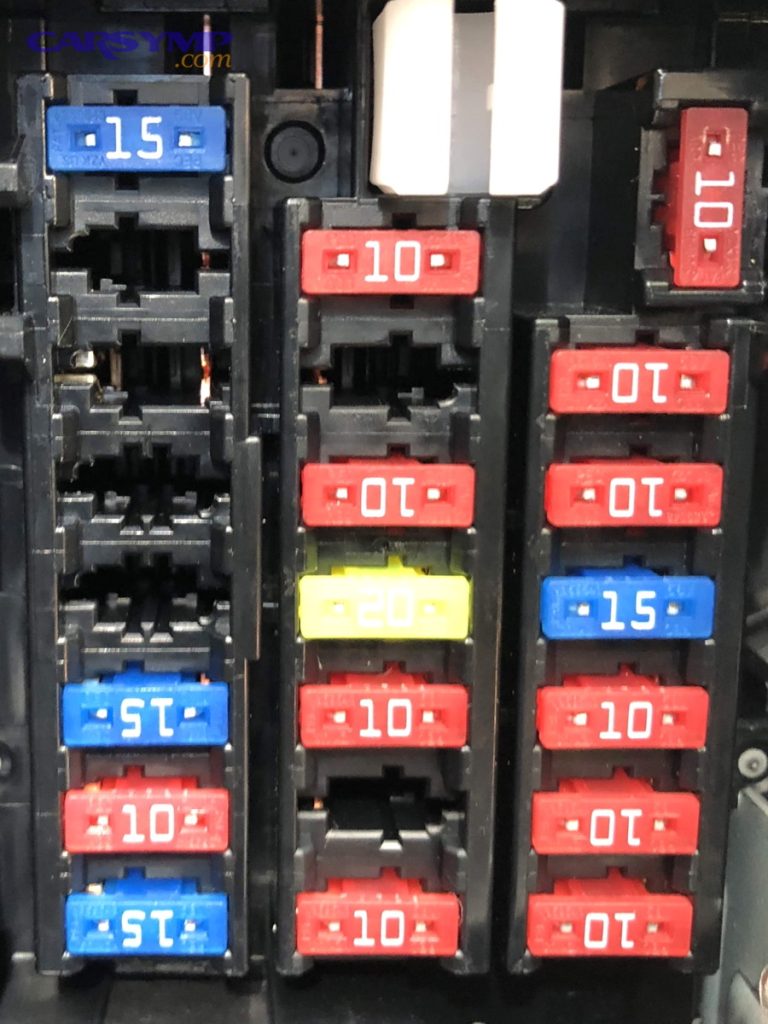
If you’re stuck deciding whether an electrical problem is a relay issue or a blown fuse, start with the simplest truth: a fuse protects the circuit, while a relay switches power to a load—and that difference changes what you test, what you replace, and what symptoms you trust.
Next, you’ll learn how to spot classic fuse failure patterns (dead circuit, visible break, correct rating matters) versus classic relay failure patterns (intermittent operation, clicking, heat-related issues), so you don’t waste time swapping good parts.
Then, you’ll get a practical, beginner-friendly sequence—quick checks first, meter checks second—so you can isolate whether the fault is in the protection side (fuse/wiring) or in the control/switching side (relay/trigger circuit).
Introduce a new idea: once you understand how “protection” and “switching” work together, troubleshooting becomes a repeatable process instead of guesswork.
What does a fuse do in a car electrical system?
A car fuse is a sacrificial circuit protection device that opens (blows) when current exceeds its rating, preventing wiring damage and reducing fire risk by stopping excessive current flow.
To better understand fuse troubleshooting, start by treating the fuse as the “circuit’s seatbelt”—it doesn’t power anything, it protects everything downstream.
How does a fuse protect wiring and devices?
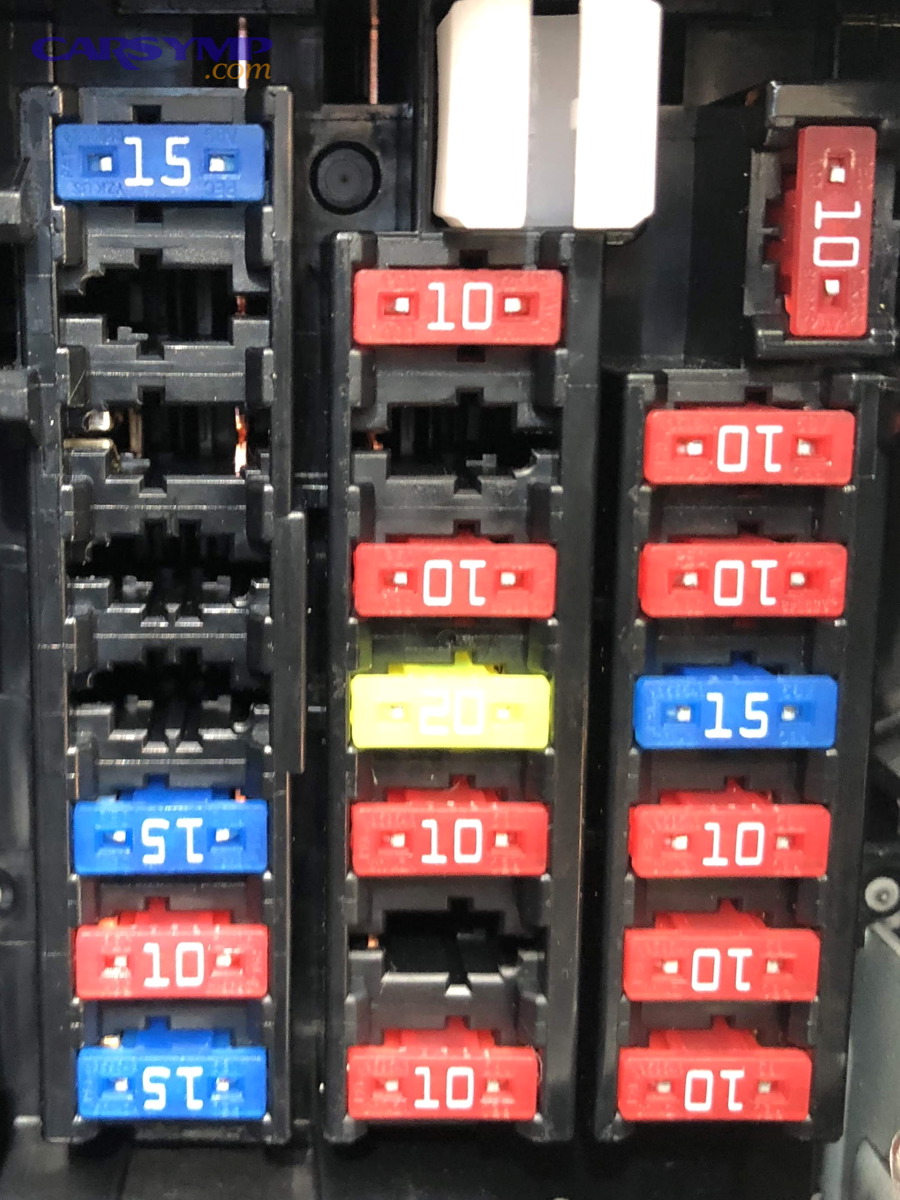
A fuse protects the circuit by melting its internal element when current rises beyond what the circuit and wire are designed to handle. That matters because wiring is sized for a certain load; if a short or overload occurs, the fuse is supposed to open before the wire overheats.
Here’s what that means in real DIY terms:
- A fuse is sized to the circuit, not the accessory you wish you had.
- The fuse is usually placed upstream of the load, so the wiring from the power source to the load is protected.
- When a fuse blows, it’s a result, not a diagnosis: you still need to learn why it blew.
Fuse types and ratings explained (the quick mental model):
- Type/size (Mini, Micro2, Micro3, Regular/ATO/ATC, Maxi) determines physical fit.
- Rating (amps) determines how much current it tolerates before opening.
To make this more concrete, the table below summarizes common automotive blade fuse families and where DIYers typically see them. (Your vehicle may use a mix of styles.)
| Blade Fuse Family (Common) | Typical Use | Where You’ll Commonly See It |
|---|---|---|
| Micro2 / Micro3 | Tight packaging, many small circuits | Interior fuse panel, newer vehicles |
| Low-profile Mini | Space-saving blade fuse | Interior fuse panel, some under-hood boxes |
| Mini (ATM/APM) | Many accessory circuits | Interior and under-hood |
| Regular (ATO/ATC) | Older/common accessory circuits | Interior and under-hood |
| Maxi | Higher-current circuits | Under-hood fuse/relay box |
If you’re unsure which family you have, look at the fuse’s shape and how it seats in the fuse box—not just its color.
What are common fuse failure signs?
A fuse problem usually creates a clean, hard failure: the circuit is dead, and it stays dead until the fuse is replaced and the underlying issue is resolved.
Look for these patterns:
- One circuit is completely inoperative (e.g., horn doesn’t work at all).
- Fuse element is visibly broken through the inspection window (often—but not always).
- Replacement fuse blows again quickly, suggesting a short-to-ground or overload.
- Heat damage around the fuse (melted plastic, discoloration) suggesting high resistance at the fuse terminals, not just a blown element.
A key nuance: a fuse can “look fine” and still fail under load due to hairline breaks, poor contact tension, or corrosion at the terminals. That’s why visual checks are step one—not the final answer.
Where do you find fuses in most vehicles?
Most vehicles have at least two fuse locations:
- Interior fuse panel (dash side, kick panel, glovebox area) for cabin electronics.
- Under-hood fuse/relay box for high-current loads like fans, fuel pump circuits, lighting, and engine-related circuits.
Use the fuse box cover diagram or owner’s manual to identify the correct fuse. If the diagram is missing, match by circuit label, not “whatever looks the same.”
What does a relay do and why isn’t it a fuse?
A relay is an electromechanical switch that uses a small control current to turn a larger current path on or off, letting low-power controls safely operate high-power loads.
Next, the easiest way to stop confusing relays with fuses is to remember: a fuse sacrifices itself to protect, while a relay repeatedly switches to control.
How does a relay switch high current with low current?
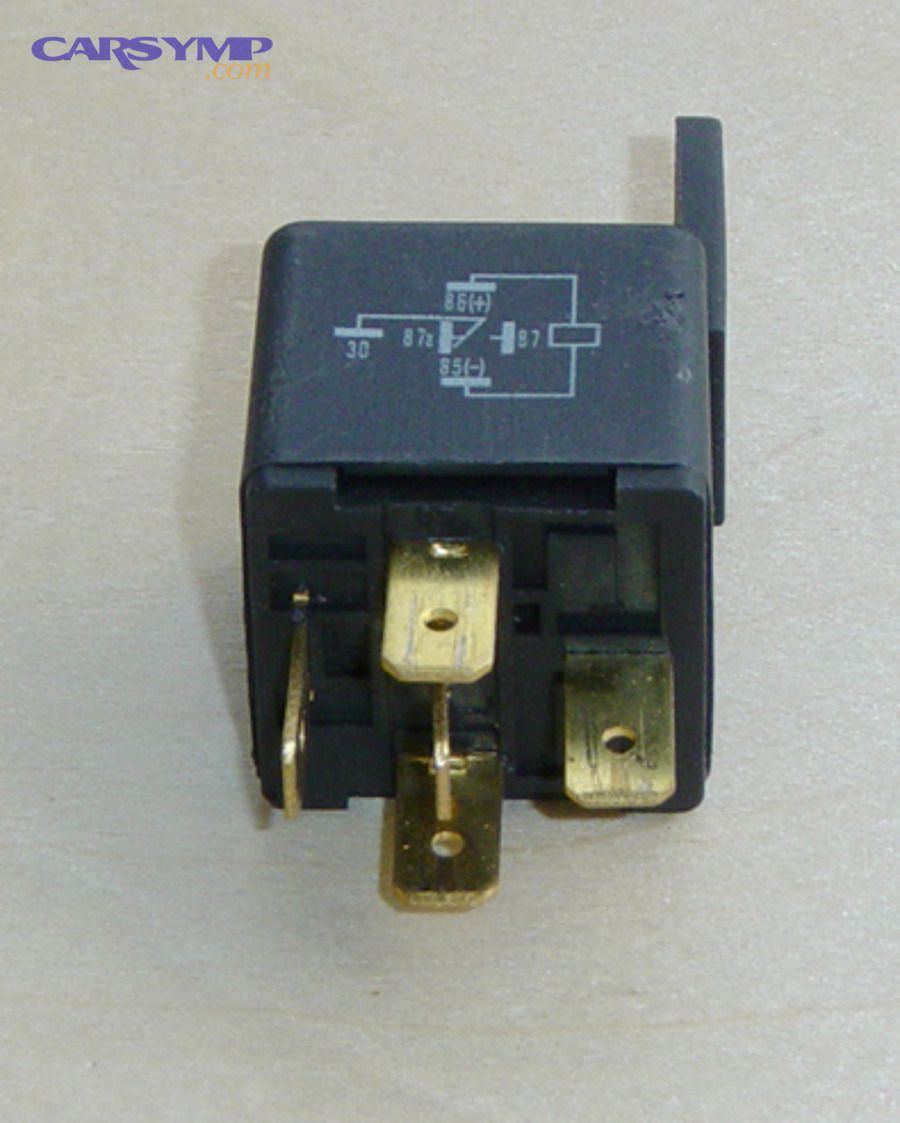
Relays separate a circuit into two sides:
- Control side (coil): low current activates the relay.
- Load side (contacts): higher current runs through a switchable path to power a device.
When the coil is energized, it creates a magnetic field that moves an internal armature, closing (or opening) the load contacts. This architecture is why relays are common for:
- Cooling fans
- Fuel pumps
- Headlights (in some designs)
- Horns
- Starter circuits
This separation also explains a common trap: you can have a perfectly good fuse but a relay that never switches, leaving the circuit dead.
What are common relay failure signs?
Relay failures are often messier than fuse failures because relays can fail intermittently or only under heat/vibration.
Common patterns include:
- Intermittent operation (works sometimes, fails sometimes).
- Clicking sound but the load doesn’t run (coil works, contacts don’t).
- No click and no operation (coil not powered, coil open, or control command missing).
- Heat-related failure (works cold, fails hot).
- Stuck contacts (load stays on when it shouldn’t, potentially causing battery drain).
One especially important real-world detail: relay contacts can degrade over time as resistance increases, leading to voltage drop and heat at the relay.
What do relay pin numbers like 30, 85, 86, 87 mean?
Most common automotive relays use standardized terminal labeling:
- 85 and 86 = the coil terminals (control side)
- 30 = common (power feed into the switch)
- 87 = normally open output (power out when energized)
- 87a (on 5-pin relays) = normally closed output (power out when NOT energized)
This matters because relay testing becomes systematic when you know what should be powered and when.
If you want the fastest visual recognition: 85/86 = coil, 30/87 = the switched circuit.
What is the difference between relay failure and fuse failure symptoms?
A fuse failure usually shows up as a consistent loss of power, while relay failure commonly shows up as intermittent or control-related behavior that changes with heat, vibration, or command signals.
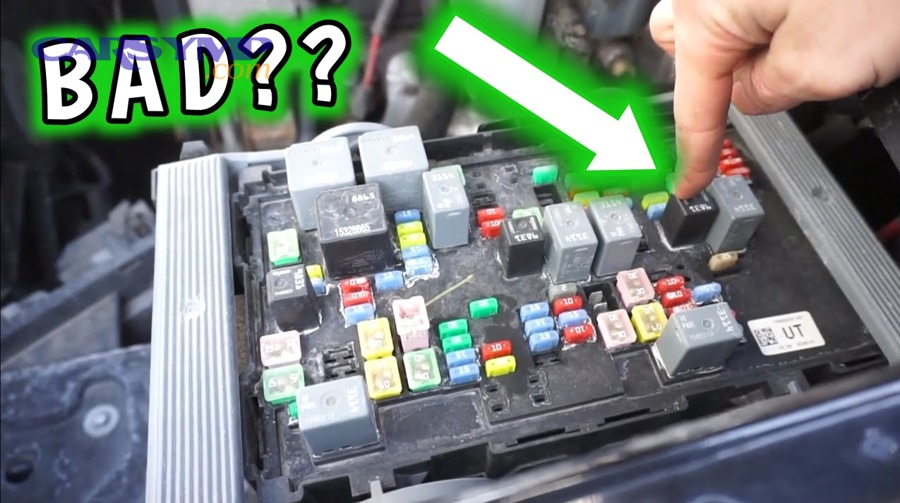
However, the biggest troubleshooting mistake is assuming symptoms alone are enough—so use symptoms to choose tests, not to declare a verdict.
Is it “no power” or “no switching”?
Use this comparison:
- Blown fuse: power is blocked early in the circuit; downstream devices are dead and stay dead.
- Bad relay (contacts): power feed may be present, but the device doesn’t receive it because the relay doesn’t pass current.
- Bad relay (control side): relay never energizes because the coil isn’t being commanded or powered.
A quick clue: if multiple devices on the same fuse are dead, suspect the fuse (or the shared feed). If one device is dead but related devices work, the issue may be relay-specific or downstream wiring.
Does clicking mean the relay is good?
No—clicking only proves the coil is moving something, not that the contacts are delivering healthy power.
You can have:
- A strong click with burnt/pitted contacts that can’t pass load current.
- A weak click due to low control voltage, causing partial engagement and heat.
- A click but the output has high resistance, creating voltage drop under load.
This is where voltage drop testing becomes more trustworthy than “it clicked, so it’s fine.”
Are heat, melting, or smell a fuse problem or relay problem?
Heat and melting can happen with both—but the location matters:
- Melted fuse body or fuse socket: often poor terminal tension/corrosion causing resistance at the fuse connection.
- Melted relay or relay socket: often high current loads plus contact resistance or poor socket tension.
- Burn smell near the fuse/relay box: treat as a warning to stop and inspect carefully.
In short: visible heat damage is often a connection quality problem more than a simple “replace the part” problem.
How can DIYers troubleshoot relay vs fuse issues step-by-step?
A reliable DIY troubleshooting method is a 6-step sequence—verify the symptom, confirm protection, confirm power, confirm switching, confirm load, and only then replace parts—so you avoid random swaps and repeated failures.
Below, you’ll move from “fast checks” to “meter checks,” because the fastest wins usually come from isolating whether the circuit is protected but not switched, or switched but not delivering.
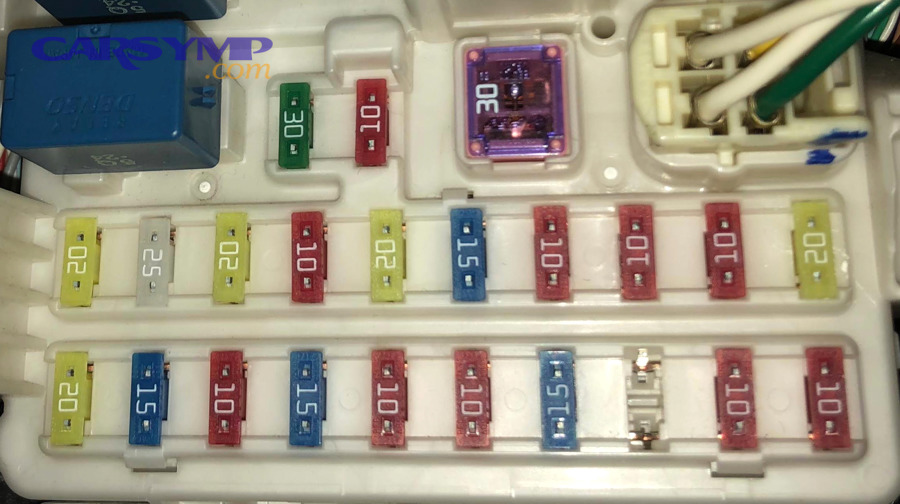
What is the safety-first checklist before touching fuses or relays?
Start with safety because electrical faults can escalate quickly:
- Turn the ignition off before pulling relays/fuses for most checks.
- If you see melted plastic, burnt smell, or repeated fuse blowing, stop and inspect wiring before “just trying a bigger fuse.”
- Use plastic fuse pullers when possible.
- If you’re working near the battery or main power distribution, disconnect the negative terminal if the procedure requires it.
Then, write down the symptom in one sentence: “Cooling fan doesn’t run even when hot,” or “Horn works sometimes.” That sentence will guide every test you do next.
How do you do a quick fuse test the right way?
A quick fuse test has two layers:
- Visual check: look for a broken element.
- Power check: confirm the fuse is powered on both sides (when the circuit should be powered).
For most DIYers, the most reliable approach is:
- Identify the fuse by label.
- Inspect it.
- If it’s a blade fuse, test continuity with a multimeter (or use a test light on both test points on top of the fuse).
If power is present on one side but not the other, the fuse is open. If power is missing on both sides, the issue is upstream (feed, ignition state, battery supply, main fuse, etc.).
This is also where fuse replacement must be done carefully: use the same amp rating unless the manufacturer specifies otherwise.
How do you do a quick relay swap test without guessing?
The fastest relay test (when applicable) is the swap test:
- Find an identical relay used for a non-critical circuit (same part number).
- Swap them.
- See if the problem moves.
Rules that keep the swap test honest:
- Swap only matching relays (same pin layout and rating).
- If the swapped circuit starts failing too, you likely found a bad relay.
- If nothing changes, don’t conclude the relay is good yet—move to power/control testing.
For a clear walkthrough of relay testing and wiring basics, this video can help you visualize what you’re testing.
What multimeter tests separate a fuse issue from a relay issue?
Multimeter testing works best when you treat the circuit like two questions:
- Is the relay being commanded? (control side)
- Is the relay delivering power cleanly? (load side)
Practical relay checks:
- Coil resistance check (relay removed): an open coil suggests a failed relay (values vary by design).
- Control voltage check (relay installed): confirm the coil sees voltage/ground when the system is commanded.
- Output voltage check: confirm power appears at the relay output when energized.
- Voltage drop test under load: confirms whether contacts or connections are adding resistance (the “hidden failure” test).
Why voltage drop matters: circuits can show “12V” with no load, yet fail when the device draws current because resistance turns into heat and the device starves.
Evidence that contact resistance is a real reliability variable (not just theory): according to a study by Northeast Forestry University from the Department of Information and Computer Engineering, in 2017, relay degradation modeling treated contact resistance as a key performance parameter linked to relay life and reliability.
Which common car systems use fuses and relays, and what problems do they cause?
There are four common system groups where “relay vs fuse” confusion happens most—fuel/ignition-related circuits, cooling fans, lighting/horn, and accessories—because each uses fuses for protection and relays for switching in slightly different ways.
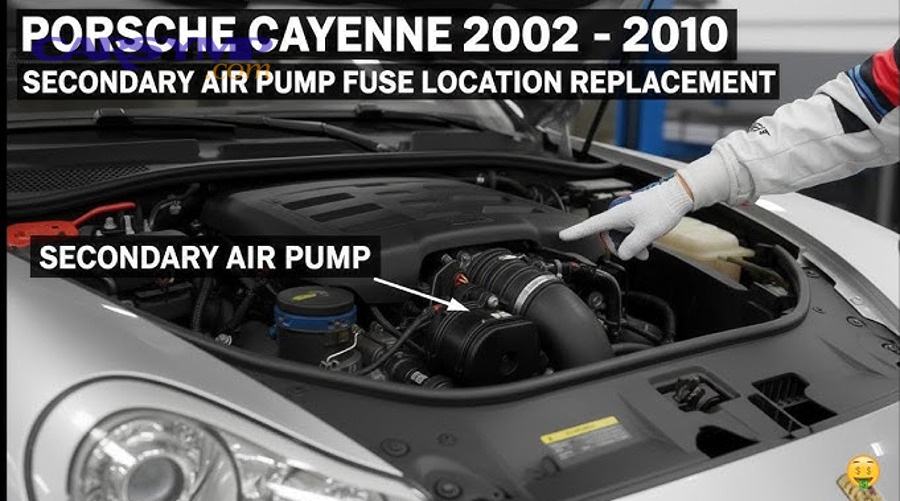
More importantly, recognizing the system type helps you predict whether you’re chasing a high-current load problem, a control-signal problem, or a simple blown fuse.
Fuel pump and ignition circuits
Fuel pump circuits often involve:
- A fuse protecting the feed
- A relay controlled by the ECU (or a control module)
- Safety logic (prime at key-on, shutoff during no-RPM, etc.)
Typical failure patterns:
- Blown fuse: pump dead, no prime sound (though some cars are quiet)
- Relay/control: intermittent no-start, starts then stalls, or no prime but fuse intact
- Wiring/connector resistance: pump runs weak, pressure low, relay area warm
Because fuel delivery problems can mimic other issues, isolate “power delivery to pump” before blaming sensors.
Cooling fan circuits
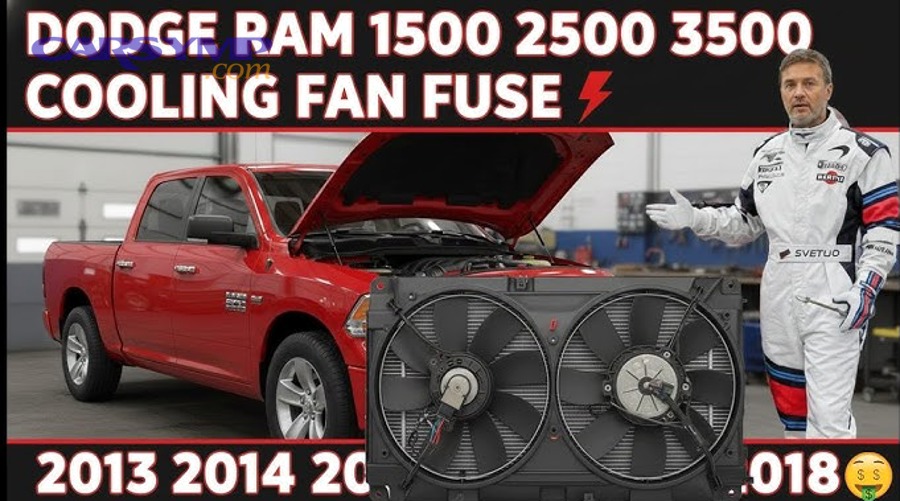
Cooling fan loads are high current, so relays and fuses are common.
Common failures:
- Fuse blown from motor overload or wiring short
- Relay contacts burnt from repeated high load switching
- Control side issue: temperature sensor, ECU command, or fan control module input
If the fan works when jumped but not commanded, you’re in relay/control territory. If it never works and the fuse blows repeatedly, suspect motor or wiring.
Headlights, horn, and exterior lighting circuits
These circuits vary by vehicle generation:
- Older: more direct switching, fewer relays
- Newer: more module control, relays or solid-state drivers
Failures look like:
- Fuse issue: entire side or circuit dead
- Relay issue: intermittent, only high-beam fails, horn works sometimes
- Ground issue: dim or flickering lights (not always a fuse/relay fault)
Power windows and accessories
Accessory circuits often have:
- Multiple fuses (some constant, some ignition-switched)
- Relays for ignition/accessory power distribution
- Body control module (BCM) involvement
Symptoms can look random (“sometimes works”), but your job is to identify whether:
- The fuse is losing feed
- The relay isn’t switching
- The module isn’t commanding
- The load is binding (window motor drawing high current)
Is it safe to replace a fuse or relay yourself?
Yes—it’s generally safe to replace a fuse or relay yourself if you use the correct part and rating, avoid “upsizing” amperage, and stop when you see heat damage or repeated failures—because those signs point to deeper electrical faults.
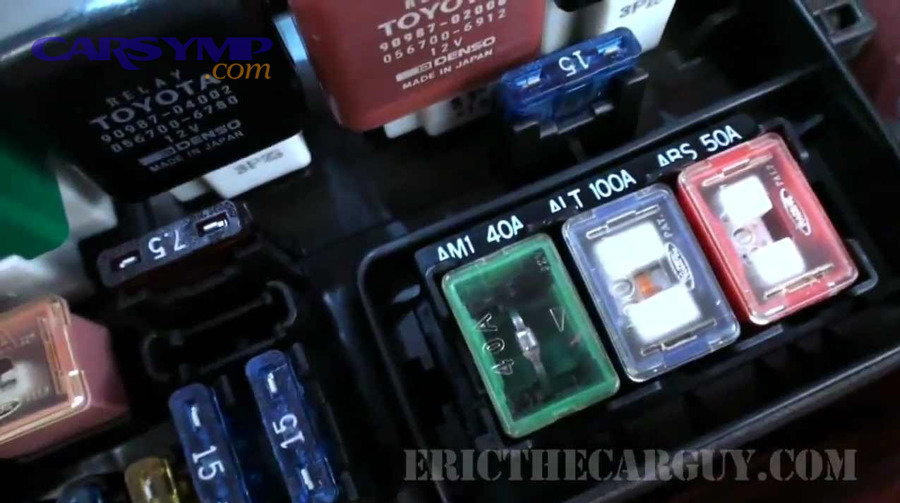
Besides being safe, doing it correctly prevents repeat blowouts and reduces the risk of overheating in the fuse box.
When is fuse replacement OK?
Fuse replacement is appropriate when:
- The fuse is clearly blown
- The circuit failed once (not repeatedly)
- There’s no melted plastic, burnt smell, or evidence of a short
- You replace it with the same type and rating
If the new fuse blows immediately, don’t keep feeding it fuses. That usually indicates a short-to-ground, a failing load (like a motor), or wiring damage.
How do you find the right fuse for a circuit?
How to find the right fuse for a circuit comes down to three checks:
- Match the amp rating printed on the fuse and specified on the fuse map/manual.
- Match the physical type/size so it seats correctly (Micro2 vs Mini vs Regular, etc.).
- Match the circuit location (don’t “borrow” a fuse from an unrelated slot unless you’re diagnosing and you restore it afterward).
If the circuit calls for a 10A fuse, a 15A fuse is not a “stronger fix”—it’s a way to let wires overheat before protection opens.
When should you see a shop for electrical faults?
When to see a shop for electrical faults is when you hit any of these thresholds:
- Repeated fuse blows (especially immediately)
- Melted fuse/relay sockets or burnt odor
- Evidence of rodent damage, pinched harnesses, or water intrusion
- Electrical issues tied to safety systems (ABS, airbags, steering assist)
- You suspect module control issues (BCM/ECU) and need scan-tool command verification
DIY diagnosis is great until the risk of collateral damage rises—then professional tools and wiring diagrams pay for themselves.
Contextual border: At this point, you’ve covered the troubleshooting basics that match the core intent—how to distinguish relays from fuses and test them correctly. The next section expands into deeper, less common checks that help when the basics don’t solve the fault.
What advanced checks help when basics don’t solve the problem?
Advanced diagnosis focuses on why the fuse blew or why the relay isn’t being commanded, including wiring faults, control-module logic, and parasitic drains that don’t show up in a simple swap test.
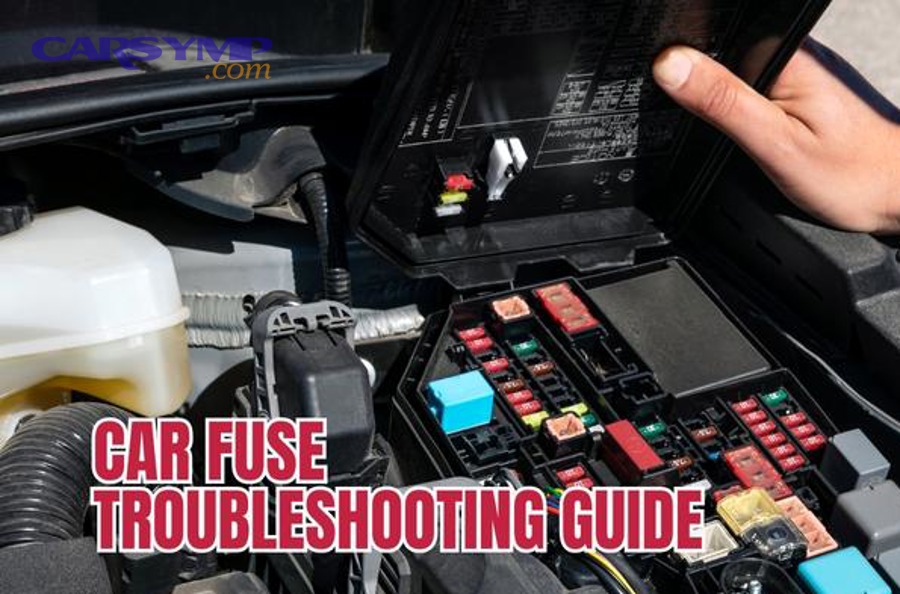
More specifically, these checks help when you’ve confirmed the fuse is intact, the relay seems functional, and the circuit still misbehaves.
How do you diagnose wiring shorts and bad grounds?
A short-to-ground is often the reason a fuse blows repeatedly. Practical steps include:
- Inspect harness routing near hot/moving parts (exhaust, belts, fans, hinges).
- Look for crushed insulation, chafing, or moisture in connectors.
- Use a fused jumper or current-limited method when appropriate to avoid repeated fuse sacrifice.
- Use continuity tests carefully (with power off) and remember: a short may only appear when the harness moves.
Bad grounds often cause “ghost symptoms” (dim, intermittent, weird interactions). Voltage drop testing across ground paths under load is often more revealing than resistance checks.
How do you test the relay control side when the relay isn’t commanded?
If the relay never energizes, don’t assume “bad relay”—confirm:
- Does the coil receive voltage when it should?
- Does the coil receive ground when it should (or vice versa, depending on design)?
- Is the command coming from a switch, ECU, or BCM?
- Are there enabling conditions (temperature threshold, RPM signal, safety interlocks)?
If you can command the relay with a scan tool (on some vehicles), you can separate “control logic” from “hardware path” quickly.
Can a relay cause parasitic battery drain?
Yes—if relay contacts stick closed or a control circuit keeps a relay energized, it can contribute to parasitic drain, leaving you with a dead battery in the morning.
A disciplined approach:
- Measure key-off current draw (after modules go to sleep).
- Pull fuses/relays methodically to find which circuit drops the draw.
- Confirm whether the relay is being commanded or mechanically stuck.
How does “upgrade thinking” prevent repeat fuse and relay failures?
Sometimes the “fix” is not just replacing a part, but preventing the same failure mode:
- Clean and tighten terminals if tension is poor (heat = resistance).
- Repair chafed wiring rather than feeding the circuit more fuses.
- Use correct add-a-circuit methods for accessories (and fuse them properly).
- Treat high-current aftermarket loads as relay-and-fuse projects, not “tap and pray.”
Finally, it’s worth remembering why protection and switching quality matter: according to a study referenced by RWTH Aachen University, in Germany, reported fire incident rates were far lower per vehicle for EVs than for fossil-fuel vehicles—highlighting how much modern safety depends on preventing fault escalation, including electrical fault paths.
Source: electricschoolbusinitiative.org
Evidence (selected)
- According to a study by Northeast Forestry University from the Department of Information and Computer Engineering, in 2017, relay reliability modeling treated contact resistance as a key degradation parameter used to predict relay life. Source: aidic.it
- Research literature on low-voltage relays describes how contact surface condition and fault current events can influence contact resistance over time, which directly affects performance. Source: pmc.ncbi.nlm.nih.gov