


When a circuit suddenly goes dead, the safest fix is to replace the blown fuse with the correct, matching fuse—because the fuse is designed to fail first to protect wiring and devices from overheating. Done correctly, a safe replacement restores power without bypassing the protection that prevents shocks, melted wiring, and fires.
Next, you also need to identify the blown fuse with confidence and choose the right replacement by matching the amperage rating, voltage rating, and fuse type—because “close enough” is where most DIY fuse mistakes begin.
Then, you must follow the do’s and don’ts that separate a safe repair from a dangerous shortcut, including what never to do (like oversizing the fuse) and what to do every time (like turning power off and verifying the circuit is de-energized).
Introduce a new idea: if the fuse blows again, that repeat failure is a message—not bad luck—and the most important skill is knowing what you can safely check versus when to stop and call a professional.
What does a fuse do, and why is replacing it the safe way to restore power?
A fuse is a sacrificial overcurrent safety device that protects wiring and equipment by opening the circuit when current becomes unsafe, and replacing the blown fuse is the safe way to restore power because it returns the circuit to its designed protection level instead of bypassing it.
Then, because many people treat a fuse as “just a part,” it helps to understand what “blown” actually means and when a DIY replacement is appropriate.
What counts as a “blown fuse,” and how can you tell for sure?
A “blown fuse” is a fuse whose internal element has opened, so the circuit cannot carry current, and you can tell for sure by combining symptoms + a quick test rather than relying on looks alone.
Specifically, a fuse can fail in ways that are not always obvious at a glance—especially in automotive blade fuses where discoloration can be subtle.
Symptoms of a blown fuse by system often follow predictable patterns:
- Home (single circuit goes dead): one room’s lights or outlets stop working while others still work; a specific appliance won’t power on; a single branch circuit is affected.
- Car (one feature stops): radio, power windows, interior lights, horn, 12V socket, or a specific module stops functioning while the engine may still run. If you’re mapping Car Symp to an electrical issue, a sudden “one thing only” failure is a classic fuse clue.
- Intermittent electrical behavior: some fuses fail “open” completely, while others show heat damage at the blades/ends that causes intermittent contact.
To confirm quickly and safely:
- Match the symptom to the circuit label (panel legend for homes; fuse box cover/owner’s manual for cars).
- Inspect the fuse for a broken element, soot, or obvious heat damage (melted plastic, browned metal).
- Test the fuse if there’s any doubt—because visual inspection is not definitive.
A practical testing rule is simple: if the fuse tests open (no continuity), it’s blown; if it tests closed (continuity), the problem is elsewhere.
Is it safe to replace a fuse yourself, yes or no?
Yes—fuse replacement can be safe if (1) you can fully de-energize the circuit, (2) you replace the fuse with an exact match, and (3) there are no signs of heat damage, burning smell, or repeated failures; otherwise, no because the risk shifts from “simple swap” to “active fault.”
Moreover, three safety realities determine whether DIY is reasonable:
- Energy control: You must be able to turn the power off (main switch at a home board, ignition off in a car) and keep it off while working.
- Condition of the hardware: A clean fuse holder is low-risk; a melted fuse holder suggests overheating, loose contact, or a higher-current fault.
- Pattern of failure: A one-off blown fuse after a known event is one thing; a fuse that blows again immediately is often a short circuit or overload that needs diagnosis.
If you see melted plastic, scorch marks, buzzing/arcing, smoke odor, water exposure, or repeated blowing, treat that as “not a DIY fuse swap” and escalate.
How do you replace a blown fuse safely step by step?
Safe fuse replacement is a repeatable checklist: isolate power, verify the circuit is de-energized, remove the fuse correctly, install an exact-match replacement, and restore power while monitoring for heat or repeat failure.
To better understand why “steps” matter, notice that most injuries and damage happen before the new fuse is even installed—during access, removal, and re-energizing.
What are the exact safety steps to do before touching the fuse?
Before touching any fuse, do these safety steps in order: turn power off, isolate the circuit, and verify it’s off—because that prevents accidental contact with live parts and reduces the chance of shorting tools across energized metal.
Below is a simple sequence that applies to both home and vehicle contexts, with the key differences called out.
For a home fuse board (older fuse panels):
- Switch off the appliance involved (if it’s running) and unplug it if accessible.
- Turn off the main switch on the board so the fuse area is not energized. (electricalsafety.qld.gov.au)
- Use a flashlight (not a candle), keep hands dry, remove jewelry, and stand on a dry surface.
- If anything looks burnt or smells hot, stop and call an electrician.
For a car fuse box:
- Park safely, set the parking brake, turn the ignition off, and remove the key (or power down fully for push-button systems).
- Turn off the affected accessory (lights, radio, etc.).
- Keep metal tools away from battery-positive terminals and exposed metal bus bars.
The goal is consistent: you want zero live work, even for a “small” fuse.
How do you remove and install the new fuse without damaging the holder?
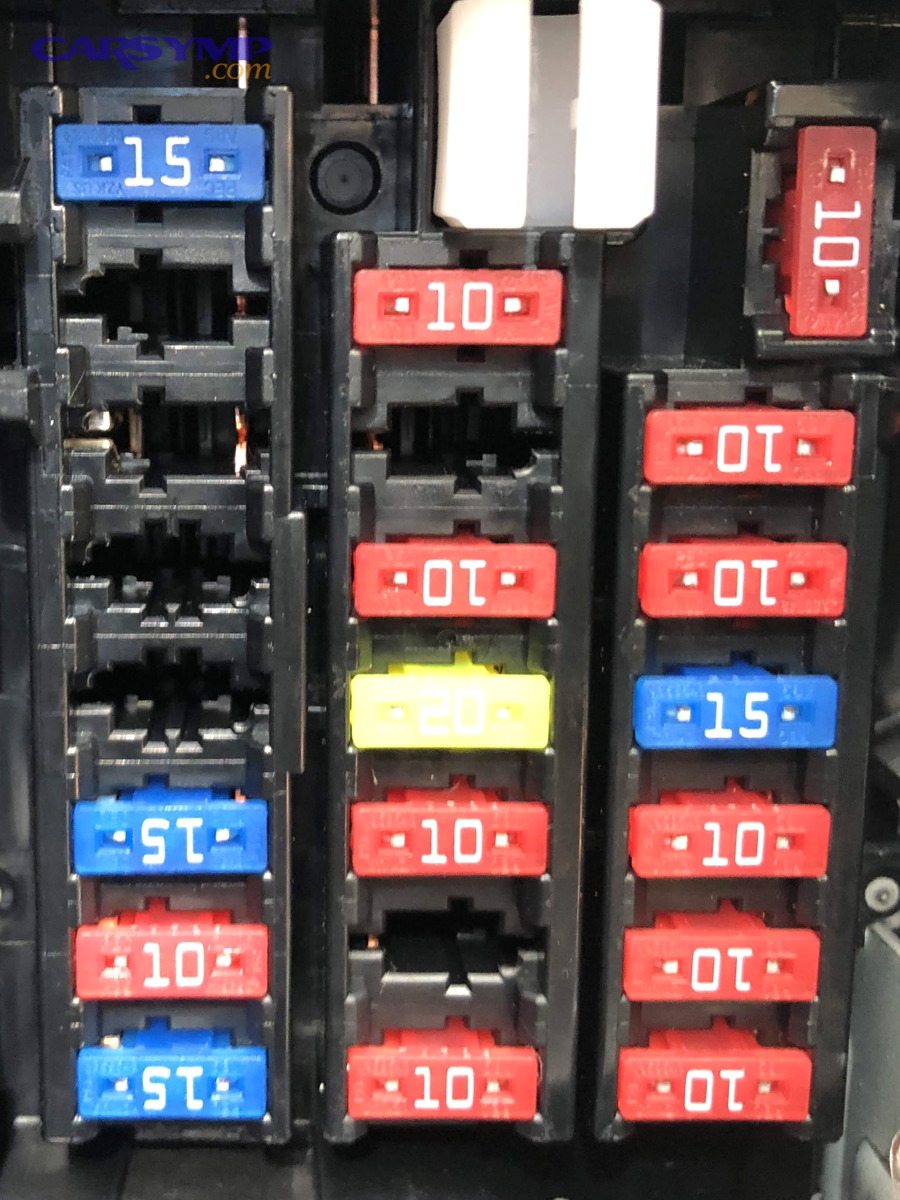
You remove and install a fuse safely by using the proper grip (preferably a fuse puller), pulling straight without twisting, and seating the replacement fully—because prying, twisting, or forcing can loosen contacts and create future overheating.
For example, automotive blade fuses should come out cleanly; if one is stuck, that “stuckness” is often telling you something about heat, corrosion, or distortion of the holder.
Removal best practices (cars and many household fuse holders):
- Use a plastic fuse puller or insulated needle-nose pliers.
- Pull straight up on blade fuses.
- Avoid levering against nearby wires or relay housings.
Installation best practices:
- Confirm the replacement is the same type and rating before installing.
- Insert the fuse straight and fully so the blades seat evenly.
- Do not “wiggle” to the point of spreading the contacts.
If the fuse holder shows green/white corrosion, pitting, looseness, or melted plastic, replacing only the fuse may not solve the root cause.
How do you restore power and confirm the fix after replacement?
You restore power safely by re-energizing in a controlled order, confirming the system works, and monitoring for heat or repeat failure—because a fuse that blows again is warning you that current is still unsafe.
In addition, the confirmation step is where you prevent Common mistakes that damage electronics—like repeatedly cycling power into a shorted circuit or installing multiple fuses until “one holds.”
Home re-energizing checklist:
- Make sure loads are off (unplug or switch off the device that likely caused the blow).
- Turn the main switch back on.
- Turn the circuit load on gradually and watch for immediate failure.
Car re-energizing checklist:
- Install the fuse with the ignition off.
- Turn ignition on and test the specific function (radio, windows, lights).
- If it fails again immediately, don’t keep swapping fuses—move to troubleshooting.
If the fuse remains intact but the system still doesn’t work, the fuse wasn’t the only issue (relay, switch, wiring, module, or ground fault).
Which fuse should you use, and what happens if you pick the wrong one?
The correct replacement fuse is the one that matches the original fuse’s amperage, voltage rating, and type, and picking the wrong fuse can either create nuisance failures (too small) or remove protection and overheat wiring (too large).
However, “wrong fuse” isn’t only about amps—it can also be about form factor (fit), speed (fast vs slow-blow), and contact quality.
Should the replacement fuse match the exact amperage rating, yes or no?
Yes—the replacement fuse should match the exact amperage rating, because (1) the circuit wiring is sized for that protection level, (2) the connected components rely on that limit to prevent overheating, and (3) oversizing can allow damaging current to flow long enough to melt insulation or start a fire. (pmc.ncbi.nlm.nih.gov)
Meanwhile, there’s also a practical reason DIYers miss: the amperage rating is part of a larger protection plan that includes wire gauge, connector design, and heat dissipation.
Here’s how to do it reliably:
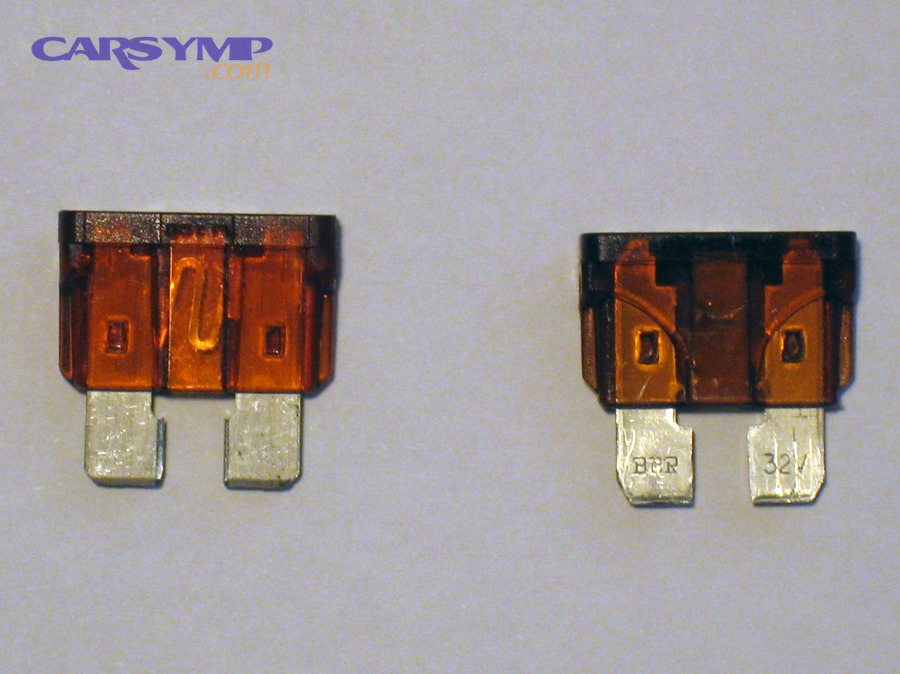
- Read the number stamped/printed on the fuse (e.g., 10A, 15A, 20A).
- Confirm the same rating is listed on the panel/fuse holder label or the vehicle fuse legend. (pmc.ncbi.nlm.nih.gov)
- Replace only with that same value.
If you cannot find markings on the fuse or holder, consult the equipment manual rather than guessing. (pmc.ncbi.nlm.nih.gov)
What are the most common fuse types you’ll see in cars and homes?
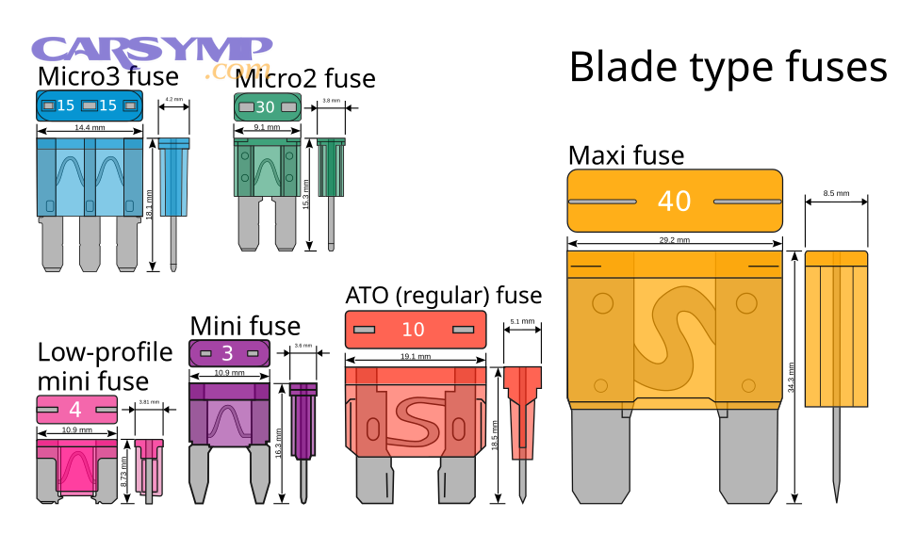
There are six common fuse categories you’ll encounter—automotive blade fuses, micro blade fuses, maxi blade fuses, glass cartridge fuses, ceramic/cartridge fuses, and older-style screw-in plug fuses—grouped by where they’re used and how they mount.
To illustrate the “grouping” clearly, the table below shows the most common fuse types, where you’ll find them, and how to identify them quickly.
| Fuse type (group) | Where you’ll see it | Quick visual ID | Common replacement clue |
|---|---|---|---|
| Standard blade (ATO/ATC) | Many cars (older and current) | Two flat blades, colored plastic body | Number printed on top (amps) |
| Mini / low-profile mini | Many modern cars | Smaller blade body, colored | Fuse box legend + amp print |
| Micro2 / Micro3 | Newer cars, dense fuse boxes | Very small footprint | Must match exact footprint |
| Maxi blade | High-current automotive circuits | Larger blade body | Often 30A–80A+ |
| Glass cartridge | Electronics, older equipment | Glass tube with metal ends | Printed rating on end cap |
| Screw-in plug fuses (older homes) | Older residential fuse boxes | Round “bulb” shape | Rating stamped on base/holder |
This is why “it looks close” is risky: two fuses can have the same amp number but different physical footprints, and forcing the wrong footprint can distort the holder.
What’s the difference between fast-acting and time-delay (slow-blow) fuses, and when does it matter?
Fast-acting fuses win for quick protection of sensitive electronics, time-delay (slow-blow) fuses are best for motor start-up surges, and using the wrong speed can either cause nuisance blowing or allow too much energy during a fault. (pmc.ncbi.nlm.nih.gov)
More specifically, some devices draw a brief inrush current when they start (motors, transformers, some power supplies). A slow-blow fuse tolerates that brief surge but still protects against sustained overcurrent.
When it matters most:
- Motors and compressors: may need time-delay protection to avoid blowing at start.
- Electronics with tight tolerances: may require fast-acting fuses to protect components quickly.
- Mixed loads (home appliances): the manufacturer’s specified fuse type is the safe choice.
If the fuse holder label or device documentation indicates fast-blow vs slow-blow, match it exactly rather than “upgrading” based on guesswork. (pmc.ncbi.nlm.nih.gov)
What are the do’s and don’ts of fuse replacement to prevent shock and fire?
Fuse replacement is safest when you follow clear do’s and don’ts: do isolate power, verify ratings, and inspect for heat damage; don’t oversize, bypass, or repeatedly replace fuses without addressing the cause—because those shortcuts remove the very protection the fuse is meant to provide.
In addition, this is the section that prevents the most expensive outcomes: electronics damage, wiring damage, and “mystery” repeat failures that escalate into overheating.
What are the top “Do’s” that make fuse replacement safer?
The top do’s are: do de-energize first, do match the fuse exactly, and do treat repeat blowing as a fault to diagnose, because those three habits prevent shock exposure, prevent under/over-protection, and prevent repeated stress to wiring and modules. (electricalsafety.qld.gov.au)
Specifically, use this practical do-list:
- Do switch off power at the source (main switch for a home board; ignition off for a car). (electricalsafety.qld.gov.au)
- Do confirm the correct rating before you remove the old fuse, so you’re not guessing with a handful of spares later. (pmc.ncbi.nlm.nih.gov)
- Do use a fuse puller for blade fuses to avoid bending contacts.
- Do inspect the fuse holder for melting, discoloration, or corrosion.
- Do remove loads before re-energizing (unplug appliances; switch off accessories).
- Do keep a small kit of common fuses, especially in a vehicle, so you’re not tempted to “make do” with the wrong part.
A small but important do: if labels are unclear, take a photo before removing multiple fuses—because visual reference prevents mix-ups.
What are the “Don’ts” that can cause fires or injury?
The most dangerous don’ts are: don’t install a higher-amp fuse, don’t bypass a fuse, and don’t ignore heat damage, because these actions allow unsafe current, raise temperatures in wiring and connectors, and can trigger electrical fires or equipment destruction. (electricalsafety.qld.gov.au)
To illustrate how people get hurt, here are the Common mistakes that damage electronics and also increase fire risk:
- Don’t “upgrade” amperage to stop nuisance blowing; that can overheat wiring that was never designed for that current. (cms5.revize.com)
- Don’t wrap foil or use wire to “get by.” That is not a fuse; it’s a bypass.
- Don’t keep swapping fuses until one holds; repeated failures point to a short or overload. (cms5.revize.com)
- Don’t work on wet surfaces or with wet hands; moisture reduces skin resistance and increases shock risk.
- Don’t ignore smell, smoke, or discoloration—these are signs of overheating or arcing, not “normal fuse behavior.”
In a home context, the single most important don’t is: don’t work inside a board you can’t fully de-energize. In a car context, the parallel don’t is: don’t short metal tools across terminals or bus bars while hunting for the “right fuse.”
Is it okay to replace a fuse more than once if it keeps blowing, yes or no?
No—it’s not okay to keep replacing a fuse that keeps blowing, because (1) repeat blowing signals an unresolved overload or short circuit, (2) repeated attempts can heat and damage the fuse holder, and (3) repeated power cycling can harm electronics that are being fed a fault condition. (cms5.revize.com)
Besides, a fuse that “sacrifices itself” repeatedly is doing its job—your job is to find why the circuit is asking for more current than it should.
A safe rule of thumb:
- If the new fuse blows immediately, suspect a short-to-ground or direct fault.
- If it blows after a device runs, suspect overload, failing motor, or a component drawing too much current.
- If it blows randomly, suspect intermittent wiring damage, moisture, or a loose connection heating up.
At that point, stop the repeat swap cycle and move into safe checks.
Why does a fuse blow again, and what should you check before calling a pro?
A fuse blows again because the circuit still has an overload, a short circuit, or a failing component, and you can safely narrow the cause by removing loads, checking obvious wiring damage, and observing the failure pattern—without doing live probing or risky disassembly.
More importantly, repeat fuse failures are one of the clearest signals that it’s time to switch from “replacement” to “diagnosis.”
Is the problem an overload or a short circuit—and how can you tell?
An overload is most likely when the fuse blows after a device has been running, while a short circuit is most likely when the fuse blows immediately when power is applied; the difference matters because overload troubleshooting starts with load reduction, while short troubleshooting starts with isolation. (researchonline.ljmu.ac.uk)
However, you don’t need complex tools to read the pattern:
- Overload clues (time-based): the fuse survives at first, then fails after turning on a heater, blower motor, window motor, or multiple loads.
- Short circuit clues (instant): the fuse pops the moment you switch on the circuit, plug in the device, or turn the ignition to a specific position.
- Heat/connection clues (intermittent): the fuse may not blow, but you see heat damage at the holder or smell warm plastic.
This distinction determines your next safe action: unplug and reduce load (overload) versus isolate the branch/device (short).
What quick checks can homeowners and car owners do without specialized tools?
You can do three quick checks safely without specialized tools: (1) remove connected loads, (2) inspect visible wiring and connectors for damage, and (3) re-test with a correct fuse once—because those steps can identify obvious overload sources and prevent repeated fault energizing.
In addition, these checks build a clean handoff if you need a professional later.
Home quick checks (safe, non-invasive):
- Unplug devices on the dead circuit and try a single correct fuse again.
- Look for damaged cords, warm plugs, scorch marks, or buzzing outlets.
- Avoid using extension cords as a “workaround” on the same circuit.
Car quick checks (safe, accessible):
- Disconnect aftermarket accessories (dash cams, amps, lighting kits) temporarily.
- Inspect the immediate area for pinched wires (near doors, seats, trunk hinge points).
- Check whether the failure happens only with one feature on (like rear defrost or power seat).
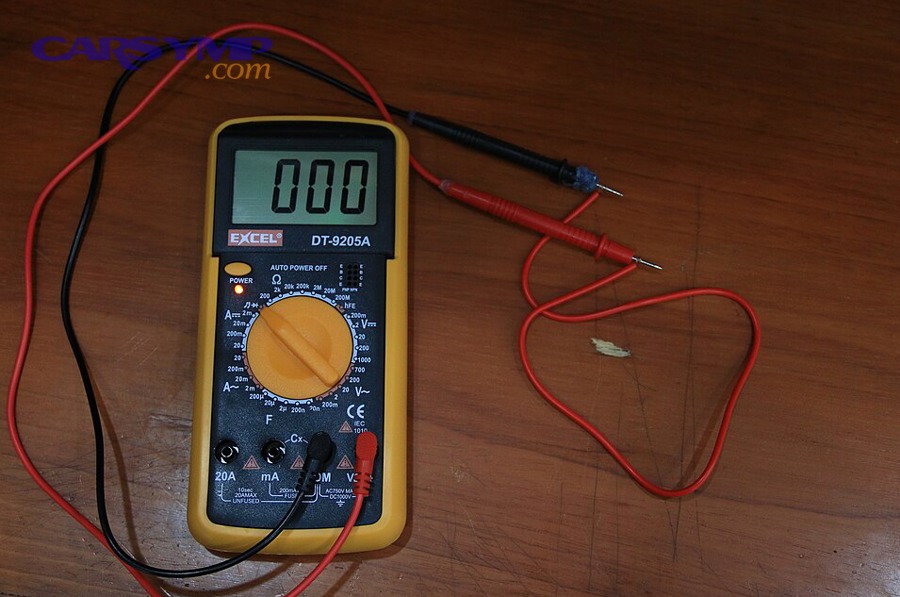
If you want a basic electrical confirmation step, this is where How to test a fuse with a multimeter becomes useful: you can test the removed fuse for continuity and confirm whether it truly failed open before assuming the circuit is at fault.
A safe multimeter approach (no live probing required):
- Set the meter to continuity (or lowest ohms range).
- Touch probes to the fuse’s terminals/blades.
- Good fuse: continuity beep or near-zero resistance. Blown fuse: no beep / very high resistance.
That quick test prevents the classic mistake of chasing a “wiring issue” when the fuse was never actually open.
When should you call an electrician or mechanic immediately?
You should call a professional immediately if there are signs of heat damage, recurring fuse failures, or signs of electrical fault risk, because these situations can escalate from nuisance failures to melted wiring, arcing, and fire hazards. (researchonline.ljmu.ac.uk)
More specifically, stop DIY and call for help if you see any of the following:
- Melted fuse holder, scorched insulation, or burnt smell
- A fuse that blows repeatedly “for no obvious reason”
- Flickering lights, hot plugs/sockets, or scorch marks
- Evidence of water intrusion in a panel or fuse box
- Smoke, buzzing, or any arcing sound
- You cannot clearly identify the correct fuse rating/type
Evidence: According to a study by Liverpool John Moores University from the School of Computing and Mathematical Sciences, in 2024, domestic electrical fire safety guidance highlights that fuses that blow frequently and flickering lights can be signs of electrical faults that may trigger a domestic fire. (researchonline.ljmu.ac.uk)
Now that you can replace a blown fuse safely and avoid the most dangerous mistakes, the next sections cover deeper, situation-specific questions that help prevent repeat failures and improve long-term reliability.
How can you prevent repeat fuse failures and make future replacements easier?
You can prevent repeat failures by reducing overload risk, correcting poor connections, and keeping the right spares and labels—because prevention turns fuse replacement from an emergency reaction into a controlled maintenance habit.
Next, the best prevention strategies are the ones that remove the temptation to “improvise” when something fails.
What spare fuses and tools should you keep on hand for cars and homes?
You should keep a small kit with (1) common fuse ratings, (2) a fuse puller, (3) a flashlight, and (4) a basic multimeter—because having the correct parts and tools prevents risky substitutions and speeds accurate troubleshooting.
A practical kit looks like this:
Car kit (glovebox-friendly):
- Assortment of blade fuses (common ratings like 5A, 10A, 15A, 20A, 25A, 30A)
- Fuse puller (often included in the vehicle fuse box)
- Small flashlight
- A compact multimeter (optional but useful)
Home kit (drawer or garage):
- Correct fuses for your specific panel/device type (plug fuses or cartridges where applicable)
- Flashlight or headlamp
- Insulated gloves (optional but helpful)
- Labels/marker for circuit identification
The aim is not to stock everything—it’s to stock what keeps you from making unsafe substitutions.
How do labeling and fuse charts reduce mistakes during replacement?
Labeling and fuse charts reduce mistakes by making the circuit-to-fuse relationship obvious, so you match the correct fuse and isolate the correct circuit quickly—because confusion is the root cause of wrong-fuse installs and unnecessary swapping. (worksafe.qld.gov.au)
Specifically, labels help you in three ways:
- Speed: you find the correct fuse without pulling multiple candidates.
- Accuracy: you match the correct rating/type the first time.
- Safety: you isolate the correct circuit in an emergency.
In a car, the “chart” is usually the fuse box cover diagram or owner’s manual page. In a home setting, it’s the switchboard legend. If yours is missing or incorrect, creating a correct label set is one of the best upgrades you can do without touching wiring.
Can corrosion or heat damage in the fuse holder cause recurring problems, yes or no?
Yes—corrosion or heat damage in the fuse holder can cause recurring problems, because (1) corrosion increases resistance and heat at the contact, (2) heat damage loosens the grip on the fuse and creates intermittent contact, and (3) poor contact can mimic a blown fuse symptom even when the fuse itself is intact.
Meanwhile, this is one of the most overlooked “why it keeps happening” causes: the fuse is not the only failure point; the connection quality matters.
Signs that the holder—not the fuse—may be the issue:
- Discoloration around the fuse socket
- Melted plastic near the contact area
- Loose fit (fuse rocks or feels sloppy)
- Pitting or oxidation on metal contacts
If you see these signs, replacing fuses repeatedly is unlikely to help; the connection needs repair.
What’s the safest way to add accessories (car) without overloading a circuit?
A dedicated fused feed wins for high-draw accessories, an ignition-switched relay feed is best for clean control, and a fuse tap is only appropriate for low-draw add-ons when you choose the correct circuit—because the safest accessory install protects both the accessory wiring and the original vehicle circuit.
On the other hand, the most common unsafe pattern is adding loads to an already-busy circuit, which creates nuisance blowing and intermittent failures.
A safe hierarchy for add-ons:
- Dedicated fused line from the battery (with correct gauge wire): best for amplifiers, auxiliary lights, and high-draw devices.
- Relay-controlled circuit: best when you want the accessory to turn on with ignition without drawing ignition-circuit current directly.
- Fuse tap/add-a-fuse (low draw only): best for dash cams and small chargers—when you confirm the circuit and fuse size are appropriate.
If you’re unsure, the “safe default” is to avoid stacking loads on factory circuits and choose a dedicated fused feed with professional guidance.
Evidence: According to a study by Liverpool John Moores University from the School of Computing and Mathematical Sciences, in 2024, England recorded 11,089 domestic electrical fires (17.9% of domestic fires), and the research emphasizes that recognizing warning signs (including repeat fuse problems) supports fire prevention. (researchonline.ljmu.ac.uk)