


A combustion gas test in coolant (often called a block test or exhaust gas test) is a fast, practical way to confirm whether exhaust gases are leaking into your cooling system—an early warning sign of problems like a head gasket leak, a warped cylinder head, or a cracked casting. If you learn what the test detects and how the color change works, you can move from “I think I have a problem” to “I have evidence.”
Next, the same test can be done safely at home if you follow the right prep: cool-down time, correct test location (radiator neck vs reservoir), and a vapor-only sample that avoids contaminating the test fluid. That procedure matters because the tool is simple, but the cooling system is not forgiving.
Then, interpreting results is where most DIYers get stuck: blue that stays blue, green that looks “maybe,” and yellow that looks “definitely.” The good news is you can apply a repeatable interpretation framework and decide what to do next—retest, confirm with a pressure test or leak-down test, or stop driving.
Introduce a new idea: once you understand the overview, the steps, and the meaning of the colors, you can also make smarter decisions about kit features, edge cases (diesel engines, additives, sealed reservoirs), and when it’s safer to hand the problem to a shop.
What is a combustion gas test in coolant (block test), and what problem does it diagnose?
A combustion gas test in coolant is a chemical indicator test that checks for exhaust gases in the cooling system by pulling vapor through a reactive fluid, helping you diagnose combustion-to-coolant leaks commonly linked to head gasket or cylinder head problems.
To better understand why this matters, you need to connect the test result to what’s happening inside the engine—where pressure and heat can cross boundaries that are supposed to stay sealed.
What does “combustion gas in coolant” actually mean in engine terms?
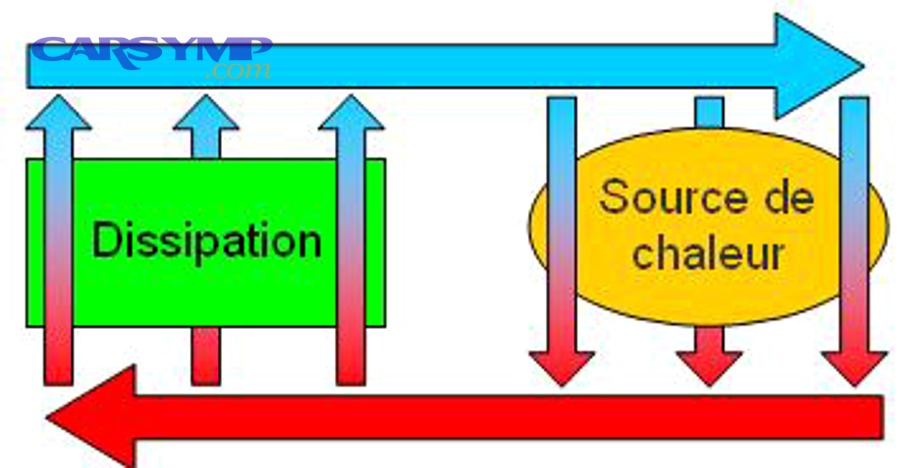
It means gases produced during combustion are escaping the combustion chamber and entering cooling passages that normally carry coolant—so the cooling system becomes a “recipient” of pressure pulses and exhaust byproducts instead of just heat transfer.
Here’s the mechanical story in plain language:
- Combustion chambers run at high pressure during the power stroke.
- The head gasket and the machined surfaces of the engine block and cylinder head are supposed to keep that pressure sealed inside the cylinders.
- If that seal is compromised, the engine can leak in two main directions:
- Combustion gases → cooling system (the scenario a block test targets)
- Coolant → cylinders or oil passages (often seen as white smoke, misfire on startup, or milky oil—depending on the leak path)
Why a coolant-focused test is valuable is that the cooling system is a big, connected network. If combustion gases enter it, they can cause:
- Over-pressurization (upper hose turns rock-hard quickly, coolant pushes into overflow, repeated cap venting)
- Air pockets that reduce circulation and trigger overheating
- Heat spikes because gases don’t carry heat like liquid coolant does
The key diagnostic idea is this: a cooling system can overheat for many reasons, but combustion gas in coolant strongly narrows the cause toward a sealing failure between the combustion chamber and coolant passages.
Is this test the same as a “block test” or “exhaust gas test” (synonyms)?
Yes—“combustion gas test in coolant,” “block test,” and “exhaust gas test” typically refer to the same diagnostic concept: sampling vapor from the cooling system and using a chemical indicator to detect combustion-related gases (commonly discussed as CO₂) entering coolant.
The terms differ mainly by emphasis:
- Combustion gas test in coolant = focuses on where you’re testing (the coolant system)
- Block test = focuses on the engine block area and the classic tool name
- Exhaust gas test = focuses on what you’re detecting (exhaust/combustion gases)
So if your search intent is “what is this test and what does it prove,” you can treat the terms as synonyms and focus on method + interpretation + next steps.
How does a block tester work, and what does the color change indicate?
A block tester works by drawing vapor from the cooling system through a chamber of indicator fluid that changes color if combustion-related gases are present, turning a simple chemical reaction into a visible yes/no (or “uncertain”) result.
Next, the most important detail is that the tester is designed to sample vapor, not liquid coolant—because liquid contamination can distort what the color is trying to tell you.
Why does the fluid change from blue to green or yellow (and what is it reacting to)?
The fluid changes color because it is formulated to react when certain combustion-related gases pass through it—commonly described as reacting to CO₂ or related acidic components in the vapor stream.
A practical way to interpret the chemistry without getting lost in formulas:
- Blue (starting color) = the fluid remains in its baseline state
- Green (often transitional) = a partial shift that can indicate low concentration, brief exposure, borderline reading, or contamination
- Yellow (strong shift) = consistent with a positive reading in most kits when vapor is sampled correctly
Why it’s set up this way is strategic: engines can have intermittent leaks. A small leak might only show a partial change at idle, while a stronger leak triggers a rapid color shift.
A clean result depends on three “micro-conditions”:
- Vapor-only sampling (no coolant sucked into the chamber)
- Good seal at the test point (so you pull system vapor, not ambient air)
- Stable temperature and circulation (so vapor represents what the system is producing)
If you nail those conditions, the color change becomes a meaningful diagnostic shortcut instead of a confusing science experiment.
What results are valid vs invalid, and when should you repeat the test?
A valid block test is one where the indicator fluid was exposed to cooling-system vapor under safe, controlled conditions, and the observed color change is stable—not a momentary “flash” caused by splashing coolant or poor sealing.
Use this validation checklist:
Valid “Negative”
- Fluid stays blue
- You pumped enough cycles to sample real vapor (not just the air in the tool)
- Engine is at operating temperature (or at least warmed enough to circulate coolant)
Valid “Positive”
- Fluid turns yellow (or strong yellow/green per the kit’s chart) and stays there
- You repeat the sampling and get the same result
Common “Invalid”
- Coolant gets sucked into the chamber (fluid looks diluted, cloudy, or changes strangely)
- You can’t keep a seal and you mostly pull outside air
- You test a stone-cold engine with no circulation and expect a definitive answer
When to repeat:
- If you see a borderline green once, repeat after:
- Bleeding obvious air pockets (if accessible)
- Ensuring coolant level is below the test opening
- Warming the engine to stable temperature
- If symptoms only occur under load, repeat after a short drive—then test safely with appropriate cool-down time.
How do you do a combustion gas test safely and correctly at home?
You can do a combustion gas test at home by following a safe, vapor-only procedure that uses the right test location, correct coolant level, and controlled sampling steps—so the color change reflects combustion gases, not contamination or rushed handling.
Then, because the cooling system is pressurized and can cause severe burns, the procedure must begin with safety and cool-down, not with the tester.
Do you test at the radiator neck or the reservoir neck (and why does it matter)?
You test where the system lets you sample vapor from the pressurized coolant circuit, and that depends on the vehicle’s design.
A simple decision rule:
- If the radiator has a cap on the radiator itself, the radiator neck is usually the primary test point (common on many older designs).
- If the system uses a pressurized expansion tank (reservoir) with the cap there, the reservoir neck is typically the correct test point.
Why it matters:
- Testing the wrong point can mean you sample air from a non-pressurized overflow section instead of the actual system vapor.
- Some reservoirs have internal baffles that can splash coolant—raising contamination risk—so you may need an adapter cone and careful pumping.
Practical tips for whichever point you choose:
- Keep the coolant level below the opening you’re testing, so you draw vapor—not liquid.
- Ensure the tester cone/adapter creates a tight seal.
- Avoid testing in windy conditions where ambient air can dilute the sample.
Should the engine be warm, idling, or revved during the test?
Most of the time, the engine should be warm and idling for the baseline test, because a warm engine circulates coolant and produces representative vapor—but you should avoid aggressive revving that increases pressure and splash risk.
A safe progression:
- Warm to operating temperature (enough for coolant circulation and thermostat activity in many vehicles)
- Idle test first (stable, controlled)
- If symptoms are load-related, use brief, gentle throttle blips only if your kit instructions recommend it and you can keep the chamber dry
What you’re trying to capture is not “maximum drama,” but consistent vapor composition. A raging hot engine that is actively overheating is the worst time to rush a test—because safety and contamination risk both spike.
Evidence: According to a study by researchers at a regional burns service in the east of England, in 2016, about 66% of radiator scald injuries occurred when people removed the pressure cap of an overheated radiator, highlighting why cool-down and cautious cap handling must come first.
What are the most common mistakes that cause wrong readings?
Most wrong readings come from one of three failure modes: contamination, bad sampling, or testing under the wrong conditions.
Here’s a “mistake → consequence” map:
- Coolant splashes into the tester
- Consequence: false color shift, cloudy fluid, invalid test
- Fix: lower coolant level below neck; pump gently; keep tool upright
- Poor seal at the neck
- Consequence: outside air dilutes vapor; false negative
- Fix: use correct cone/adapter; steady hand; don’t pump aggressively
- Testing too cold
- Consequence: no circulation, no representative vapor; false negative
- Fix: warm engine properly (without overheating)
- Intermittent leak not active at idle
- Consequence: “negative” despite symptoms
- Fix: repeat after a drive; confirm with other tests
- Ignoring the kit’s time and cycle guidance
- Consequence: under-sampling or over-sampling; confusing results
- Fix: follow a repeatable number of pumps and observation time
If you treat the test like a controlled experiment—same conditions, same cycles, clean sampling—you’ll get a result that supports real decisions instead of adding uncertainty.
Does a positive combustion gas test always mean a blown head gasket?
No, a positive combustion gas test does not always mean a blown head gasket, because combustion gases can enter the cooling system through several failure paths—but it does strongly indicate a combustion-to-coolant leak that requires prompt confirmation and planning.
Moreover, the smartest move after a positive is to shift from “diagnosis curiosity” to “damage control,” because driving decisions can change the final repair scope.
What are the most common causes of combustion gases entering the cooling system ?
There are 5 main causes of combustion gases entering the cooling system, grouped by what fails at the seal between combustion pressure and coolant passages:
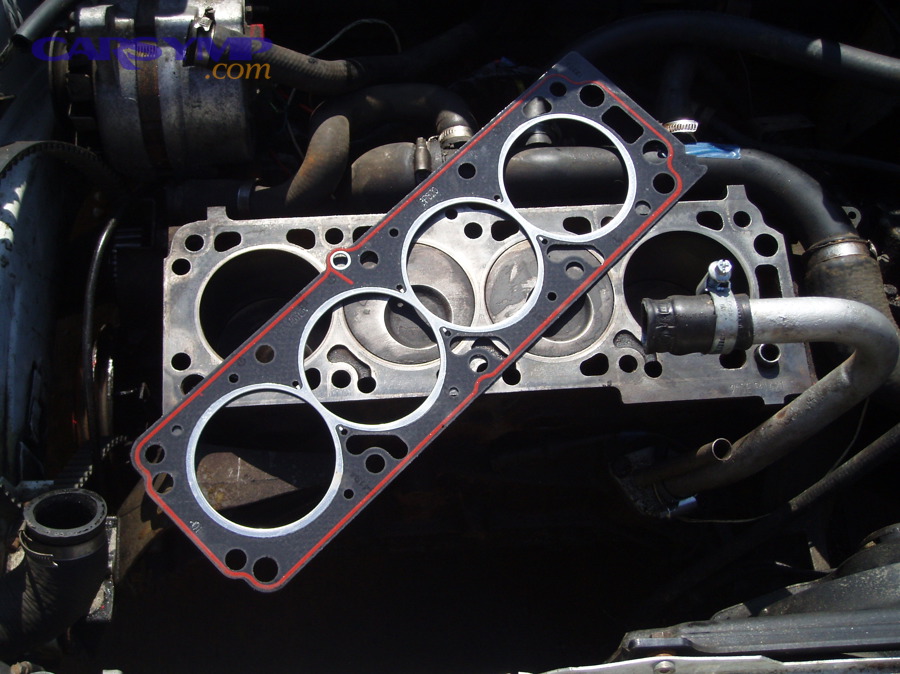
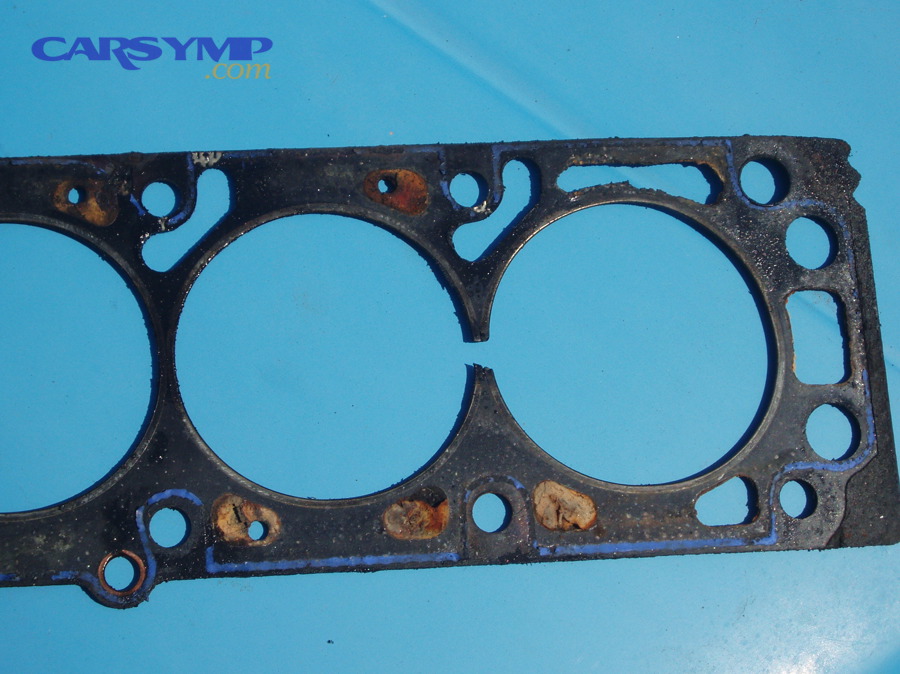
- Head gasket failure (most common suspicion)
- The gasket loses sealing integrity due to overheating, age, improper torque, or surface warping.
- Warped cylinder head
- Overheating can distort the head so even a new gasket cannot seal perfectly without machining.
- Cracked cylinder head
- A crack can link a combustion chamber area to a coolant jacket.
- Cracked engine block (less common, more severe)
- A crack in the block’s coolant jacket or deck surface can allow pressure transfer.
- Related component failures (vehicle-dependent)
- Some engines have additional heat exchangers or coolers where failure can mimic combustion leak symptoms (your exact architecture matters).
If the test is positive, it’s not telling you “which one” with certainty—it’s telling you the cooling system is being exposed to combustion byproducts. Your next step is to determine the most likely root cause with a second diagnostic.
Evidence: According to a study by Yale University from the School of the Environment, in 2015, coolant leaks past a faulty engine head gasket into engine cylinders were identified as a mechanism that can lead to measurable ethylene glycol-related emissions, supporting the point that head gasket sealing failures can create abnormal cross-system leakage pathways.
What should you do next after a positive result (and what can wait)?
After a positive result, you should follow a priority checklist that protects the engine first, confirms the diagnosis second, and plans repair third.
Do immediately (high priority)
- Stop driving if you have:
- Overheating events
- Rapid coolant loss
- Misfires that worsen with time
- A cooling system that pressurizes very quickly after startup
- Confirm basics:
- Coolant level trend (mark the bottle)
- Visible leaks (hoses, radiator, water pump)
- Oil condition (milky oil is a red flag—but not required for a head gasket leak)
Confirm within the next diagnostic step
- Cooling system pressure test: checks for external leaks and pressure loss
- Cylinder leak-down test (or compression test): helps identify which cylinder is leaking and whether the leak path aligns with coolant passages
- Repeat the block test under controlled conditions if you suspect contamination
What can wait (if no overheating and symptoms are mild)
- Cosmetic symptoms (occasional smell, small coolant drop) can be monitored briefly, but only if engine temperature remains stable and you’re not pressurizing the system abnormally.
This is also the point where many owners ask about head gasket repair planning. If your confirmation tests align, start gathering:
- A Head gasket repair cost estimate based on your engine layout and labor rates
- The expected Head gasket repair labor time and steps, because access can vary wildly between an inline-four and a transverse V6, for example
The key is to treat a positive block test like a “probable cause” signal that triggers a controlled confirmation path—not an automatic verdict.
How accurate is the block test compared with other cooling-system diagnostics?
A block test is most accurate when used as a screening tool for combustion-to-coolant leaks, while a pressure test and leak-down test are better for identifying leak location and mechanical severity—so the best diagnostic strategy is often to combine them.
However, accuracy depends on how the test is performed, which is why it helps to explicitly address false positives, false negatives, and the role of comparison tests.
Can the test be wrong (yes/no), and what causes false positives vs false negatives?
Yes, the combustion gas test in coolant can be wrong, and it most commonly fails for three reasons: contamination, poor sampling/sealing, or testing conditions that don’t activate an intermittent leak.
False positives (shows “positive” when leak isn’t present)
- Coolant contamination in the tester
- Splashing coolant into the chamber can alter the fluid’s apparent color.
- Chemical contamination from additives
- Stop-leak products or unusual additives can create confusing color shifts.
- Dirty tool or reused fluid
- Residual fluid in the chamber can “pre-load” the next test.
False negatives (shows “negative” when leak is present)
- Intermittent leak not active at idle
- Some leaks show only under load or at specific temperatures.
- Poor seal causing diluted sample
- If you pull mostly outside air, the tester won’t see enough target gas.
- Engine not warm enough
- No circulation = not enough representative vapor.
To reduce error, treat the test as repeatable:
- Same warm-up condition
- Same pump count
- Same test location
- Fresh fluid (or properly stored fluid)
- No splashing
If you do that and the result still conflicts with symptoms, it’s a sign to move to a different diagnostic method rather than arguing with the color.
What’s the difference between a combustion gas test, a cooling system pressure test, and a cylinder leak-down test?
A combustion gas test is best for detecting presence of combustion byproducts in coolant vapor, a pressure test is best for finding system leaks and pressure integrity, and a leak-down test is best for pinpointing where compression is escaping—so they answer different questions.
Here’s a quick comparison table (so you can choose the next step logically). This table summarizes what each test is designed to prove and what the results usually imply:
| Test | What it measures | Best at answering | Typical “pass” meaning | Typical “fail” meaning |
|---|---|---|---|---|
| Combustion gas test (block test) | Chemical reaction to combustion-related gases in cooling vapor | “Are combustion gases getting into the coolant?” | No detectable combustion gases under test conditions | Combustion-to-coolant leakage likely |
| Cooling system pressure test | Pressure retention/leaks in cooling system | “Does the cooling system hold pressure?” | System holds pressure; fewer external leak concerns | External leak, internal leak, or cap/system issue |
| Cylinder leak-down test | Air leakage from a cylinder under pressure | “Where is compression escaping?” | Good sealing of rings/valves/head area | Leak path can be heard/seen (intake, exhaust, crankcase, bubbles in coolant) |
A useful strategy is “screen → confirm → localize”:
- Screen with a block test (quick indicator)
- Confirm with a pressure test (system integrity)
- Localize with leak-down (pinpoint cylinder/leak path)
That combination reduces guesswork and makes your repair plan more precise—especially if you’re heading toward a major repair decision.
Which combustion leak tester kit should you choose, and how do special cases change the approach?
You should choose a combustion leak tester kit based on seal quality, chamber design, included adapters, and fluid availability, and you should adjust your approach for special cases like pressurized reservoirs, diesel applications, and borderline results that require retesting and confirmation.
Especially when the result could lead to expensive work, the kit and the method should support confident interpretation rather than “maybe.”
What features matter most in a block tester kit (fluid type, adapters, bulb quality)?
Focus on the “meronyms” (the parts that decide whether you sample correctly):
- Adapter/cone fit
- A tight seal prevents outside air dilution (false negatives).
- Chamber visibility
- Clear chamber walls make subtle color shifts easier to judge.
- Bulb/pump quality
- Consistent draw matters more than aggressive pumping.
- Fluid availability and storage
- You want replacement fluid you can reliably get, and a bottle that seals well for shelf life.
- Two-chamber designs (when available)
- Many kits position multi-chamber designs as a way to reduce contamination-driven misreads (especially from airborne particles or residue).
A kit that seals poorly can turn a good engine into a “false positive,” or a bad engine into a “false negative.” So the correct purchase mindset is: buy sealing confidence, not marketing claims.
How do diesel engines or different coolants/additives affect test fluid choice and readings?
Diesel engines and coolant chemistry can influence results mainly by changing the composition of vapor and the likelihood of contamination.
Use these guardrails:
- Diesel vs gasoline: Some kits specify different fluids or procedures for diesel exhaust characteristics—follow the kit’s compatibility notes.
- Coolant type: Modern coolants (OAT/HOAT and specialty blends) usually aren’t a problem if you sample vapor correctly, but they can become a problem if you contaminate the chamber with liquid coolant.
- Additives/stop-leak: These are the real wildcards. If the vehicle has stop-leak history, assume higher risk of confusing readings and prioritize confirmation tests.
When in doubt, the safest approach is not “trust the first color,” but “control the sample and confirm with a second method.”
What should you do if results are borderline (blue→green) or the symptom only happens under load?
If results are borderline or symptoms are load-dependent, you should run a retest + confirm workflow rather than making a repair decision off a single ambiguous color.
A practical workflow:
- Reset conditions
- Ensure coolant level is below the test opening
- Remove obvious air pockets (if your system has a bleed procedure)
- Repeat under stable temperature
- Warm to operating temp; idle; controlled sampling
- Repeat after load
- Short drive, then test safely (cool-down time matters)
- Confirm with a second diagnostic
- Pressure test or leak-down test to validate and localize
This is also where repair planning becomes real. If confirmation points toward a head gasket issue, your next steps often include:
- Getting a Head gasket repair cost estimate (parts + machining + labor)
- Understanding Head gasket repair labor time and steps (disassembly access, head removal, cleaning, measuring flatness, torquing sequence)
And after the repair, plan the post-repair process—not as an afterthought, but as part of success:
- After repair: coolant flush and break-in matters because contaminated coolant, trapped air, or leftover combustion byproducts can shorten the life of the new gasket and stress the cooling system again.
When should you skip DIY testing and go to a shop immediately (yes/no)?
Yes, you should skip DIY testing and go to a shop immediately if (1) the engine is overheating, (2) the cooling system is dangerously pressurized, or (3) drivability and lubrication are at risk—because continued driving can turn a contained leak into a warped head or damaged bottom end.
Then, use these “go now” triggers:
- Overheating even once in a short drive (especially repeated spikes)
- Coolant loss you can’t account for (no external leak found)
- Misfires + sweet smell + steam (possible coolant ingestion)
- Milky oil or rising oil level (coolant mixing risk)
- Rock-hard upper hose quickly after startup (abnormal pressurization)
A shop can run a coordinated set of tests (block test, pressure test, leak-down, borescope in some cases) and give you a repair path that matches your engine’s exact failure mode—so you’re not guessing your way into an expensive mistake.
Evidence: According to a study by researchers at a regional burns service in the east of England, in 2016, radiator scald injuries frequently occurred during cap removal on overheated systems, reinforcing why professional help is the safer choice when overheating and pressure are already severe.