


A post-repair coolant flush and a careful engine run-in (break-in) matter because they prevent the two problems that ruin fresh work: trapped air that triggers overheating, and early-use stress that turns minor seepage into major leaks. Done in the right order, this workflow stabilizes temperature control and confirms your repair actually fixed the root cause.
Next, you’ll learn exactly when you should flush versus when a drain-and-fill or simple refill is enough, so you don’t waste time or accidentally introduce new issues by over-flushing a clean system. The goal is to match the method to the repair type, the coolant condition, and any contamination risk.
Then, you’ll get a practical DIY checklist for tools, fluids, and safety—plus the full step-by-step procedure: draining, flushing, refilling, and bleeding air correctly so the thermostat opens normally, the heater works, and the fan cycles as expected.
Introduce a new idea: once the cooling system is stable, the run-in/break-in process becomes a structured “monitor-and-verify” period—where you recheck levels, watch for pressure behavior, and use targeted diagnostics if symptoms suggest a deeper issue (including the phrases you’ll see in the real world, like head gasket repair, combustion-leak checks, and compression testing).
What does “post-repair coolant flush and engine run-in (break-in)” mean, and why do both matter?
A post-repair coolant flush and engine run-in (break-in) is a two-stage process that first restores clean, air-free coolant circulation and then validates the repair through controlled heat cycles and early driving checks to prevent overheating, leaks, and premature wear.
More importantly, these steps work together: a perfect break-in is impossible if the cooling system still has air pockets or contaminated coolant.
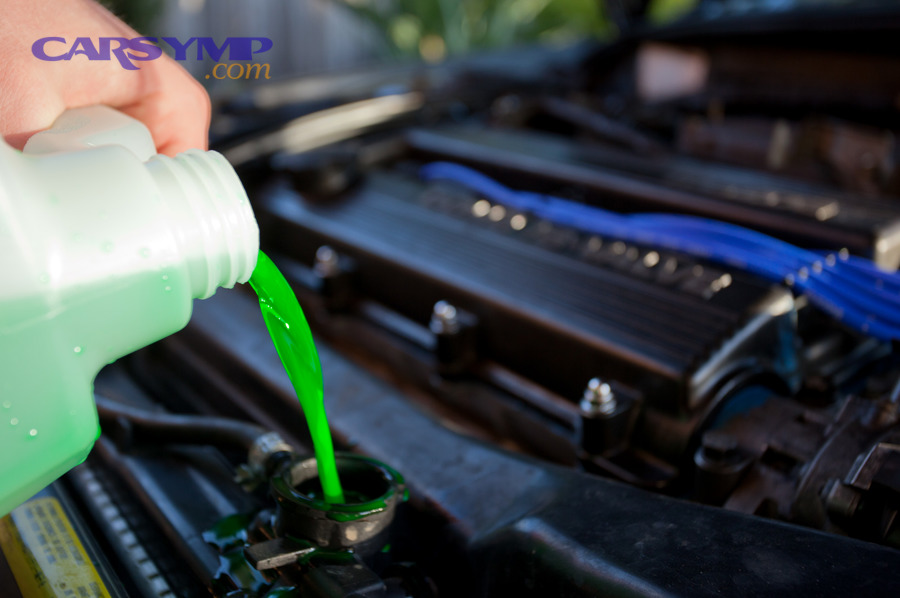
Your engine’s cooling system is a loop: coolant flows through passages in the block and head, absorbs heat around combustion chambers, and releases heat through the radiator. A thermostat regulates flow to keep the engine at an efficient operating temperature, and a pressure cap raises the boiling point by maintaining pressure. If you repaired any part of that loop—radiator, hoses, water pump, thermostat, head gasket, or heater core—you disturbed conditions that the system relies on: correct coolant chemistry, correct fill volume, and correct air removal.
Why the flush matters: after a repair, you might have old coolant, tap-water minerals, rust, stop-leak residue, or debris. Even when nothing is “dirty,” mixing incompatible coolants or leaving diluted coolant in the block can reduce corrosion protection and shift freeze/boil margins.
Why the run-in matters: the first few heat cycles reveal what steady-state driving may hide—small seepage at hose connections, trapped air that only burps out after thermostat opening, or pressure behavior that points to combustion gas intrusion. “Run-in” is also a synonym for “break-in,” meaning the early operation period when parts settle into normal contact patterns and you verify performance under gradually increasing load.
What is the difference between a coolant flush, a drain-and-fill, and a refill after parts replacement?
A coolant flush actively pushes water (and sometimes a cleaning agent) through the system to remove old coolant and contaminants, while a drain-and-fill replaces only the portion that drains out, and a refill simply restores lost volume after a component swap.
Then, the right choice depends on what you repaired and what you’re trying to remove.
Refill (small disturbance, clean coolant):
- Replacing a hose, radiator cap, or reservoir, with minimal coolant loss.
- Coolant is fresh, correct type, and uncontaminated.
- You still must bleed air properly afterward.
Drain-and-fill (routine maintenance or mild uncertainty):
- Coolant is old but not contaminated.
- You want a safer, simpler refresh with less chance of stirring debris.
- You accept that some old coolant remains in the block and heater core.
Full flush (contamination risk or major system work):
- Mixed coolant types, heavy rust/sludge, unknown history.
- A component failure introduced debris (e.g., deteriorated hose fragments, clogged radiator symptoms).
- Oil contamination after a cooling-system failure related to head gasket repair or oil cooler issues.
A key idea is “system volume.” Draining the radiator rarely empties the block and heater core completely. That’s why a flush is sometimes necessary, and why concentration math matters when you refill.
How is “engine run-in” (run-in) the same as “break-in,” and when is it relevant after repairs?
Engine run-in is the same concept as break-in: an early operating period where you verify stability, avoid extreme load, and monitor for abnormal temperature or pressure behavior as parts and seals settle.
In addition, run-in is relevant not only for rebuilt engines but also after repairs that affect sealing and heat management.
Run-in/break-in is most critical after:
- Engine rebuild/remanufactured engine installation.
- Cylinder head removal, gasket replacement, or head gasket repair.
- Any repair where overheating risk is elevated (water pump, thermostat housing, major coolant loss).
Run-in is still useful after “simple” work because temperature behavior changes when air is trapped. A cautious first drive with planned rechecks is how you prevent a minor burp from becoming a roadside boil-over.
According to a study by Universitat Politècnica de València from Tribology/Lubrication research, in 2023, real-time wear-debris measurement during gasoline-engine running-in showed that the early running-in phase is a distinct wear period where surfaces transition toward stable behavior.
Should you flush the coolant after a repair?
Yes—you should flush the coolant after a repair when contamination, mixed coolant chemistry, or major cooling-component work is involved, because it removes residues, restores corrosion protection, and reduces overheating risk from debris or improper mixture.
However, many repairs only require a correct refill and thorough air bleeding, so the smartest approach is to choose the least invasive method that fully solves your situation.
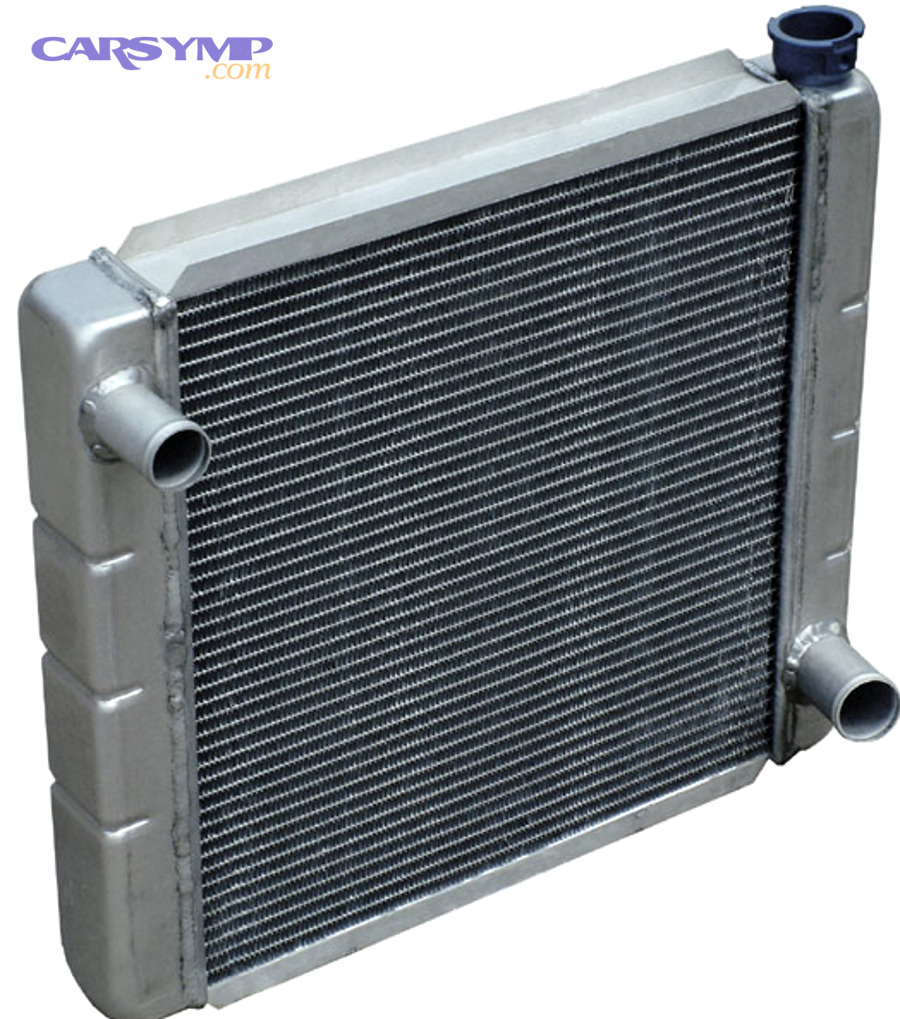
The decision comes down to three practical questions:
- Did anything contaminate the system? (oil, stop-leak, rust sludge, unknown coolant)
- Did you change coolant type or lose a lot of coolant? (mixture accuracy now uncertain)
- Did you open the system enough to introduce air and debris? (major parts replacement)
Which repair scenarios require a full coolant flush vs a drain-and-fill vs just topping off?
There are 3 main post-repair fluid strategies: refill-only, drain-and-fill, and full flush, based on the criterion of how much the repair disturbed coolant quality and system cleanliness.
Next, use these groupings to pick the right one quickly.
1) Refill-only (usually enough)
- Radiator cap replacement, overflow bottle replacement.
- One hose swap with minimal coolant loss.
- Thermostat replacement where coolant is otherwise fresh and correct type (still bleed air carefully).
2) Drain-and-fill (recommended in many normal repairs)
- Radiator replacement with unknown coolant age but no contamination.
- Water pump replacement where coolant drained out and you want fresh inhibitors.
- You want a “safe refresh” without aggressive flushing.
3) Full flush (strongly recommended)
- Mixed coolant types or unknown coolant history (previous owner mystery).
- Rust/sludge or repeated overheating history.
- Oil contamination after head gasket repair or oil cooler failure symptoms.
- Heater-core performance issues caused by sediment or degraded coolant.
If you’re unsure, drain-and-fill is often the conservative middle ground—unless you see signs of contamination, in which case flushing becomes the safer path.
Flush vs drain-and-fill—what are the pros/cons for DIY drivers after repairs?
Flush wins in contamination removal, drain-and-fill is best for low risk and simplicity, and refill-only is optimal for minimal disturbance after small repairs.
Meanwhile, the “best” option depends on what you’re trying to protect: your time, your components, or your confidence.
Flush (best cleaning)
- Pros: removes more old coolant and debris; resets chemistry.
- Cons: more steps, more disposal volume, greater chance of introducing air if rushed.
Drain-and-fill (best balance)
- Pros: simpler; lower risk of dislodging heavy sediment; fewer mistakes.
- Cons: leaves a portion of old coolant in the block/heater core.
Refill-only (best speed)
- Pros: fastest; least invasive.
- Cons: does not correct wrong coolant type, dilution, or degraded inhibitors.
If your repair solved a leak but the coolant is old or unknown, a drain-and-fill often prevents the “fixed leak, new corrosion” problem later.
Is it safe to drive immediately after a repair without flushing first?
No—it is not safe to drive immediately after a repair without verifying coolant level and bleeding air, because low coolant, trapped air, or poor mixture can cause rapid overheating, warped components, and repeat failures.
To begin, “safe” means the system is full, bled, and stable through at least one heat cycle.
If you must drive (for example, a short test loop), do it only when:
- Coolant is at the correct level (radiator and reservoir as applicable).
- Heater produces steady heat as the engine warms.
- Temperature rises smoothly and stabilizes (no spikes).
- You have a plan to stop immediately if the gauge climbs or warning lights appear.
This is exactly why the next sections focus on preparation and bleeding: most post-repair overheating isn’t “bad parts,” it’s trapped air and incomplete verification.
What tools, fluids, and safety steps do you need before you start?
You need the correct coolant, safe lifting and draining tools, and a simple bleeding setup to flush and refill confidently, because cooling systems combine hot pressurized fluid with rotating fans and belts.
Next, think “minimum viable safety” before “maximum complexity.”
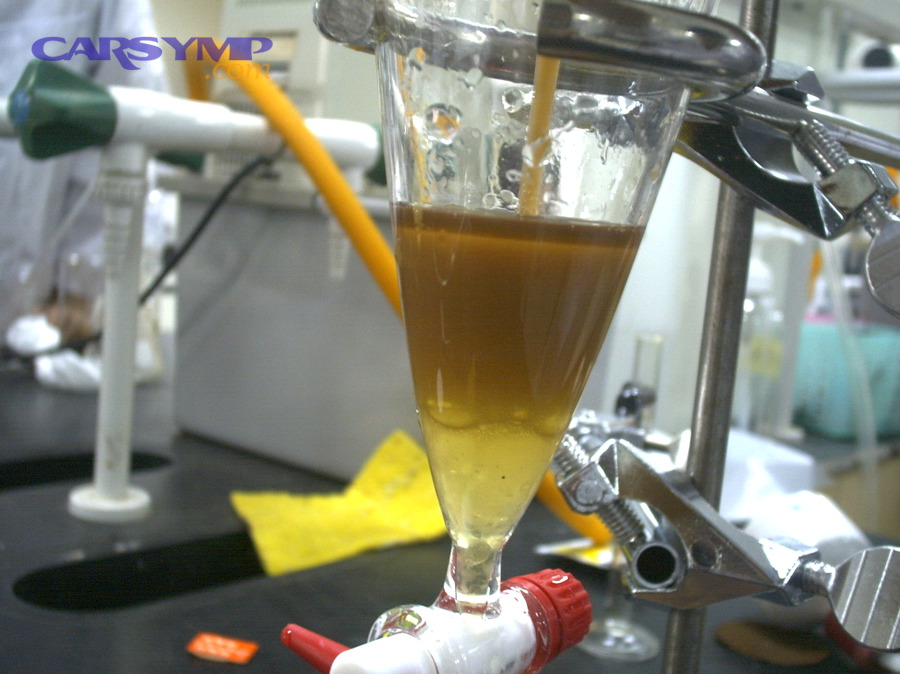
What is the minimum DIY kit for a safe coolant flush and refill?
There are 2 main levels of DIY kit—minimum and upgraded, based on the criterion of how reliably you can fill and purge air.
Specifically, start with the minimum kit and add tools only if your vehicle is difficult to bleed.
Minimum kit (works for many cars):
- Drain pan (large enough for system volume)
- Nitrile gloves and safety glasses
- Funnel (or spill-free funnel kit if possible)
- Distilled water (for flushing and mixing if using concentrate)
- Correct coolant type (per manufacturer spec)
- Basic hand tools for drain plug, hose clamps, shields
- Rags and brake cleaner for cleanup (avoid spraying onto belts)
Upgraded kit (reduces headaches):
- Spill-free funnel kit (helps continuous top-up while burping)
- Cooling-system pressure tester (finds leaks before the road test)
- Vacuum fill tool (best for stubborn air pockets, if available)
The “best” tool is the one that prevents air locks—because air locks create overheating that looks like a failed repair.
Which coolant type should you use (and what does OAT/HOAT/IAT mean in plain English)?
Coolant type refers to the additive chemistry that prevents corrosion and scaling, and you should use the exact type your vehicle specifies because mixing types can reduce protection and create deposits.
Besides, the simplest rule is: match the spec, not the color.
In plain English:
- IAT (older “green” style in many classic vehicles): faster inhibitor depletion, often shorter service interval.
- OAT (organic acid technology): long-life additives common in many modern vehicles.
- HOAT (hybrid): blends approaches and is common in certain manufacturers.
Color is not a reliable identifier. Two different brands can dye different chemistries the same color. If the coolant history is unknown, a full flush and refill with the correct spec is often the cleanest reset.
Do you need distilled water, and is tap water ever acceptable?
Yes—you should use distilled water for mixing and flushing whenever possible because it avoids minerals that contribute to scaling and corrosion, especially in aluminum components.
However, tap water can be used in an emergency short-term, but you should replace it with distilled-water mixture as soon as practical.
Distilled water matters most when:
- You’re doing multiple flush cycles.
- Your local tap water is hard (high mineral content).
- You have an aluminum radiator and modern aluminum engine parts.
If you used tap water during an emergency refill, treat that as a temporary measure and plan a drain-and-fill with the correct mixture soon.
How do you perform a post-repair coolant flush step-by-step?
A reliable post-repair coolant flush is a 6-step method—cool engine, drain, flush cycles, heater-included circulation, final drain, and correct refill—that removes old fluid and restores stable temperatures.
To better understand the steps, first visualize where coolant actually sits and why “drain once” is rarely the full story.
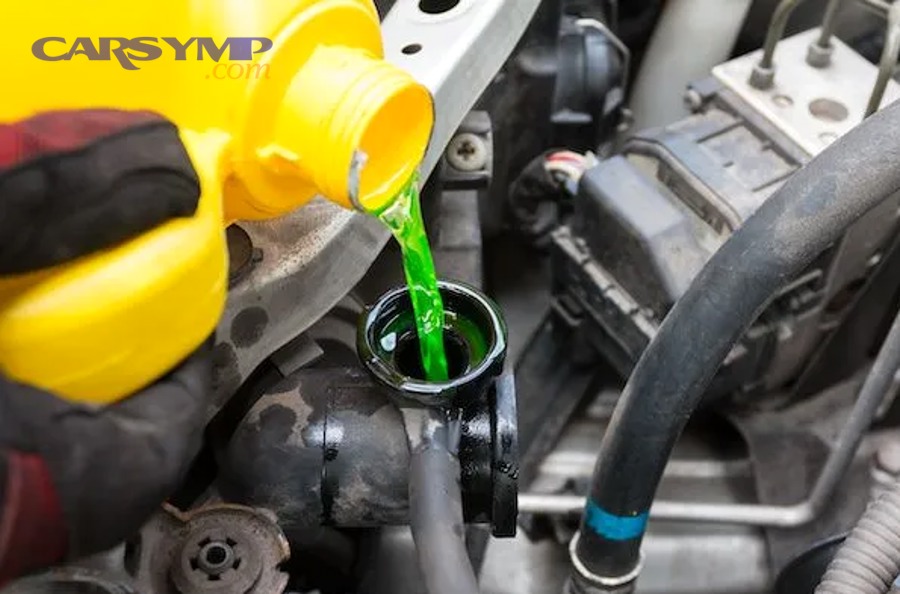
Where does coolant actually sit (radiator, block, heater core), and why does that change your flush plan?
Coolant sits in three main places—radiator, engine block/head passages, and heater core, and that distribution changes your plan because draining the radiator often leaves a significant volume in the block and heater core.
Next, use this mental model to avoid the most common DIY mistake: refilling with premix and ending up too diluted.
What this means in practice:
- If you drain only from the radiator, you may still have old coolant (or water from flushing) trapped in the block.
- The heater core acts like a small radiator; if the heater valve is closed, you may not flush it well.
- Air naturally rises to high points, which is why some vehicles need bleed screws or special fill points.
The radiator and thermostat relationship also matters: until the thermostat opens, circulation through the radiator is limited. That’s why flushing often uses warm-up cycles with the heater on.
What are the step-by-step flush methods you can choose from (gravity flush, chemical flush, hose flush)?
There are 3 main flush methods—gravity flush, chemical flush, and hose/flow flush, based on the criterion of how aggressive you need to be to remove contamination.
Then, choose the least aggressive method that still achieves a clean system.
Method A: Gravity flush (most DIY-friendly)
- Start with a cold engine and remove the radiator cap/pressure cap safely.
- Open the radiator drain (petcock) or remove the lower hose to drain into a pan.
- Close drains, refill with distilled water.
- Run engine with heater on (full hot) until warm; allow thermostat to open.
- Shut down, cool, drain again.
- Repeat until drained water looks clear (often 2–4 cycles).
- Final drain, then refill with correct coolant mixture.
Method B: Chemical flush (for deposits/sludge, not for oil contamination unless product states so)
- Follow product instructions precisely, then perform multiple distilled-water rinses.
- Never leave chemical flush solution in longer than instructed.
Method C: Hose/flow flush (more aggressive, more risk)
- Uses controlled water flow to push debris out.
- Risk: can dislodge sediment that later clogs small passages, especially heater cores.
If the system has oil contamination, the approach changes: you may need specialized cleaners and more cycles, and you must confirm the source of contamination is fixed before you try to “clean it away.”
Should you use a chemical flush product after a repair?
No—you should not use a chemical flush product after a repair unless you have clear evidence of deposits or contamination that distilled-water cycles won’t remove, because chemicals can stress seals and require extra rinse cycles.
However, if the system shows sludge, rust, or repeated overheating history, chemical flush can be helpful when used correctly.
Use chemical flush when:
- Coolant is brown/sludgy and drains dirty after multiple water cycles.
- Heater-core flow is weak and you suspect deposits.
- The manufacturer or product specifically supports your contamination type.
Avoid chemical flush when:
- You only replaced a hose or thermostat and the coolant was clean.
- You’re unsure of compatibility with your coolant type or seal materials.
How do you bleed air from the cooling system so it doesn’t overheat?
You bleed air by using a 3-part approach—fill at the correct point, circulate with heater on through thermostat opening, and top off after cooldown—because trapped air causes hot spots, temperature spikes, and no-heat symptoms.
Next, treat bleeding as a required step, not an optional “extra,” because most post-repair overheating is actually air.
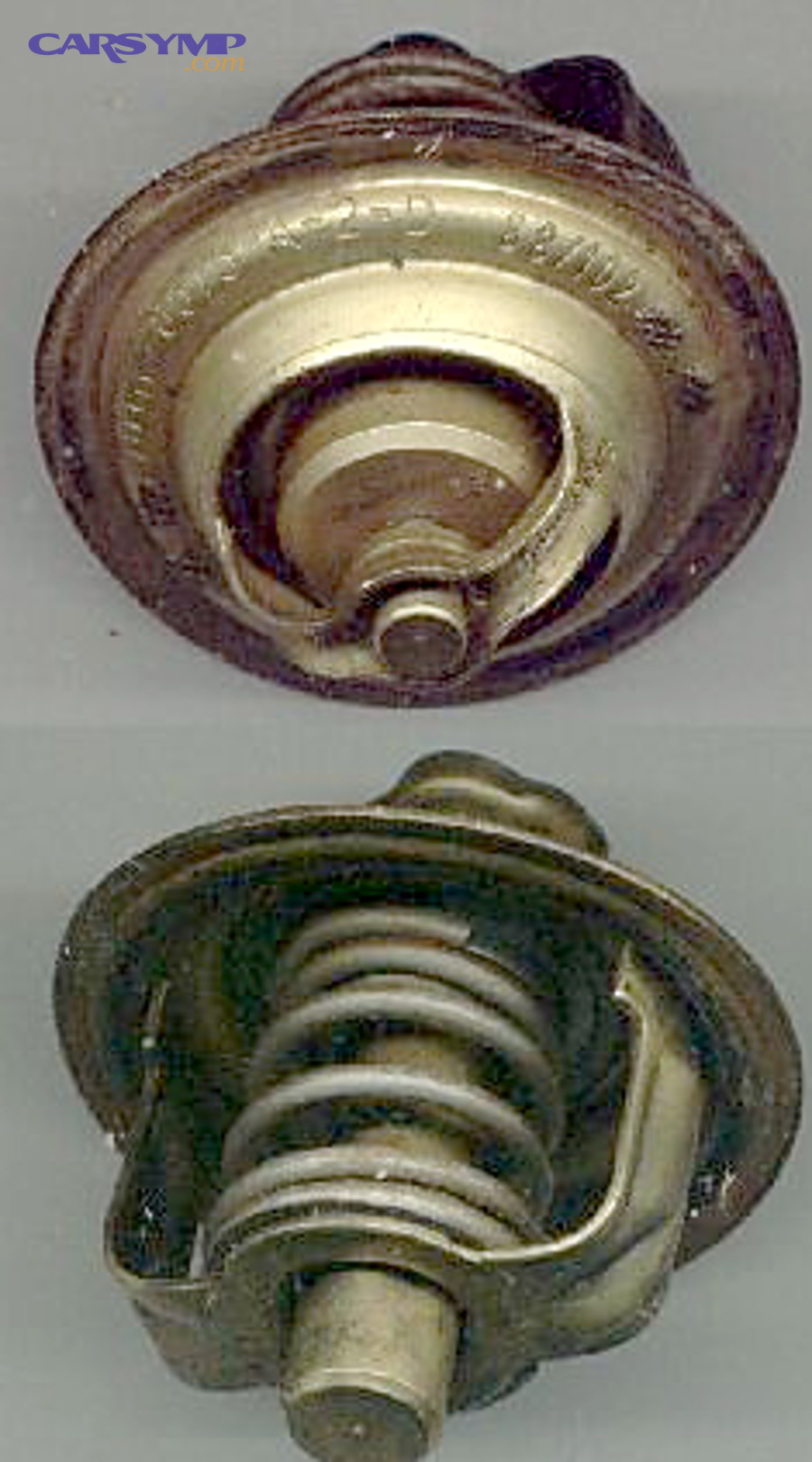
What are the common bleeding methods (bleed screw, spill-free funnel, vacuum fill), and when should you use each?
There are 3 main bleeding methods—bleed screw, spill-free funnel, and vacuum fill, based on the criterion of how the vehicle traps air and where the highest points are.
To illustrate, pick the method that matches your vehicle design.
1) Bleed screw method
- Best when your engine has factory bleed screws near the thermostat housing or high coolant points.
- You open the screw while filling until coolant flows without bubbles.
2) Spill-free funnel method
- Best for many DIY drivers because it keeps a column of coolant above the fill neck and allows bubbles to escape.
- You run the engine through warm-up while keeping the funnel level stable.
3) Vacuum fill method
- Best for stubborn systems (complex hose routing, mid-engine layouts, or repeated air locks).
- Pulls vacuum, then draws in coolant without leaving air pockets.
The common rule is the same: keep the system full during warm-up, let the thermostat open, and recheck after full cooldown.
If the heater blows cold at idle, is that a sign of trapped air?
Yes—a heater that blows cold at idle is often a sign of trapped air or low coolant level, because the heater core is a small radiator that needs steady coolant flow to produce heat.
However, it can also point to a stuck thermostat, clogged heater core, or water pump flow issues, so you should interpret it alongside temperature behavior and coolant level.
Common “air in system” pattern:
- Heat comes and goes.
- Gurgling sounds behind the dash.
- Temperature gauge fluctuates with RPM changes.
- Coolant level drops after the first heat cycle.
If heat returns when you rev the engine slightly, that often indicates flow improves with RPM—consistent with air pockets moving or low coolant volume.
“Overheating” vs “air pocket hot spot”—how can you tell the difference during the first heat cycle?
Overheating is a system-wide failure to shed heat, while an air-pocket hot spot is a localized temperature spike caused by trapped air preventing proper circulation in a specific area.
Meanwhile, the difference shows up in the behavior: stable vs spiky.
Air pocket hot spot signs
- Temperature rises quickly, then drops suddenly when the bubble moves or coolant finally contacts the sensor area.
- Heater may blow cold even while the engine seems hot.
- Coolant level changes noticeably after shutdown and cooldown.
True overheating signs
- Temperature climbs and stays high.
- Fans may run continuously but can’t bring temp down.
- Coolant may boil in the reservoir or vent from the cap due to sustained heat.
If you see spikes, stop and bleed again before driving farther. If you see sustained overheating, stop and diagnose—because continuing can warp components and undo your repair.
What is the post-repair “first heat cycle + cold recheck” checklist?
The first heat cycle + cold recheck is a two-stage verification where you confirm thermostat opening, fan operation, heater performance, and leak-free stability while hot, then verify proper levels and pressure behavior after full cooldown.
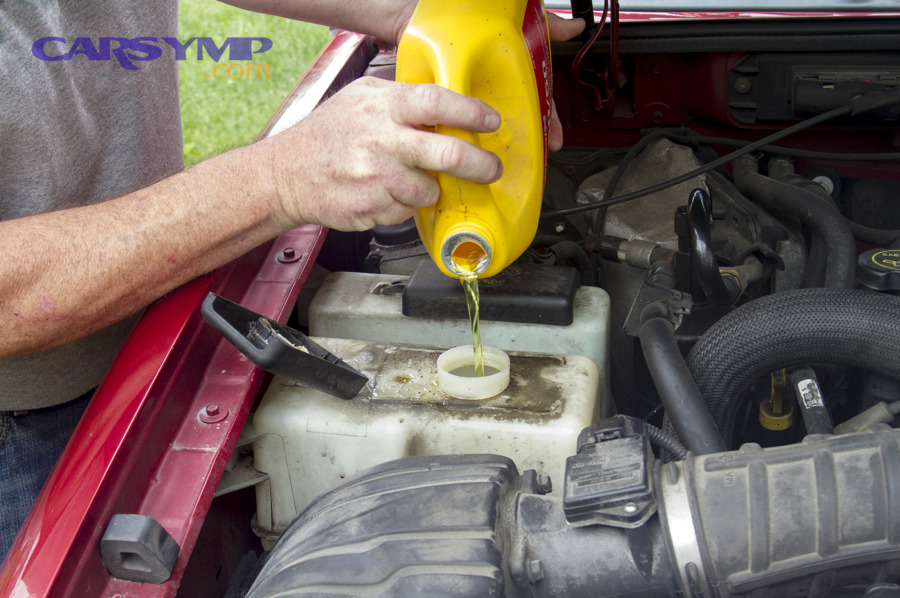
Next, treat this as mandatory after any coolant system opening, because it’s the fastest way to catch a small issue before it becomes expensive.
What should you check during the first warm-up (before driving)?
There are 6 key checks during the first warm-up: temperature rise, thermostat opening, fan cycling, heater output, hose temperature balance, and leak inspection, based on the criterion of whether the system is circulating and controlling heat normally.
Then, do them in order so you don’t miss the early warning signs.
Warm-up checklist
- Temperature rises gradually (not a fast spike).
- Upper radiator hose warms when thermostat opens (flow to radiator begins).
- Cooling fans cycle on/off near normal operating temp (varies by vehicle).
- Heater blows steadily hot once warm (confirms flow through heater core).
- No coolant dripping at hose connections, thermostat housing, water pump weep area.
- No “steam cloud” from hidden spills near belts or exhaust.
If any check fails, stop and correct it before a road test.
What should you check after cooldown ?
After cooldown, you check level normalization and leak evidence, and a small top-off can be normal because trapped air may purge into the reservoir and be replaced by coolant volume.
Especially after the first cycle, level changes are expected—but repeated loss is not.
Cold recheck checklist
- Radiator level (if your system uses a direct radiator cap) is full to spec.
- Reservoir level is at the cold mark.
- No wet residue at clamps, seams, or under the car.
- No sweet smell that persists after cleanup.
- No milky appearance in coolant or oil (contamination sign).
What’s normal:
- A modest reservoir drop after the first heat cycle as air purges.
What’s not normal:
- Needing to add coolant every day, or visible puddles.
According to a study by Nahrain University from Mechanical Engineering research, in 2007, ethylene-glycol/water mixture properties showed that changing glycol concentration measurably shifts freezing and boiling behavior—supporting why correct mixture after flushing matters for real temperature margins.
Should you re-torque clamps/inspect connections after the first heat cycle?
Yes—you should recheck and snug hose clamps and inspect connections after the first heat cycle because thermal expansion and settling can reveal small seepage that wasn’t visible when cold.
Moreover, this is one of the easiest ways to prevent a “mystery slow leak” that appears days later.
Focus on:
- Upper/lower radiator hose connections.
- Thermostat housing bolts (verify torque spec; do not overtighten).
- Heater hoses near the firewall.
- Any replaced O-rings or quick-connect fittings.
Do not overtighten plastic necks or brittle fittings; “tight enough to seal” beats “tight enough to crack.”
How do you run-in (break-in) the engine after repair without risking damage?
A safe run-in (break-in) after repair is a 3-phase plan—initial idle verification, short low-load drive, and scheduled rechecks—because the early operating period reveals leaks, pressure anomalies, and temperature instability before they become catastrophic.
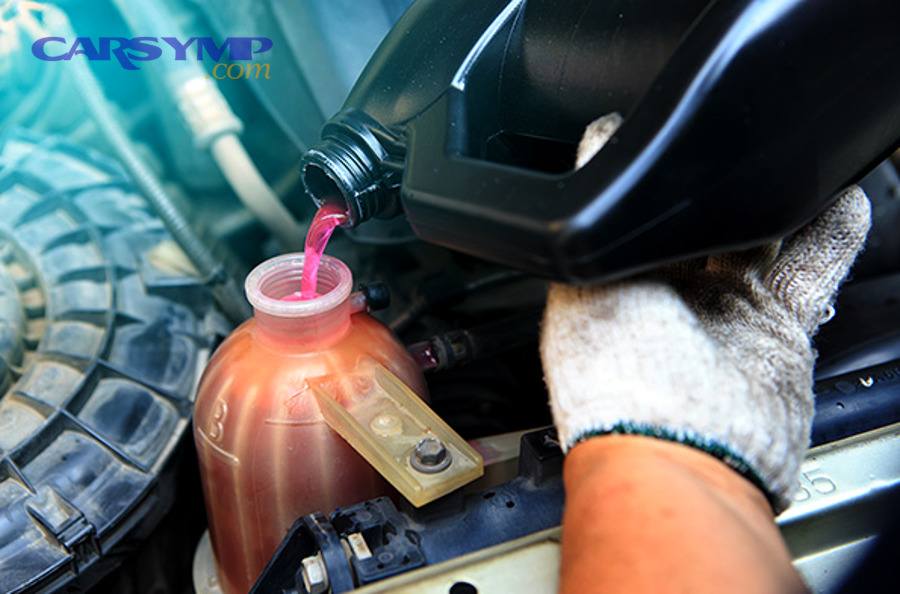
Next, match the intensity of your break-in to the type of repair, because not every repair needs the same caution level.
Which repairs actually require a break-in/run-in routine, and which only need monitoring?
There are 2 main categories—true break-in repairs and monitor-only repairs, based on the criterion of whether internal surfaces or sealing interfaces are new or disturbed.
Then, use this grouping to avoid overthinking simple jobs while still protecting major work.
True break-in/run-in repairs (be conservative)
- Rebuilt/reman engine installation.
- Cylinder head removal and gasket replacement.
- Major work that disturbed compression sealing or combustion sealing (common in head gasket repair contexts).
Monitor-only repairs (still do heat-cycle checks)
- Radiator replacement.
- Water pump replacement.
- Thermostat replacement.
- Hose and reservoir repairs.
Even monitor-only repairs benefit from a planned first drive: you’re validating temperature control under real airflow, not just in the driveway.
Should you idle the engine for a long time as part of break-in?
No—you should not idle for a long time as a break-in strategy, because prolonged idle can reduce airflow through the radiator at low fan speed, delay stable temperature patterns, and doesn’t replicate real load conditions needed to validate performance.
However, you should idle long enough to confirm stable coolant circulation, thermostat opening, and leak-free operation before you drive.
A practical approach:
- Idle until warm and stable, then hold a modest steady RPM briefly if needed to purge air.
- Avoid repeated high revs in place.
- Move to a short drive with gentle acceleration and varied RPM once stable.
For rebuilt engines, follow the builder’s instructions first. If you don’t have them, default to conservative load, varied RPM, and frequent inspections.
What should you monitor during the first 30 minutes, first day, and first week after repair?
There are 3 monitoring windows—first 30 minutes, first day, and first week, based on the criterion of how quickly certain problems appear.
Especially after major repairs, this schedule prevents “it seemed fine” surprises.
First 30 minutes
- Temperature behavior under idle and light driving.
- Heater output consistency.
- Fan cycling and any warning lights.
- Immediate leaks (fresh wetness at joints).
First day
- Cold coolant level recheck.
- Look for dried residue around hose ends and thermostat housing.
- Check for smells, steam, or damp carpets (heater-core leak sign).
First week
- Recheck coolant level again after multiple heat cycles.
- Inspect under the oil cap and dipstick for abnormal milky residue (context-dependent).
- Confirm no unexplained pressure spikes or bubbling in the reservoir.
If you see repeated bubbling or pressure building quickly from cold, you move from “monitoring” to “diagnostics,” which includes combustion-leak checks and cylinder sealing tests.
What are the red flags that mean you should stop driving immediately?
Yes—you should stop driving immediately when you see rapid overheating, repeated coolant loss, strong bubbling/pressurization, or warning lights, because these signals often indicate a condition that can cause engine damage within minutes.
More importantly, the “stop now” moment protects your repair investment—especially after major jobs like head gasket repair.
What symptoms indicate trapped air vs an active leak vs a failed part install?
There are 3 main symptom groups—air, leak, and install/part failure, based on the criterion of whether the system loses coolant volume, loses pressure control, or loses circulation.
Then, you can decide whether to bleed, tighten, or diagnose deeper.
Trapped air likely
- Temperature spikes then drops.
- Heater output inconsistent.
- Coolant level drops after cooldown but stabilizes after proper bleeding.
Active leak likely
- Visible drips, puddles, or wet trails.
- Repeated need to add coolant.
- Sweet smell that persists and level keeps falling.
Failed install/part issue likely
- Persistent overheating despite correct bleeding.
- No thermostat opening behavior (hose remains cool, heater poor).
- Fans not cycling when expected (could be sensor, relay, or wiring).
If you’re unsure, a cooling-system pressure test is a controlled way to find leaks without risking overheating on the road.
If your temperature spikes once, can you keep driving after it drops?
No—you should not keep driving after a temperature spike even if it drops, because the spike can reflect a hot spot or steam pocket that can reoccur and cause sudden boil-over or gasket damage.
Instead, treat the drop as a clue: something changed (air moved, thermostat opened suddenly, or coolant sloshed), and you need to confirm stability.
Safe response steps:
- Pull over safely, let the engine cool.
- Do not open a hot pressure cap.
- Check reservoir level and visible leaks.
- Re-bleed air if you suspect air pockets, then repeat a controlled heat cycle.
Continuing to drive “because it went back to normal” is how many minor post-repair issues turn into major failures.
Normal coolant smell/steam after a spill vs a real coolant leak—what’s the difference?
A spill smell/steam is usually temporary and localized, while a real leak is persistent and accompanied by level loss or residue patterns.
Meanwhile, the timing and repeatability separate the two.
Spill/cleanup pattern
- Smell strongest immediately after service.
- Steam comes from a known spill area and fades over 1–2 heat cycles.
- Coolant level remains stable after a cold recheck.
Real leak pattern
- Smell returns every drive.
- Residue appears at the same fitting or seam.
- Coolant level slowly drops over days.
If the smell persists and the level drops, treat it as a leak until proven otherwise.
How do you handle special post-repair cases like contamination, coolant mixing mistakes, and persistent overheating?
Special cases require targeted troubleshooting and specific corrective steps, because contaminated coolant, mixed chemistry, and persistent overheating often indicate underlying faults that bleeding alone won’t solve.
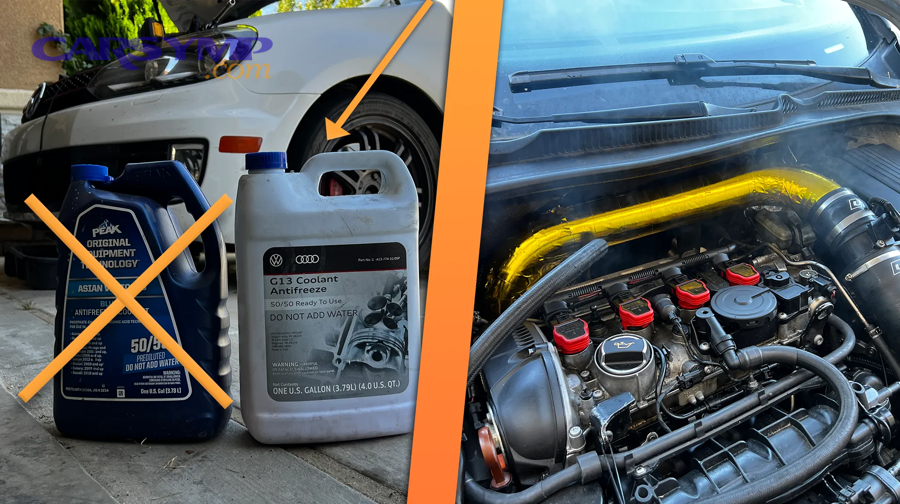
Next, this is where diagnostics like combustion gas testing and cylinder sealing tests become relevant—especially if symptoms suggest combustion pressure entering the cooling system.
If oil or sludge contaminated the coolant, how many flush cycles are typically needed and why?
Oil or sludge contamination usually requires multiple flush cycles because oil films cling to internal surfaces and can re-contaminate fresh coolant if you stop after one rinse.
Specifically, one drain often removes only the bulk fluid, not the residue.
A practical approach:
- Drain contaminated coolant completely.
- Perform repeated distilled-water cycles until the drained water is visibly clean.
- Use a contamination-appropriate cleaner only if it’s designed for oil/coolant residue and follow with thorough rinsing.
- Refill with the correct coolant mixture and verify stability through heat cycles.
If the contamination came from a known failure mode (like a gasket breach), flushing without fixing the cause will only produce “clean coolant that turns dirty again.”
If you accidentally mixed coolant types, should you flush again immediately or can you correct it later?
Yes—you should flush again soon if you mixed incompatible coolant types, because mixed additive packages can reduce corrosion protection and create deposits, especially over time.
However, if you’re stranded and the mix was a small top-off, you may drive short-term while monitoring temperature, then perform a corrective flush as soon as possible.
What to do:
- If you know the coolant types are incompatible or unknown, plan a full flush.
- If the system is stable and you only added a small amount, you can sometimes do a drain-and-fill quickly as a first correction step.
- Always return to the correct manufacturer spec as the endpoint.
When in doubt, a clean reset avoids months of slow damage.
If the system won’t “burp” and you keep getting bubbles, what rare causes should you consider?
Persistent bubbles can come from rare but important causes like a small suction-side leak, a failing pressure cap, or combustion gases entering the cooling system, especially after major repairs.
More importantly, this is the moment to stop guessing and test.
Here’s a simple diagnostic sequence:
- Check the cap and sealing surfaces (cap can’t hold pressure = early boil, bubbles).
- Pressure test the cooling system for external leaks.
- If pressure behavior is abnormal or bubbling persists, consider a Combustion gas test in coolant overview: a block tester draws vapor from the radiator/expansion area through a chemical that changes color if combustion byproducts are present.
- If combustion leak is suspected, move to Compression/leak-down tests explained: compression testing compares cylinder pressure during cranking, and a leak-down test pressurizes a cylinder to locate where it leaks (intake, exhaust, crankcase, or head gasket path).
This chain matters because “bubbles” can be harmless air purging—or a sign of combustion intrusion that will not resolve with bleeding.
If you used distilled water to flush and can’t drain it all, how do you restore the correct coolant concentration?
You restore correct concentration by using coolant concentrate (not premix) when residual distilled water remains in the block, because concentrate compensates for the trapped water and brings the final mixture back to spec.
To sum up, you’re correcting dilution math, not “adding more coolant because it looks low.”
A practical method:
- Find your system capacity (manual/spec).
- Estimate how much water remains after draining (you won’t know perfectly, but you can approximate).
- Add an appropriate amount of concentrate first, then top off with distilled water as needed.
- After bleeding and a full cooldown, verify level and consider checking freeze protection with a tester if you want confidence.
This is one of the most overlooked post-flush steps, and it’s why many DIY jobs end up running a weaker-than-intended mixture even though the system looks “full.”