


If you’re stuck deciding between engine repair, engine rebuild, or engine replacement, the “right” choice is the one that matches your engine’s damage severity, your budget, and how long you plan to keep the vehicle—because each path wins under different conditions.
Next, you’ll see what these options actually mean in real shop terms, so you can translate quotes and mechanic recommendations into a clear scope of work instead of guessing based on labels alone.
Then, you’ll learn how to use symptoms and basic test results to separate “repairable” problems from cases where a rebuild or replacement is more realistic, so you avoid paying twice for the same failure.
Introduce a new idea: once you can define the options, assess severity, and compare cost/time/reliability, you can apply a simple decision framework that fits your scenario and reduces surprise add-ons at the shop.
What does “engine repair vs rebuild vs replacement” mean in plain English?
Engine repair vs rebuild vs replacement are three levels of fixing an engine: repair targets specific failed parts, rebuild restores the engine internally by reconditioning and replacing wear items, and replacement swaps in a different engine assembly to restore function fastest.
More specifically, the confusion happens because shops sometimes use these terms loosely, so you’ll want to anchor each one to scope, parts touched, and what stays original.
What counts as an engine repair (and what does not)?
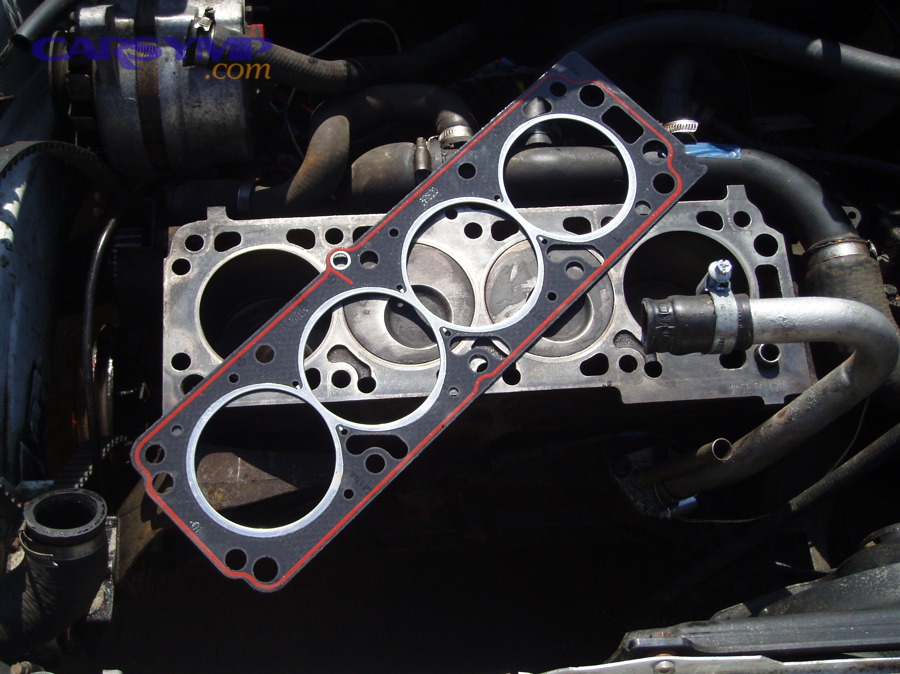
Engine repair is a targeted fix that replaces or restores a specific faulty component without fully tearing down the engine’s internal rotating assembly, and it’s best when the root cause is isolated, measurable, and unlikely to have damaged bearings, rings, or cylinder walls.
Next, the key is separating true “component repair” from internal wear problems that will keep coming back.
What engine repair usually includes (common, legitimate scope):
- Sealing and leakage fixes: valve cover gasket, oil pan gasket, front/rear main seal (sometimes), intake manifold gasket, oil cooler seals.
- Cooling system repairs: water pump, radiator, thermostat, hoses, heater core, cooling fans—often critical when overheating triggered the issue.
- Fuel/air/ignition fixes: coils, injectors, plugs, sensors, vacuum leaks, PCV system, throttle body issues.
- Timing system work: timing belt/chain, tensioners, guides—when failure hasn’t caused internal contact damage.
- Cylinder head service only (sometimes): a top-end job can be a repair if the bottom end is healthy and damage is limited.
What engine repair usually does not include (this starts drifting into rebuild territory):
- Replacing piston rings across cylinders
- Crankshaft bearing replacement
- Cylinder machining, boring, or honing across the block
- Full teardown and reassembly of the short block
Where “head gasket repair” fits:
A head gasket job can be a repair when the engine did not overheat severely, the head and block surfaces check flat, and contamination hasn’t damaged bearings. But if the engine repeatedly overheated or ran with coolant in the oil, the gasket job can turn into a rebuild-level project because the bottom end may already be compromised.
What is an engine rebuild—and which parts are normally replaced or machined?
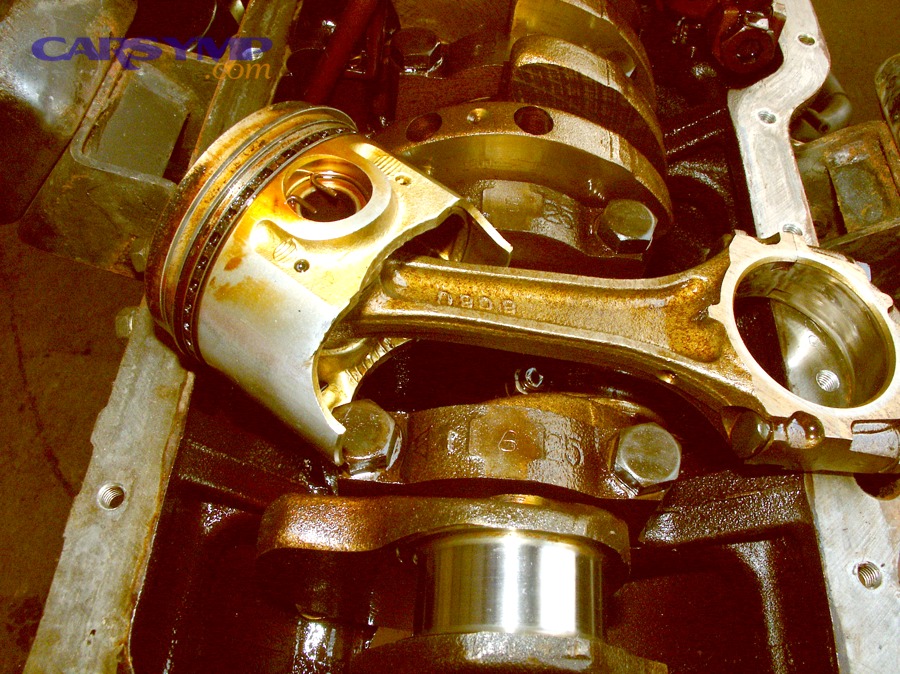
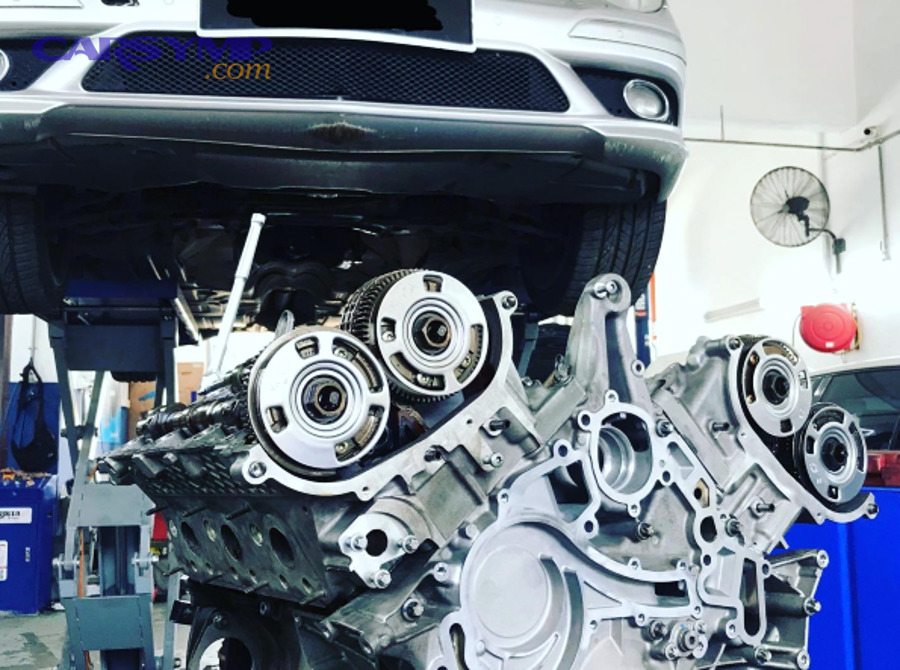
An engine rebuild is an internal restoration process where the engine is disassembled, inspected, measured, and reconditioned so worn components (rings, bearings, seals) are replaced and critical surfaces are machined back to specification for long-term reliability.
Then, the practical difference is that a rebuild is not just “new parts”—it’s also precision measurement and machining, which is why cost and downtime vary so widely.
What a rebuild typically includes (full rebuild expectations):
- Complete teardown to the bare block and rotating assembly
- Inspection and measurement (clearances, wear, cracks, out-of-round cylinders)
- Machining as needed (common examples):
- Cylinder hone or bore
- Deck surface refinishing (if warped)
- Cylinder head resurfacing + valve job
- Crankshaft polish or grind (if wear/damage)
- Wear components replaced:
- Piston rings
- Main/rod bearings
- Gaskets and seals
- Timing components (often)
- Oil pump (often recommended depending on platform)
- Reassembly with correct torque specs, procedures, and break-in steps
Partial rebuild vs full rebuild (why quotes can differ):
- A top-end rebuild focuses on the cylinder head(s): valves, guides, seals, springs, resurfacing.
- A bottom-end rebuild addresses bearings, rings, pistons, crank issues.
- A full rebuild typically involves both and provides the most predictable longevity.
Why rebuilds are chosen:
Rebuilds make the most sense when the original engine is worth saving (rare engine, matching numbers, expensive replacement) or when you want the highest control over internal condition—because every critical wear path is measured and corrected rather than assumed.
What is engine replacement and what are the main replacement types?
Engine replacement is the process of removing your current engine and installing another engine assembly (used, rebuilt, remanufactured, or new), and it usually wins when time matters, internal damage is severe, or rebuild uncertainty is high.
Moreover, replacement is not one thing—it’s a family of options that differ by risk, warranty, and cost.
There are 4 main types of replacement engines (grouped by condition and process):
- Used (salvage/junkyard) engine
- Rebuilt engine (refreshed with replaced worn parts, process varies by rebuilder)
- Remanufactured engine (more standardized restoration; often stronger testing and warranties)
- New/“crate” engine (typically the most expensive, least wear risk)
Assembly levels you’ll hear in quotes:
- Long block: block + rotating assembly + cylinder head(s) assembled (often without accessories)
- Short block: block + rotating assembly only (heads are reused or rebuilt separately)
Why replacement is often recommended:
If an engine has bottom-end knock, metal contamination, repeated overheating, or unknown internal damage, a replacement can reduce the risk of “we fixed one thing but another internal part fails next month,” which is the classic double-pay scenario.
According to an industry explainer by Kelley Blue Book, in 2025, remanufactured engines are described as a more comprehensive overhaul that can provide greater durability and often stronger warranty coverage than rebuilt engines, which typically replace worn parts but may carry shorter lifespans and more limited warranties. (kbb.com)
Is repair enough, or is the engine damage too severe?
No—repair is not enough when engine damage is severe, because severe internal wear can (1) keep symptoms returning, (2) accelerate catastrophic failure under load, and (3) turn a “cheap fix” into a higher total cost after repeated breakdowns.
However, severity is not guesswork; it’s a pattern built from symptoms, contamination signs, and test results that point to internal sealing and lubrication health.
Are there “stop now” symptoms that make replacement/rebuild more likely than repair?
Yes—certain symptoms strongly suggest internal damage, because they indicate failing bearings, loss of oil film, compromised compression sealing, or combustion-to-coolant leakage that won’t be solved by replacing a single external part.
To better understand, treat these symptoms as “risk multipliers” that raise the odds a rebuild or replacement is the safer decision.
Stop-now / high-risk symptoms (and what they often mean):
- Rod knock or deep knocking under load: commonly points to rod bearing wear or crank damage; repair rarely fixes this.
- Low oil pressure warning + noise: suggests worn bearings or oil pump issues; continued driving can destroy the crank.
- Metal flakes in oil or filter: indicates active internal wear; even if you fix the trigger, damage may already be widespread.
- Repeated overheating episodes: raises the risk of warped head/block surfaces and compromised head gasket sealing.
- Coolant mixed with oil (milky sludge) or oil in coolant: risks bearing damage because coolant reduces lubrication quality.
- White smoke + coolant loss with no external leak: points toward internal coolant consumption, commonly head gasket or cracked head.
Where the required phrases fit naturally:
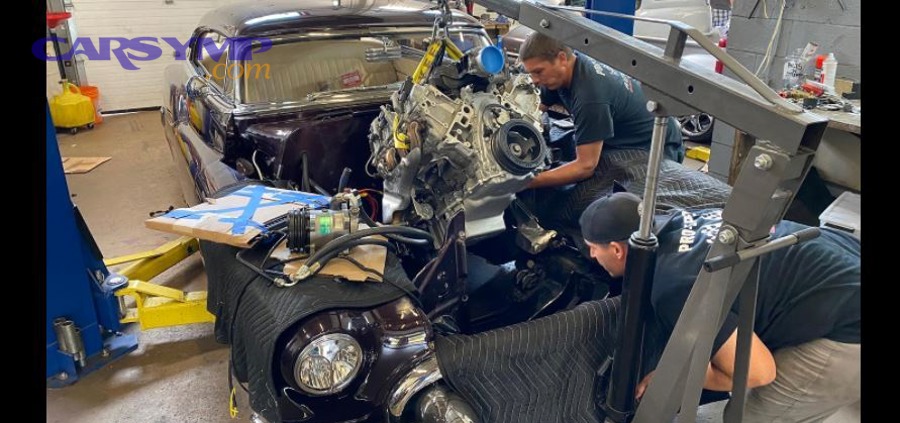
When you suspect Head gasket failure symptoms, the “stop-now” logic matters because overheating plus coolant loss can quickly expand from a gasket leak into bearing damage if coolant contaminates the oil.
Can test results (compression/leak-down/oil pressure) reliably separate repair vs rebuild vs replace?
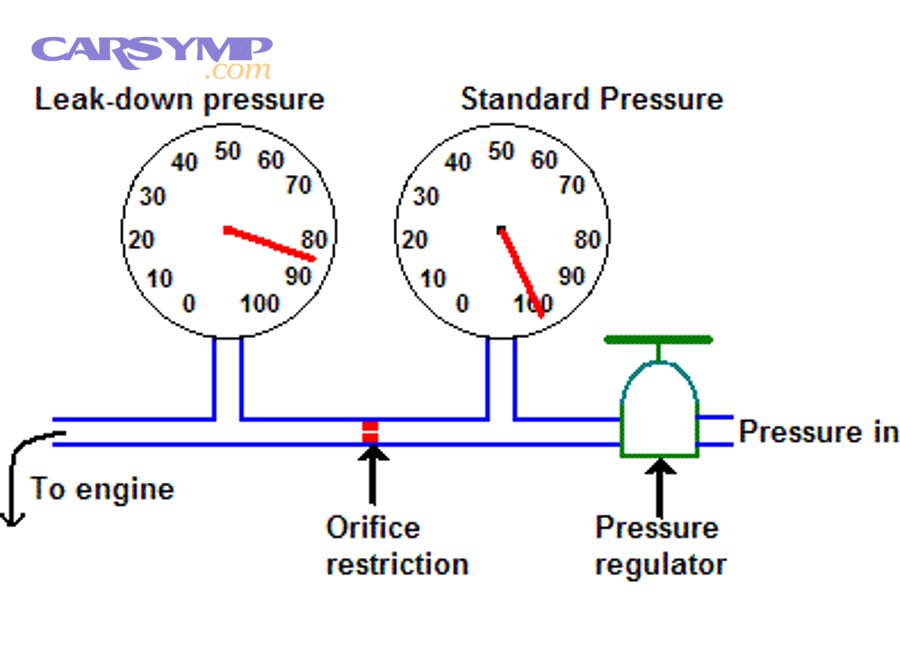
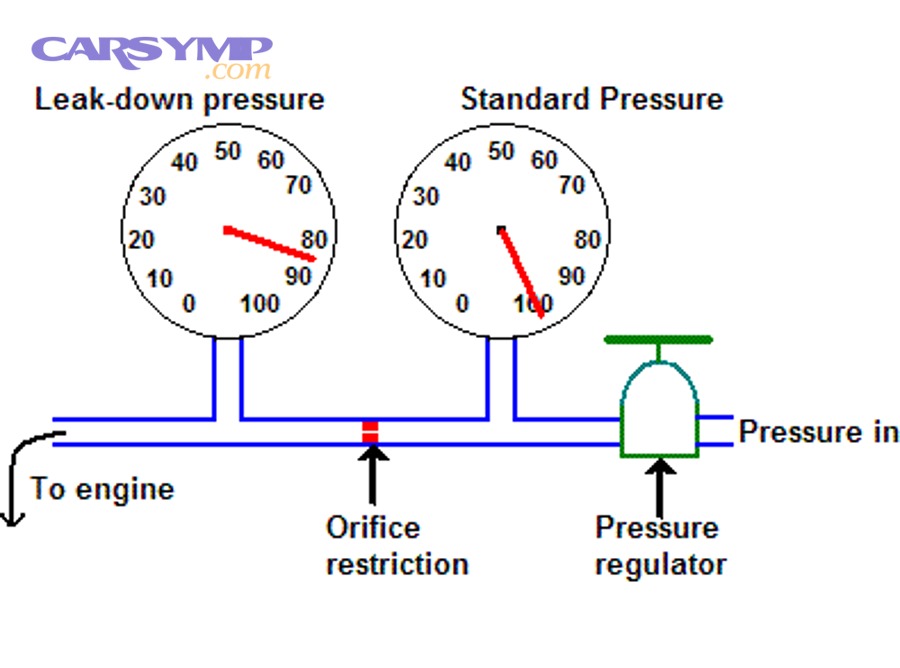
Yes—these tests can reliably separate repair vs rebuild vs replace when you interpret them as a pattern, because (1) compression shows pressure creation, (2) leak-down shows pressure holding and leak path, and (3) oil pressure reflects lubrication system health under operating conditions.
Meanwhile, one “bad number” alone is less useful than the relationship between cylinders and where the pressure is going.
Compression vs leak-down in plain terms:
A technical overview from HOT ROD explains that a compression test measures how much pressure the engine makes, while a leak-down test measures the engine’s ability to hold pressure.
How to use these results for decision-making:
- Mostly even compression + normal oil pressure: usually supports repair-first logic if symptoms point to external systems.
- Low compression in one cylinder + leak-down shows air into cooling system: points toward head gasket or head crack risk.
- Multiple cylinders low + high leak-down + audible blow-by: suggests ring/cylinder wear → rebuild or replacement.
- Oil pressure low at hot idle and under load: increases likelihood of bearing wear → rebuild/replacement more likely.
Combustion gas test in coolant overview (what it does and why it’s powerful):
A combustion leak test (block test) checks whether combustion gases are present in the cooling system, which supports diagnosing head gasket or crack pathways between the combustion chamber and coolant passages.
MotorTrend describes a block tester (combustion leak tester) that draws fumes from the radiator through a test fluid; if combustion gas is present, the fluid changes color, indicating a combustion leak that can be caused by a head gasket issue.
Practical takeaway:
If you can verify combustion gases in coolant, it strengthens the case for head gasket work—but you still must decide whether the engine is healthy enough for a repair-only solution or whether overheating/contamination has pushed it into rebuild territory.
How do repair, rebuild, and replacement compare on cost, time, and reliability?
Repair wins on low cost and speed, rebuild wins on controlled long-term restoration, and replacement wins on predictable turnaround when internal damage is severe—because each option optimizes a different constraint: money now, risk later, or downtime today.
Specifically, the best comparison comes from a side-by-side framework that shows what you buy with each dollar and each day in the shop.
Here’s a decision comparison table (what it contains):
The table below compares repair vs rebuild vs replacement across the criteria that most directly affect your outcome: upfront cost, hidden-risk exposure, downtime, and reliability predictability.
| Criterion | Engine repair | Engine rebuild | Engine replacement |
|---|---|---|---|
| Upfront cost | Lowest when problem is isolated | Mid to high (labor + machining) | Mid to high (engine + install) |
| Hidden damage risk | Highest if internal damage exists | Lower (engine is inspected/measured) | Medium (depends on engine source) |
| Downtime | Often shortest | Often longest (machining/parts) | Often moderate/short (swap-based) |
| Reliability predictability | Varies widely | High if done to spec | Varies by used vs reman vs new |
| Warranty leverage | Shop-limited on repair | Shop/rebuilder dependent | Strongest with reman/new |
Which option is usually cheapest upfront—and which is cheapest per mile long-term?
Engine repair is usually cheapest upfront, rebuild is often cheapest per mile when you plan to keep the car and internal wear is real, and replacement can be cheapest per mile when the installed engine has strong warranty/testing and your original engine has high uncertainty.
However, the “per mile” winner depends on whether the repair truly removes the root cause or only quiets symptoms.
How to think about total cost (simple model):
- Repair cost + probability of recurrence + cost of recurrence (towing, downtime, secondary damage)
- Rebuild cost + expected service life gained (miles) + break-in/maintenance compliance
- Replacement cost + warranty strength + risk of unknown used-engine history
Example logic that prevents double-paying:
- If you have coolant loss + overheating + confirmed combustion gases, a simple gasket-only repair might still be the right first step if the oil is clean, oil pressure is stable, and the engine did not run hot for long.
- If the engine ran hot repeatedly or you see contamination, rebuild/replacement often beats repair because you’re buying risk reduction.
A cost guide from AutoZone notes that having a mechanic replace an engine can commonly range from about $3,000 to $8,000+, depending on factors like engine choice and labor. (autozone.com)
Which option minimizes downtime and surprises at the shop?
Replacement often minimizes downtime and surprises, repair minimizes downtime only when diagnosis is certain, and rebuild minimizes surprises only after teardown confirms the true condition—because machining lead times and “hidden damage discoveries” are the primary schedule killers.
In addition, surprises tend to come from the same places, so you can plan around them.
Common surprise add-ons :
- Repair surprises: broken bolts, corroded fittings, failed adjacent components (thermostat housing cracks, brittle hoses), and “we fixed X but Y was the real cause.”
- Rebuild surprises: crank damage beyond polish, block cracks, excessive bore wear requiring oversized pistons, head cracks requiring replacement.
- Replacement surprises: missing sensors/brackets, harness differences, ECU relearn/immobilizer pairing on some models, accessory transfer issues.
Downtime reality check:
- A rebuild can be fast if the machine shop schedule is open and the block/head are salvageable.
- A replacement can be fast if the correct engine variant is sourced and compatibility issues are handled upfront.
Which option offers the best reliability and warranty leverage?
Repair offers the least warranty leverage, rebuild offers moderate leverage depending on who stands behind the work, and replacement—especially remanufactured or new—often offers the strongest warranty leverage because the engine supplier can provide standardized coverage and testing.
More importantly, warranty leverage only works when installation and documentation meet the warranty terms.
Kelley Blue Book explains that remanufactured engines are typically more comprehensively overhauled than rebuilt engines and are often paired with more attractive warranty coverage, while rebuilt engines can be more cost-effective but may come with more basic warranties. (kbb.com)
What decision framework should a car owner use to choose the right option?
A car owner should choose repair vs rebuild vs replacement by answering five decision questions and matching them to severity evidence, because this approach (1) reduces emotion-based choices, (2) prevents repeated-pay repairs, and (3) aligns your spend with how long you’ll own the car.
Next, you’ll turn a messy decision into a simple tree that makes quotes easier to compare.
What 5 questions should you answer before committing to repair, rebuild, or replace?
There are 5 main questions you should answer before committing to repair, rebuild, or replace an engine: severity evidence, vehicle value, ownership horizon, downtime tolerance, and risk tolerance, because these five determine whether you’re buying a quick fix or a long-term solution.
Then, once you write these answers down, you can compare options without getting swayed by a single scary symptom or a single low quote.
- What does the evidence say about severity?
- Compression/leak-down patterns
- Oil condition (metal, coolant contamination)
- Overheating history
- What is the car worth today—and what is it worth to you?
- Market value vs sentimental value
- Rust, transmission health, suspension/brakes condition
- How long will you keep the car?
- 6–12 months → often repair/replacement value logic
- 3–5 years → rebuild/reman replacement can make more sense
- How much downtime can you tolerate?
- Daily commuter vs project car vs secondary vehicle
- How much uncertainty can you tolerate?
- Used engine = more uncertainty
- Rebuild = less uncertainty (if done well)
- Reman/new = least uncertainty (usually)
When does it make more sense to replace the car instead of the engine?
It makes more sense to replace the car instead of the engine when engine work exceeds the vehicle’s total remaining value and reliability potential, because you’re effectively buying a drivetrain reset while other aging systems (transmission, rust, electronics) can still fail next.
However, this decision becomes clearer when you treat it as a whole-vehicle risk assessment, not just an engine decision.
Replace the car more strongly when:
- The car has structural rust or major safety issues
- The transmission is already slipping or has major issues pending
- The vehicle needs multiple major repairs beyond the engine (suspension, AC, electrical)
- You need maximum reliability and the car’s platform is known for cascading failures
Keep and fix more strongly when:
- The body/chassis is solid and rust-free
- Maintenance history is strong
- The vehicle has known value retention or uniqueness
- You can secure a strong-warranty replacement engine or a high-quality rebuild
How do you avoid getting upsold—what should a written estimate include?
Yes—you can avoid getting upsold when the estimate clearly defines scope, because clear scope prevents (1) vague “engine work” line items, (2) hidden “while-you’re-in-there” stacks, and (3) warranty disputes later.
Moreover, a good estimate turns a repair decision into an apples-to-apples comparison.
A written estimate should include:
- Exact diagnosis statement (what failed, and why)
- Test results summary (compression/leak-down/oil pressure if relevant)
- Parts list with brands/part numbers where practical
- Labor hours and labor rate
- Machining line items (for rebuilds): resurfacing, bore/hone, valve job
- Fluids and consumables (oil, coolant, sealants, filters)
- Warranty terms (duration, mileage, conditions, exclusions)
- Contingency policy
Smart owner move:
Ask for a “base scope” and an “if-needed scope,” especially for head gasket-related jobs where the head may need additional machine work after removal.
Which option fits common real-world scenarios?
There are 3 common scenario patterns that guide the best choice: overheating/coolant loss cases, bottom-end knock/metal contamination cases, and top-end/timing/misfire cases—because each pattern predicts whether the engine’s internals are likely healthy enough for repair.
To illustrate, you can map your symptoms to the closest pattern and then validate with one or two targeted tests.
If your engine overheated once vs repeatedly, should you repair, rebuild, or replace?
Repair is often enough after a single controlled overheating event, rebuild becomes more likely after repeated overheating, and replacement becomes optimal when overheating caused internal damage or repeated failures—because heat distortion can compromise sealing surfaces and escalate into internal wear.
Next, the detail that matters is not “did it overheat,” but how long it ran hot and whether fluids were contaminated.
Single overheating event (repair-leaning conditions):
- Temperature spiked briefly and you shut down quickly
- No ongoing coolant loss afterward
- Oil looks normal (no milkshake)
- Compression/leak-down is acceptable and consistent
Repeated overheating (rebuild/replace-leaning conditions):
- Ongoing coolant loss
- Overheats under load or at highway speed repeatedly
- Heater performance changes (air pockets)
- White smoke or sweet smell from exhaust
Where the required phrase fits naturally:
When you’re chasing Head gasket failure symptoms after overheating, you should treat the diagnosis as a two-part problem: confirm combustion-to-coolant leakage, then confirm whether the engine’s lubrication system remained healthy.
MotorTrend describes using a block tester (combustion leak tester) that draws radiator fumes through a chemical fluid; if combustion gas is present, the fluid changes color, indicating a combustion leak that can be associated with a head gasket problem.
If you hear knocking or find metal in oil, is rebuild realistic or is replacement smarter?
Replacement is often smarter than rebuild when you hear persistent bottom-end knocking or find significant metal in oil, because those signs suggest bearing or crank damage that can expand scope, increase machining requirements, and raise rebuild uncertainty and cost.
However, rebuild can still be realistic if the engine is rare/valuable and a reputable machine shop confirms the block and crank are salvageable.
Why knock and metal change the equation:
- Bearings fail when lubrication film breaks down
- Metal circulates through the oiling system and can score surfaces
- The true damage can be broader than the initial noise suggests
Practical owner checklist (fast triage):
- Does oil pressure drop at hot idle?
- Is the knock load-dependent and deep (rod knock) vs light top-end tick?
- Did the oil filter contain glitter?
- Did the engine ingest coolant (which can ruin bearing surfaces)?
If multiple answers point to internal wear, replacement—especially remanufactured with warranty—often reduces the risk of an expensive rebuild that still has hidden weak points.
If the problem is a head gasket, timing failure, or misfire, is repair usually enough?
Yes—repair is usually enough when the problem is a head gasket caught early, a timing component failure without internal contact damage, or a misfire caused by fuel/ignition faults, because these issues can be isolated and corrected without renewing the entire rotating assembly.
More importantly, the “usually” depends on whether the engine ran long enough with contamination or overheating to harm bearings and rings.
Head gasket: repair vs rebuild decision cues
- A head gasket job can stay a repair if:
- Overheating was limited
- Oil is clean
- Compression is stable across cylinders
- It begins to lean rebuild/replacement if:
- Coolant contaminated oil for extended time
- Overheating was repeated
- Compression is low across multiple cylinders
Combustion gas test in coolant overview (when it helps most):
- Use it when you suspect internal leakage but don’t see obvious external leaks.
- It’s especially useful when coolant loss is intermittent.
MotorTrend explains the block tester process and notes that a color change indicates a combustion leak into the cooling system.
After repair: coolant flush and break-in (what to do so the fix lasts):
- Coolant flush: remove contaminated coolant and trapped combustion byproducts; refill with the correct coolant type and bleed air properly.
- Oil and filter change: especially if coolant contamination was possible; consider a short-interval follow-up oil change.
- Break-in habits (when applicable): if the repair involved new sealing surfaces, head work, or rebuilt components, follow shop guidance for heat cycles, gentle load, and early fluid inspection.
- Recheck levels: monitor coolant level stability and look for pressure buildup or bubbles.
What replacement-engine alternatives (used vs rebuilt vs remanufactured) should you consider after you decide to “replace”?
Used engines are best for lowest upfront cost, rebuilt engines are best when you trust the builder and want moderate savings, and remanufactured engines are optimal when you want the strongest durability and warranty leverage—because these options differ mainly by process control and risk.
Next, you’ll choose the replacement type that matches your tolerance for uncertainty and your need for predictable uptime.
Is a used engine a smart choice for budget builds, and what are the hidden risks?
Yes—a used engine can be a smart budget choice when you can verify mileage and condition, because it reduces upfront cost and often speeds up the swap; however, the hidden risks include unknown maintenance history, prior overheating, and limited warranty coverage.
In addition, a used-engine gamble becomes expensive when labor is high, because you may pay installation costs twice if the used engine is weak.
How to reduce used-engine risk:
- Ask for donor vehicle VIN and mileage documentation
- Inspect for sludge under oil cap and signs of overheating
- Verify compression if possible (or at least rotate and inspect)
- Prefer reputable recyclers with written warranty terms
What’s the difference between a rebuilt and a remanufactured engine (and why does it matter)?
A rebuilt engine typically replaces worn or damaged parts as needed, while a remanufactured engine is usually restored through a more comprehensive, standardized process with more new components and testing—so reman tends to matter most when you want predictable longevity and stronger warranty confidence.
However, the real-world difference shows up in consistency: reman programs often apply tighter process control and testing.
Kelley Blue Book describes rebuilt engines as a cost-effective option that replaces worn or damaged parts, while remanufactured engines undergo a more comprehensive overhaul with new components and often stronger warranty coverage. (kbb.com)
Do you need ECU programming, emissions checks, or VIN-code matching after an engine swap?
Yes—some vehicles need ECU programming, emissions verification, or VIN/variant matching after an engine swap, because modern powertrains rely on software calibration, immobilizer systems, and sensor compatibility that can prevent starting, trigger fault codes, or fail inspection.
Besides, this is one of the biggest reasons “cheap engine, expensive swap” happens.
Situations where extra steps are more likely:
- Different engine variant years with sensor/harness changes
- Vehicles with immobilizer pairing requirements
- Direct-injection or turbo platforms with calibration dependencies
- States with strict emissions and OBD readiness requirements
Best practice:
Confirm engine code compatibility before purchase and ensure the installer is prepared for programming or relearn procedures if your platform requires it.
What questions should you ask about warranty terms and “core charges” before buying?
There are 4 key questions to ask about warranty terms and core charges: warranty length, what voids coverage, who must install it, and core return requirements—because these details determine whether your “covered” engine is actually covered when something goes wrong.
More importantly, these questions protect you from paying extra due to paperwork errors.
- What is the warranty duration and what’s covered (parts vs labor)?
- What actions void the warranty (overheating, missing receipts, wrong fluids)?
- Do they require professional installation and documentation?
- What are the core charge rules (return time limit, acceptable condition, required components)?
According to AutoZone’s engine replacement cost overview, replacement costs vary widely based on labor and engine choice, which is why warranty terms and install requirements can materially affect the true total cost of replacement. (autozone.com)
Video (embedded)
Evidence
According to a study by the U.S. Department of Energy, Vehicle Technologies Office (reliability-informed life-cycle warranty cost analysis), in 2020, researchers modeled warranty policies that compare replacement with new vs remanufactured units using field reliability data, showing that reliability differences between new and remanufactured replacement units materially affect expected life-cycle warranty cost outcomes. (osti.gov)