


If your cabin temperature is stuck on hot, stuck on cold, or makes a repeated clicking noise after a battery disconnect or actuator replacement, a blend door actuator reset-and-relearn is often the fastest way to restore correct HVAC door positions without replacing parts.
Next, you’ll learn how to tell whether you truly need recalibration or whether you’re facing a mechanical problem like a binding blend door or stripped actuator gears—because the fix (and the risk of repeated failure) changes depending on the root cause.
Then, you’ll see how recalibration steps differ between manual HVAC controls and automatic climate control, and why dual-zone and rear HVAC setups often require a “full sweep” relearn to bring both sides back into sync.
Introduce a new idea: once you finish the main reset routine, you can use simple verification checks and a fallback troubleshooting path to confirm the relearn “stuck,” improve defrost behavior, and prevent recurring weak heat complaints.
What is blend door actuator recalibration (reset & relearn) and what does it fix?
Blend door actuator recalibration is a control-module “learning” process that resets stored door positions and then relearns the actuator’s end stops so the HVAC system can mix heated and cooled air correctly across its full range.
Specifically, recalibration matters because the HVAC control head relies on actuator drive signals and feedback to position the blend door accurately, and that relationship can drift after power loss or part replacement. (navistareducation.com)
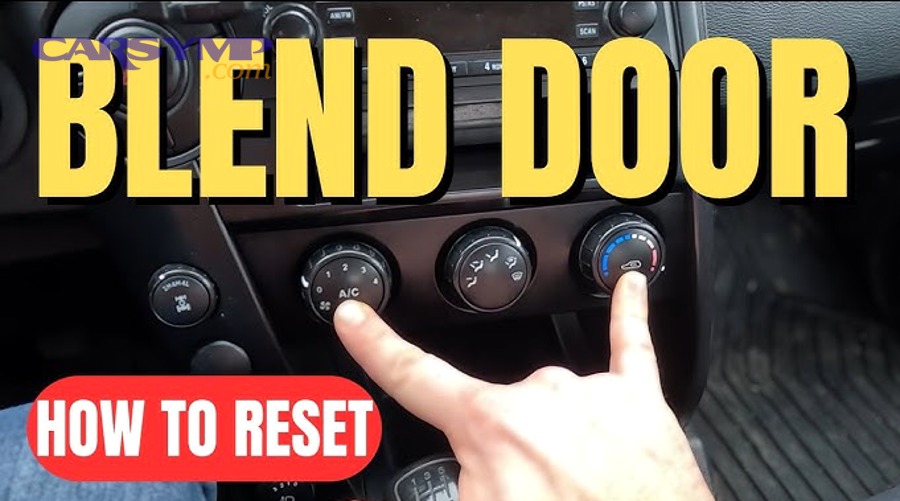
A modern blend door actuator is more than a simple motor. It’s typically a small geared motor with a position sensor (often a potentiometer or similar feedback device) that reports where the door currently sits. The control module sends a drive signal to move the door and reads the feedback signal to confirm the door reached the intended position. When the module loses power (battery disconnected, blown HVAC fuse, low voltage event) or when you install a new actuator, the “stored” idea of where the door’s endpoints are can become wrong.
When endpoints are wrong, you see predictable symptoms:
- Temperature mismatch: you request cold but get lukewarm, or request heat and get mild air.
- Stuck on one temperature: the system seems to ignore the temperature knob or digital setting.
- Clicking/ratcheting: gears repeatedly hunt for an endpoint that the module thinks exists.
- Dual-zone disagreement: driver side heats, passenger side stays cool (or vice versa).
In plain terms, a reset clears confusion, and a relearn teaches the system the true mechanical limits again. That’s why recalibration is often the first “no parts” step in a heater performance fix—especially when the timing lines up with battery work, fuse work, or a recent HVAC repair.
Is “reset” the same as “relearn” for a blend door actuator?
No—“reset” and “relearn” are related, but they’re not the same, and separating them helps you pick the right steps and avoid false success.
However, DIY guides and forum posts often use these words as synonyms, so it’s worth defining them in practical terms:
- Reset (power reset / module reboot): removes power long enough for the HVAC control module to restart and drop temporary states. This can stop erratic behavior, but it may not correct stored endpoints by itself.
- Relearn (calibration sweep): intentionally moves the actuator through its travel so the module can detect endpoints and store new limits.
- Calibration (as used by OEM procedures): typically means the full relearn routine, sometimes requiring a specific “no-touch” waiting period or a scan tool function depending on vehicle.
A good mental model is: reset wakes the system up cleanly, relearn teaches it where “full hot” and “full cold” truly are. If your symptoms began right after battery disconnect, a reset might help quickly; if your symptoms began after installing an actuator, you usually need a relearn so the new actuator’s feedback range aligns with the module’s expectations.
What symptoms confirm you need recalibration instead of replacing parts?
There are five common symptom clusters that strongly point to recalibration, especially when they appear right after a power event or actuator work:
- The problem started immediately after battery disconnect, jump start, alternator replacement, or fuse removal.
If nothing else changed, the most likely change is the control module’s reference state. - You hear clicking for a short time at startup, then it stops.
Brief clicking can be the actuator attempting to find a home position; if it settles, recalibration often resolves it. - Temperature changes feel “shifted,” not absent.
Example: the coldest setting is still cool-ish, and the hottest setting is warm-ish, like the door range is offset. - Dual-zone systems show mismatch without airflow changes.
Airflow is normal, fan works, but temperatures disagree—classic for an actuator position issue rather than a blower or clogged core. - The HVAC behaves differently after cycling ignition.
Intermittent behavior that changes with key cycles often indicates a control/state problem more than a purely mechanical failure.
If instead you have no airflow at all, a dead blower motor, overheating engine, or coolant loss, recalibration is not the first priority. Likewise, if your engine never warms up, you can “relearn” the blend door perfectly and still have weak heat—because the heater core never receives hot coolant.
Can driving with a miscalibrated blend door cause further damage?
Yes, it can—mainly to the actuator—and it can also create safety issues when defrost performance suffers.
Besides being annoying, repeated clicking usually means the actuator gears are loading and unloading repeatedly, which can accelerate wear and eventually strip teeth, turning a simple relearn into a parts replacement.
More importantly, if a miscalibrated system can’t deliver consistent warm airflow to the windshield, you may lose clearing ability during fogging or icing conditions. In the U.S., windshield defrosting/defogging performance is regulated under FMVSS 103, reflecting how important it is for driving visibility. (nhtsa.gov)
That doesn’t mean you’re guaranteed to “break something” by driving one day with poor HVAC control, but it does mean you should treat persistent clicking and poor defrost as a fix-now issue rather than something to ignore until spring.
How do you do a step-by-step blend door actuator reset & relearn safely at home?
A reliable DIY reset-and-relearn uses a controlled power cycle plus a no-touch calibration period so the HVAC module can sweep the door(s), learn endpoints, and restore accurate temperature blending within one ignition session.
To better understand the process, think of it as giving the module a quiet moment to “listen” to actuator feedback while it moves through its range. (navistareducation.com)
Before you begin, set yourself up for success:
- Battery voltage matters. Low voltage can cause the actuator to stall mid-sweep, which leads to incomplete learning.
- Do not touch HVAC controls during the relearn period. Many OEM-style routines assume stable inputs.
- Start with the simplest method first. If it works, you save time and avoid unnecessary fuse pulling.
Below is a practical “universal-first” workflow that works on many vehicles, followed by common alternative methods when your platform needs a more specific approach.
Do you need to disconnect the battery or pull an HVAC fuse for recalibration?
No, not always—but sometimes you do, and the best choice depends on what triggered the problem and how stubborn the miscalibration is.
Besides, there are at least three reasons you might choose one method over another:
- A fuse pull isolates the HVAC module cleanly (often better than a brief battery disconnect that may leave residual power through other circuits).
- A battery disconnect can reset multiple modules, which may be helpful after major electrical work but can also erase settings and complicate diagnostics.
- Some vehicles have an internal calibration routine that runs on ignition-on without needing any disassembly—making it the safest first attempt.
A good decision rule:
- If symptoms started after a minor power event (dead battery, quick disconnect): try ignition-cycle relearn first.
- If symptoms persist or clicking continues: try an HVAC fuse pull method.
- If you replaced multiple actuators or control head work was done: use the OEM-style module power reset + no-touch relearn, or a scan tool if required.
What are the most common recalibration methods (key cycle, fuse pull, battery reset)?
There are 3 main recalibration methods used in the real world—based on how you remove power and how the relearn is triggered:
- Ignition-on “no-touch” relearn (quickest, least invasive)
- Turn ignition to ON (engine off if possible).
- Set HVAC to a stable state (often full cold or a neutral setting) before starting.
- Do not touch controls. Wait 60–120 seconds.
- Start engine, then test full cold → full hot and listen for smooth travel.
- HVAC/Climate fuse pull (clean HVAC module reset)
- Turn ignition OFF, remove key, wait 30 seconds.
- Pull the HVAC/Climate/Blower-related fuse (use your fuse box diagram).
- Wait 60 seconds (some procedures recommend longer).
- Reinstall fuse. Turn ignition ON.
- Do not touch controls for 60–120 seconds while actuators sweep.
- Test operation.
- Battery disconnect reset (broad reset when electrical state is suspect)
- Turn ignition OFF and remove key.
- Disconnect negative battery cable for 10–15 minutes.
- Reconnect, then perform ignition-on no-touch relearn.
- Test.
Why these methods work: they force the control head/module to restart and then give it a quiet window to drive the actuator and interpret feedback signals as it reaches endpoints. That “endpoint capture” is the heart of calibration.
If you want a visual walkthrough, one widely referenced approach is demonstrated in step-by-step videos focused on blend door actuator resets. (youtube.com)
How long should you wait during relearn, and what should you hear/see?
You should usually wait 60 to 120 seconds during the no-touch period, and you should hear a smooth, brief whirring or subtle movement sounds—not repeated loud clicking.
Moreover, the waiting time matters because the module may sequence multiple doors (blend, mode, recirc) one after another, especially on dual-zone systems.
What “normal” looks like:
- A short movement sound behind the dash.
- Slight airflow direction change if mode door is part of the routine.
- After waiting, temperature response feels consistent when you sweep settings.
What “not normal” looks like:
- Rapid clicking that continues past 30–60 seconds (often gear skipping or a stuck door).
- No movement sounds at all combined with no temperature change (possible actuator power/connector issue).
- One side works, the other doesn’t on dual-zone (suggests a second actuator still mislearned or failed).
If your goal is defrost reliability, verify performance on a cold day by selecting defrost, turning A/C on (for dehumidification), and confirming the windshield clears quickly and evenly. Defrost performance is a real engineering metric—researchers model and test it using numerical and experimental methods, underscoring that airflow distribution, temperature, and humidity control all matter. (sae.org)
Which recalibration steps should you use for manual HVAC vs automatic climate control?
Manual HVAC systems typically use simpler control logic and fewer sensors, while automatic climate control systems coordinate multiple actuators and feedback loops—so automatic systems are more likely to require a strict no-touch relearn or a scan-tool procedure on some models.
In addition, the more complex the system (dual-zone, rear HVAC), the more important it is to let the full sequence complete without interruptions.
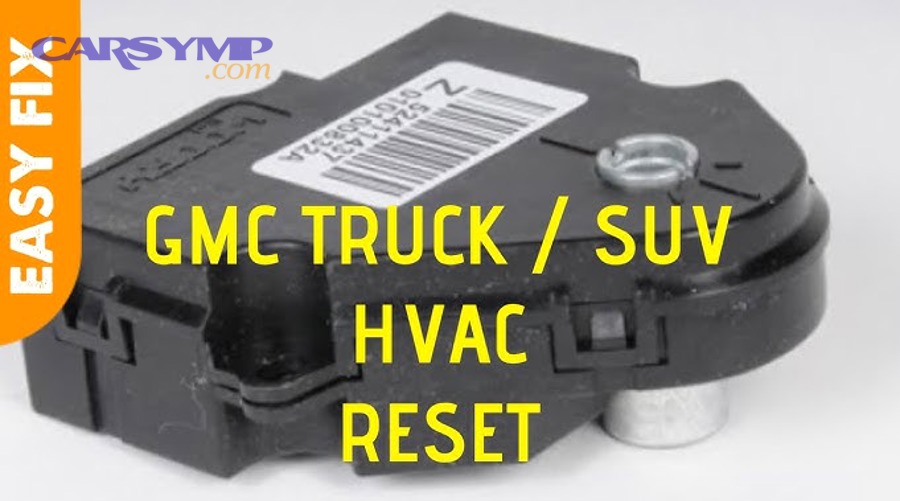
The biggest difference is intent:
- Manual HVAC: your knobs/switches are direct commands; the system may not store as many adaptive endpoints.
- Automatic HVAC: the module targets a temperature and adjusts doors continuously; accurate calibration is essential to keep the loop stable.
This is why a recalibration that “sort of works” on manual HVAC can still feel inconsistent on automatic climate control—because the system is actively correcting based on sensors and may keep hunting if the door position model is wrong.
How can you tell if your vehicle has automatic HVAC or manual controls?
Automatic HVAC is usually identifiable by AUTO mode and digital temperature settings, while manual controls typically rely on a blue-to-red dial without temperature numbers.
For example, you likely have automatic HVAC if you see:
- AUTO button
- Dual-zone temperature numbers (e.g., 68°F driver / 72°F passenger)
- “SYNC” function
- Sunload sensor (small dome on dash near windshield)
You likely have manual HVAC if you see:
- Fan speed knob with fixed steps
- Temperature dial without numbers (blue/red arc)
- Mode selector icons without automatic regulation
This matters because automatic HVAC is more sensitive to small endpoint errors; a few degrees of blend door offset can cause the module to overcorrect, creating temperature swings or constant low-level actuator movement.
Are relearn procedures different for dual-zone or rear HVAC systems?
Yes—dual-zone and rear HVAC systems often require a longer, uninterrupted relearn because the module may calibrate multiple actuators in sequence, and each zone may have its own temperature blend door.
On the other hand, a single-zone system may complete a relearn quickly and feel “fixed” sooner.
Practical implications for DIY owners:
- If you have dual-zone, test both sides independently after relearn (full cold → full hot).
- If you have rear HVAC, verify rear temperature response as well; rear complaints are common when a rear blend door actuator is out of sync.
- If one zone remains wrong, rerun the relearn once—then pivot to diagnostics rather than repeating resets endlessly.
This is also where you can accidentally chase the wrong issue. A driver-passenger mismatch can be an actuator calibration problem, but it can also happen if one heater core circuit is restricted or if airflow is blocked. “Cabin airflow restrictions and cabin filter checks” aren’t the same topic as recalibration, but they can mimic it: low airflow can make you think the temperature is wrong when the real issue is volume, not blend.
Should you recalibrate all actuators (blend/mode/recirc) or only the blend door?
Yes, you should often recalibrate all actuators when the system supports a full sweep—because it increases the chance the HVAC module’s internal “map” matches reality across airflow direction, recirculation, and temperature.
Especially after electrical work or control head resets, calibrating only one door can leave the system partially inconsistent, and that inconsistency can show up as weak defrost or odd airflow.
Three reasons a full recalibration is usually smarter:
- Actuators share the same control head logic—a clean relearn aligns the whole set.
- Defrost depends on mode door accuracy, not just blend door temperature.
- Recirculation position affects humidity, which affects fogging and clearing behavior.
If you’re doing “Defrost performance improvement tips,” you care about more than temperature—you care about where the air goes and how dry it is. That’s why a full calibration (when available) supports both comfort and safety.
What should you do if recalibration doesn’t work or the clicking returns?
If recalibration doesn’t work, you should assume either the relearn was interrupted (voltage, control input, timing) or the actuator/door has a mechanical or electrical fault that prevents accurate endpoint learning, and then follow a structured diagnosis path.
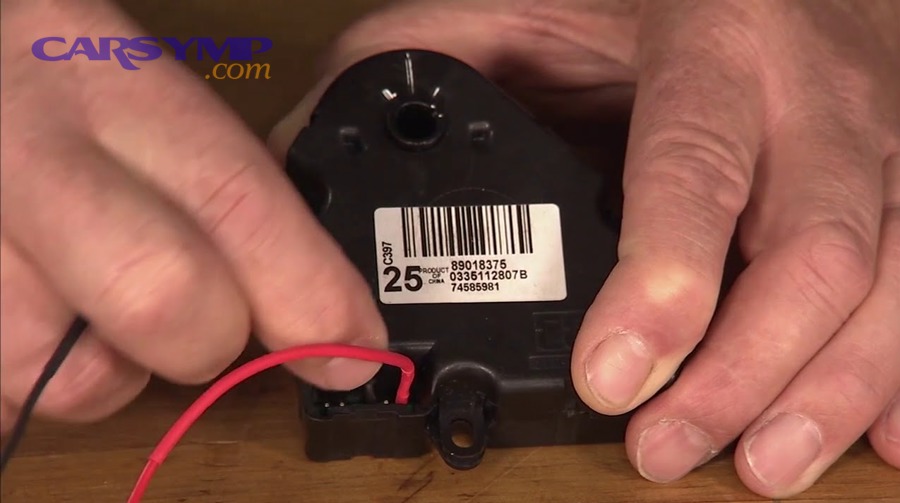
More importantly, this is where you stop repeating resets and start confirming what’s physically happening behind the dash.
A simple rule: one successful relearn attempt should noticeably change behavior—either it fixes the problem or it changes symptoms (quieter, different temperature response). If nothing changes at all, it’s likely not “just calibration.”
Does repeated clicking mean the actuator is bad (or could it be the door itself)?
Repeated clicking can mean either one, but the pattern tells you which is more likely: actuator gear failure is common when clicking is rhythmic and localized, while a binding door is more likely when clicking occurs at the same temperature range and the door feels stiff when moved manually.
However, both problems can coexist—an old binding door can cause a new actuator to fail early.
Use these differentiators:
- Actuator likely: clicking is rapid, consistent, and occurs anytime the system tries to move; temperature response may be erratic or stuck.
- Door likely: clicking happens near one endpoint (full hot or full cold), often after a period of normal operation; you may feel resistance if you can access the door pivot.
- Electrical/feedback likely: no movement, then sudden jumps; intermittent function that changes with tapping the connector or moving wiring.
Some training materials describe how actuator positioning relies on both drive and feedback signals. If feedback is wrong (sensor failure, connector issue), the module may keep driving the motor, causing repeated attempts at “finding”a position. (navistareducation.com)
What quick checks can you do before replacing the actuator?
There are 7 quick checks you can do before buying parts—based on what fails most often:
- Confirm power reset actually happened.
If you pulled the wrong fuse, you didn’t reset the HVAC module. Double-check fuse labels. - Check battery voltage during the relearn.
A weak battery can stall the actuator and ruin the learning window. If needed, connect a charger. - Listen for movement during no-touch period.
No sound at all can indicate a dead actuator, unplugged connector, or blown circuit. - Inspect actuator connector seating and pins.
Loose connectors and corrosion create intermittent feedback. - Test temperature sweep behavior.
Move from full cold to full hot slowly. If the system changes only at one end, the door may be offset or binding. - If accessible, check door pivot movement by hand (engine off).
Some guides recommend verifying the door moves freely before installing a new actuator to prevent repeat failure. - Rule out cooling-system causes of weak heat.
If your engine isn’t reaching normal operating temperature, or if coolant is low, recalibration won’t create heat that isn’t there.
That last check matters because many “no heat” complaints are not door-position problems at all. If you’re chasing “Preventing future weak heater complaints,” it’s smart to treat HVAC recalibration as one layer in a bigger system: engine temperature, coolant flow, heater core condition, airflow volume, and door control.
This is also where the phrase Heater core flush procedure becomes relevant—not because you should flush immediately, but because heater core restriction creates weak heat even when the blend door is perfectly calibrated. If cabin heat is lukewarm across all settings, flushing the heater core (properly and safely) may be the real solution.
When do you need a scan tool or professional recalibration?
Yes, you sometimes need a scan tool or professional help—especially when the vehicle’s OEM procedure requires a commanded calibration routine, when the HVAC module stores diagnostic trouble codes, or when actuator access is too limited to confirm mechanical movement safely.
Besides, a scan tool becomes valuable for three reasons:
- It can command each actuator (blend/mode/recirc) to known positions.
- It can read HVAC-related codes that point to feedback circuit faults.
- It can run an official calibration function on platforms that don’t reliably relearn with simple power cycling.
If you’ve done a correct fuse-pull or ignition-on relearn twice, have persistent clicking, and can’t confirm door movement, that’s the moment to stop guessing. A professional diagnosis can prevent repeated actuator replacements caused by an underlying binding door.
What rare issues prevent a blend door relearn from sticking, and how do you diagnose them?
Rare relearn failures happen when the HVAC module can’t reliably detect endpoints—either because the actuator can’t physically reach them, the feedback signal is unstable, or the relearn window is interrupted by voltage drops or module sleep behaviors.
Next, these are the “edge case” causes that explain why some vehicles appear to recalibrate successfully—and then revert days later.
Can low battery voltage or ignition sleep interrupt the relearn process?
Yes—low voltage and module sleep can interrupt the relearn, and both problems can mimic “bad parts” even when the actuator is fine.
More specifically, relearn routines assume steady motor speed and stable feedback. When voltage drops:
- The motor slows and may not reach endpoints.
- The control module may reset mid-sweep.
- Feedback readings can drift, producing incorrect stored limits.
Likewise, some vehicles time out accessory power quickly. If you perform the relearn with ignition in the wrong mode, the module may go to sleep before learning completes.
Practical fixes:
- Use a battery charger/maintainer during relearn.
- Follow a consistent ignition position (ON, engine off if recommended).
- Avoid opening doors repeatedly during the no-touch window (some vehicles wake/sleep networks when doors open/close).
How do deteriorated foam seals or a binding door cause recalibration failure?
Deteriorated foam seals or a binding door create friction and inconsistent stopping points, so the actuator hits resistance early, the module stores the wrong endpoint, and the system “forgets” accurate range under real driving vibrations and temperature changes.
To illustrate, many HVAC cases use foam to seal air passages. Over time, foam can crumble or shift, creating obstructions. The door might move freely for part of its travel, then bind near an endpoint—exactly where endpoint learning is most important.
Signs this is happening:
- Clicking occurs mainly near full hot or full cold.
- Relearn appears to complete, but temperature range still feels limited.
- The issue worsens in very cold weather (materials shrink/stiffen).
If you can access the actuator mounting location, removing the actuator and gently moving the door pivot through its full travel can reveal binding. If the door does not move smoothly, a new actuator is likely to fail again—so fixing the obstruction becomes the true heater performance fix.
What’s the difference between a blend door actuator, a mode door actuator, and a recirculation actuator?
Blend door actuator wins for temperature control, mode door actuator is best for airflow direction control, and recirculation actuator is optimal for humidity and cabin air source control—so identifying the correct actuator prevents wrong-part replacements and faster repairs.
Meanwhile, the symptoms differ in a way you can use:
- Blend door actuator: wrong temperature, hot/cold mismatch, driver vs passenger temperature disagreement.
- Mode door actuator: airflow stuck on defrost, stuck on floor, or can’t switch vents even though fan speed changes.
- Recirculation actuator: recirc button doesn’t change airflow feel; windows fog more easily because humid cabin air keeps circulating.
This matters for defrosting. The best “Defrost performance improvement tips” often involve: mode door set to defrost, A/C on to remove moisture, recirculation off so drier outside air enters, and adequate fan speed. If the mode door or recirc door is mispositioned, defrosting slows—even if the blend door can produce heat.
Which diagnostic trouble codes or scan-tool functions relate to HVAC actuator calibration?
There are 4 common scan-tool function groups used for HVAC actuator calibration and diagnosis: actuator command tests, actuator position feedback monitoring, calibration/relearn routines, and HVAC module DTC read/clear routines.
In addition, some OEM tools label these functions as:
- “HVAC actuator recalibration”
- “Air mix door initialization”
- “Mode door learn”
- “Actuator sweep test”
- “HVAC module reset”
Even without listing model-specific codes, the key idea is consistent: if the scan tool can command the actuator and confirm feedback position, you can separate calibration problems from mechanical failure quickly.
According to a study by T Ono from a building/environmental engineering conference context in 2019, researchers evaluated defogging performance by defining windshield areas that must remain nearly free of fogging for driving visibility, reinforcing that HVAC airflow control directly impacts visibility outcomes. (e3s-conferences.org)
Evidence (summary)
- Windshield defrost/defog performance is regulated in the U.S. under FMVSS 103, highlighting its safety importance. (nhtsa.gov)
- Engineering research and SAE technical work analyze and simulate windshield defrosting performance, reinforcing that airflow distribution and heat delivery matter. (sae.org)
- Training documentation describes HVAC actuator control as a combination of drive and feedback signals, explaining why calibration depends on stable feedback during endpoint learning. (navistareducation.com)