Fix Low Heater Performance: Troubleshoot & Restore High Heat Output for Homeowners (Filters, Thermostat & Airflow)
Low heater performance is usually fixable because it almost always comes down to one of three controllable bottlenecks: a restriction that chokes airflow, a control setting that prevents full heating, or a heat-production issue that keeps the system from delivering a proper temperature rise. Start by confirming the thermostat call for heat, then remove the most common restriction (a clogged filter), and you’ll often restore strong heat output without replacing major parts.
Next, you’ll get a fast “first 10 minutes” diagnostic flow that separates weak airflow from weak heat production, so you don’t waste time on the wrong fix. This includes practical checks like vents/returns, blower behavior, and the easiest “good vs bad” signs you can feel and measure.
Then, you’ll learn how to match symptoms to solutions—because “lukewarm air,” “poor room warm-up,” and “uneven temperatures” do not point to the same repair. You’ll also see how related systems (like a vehicle HVAC’s Cabin airflow restrictions and cabin filter checks) mirror the same physics, which helps you reason clearly about Weak heat output causes and solutions.
Introduce a new idea: once the basics are correct, you can move from “it works again” to “it works better than before” by Preventing future weak heater complaints through maintenance habits, smart control settings, and targeted fixes that protect performance over time.
Is your heater’s low performance caused by a simple setting or restriction?
Yes—low heater performance is very often caused by a simple setting or restriction because (1) thermostat mode/schedule can silently limit heat calls, (2) clogged filters and blocked returns reduce delivered airflow, and (3) closed or poorly balanced vents keep heat from reaching the rooms that feel cold.
To begin, the fastest way to regain heat output is to eliminate the obvious bottlenecks before you assume a major breakdown.
Is the thermostat set correctly for heat output (mode, schedule, fan setting)?
Yes—thermostat settings commonly cause “weak heat” because (1) the system may not be in HEAT mode (or may be stuck in an energy-saving schedule), (2) the fan setting can undermine comfort and temperature stability, and (3) the thermostat may be reading the wrong temperature due to placement or sensor behavior.
Specifically, treat the thermostat like the “brain” of heater performance: if it does not request heat in the right way, the best furnace or heat pump in the world will still feel weak.
Check mode and setpoint first (fastest win).
A correct configuration looks like this:
- Mode: HEAT (not COOL or OFF). If you have a heat pump, HEAT is normal; EMERGENCY HEAT is only for special cases (covered later).
- Setpoint: Raise it 2–3°F above current room temperature and wait a few minutes to confirm the system responds.
- Schedule/eco: Temporarily disable aggressive setbacks if the house struggles to recover. Some smart thermostats “learn” patterns that can delay calls for heat.
Fan setting matters more than most people think.
- FAN = AUTO usually produces better comfort because it prevents blowing cooler air between heating cycles.
- FAN = ON can help with mixing air in some homes, but it may also make supply air feel less warm between cycles and can exaggerate the “my heater is weak” feeling.
Placement and sensing can fake a performance problem.
- A thermostat hit by sunlight, placed near a draft, or mounted over a cold cavity wall can misread the real room temperature.
- If you use remote sensors, the thermostat may average readings and stop heating before the coldest room is comfortable.
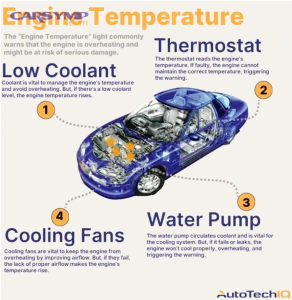
Related note (vehicle HVAC logic): “Thermostat replacement impact on cabin heat” is real in cars, too—an engine thermostat stuck open can keep coolant too cool, so the cabin heater stays weak even if the blower is strong. The same idea applies at home: if the control logic never allows the heat source to run long enough, heat output remains disappointing.
Is a dirty filter or blocked return vent reducing airflow and heat delivery?
Yes—airflow restrictions are one of the top causes of low heater performance because (1) the blower cannot move enough warm air into living spaces, (2) restricted airflow can trigger protective shutoffs or inefficient operation, and (3) rooms warm slowly and unevenly even when the heat source is working.
Next, treat airflow like the “blood flow” of your heating system: if the flow is restricted, the heat cannot be delivered.
Start with the filter (the most common restriction).
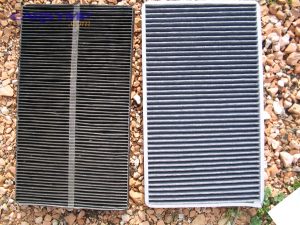
- If the filter looks gray, matted, or fuzzy, replace it.
- If the filter is bowed inward, that’s a strong clue the system is struggling to pull air through it.
- Avoid installing an overly restrictive filter type your system can’t handle—sometimes “better filtration” can unintentionally create weaker airflow.
Then check return vents (often overlooked).
- Make sure return grilles are not blocked by furniture, rugs, curtains, or stacked boxes.
- Ensure interior doors allow return airflow; a tightly sealed door can starve a room of circulation.
Why this instantly improves performance:
When airflow improves, the system can move more heated air across the home, making supply registers feel stronger and rooms warm faster. A federal energy guidance page explains that dirty, clogged filters reduce airflow and system efficiency—airflow obstruction is a direct performance killer. (energy.gov)
Parallel example (Car Symptoms): a clogged cabin filter does the same thing in a vehicle—Cabin airflow restrictions and cabin filter checks often fix “my heat is weak” complaints because the heater core may be hot, but the cabin airflow cannot carry heat into the cabin. (autozone.com)

What does “low heater performance” mean in practical terms?
Low heater performance is a comfort-and-delivery problem where the system produces less usable warmth than expected—often showing up as slow warm-up, weak register airflow, lukewarm supply air, or uneven room temperatures—because airflow and heat production are not working together efficiently.
Then, once you define the symptom correctly, you can choose the right fix instead of guessing.
The practical signs homeowners report most often:
- “The heater runs, but the house warms slowly.”
- “Some rooms stay cold, even though others are okay.”
- “Air blows, but it doesn’t feel hot.”
- “Defrost performance improvement tips” are needed—your windows feel clammy or foggy because airflow and temperature control aren’t clearing humidity effectively (this can happen in homes and vehicles).
What symptoms indicate an airflow problem vs a heat-production problem?
Airflow problems win the “weak airflow/poor delivery” category, while heat-production problems dominate “not warm enough air” symptoms: strong airflow with lukewarm air points toward heat-production limits, but weak airflow (even when air is warm) points toward restriction or blower/duct delivery issues.
However, the key is to test with your senses in a structured way, not by how the air “feels” for one second.
Airflow-problem pattern (delivery issue):
- Vents blow weakly even at higher fan settings.
- Some rooms get very little air.
- You hear the blower working harder (or whistling at grilles).
- The system may run longer without achieving comfort.
Common causes:
- Dirty filter, blocked return, closed registers
- Duct leaks, crushed flex duct, disconnected duct runs
- Blower motor issues or incorrect blower speed settings
Heat-production pattern (temperature-rise issue):
- Airflow feels normal/strong, but supply air is only mildly warm.
- The system runs and runs, but temperature barely climbs.
- Heat pump may be in a defrost cycle, or a furnace may be failing to sustain a strong burn.
Common causes:
- Heat pump performance limits in very cold weather (or auxiliary heat not engaging properly)
- Furnace combustion/ignition issues
- Sensor and safety-limit interruptions that shorten cycles
Vehicle parallel (helps you reason clearly):
In cars, “weak heat output causes and solutions” often split the same way: strong blower with cold air is commonly coolant/thermostat/heater-core related, while weak airflow is commonly cabin filter or blower related. (seacoastmazda.com)
What is “heat output” versus “airflow,” and why both matter?
Heat output is the amount of thermal energy your system generates and transfers into the air, while airflow is the volume of air moved through the system; both matter because even high heat output feels weak if airflow can’t deliver it, and strong airflow feels cold if the air isn’t heated enough.
Moreover, airflow and heat transfer are linked: reduced airflow can reduce effective heat transfer and overall performance. A report from Oak Ridge National Laboratory explains that as a filter becomes clogged, airflow is reduced and heat transfer is inhibited—performance drops as flow drops. (info.ornl.gov)
What this means in real life:
- Low airflow + hot air can still leave rooms cold because not enough heated air reaches the space.
- High airflow + lukewarm air can feel drafty and still fail to warm the house.
Which causes of low heater performance are most common—and how do you identify them?
There are 2 main types of causes of low heater performance—(A) airflow/delivery causes and (B) heat-production causes—based on whether the system fails to move enough air or fails to heat the air enough.

In addition, you can identify the right group quickly by checking airflow strength, temperature feel over time, and whether the system can maintain a stable heating cycle.
What are the top airflow-related causes (filters, vents, blower, ducts)?
There are 5 main airflow-related causes: (1) clogged filters, (2) blocked returns, (3) closed/imbalanced registers, (4) blower performance or blower settings issues, and (5) duct leakage or crushed/disconnected ductwork—based on where airflow gets restricted along the path.
More specifically, walk the airflow path in order:
- Returns (air intake):
- Blocked grilles, sealed room doors, return paths cut off by furniture
- A common “hidden” problem: a room with supply but no easy return path becomes pressurized, reducing net airflow.
- Filter slot:
- Wrong size filter allowing bypass (dust build-up on coil or blower)
- Overly restrictive filter media for the system’s blower capacity
- Blower compartment:
- Blower wheel packed with dust reduces efficiency
- Variable-speed settings misconfigured after service
- Supply trunk and branches:
- Duct leakage dumps warm air into attic/basement instead of living space
- Flex duct kinks restrict flow like a pinched hose
- Registers and diffusers:
- Closed registers create room-to-room imbalance and can increase noise/static pressure
Car mirror (micro-semantics, same physics):
“Cabin airflow restrictions and cabin filter checks” are the vehicle version of return/filter problems. If you’ve ever seen a cabin filter so dirty it blocks airflow, you’ve seen how “heat exists” but can’t reach people. (autozone.com)
What are the top heat-production causes (furnace/heat pump components)?
There are 4 main heat-production causes: (1) inadequate heat source output, (2) cycling interruptions from safety controls, (3) heat pump capacity limitations or auxiliary heat problems, and (4) system-level thermal transfer issues—based on whether the equipment can generate and sustain the needed temperature rise.
Especially, identify them by how the system behaves across a full heating cycle:
- Furnace issues (gas/electric/oil):
- Burners not fully lighting, dirty burners, ignition failures
- Overheating limit switch trips caused by airflow restriction (this creates “short cycling” and weak comfort)
- Heat pump issues:
- Outdoor temperature below efficient operating range (capacity drops)
- Defrost cycle behavior: temporary cool air can be normal during defrost
- Auxiliary heat not engaging when needed, or emergency heat misused
- Control and sensor issues:
- Faulty temperature sensors, pressure switches, or control boards can interrupt heating cycles
- Thermal transfer issues:
- Coil fouling, blocked heat exchanger airflow pathways, or poor circulation inside the unit
Vehicle parallel (useful for troubleshooting logic):
In cars, weak cabin heat is frequently linked to coolant availability and circulation—low coolant can prevent hot coolant from reaching the heater core, producing cold air. (seacoastmazda.com)
That’s why “cooling system repair” and even a “Heater core flush procedure” can be part of the fix in automotive cases—because restricted flow equals reduced heat transfer. (We’ll keep home HVAC as the main focus, but the diagnostic logic is the same: confirm heat transfer and flow.)
How do you troubleshoot low heater performance step-by-step without skipping the important checks?
You troubleshoot low heater performance by following a 4-step sequence—confirm the heat call, remove airflow restrictions, verify heat production, and then validate delivery room-by-room—so you restore high heat output without unnecessary part swapping.
To better understand the problem, the goal is to produce a simple “proof” at each step: proof the system is being asked to heat, proof air can move, proof the air is getting heated, and proof that heated air reaches the rooms.

How do you run a safe “airflow path” test from return → filter → blower → supply?
You run an airflow path test by checking each segment of the air path—return intake, filter condition, blower operation, and supply delivery—so you can pinpoint where airflow is being restricted and fix the restriction at the lowest cost point.
Then, once you find the restriction, you correct it and immediately re-test to confirm the change improved airflow.
Step-by-step airflow path test (home HVAC):
- Listen at the return grille with the system on.
- Strong suction suggests decent intake airflow.
- Weak suction suggests restriction, blocked return, or blower issue.
- Inspect and replace the filter if dirty.
- Treat this as a required step, not optional.
- Check supply registers in multiple rooms.
- One weak room suggests duct branch issues or a closed damper/register.
- Many weak rooms suggests a central restriction (filter, blower, main duct).
- Check obvious blockages and balancing.
- Open closed registers.
- Ensure returns are not blocked.
- If doors isolate rooms, consider leaving them slightly open during testing.
Vehicle version (for clarity, not to change the article topic):
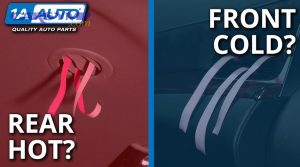
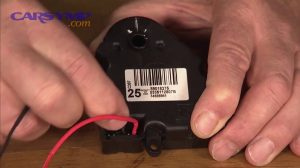
A car’s airflow path test is similar: verify blower speed, check cabin filter, confirm vents open, and ensure mode doors are directing air correctly—this is where “Blend door recalibration steps” can restore airflow direction and temperature mixing if the doors are out of sync. (rycompressors.com)
How do you confirm the system is actually heating (supply air warmth / temperature rise check)?
You confirm the system is heating by comparing return-air temperature to supply-air temperature after the system has run long enough to stabilize—because a meaningful temperature rise proves the heat source is producing and transferring heat into the air stream.
Moreover, this simple measurement prevents false conclusions based on “hand feel,” which changes with airflow speed and humidity.
Simple temperature rise check (home HVAC):
- Place a thermometer near a return grille (not touching metal) and note the reading.
- After the system runs for several minutes, measure at a nearby supply register.
- Compare the numbers: supply should be noticeably warmer than return during steady heating.
How to interpret results:
- Good airflow + low temperature rise: suspect heat-production limits (heat pump capacity, furnace firing/controls).
- Low airflow + high temperature rise at the register: suspect delivery issues; the air may be hot but not moving enough to heat rooms.
Car Symptoms cross-check (optional mental model):
If a car heater blows cold air, a common first check is coolant level because coolant carries heat to the heater core. Low coolant is frequently cited as a common culprit in vehicle heating performance problems. (seacoastmazda.com)
In automotive cases, “Coolant mix ratio and heater performance” can matter too: if the mixture is wrong, heating can suffer in cold weather and overall thermal behavior changes.
What fixes restore high heat output for homeowners—based on the problem you found?
There are 2 main categories of fixes that restore high heat output—(A) airflow restoration fixes and (B) heat-production restoration fixes—based on whether you’re correcting delivery limitations or increasing the system’s actual heating capability.

Besides, the most cost-effective approach is to start with fixes that improve airflow and control accuracy first, because they often solve the problem without major component replacement.
Which DIY fixes most often improve heater performance immediately?
There are 6 DIY fixes that most often improve heater performance immediately: (1) replace the air filter, (2) clear returns and open key registers, (3) correct thermostat mode/schedule, (4) balance airflow room-by-room, (5) seal obvious duct leaks you can safely access, and (6) adopt “preventive” habits that stop performance from degrading again—based on how quickly they remove common bottlenecks.
Next, apply them in this order:
- Replace the filter (again, it’s that common).
- This is often the lowest “Cost to improve heater performance” because the part is inexpensive and the benefit is immediate.
- Clear airflow pathways.
- Move furniture away from returns.
- Open closed registers in key rooms.
- Ensure curtains aren’t blocking warm air from entering the room.
- Correct thermostat setup.
- Temporarily disable aggressive setbacks.
- Use HEAT + AUTO fan for baseline testing.
- Basic airflow balancing.
- If one room is freezing, check whether its register is closed or the duct is pinched.
- Don’t over-close other rooms to “force” air—this can create new problems with static pressure.
- Seal accessible duct leaks (safe scope).
- If you can see a disconnected duct in a basement, reconnecting it can feel like “magic” because you stop losing heated air into an unconditioned space.
- Preventing future weak heater complaints (maintenance habits).
- Set a reminder to inspect filters monthly during heavy heating season.
- Keep returns clear as part of normal housekeeping.
- Periodically confirm the thermostat schedule still matches real life.
Vehicle note (micro semantics, same style of DIY wins):
In a car, quick wins include cabin filter replacement, defrost mode optimization, and checking for mode-door issues—common “Defrost performance improvement tips” involve ensuring strong airflow to the windshield and using the correct modes to reduce humidity. (autozone.com)
Which repairs usually require a technician (and why)?
There are 5 repair categories that usually require a technician: (1) combustion/ignition service, (2) blower motor or control board diagnosis, (3) refrigerant-side heat pump issues, (4) safety-limit and venting problems, and (5) advanced duct/zoning design corrections—because they involve electrical, gas, refrigerant, or design-level risks that DIY work can’t safely address.
More importantly, these repairs often connect to safety and reliability, not just comfort.
Common “call a pro” repairs (home HVAC):
- Gas furnace ignition, burner cleaning, or combustion tuning
- Repeated tripping breakers or blown fuses
- Short cycling caused by limit switches (especially if airflow fixes didn’t help)
- Heat pump refrigerant leaks or compressor/defrost control problems
- Zoning dampers not opening correctly or suspected high static pressure
Automotive comparison (for readers who troubleshoot both worlds):
If cabin heat is weak due to coolant circulation issues, a mechanic may recommend “cooling system repair,” pressure testing, or a “Heater core flush procedure” when restriction is suspected—because improper service can introduce leaks or air pockets and cause overheating. (The same principle applies at home: advanced service must be done safely and verified.)
Should you keep running the heater when performance is low—or stop for safety?
It depends—yes, you can usually keep running the heater during mild performance problems, but no, you should stop and call for service if (1) you smell gas or burning wiring, (2) safety alarms trip or the system repeatedly shuts off, or (3) you see signs of overheating, electrical faults, or leaks.
Thus, the safest approach is to treat “weak heat” as a comfort issue until a warning sign says it’s a safety issue.
Are there warning signs that indicate a safety risk or imminent damage?
Yes—there are clear warning signs because (1) they indicate combustion or electrical danger, (2) they signal the system is protecting itself from overheating, and (3) they suggest a failure mode that can worsen quickly.
In addition, if you see any of the following, stop “optimizing” and start “protecting”:
Stop and call for service if you notice:
- Gas smell near the furnace or gas line
- Persistent burning smell that doesn’t fade after initial seasonal startup
- Frequent breaker trips or visible electrical scorching
- Water pooling around equipment (condensate issues, leaks)
- CO alarm activation or symptoms of CO exposure (leave immediately and contact emergency services)
Why airflow restrictions can become a safety problem:
If airflow is too low, a furnace can overheat and trip a limit switch, which creates repeated shutdowns and poor performance. A clogged-filter discussion from an HVAC safety-focused source notes that clogged filters prevent furnaces from running properly and can stress components. (blog.msasafety.com)
Is “short cycling” a performance problem or a safety/protection response?
Short cycling is both: it is a performance problem because it reduces delivered heat and efficiency, but it is often a safety/protection response when sensors or limit switches detect overheating, airflow restriction, or control instability.
Meanwhile, your job is to determine which side is driving it.
Short cycling as a performance problem:
- Thermostat placement causes rapid on/off behavior
- Oversized equipment heats the thermostat location too quickly
- Smart thermostat recovery settings or schedules cause frequent cycling
Short cycling as protection:
- Overheating due to clogged filters or blocked returns
- Heat exchanger or safety limit trips
- Pressure switch and venting issues (furnaces)
- Defrost/control issues (heat pumps)
What to do first:
- Correct airflow restrictions.
- Confirm thermostat settings.
- If cycling continues, call a technician—because repeated protective cycling means the system is not operating within safe limits.
How do heater type and controls change the best “heater performance fix”?
Gas furnaces usually win in rapid high-temperature supply air, heat pumps are best for steady efficiency in mild-to-cold conditions, and smart controls are optimal for comfort consistency—because the best heater performance fix depends on equipment type, how it handles cold weather, and how the controls manage cycles and airflow.

On the other hand, the wrong control choice can mimic a “broken heater” even when the equipment is fine.
How is troubleshooting different for a heat pump (defrost, auxiliary heat, emergency heat)?
Heat pumps win in efficiency during moderate cold, auxiliary heat is best for boosting output during deeper cold, and emergency heat is optimal only when the heat pump can’t operate—because defrost cycles and capacity limits change what “normal” heat feels like.
Specifically, heat pumps may blow air that feels cooler than a gas furnace even when operating correctly, because they deliver heat steadily at a lower supply temperature.
What to watch:
- Defrost cycle: temporary changes in air temperature can occur; the system is protecting outdoor coil performance.
- Aux heat behavior: if the home can’t reach setpoint in cold weather, auxiliary heat may be required.
- Emergency heat: use only when the heat pump is malfunctioning or conditions demand it; otherwise it can be expensive.
How do smart thermostats and schedules accidentally cause low heat output?
Smart thermostat scheduling causes accidental low heat output when it applies aggressive setbacks, eco modes, or sensor averaging that reduces effective heat calls, making the system run at the wrong times or stop before cold rooms recover.
Moreover, the “smart” part can hide the cause because everything looks normal on the screen.
Common culprits:
- Eco schedules that reduce setpoint while you’re home
- Recovery settings that start too late
- Remote sensors that average warm rooms with cold rooms, masking discomfort
- Fan circulation settings that change how warm the air feels
Can zoning dampers or high static pressure reduce performance even with a clean filter?
Yes—zoning dampers and high static pressure can reduce performance even with a clean filter because (1) closed dampers increase resistance and reduce airflow, (2) the blower can’t deliver design airflow against excessive pressure, and (3) rooms become uneven even though the heat source is producing heat.
Especially, this is one of the most common “mystery” causes when the basics look correct.
Clues you may have high static pressure:
- Whistling registers
- Excessive airflow noise near returns
- Some zones starved while others are okay
- Frequent comfort complaints after system modifications (new filters, new dampers, remodeled ducts)
What quick “performance tune-up” tasks improve efficiency without repairs?
There are 4 quick performance tune-up tasks: (1) consistent filter maintenance, (2) airflow pathway housekeeping and register balancing, (3) control optimization and schedule alignment, and (4) seasonal professional inspection—based on how they prevent performance loss without replacing parts.
In short, these actions convert “it heats” into “it heats reliably, efficiently, and evenly.”
Tune-up tasks you can do:
- Set a monthly reminder to inspect/replace filters during peak season.
- Keep returns unobstructed as a household rule.
- Re-check thermostat schedules after travel or seasonal changes.
- If comfort problems persist, request a professional evaluation that includes airflow and safety checks.
Automotive micro-coverage (for readers who also troubleshoot cars):
Defrost performance improvement tips, coolant checks, and even coolant “mix ratio” are part of a vehicle’s heating tune-up logic; low coolant is commonly cited as a frequent reason for cold air from a car heater, and incorrect mixture can affect heating behavior in colder conditions. (seacoastmazda.com)
Evidence (if any): According to a report by Oak Ridge National Laboratory, in 2017, as an air filter becomes clogged the airflow is reduced and heat transfer is inhibited, which directly degrades system performance. (info.ornl.gov)