


Rear heat that suddenly turns lukewarm or cold is usually diagnosable in one session because the rear HVAC system fails in predictable ways: either airflow is restricted or hot coolant isn’t transferring heat through the rear heater core—and each path has clear, testable signs you can confirm in minutes.
Then, once you know which path you’re on, the “rear heat blows cold” problem narrows fast to a short list of common culprits like trapped air after coolant service, low coolant, restricted rear heater core flow, a stuck rear blend door actuator, or a heater control valve that isn’t opening.
After that, the goal becomes precision: match your exact symptom pattern (idle vs driving changes, vent vs floor differences, rear-only vs front-and-rear) to the component that can actually cause it—so you don’t waste money chasing the wrong heater performance fix.
Introduce a new idea: you’ll get the best results when you follow a front-to-rear diagnostic order (engine temperature → coolant level/air → rear heater core flow → rear blend door controls), because rear HVAC problems often look like “Weak heat output causes and solutions” but have a single root fault you can confirm.
Is the rear heater problem caused by airflow or temperature (hot coolant) in your SUV?
Yes—this problem is almost always identifiable as either an airflow restriction or a temperature/heat-transfer fault, because (1) airflow problems change how much air moves, (2) coolant/heat-transfer problems change how hot the air can get, and (3) control-door problems change where heated air can actually go.
Then, to avoid guessing, you’ll separate “air not moving” from “air moving but cold” before touching parts.
Is air coming out of the rear vents strongly (Yes/No)?
If the answer is No, treat this as an airflow-first diagnosis—because a rear system can have plenty of heat available but still feel “cold” when the cabin never receives enough air volume.
Start with the simplest checks that create big airflow losses:
- Rear fan speed setting vs front fan setting: Some tri-zone systems reduce rear airflow when the front is set low, even when rear temp is set high.
- Rear vent position and blockage: Confirm rear vents are open, not jammed, and not obstructed by bags, blankets, or third-row cargo.
- Rear duct routing problems: Ducts can partially disconnect in some SUVs after interior work, leaving you with low airflow at the vents but normal blower noise.
- Rear blower operation (if equipped): Many larger SUVs have a dedicated rear blower. If it’s weak, intermittent, or noisy, airflow drops even if heat is available.
A quick “feel test” that’s surprisingly reliable:
- Set rear fan to max.
- Put your hand directly at the rear vent outlet.
- Compare left vs right rear vents.
- Switch mode (vent → floor, if rear mode control exists).
What you’re looking for: a consistent strong stream at multiple outlets. If airflow is weak everywhere, you likely have a blower/control issue; if airflow is strong in one outlet but weak in another, you likely have a duct or door routing issue.
If airflow is strong, is the air still cold or only lukewarm (Yes/No)?
If the answer is Yes (airflow is strong but the air is cold/lukewarm), treat it as a heat-transfer or temperature-mix problem—because airflow has been “proven.”
Now do a fast sanity check to stay on track:
- Rear air temperature changes when you move the rear temperature setting: If it never changes, suspect a blend door/actuator/control issue (air is being routed around the heated path).
- Rear heat improves at higher RPM or while driving: That symptom often points to flow/air in the system (rear heater core isn’t getting consistent hot coolant at idle).
- Rear heat works on “floor” but not “vent” (or vice versa): That often points to a door position problem rather than coolant temperature.
This is the point where people commonly replace parts and still get cold rear vents—so keep the hook chain tight: strong airflow means the “rear heater feels cold” symptom is coming from coolant not delivering heat or doors not mixing air correctly.
What are the most common causes of rear heat blowing cold in SUVs?
There are 5 main causes of rear heat blowing cold in SUVs: trapped air/low coolant, restricted rear heater core flow, rear blend door actuator failure, heater control valve or control logic issues, and engine temperature running too cool—grouped by whether they reduce heat supply, heat transfer, or heat delivery.
Next, you’ll match causes to symptoms so you can diagnose instead of guessing.
What symptoms point to trapped air or low coolant affecting the rear heater core?
Low coolant and trapped air are top suspects in rear-only heater complaints because rear heater lines are long and the rear core often sits higher or farther from the main coolant flow path.
Look for these patterns:
- Rear heat is worse than front heat: Front may still get warm because it’s closer to the engine and sees more consistent flow.
- Heat fluctuates or “burps” hot then cool: Air pockets move through the rear core, interrupting heat transfer.
- Rear heat improves while driving but fades at idle: Higher RPM increases water pump flow, which can temporarily push coolant through an air-bound rear circuit.
- Problem started after cooling system work: Coolant flush, radiator replacement, Thermostat replacement impact on cabin heat—any of these can introduce air if bleeding wasn’t complete.
If you recently topped off coolant or did a repair, don’t skip this. “Weak heat output causes and solutions” often begins with coolant basics, and rear systems amplify that issue.
What symptoms point to a restricted/clogged rear heater core or rear heater hoses?
A restricted rear heater core behaves like a partially plugged radiator: hot coolant enters, but flow is limited, so the core can’t deliver enough heat.
Common signs:
- Rear heat is consistently weak, not just intermittent.
- Rear hoses show a noticeable temperature difference (one hot, one much cooler) once the engine is warm.
- Rear heat takes a long time to warm up and never reaches “hot” even though the front does.
- You’ve had contaminated coolant or previous overheating (deposits can build up in the smaller passages of the rear heater core).
A restriction can also come from hoses, not the core:
- Kinked rear heater hoses after repairs.
- Collapsed inner hose liners that act like a one-way flap.
- Restricted quick-connect fittings (rare, but real).
If restriction is likely, your eventual repair might involve a Heater core flush procedure—but only after you confirm the restriction pattern with temperature checks.
What symptoms point to a rear blend door/actuator problem instead of a coolant problem?
A rear blend door actuator issue means the system has heat available, but the rear air never gets routed across the heated core (or never mixes correctly).
Symptoms that scream “door/actuator”:
- Rear temperature setting does nothing: Turning the rear temp from cold to hot produces little or no air temperature change.
- Clicking, tapping, or ratcheting from the rear HVAC area: Common actuator gear failure behavior.
- Mode-dependent heat: Heat works on “floor” but not “vent,” or changes dramatically when switching modes—more consistent with door routing than coolant temperature.
- Rear air is cold even when rear heater hoses are hot: That’s the classic split: heat supply is fine, delivery is wrong.
This is also where a “heater performance fix” can go off the rails—because replacing a heater core won’t help if the blend door is stuck in a cold position.
What symptoms point to a heater control valve or HVAC control logic issue?
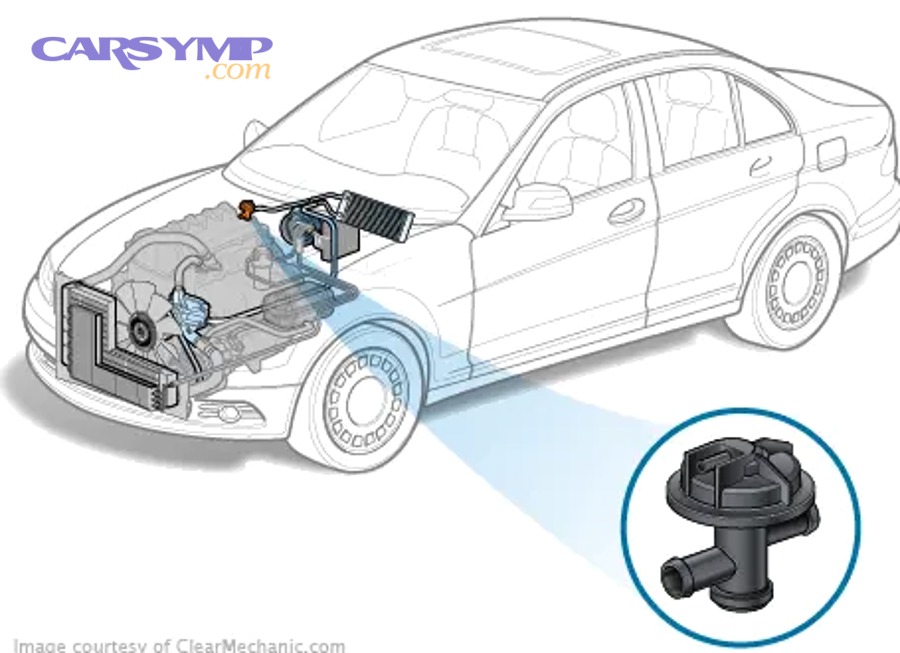
Some SUVs use a heater control valve (vacuum or electrically actuated) to regulate coolant flow to heater cores. Others rely on constant flow and blend doors only. If your SUV has a valve and it fails closed (or is never commanded open), the rear core can starve.
Clues:
- Rear heat stays cold no matter how long you drive, but front heat is okay.
- Coolant hoses to the rear stay cooler than expected even when engine is fully warm.
- Intermittent rear heat that correlates with electrical glitches, certain settings, or a rear control panel acting “strange.”
- Tri-zone “sync/lock” confusion: A rear panel can be locked out or overridden by the front controls, making a normal system look broken.
Evidence: According to a study by Carnegie Mellon University from the Department of Mechanical Engineering, in 2015, the authors found that vehicle energy outcomes vary with ambient temperature partly because cabin climate control demand changes, and they report that annual energy consumption for BEVs can increase by about 15% in some regions due to temperature differences. (cmu.edu)
How do you diagnose rear heater core flow and temperature in an SUV (step-by-step)?
Use a simple rear-heater flow diagnosis in 3 steps—verify engine operating temperature, compare rear heater hose temperatures (inlet vs outlet), and bleed trapped air if flow is inconsistent—so you can pinpoint whether the rear heater core is starved, restricted, or working normally.
Then, you’ll interpret each result so you don’t confuse a door problem with a coolant problem.
Can you safely confirm the engine reaches normal operating temperature first (Yes/No)?
Yes—you should confirm it first, because (1) a cool-running engine can’t provide strong cabin heat, (2) rear zones suffer first when heat supply is weak, and (3) it prevents you from misdiagnosing a normal rear system as “failed.”
Next, treat this as the “gateway test” before chasing rear components.
How to confirm quickly:
- Watch the temp gauge stabilize near its normal position (varies by vehicle).
- Use a scan tool if available to read actual coolant temperature (best).
- Feel the upper radiator hose behavior (after warm-up, it heats when thermostat opens—be cautious; hot surfaces burn).
If the engine never reaches normal temperature:
- A thermostat stuck open is a common culprit and directly ties to thermostat replacement impact on cabin heat—rear heat often improves dramatically once engine temperature control is restored.
- Don’t proceed with rear-specific steps until engine temperature is correct.
How do you use rear heater hose inlet/outlet temperatures to pinpoint the fault?
This is the most powerful test because it tells you whether heat is entering the rear heater core and whether the core is transferring heat.
What to do (basic tool path):
- Warm the engine fully.
- Set HVAC to max heat (front and rear).
- Set rear fan to medium (so the core is actually transferring heat).
- Carefully feel or measure the two hoses feeding the rear heater core.
Interpretation map (the part people skip):
- Both rear hoses are cool or only slightly warm
- Likely causes: low coolant, trapped air, closed heater control valve, severe flow blockage, or pump/circulation issue.
- Next step: bleed air and confirm coolant level; check valve operation if equipped.
- Inlet hose is hot, outlet hose is much cooler
- Likely cause: restricted rear heater core or restricted hose/fitting.
- Next step: investigate restriction; consider a heater core flush procedure only after confirming no air pocket is skewing readings.
- Both hoses are hot, but rear vents are cold
- Likely cause: rear blend door/actuator not routing air across the core, or duct routing/leak.
- Next step: move to rear blend door actuator diagnosis.
- Both hoses hot and rear vents warm, but heat is weak
- Likely causes: airflow limitation, fan speed low, rear intake/duct restriction, door not fully sealing, or high cabin heat loss.
- Next step: revisit airflow checks and door calibration.
To make this easier, here’s what the table contains: a quick “temperature pattern → likely fault” guide that mirrors the logic above.
| Rear hose pattern | What it usually means | What to do next |
|---|---|---|
| Both hoses cool | Not enough hot coolant reaching rear | Check coolant level + bleed air; check valve/pump if equipped |
| Inlet hot, outlet cool | Flow restriction through rear heater core | Confirm restriction; evaluate flush vs replacement |
| Both hoses hot, vents cold | Heat present but air mixing/routing wrong | Diagnose rear blend door actuator/controls |
| Both hoses hot, vents warm but weak | Heat transfer OK, delivery weak | Improve airflow/door sealing; check ducts |
What is the correct order to bleed air from the cooling system to restore rear heat?
Air bleeding fixes more rear heat complaints than people expect because rear heater circuits are long and trap bubbles.
A reliable order (generalized; always follow OEM specifics when available):
- Start cold. Never open a hot cooling system.
- Set HVAC to MAX HEAT (front and rear). This helps open coolant paths in many systems.
- Fill coolant to the correct level (overflow/expansion tank or radiator, depending on design).
- Run the engine with the cap off only if your vehicle allows it safely (some require a special procedure).
- Watch for bubbles and coolant level drop as air purges. Top up as needed.
- Warm fully and verify heat output at rear vents and rear floor outlets.
- Recheck coolant level after a full cool-down and top off again if needed.
If you want one visual reference for the technique, this video is commonly used as a general demonstration of purging air from a cooling system:
Important cautions that protect your engine:
- Don’t rev a cold engine aggressively to “force” flow.
- Don’t keep driving if the engine overheats—rear heat is not worth engine damage.
- If bleeding repeatedly “doesn’t hold,” suspect a leak, wrong cap, or combustion gas intrusion (less common, but serious).
How do you diagnose the rear blend door actuator and controls (without replacing parts first)?
Diagnose the rear blend door actuator by confirming (1) the temperature command changes, (2) the actuator responds or moves, and (3) the vent air temperature actually changes—because a working heater core can still deliver cold air if the blend door stays in the wrong position.
Next, you’ll separate “bad actuator” from “bad command” so you don’t buy parts blindly.
Does changing the rear temperature setting actually change the air temperature (Yes/No)?
Yes or No matters here: if the answer is No, the rear temperature system is not mixing correctly for at least three reasons—an actuator failure, a stuck blend door, or a control/command issue—so you should treat it as a control-path problem rather than a coolant problem.
Then, confirm it with repeatable tests instead of “it feels the same.”
Do this consistently:
- Warm engine fully.
- Rear fan to medium-high.
- Measure vent temperature (even a cheap thermometer helps).
- Move rear temp from full cold to full hot and wait 30–60 seconds.
If there’s little to no change:
- Listen for actuator movement or clicking near the rear HVAC housing.
- Switch between rear vent and rear floor modes (if available) to see if a different door position “accidentally” restores heat.
What checks confirm a blend door actuator failure versus a control head problem?
This is a comparison problem: the actuator can be bad, or the control system can be failing to command it. Here’s how you separate them without guesswork:
Actuator-likely signs (hardware failure):
- Clicking/ticking that repeats when you change temperature.
- Temperature sometimes changes but stops at a certain point (gear skipping).
- You can see or feel partial movement but not full travel (if accessible).
Control-likely signs (command failure):
- Rear panel unresponsive, buttons inconsistent, displays flicker.
- Rear controls locked out or overridden by front controls unexpectedly.
- Multiple rear functions fail together (temp + mode + fan).
Practical checks:
- Check fuses related to HVAC/rear climate.
- Try a simple control reset (vehicle-specific—often battery disconnect procedures exist, but follow safe guidance).
- Scan tool HVAC data (best): see if the system “thinks” it’s moving the door while the air never changes.
If the rear heater hoses are hot but the rear vents stay cold, this section usually contains the answer—more often than the heater core itself.
What should you try first, and when should you stop and visit a shop?
Yes—there is a safe “try-first” order, because (1) coolant/air issues are common and inexpensive to correct, (2) door/control issues are testable before replacement, and (3) overheating or coolant loss should stop DIY immediately to prevent engine damage.
Next, you’ll use a decision threshold so you don’t turn a heater complaint into a major repair bill.
Is it safe to keep driving if the rear heater blows cold (Yes/No)?
Yes, it can be safe to drive if engine temperature stays normal, coolant level remains stable, and there are no leak signs—because rear heat loss alone doesn’t always indicate a critical failure—but it’s not safe if overheating or coolant loss is present.
Then, use the rear heater symptom as a warning light, not a panic button.
Safe-to-drive conditions (generally):
- Temp gauge normal and stable.
- No coolant smell, puddles, or steam.
- Coolant level doesn’t drop.
Stop driving / seek help if:
- Engine overheats or fluctuates toward hot.
- Coolant level keeps falling.
- You see fogging with a sweet smell (possible heater core leak).
- You have wet carpet near HVAC areas.
Rear heat complaints often begin as comfort issues—but ignoring coolant loss is how comfort problems become engine problems.
Which DIY fixes are reasonable, and which repairs are usually professional-level?
DIY wins for quick checks and basic corrections, while professional service is best for repairs involving coolant system disassembly, hard-to-access rear HVAC modules, or electrical diagnosis that requires scan tools and calibration routines.
Next, use this split to control cost and reduce misdiagnosis.
Reasonable DIY (high value, low risk if done safely):
- Verify engine reaches operating temperature.
- Confirm coolant level (cold) and correct coolant type.
- Bleed air properly after service.
- Check rear vents/duct blockage and rear control settings.
- Compare rear heater hose temperatures (carefully).
Usually professional-level (higher complexity):
- Rear heater core replacement (often deep interior labor).
- Replacing/servicing heater control valves in tight spaces.
- Diagnosing control module faults, wiring breaks, or calibration failures.
- Performing an aggressive heater core flush procedure when contamination is severe (risk of leaks if the core is already weak).
If you want a structured approach that reads like a shop checklist—but still stays DIY-friendly—some owners use guides similar to what you’d find on carsymp.com to keep the troubleshooting sequence consistent and avoid random part swaps.
What SUV-specific factors make rear heater diagnosis different from front heater troubleshooting?
Rear heater diagnosis is different because the rear system often has long coolant lines, separate actuators, and tri-zone control logic, which can create rear-only failures even when the front works normally; this section expands micro details so you can handle the edge cases without losing the main diagnostic flow.
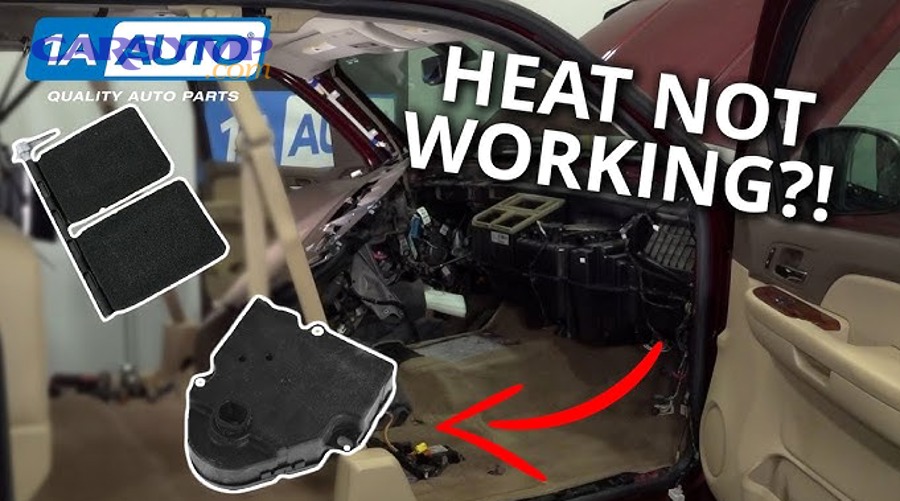
How do tri-zone “SYNC/LOCK” settings and rear control modules mimic a mechanical failure?
Tri-zone systems can mimic failure when rear controls are effectively overridden:
- SYNC mode can tie rear temp to front settings, so rear never gets the “hot” command you think you gave it.
- Rear lockout (common in family SUVs) can disable rear adjustments even though the panel appears active.
- Some systems prioritize defrost or front comfort, temporarily reducing rear heating under certain conditions.
Your best defense is consistency:
- Test with front and rear set to max heat.
- Disable sync if possible.
- Confirm rear fan speed is actually increasing.
Which SUVs use an auxiliary coolant pump or rear heater control valve, and how do you test them?
Different platforms handle rear heat differently, but the concept is consistent: if the vehicle uses an auxiliary pump or control valve and it fails, the rear core can be starved.
How to test conceptually (without getting model-specific):
- Aux pump: Listen/feel for operation when heat is commanded; check for power if accessible.
- Control valve: Observe hose temps before/after the valve; a valve that stays closed will keep downstream hoses cooler.
If your hose temperature pattern says “no flow to rear,” these components become much more likely.
When do you use an infrared thermometer or scan-tool HVAC data, and what readings matter?
Use an infrared thermometer when you need objective data:
- Compare rear heater hose inlet vs outlet temperatures.
- Compare front core hoses vs rear core hoses.
- Confirm whether “hot” exists at the rear core even when the cabin air is cold.
Use scan-tool HVAC data when you suspect control issues:
- See commanded blend door positions vs actual feedback (if available).
- Confirm rear temperature requests are being recognized.
The key is correlation: hot coolant at the rear core + cold rear vents points back to doors/controls, not coolant.
What rare issues cause rear heat complaints even when the heater core is hot?
If both rear hoses are hot and you still have weak rear heat, rare issues become relevant:
- Duct leakage or disconnected ducts dumping warmed air into panels instead of the cabin.
- Door foam deterioration letting cold bypass air leak around the blend door.
- Airflow imbalance (rear fan weak, intake restricted, or vents blocked) making heat feel absent even when temperatures are technically elevated.
- Partial door travel after a control fault—door “moves,” but never reaches the full hot position.
This is where your earlier diagnostic order still protects you: because you already proved heat supply, you can stay focused on delivery and control rather than restarting at coolant.
Evidence (if any): According to a study by Carnegie Mellon University from the Department of Mechanical Engineering, in 2015, the researchers reported that temperature-driven cabin climate control demand contributes to changes in vehicle energy consumption, and they found annual BEV energy consumption can increase by about 15% in some regions due to temperature differences. (cmu.edu)