


A temporary emergency hose repair is a stopgap approach that can slow or stop a leak long enough to get you safely home or to a shop—by sealing, clamping, or bypassing the damaged spot until a permanent repair is possible. The key is to stabilize the leak without creating a bigger hazard from heat, pressure, or flammable fluids.
Next, the most useful way to “win” an emergency hose leak is to match the method to the leak type: a loose clamp needs a different fix than a split hose, and a pinhole seep needs different materials than a burst. When you choose correctly, even a basic kit (tape + clamps + a coupler) can buy you critical time.
Then, safety matters as much as sealing. Some systems (fuel lines, brake lines, high-pressure hydraulics) are not “temporary-fix friendly,” and some conditions (spraying hot coolant, steam, or rapid fluid loss) mean you should shut down immediately and avoid touching the hose until it cools.
Introduce a new idea: once you understand what a stopgap fix can do—and what it cannot—you can follow a simple workflow: assess risk, prep the surface, apply the right temporary method, and test it carefully before you drive or restart the system.
What does “temporary emergency hose repair” mean, and what can it realistically do?
Temporary emergency hose repair is a short-term leak-control method that seals or restricts fluid/air loss long enough for safe travel or shutdown, but it does not restore the hose’s full strength, heat resistance, or long-term reliability.
Next, because “temporary” can mean minutes or a few days depending on the hose and system, you need realistic expectations before you touch anything.
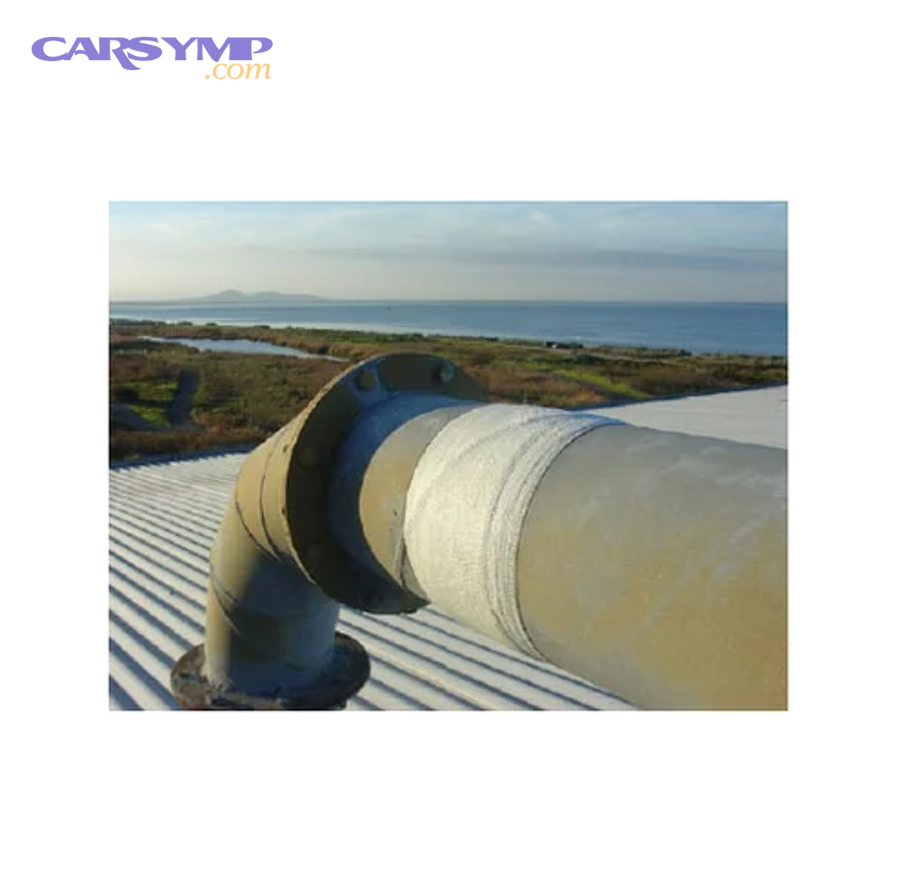
What is a “stopgap” hose fix (and what does it not fix)?
A stopgap hose fix is an emergency measure that reduces the leak rate by sealing a hole, reinforcing a split, or tightening a joint so you can limp home or reach proper service. It works because it changes one of three things:
- Sealing: you block the leak path (tape, putty, wrap).
- Clamping: you increase compression where the hose meets a fitting (re-seat + tighten).
- Splicing: you remove the damaged section and reconnect healthy hose ends (barbed coupler + clamps).
What it does not fix is the underlying deterioration of the hose body—heat-aging, internal cracking, swelling from chemical exposure, or reinforcement breakdown. A hose can look “sealed” and still be structurally weak. That is why stopgap repairs must be treated as temporary vs permanent decisions, not “problem solved.”
To keep your terminology consistent (and your decisions clear), think of the hose as two parts:
- The sealing surface (where fluid escapes).
- The structural wall (what resists pressure, heat, vibration, and bending).
Stopgap methods mostly improve the sealing surface, but they rarely restore the structural wall—especially in hot or pressurized systems.
How is a temporary hose fix different from a permanent hose repair or replacement?
A temporary hose fix is designed for speed and containment; a permanent repair is designed for durability and safety margins. The difference shows up in four practical areas:
- Temperature tolerance: A wrap that holds cold water might fail quickly near an engine bay heat source.
- Pressure cycles: Engine cooling and many household lines see repeated pressure rises and drops; temporary wraps can creep or loosen with cycles.
- Chemical compatibility: Adhesives and putties may degrade when exposed to coolant additives, oil mist, or fuel vapors.
- Inspection standard: A permanent repair can be “install and forget” for years; a stopgap fix must be checked frequently.
If you need a simple rule: temporary fixes help you move; permanent repairs help you stay safe.
Is it safe to drive (or run the system) with a leaking hose right now?
No, it is not always safe to drive or keep running a system with a leaking hose because the leak can trigger overheating, loss of braking assist, fire risk, or high-pressure injection injuries—so you must first identify the fluid, the pressure level, and the leak rate before you proceed.
Then, once you classify the risk, you can decide whether to shut down immediately, attempt a stopgap fix, or call for help.
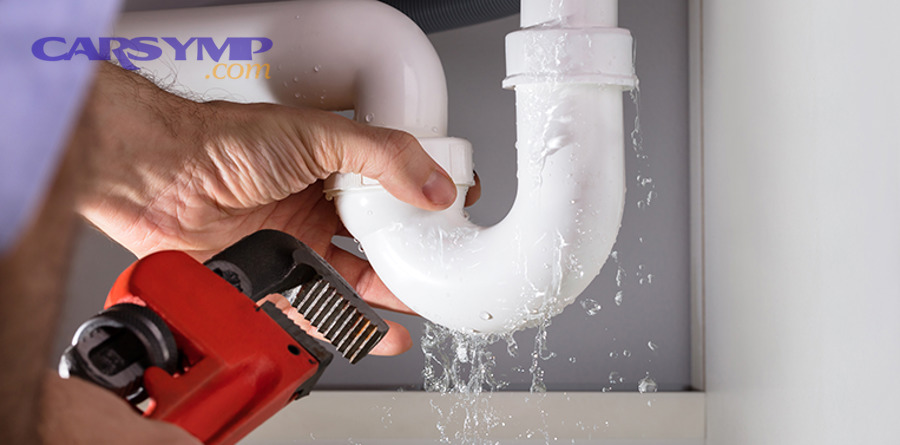
Should you shut the engine/system off immediately when you notice the leak?
Yes, you should shut the engine/system off immediately if the leak shows any of these three danger signals:
- Spray or stream under pressure (not a slow drip): this suggests a significant breach and fast fluid loss.
- Steam, smoke-like vapor, or burning smell: this can indicate hot coolant contacting hot surfaces or a flammable leak.
- Rapid gauge movement or warning lights (engine temperature rising, low oil pressure, charging issues from belt slip due to coolant).
However, if you see a small seep at a hose clamp and the engine temperature is stable, you may be able to shut down safely, allow cooling, and perform a controlled stopgap fix.
The key is to avoid the common mistake: trying to “just make it” while the system is actively losing fluid. The leak usually gets worse under heat and pressure, not better.
Which hose leaks are “do not attempt” for temporary repair?
There are several hose/leak scenarios where you should not attempt a temporary repair because the consequences of failure are severe or immediate:
- Fuel lines and vapor lines near heat sources: leak = fire risk.
- Brake hydraulic lines: loss of braking performance is unacceptable.
- High-pressure hydraulic hoses (equipment, power systems): injection injury risk and sudden failure potential.
- Coolant leaks that are already spraying near belts/fans: the leak can worsen and you can be injured by moving parts.
- Unknown fluid leaks: if you cannot identify it confidently, treat it as hazardous.
- Hoses that are swollen, cracking everywhere, or delaminating: a “patch” may push failure to the next weak spot.
This is the “permission framework”: stopgap fixes are best for low to moderate pressure, non-flammable fluids, accessible hoses, and limited damage.
What’s riskier—coolant hose leaks or fuel/hydraulic hose leaks—and why?
Coolant hose leaks are often less immediately lethal than fuel or high-pressure hydraulic leaks, but they can still destroy an engine through overheating. Fuel and high-pressure hydraulic leaks are riskier because they can cause fire or injection injuries even from small openings.
A practical comparison:
- Coolant: risk is typically overheating + scalding; urgency depends on leak rate and temperature.
- Fuel: risk is fire/explosion; even minor leaks are high priority.
- Hydraulic high-pressure: risk is injection injury + sudden rupture; patching can be dangerous.
Evidence: Medical reviews describe high-pressure injection injuries as catastrophic due to the mechanical force and toxic substances introduced into tissue. (pmc.ncbi.nlm.nih.gov)
What are the first-response steps before applying any temporary fix?
The best first-response workflow is a simple sequence—cool down, depressurize, identify the leak source, then clean and dry the area—because almost every temporary method fails when applied to a hot, wet, or misdiagnosed leak point.
Next, once you stabilize the situation, you can choose the right stopgap method instead of guessing.
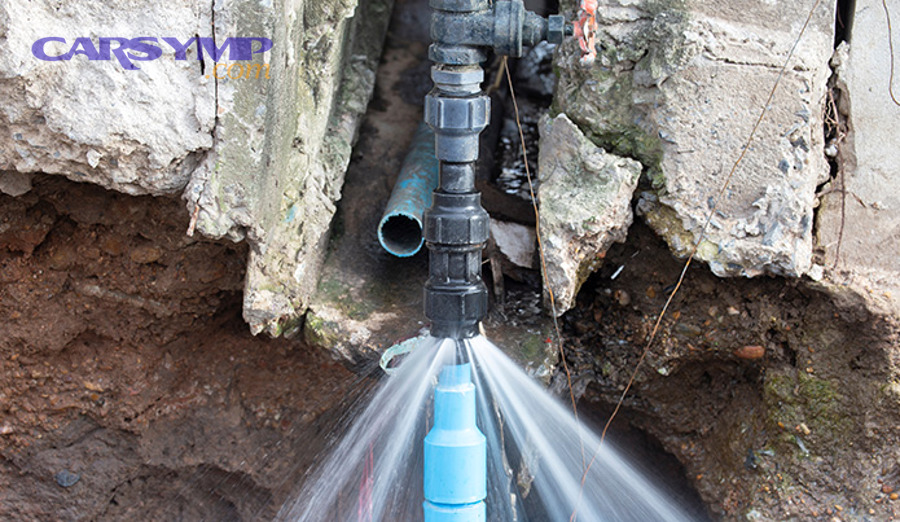
How do you confirm the leak is the hose (not the clamp, fitting, or housing)?
You confirm the leak source by tracing the leak upstream and separating three common culprits: the hose body, the clamp seal, or the fitting/housing.
Use this quick diagnostic routine:
- Visual trace: Look for the highest wet point. Gravity makes leaks drip downward and backward with airflow.
- Wipe test: With the system cool, wipe the area dry and observe where wetness returns first.
- Clamp edge check: If the wetness appears around the clamp circumference, the joint may be loose or the hose end may be hardened.
- Hose body check: If the wetness appears mid-hose, you likely have a crack, pinhole, abrasion, or bulge failure.
- Fitting/housing check indication: If the fitting itself is wet at seams or casting lines, patching the hose will not help.
This matters because the correct stopgap fix differs:
- Joint leak → re-seat + clamp correction.
- Hose body leak → wrap/clamp or splice.
- Housing leak → stopgap options are different (and often not safe).
What basic tools and materials should be in an emergency hose repair kit?
A practical emergency kit is compact, low-cost, and built around the three stopgap mechanisms: seal, clamp, splice. Here’s a balanced list that covers most driver and DIY scenarios:
- Sealing
- Self-fusing silicone tape (or high-quality repair tape)
- Nitrile gloves + shop towels/rags
- Small wire brush or scouring pad (for cleaning)
- Clamping
- Assorted worm-gear hose clamps (several sizes)
- Pliers or nut driver/screwdriver for clamp tightening
- Splicing
- Barbed hose coupler(s) (common hose diameters)
- Small utility knife or hose cutter
- Safety + support
- Flashlight/headlamp
- Zip ties (for temporary bundling or repositioning)
- Coolant-compatible top-off fluid (or water for true emergencies)
If you only carry three things, prioritize: self-fusing tape, two clamps, and a barbed coupler—because that covers pinholes, joint leaks, and small bursts.
Do you need the surface completely dry for tape/putty to work?
Yes, you generally need the surface mostly dry for tape and putty to bond and seal well, for three reasons:
- Water/coolant creates a slippery layer that reduces friction and prevents tight wraps.
- Heat and wetness can cause trapped vapor pockets under tape.
- Many putties and adhesives cure poorly on wet, contaminated rubber.
However, “completely dry” is not always realistic roadside. Your goal is functional dryness:
- Wipe thoroughly.
- Let it air for a few minutes.
- Use a clean rag to remove film.
- If safe, reposition the leak so gravity drains away from the repair area (e.g., rotate the hose slightly at the fitting).
Then, once the surface is as dry as practical, your wrap will hold far better under pressure cycles.
Which temporary repair method should you use for your leak type?
There are four main types of temporary hose fixes—re-seat-and-clamp, wrap-and-seal, sleeve-and-double-clamp, and cut-and-splice—chosen based on leak location, leak severity, and hose condition.
Then, once you match the method to the leak type, you greatly increase the odds that the stopgap repair holds long enough to reach a permanent fix.

What are the best temporary fixes for a pin-hole leak or slow seep?
A pinhole or slow seep is the best-case scenario for a stopgap repair because the hose wall is often mostly intact. The most reliable temporary options are:
- Self-fusing silicone tape wrap
- Works by fusing to itself under stretch and compression.
- Best when the leak is on a straight section with room to wrap beyond the damaged spot.
- Reinforced wrap + external clamp
- Wrap the tape, then place a clamp over the wrap to add compression.
- Useful when the seep worsens under pressure cycles.
- Low-pressure repair putty (system-dependent)
- Works better on rigid pipes than flexible hoses.
- On rubber hoses, it can crack as the hose flexes, so treat it as a last-resort for slow seeps.
The critical technique is to wrap well past the leak in both directions, because pinholes often indicate surrounding micro-cracks.
What are the best temporary fixes for a split hose or lengthwise crack?
A split or crack suggests structural weakening, so your stopgap fix must add both sealing and reinforcement. The best temporary approaches are:
- Sleeve-and-double-clamp
- Place a rubber sleeve (or thick rubber patch) over the split.
- Install one clamp on each side of the split so the clamp pressure compresses healthy hose, not the torn area.
- Wrap-and-clamp reinforcement
- Wrap self-fusing tape tightly to build a “compression sleeve.”
- Add a clamp over the wrap if there is enough space and the hose diameter allows safe clamping.
- Cut-and-splice (if the split is localized and you have slack)
- Cut out the damaged section.
- Reconnect with a barbed coupler and double-clamp each side.
If a split runs long or the hose feels mushy/swollen, the safe move is to avoid “patch optimism” and plan for hose replacement.
What are the best temporary fixes for a loose connection or leaking clamp joint?
A leaking clamp joint often looks dramatic because it drips near the end of the hose, but it may be the easiest to stabilize. The best sequence is:
- Cool and relieve pressure (always first).
- Re-seat the hose
- Push the hose fully onto the fitting until it bottoms out against the stop/bead.
- Reposition the clamp
- Place the clamp behind the bead (not on the very edge).
- Avoid placing it over a damaged/hardened hose lip.
- Tighten or replace the clamp
- Old clamps can lose tension or deform.
- Cut back the hose end (only if you have length)
- If the hose end is cracked or permanently ovaled, trimming 1–2 cm can create a fresh sealing surface.
This method is often the fastest “get moving safely” fix because it restores the original sealing geometry rather than relying on adhesives.
Tape vs clamp vs epoxy/putty—what works best under heat and pressure?
Tape, clamp, and putty each win in different conditions:
- Tape wins for small leaks on flexible hoses when you can wrap with strong overlap and stretch. It’s fast and adaptable.
- Clamps win for joint leaks where the hose meets a fitting, because compression is the original sealing mechanism.
- Epoxy/putty wins on rigid pipes and fittings where the surface does not flex much and can be cleaned thoroughly.
A simple decision matrix:
- Hot engine coolant hose mid-line pinhole: tape (plus optional clamp over tape).
- Coolant hose leaking at fitting: re-seat + clamp correction.
- Low-pressure garden hose: tape or repair clamp, depending on access.
- Unknown chemical line or oily surface: avoid adhesives; consider shutdown and replacement.
Evidence: Automotive cooling systems often use radiator caps with pressure relief ratings in the teens (e.g., 13–18 psi), so a “pretty good” wrap can still fail under cycling pressure and heat. (dewitts.com)
How do you apply the most common stopgap methods correctly?
The most common stopgap methods—self-fusing tape wrap, sleeve-and-double-clamp, and barbed-coupler splice—work best when you apply them with clean surfaces, controlled tension, and proper overlap, because technique determines whether the seal survives pressure cycles.
Next, once you apply the method correctly, you can test it safely before you rely on it.
How do you use self-fusing silicone tape so it actually seals?
Self-fusing silicone tape seals by stretching and fusing to itself, not by sticking to the hose with adhesive. That means the technique is different from duct tape.
Use this step-by-step method:
- Cool and clean
- Shut down and let the hose cool to touch.
- Wipe away fluid and grime; the tape needs friction and compression.
- Start beyond the leak
- Begin wrapping 2–3 inches (5–8 cm) before the leak point.
- Stretch aggressively
- Stretch the tape as you wrap (many products suggest significant stretch).
- The stretch creates the pressure that helps it fuse and seal.
- Overlap heavily
- Use a large overlap per wrap, not a small overlap.
- More overlap = thicker compression sleeve.
- Wrap past the leak
- Continue 2–3 inches beyond the leak.
- Finish with compression
- Press the final wrap down firmly.
- If you can safely add a clamp over the wrap, do so to increase compression (only if it won’t cut into the hose).
Common failure points:
- Not stretching enough.
- Wrapping only at the leak point (too narrow).
- Applying to a wet/oily surface.
- Using low overlap that creates thin “bands” rather than a sleeve.

How do you “wrap-and-clamp” a split hose without it blowing out?
A split hose wants to open wider under pressure, so the goal is to build a reinforced sleeve that distributes pressure away from the split.
Use this method:
- Make the split “quiet”
- If the hose is still actively spraying, wait until pressure drops.
- Add a sleeve layer
- Place a rubber patch or sleeve over the split if available (even a cut piece of thick rubber can help).
- Wrap with self-fusing tape
- Stretch and overlap heavily to compress the sleeve.
- Clamp on healthy hose
- Place clamps on both sides of the split (not directly over the torn center).
- Tighten gradually and evenly.
The “why” is important: clamping directly over a split can cut into a weak spot and worsen tearing. Clamping healthy hose creates a stable platform that compresses the patch and wrap like a gasketed sleeve.
How do you splice a hose with a barbed coupler for a blown section?
A barbed coupler splice is one of the strongest emergency methods because it removes damaged hose entirely and relies on mechanical retention.
Follow these steps:
- Cut back to healthy material
- Identify soft, cracked, or swollen hose sections and cut them away.
- Cut squarely so the hose seats evenly on the barb.
- Check coupler size
- Match the coupler to the inner diameter of the hose.
- Too small = leak; too large = tearing during installation.
- Insert fully
- Push the hose end until it bottoms out against the coupler stop (if present).
- Double-clamp each side
- Use two clamps per hose end if you have them, staggered slightly.
- Tighten firmly but avoid cutting the hose with over-torque.
- Prevent kinks
- Ensure the splice doesn’t force a sharp bend that collapses flow.
This method is especially useful when you can’t rely on sealants due to heat or fluid contamination.
Should you use duct tape for a hose leak in an emergency?
No, you should not rely on duct tape for most hose leaks because it fails quickly under heat, fluid exposure, and pressure cycling—though it can serve as a very short-term wrap on low-pressure, cool, clean lines when nothing else is available.
Then, once you treat duct tape as a last resort, you avoid the common “it held for 2 minutes” disappointment.
Three reasons duct tape often fails:
- The adhesive softens with heat.
- Coolant, oil mist, and grime reduce adhesion.
- Pressure cycles lift edges and create channels for leakage.
If duct tape is your only option, improve your odds:
- Clean and dry aggressively.
- Wrap far beyond the leak.
- Add a clamp over it to supply compression (if safe and feasible).
- Drive only a short distance and monitor constantly.
How do you test the temporary repair and prevent immediate re-failure?
You test a temporary hose repair by re-pressurizing the system gradually, inspecting for seepage or bulging, and then monitoring during the first heat/pressure cycle, because most stopgap failures happen when the system returns to normal operating pressure and temperature.
Next, once the repair survives a controlled test, you can make a cautious plan to travel or shut down safely.
What are the signs your temporary fix is holding (and failing)?
You can tell a stopgap repair is holding when the repair area stays dry (or only slightly damp) through a full cycle, and the hose remains stable in shape and position. Warning signs of failure include:
Signs it’s holding
- No new droplets forming after pressurization.
- Tape edges remain flat; wrap looks uniform.
- Clamps do not shift; hose remains seated.
Signs it’s failing
- A fine mist or “sweating” that grows into droplets.
- Tape edges lifting or wrap “creeping” sideways.
- Bulging under the wrap (pressure finding a weak spot).
- A clamp that suddenly loosens, or a hose end that walks off the fitting.
Respond quickly to failure signs:
- Shut down and cool.
- Re-clean and re-wrap (if safe).
- Upgrade to a splice method if the hose wall is compromised.
Should you top off fluid (coolant/water) before driving—and with what?
Yes, you should top off the fluid before driving if the system requires it, because a low level can cause overheating, cavitation, and sudden temperature spikes—even if your stopgap seal looks good.
Then, once you restore a safe fluid level, you reduce the chance that a small leak becomes a major engine event.
For cooling systems:
- In a true emergency, water can be used to get you to safety.
- For routine operation, use the correct coolant mix recommended for the vehicle.
The practical priority is: enough fluid to prevent overheating, followed by restoring the correct mixture later.
For non-cooling systems:
- Do not top off unknown fluids unless you know exactly what the system uses.
- For hydraulic systems, leaks often mean you should shut down and avoid “just topping off” repeatedly.
How long can a temporary hose repair last—minutes, hours, or days?
A temporary repair can last minutes if the hose is badly degraded, hours if the method matches the leak and conditions stay mild, or days in some low-pressure scenarios—but you should always plan for the shortest plausible duration and schedule a permanent repair promptly.
Typical ranges (realistic, not optimistic):
- Loose clamp indicate: often hours to days after reseating and proper clamping (if hose end is healthy).
- Self-fusing tape on pinhole seep: sometimes hours to a couple days if heat/pressure are moderate and the wrap is thick.
- Sleeve + double clamps on split: often short-lived unless the split is small and the hose is otherwise healthy.
- Cut-and-splice: can last longer than other stopgaps if done correctly, but still treat it as temporary until inspected.
Evidence: A technical bulletin from a major hose manufacturer notes the incidence of coolant hose failure increases after several years of service, which is why any “patch” on an aged hose should be treated as temporary and followed by replacement planning. (gatesaustralia.com.au)
What should you buy (and avoid) to make emergency hose repairs more reliable, and what’s the best permanent follow-up?
The best way to make emergency hose repairs more reliable is to stock a small kit built around self-fusing tape, quality clamps, and barbed couplers, then follow up with a permanent fix—often hose replacement—because aged hoses can fail again even after a stopgap seal.
Next, once you cross from emergency mode into maintenance mode, you can reduce repeat failures and estimate your true repair path.
Which emergency hose repair products are worth keeping in your car/garage kit?
A smart kit focuses on versatility and compatibility:
- Self-fusing silicone tape (one roll)
- Assorted worm-gear clamps (at least 4–6 clamps)
- Barbed couplers (2–3 common sizes for your vehicles/equipment)
- Short spare hose segment (if you know your hose diameter)
- Nut driver / screwdriver (faster than a multi-tool for clamps)
- Rags + gloves (for safe handling)
- Flashlight/headlamp
Avoid “junk drawer” substitutes that fail under real heat and pressure:
- Cheap thin tape that tears under stretch
- Old clamps with stripped worm gears
- Wrong-size couplers that require force and tear the hose
This kit also shortens the path to hose replacement because the same clamps and couplers can support temporary routing during repairs.
Self-fusing silicone tape vs “hose repair tape” vs duct tape—what’s the difference?
Self-fusing silicone tape, typical “hose repair tape,” and duct tape differ by how they seal:
- Self-fusing silicone tape: seals by fusing to itself under stretch and overlap; no adhesive layer is required. It handles irregular shapes well and resists many environmental factors better than adhesive tapes.
- Hose repair tape (adhesive): seals by sticking to the surface; performance depends heavily on dryness, cleanliness, and temperature.
- Duct tape: designed for general-purpose adhesion, not hot, wet, pressurized sealing; it often fails fastest in engine-bay conditions.
In an emergency workflow, self-fusing tape is usually the best “first reach” wrap because it relies on compression and fusion rather than fragile adhesive bonding.
What material-compatibility issues (coolant/oil/fuel) can make tapes/putties fail?
Compatibility issues are the hidden reason many emergency repairs fail even when the technique looks correct.
Common failure drivers:
- Oil film on rubber: prevents adhesion and reduces friction under wraps.
- Coolant additives + heat cycling: can soften some adhesives and degrade sealants.
- Fuel exposure: can dissolve or weaken many adhesives and some rubber compounds.
- Surface oxidation and cracking: gives you a “crumbly” sealing surface that won’t compress evenly.
If you need an easy checklist, verify these before trusting a wrap:
- The surface is dry enough to grip.
- The wrap is thick enough to provide compression.
- The hose wall is not swollen or delaminating.
- The fluid is not fuel (if it is, stop and plan a proper repair).
After a temporary fix, do you always need to replace the hose (even if it stops leaking)?
Yes, you usually should plan for hose replacement after a temporary fix—especially for automotive coolant hoses—because the repair only stabilizes one spot, while the rest of the hose may still be heat-aged, internally cracked, or chemically weakened.
Then, once you treat the stopgap as a bridge to permanent service, you can prevent the “new leak two inches away” scenario.
Here’s when hose replacement is strongly recommended:
- The hose feels spongy, swollen, hardened, or cracked.
- The leak occurred mid-hose (not just at a clamp).
- You see multiple weak areas or surface checking.
- The system runs hot, vibrates heavily, or cycles pressure frequently.
If your case involves a radiator hose, the permanent path is usually straightforward:
- Follow Radiator hose replacement steps: cool system, drain to safe level, remove clamps, remove hose, clean fittings, install new hose, refill/bleed, and test.
- Get a Hose replacement cost estimate by considering parts + coolant + labor; costs vary widely by vehicle layout and accessibility, but the real value is avoiding an overheat event.
- Treat hose replacement as preventive maintenance, not just repair, because aged hose material can degrade over time due to thermal and mechanical loadings. (essay.utwente.nl)