


You can choose the right hose clamp types and best practices by matching clamp design to the job (pressure, temperature, vibration, and serviceability), then sizing and tightening correctly so the hose seals without being cut, crushed, or loosened by heat cycling.
Next, you’ll see how the most common clamp styles—worm-drive (band/screw), spring clamps, ear clamps, and heavy-duty options—differ in clamping behavior, reusability, and leak resistance, so you stop guessing and start selecting with intent.
Then, we’ll walk through sizing and installation details that prevent repeat leaks: where to place the clamp on a barb, how tight is “tight enough,” and what mistakes cause “mysterious” seepage even after you retighten.
Introduce a new idea: even with the right clamp, a damaged hose end can keep leaking—so we’ll also cover Emergency hose repair temporary measures, when hose replacement is the smarter fix, and what a realistic Hose replacement cost estimate should include.
What are the main hose clamp types, and what makes each one different?
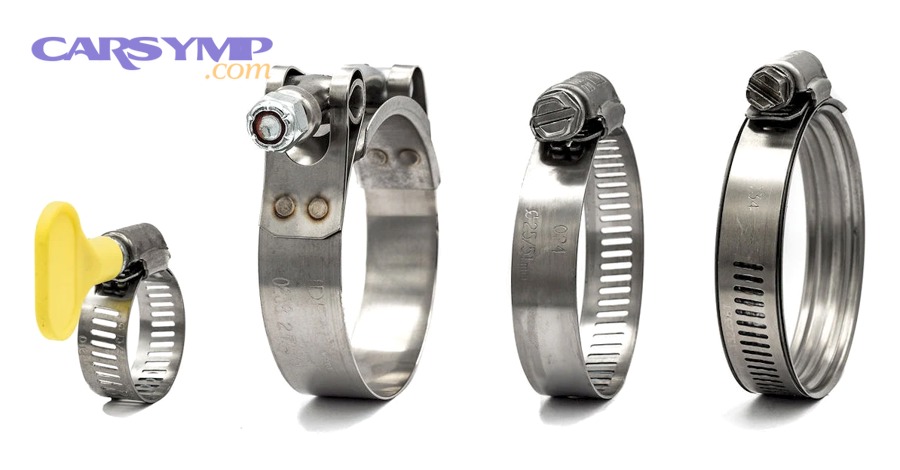
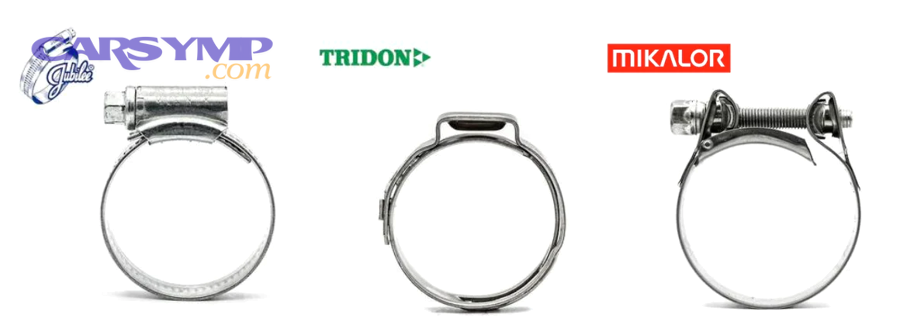
There are 4 main types of hose clamp types most people encounter—worm-drive (screw/band), spring (constant-tension), ear (pinch), and heavy-duty bolt/T-bolt styles—based on how they generate clamping force and how consistently they maintain it under vibration and temperature changes. (en.wikipedia.org)
To better understand why “one clamp leaks and another doesn’t,” it helps to visualize the designs and what they do to the hose wall during tightening.
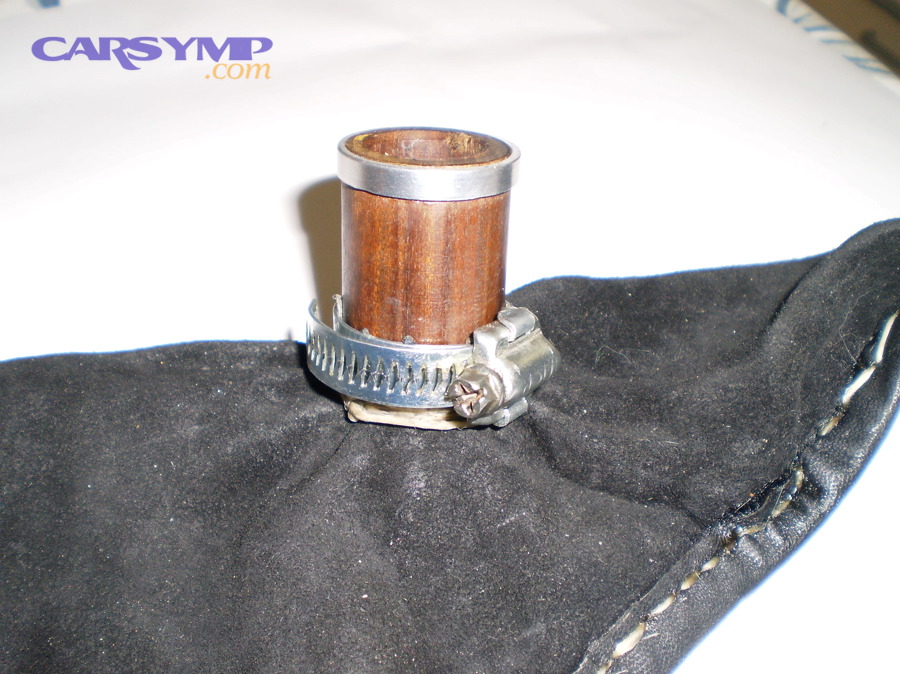
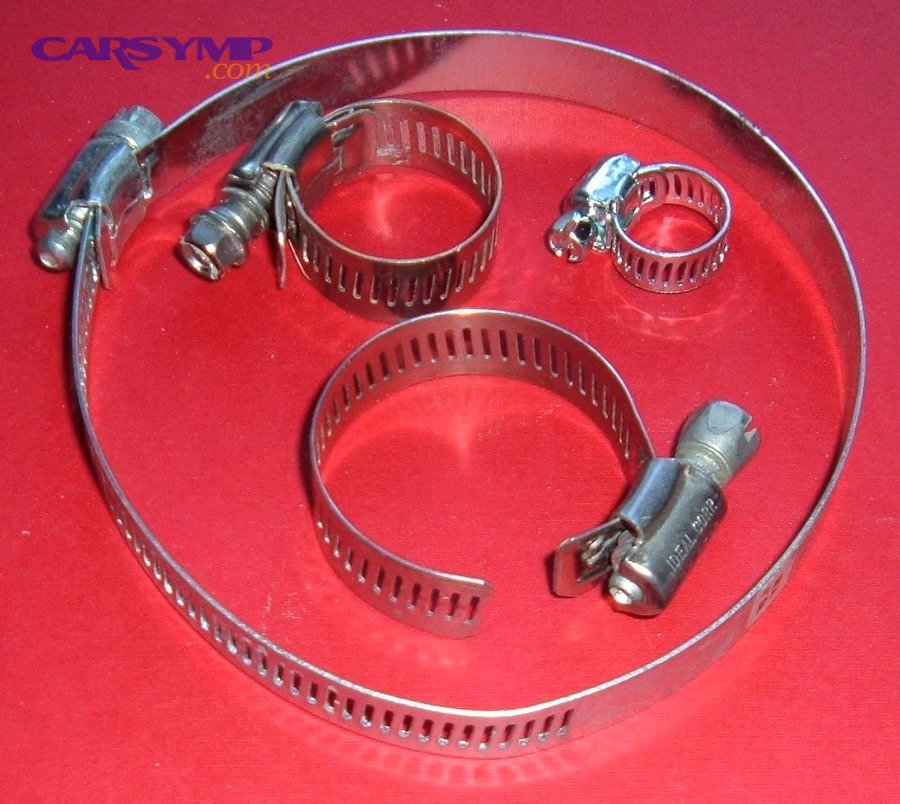
Worm-drive (band/screw) clamps (aka worm gear / Jubilee clip / hose clip).
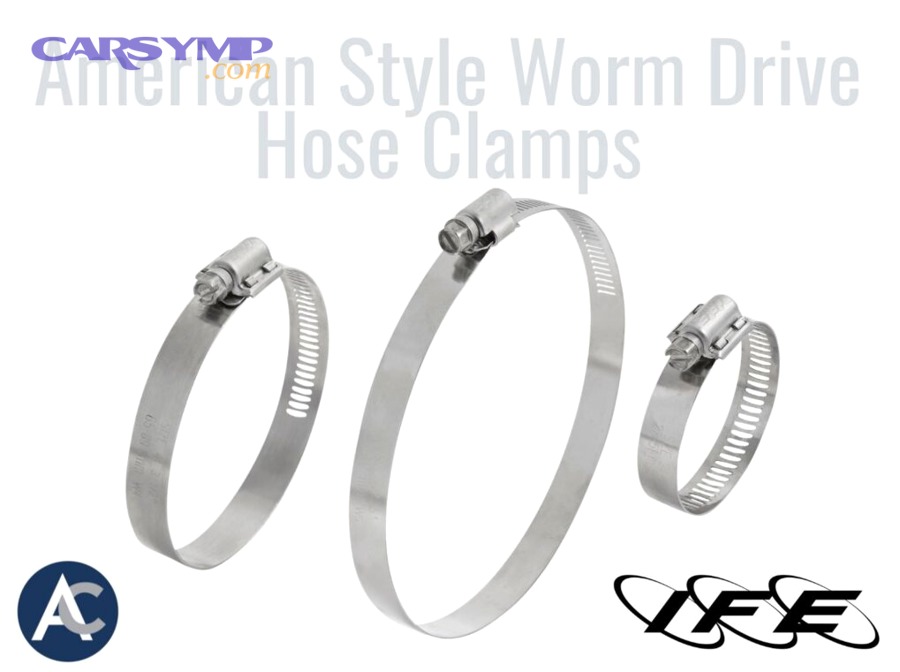
These are the most common adjustable clamps: a slotted band and a screw housing that pulls the band tighter as you turn the screw. They’re easy to fit, easy to re-tighten, and widely available in many diameters. (en.wikipedia.org)
- Strengths: Adjustable range, reusable, quick to install, works well for general-purpose hoses.
- Tradeoffs: Slotted/perforated bands can create localized pressure points that can “bite” into softer hose materials, especially if over-tightened. In high heat cycling or high vibration, some connections benefit from clamps that maintain more constant tension.
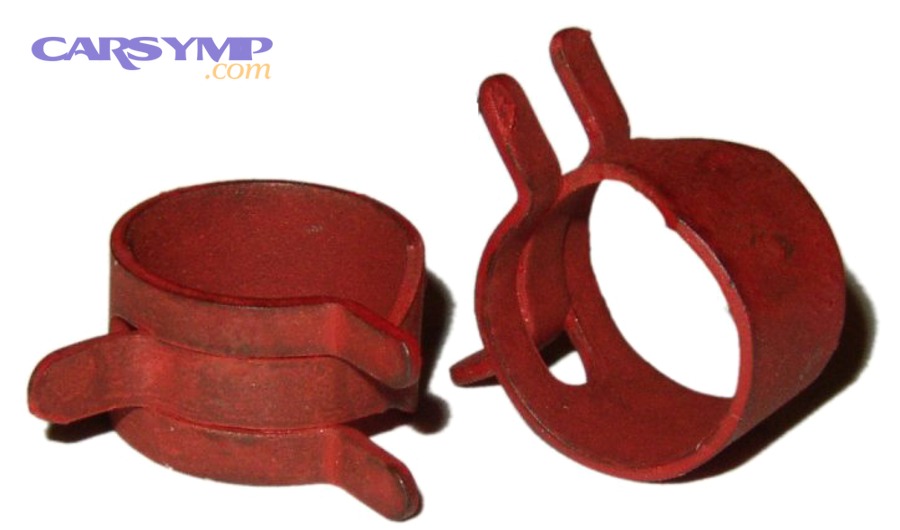
Spring clamps (constant-tension style).
Spring clamps apply a set force using spring steel. When the hose expands and contracts with temperature swings, the clamp “moves with it,” helping maintain sealing pressure.
- Strengths: Better at maintaining tension through heat cycles; common on automotive coolant and heater circuits.
- Tradeoffs: Less adjustable; requires the correct diameter; removal can be awkward without clamp pliers.
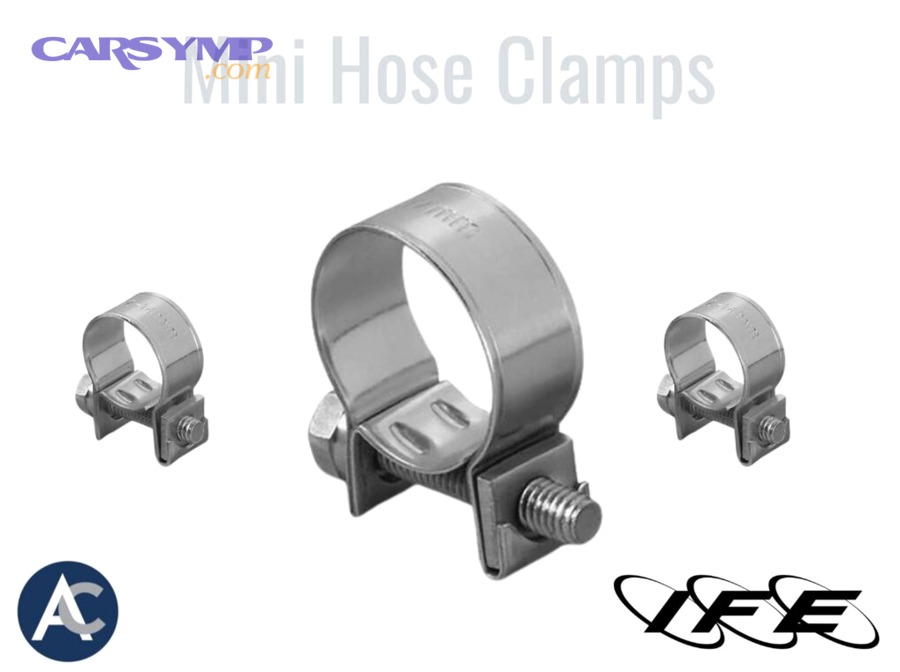
Ear clamps (pinch clamps / Oetiker-style).
Ear clamps tighten by compressing a raised “ear” with special pincers, creating a 360° uniform clamp with no screw housing bulge.
- Strengths: Very uniform compression, low profile, tamper-resistant, often excellent for small-diameter hoses and barbed fittings (fuel/vacuum/EVAP/coolant bypass lines depending on spec).
- Tradeoffs: Generally one-time use (remove = cut), sizing must be right, and you need the right tool.
Heavy-duty bolt/T-bolt clamps and similar high-load bands.
These use a stronger band and bolt mechanism intended for higher pressure, thicker-walled hoses, or reinforced silicone couplers (common in performance/boost/industrial). They can deliver more uniform force than a basic slotted worm clamp.
- Strengths: Higher clamping loads; better for demanding environments.
- Tradeoffs: More expensive and sometimes bulkier; overkill for low-pressure lines.
Quick takeaway: clamp “type” is really about how the clamp maintains sealing pressure over time. If your connection experiences thermal cycling, vibration, or pressure spikes, the clamp style matters as much as the hose.
Which hose clamp type should you use for your application?
Worm-drive clamps win for general adjustability and quick service, spring clamps are best for heat-cycling systems, and heavy-duty/T-bolt styles are optimal for high-load couplers—because each is designed around a different “failure mode” (loosening, cutting the hose, or insufficient load). (dixonvalve.com)
However, the right choice becomes obvious when you sort by the conditions your hose connection actually sees:
Choose by system type (real-world selection rules)
Automotive cooling and heater circuits (radiator hoses, heater hoses, bypass lines).
- Best default: spring (constant-tension) clamps if OEM-style fittings support them, because they can track expansion/contraction.
- Also common: worm-drive clamps for service replacements (especially when you need adjustability).
- When to upgrade: if you use silicone couplers or see repeated seepage under heat cycling, consider a clamp designed for more uniform force rather than a light-duty slotted band.
Fuel, vacuum, small emission hoses (small diameters).
- Often best: ear clamps for compact, uniform sealing—especially on barbed fittings where the hose OD doesn’t change much.
- When worm-drive is risky: very small hoses can be damaged by aggressive tightening or band edges if the clamp is mismatched.
Boost, turbo intake, high-pressure or reinforced couplers (silicone, charge pipes).
- Best: T-bolt / heavy-duty band clamps for consistent high load.
- Why: you want uniform compression and resistance to vibration, pressure pulses, and hose “cold flow.”
Plumbing / irrigation / general shop use.
Worm-drive is typically the practical default because it’s adjustable and easy to re-tighten during maintenance.
Choose by what you need most: serviceability vs stability
- Pick worm-drive if you expect frequent removal, want a wide adjustment range, and can control tightening carefully.
- Pick spring if temperature swings are a major factor and you want the clamp to maintain tension without periodic re-tightening.
- Pick ear if you want a low-profile, uniform clamp and accept that replacement usually means cutting it off.
- Pick heavy-duty/T-bolt if you need high clamping force and uniformity.
Selection tip that prevents regret: if you can’t reliably access the screw once installed, don’t pick a clamp that depends on periodic re-tightening to stay sealed.
How do you size a hose clamp correctly for a leak-free seal?
You size a hose clamp correctly by measuring the hose’s outside diameter (OD) at the fitting and choosing a clamp whose working range places your target OD near the middle—not at the extreme—so the clamp tightens smoothly without bottoming out or barely grabbing.
Next, let’s turn “close enough” into a repeatable sizing routine that works whether you’re clamping a heater hose, a fuel line, or a shop hose.
Step 1: Measure the right thing (OD at the sealing zone)
What matters is not the hose ID printed on the package—it’s the OD of the hose when it’s pushed onto the fitting (because wall thickness and reinforcement change OD).
- If you have calipers, measure OD after the hose is fully seated.
- If you don’t, wrap a strip of paper around the hose, mark the circumference, measure the length, and compute OD ≈ circumference ÷ π.
Step 2: Choose a clamp range that centers on your OD
- For worm-drive clamps, the box usually lists a range (e.g., 16–25 mm). Your measured OD should land comfortably inside that range, not at 16 or at 25.
- For spring clamps, choose the clamp diameter intended for that hose OD; the “range” is smaller because the clamp is designed to deliver a specific force.
- For ear clamps, sizing is critical because you deform the clamp once; too large = weak compression, too small = won’t seat or risks damaging the hose.
Step 3: Match clamp width and band style to hose material
Sizing isn’t only diameter—it’s also how the clamp contacts the hose:
- Thin-wall hoses (or soft silicone) often seal better with a wider, smoother band that spreads load.
- Reinforced hoses can tolerate higher load but may still leak if the clamp is too narrow or placed incorrectly.
Step 4: Confirm barb coverage (don’t clamp “in the air”)
A hose clamp can’t seal a hose that isn’t supported by the fitting underneath. If your clamp sits past the barb or on an unsupported section, tightening can deform the hose without sealing. This is one of the most common sizing/placement failures.
Quick check: after tightening, look for a consistent “compression ring” around the hose directly over the barb area—not behind it and not beyond it.
How do you install and tighten hose clamps using best practices?
The best installation method is seat the hose fully, place the clamp behind the barb ridge, tighten in controlled steps, and verify sealing with a heat/pressure re-check, which prevents leaks without cutting the hose or distorting the fitting.
Then, the real “best practices” come down to three things: placement, alignment, and restraint (because most failures are caused by over-tightening or wrong clamp position).
Placement best practices (where the clamp actually belongs)
- Push the hose fully onto the fitting until it bottoms or reaches the designed stop. Partial seating creates a leak path you can’t fix with extra torque.
- Place the clamp just behind the barb ridge, not on the very end of the hose.
- Keep the clamp square to the hose. A tilted clamp creates uneven pressure and can “walk” under vibration.
Tightening best practices
Failure #1: Under-tightening (seepage, especially after warm-up).
The connection looks dry at idle, then gets a wet halo after a drive or heat cycle.
- Fix: tighten gradually and re-check after heat cycling (especially on coolant/heater lines).
Failure #2: Over-tightening (hose damage, fitting distortion, stripped clamp).
Over-tightening can cut into the hose outer layer, create grooves, or deform softer fittings—ironically causing more leaks later.
- Fix: tighten until the hose compresses uniformly and the clamp feels “seated,” then stop. If you need extreme torque to stop a leak, something else is wrong (wrong size clamp, wrong placement, damaged hose end, or poor barb).
Best practices by clamp type (what changes)
Worm-drive clamps:
- Tighten in short increments and pause to let the band settle.
- Keep the screw housing positioned so you can service it later, but not where it will rub or snag.
- If the band is heavily perforated and the hose is soft, consider a smoother band design for better sealing behavior.
Spring clamps:
- Use clamp pliers if possible for control.
- Make sure the clamp is centered over the sealing zone; because you can’t “fine adjust” the tension, placement matters even more.
Ear clamps:
- Confirm sizing and hose seating before crimping, because “one more turn” doesn’t exist.
- Crimp the ear fully in one controlled motion so the clamp closes evenly.
Verification best practices (the step people skip)
- For cooling/heater hoses: after the first warm-up to operating temperature, re-check for seepage once the system cools enough to inspect safely.
- For pressurized air/boost: do a controlled pressure test if possible before road testing.
According to a study by Purdue University researchers (reported via Purdue’s institutional repository), durability and leakage testing of tube-joining methods showed measurable leakage differences across joining approaches under test conditions, reinforcing why assembly method and retention design matter—not just “tightness.” (docs.lib.purdue.edu)
What clamp materials and coatings reduce corrosion and clamp failure?
Stainless steel clamps improve corrosion resistance, but the best material choice depends on the environment, because dissimilar-metal contact (like stainless against aluminum) can accelerate galvanic corrosion in wet or salty conditions even when the clamp itself looks “fine.” (catalinadirect.com)
Next, let’s connect material choice to real problems people see: seized screws, rusted bands, broken housings, and fittings that corrode under the clamp.
Common clamp materials (and when they make sense)
Zinc-plated or galvanized steel (typical worm-drive clamps).
- Pros: low cost, widely available.
- Cons: corrosion over time in wet/salty environments; screw can seize.
All-stainless steel clamps (band + housing + screw).
- Pros: better corrosion resistance in many environments; good for marine, underbody, or high-moisture applications.
- Cons: can still contribute to galvanic issues if clamped over aluminum fittings in the presence of an electrolyte.
Spring steel clamps (often coated).
- Pros: designed for constant tension; common in OEM automotive cooling/heater systems.
- Cons: can rust if coating fails; correct sizing is crucial.
Galvanic corrosion risk (stainless clamp + aluminum fitting)
Galvanic corrosion occurs when dissimilar metals contact each other in an electrolyte (water, road salt spray), causing the more anodic metal (often aluminum) to corrode faster.
Best practices to reduce risk:
- Keep the area clean and dry when possible (especially marine/road-salt use).
- Use materials appropriate for the environment and consider protective barriers when spec allows.
- Inspect under clamps periodically in corrosive environments because damage can be hidden until it leaks.
Failure prevention checklist (material-focused)
- Replace clamps with damaged screw housings or rounded screw heads—those are future roadside failures.
- Avoid mixing “mystery metal” clamps in harsh environments; unknown alloys can corrode faster than expected.
- If you see repeated clamp corrosion, treat the environment as the root cause, not the brand.
How do you diagnose leaks and use emergency hose repair temporary measures?
You diagnose hose leaks best by confirming the leak source, checking clamp placement/tension, inspecting the hose end for damage, and only then applying temporary measures, because many “clamp leaks” are actually hose-end failures that no clamp can fix.
Then, if you must get moving, you can use Emergency hose repair temporary measures safely only as a bridge to a real repair—especially on pressurized or high-temperature systems.
Step 1: Confirm the leak is at the connection (not nearby)
Leaks travel. Fluid can run along a hose and drip from a low point.
- Dry the area, run the system briefly, and watch for the first wet spot.
- Look for a uniform wet ring at the clamp edge (often placement or tension issue) versus cracks or bulges in the hose wall (hose failure).
Step 2: Check clamp placement, alignment, and bottoming-out
Common causes that look like “bad clamp”:
- Clamp is past the barb ridge or partly off the sealing zone.
- Clamp is cocked (tilted), creating a high-pressure side and a low-pressure side.
- Clamp is too large and “runs out of travel” without sealing.
Step 3: Inspect the hose end (the overlooked culprit)
If you previously over-tightened, the hose end may have:
- A groove cut into it (leak path).
- A hardened, heat-aged end that doesn’t conform to the barb anymore.
- A split that opens under pressure.
At this point, a clamp swap won’t save it—hose replacement (or at least trimming to fresh rubber and re-clamping) becomes the correct fix.
Emergency hose repair temporary measures (use with caution)
If you’re stuck and need to reduce leakage long enough to reach help:
- Re-seat and re-clamp: loosen, push the hose fully back onto the fitting, reposition, and retighten correctly.
- Trim and reattach (if hose length allows): cut off the damaged end cleanly, reinstall, clamp properly.
- Wrap + clamp as a temporary bandage (low-pressure only): a short wrap of appropriate material under a clamp can sometimes slow seepage, but it’s not a reliable seal for hot, pressurized coolant or fuel systems.
What not to do:
- Don’t rely on makeshift fixes on fuel lines (fire risk).
- Don’t keep tightening indefinitely—if you’re chasing a leak with more torque, you may be creating a bigger failure.
When should you replace a hose, and what does a hose replacement cost estimate include?
You should replace a hose when it shows cracks, soft bulges, hardened ends, persistent leaks after correct clamping, or heat/chemical damage, because clamp changes can’t restore a hose wall that has lost elasticity and structure—making hose replacement the best practice, not the last resort.
In addition, the smartest decision often comes from separating the part cost from the job cost so your Hose replacement cost estimate reflects reality.
Heater hose replacement overview (what replacement usually involves)
For a typical vehicle heater circuit, replacement commonly includes:
- Draining or controlling coolant loss (depends on hose location).
- Removing old clamps (spring clamp pliers or cutting ear clamps).
- Cleaning the fitting/barb surfaces.
- Installing the new hose fully seated.
- Installing the correct clamp type and tightening using best practices.
- Refilling coolant, bleeding air as needed, and checking for leaks after warm-up.
Even when a small hose is cheap, access can be the real cost driver—especially behind engine covers, near firewall connections, or under intake components.
Replace vs repair: a practical decision rule
Replace the hose if:
- The leak returns after correct clamp placement and tightening.
- The hose end is grooved, swollen, or hardened.
- The hose has visible cracking or feels “crunchy” when bent.
- The system is safety-critical (coolant hose that can strand you, or any fuel-related hose).
Attempt a limited repair (trim + reattach) only if:
- The hose is long enough to lose a small section safely.
- The hose body is still flexible and intact.
- You can re-clamp on a clean, properly supported barb zone.
Hose replacement cost estimate (what you’re paying for)
A realistic hose replacement cost estimate typically includes:
- Parts: the hose itself + new clamps (often worth replacing rather than reusing).
- Fluids/consumables: coolant top-up, shop supplies, sometimes new fittings if damaged.
- Labor/access: time to reach the hose, remove components, and bleed the system.
- Diagnostics: if the true leak source wasn’t obvious, time spent confirming it.
Best practice for budgeting: treat clamps as part of the repair kit. Reusing a weakened clamp is a common reason a new hose “mysteriously” seeps after installation.
Evidence (if any)
- Clamp types and terminology (worm-drive/band clamp, Jubilee clip/hose clip; general clamp type descriptions) are documented in reference overviews of hose clamps and related terms. (en.wikipedia.org)
- Comparative discussion on why T-bolt clamps provide more uniform clamping force than worm-drive clamps (and where each is advantageous) is summarized by a clamp manufacturer’s technical blog.
- Galvanic corrosion mechanism (dissimilar metals + electrolyte) and its relevance to stainless/aluminum contact is described in corrosion guidance resources. (catalinadirect.com)
- University-hosted research on leakage/durability of joining methods supports the idea that assembly approach affects leakage outcomes under test conditions. (docs.lib.purdue.edu)