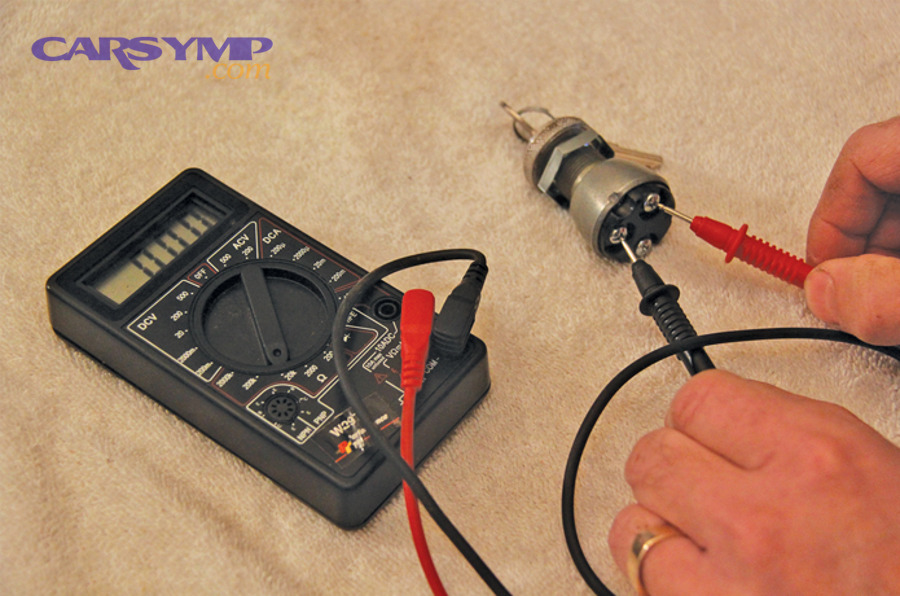
If you want to test an ignition switch with a multimeter, the most reliable approach is to combine a power-off continuity/ohms test (to confirm the internal contacts open/close correctly) with a power-on voltage test (to confirm the switch actually delivers usable power in ACC/RUN/START).
Next, you’ll also want a quick way to decide whether your readings point to a faulty ignition switch or to a different no-start cause—like a starter relay, neutral safety/clutch switch, wiring damage, or a weak battery—because those faults can look identical at first glance.
Then, the multimeter mode matters: continuity testing is fast and clean, but voltage (and voltage-drop) testing is what exposes “passes continuity, fails under load” cases—one of the most common patterns behind intermittent ignition switch problems.
Introduce a new idea: you can do all of this without guesswork if you map the switch terminals (BAT/ACC/IGN/START) to key positions first, use safe probing habits, and interpret results using simple pass/fail rules.
What does an ignition switch do, and what exactly are you testing with a multimeter?
An ignition switch is a multi-position electrical switch that routes battery power (BAT) to different vehicle circuits (ACC, IGN/RUN, START) based on key position, and you test it to confirm the internal contacts open/close correctly and deliver stable voltage where it’s supposed to go.
Specifically, the ignition switch is the “traffic controller” between your battery and the circuits that wake up the vehicle. In ACC, it powers accessories like the radio; in RUN/ON, it powers engine-management and ignition-related loads; in START, it sends a start signal to the starter solenoid/relay circuit. When the switch ages, heat and arcing can increase contact resistance, and the result isn’t always a total failure—often it’s intermittent power loss, random no-crank, or accessories that cut out while driving.
To better understand what you’re measuring, it helps to separate the ignition switch into two realities:
- Internal contact logic (continuity/ohms): Are the correct terminals connected together in each key position?
- Real-world output (DC voltage and voltage drop): Does the switch deliver near-battery voltage at the correct output terminal under normal conditions?
That distinction matters because a switch can “beep” on continuity mode and still fail to deliver enough voltage in RUN or START under load—one reason Bad ignition switch symptoms can be confusing.
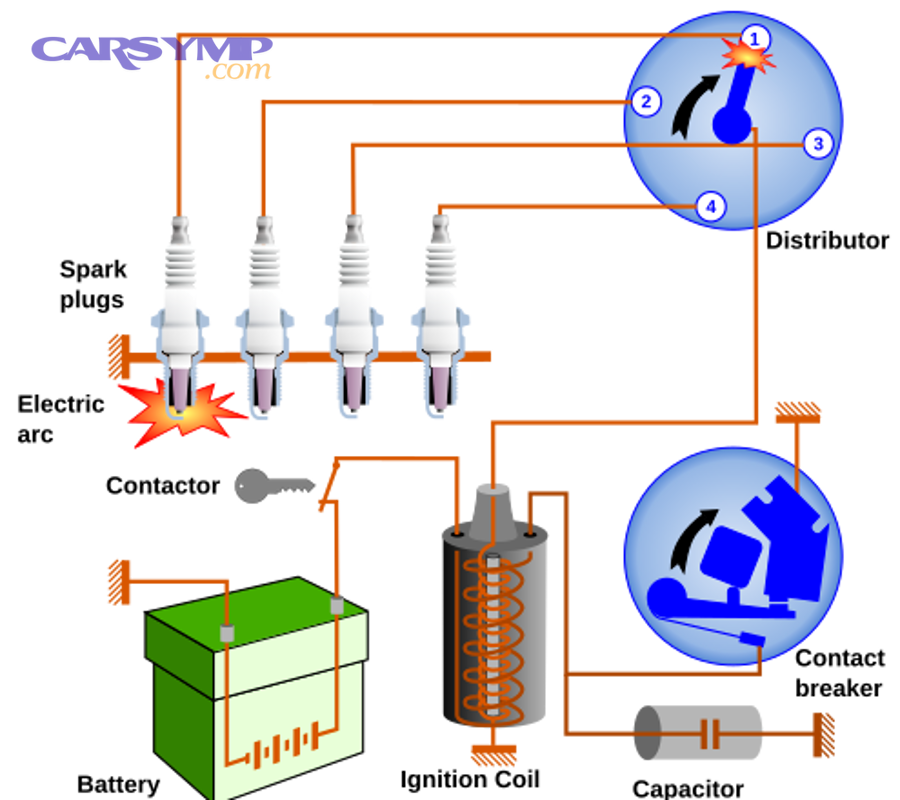
Do you need to remove the ignition switch to test it, or can you test it in the vehicle?
No—you usually do not need to remove the ignition switch because (1) in-vehicle voltage testing confirms real output, (2) back-probing the connector is faster and reduces reassembly errors, and (3) removal can hide intermittent faults caused by harness movement or steering-column position.
However, bench testing still has a place when you can’t access the connector safely, when the connector pins are damaged, or when you need to confirm internal contact mapping without the rest of the circuit interfering. The key is to pick the method that matches your goal: “Does the switch work in real life?” vs “Are the contacts internally correct?”
Next, make your plan based on access and risk:
- If you can reach the ignition switch connector and safely probe it, start with in-vehicle voltage testing.
- If voltage results are confusing, follow up with battery-disconnected continuity testing at the unplugged switch.
What tools and settings do you need on the multimeter to test an ignition switch correctly?
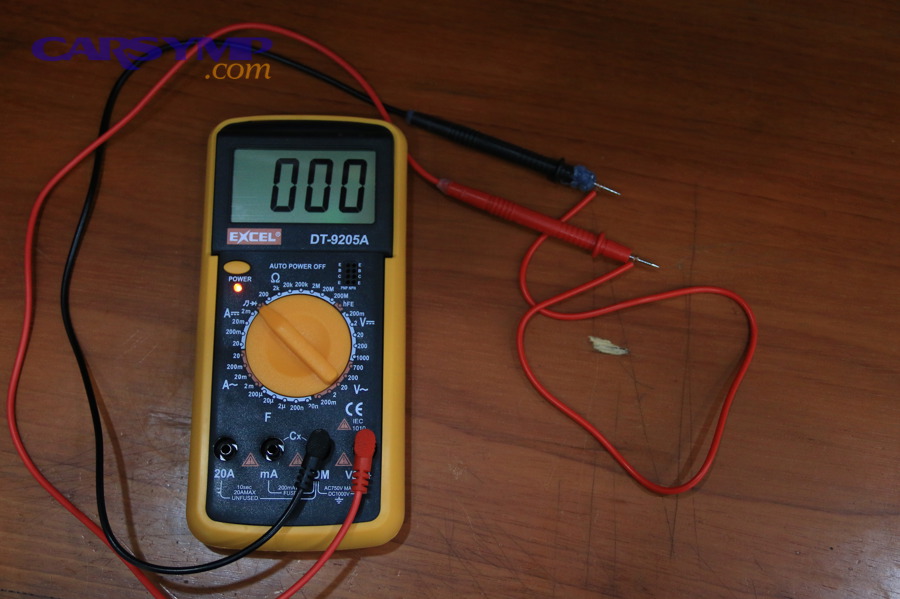
There are 4 essentials for reliable ignition switch testing: DC volts, continuity mode, ohms (Ω), and a safe probing method, because ignition switches are tested both with power OFF (continuity/ohms) and power ON (voltage).
To better understand the workflow, set up your tools like this:
- Digital multimeter (DMM)
- DC volts range (typically 20V DC on manual meters)
- Continuity mode (beep) and/or low-ohms range
- Probing tools
- Sharp probe tips, back-probe pins, or T-pins (to avoid spreading terminals)
- Alligator clip leads (to keep hands clear during START testing)
- Reference info
- Wiring diagram or connector pinout for your vehicle (recommended)
- Terminal markings on the switch (if present)
- Safety basics
- Eye protection
- Park/Neutral, parking brake set, wheels chocked if needed
A quick rule that keeps you safe and accurate: Use continuity/ohms only with power OFF, and use DC volts with power ON. This is consistent with standard continuity-test guidance that instructs you to ensure power is off before measuring continuity.
Is it safe to test continuity on an ignition switch with the battery connected?
No—testing continuity (or resistance) on an ignition switch with the battery connected is unsafe because (1) the meter injects its own small test current, (2) live voltage can damage the meter or create false readings, and (3) you can accidentally short BAT to other terminals and cause blown fuses or harness damage.
Then, keep it simple:
- Battery disconnected = continuity/ohms testing
- Battery connected = voltage/voltage-drop testing
If you need a safe middle ground, disconnect the ignition switch connector and the battery negative terminal, wait a minute for modules to sleep, and only then run continuity checks across the switch terminals.
How do you identify the ignition switch terminals (BAT/ACC/IGN/START) before testing?
You identify ignition switch terminals by using a wiring diagram or connector pinout and confirming each terminal’s role with a multimeter—BAT will show constant battery voltage, while ACC/IGN/START will only show voltage in specific key positions.
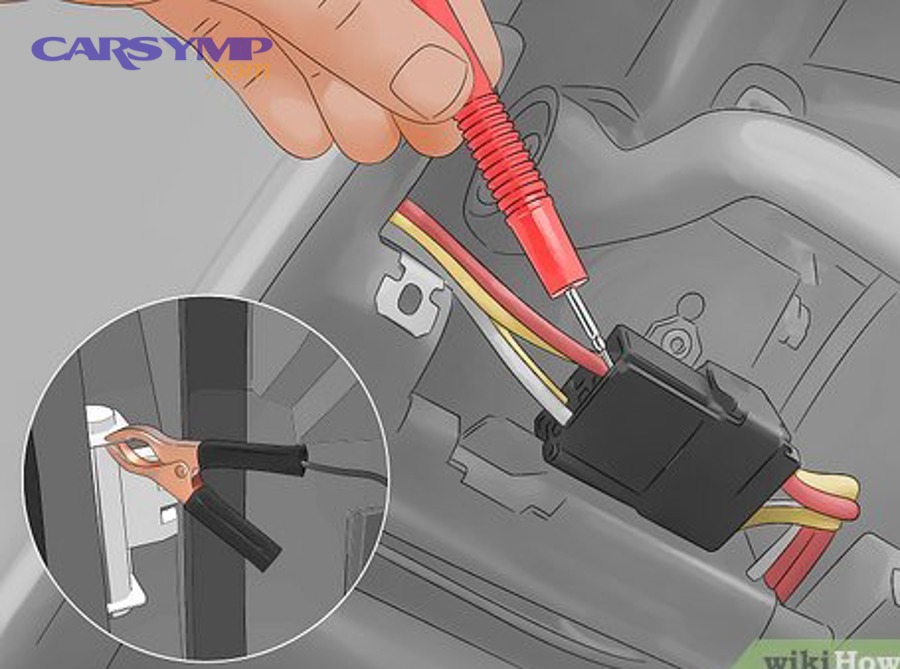
Specifically, different vehicles label things differently (and some don’t label them at all), so relying on wire color alone can lead to misdiagnosis. The best path is:
- Locate the ignition switch electrical connector (often on the steering column, behind trim).
- Identify terminal names from a diagram or service information.
- Confirm with the meter using DC volts at the harness side.
Next, use a simple mental model: BAT is the feed in, ACC/IGN/START are the feeds out—and each output “wakes up” in a different key position.
Which ignition switch terminal is “BAT,” and how do you verify it with the meter?
The BAT terminal is the constant 12V supply into the ignition switch, and you verify it by measuring DC voltage from the suspected BAT pin to chassis ground with the key OFF—if it reads near battery voltage, you’ve found BAT.
Then, verify it correctly:
- Set meter to DC volts
- Black lead to a clean chassis ground
- Red lead to the suspected BAT terminal (harness side)
- Key OFF: expect ~12.4–12.8V on a healthy, rested battery (engine off)
If you read 0V on every pin, don’t blame the ignition switch yet—check the ignition feed fuse, fusible link, or battery connection first.
How do key positions map to terminal outputs (OFF vs ACC vs RUN vs START)?
OFF powers none of the outputs, ACC powers accessories, RUN powers ignition/engine systems, and START energizes the start circuit—so the “winner” depends on which key position your vehicle problem appears in.
Next, use this mapping logic as your baseline (your exact vehicle may vary, but the pattern holds):
The table below summarizes which ignition switch outputs typically receive power in each key position, helping you set pass/fail targets before you probe.
| Key Position | BAT | ACC Output | IGN/RUN Output | START Output |
|---|---|---|---|---|
| OFF/LOCK | Hot | Off | Off | Off |
| ACC | Hot | On | Usually Off | Off |
| RUN/ON | Hot | On (often) | On | Off |
| START (crank) | Hot | Often drops out | On | On (momentary) |
This table gives you a practical test target: if ACC works but RUN doesn’t, you focus on IGN output; if RUN works but there’s no crank, you focus on START output and its downstream path.
How do you test an ignition switch with a multimeter using continuity (ohms) mode step-by-step?
Continuity testing an ignition switch is a power-off method with 4 steps—disconnect the battery, unplug the switch, probe terminal pairs in each key position, and confirm each expected contact closes with low resistance and opens with OL—so you can verify the internal contact logic.
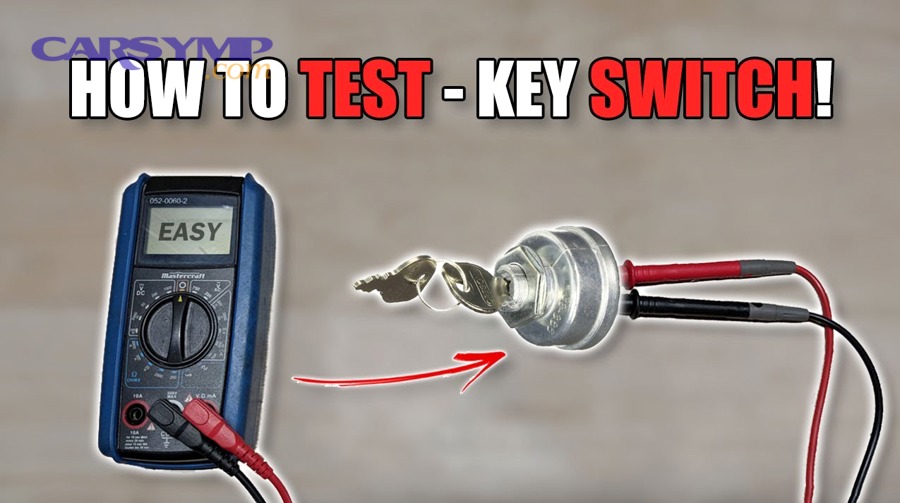
Next, follow this workflow without skipping steps:
- Disable power
- Disconnect the negative battery cable
- Access the switch connector
- Unplug the ignition switch electrical connector (switch side)
- Set the meter
- Use continuity (beep) or low ohms range
- Test terminal pairs by key position
- Check BAT-to-ACC in ACC
- Check BAT-to-IGN in RUN
- Check BAT-to-START in START (momentary)
A common benchmark for “good continuity” is a stable near-zero resistance reading and/or a steady beep, while OL or very high resistance indicates an open circuit.
What readings indicate a good ignition switch in continuity testing?
Yes—an ignition switch passes continuity testing when (1) expected pairs show a stable near-zero ohms reading, (2) non-selected pairs show OL/open circuit, and (3) readings remain stable when you gently move the key and harness (no flicker, no dropouts).
Then, interpret the meter like a technician:
- 0.0–0.5 Ω (typical) + steady beep: closed contact is likely good
- OL / no beep when it should be open: correct open state
- Wandering resistance or beep that cuts out: likely worn contacts or looseness
If your meter supports it, keep the probes clipped, turn the key slowly through positions, and watch for momentary opens. Some meters explicitly support detecting intermittent opens/shorts for very short events, which is useful for “works sometimes” complaints. (assets.fluke.com)
What continuity results point to a bad ignition switch (open circuit, short, or inconsistent contact)?
There are 3 main failure patterns in ignition switch continuity testing—open circuits, shorted/bridged circuits, and inconsistent contact—based on whether the switch fails to connect, connects what it shouldn’t, or connects unreliably.
Next, use these results as a practical grouping guide:
- Open circuit where continuity is required
- BAT-to-IGN shows OL in RUN
- BAT-to-START shows OL in START
- Meaning: the switch can’t close the circuit reliably (classic no-start/no-run)
- Continuity where the circuit should be open
- BAT-to-START shows continuity in RUN or OFF
- Meaning: internal bridging/short can cause starter engagement issues or drain
- Inconsistent contact
- Resistance jumps around with small key movement
- Beep cuts in/out (“flicker beep”)
- Meaning: worn switch contacts; a prime source of intermittent ignition switch problems
At this point you’ve validated internal switching logic, but you still need voltage testing to confirm the switch actually delivers usable voltage to the vehicle loads.
How do you test an ignition switch with a multimeter using voltage tests in ACC/RUN/START?
Voltage testing an ignition switch is an in-vehicle method with 3 steps—keep the battery connected, back-probe the output terminals, and confirm each terminal delivers near-battery voltage in its key position—so you can verify real-world performance.
Next, do it safely and consistently:
- Set meter to DC volts
- Use a 20V DC range if manual
- Establish a solid ground
- Black lead on clean chassis ground (or battery negative)
- Probe outputs by key position
- ACC position: probe ACC output
- RUN position: probe IGN output
- START position: probe START output while someone turns the key (or use clips)
If you can’t safely hold probes during cranking, clip the leads first, then turn the key.
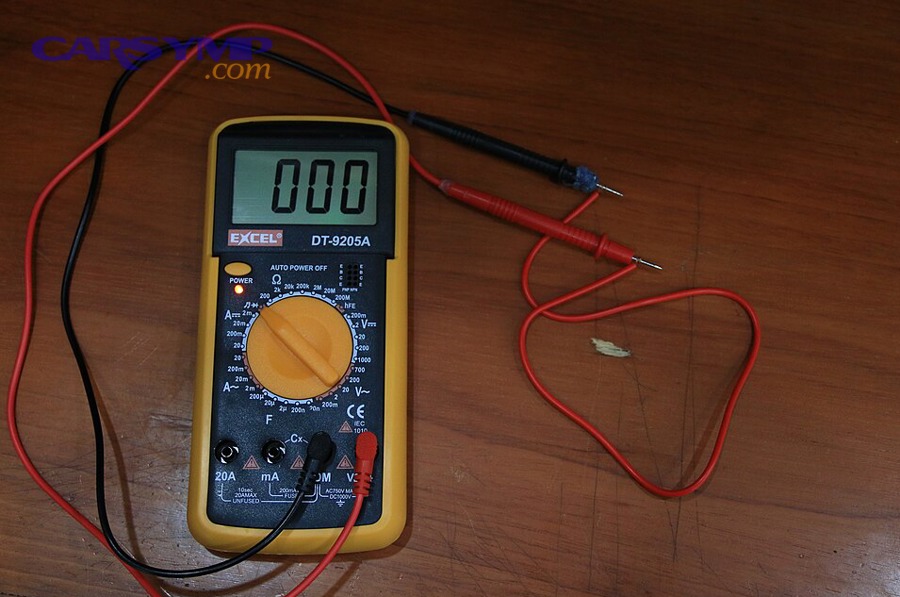
Should the ignition switch output the same voltage as the battery, or is some drop normal?
Battery voltage is the target, and a small drop can be normal, but a large drop means trouble—so the “winner” is battery-like voltage for ACC/IGN/START, while a significantly lower reading under load points to high resistance in the switch or its connector.
Next, use this interpretation framework:
- Near battery voltage (within a few tenths) at the output terminal in the correct key position is typically healthy.
- Noticeably low voltage (for example, accessories dimming, modules rebooting, or a START signal that won’t pull in the relay) often indicates high resistance in the switch contacts or connector pins.
Why does that happen? Electrical contacts can develop higher constriction resistance and surface degradation from arcing, which increases voltage drop at the contact spot—exactly the mechanism that turns a “working” switch into an unreliable one. (mdpi.com)
How do you perform a voltage-drop test to catch a “weak” ignition switch contact?
A voltage-drop test checks switch health under load by measuring the voltage lost across the switch contact while the circuit is operating, and it’s typically done by probing the switch input (BAT) and output (ACC/IGN/START) at the same time during the relevant key position.
Next, use this practical method:
- Set meter to DC volts
- Red lead on BAT input, black lead on the target output (ACC, IGN, or START)
- Turn the key to the position that energizes that output
- Read the meter:
- Lower is better (less voltage lost across the switch)
- Higher drop suggests higher resistance inside the switch or at the terminals
If you want to make the test more meaningful, test under a real load:
- For ACC: turn on blower or headlights (if applicable)
- For RUN: verify voltage while the dash is powered and modules are awake
- For START: watch the reading during crank attempt (use clipped leads)
Evidence: According to a study by University of Liverpool from the Department of Electrical Engineering and Electronics, in 2024, researchers described voltage drop as the combined effect of bulk resistance and contact resistance between contacts, reinforcing why rising contact resistance directly increases measurable voltage loss across switching contacts. (livrepository.liverpool.ac.uk)
Is the ignition switch bad, or is the problem the starter, relay, or wiring?
The ignition switch is the likely culprit when it fails to deliver correct voltage to ACC/IGN/START, but starter, relay, wiring, grounds, and interlock/security systems can mimic the exact same symptom—so you decide by checking the START signal path and confirming whether power exits the switch when commanded.
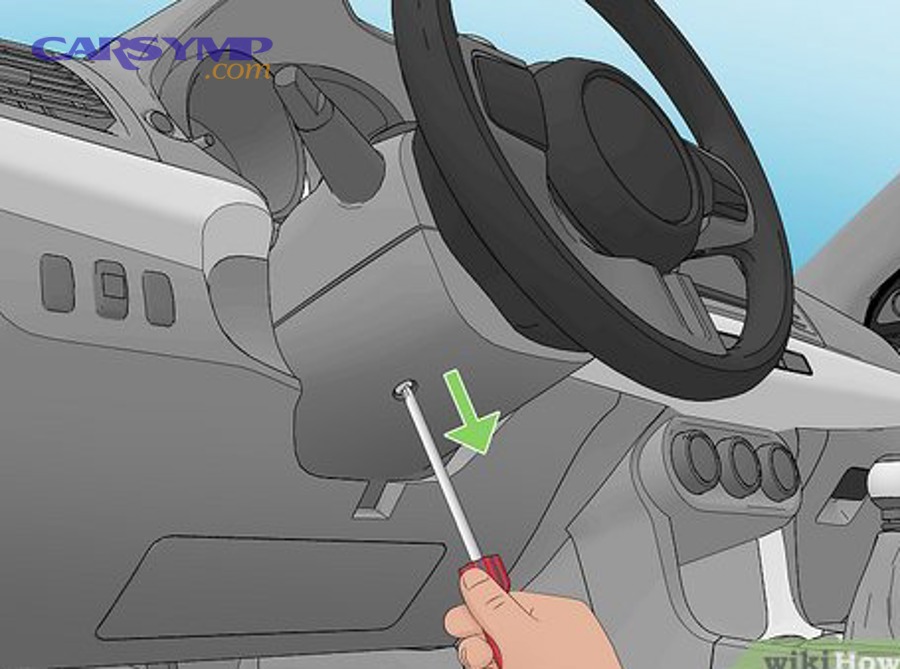
Next, think in “signal flow” terms: the ignition switch sends a start request, and that request must pass through potential blockers (fuse, relay, neutral safety/clutch switch, security logic) before the starter engages.
This is where Bad ignition switch symptoms can overlap with other faults:
- No crank: could be START output missing, relay not energizing, neutral safety switch open, weak battery, bad starter
- Accessory dropouts: could be switch contacts, loose connector pins, worn ignition lock assembly, or poor ground
- Random stalls: could be IGN/RUN output interruption, not necessarily fuel-related
Also note a mechanical clue that often appears alongside electrical issues: Key stuck in ignition causes can include a worn lock cylinder, steering lock pressure, shifter interlock problems, or internal wear that can coexist with electrical switch wear. When a key feels “inconsistent,” it’s a hint to test both the mechanical and electrical sides rather than assuming only one failure.
If you have power at BAT but no power at START, does that confirm the ignition switch is faulty?
Yes—most of the time, BAT power with no START output in the START position points to a faulty ignition switch because (1) the switch should directly energize the START circuit, (2) continuity/voltage tests isolate whether the signal exits the switch, and (3) a failing START contact often becomes intermittent before it dies completely.
However, to keep the diagnosis honest, account for two important exceptions:
- Some vehicles route the “start request” through a body control module (BCM) or security system logic rather than a simple direct switch output.
- A broken wire, backed-out terminal, or blown fuse on the START circuit can make it look like the switch never outputs power.
This is where Security system interaction with ignition becomes relevant: an immobilizer or anti-theft system may allow ACC and RUN but block crank (or allow crank but block start), depending on design. If the security indicator is flashing or a “key” warning appears, don’t stop at the ignition switch test—verify whether the start request is being permitted.
What quick checks help rule out battery, starter, and ground issues before blaming the ignition switch?
There are 6 quick checks that rule out look-alike failures—battery condition, ground integrity, starter response, relay operation, interlocks, and output voltage at key points—based on whether the fault is power supply, control signal, or load response.
Next, run these checks in order:
- Battery voltage at rest and during crank attempt
- Rested battery: typically around 12.4–12.8V
- During crank attempt: if it collapses dramatically, you may have a battery/connection issue
- Ground integrity
- Inspect and tug-test main ground straps
- Check for corrosion at battery terminals
- Starter behavior
- Single click vs rapid clicking vs silence
- Clicking often points to low voltage or relay/starter solenoid issues
- Starter relay check
- Confirm relay receives command voltage at its coil (from START circuit)
- Swap with a known-good relay if identical and safe to do
- Neutral safety / clutch interlock
- Try starting in Neutral (automatic) or ensure clutch switch engagement (manual)
- START output at ignition switch
- If START output never shows near-battery voltage while key is held in START, the switch is strongly suspected
When these checks line up with ignition switch output failure, you’re no longer guessing—you’re confirming.
What special cases can change how you test an ignition switch (push-button start, immobilizer, intermittent faults)?
Special cases change ignition switch testing because modern vehicles may use electronic “ignition requests,” immobilizers may block crank or start, and intermittent failures can appear only under heat or vibration—so your method must adapt to system design, not just terminal labels.
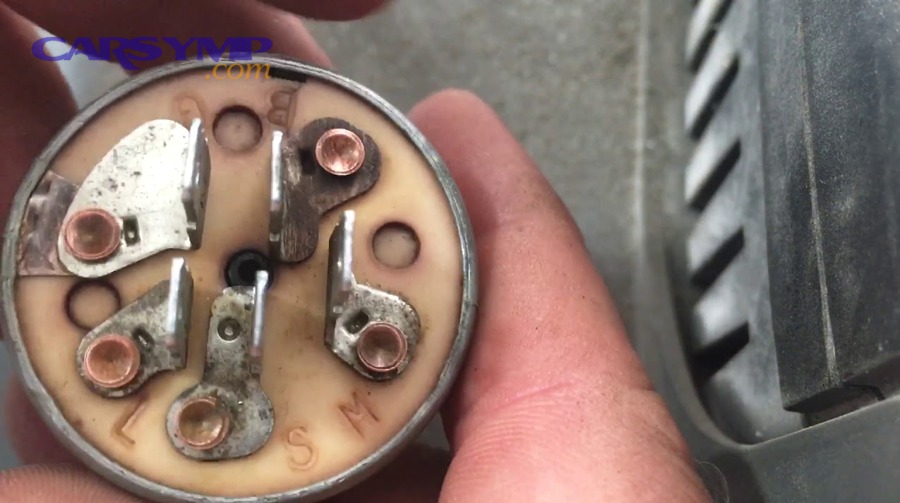
Next, treat this section as your “why doesn’t my test match the internet?” map. It expands your semantic coverage beyond basic BAT/ACC/IGN/START behavior while still keeping the diagnostic chain consistent.
How is testing different on push-button start or BCM/CAN-controlled ignition systems?
BCM/CAN-controlled systems replace direct high-current switching with an electronic request, so the ignition switch (or button) may not output a traditional START voltage the way older systems do, and you focus instead on request signals, relay commands, and module-permitted outputs.
Then, adjust your expectations:
- You may still find a battery feed and switched outputs, but the “START” function could be a low-current signal read by a module.
- Your multimeter is still useful—just point it at inputs and outputs of the control chain:
- Does the button/switch request change state?
- Does the module command the starter relay?
- Do the permitted outputs appear in RUN?
If the system is heavily module-controlled, a scan tool may be required to see why the request is denied, but you can still rule out basics (battery feed, grounds, fuses, relay outputs) with a meter.
Can an immobilizer or anti-theft system mimic a bad ignition switch?
Yes—an immobilizer can mimic ignition switch problems because (1) it may allow ACC/RUN but block START, (2) it may allow crank but block fuel/spark, and (3) it can trigger intermittent behavior when keys, readers, or modules miscommunicate.
Next, look for practical clues that separate electrical switch failure from security denial:
- Security light behavior (flashing or staying on abnormally)
- Key/transponder warnings on the dash
- “Cranks but won’t start” paired with normal IGN/RUN voltage
- Consistent START output voltage present but no relay/starter activation (module denial downstream)
This is a prime example of Security system interaction with ignition: your meter might show the ignition switch is doing its job, while the security layer blocks what happens next.
What is the best way to test for an intermittent ignition switch failure (wiggle/heat/load)?
There are 3 best practice methods for intermittent testing—wiggle testing, heat-soak timing, and load-based voltage drop checks—because intermittent failures often appear only when the switch contacts expand, vibrate, or carry current.
Next, make the test reproduce the symptom:
- Wiggle test (controlled)
- With probes clipped to IGN output, gently move the key and harness
- Watch for voltage dropouts or meter flicker
- Heat-soak test
- If the issue happens after driving, test immediately after a hot soak
- Compare output voltage hot vs cold
- Load + voltage drop
- Turn on blower/headlights while monitoring ACC/IGN output
- Weak contacts show bigger drops under load
If your readings change with tiny movements, you’ve identified a classic intermittent ignition switch problems even if continuity sometimes “passes.”
When should you stop testing and replace the switch versus repairing wiring/connectors?
Replace the ignition switch when the internal contacts show unstable continuity or excessive voltage drop, but repair wiring/connectors when the switch output is correct and the voltage loss occurs at terminals, pins, grounds, or damaged harness sections.
Next, use a clean decision rule:
- Replace the switch if:
- Continuity is inconsistent across correct terminal pairs
- START or IGN output voltage is missing or unstable in the correct key position
- Voltage-drop across the switch is clearly higher than expected under load
- You consistently reproduce the symptom at the switch output
- Repair wiring/connectors if:
- Switch output is solid, but the circuit fails downstream
- Connector pins are loose/spread, heat-discolored, or corroded
- Flexing the connector changes readings
- You find blown fuses or obvious harness damage
This is also where you connect the dots back to Bad ignition switch symptoms: if symptoms disappear when you bypass the connector or clean/tighten terminals, the “switch problem” was actually a connection problem.
Evidence (if any)
According to a study by University of Liverpool from the Department of Electrical Engineering and Electronics, in 2024, researchers described voltage drop as the combined contribution of bulk resistance and contact resistance between contacts, supporting why increased contact resistance in worn switch contacts produces measurable voltage loss across the switch. (livrepository.liverpool.ac.uk)