


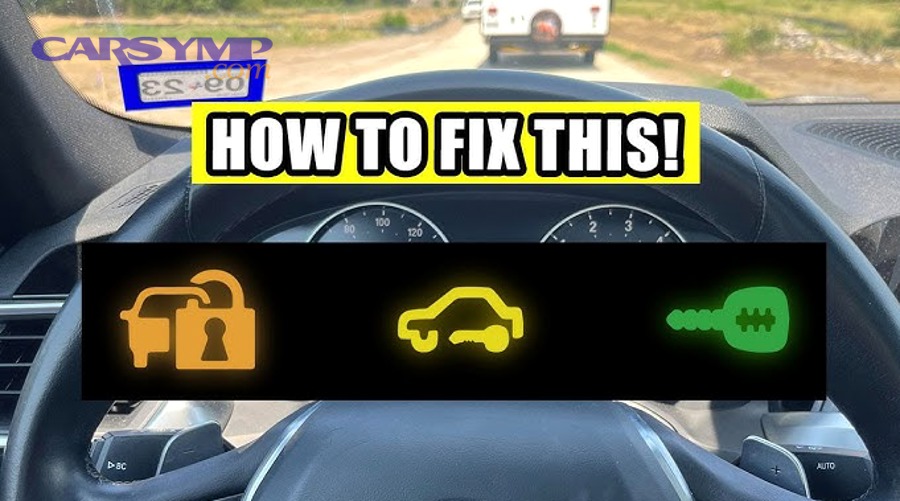
If your immobilizer warning light (often shown as a car-with-key or car-with-lock icon) turns on or flashes, it usually means the vehicle’s security system is either armed normally or is not accepting the key’s code, which can prevent starting. The fastest path is to read the light’s behavior (off/flashing/solid) and match it to what the car is doing (off/starting/running).
Many drivers also want the “why” behind the light—especially when immobilizer problems show up after a low battery, a jump start, or a key fob that suddenly won’t be recognized. In those cases, the root cause is commonly key recognition, a weak key fob battery, or a power interruption that forces the system to re-check security status.
Another common question is whether a blinking anti-theft light is normal, because some vehicles intentionally flash the indicator when the car is locked and the immobilizer is armed. The difference between “normal” and “fault” is usually whether the car starts and stays running—and whether the light changes behavior when you attempt to start.
Introduce a new idea: once you know what the symbol means and whether it’s normal, you can work through safe, escalating fixes—from quick at-home checks to situations where a locksmith, mechanic, or dealer-level programming is the only realistic solution.
What does the immobilizer (anti-theft) warning light mean?
The immobilizer (anti-theft) warning light is a dashboard security indicator that shows the car’s immobilizer system is either armed or rejecting the key’s authentication code, which can stop the engine from starting or staying on.
Next, that meaning becomes clearer when you connect the icon to how immobilizers actually block starting and what the symbol variants represent.
What is an immobilizer system and how does it prevent a car from starting?
An immobilizer system is an electronic anti-theft system that uses a key transponder or smart key code to authorize starting, and it prevents theft by disabling critical engine functions unless the correct code is recognized.
To begin, the key detail is that an immobilizer is not “just a light”—it’s a security decision happening every time you try to start.
Here’s what the immobilizer is doing in practical terms:
- A transponder key or smart key broadcasts an ID (via a chip in the key or a code exchange with the vehicle).
- A receiver in the car listens for that expected ID (commonly near the ignition cylinder, steering column, or start button area).
- The security module approves or denies starting based on whether it sees a valid code and whether the system is in a normal state.
When the system denies authorization, the car may respond in a few typical ways:
- Crank-no-start: the starter turns, but fuel/ignition is blocked.
- Start-then-stall: the engine catches briefly and then shuts off as authorization fails.
- Key not detected / immobilizer active message: common on push-button start vehicles.
Immobilizers are designed to be “silent” most of the time. That’s why the immobilizer warning light is so important: it’s the only quick clue that the car is making a security decision rather than a purely mechanical failure.
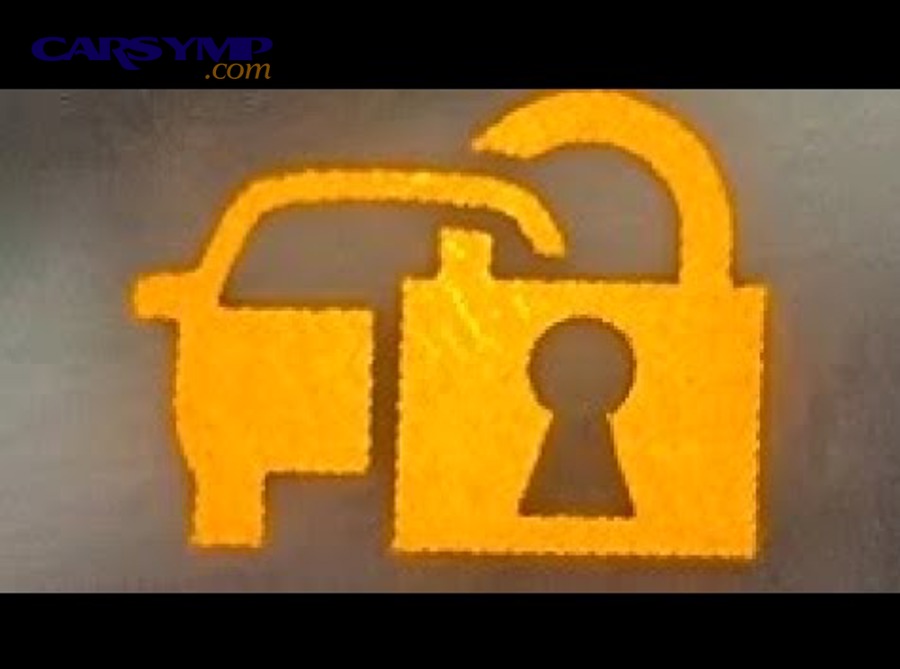
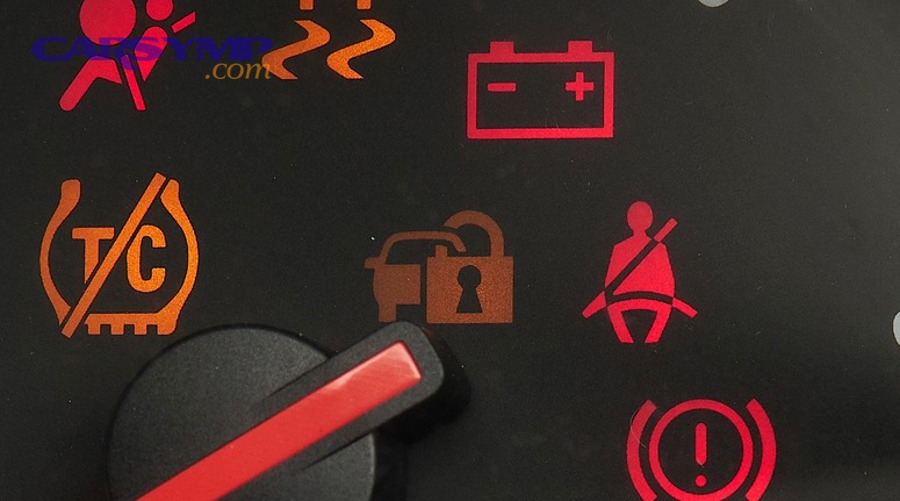
What does the “car with key” or “car with lock” symbol mean?
The “car with key” or “car with lock” symbol is a visual shorthand for the immobilizer/anti-theft system status, meaning the vehicle is either armed, in a security check, or not recognizing the key (depending on flashing vs solid behavior).
Then, you can treat these symbols as synonyms for an anti-theft light, because many manufacturers use different icons to point to the same security subsystem.
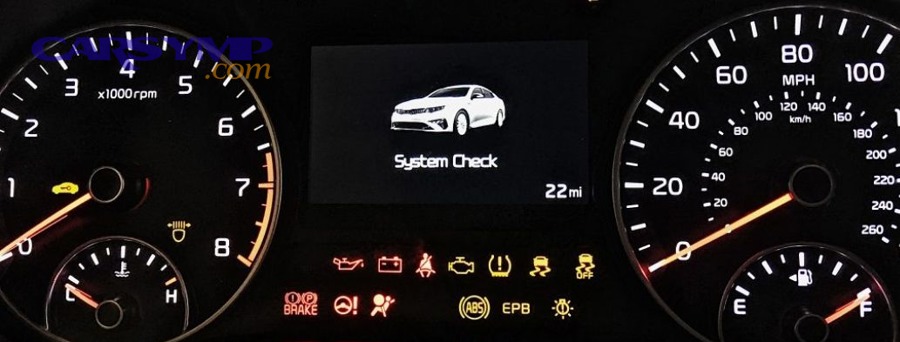
Common icon interpretations (general guidance across many vehicles):
- Flashing with ignition OFF: often indicates the immobilizer is armed (normal on many models).
- Solid with ignition ON or during starting: often indicates a fault state (key not accepted or security module issue).
- Rapid flashing while trying to start: often indicates the key code is being rejected or the system is in a lockout/failed authentication cycle.
One reason these icons confuse drivers is that the light can be “normal” at night while parked but “not normal” when you’re trying to start. So the icon alone isn’t enough—you always interpret it with context: off/starting/running.
Is a flashing immobilizer light normal when the car is off?
Yes—an immobilizer warning light can flash normally when the car is off because (1) many cars flash the anti-theft light to confirm the system is armed, (2) it deters theft by signaling security is active, and (3) it often stops flashing when a valid key is detected and the car is started.
However, the same flashing behavior can mean a problem if it changes pattern or appears during starting, so the next step is to separate “armed state” from “fault state.”
Is it normal if the light flashes after you lock the car?
Yes, it’s normal on many vehicles if the immobilizer light flashes after you lock the car because (1) it confirms the immobilizer is armed, (2) it indicates the system is monitoring for unauthorized entry/start, and (3) it’s a low-power status signal that doesn’t typically drain a healthy battery quickly.
More specifically, this is the “security standby” behavior many owners manuals describe without much detail.
What “normal” usually looks like:
- The light starts flashing shortly after you lock the doors.
- The light continues flashing at a steady rhythm while parked.
- The light stops flashing (or changes behavior) when you unlock and start with a valid key.
What should make you suspicious:
- The light begins flashing much faster than usual or in a new pattern.
- The vehicle suddenly shows key not detected messages.
- The car won’t start, or starts and stalls.
A simple safety check is to note whether the car starts normally. If starting and running are normal, a parked flashing anti-theft light is typically just the immobilizer doing its job.
Is it a problem if the light stays on while driving?
Yes, it can be a problem if the immobilizer light stays on while driving because (1) it may indicate an ongoing security-system fault, (2) it can signal intermittent key recognition or module communication issues, and (3) it can create a risk of future no-start or being stranded even if the car currently runs.
Moreover, while many vehicles won’t shut off mid-drive due to immobilizer logic, a persistent security warning should be treated as “needs diagnosis soon.”
What to do when you notice it while driving:
- Don’t panic, but don’t ignore it. Keep driving only if the car is behaving normally and you can do so safely.
- Avoid shutting off the engine until you reach a safe location, because restart may fail if the system is in a marginal state.
- Check for related symptoms: flickering dash lights, weak battery signs, intermittent “key not detected,” or recent battery work.
If the light appears along with stalling, severe electrical symptoms, or repeated key-not-recognized messages, treat it as urgent and plan for a safe stop and a tow rather than repeated restart attempts.
What are the most common causes of an immobilizer warning light?
There are two main groups of causes of an immobilizer warning light—key-side causes and vehicle-side causes—based on whether the authentication problem is coming from the key/fob identity or from the car’s power/receiving/security modules.
To better understand the cause, match the warning light to the symptom you’re experiencing: “starts fine” versus “won’t start” narrows the possibilities fast.
Which key-related issues trigger the warning (wrong key, dead fob battery, damaged transponder)?
There are four common key-related triggers of the immobilizer warning light: (1) wrong or unprogrammed key, (2) weak/dead key fob battery (smart key systems), (3) damaged transponder chip, and (4) interference or positioning that prevents the car from reading the key.
Specifically, these causes dominate because the immobilizer’s first job is to decide whether your key is “trusted.”
1) Wrong key or unprogrammed key
A metal copy that turns the ignition may still fail the security check if it lacks the correct transponder. Likewise, a replacement key must usually be programmed to the car.
2) Weak/dead key fob battery (smart key / push-button start)
A low fob battery can reduce signal strength and cause intermittent recognition, especially if you start the car with the fob far from the start button or if the fob is shielded by a bag or other objects.
3) Damaged transponder chip
Keys that have been dropped, exposed to water, or physically damaged can develop intermittent transponder issues. The symptom is often inconsistent: the same key works sometimes and fails other times.
4) Interference or positioning problems
Some environments or devices can reduce effective reading distance. In practice, the simplest workaround is to place the fob very close to the start button or use the designated emergency start procedure.
This is where Spare key testing and troubleshooting becomes your best “no-tools” diagnostic: if a spare key starts the car reliably, you’ve isolated the problem to the primary key/fob rather than the vehicle.
Which vehicle-related issues trigger the warning (low battery, power reset, blown fuses, wiring)?
There are four common vehicle-related triggers of an immobilizer warning light: (1) low or recently disconnected car battery, (2) power interruption after jump-start or battery replacement, (3) blown fuses/poor grounds affecting the security system, and (4) wiring/receiver/module communication faults.
In addition, these causes often show up right after routine maintenance, which makes the immobilizer light feel “random” even though it’s responding to power or signal instability.
1) Low or unstable vehicle battery voltage
Modern security systems are sensitive to voltage. A weak battery can cause modules to reboot, lose synchronization momentarily, or fail to read the key reliably.
2) Power interruption after jump-start/battery replacement
After a battery disconnect, some cars behave normally, while others may require a relearn procedure or a specific lock/unlock sequence before they fully accept the key again.
3) Blown fuses, corroded terminals, or poor grounds
If the immobilizer receiver, body control module (BCM), or related circuits aren’t getting clean power, key authentication can fail even with a good key.
4) Wiring, receiver, or module communication faults
This includes corrosion from water intrusion, damaged connectors, or module network issues that prevent the immobilizer logic from confirming authorization.
A practical clue: if your dash shows multiple warnings, lights dim, or the car struggles to crank, start by treating the battery/power side as suspect before you assume the key “went bad.”
How can you tell “normal armed state” vs “fault state” from the light behavior?
You can tell “normal armed state” vs “fault state” by comparing light behavior (off/flashing/solid) against vehicle state (car off/starting/running): normal armed state usually flashes with the car off and stops when started, while a fault state often shows a solid light or aggressive flashing during starting with no-start symptoms.
However, the clearest interpretation comes from using a simple behavior map rather than guessing from the icon alone.
What’s the difference between flashing vs solid immobilizer light when starting?
Flashing vs solid during starting usually separates two failure modes: flashing often indicates the key code is not being accepted, while solid often suggests the immobilizer system is active or has detected a security fault state that needs resolution before the engine will run.
Meanwhile, the most important tie-breaker is the symptom you feel at the ignition.
Use this practical guide:
- Flashing while you try to start + crank-no-start
Likely a key recognition failure (wrong key, key not programmed, transponder/fob issue, or receiver problem). - Starts then stalls + immobilizer light behavior changes
Often a failed authorization after initial start, sometimes linked to intermittent key reading or module sync issues. - Solid immobilizer light with ignition on
Often indicates the immobilizer is actively preventing start due to a security or communication fault.
A useful habit is to watch what happens in the first 3–5 seconds after you try to start. If the light immediately reacts and the engine doesn’t behave normally, treat it as an immobilizer-driven no-start rather than a fuel or starter motor issue.
What’s the difference between an immobilizer warning and a general check engine light?
The immobilizer warning is a security authorization indicator, while the check engine light is a powertrain/emissions diagnostic indicator—so the immobilizer light focuses on “should the car be allowed to run,” and the check engine light focuses on “how well the engine system is operating.”
On the other hand, both can appear together if a no-start condition causes secondary faults, so you still diagnose in the right order.
Key differences that matter for drivers:
- Immobilizer light is strongly linked to key recognition and security modules.
- Check engine light is strongly linked to engine sensors, emissions controls, and powertrain faults.
- An immobilizer problem can cause a no-start with no check engine codes, especially on basic scanners, because security-related data can be stored in body/security modules rather than the engine module.
If you have access to a scan tool, treat it as helpful context—but don’t let “no codes” convince you the immobilizer is fine if the security light behavior is clearly abnormal.
How do you fix an immobilizer warning light and get the car to start?
To fix an immobilizer warning light and get the car to start, use a 6-step escalation: (1) stabilize vehicle battery power, (2) try a spare key, (3) refresh the key fob battery, (4) follow the vehicle’s lock/unlock or emergency start method, (5) eliminate aftermarket interference, and (6) get key programming/diagnosis if the problem persists.
Besides, this order reduces wasted time because it isolates key-side failures before you chase deeper electrical faults.
What quick at-home steps should you try first?
Start with these quick steps because they solve a large share of immobilizer problems without special tools and without risking damage to the security system.
Next, follow the sequence below in order, stopping as soon as the car starts reliably.
Step 1: Stabilize the car battery and connections
- Confirm battery terminals are tight and clean.
- If the battery is weak, charge it or use a known-good jump pack correctly.
- Turn off heavy electrical loads (heater fan, headlights) before starting.
Step 2: Use Spare key testing and troubleshooting immediately
- Try a spare key (or the second smart fob) if you have one.
- If the spare works consistently, your primary key/fob is the likely culprit.
- If neither key works, suspect a vehicle-side receiver/module/power problem.
Step 3: Replace the key fob battery (smart keys)
- Use the correct battery type and ensure polarity is correct.
- After replacement, try starting with the fob close to the start button.
Step 4: Use the emergency start method (push-button systems)
Many vehicles allow starting by touching the fob to the start button or placing it in a designated slot. This bypasses some radio-distance issues and is a strong diagnostic clue.
Step 5: Lock/unlock cycle to reset security state
- Lock the car, wait 30–60 seconds, unlock, then attempt start.
- If your vehicle has a known sequence (owners manual), follow it exactly.
Step 6: Remove obvious interference
- Move other RFID tags, metal objects, or electronics away from the key.
- If you have an aftermarket alarm, remote start, or immobilizer add-on, consider it a suspect if the problem began after installation or wiring work.
At-home steps are about fast isolation: if a spare key and fresh fob battery do nothing, your time is usually better spent moving toward professional diagnosis than repeating starts.
When do you need a locksmith, mechanic, or dealer to program/relearn keys?
You need a locksmith, mechanic, or dealer when (1) the car won’t recognize any key consistently, (2) you’ve replaced or added keys that must be programmed, and (3) the immobilizer/BCM/ECU shows security faults that require scan-tool access or security authorization.
More importantly, professional help is the safe route when the car is in an immobilizer lockout state or when modules have lost synchronization.
Situations that strongly indicate programming/relearn is required:
- You bought a replacement key/fob and it was never programmed to your vehicle.
- The car intermittently recognizes keys, suggesting a receiver/antenna or module issue that needs testing.
- A battery disconnect, module replacement, or wiring repair triggered persistent security warnings.
- You suspect a key was cloned incorrectly (the doors work, but the engine won’t start).
A competent automotive locksmith can often program keys for many makes, while some systems require dealer-level tools and security access. If you’re stuck away from home, roadside assistance + locksmith programming can be faster than towing to a dealership, depending on the vehicle.
Evidence: According to a study by Tilburg University from the CentER research institute, published in 2016, mandatory electronic engine immobilizers were estimated to reduce car theft by about 40%, showing how strongly immobilizer authorization affects whether vehicles can be stolen—or even started without the correct key. (Source domain: academic.oup.com)
Is it safe to drive with the immobilizer light on?
No, it’s not reliably safe to drive with the immobilizer light on because (1) it can signal an unresolved security fault that may lead to a future no-start, (2) intermittent key recognition can worsen with vibration or electrical noise, and (3) you risk being stranded if the system refuses the next restart—even if the car currently runs.
Thus, the safest approach is to treat a persistent anti-theft light as “diagnose soon” and treat a light that appears with symptoms as “stop as soon as safely possible.”
Should you stop driving immediately if the light appears while driving?
Yes, you should plan to stop driving soon if the immobilizer light appears while driving because (1) it may indicate a security system fault, (2) it can be associated with unstable electrical power or module communication issues, and (3) turning the engine off may result in a no-start condition.
However, the immediate action depends on whether the car is still running smoothly and whether other warning signs appear.
Use this decision rule:
- Light appears but the car drives normally: proceed carefully to a safe destination, avoid shutting off the engine unnecessarily, and schedule diagnosis.
- Light appears with stalling, power loss, or repeated key warnings: treat it as urgent and pull over safely.
The goal is not to “fear the light,” but to avoid converting a driveable situation into a stranded situation through an avoidable shutoff/restart cycle.
When should you call roadside assistance or tow instead of retrying starts?
Yes, you should call roadside assistance or tow when (1) the car repeatedly cranks but won’t start and the immobilizer light behavior is abnormal, (2) the system appears to be in lockout and repeated attempts aren’t changing outcomes, and (3) battery voltage is dropping and repeated attempts risk draining power or causing additional electronic issues.
In addition, towing is smarter when you suspect wiring/module faults rather than a simple key battery issue.
Practical “tow instead of retry” triggers:
- You tried a spare key and got the same no-start.
- The immobilizer light shows solid with ignition on and won’t clear.
- The dashboard lights flicker or the battery seems too weak to support modules reliably.
- You’ve already done basic steps and each attempt is only draining the system further.
A single, calm diagnostic session beats 30 frantic start attempts. Repeated attempts can also complicate troubleshooting because low voltage creates new symptoms that mimic deeper failures.
What rare or model-specific issues can keep the immobilizer light on even after basic fixes?
There are four less-common causes that can keep the immobilizer light on after basic fixes: (1) aftermarket alarm/remote start interference, (2) immobilizer antenna/receiver faults, (3) key programming or transponder mismatch issues, and (4) module synchronization or security data faults only visible with advanced scan tools.
Especially when immobilizer problems persist despite spare key tests and a healthy battery, these “edge cases” become the most likely explanations.
Can aftermarket alarms or remote starters cause immobilizer faults?
Yes—aftermarket alarms or remote starters can cause immobilizer faults because (1) they may interrupt ignition or starter circuits, (2) they can introduce bypass modules that confuse factory security logic, and (3) wiring changes can create intermittent power/ground issues that disrupt key authentication.
More importantly, Aftermarket alarm causing immobilizer faults is one of the most common “mystery” explanations when the problem began immediately after an install or repair.
How this usually shows up:
- The car starts sometimes, then fails unpredictably.
- The immobilizer/anti-theft light behaves differently than it did before installation.
- The problem appears after a remote start attempt or alarm trigger.
- The car may crank but not run, or run briefly then stall.
What to do safely:
- If the system has a valet mode or disarm procedure, try it.
- Remove additional keychains/electronics and test again.
- If you can, have the installer inspect wiring, grounds, and any immobilizer bypass module connections.
Factory security systems are designed around predictable wiring and controlled module communication. Aftermarket systems can work well—but when they don’t, they can mimic a “bad key” while the real issue is circuit interruption.
What is an immobilizer antenna/receiver problem and what symptoms does it cause?
An immobilizer antenna/receiver problem is a failure in the component that reads the key’s transponder or smart key signal, causing the vehicle to intermittently or consistently reject valid keys and trigger the immobilizer warning light.
To illustrate, even a perfect key can’t authenticate if the car can’t “hear” it.
Typical symptoms:
- Works fine one moment, fails the next with the same key.
- Failures correlate with temperature changes (heat/cold), bumps, or steering column movement.
- “Key not detected” messages appear even with a fresh fob battery.
- A spare key produces the same failures, which points away from the key and toward the receiver path.
Receiver problems often require targeted testing. A technician or locksmith may check wiring continuity, inspect connectors for corrosion, and confirm the module is seeing key data.
When is key programming, cloning, or transponder mismatch the real cause?
Key programming or transponder mismatch is the real cause when a key can physically operate locks or turn the ignition but cannot present the correct electronic identity to satisfy the immobilizer’s authorization check.
However, this is easiest to spot when you compare “mechanical access” versus “engine authorization.”
Common mismatch scenarios:
- A hardware-store key copy works in the door but won’t start the engine (no transponder).
- A replacement key was cut correctly but never programmed.
- A cloned transponder was created incorrectly, so the identity is not accepted consistently.
- The vehicle expects a specific key type (chip generation), but the provided key uses a different transponder standard.
The clearest diagnostic is again Spare key testing and troubleshooting: if an older known-good key starts the car, the new key’s programming is suspect. If no key works, programming may be required—or the vehicle-side receiver/module path may be failing.
What scan-tool clues (codes/data) help confirm an immobilizer/BCM/ECU sync issue?
Scan-tool clues that confirm an immobilizer/BCM/ECU sync issue usually include security-related trouble codes, key registration status, immobilizer “authorization” parameters, and module communication errors that do not appear on basic engine-only scans.
In short, when the light says “security,” the best confirmation often lives in body/security modules rather than the engine module.
Helpful data points technicians look for:
- Immobilizer status: authorized vs not authorized
- Key count / key IDs: whether the module recognizes stored keys
- BCM/ECU communication faults: network errors that break authorization flow
- Security lockout indicators: conditions that prevent attempts until a timer expires
- Related voltage history: low-voltage events that correlate with failures
If you’ve reached this stage, you’re beyond quick fixes and into diagnosis. The practical win is certainty: you stop swapping parts blindly and instead confirm whether the issue is key identity, receiver input, or module synchronization.
Evidence: According to a study by Tilburg University from the CentER research institute, in 2016, researchers estimated that electronic immobilizers reduced theft by around 40%, reflecting how strongly successful authorization changes real-world outcomes for both security and starting reliability. (Source domain: academic.oup.com)