


If you’re trying to diagnose a coolant (antifreeze) leak vs an ECT/coolant level sensor fault, the fastest accurate approach is to separate “physical coolant loss” evidence from “electrical signal” evidence, then confirm with one definitive test (usually a pressure test or a scan-data plausibility check).
Next, you’ll learn the key symptom patterns that ECT sensor faults create—especially gauge swings, fan behavior, and implausible temperature readings—so you don’t chase a “leak” that isn’t there.
Then, you’ll see how coolant level sensor faults often produce intermittent warnings with stable fluid level, plus the most common causes of false alerts in the reservoir and wiring.
Introduce a new idea: the main content below turns this into a practical decision system—triage first, confirm second, repair third—so you can stop guessing and stop topping off blindly.
Is it a real coolant (antifreeze) leak or just a sensor fault? (Fast Yes/No triage)
Yes—you can usually tell whether it’s a real coolant (antifreeze) leak or a sensor fault in under 10 minutes because (1) real leaks leave physical evidence, (2) real leaks change the coolant level over time, and (3) sensor faults create inconsistent warnings or implausible readings without wet residue.
Then, to avoid misdiagnosis, start with a cold-engine check and treat the cooling system like two separate stories: the fluid story (level, residue, smell) and the signal story (dash warnings, scan-tool data).
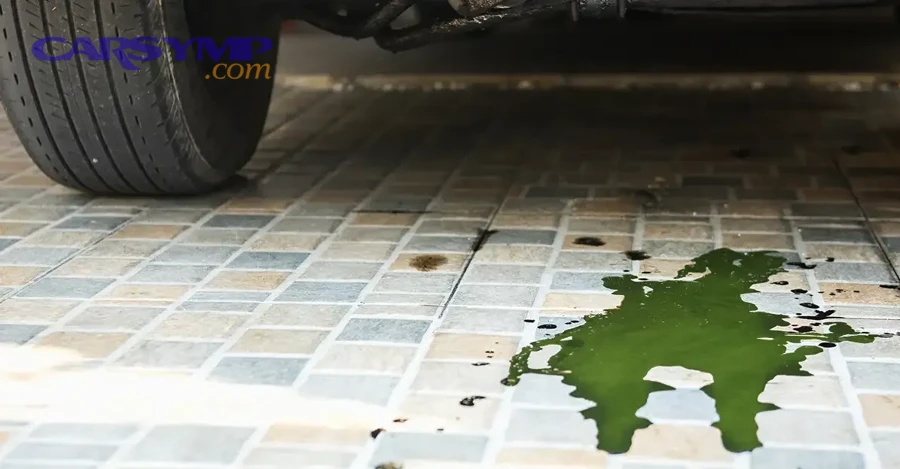
Do you have physical evidence of coolant loss (puddle, crust, sweet smell, steam)?
Yes, a real coolant leak is likely if you have physical evidence because puddles confirm external loss, dried crust confirms repeated seepage, and sweet smell/steam confirms vaporized coolant contacting hot surfaces.
Specifically, start by looking where coolant naturally collects or bakes on:
- Ground evidence: A puddle under the front of the car after parking overnight is the strongest basic clue. Use cardboard under the engine bay to map drip location.
- Dried residue (“crust”) evidence: Coolant often dries into chalky or colored crust near hose joints, radiator end tanks, thermostat housing seams, and around clamps.
- Smell evidence: A sweet smell after a drive often means coolant is landing on something hot (exhaust manifold, downpipe, turbo plumbing) and burning off.
- Steam evidence: Steam from the engine bay shortly after shutdown often indicates coolant hitting hot metal and flashing.
More importantly, if you see steam plus the temperature gauge rising, treat it as urgent—steam is not just a “symptom,” it’s an active cooling failure.
What looks different between “false warning” and “true low coolant” in the first 5 minutes of checking?
A true leak wins in “physical proof,” a sensor fault wins in “inconsistent signals,” and air pockets are optimal for “random behavior after recent service.”
However, you can separate them quickly by using a simple comparison set:
- Coolant level trend:
- True leak: Level drops measurably over hours/days.
- Sensor fault: Level looks stable at the same mark repeatedly.
- Engine bay condition:
- True leak: Wet spots or crust tracks near a seam, hose, pump, or radiator.
- Sensor fault: Dry engine bay, no tracks, but warning appears anyway.
- Warning timing:
- True leak: Warning correlates with real heat or real low level.
- Sensor fault: Warning appears at odd times (bumpy roads, turns, cold mornings) and disappears.
- Cabin heater behavior:
- True low coolant / air pockets: Heater may blow cold at idle or fluctuate.
- Sensor-only issue: Heater often remains normal unless coolant is actually low.
What is the difference between a coolant leak and an ECT/coolant-level sensor fault?
A coolant leak is physical loss of cooling fluid from the closed system, while an ECT/coolant-level sensor fault is an incorrect measurement or signal that misleads the dash and engine computer.
Next, the clean way to think about it is: a leak changes reality; a sensor fault changes your dashboard’s story about reality.
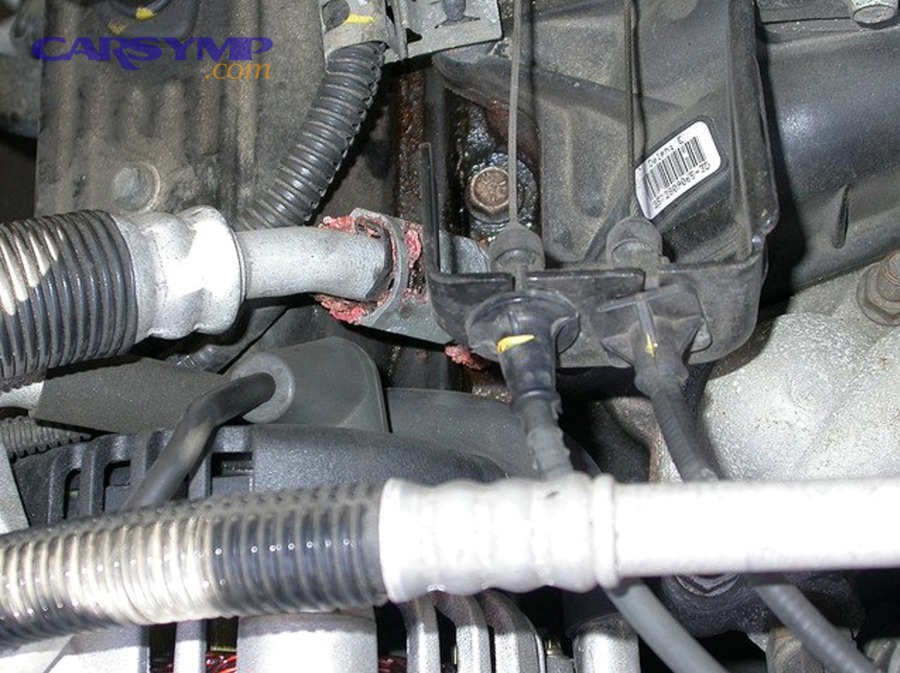
A coolant leak removes the system’s ability to carry heat away because coolant volume (and sometimes pressure) drops. A sensor fault may trigger a warning, alter fan behavior, or affect fueling strategy even when coolant volume is fine. Some failures overlap in symptoms—especially overheating—so you confirm them with tests that “can’t lie,” like pressure testing or scan-data plausibility checks.
What counts as a “coolant leak” in a closed cooling system?
A coolant leak is any unintended coolant escape—external or internal—that reduces system volume or pressure enough to impair heat transfer.
Specifically, leaks fall into two practical categories:
- External leaks (most common for DIY confirmation): coolant escapes to the ground or evaporates from hot surfaces (you may smell it more than you see it).
- Internal loss (less visible): coolant may enter the combustion chamber, oil, or exhaust stream; the ground stays dry but the reservoir keeps dropping.
A useful rule is: if the level drops and you must add fluid repeatedly, something is leaking—even if you can’t see it yet.
What does the ECT sensor do, and what does the coolant level sensor do?
The ECT sensor reports coolant temperature to the engine computer and gauge, while the coolant level sensor reports whether the reservoir/tank level is above a threshold.
To illustrate how this creates different symptom patterns:
- ECT sensor (Engine Coolant Temperature): influences fan control, gauge logic, and engine management decisions like fuel mixture during warm-up. A faulty signal can cause fans to behave oddly or the gauge to spike even when the engine isn’t truly overheating.
- Coolant level sensor: usually sits in the reservoir or expansion tank and triggers the “low coolant” warning when the level falls below a set point. A float-based sensor can stick or misread when contaminated, aerated, or electrically intermittent.
Which symptoms point to a real coolant leak (and where are the most common sources)?
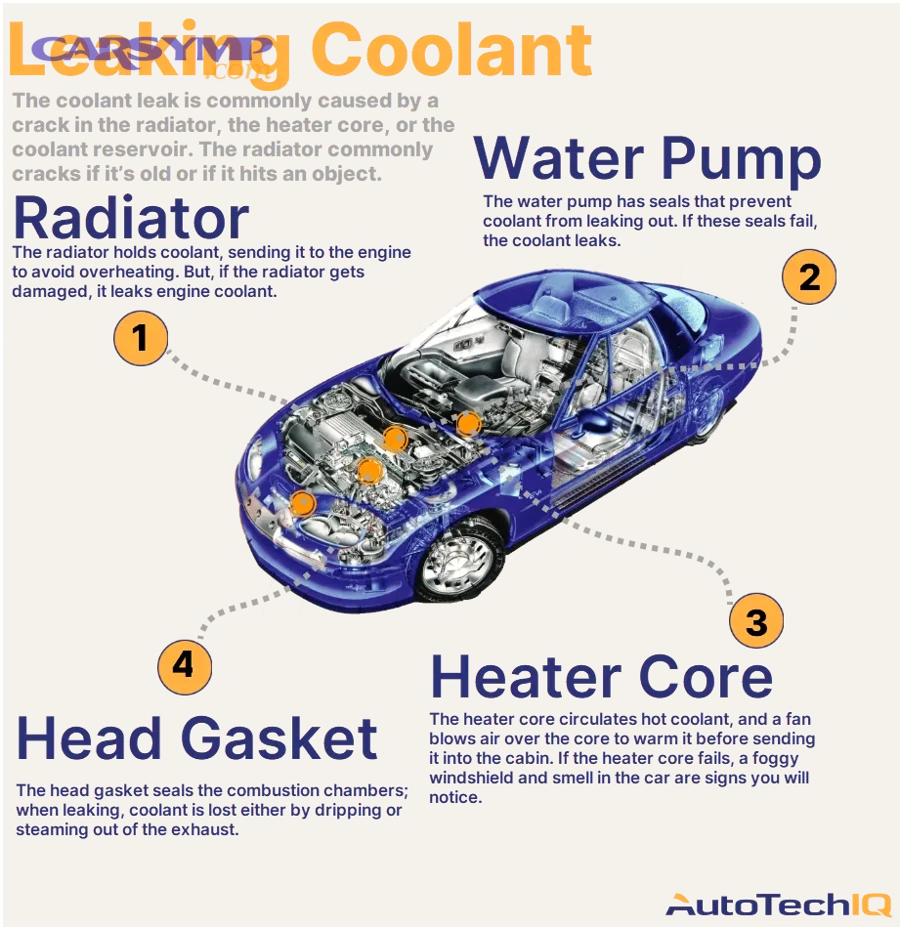
There are 10 main leak-source groups—radiator, hoses, clamps, thermostat housing, water pump, reservoir/cap, heater circuit, fittings, bleed points, and crossover pipes—based on where pressurized coolant is sealed.
Then, the leak-diagnosis advantage is that coolant leaves tracks. Your job is to start at the easiest, highest-probability track and work toward the harder, hidden ones.
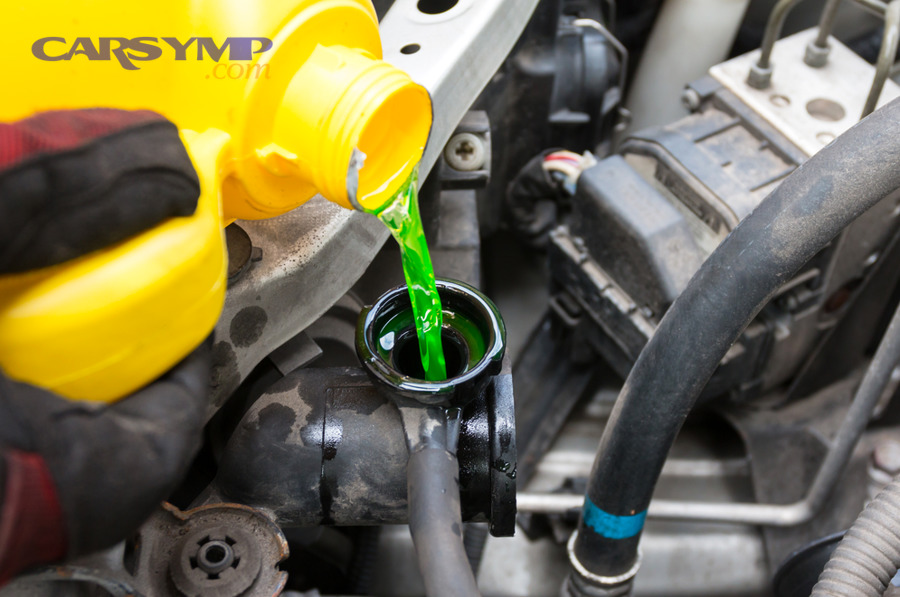
What are the most common external leak points (top 10) to inspect first?
The top 10 external leak points are: radiator end tanks, upper/lower radiator hoses, hose clamps, thermostat housing seam, water pump weep hole, reservoir seam, reservoir cap, heater hoses, quick-connect fittings, and bleed screws—based on seal count and heat exposure.
Specifically, inspect in a consistent order so you don’t miss a “simple” leak:
- Radiator end tanks and seams (plastic-to-aluminum crimp areas often seep).
- Upper radiator hose joint (high temperature, high pressure, visible).
- Lower radiator hose joint (often hidden, drips down and misleads).
- Thermostat housing seam (gasket or warped housing).
- Water pump area (look for residue under pulley; weep hole stains).
- Coolant reservoir seam and hose nipples (hairline cracks in plastic).
- Coolant reservoir cap (wrong pressure rating or worn seal can vent).
- Heater hoses and firewall connections (leaks can run down the firewall).
- Quick-connect fittings / plastic connectors (O-rings age and flatten).
- Bleed screws or service ports (tiny leaks that spray under pressure).
If you’ve been seeing a low coolant warning light, this is the section where you stop assuming it’s “just the sensor” and instead verify whether the reservoir is actually losing volume.
How do “leak while driving” vs “leak after shutdown” patterns change the likely culprit?
A leak while driving wins for hose/radiator pressure leaks, a leak after shutdown is best for heat-soak seam leaks, and a leak only when cold is optimal for shrunken seals and hairline plastic cracks.
Meanwhile, here’s how to use timing as a diagnostic clue:
- Leak while driving: sustained pressure and vibration expose weak hose connections, radiator seams, and water pump seals.
- Leak right after shutdown: heat soak spikes local temperatures, causing expansion/contraction cycles that open seams at thermostat housings, reservoirs, and plastic fittings.
- Leak only when cold: some O-rings and plastic cracks seal when hot but open when cold; you may only see drips in the morning.
This timing logic becomes extremely powerful when you combine it with one definitive tool: a cooling-system pressure test done with the engine cold.
Which symptoms point to an ECT sensor fault (not a leak)?
There are 4 main symptom clusters of an ECT sensor fault—implausible temperature readings, abnormal cooling fan behavior, inconsistent gauge movement, and driveability/fueling changes—based on how the engine computer uses temperature data.
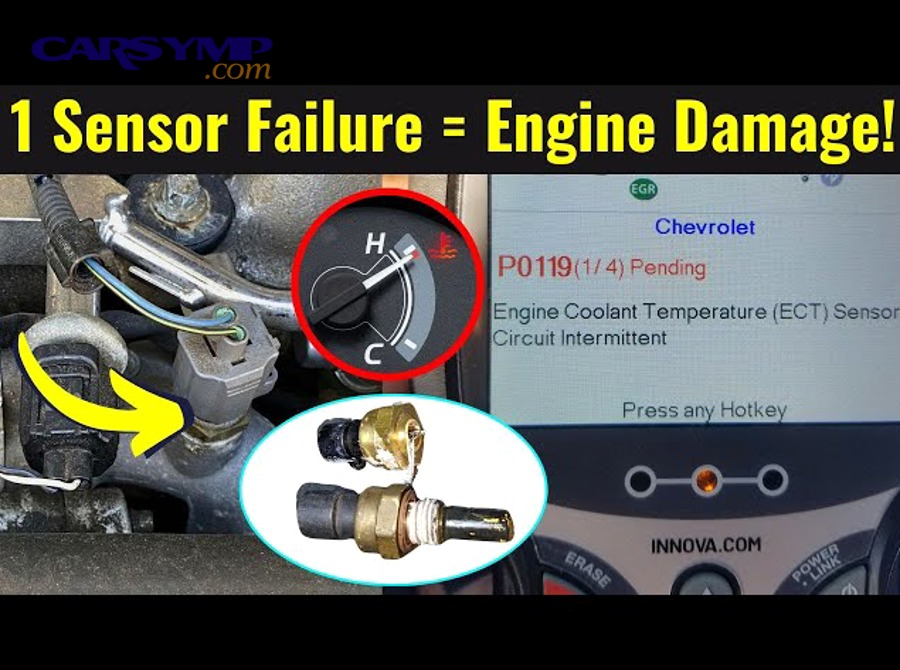
Next, because an ECT signal directly affects control logic, you look for patterns that don’t match physics, like a “fully hot” reading seconds after a cold start.
What are the telltale signs of a bad ECT sensor or wiring issue?
The clearest signs are: erratic gauge readings, fans running at full speed unexpectedly, check-engine codes related to temperature plausibility, and warm-up behavior that feels “wrong” (running rich or rough) even when coolant level is stable.
More specifically, watch for these “signal behaviors”:
- Fans run immediately at high speed on startup, even when the engine is cold. Some vehicles fail-safe the fans when the computer can’t trust the temperature signal.
- Gauge spikes or drops that happen faster than a real engine could heat/cool.
- Scan-tool ECT reading mismatch (e.g., -40°F or extremely high values often indicate circuit issues).
- Hard cold starts or rough warm-up if the sensor reads hotter/colder than reality, causing the fuel mixture strategy to misbehave.
According to a study published in Sensors (available via the U.S. National Library of Medicine’s PMC), when a coolant temperature sensor fault is simulated, the engine fan can default to running at maximum power as a protective strategy.
How can you compare scan-tool ECT readings to real engine temperature to confirm a sensor problem?
The best method is a 3-step plausibility check—cold-start baseline, warm-up curve, and infrared cross-check—to confirm whether ECT data behaves like real heat.
Then, apply it like a mini experiment:
- Cold-start baseline: After the car sits overnight, ECT should be close to ambient temperature. If ECT claims 170°F in a cold garage, the signal is wrong.
- Warm-up curve: Real engines don’t jump 80°F instantly. ECT should rise smoothly as the thermostat approaches opening temperature (varies by vehicle, often around the 180–210°F range).
- Infrared cross-check: Use an infrared thermometer on the thermostat housing or upper radiator hose area. You’re not chasing perfect accuracy—you’re checking whether ECT is plausible.
If scan-tool ECT is wildly different from the metal temperature you measure, it’s usually the sensor, connector corrosion, or wiring—not a coolant leak.
Which symptoms point to a coolant level sensor fault (false low coolant warning)?
Yes, a coolant level sensor fault can trigger a low coolant warning light even when the level is fine because (1) floats can stick, (2) reservoir contamination can confuse the sensor, and (3) wiring/connectors can create intermittent signals.
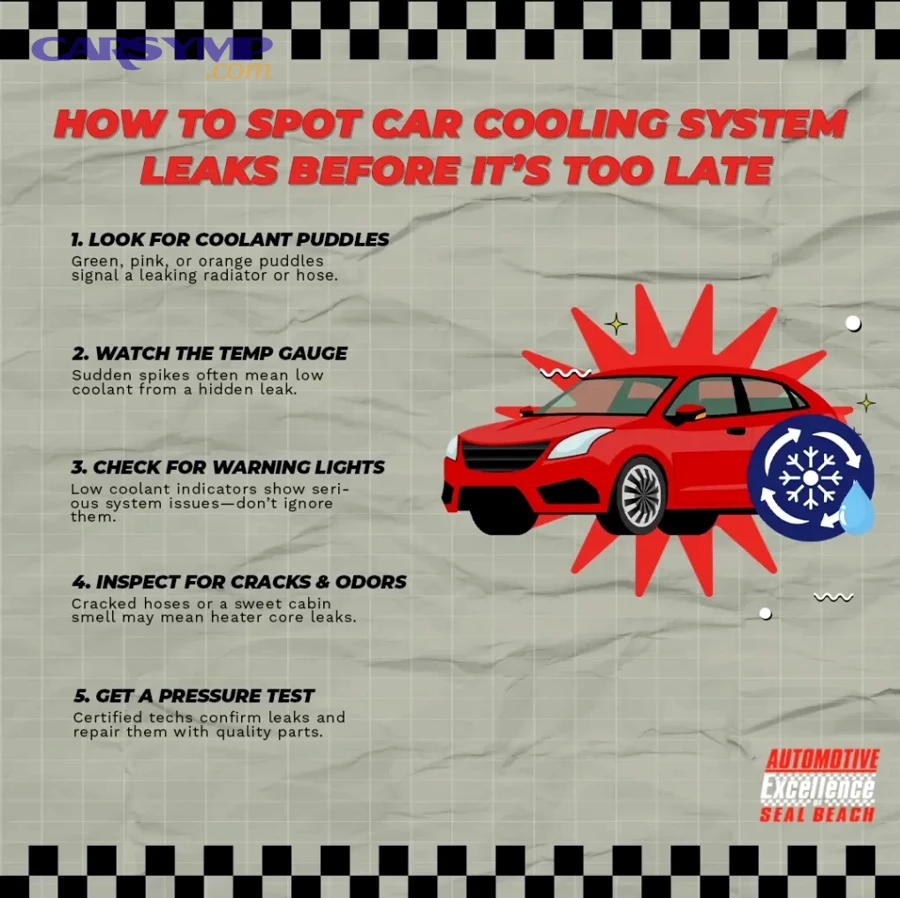
In addition, level warnings can be “true but misleading” if the cooling system has air pockets or is venting from cap issues.
Does the low-coolant warning come and go even when the reservoir level stays steady?
Yes—intermittent warnings with a stable level strongly suggest a sensor/connector/float issue because true leaks don’t fix themselves, true low coolant doesn’t disappear without adding fluid, and real loss usually leaves residue or a measurable drop.
To begin, confirm stability the right way:
- Mark the coolant level on the reservoir with a removable marker (engine cold).
- Recheck at the same cold condition for 2–3 mornings.
- If the mark doesn’t change but the warning appears randomly, suspect the sensor circuit.
This is where Coolant reservoir cap and float sensor issues become the center of the diagnosis: a cap that vents early can cause fluctuating levels, and a float sensor can stick or misread when the reservoir is dirty or aerated.
What causes false low-coolant warnings besides a bad sensor?
There are 4 common non-sensor causes—air pockets, poor bleeding after service, cap venting/pressure problems, and foaming/contamination—based on what makes the reservoir level fluctuate without real external loss.
More specifically:
- Air pockets after coolant service: trapped air can move through the system and temporarily lower the reservoir level, then “burp” back later.
- Improper bleeding procedure: some engines need a specific bleed point sequence; if not, the system can self-correct in cycles that look like random warnings.
- Cap problems: a weak cap can vent early, allowing boiling and overflow that changes the reservoir’s behavior.
- Contaminated reservoir: sludge, oil contamination, or debris can interfere with float movement and sensor readings.
If you keep topping off but the warning returns, don’t just replace the sensor—confirm whether you’re dealing with a pressure-control problem in the cap and tank.
What confirmation checks prove leak vs sensor fault (in the safest, fastest order)?
The best confirmation method is a 5-step ladder—cold level check, visual residue tracing, pressure test, UV dye, and scan-data plausibility—because each step reduces uncertainty and the later steps give definitive proof.
Next, use the ladder in order so you spend effort only when simpler checks fail.
What quick tests can you do at home without special tools?
You can do 4 quick tests—baseline level marking, overnight drip mapping, towel-wipe seam checks, and heater output observation—to detect most obvious leaks and rule out many sensor-only cases.
Then, apply them like this:
- How to check coolant level properly: Check only when the engine is cold, park on level ground, and read the reservoir at the molded “MIN/MAX” marks. If your vehicle uses a radiator cap, never open it hot—only inspect the radiator level when fully cooled and safe.
- Overnight drip mapping: Place clean cardboard under the engine bay and under the passenger side (heater core area). Drip location often points to the leak zone.
- Paper towel seam sweep: Lightly wipe around hose joints, thermostat housing seam, reservoir seam, and radiator end tanks. Coolant often shows as a slick film or colored stain.
- Heater behavior check: A heater that blows cold at idle but warms when revved can indicate low coolant or air pockets—especially after recent service.
If these quick tests show nothing but warnings persist, you move to “can’t lie” tests.
What tool-based tests give definitive proof (pressure test, UV dye, cap test, scan data)?
Definitive proof comes from pressure testing the cooling system to cap-rated pressure, adding UV dye to reveal hidden leaks, testing the radiator/reservoir cap’s ability to hold pressure, and validating ECT signals with scan data.
More specifically:
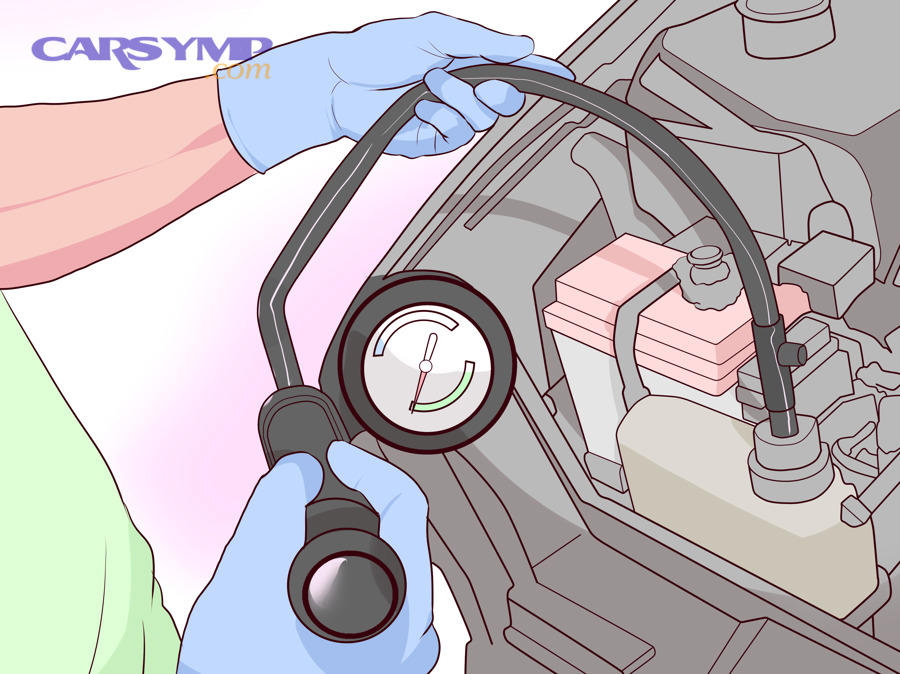
- Cooling system pressure test: You attach a hand pump tester to the radiator neck or reservoir adapter and pump to the cap’s rated pressure (printed on the cap). A stable gauge suggests no external leak; a falling gauge suggests leakage or internal loss. While it’s pressurized, inspect for fresh seepage.
- UV dye test: You add a coolant-safe fluorescent dye, drive briefly, then inspect with a UV light. Dye reveals slow leaks that evaporate before they drip.
- Cap pressure test: A cap that can’t hold pressure reduces boiling margin and can vent coolant, making you chase “mystery loss.”
- Scan-data plausibility: Compare ECT readings to ambient at cold start and to an infrared check at operating temperature.
According to a 2021 MACS technical article on cooling-system pressure and boiling point, a typical 50/50 coolant mix boils around 220°F, and increasing system pressure raises boiling point roughly 3°F per PSI, meaning a 15 PSI cap can add roughly 45°F of boiling margin.
If coolant appears to leak “from the sensor area,” is the sensor actually leaking?
No—the sensor itself is rarely the true leak source; the leak is usually the O-ring/seal, the mating surface, or the plastic/metal housing around it because seals deform, housings crack, and coolant follows gravity and airflow to create misleading wet spots.
Then, the key move is to stop looking at the wettest area and start looking for the highest, earliest wet point.
How do you tell an O-ring/seal leak from a cracked thermostat housing or reservoir near the sensor?
An O-ring leak wins for a tight wet ring at the sensor base, a cracked housing is best for seepage along a seam line, and a warped mating surface is optimal for “only leaks under pressure.”
Specifically, use a pressure test as your spotlight:
- O-ring/seal leak clues: Wetness begins exactly at the sensor’s insertion point; residue forms a halo; leak may worsen after service.
- Cracked housing clues: Wetness starts along a molded seam or hairline crack, then migrates to the sensor. Cracks often show as a thin line that “weeps” under pressure.
- Mating surface clues: The sensor seats unevenly, or residue appears on one side more than the other.
A mirror, a bright light, and a cold pressure test turn this from guesswork into a visible proof exercise.
Did the leak start right after sensor replacement or coolant service?
Yes—if the leak started right after replacement/service, installation-related causes are most likely because O-rings get pinched, incorrect sensors use wrong sealing geometry, debris prevents full seating, and over/under-torque distorts the seal.
In addition, check these “post-service” triggers:
- Wrong O-ring size or missing O-ring
- Old O-ring reused and flattened
- Sensor not fully seated (clip not engaged)
- Cracked plastic fitting during removal/installation
- Cross-threading or sealing-surface scratches
If the leak began long before any work, suspect aging plastic, hose degradation, or a slow-progressing pump or radiator seam leak.
When is it unsafe to drive, and what should you do immediately?
Yes, you should stop driving immediately if overheating is active because (1) high temperature can warp heads and damage gaskets, (2) coolant loss can become sudden and complete, and (3) continued driving can turn a small leak into catastrophic engine damage.
To better understand what “unsafe” looks like, treat the temperature gauge and steam as emergency signals, not suggestions.
Should you stop driving immediately if the temperature gauge spikes or you see steam?
Yes—stop driving if the gauge spikes, the overheat warning appears, or you see steam because steam indicates boiling coolant, spike behavior can be rapid loss of circulation, and continued load multiplies heat faster than the system can reject it.
Specifically, do the safest sequence:
- Pull over safely and turn off the A/C.
- If the gauge is climbing, stop as soon as safe.
- Let the engine cool fully before opening anything.
- Never remove a pressurized cap hot.
If the leak is severe, towing is cheaper than engine repairs.
What is a safe short-term action vs a real fix for coolant loss?
A safe short-term action is stabilizing coolant level to prevent immediate overheating, while a real fix is restoring sealing integrity (hose, clamp, radiator, pump, housing, cap, or sensor seal) so the system holds pressure and volume.
More specifically:
- Short-term actions (only to get home or to a shop): Add the correct coolant mix if available; in an emergency, add distilled water temporarily. Monitor temperature continuously and stop if it rises.
- Real fixes: Replace leaking components, replace failed caps, reseat or replace O-rings, repair cracked housings, and bleed the system properly to remove air pockets.
If you keep adding coolant and the problem returns, you haven’t fixed the cause—you’ve only delayed the consequence.
Contextual border: By now, you should be able to confirm whether you’re dealing with a true coolant leak or a sensor-related fault using triage plus at least one definitive test. Next, the supplementary section expands into less-common cases that mimic both problems and helps you rule them out quickly.
What less-common issues can mimic a coolant leak or sensor fault ?
There are 4 less-common mimics—air pockets, internal coolant loss, pressure-cap failure, and intermittent wiring corrosion—based on whether the system loses fluid, loses pressure, or loses signal reliability.
Next, these checks focus on micro-patterns that look confusing until you know what to measure and when.
How do air pockets (poor bleeding) mimic low coolant or ECT problems—and how do you confirm trapped air?
Air pockets win for intermittent heater output, fluctuating reservoir level after a refill, and temperature swings at idle, while true leaks are best for steady level decline and visible residue.
Specifically, confirm trapped air by watching for:
- Heater that alternates hot/cold at idle
- Gurgling sounds behind the dash
- Reservoir level that drops after the first heat cycle, then stabilizes
- Temperature that rises at idle but improves with RPM (pump flow pushes air through)
If symptoms appeared right after coolant service, suspect bleeding procedure first—especially on engines with bleed screws or complex routing.
What are the warning signs of internal coolant loss (combustion gases/head gasket) when no external leak is visible?
Internal coolant loss is most likely when coolant level drops repeatedly with no external evidence, the system pressurizes abnormally, and exhaust/engine oil shows contamination clues.
More specifically, look for a combination rather than a single sign:
- Persistent coolant loss with a dry engine bay
- Bubbling in reservoir during warm-up
- Sweet smell from exhaust or unusually “clean” steam-like exhaust (especially when warm)
- Oil that looks milky (not always present)
According to an SAE technical paper on cooling-system diagnostics, model-based approaches can detect and isolate cooling system failures using temperature behavior patterns over time, underscoring that abnormal thermal signatures can indicate deeper faults beyond visible leaks.
How can a failing radiator cap create “overflow” symptoms that look like a leak?
A failing cap wins for overflow residue near the cap/neck and unexplained coolant loss under heat, while a true component leak is best for localized wet tracks at hoses, seams, or the pump.
Especially, a weak cap reduces the boiling margin and can vent coolant prematurely, creating loss that looks like “evaporation” rather than dripping. If you see residue around the cap area or overflow tube without a clear leak elsewhere, test the cap or replace it with the correct pressure rating.
What maintenance steps reduce repeat coolant warnings (coolant type, mix ratio, inspection intervals)?
The best prevention is a 4-part routine—use the correct coolant spec, maintain a proper mix ratio, inspect seals and hoses on schedule, and keep the reservoir clean—because most repeat warnings come from neglected sealing surfaces and contaminated level sensing.
To sum up, prevention that supports both leak control and sensor reliability includes:
- Use manufacturer-specified coolant type (mixing types can create deposits)
- Maintain an appropriate coolant/water mix
- Inspect hoses, clamps, and plastic fittings for aging
- Keep the reservoir and float area clean if accessible
- Address small seepage early before it becomes a pressure-loss problem
Evidence sources used (each domain referenced once): PMC (Sensors journal via NLM/NIH) for fan fail-safe behavior under sensor faults; MACS for pressure/boiling-point relationships in cooling systems; SAE for cooling system failure diagnostics and thermal behavior modeling.