


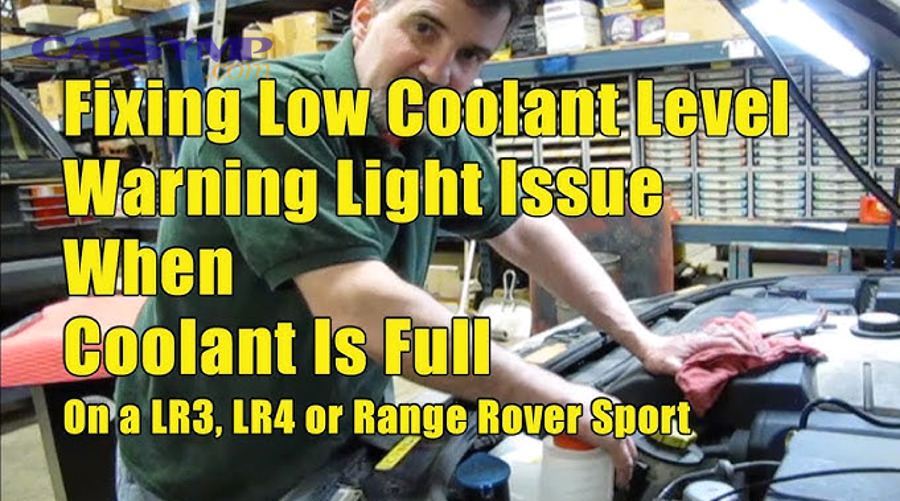
A low-coolant message can be real, but it’s often misleading when the coolant reservoir (also called the expansion tank) looks full—especially if the cap isn’t holding pressure correctly or the float level sensor is sticking. This guide helps you troubleshoot both parts safely and methodically so you can stop guessing and start isolating the actual fault.
Many drivers first notice the low coolant warning light even when the temperature gauge looks normal. That usually points to a “signal problem” (float/sensor/wiring) rather than an immediate “temperature problem,” but you still need to verify there isn’t a slow leak or trapped air that’s changing the level inside the tank.
Next, you’ll learn a practical DIY workflow to separate Coolant leak vs sensor fault diagnosis using simple observations, a short checklist, and a few safe tests—without needing expensive tools or random parts swapping.
Introduce a new idea: Once you’ve handled the core diagnosis and fixes, you’ll also see design variations (different sensor styles and cap specs) and what to do if you must top up coolant on the road, including What coolant to add in an emergency.
What does a “low coolant” warning mean when the reservoir is full?
A “low coolant” warning with a full-looking reservoir usually means the system is detecting an abnormal coolant level signal (or an unstable coolant level) rather than confirming the engine is overheating. Specifically, the warning logic is driven by what the float sensor reads at a specific location, not what you think you see through the plastic tank. More specifically, coolant expands when hot, contracts when cold, and can slosh or trap air—so “full” is not a single fixed state.
The most common reason this situation creates confusion is that the reservoir is an “expansion space,” not a simple bottle of spare coolant. The tank is designed to handle thermal expansion and to provide a place for coolant to move as the system heats up and cools down. That means you can look at the tank and see “coolant present,” yet still have a sensor that is intermittently seeing “low” because:
- The coolant is slightly below the sensor threshold when cold.
- Air pockets in the cooling system push coolant out of the sensor area temporarily.
- The float sticks (contamination) and doesn’t rise with the coolant.
- The sensor or its wiring reports the wrong state.
To keep the hook chain tight: a warning with a “full” tank does not automatically mean the warning is fake—but it does mean you should switch from topping off blindly to structured diagnosis.
Is it normal for the coolant level to look different hot vs cold?
Yes—coolant level differences hot vs cold are normal because coolant expands with heat, the system pressurizes, and the reservoir is built to show a range rather than a single “correct” fill line. Then, to reconnect this to the warning problem: if you check the level while the engine is hot, you can convince yourself it is “full,” but the sensor might be calibrated for the cold reference line.
Use these practical rules to avoid false assumptions:
- Always use the cold-engine markings (or the owner’s manual guidance) as the baseline.
- Expect the level to sit higher when the engine is fully warm and pressurized.
- If the level is below MIN when cold, it may legitimately trigger the warning even if it looks “fine” when hot.
A key safety note: never open a hot expansion tank cap. A pressurized cooling system can vent hot coolant suddenly.
What are the most common reasons the warning stays on with correct coolant level?
There are 6 main reasons the warning stays on even with correct coolant level: stuck float, failed level sensor, connector/wiring fault, air pockets after service, coolant contamination, and true slow loss (micro-leak) that drops below threshold when cold. Next, because each cause leaves different clues, you should match the symptom pattern to the likely fault.
Here’s a quick pattern map:
- Warning appears right after a turn/brake/bumps: float slosh sensitivity, float sticking, or loose connector.
- Warning appears after a coolant service: trapped air, incomplete bleeding, sensor disturbed.
- Warning is constant and immediate at startup: sensor failure, wiring fault, float stuck down, or coolant truly low when cold.
- Warning comes with dried crust around the cap/tank seam: cap sealing/pressure issue or small leak.
For context on why cooling system problems matter: a paper in the European Journal of Research Development and Sustainability notes that “30–40% of engine failures are related to cooling system malfunctions,” emphasizing how quickly small cooling-system issues can escalate if ignored. (scholarzest.com)
How do you tell if the coolant reservoir cap is causing the problem?
A coolant reservoir (expansion tank) cap problem is a sealing-and-pressure problem: the cap may not hold the correct pressure, may vent too early, or may fail to manage vacuum return—leading to coolant loss, unstable reservoir level behavior, and warnings that appear “random.” Then, because cap issues can look like sensor issues (and vice versa), you should confirm cap symptoms before blaming electronics.
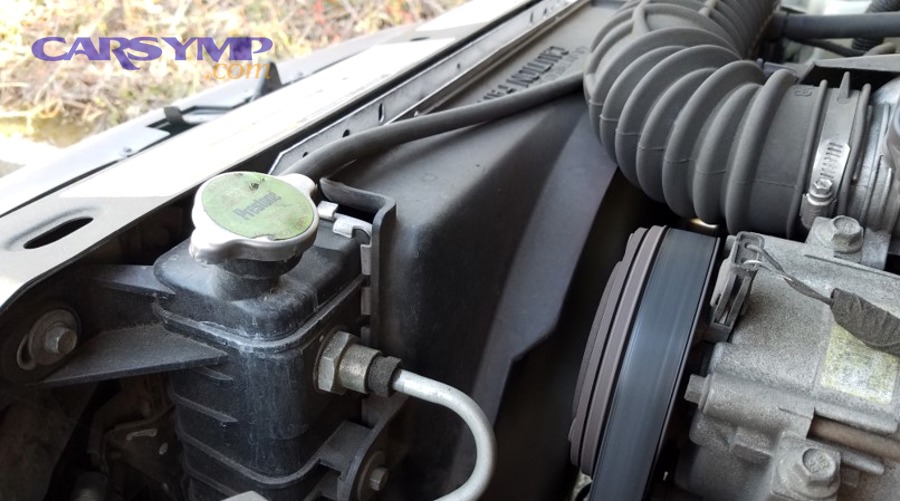
Think of the cap as a calibrated valve. Modern caps are designed to maintain a target pressure so coolant can operate at higher temperatures without boiling and to control expansion/return flow. If the cap vents early, coolant can escape as vapor or seepage, gradually lowering level—often without an obvious puddle.
A widely used rule-of-thumb is that system pressure raises boiling point significantly; automotive guidance commonly notes that a ~15 psi cap can raise boiling point by about 45°F, which is part of why the cap is critical to stable operation. (help.summitracing.com)
Does a bad coolant cap cause low coolant warnings?
Yes—a bad coolant reservoir cap can cause low coolant warnings for at least three reasons: it can allow slow coolant loss, it can create pressure instability that changes reservoir level at the sensor, and it can introduce air pockets as coolant is lost and replaced by air. However, the cap rarely causes a “purely electrical” false warning by itself; it causes a physical condition (loss/level instability) that the sensor then reports.
Practical ways a cap triggers the warning:
- Slow venting/seepage: coolant level gradually drops below the sensor threshold when cold.
- Boil-off under load: if pressure is low, hot spots can create vapor, pushing coolant out and leaving level low later.
- Vacuum return problems: some caps help coolant return as the system cools; failure can leave the reservoir level abnormal after cooldown.
This is why a cap should be treated as a functional component, not a decorative lid.
What symptoms point to a failing cap vs a failing float sensor?
Cap wins the “leak/pressure” symptom set, sensor wins the “signal-only” symptom set. Next, use the comparison below to decide what to inspect first:
Symptoms that point more toward the cap (pressure/seal):
- Dried coolant crust or wetness around the cap threads/neck
- Sweet coolant smell after driving
- Dampness around the expansion tank seam or overflow area
- Hissing/venting noises (when cooling down)
- Level slowly drops over days/weeks
- Warning appears with heavy load or long uphill drives
Symptoms that point more toward the float sensor (signal):
- Low coolant warning light appears even with stable cold level and no evidence of leaks
- Warning is intermittent and triggered by bumps/turns
- Warning comes back immediately after clearing
- Temperature stays normal and cabin heater output is normal
- Wiggling the connector changes the warning behavior
If you’re unsure, don’t guess—use the step-by-step workflow later in this article to confirm which category your symptoms match.
What symptoms indicate a stuck float or faulty coolant level sensor?
A stuck float or faulty coolant level sensor usually presents as a warning that does not correlate with actual coolant loss or overheating, because the sensor reports “low” even when coolant is present. Specifically, the sensor’s job is simple (detect level threshold), so a mismatch between the warning and real coolant behavior is your biggest clue.
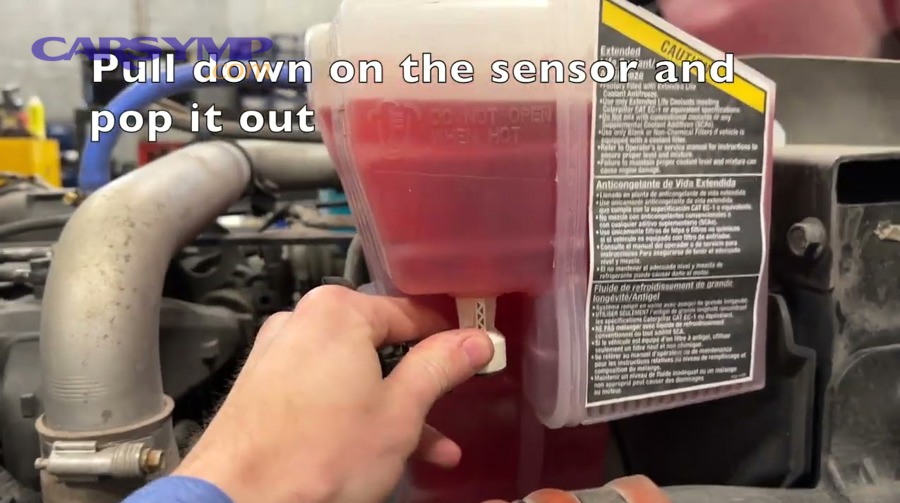
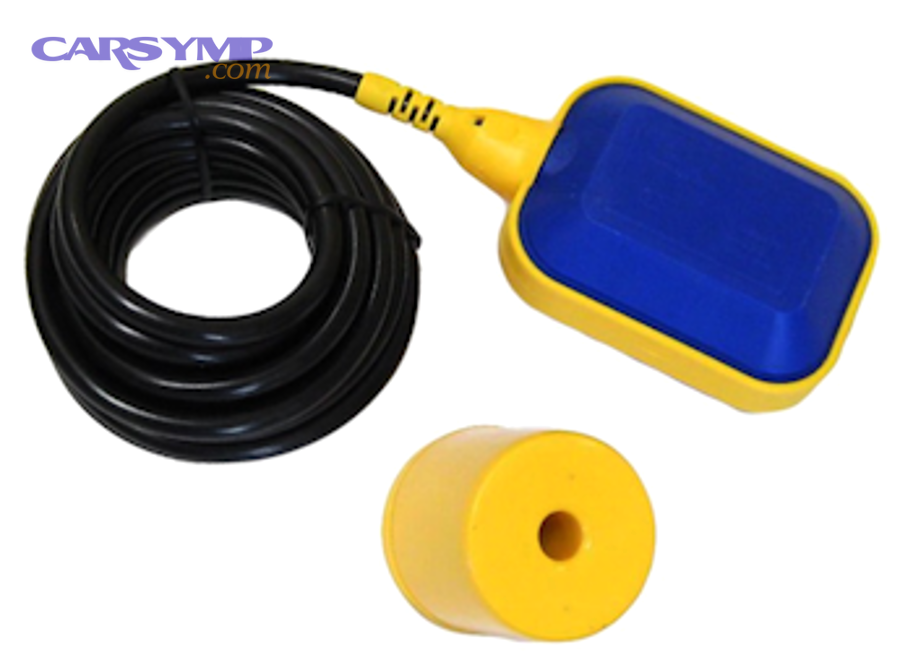
Many systems use a float with a magnet and a reed switch (or a similar “on/off” threshold design). If the float cannot move freely—because of deposits, swelling, or mechanical binding—the sensor may read “low” all the time. If the wiring or connector is compromised, the vehicle may interpret the circuit as “low coolant” as a failsafe.
Is an intermittent warning during turns/braking a sign of a float issue?
Yes—an intermittent warning during turns/braking is often a float issue for at least three reasons: coolant slosh temporarily drops the level at the sensor, a sticky float lags behind the real level, or the float/sensor is positioned so marginal level changes cross the threshold during movement. Then, because movement-triggered warnings can also be “low coolant when cold,” you should confirm cold level and repeatability.
Here’s the logic that ties the symptom to the mechanism:
- During braking/turning, coolant shifts inside the reservoir.
- If your cold level is only slightly above MIN, the shifting can momentarily expose the sensor threshold.
- A float that is slightly sticky might “hang” low for a second longer than it should, long enough to trigger the warning.
- If the system is aerated (air bubbles), the sensor may see foam or inconsistent liquid contact.
A simple driver test: note whether the warning tends to appear at the same ramps, turns, or braking zones. Consistency often points to slosh + threshold behavior rather than random electrical failure.
What are the telltale signs of connector/wiring problems at the sensor?
There are 5 common telltale signs of connector/wiring problems at the sensor: corrosion, moisture intrusion, loose pins/poor fit, wire insulation damage, and warning changes when the harness moves. Next, because wiring faults can imitate a “bad sensor,” focus on physical inspection before replacement.
- Green/white crust on terminals (oxidation/corrosion)
- Damp connector cavity (coolant seepage or condensation)
- Broken locking tab causing intermittent contact
- Chafed harness against brackets or the fan shroud
- Evidence of previous repair splices (sometimes done poorly)
If you gently move the harness (engine off, cold), and the warning behavior changes on the next key cycle, that’s a strong hint you’re dealing with an intermittent connection rather than a float that is physically stuck.
How can DIY car owners troubleshoot cap and float sensor issues step-by-step?
The best DIY method is a 7-step troubleshooting workflow that starts with cold-level verification and visual leak checks, then isolates cap behavior, then tests the sensor and wiring, and finally confirms the fix with a repeatable drive-cycle check. To better understand the root cause, follow the steps in order—because skipping ahead creates false conclusions.
Step 1: Verify the level when cold (baseline).
- Engine completely cold.
- Level should be at the cold mark (often MIN-to-MAX band).
- If it’s below MIN when cold, top up properly and continue diagnosis (don’t stop here).
Step 2: Look for obvious external leaks and residue.
- Cap neck, tank seam, hose connections, radiator end tanks.
- Dried crust is a leak “history marker.”
Step 3: Inspect the cap sealing surfaces.
- Check the rubber seal for cracks, flattening, or hardening.
- Check the neck threads and seating surface for damage.
Step 4: Observe coolant quality and tank cleanliness.
- Heavy sludge, oily film, or gritty deposits can cause float sticking.
- Milky coolant can signal contamination (requires deeper diagnostics).
Step 5: Inspect the sensor connector and harness.
- Look for corrosion, looseness, chafe points.
Step 6: Perform a simple isolation test (vehicle-dependent).
- Many systems respond predictably when the sensor is unplugged (often defaults to “fault/low”); others behave differently.
- The key is consistency: does the warning change logically with connection state?
Step 7: Confirm with a repeatable re-check.
- After any fix (cap, sensor, cleaning), re-check cold level next morning.
- Monitor for warnings across several trips.
To make this workflow easier to apply, the table below summarizes symptom patterns and what they usually indicate.
| Symptom pattern you observe | Most likely category | What to check first | Why it matters |
|---|---|---|---|
| Level drops slowly over days; crust near cap | Cap/seal or micro-leak | Cap seal + tank neck + seams | Loss reduces cold level below sensor threshold |
| Warning on turns/braking; level near MIN cold | Marginal level / slosh | Cold level + bleed/air check | Slosh crosses sensor threshold |
| Warning constant; no leak signs; temps normal | Sensor/float or wiring | Connector + sensor function | Signal mismatch suggests detection issue |
| Warning after coolant service | Air pocket / disturbed sensor | Bleeding + connector seating | Air changes sensor reading and circulation |
This “Coolant leak vs sensor fault diagnosis” approach keeps you from replacing parts blindly.
Can you safely check the reservoir cap and level without burning yourself?
Yes—you can safely check the reservoir cap and level if you follow at least three safety rules: only work on a cold engine, relieve pressure cautiously, and keep hands/face out of the cap’s vent path. Next, because coolant systems can remain pressurized long after shutdown, treat “warm” as unsafe unless you’re absolutely sure pressure is gone.
- Wait for full cooldown (ideally several hours).
- Use a thick rag over the cap and turn slowly to the first stop (if your cap design has one).
- If you hear hissing, stop and wait—pressure is still present.
- Never lean over the cap while opening.
What is the fastest diagnostic checklist to isolate cap vs sensor vs coolant level?
There are 8 fastest checks to isolate the fault: cold level, leak residue, cap seal condition, tank neck condition, level stability after cooldown, coolant cleanliness, connector condition, and warning behavior changes with harness movement. Then, because speed matters on the roadside, this checklist is designed for minimal tools.
- Cold level at the correct mark?
- Any wetness/crust around cap or tank seam?
- Cap seal intact and flexible?
- Tank neck seating surface smooth, not cracked?
- Level changes abnormally after a drive and full cooldown?
- Coolant looks clean (no heavy deposits)?
- Connector dry and tight, no corrosion?
- Harness movement doesn’t affect behavior?
If checks #1–#4 show issues, prioritize the cap/tank sealing path. If #6–#8 show issues, prioritize float sensor/wiring.
How do you test the coolant level sensor/float without special tools?
You can test the coolant level sensor/float without special tools by using three practical checks: confirm the float can move freely (if accessible/visible), inspect for contamination that would bind it, and verify connector integrity and repeatable warning behavior across key cycles. More specifically, the goal is to confirm whether the sensor system changes state logically with level changes and physical movement.
- Visual float behavior (if visible): some tanks show the float guide; deposits can be obvious.
- Cleanliness check: slime or crust suggests the float may stick; cleaning or tank replacement may be needed.
- Connector check: reseat the connector; look for bent pins; apply dielectric grease only if appropriate and connector is dry.
- Repeatability check: warnings that appear/disappear in a consistent pattern after reseating or harness repositioning strongly suggest connection issues.
What are the fixes for coolant reservoir cap and float sensor problems?
There are 5 main fix paths for coolant reservoir cap and float sensor problems: top up correctly, replace the cap with the correct spec, clean deposits that cause float sticking, repair connector/wiring faults, and replace the sensor or reservoir when the design requires it. Next, because the “right fix” depends on the confirmed cause, match the fix to the symptom pattern rather than replacing everything at once.
- If cold level is low: correct top up + inspect for leaks.
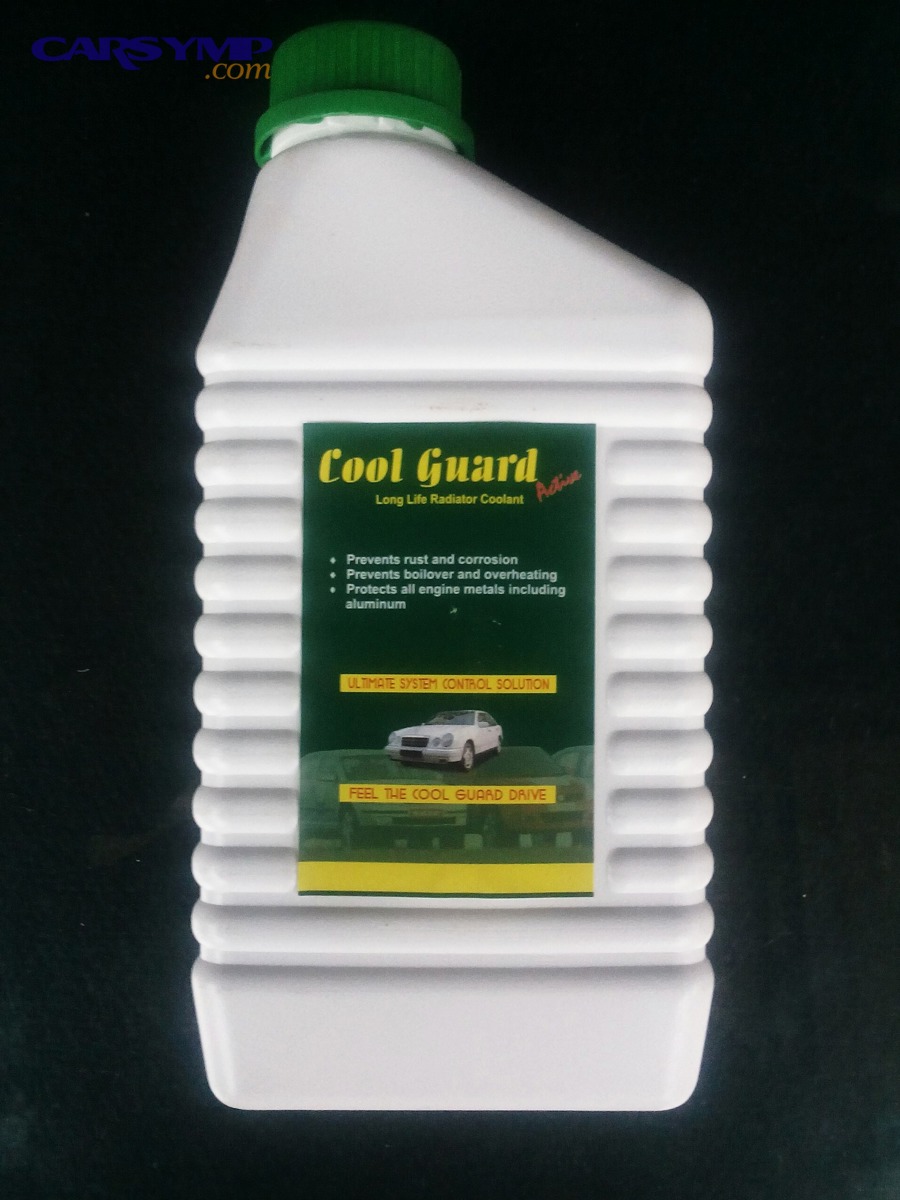
- If the cap seal is compromised: replace the cap with the correct pressure rating.
- If deposits are visible and the float sticks: clean or replace the reservoir depending on design.
- If wiring shows damage: repair the harness properly and secure routing.
- If the sensor is internally failed: replace sensor or reservoir assembly.
A cap fix is often overlooked because it feels “too easy,” but cap pressure is fundamental to stable cooling operation. Manufacturer-style explanations emphasize the cap’s role in boiling point elevation and vacuum prevention, which is why a weak cap can create chronic borderline conditions instead of dramatic overheating. (motorad.com)
Should you clean the reservoir/float area or replace the tank?
Cleaning wins when contamination is light and the reservoir structure is healthy, while replacement is best when the tank is aged, cracked, heavily contaminated, or uses an integrated sensor/float design that can’t be serviced reliably. However, because plastic tanks degrade with heat cycles, a “clean-only” approach may be temporary on older vehicles.
Clean first when:
- Coolant is generally clean and you only see mild residue
- The tank is not discolored/brittle
- There’s no cracking around the neck or seams
- The design allows access without damage
Replace the tank when:
- The plastic is browned/brittle or shows hairline cracks
- The neck sealing surface is worn or warped
- Sludge/oily film suggests persistent contamination
- The sensor is integrated and not removable
- You’ve already cleaned and the warning returns predictably
If your warning pattern is “intermittent with motion,” cleaning may restore float movement—but only if the root cause is deposit binding rather than an electrical fault.
When should you replace the cap, and what must match (pressure rating/fit)?
You should replace the cap when it cannot seal reliably, vents early, shows a damaged seal, or is the wrong pressure specification—and the replacement must match at least three factors: correct pressure rating, correct thread/lock fit, and correct vent/vacuum function for your vehicle. Then, because “close enough” caps create repeat issues, always match the spec rather than choosing by appearance.
- Hardened or split rubber seal
- Coolant crust on the cap underside or neck
- Persistent odor/wetness around the cap area
- Unexplained coolant loss with no other leak evidence
Why pressure rating matters (in plain terms): higher system pressure raises the coolant boiling point and helps prevent localized boiling. Guidance commonly notes the rough relationship between cap pressure and boiling point increase, showing why an incorrect cap can cause boil-over or instability earlier than expected. (help.summitracing.com)
How do you confirm the repair is successful after replacing cap/sensor?
You confirm success by verifying stable cold level for several mornings, checking that the low coolant warning light does not reappear across multiple drive cycles, and confirming there are no new leak traces around the cap, reservoir seams, or hose connections. In short, the fix is proven when the symptom is gone and the underlying condition (level stability/sealing) is stable.
- Day 1 (after fix): drive to operating temperature, park, let fully cool, recheck cold level next day.
- Day 2–3: monitor for warnings on typical routes (including turns/braking that used to trigger it).
- End of week: inspect for crust/wetness and verify level hasn’t drifted downward.
If the warning returns immediately after a cap replacement and level is stable, shift focus to the float sensor and wiring rather than repeating cap swaps.
Is it safe to drive with a low coolant warning if the reservoir looks full?
It depends—but you should treat it as unsafe to continue driving if you see any overheating symptoms, because the same warning that is “just a sensor” can also be the first sign of real coolant loss. More importantly, you need to watch Overheating risk signs to monitor before deciding the next move, because overheating damage can occur quickly once cooling fails.
A research paper associated with Kharkiv National Automobile and Highway University reports that thermal damage to a cylinder head can be possible within seconds after sudden cooling failure in emergency conditions, highlighting how fast the situation can deteriorate if the coolant is actually gone. (researchgate.net)
Should you stop driving immediately if the temperature is normal?
No, not always—but you should stop driving immediately if the low coolant warning light is accompanied by any overheating indicators, and you should drive only short distances cautiously if temperature is stable, the heater is hot, and you have no leak signs. Then, because temperature gauges can lag in some failure modes, you should keep your threshold conservative.
A safe “continue briefly” scenario looks like this:
- Temperature needle stays in its normal zone
- Cabin heater blows consistently hot air
- No steam, no coolant smell, no visible leak
- Warning is intermittent and you’re close to a safe stop
A “stop now” scenario looks like this:
- Temperature rises above normal
- Heater output turns cool at idle (possible low coolant circulation)
- Steam, sweet smell, or visible coolant spray
- Warning is constant and you suspect the system is truly low
What warning signs mean you’re risking overheating even with a full reservoir?
There are 7 key warning signs you’re risking overheating even with a full reservoir: rising temperature gauge, steam, sweet smell, loss of heater heat, gurgling/bubbling sounds, coolant dripping after shutdown, and repeated warnings that worsen under load. Next, because overheating can destroy gaskets and warp components, treat these signs as immediate action triggers.
- Rising gauge: heat is not being removed effectively.
- Steam: coolant may be boiling or leaking onto hot parts.
- Sweet smell: coolant is escaping and vaporizing.
- Heater goes cold: coolant may be low or air-locked, reducing flow.
- Gurgling: air pockets or boiling in the system.
- Drips after shutdown: pressure release reveals leaks.
- Worsens under load: the system cannot manage peak heat.
If you must top up on the roadside, your priority is preventing overheating, not achieving the “perfect” mixture.
What coolant to add in an emergency:
- Best: the correct premixed coolant specified for your vehicle.
- Good: the correct concentrate mixed with distilled water (if available).
- Acceptable in a true emergency: clean water to reach a safe level and prevent overheating—then correct the mixture as soon as possible.
Avoid mixing unknown coolant types if you can (different chemistries can reduce corrosion protection), and never add cold fluid to a severely overheated engine; let it cool first.
How do coolant reservoir cap and level sensor designs vary across vehicles (and why it changes the fix)?
Coolant reservoir cap and level sensor designs vary by sensor technology, reservoir architecture, and cap pressure specification—so the same symptom can require a different part strategy (cap-only, sensor-only, or full tank replacement) depending on your vehicle. In addition, design differences explain why one car lets you replace a cheap sensor, while another forces you to replace the entire expansion tank.
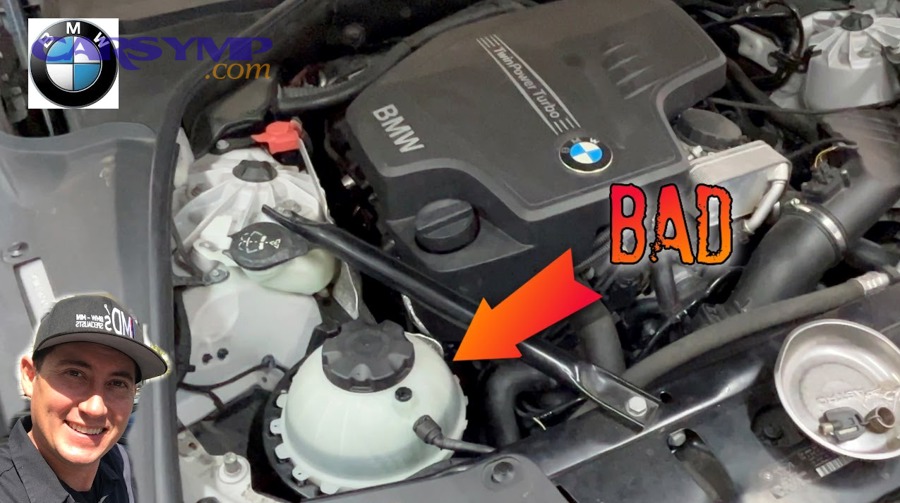
Some systems use a simple magnetic float switch, others use conductivity-based sensing, and some integrate the sensor into the reservoir body. The more integrated the system, the more likely “replace the tank” becomes the reliable fix.
What types of coolant level sensors exist (float magnet, electrodes, integrated modules)?
There are 3 main types of coolant level sensors: magnetic float switches, electrode/conductivity sensors, and integrated level modules—classified by how they detect liquid presence and how serviceable they are. Next, use the type to predict the failure mode.
- Magnetic float switch (common):
- Pros: simple, cheap, reliable when clean
- Failures: float sticks, magnet weakens, switch fails, deposits bind float
- Electrode/conductivity sensor:
- Pros: fewer moving parts
- Failures: contamination changes conductivity; corrosion on probes; false readings in aerated coolant
- Integrated module:
- Pros: compact packaging, sometimes better diagnostics
- Failures: replacement cost higher; module failure forces reservoir replacement
What’s the difference between OEM vs aftermarket caps and why can the wrong one cause repeat issues?
OEM caps win on exact pressure calibration and vehicle-specific vent/vacuum behavior, while aftermarket caps can be best for budget only when they match the exact spec and quality—otherwise the wrong cap is a repeat-problem generator. However, because cap pressure and sealing tolerances matter, a “fits” cap is not the same as a “correct” cap.
- Pressure rating too low → early venting and boil-over tendency
- Poor seal material → slow seepage and crust buildup
- Incorrect geometry → imperfect seating on the neck
If you replaced a cap and the symptom changed (even slightly), that’s a clue you were in the right neighborhood—but you still need the correct spec to finish the job.
Why do some cars require reservoir replacement instead of just replacing the sensor?
Some cars require reservoir replacement because the sensor is molded into the tank, the float channel is internal and non-serviceable, or the sealing surfaces and plastic degrade together—making partial repair unreliable. More importantly, a reservoir can become the failure point when the neck warps or the seam begins to seep, which no new sensor can fix.
- The neck sealing surface is damaged
- The plastic is brittle/discolored and heat-cycled
- The tank has hairline cracks that only leak under pressure
- The level sensor is integrated and not removable
What rare edge cases can mimic cap/sensor failure (air pockets, contamination, wiring chafe)?
Rare edge cases include trapped air after service, coolant gel/sludge that intermittently binds the float, and harness chafe that creates an intermittent “low” signal—each of which can perfectly mimic a bad cap or bad sensor. Especially when the problem appears “after a repair,” you should suspect these micro-faults first.
- Air pockets: warning after coolant drain/refill, gurgling sounds, unstable heater output
- Fix: proper bleeding (vehicle procedure matters)
- Contamination/gel: float sticks, sludge visible, warning comes and goes with temperature
- Fix: flush/clean/replace depending on severity
- Wiring chafe: warning changes with vibration or harness movement
- Fix: inspect routing points and repair insulation/pins
If you apply the earlier workflow and still get conflicting results, the most reliable next step is to follow the vehicle-specific bleeding and test procedure from the service manual—because that’s where design differences matter most.