


An accurate oil change cost estimate is a range you can predict before you book, based on your oil type, oil capacity, filter choice, labor rate, and the fees your shop adds—so you can budget and avoid “surprise” line items.
Next, you’ll see how a typical estimate is built from the same core parts (oil + filter + labor + fees), so you can tell whether a quote is complete, comparable, and truly “out the door.”
Then, we’ll break down average price ranges by oil type and explain why the same service can swing widely depending on vehicle requirements, shop type, and location.
Introduce a new idea: once you can calculate and compare estimates, you can also reduce your total cost without cutting corners that protect your engine.
What is an oil change cost estimate and what does it usually include?
An oil change cost estimate is a pre-service price range for replacing engine oil and the oil filter, built from parts, labor, and fees so you can predict your total cost before you commit.
Next, because estimates often differ in what they include, the fastest way to avoid overpaying is to understand the exact line items that should appear.
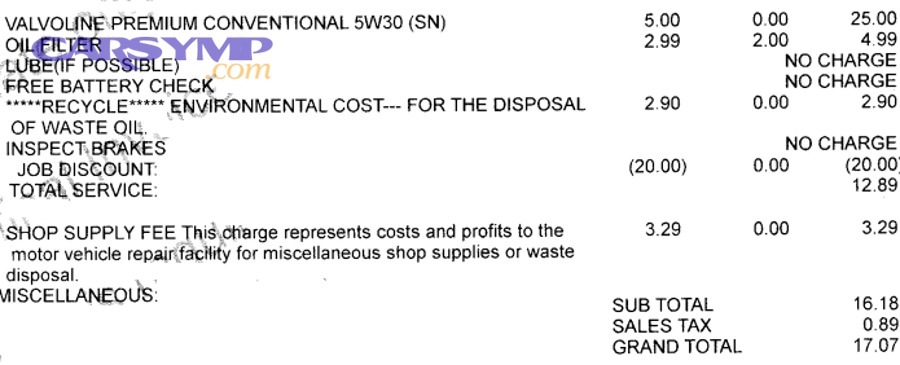
Does an oil change estimate usually include labor, oil filter, and disposal fees?
Yes—a proper oil change cost estimate should include labor, the oil filter, and disposal/environmental fees, because those are the core components of the service; when it doesn’t, you’re likely comparing incomplete numbers for at least three reasons.
Then, once you know what “should” be included, you can ask one question that turns an unclear quote into a usable estimate: “What is the out-the-door total including tax and fees?”
Reason 1: Labor is the service, not an optional add-on.
Labor covers raising the vehicle, draining old oil, replacing the filter, refilling with the correct quantity, checking for leaks, and documenting the service. Even in “express” shops, labor is real—it’s just embedded into a package price. If a quote separates labor later, the initial “price” can look cheaper than it truly is.
Reason 2: The oil filter is part of the job’s minimum standard.
A filter holds contaminants that the oil carries. Reusing an old filter undermines the purpose of the service. Many shops quote a base filter, but may upsell to an OEM or extended-life filter; that’s fine—what matters is that the estimate states which filter level it assumes.
Reason 3: Disposal fees are common and predictable.
Used oil and filters must be handled properly. Many invoices include an environmental/disposal fee or a shop-supplies fee. If a quote is “starting at $X” but fees are TBD, your out-the-door total will be higher than expected.
How to make any quote comparable in 20 seconds
Ask the shop to confirm these items in writing (or repeat them back on the phone):
- Oil type and viscosity the estimate assumes (example: 0W-20 full synthetic)
- Oil quantity (quarts) included before “additional quart” charges
- Filter type included (standard, OEM, extended-life)
- Labor included (yes/no)
- Fees included (disposal, shop supplies) and whether tax is included
Evidence: According to a study by AAA’s Approved Auto Repair network, in 2017, the average cost of a conventional oil change was $38 while a synthetic oil change averaged $70, and DIY costs were also higher for synthetic than conventional. (newsroom.aaa.com)
What line items make up the “price” of an oil change invoice?
There are 4 main groups of line items in an oil change invoice—parts, labor, fees/taxes, and optional add-ons—based on what is required to complete the service versus what is extra.
To better understand why two “oil change” prices can look similar but total differently, it helps to map each quote to the same structure.
Here’s what the line items typically include:
1) Parts (what goes into the vehicle)
- Engine oil (priced by type and often by quart)
- Oil filter (standard vs OEM vs extended-life)
- Drain plug gasket/washer (sometimes a small extra, sometimes included)
2) Labor (what the technician does)
- Drain and refill service
- Filter replacement
- Quick inspection checks (varies by shop)
3) Fees and taxes (what the shop must charge or chooses to charge)
- Disposal/environmental fee
- Shop supplies fee (rags, cleaners, etc.)
- Sales tax (varies by state and what’s taxable)
4) Optional add-ons (what increases the total)
- Air filter / cabin filter replacement
- Wiper blades
- Fluid top-offs beyond what’s included
- “Engine flush” style services (often unnecessary for many vehicles)
- Tire rotation bundle (sometimes a good deal if you need it anyway)
If you want a quote that behaves like a true “estimate,” the key is to get clarity on which items are already included and which are “if needed.”
How much does an oil change cost on average for conventional, synthetic blend, and full synthetic?
There are 3 main oil-change price tiers—conventional, synthetic blend, and full synthetic—based on oil formulation, and each tier has a typical cost range that shifts with your vehicle’s oil capacity and your local labor rate.
More specifically, once you anchor the tier ranges, you can quickly tell whether a quote is “normal,” “promo,” or “missing items.”
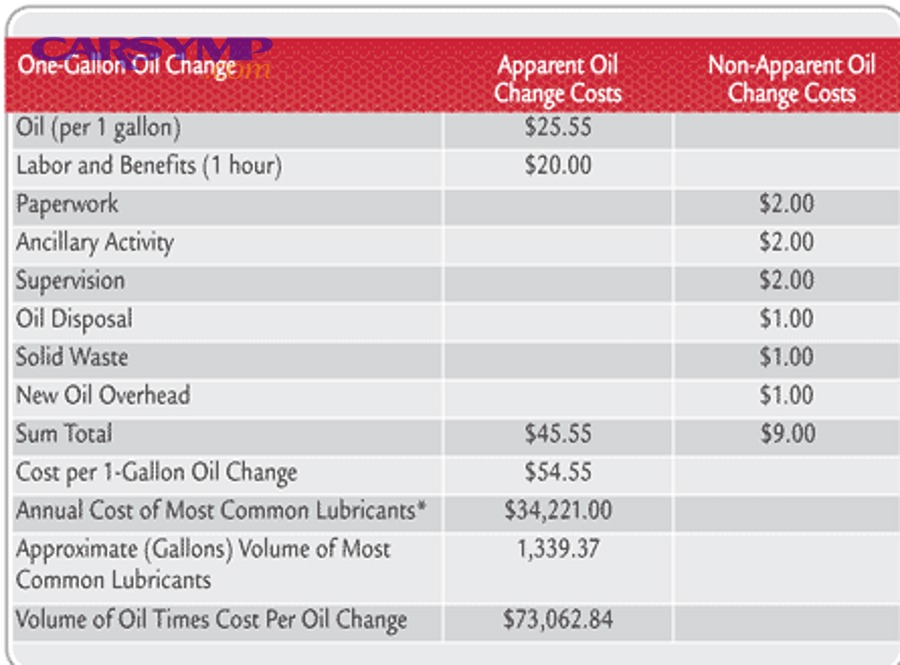
What is the average price range for a conventional oil change vs synthetic blend vs full synthetic?
Conventional wins for lowest upfront cost, synthetic blend is best for middle-ground pricing, and full synthetic is optimal for longer intervals and performance needs, so your best tier depends on what your engine requires and how you value time between services.
However, a “Synthetic vs conventional oil comparison” only works if you compare equivalent quotes—same oil quantity, similar filter quality, and the same fee assumptions.
Typical ranges you’ll see in the market
- Conventional oil change: often $35–$75 in many areas when priced as oil + filter service. (kbb.com)
- Full synthetic oil change: often $65–$125 (sometimes higher for premium specs or large capacities). (kbb.com)
Where does synthetic blend land?
Many shops price synthetic blend between conventional and full synthetic. The exact numbers vary by region and shop type, but if a full synthetic quote is only slightly higher than blend, full synthetic may deliver better value—especially if your manual recommends it.
Why “average” isn’t one number
Even when two people both say “I paid $80,” one might have:
- A 4-quart engine with easy access
…and the other might have:
- A 7–9 quart engine, a skid plate, and a premium filter
So the practical way to use averages is to treat them like a range, then adjust based on your inputs.
Evidence: According to a study by RepairPal, in January 2026, the average cost for an oil change was between $142 and $170 (not including taxes/fees and location variance), showing how vehicle and market factors can shift totals beyond “promo” pricing. (repairpal.com)
How does oil capacity (quarts) change the estimate?
Oil capacity changes your estimate because the total cost scales with the number of quarts required, so higher-capacity engines raise parts cost even when labor stays similar.
For example, once you know your capacity, you can predict the “extra quart” effect that often turns a good-looking base price into a higher invoice.
Why capacity matters in real invoices
- Many advertised prices assume 4–5 quarts
- Larger engines, trucks, performance models, and some turbo setups may need 6–10+ quarts
- Shops may charge:
- a higher package price for “up to X quarts,” or
- a base package + “each additional quart”
How to estimate the capacity impact quickly
- Find your oil capacity in the owner’s manual (or a reliable service guide).
- Ask the shop: “How many quarts does your package include?”
- Multiply the extra quarts by the shop’s per-quart price.
A practical rule
- If your vehicle needs 2 extra quarts and the shop’s per-quart charge is meaningful, your total can rise quickly—even though the advertised price looked competitive.
This is also where Choosing correct oil viscosity matters: if your engine requires a specific viscosity or manufacturer approval, the per-quart price may be higher than generic bulk oil.
What factors most increase or decrease an oil change cost estimate?
The biggest cost drivers are oil type/spec, oil capacity, shop type, and local labor/fee structure, so the same oil change can be inexpensive in one context and pricey in another.
Moreover, once you rank the drivers, you can control the ones you actually influence—like where you go, what’s included, and whether you accept add-ons.
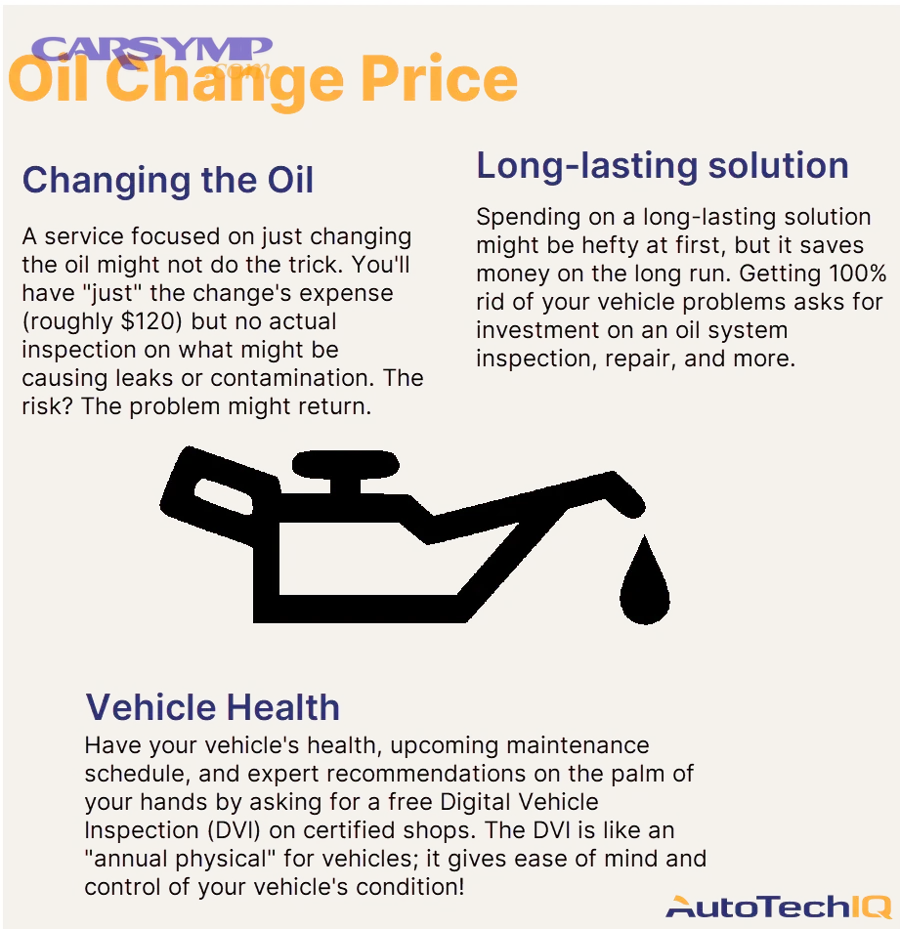
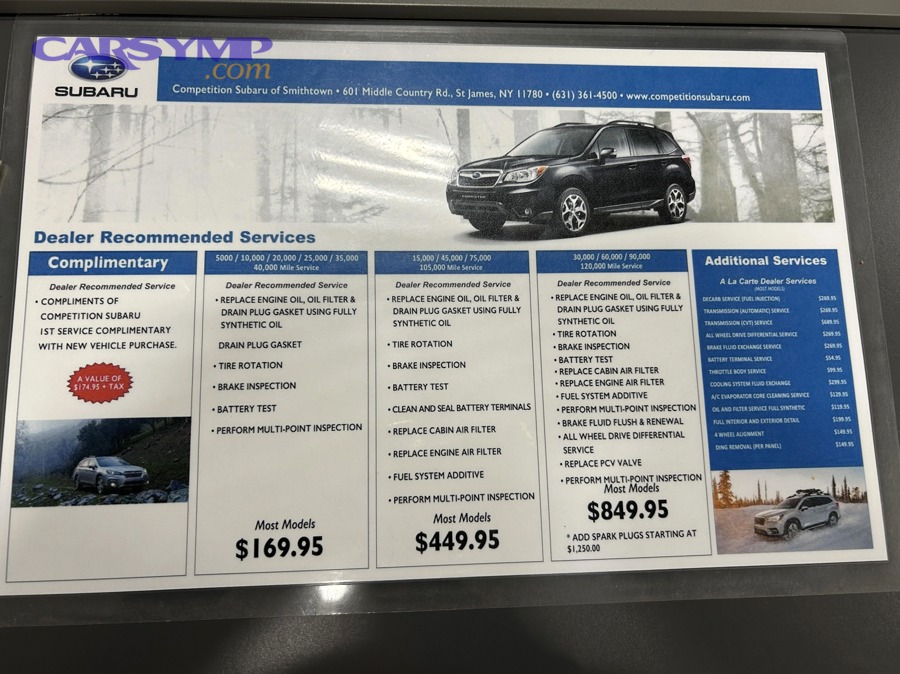
Is a dealership oil change always more expensive than a quick lube or independent shop?
No—a dealership oil change is not always more expensive, because pricing depends on service specials, required oil specifications, and what’s bundled, and those factors can narrow or even reverse the price gap.
On the other hand, quick-lube shops may win on promo pricing, but the total can climb if the quote excludes fees, assumes fewer quarts, or pushes add-ons.
Why dealerships can be competitive
- Factory service specials designed to bring you in
- Correct OEM spec oils readily available
- Sometimes stronger documentation (useful for warranty records)
Why quick lube can be competitive
- High-volume operations
- Lower base labor pricing in some markets
- Aggressive coupons
Why independents can be “best overall”
- Flexible pricing with higher-quality parts choices
- Personalized guidance (especially for older vehicles)
- Often transparent estimates if you ask for line-item clarity
The takeaway: don’t assume shop type determines cost; assume shop type determines how the price is packaged—and verify the package.
Which pricing factors matter most: oil type, shop type, location, or vehicle requirements?
Vehicle requirements win for “must-pay” cost, location is best for explaining market swings, and shop type is optimal for controlling packaging and upsells, so the most important factor depends on whether you’re trying to meet specs, predict range, or reduce total.
Meanwhile, a clear ranking helps you focus on the factors that truly move the number.
A practical ranking (most to least likely to change your total)
- Vehicle requirements and oil spec (some engines require specific approvals, not just “synthetic”)
- Oil capacity (quarts add up fast)
- Local market pricing (labor rate + fees vary by region)
- Shop type (dealer vs independent vs quick lube changes packaging and promos)
- Filter level (standard vs OEM vs extended-life)
- Add-ons and bundles (can be the largest “optional” swing)
How to use this ranking when comparing two quotes
- First, confirm both quotes assume the same oil type/spec and capacity.
- Next, compare filter quality.
- Then, compare fees and tax assumptions.
- Finally, decide whether optional add-ons are worth it.
If you do these steps, you’ll stop comparing a low advertised “price” to a higher but more complete “cost.”
How can you calculate a realistic oil change cost estimate for your car before booking?
You can calculate a realistic oil change cost estimate using 5 inputs—required oil type/spec, viscosity, oil capacity, filter level, and local out-the-door pricing—so you can predict the total and book confidently.
Let’s explore a simple method that takes less time than driving to a shop, and it works whether you’re choosing a shop service or planning DIY vs shop.
What information do you need (oil spec, viscosity, capacity, filter type) to estimate accurately?
There are 4 key pieces of information you need—oil spec/type, oil viscosity, oil capacity, and filter type—based on what determines parts cost and whether the shop must use premium oils to meet requirements.
Specifically, getting these inputs upfront prevents the two most common quote errors: underestimating quarts and quoting the wrong oil.
1) Required oil type/spec (the “what must be used”)
- Your manual may specify full synthetic, synthetic blend, or a spec approval
- Some vehicles require particular approvals beyond “synthetic”
2) Oil viscosity (the “which weight”)
- This is the heart of Choosing correct oil viscosity
- Example formats: 0W-20, 5W-30, etc.
- Using the wrong viscosity can affect lubrication under temperature conditions
3) Oil capacity
- Found in the manual or reliable service data
- Adjust your estimate based on what the shop’s package includes
4) Filter type (the “what level of filtration”)
- Standard filter included in many packages
- OEM or extended-life filter may cost more but can match longer intervals
A fast checklist to bring to the phone call
- Year/make/model/engine
- Required oil viscosity (e.g., 0W-20)
- Approximate capacity (e.g., 5.3 quarts)
- Preference for filter level (standard vs OEM)
When you provide those details, you move from a generic promo quote to a true estimate.
How do you compare quotes so you don’t confuse “low price” with “low total cost”?
You compare quotes correctly by standardizing what’s included and asking for an out-the-door total, because the lowest advertised price often excludes fees, extra quarts, or filter upgrades.
In addition, the “cost vs price” gap is exactly where people lose money—so you should treat missing details like missing dollars.
Use this quote comparison template
- Confirm the oil type and viscosity (make sure both quotes match your requirement)
- Confirm how many quarts are included and the per-quart charge beyond that
- Confirm the filter level included
- Ask for the out-the-door total including fees and tax
- Ask what’s optional vs required (and decline anything you don’t need)
A simple “apples-to-apples” table you can fill in
This table helps you compare two quotes without getting distracted by the advertised number.
| Quote item | Shop A | Shop B | Why it matters |
|---|---|---|---|
| Oil type/spec + viscosity | Ensures correct oil and fair comparison | ||
| Quarts included | Extra quarts can add significant cost | ||
| Filter level | Standard vs OEM changes both cost and value | ||
| Labor included | Avoids “surprise” labor charges | ||
| Fees + tax included | Converts price into true total cost | ||
| Optional add-ons listed | Prevents upsell-driven totals |
Evidence: According to a study by NerdWallet, updated in September 2025, an oil change at a lube shop can range from about $30 to $100, while DIY is often cited around $30 to $45, illustrating how estimates shift by service method and assumptions. (nerdwallet.com)
How can you lower your oil change cost without risking engine protection or warranty?
You can lower your oil change cost by reducing unnecessary add-ons, timing coupons smartly, and choosing the correct service method, while still using the correct oil spec and viscosity so your engine protection and warranty documentation stay intact.
Besides, cost reduction works best when you know which parts of the invoice are flexible and which parts are non-negotiable for your vehicle.
Is DIY cheaper than a shop oil change after tools, time, and disposal?
It depends—DIY vs shop can be cheaper for many drivers, but not always, because the true cost includes tools, time, disposal handling, and the risk of mistakes, and those factors can erase savings.
However, if you evaluate DIY like a real project instead of “just buying oil,” you’ll know whether it’s a smart cost move for your situation.
When DIY usually wins
- You already have ramps/jack stands, a drain pan, and basic tools
- Your vehicle is easy to access (no complicated underbody panels)
- You buy oil and filters on sale
- You value the time and inspection opportunity (checking leaks, boots, etc.)
When DIY often loses
- You need to buy tools from scratch
- Your vehicle is difficult to access safely
- You don’t have a convenient disposal option
- You’re short on time (your time has value)
Common DIY mistakes that become expensive
- Over-tightening or stripping the drain plug
- Forgetting to replace the crush washer/gasket when required
- Double-gasketing the filter (old gasket sticks, new filter installed on top)
- Underfilling or overfilling oil
A practical DIY cost calculation
- Oil (correct type/viscosity) + filter + washer
- Tool amortization (tools cost spread across multiple oil changes)
- Your time (even a conservative value)
- Disposal plan (many places accept used oil, but confirm availability)
DIY is best viewed as “cost control + quality control” when done carefully—otherwise, it can become “cost surprise.”
Do coupons, memberships, and service bundles actually reduce the total cost?
Yes, coupons, memberships, and bundles can reduce the total oil change cost when they apply cleanly to your oil type and don’t trigger expensive add-ons, and they help most for at least three reasons: they reduce base price, they can include extras you already need, and they make totals more predictable.
More importantly, you should treat every coupon like a contract: read what it includes, what it excludes, and what it assumes about oil type and quarts.
How to verify real savings
- Ask whether the coupon covers full synthetic or only conventional/blend
- Ask how many quarts are included
- Ask whether disposal fees are included
- Confirm whether the coupon price is out the door or before tax/fees
When bundles are a good deal
- You already need a tire rotation
- The bundle includes a legitimate inspection you value
- The shop clearly separates “included” vs “recommended”
When bundles are not a good deal
- The bundle forces add-ons you don’t need
- The “savings” depends on inflated list prices
- The shop won’t provide an out-the-door estimate
Used correctly, coupons and bundles lower cost without compromising service—because you’re not changing the oil choice, just changing the pricing structure.
What rare cases can make an oil change unexpectedly expensive (diesel, underbody panels, specialty specs)?
There are 5 common rare-case drivers—diesel capacity, specialty oil specs, complex underbody panels, cartridge filters, and premium filters—based on parts cost and extra labor time that many promo prices don’t anticipate.
Especially if your vehicle is newer, European, diesel, or performance-oriented, asking about these rare cases upfront prevents sticker shock.
Rare case 1: Diesel engines and high oil capacity
Diesels often use more oil and sometimes larger or multiple filtration components. More quarts means more parts cost.
Rare case 2: Specialty specs beyond “synthetic”
Some vehicles require oils meeting specific approvals. That can push per-quart pricing above generic bulk synthetic.
Rare case 3: Underbody panels or aero shields
Removing and reinstalling panels adds time. If a shop charges a higher labor tier for that, your estimate jumps.
Rare case 4: Cartridge filter housings
Cartridge filters can involve different parts and procedures than spin-on filters, sometimes changing labor and parts pricing.
Rare case 5: Premium filter requirements
If the vehicle’s service strategy expects longer intervals, an extended-life filter may be recommended to match.
What to ask the shop (script)
- “Does your price include my vehicle’s full oil capacity?”
- “Are there extra labor charges for underbody panels?”
- “Does my engine require a specific oil approval beyond synthetic?”
These questions take a minute and can save you far more than a minute’s worth of cost confusion.
What’s the difference between the cheapest oil change and the best-value oil change?
The cheapest oil change wins on lowest upfront price, but the best-value oil change wins on correct oil spec/viscosity, complete line items, and a service outcome that supports your maintenance interval and documentation needs.
In short, value comes from accuracy and completeness, not from a low advertised number.
Cheapest oil change characteristics
- Minimal included quarts
- Basic filter assumption
- Fees not clearly stated
- Add-ons commonly pushed to raise the ticket
Best-value oil change characteristics
- Uses the correct oil type and Choosing correct oil viscosity
- Clear out-the-door estimate
- Reasonable filter choice aligned to interval
- Transparent list of optional recommendations
- Includes Resetting oil life/service reminder when applicable (and confirms it was done)
Why the oil life reset matters
Many modern cars track service intervals electronically. If the reminder isn’t reset, you lose the benefit of tracking, and you may question whether the service was completed properly. A best-value shop treats this as part of a professional, documented service rather than an afterthought.
Final takeaway: A strong oil change cost estimate is built from a consistent structure—oil type/spec + viscosity, capacity, filter level, labor, and fees—so you can compare quotes fairly, decide between DIY vs shop realistically, and reduce costs without sacrificing engine protection.