


If you’re overdue for an oil change, you’ll usually see it first in small, practical signals: oil that looks “off” on the dipstick, an engine that sounds louder than normal, or a reminder on the dash that won’t go away. This guide helps you spot those warning signs early so you can protect lubrication, temperature control, and long-term engine health.
Next, you’ll learn how to read the difference between a “service due” reminder and a true warning light that means you should stop driving. That distinction matters because some alerts are scheduling prompts, while others point to conditions that can cause rapid damage if ignored.
Then, you’ll get quick ways to confirm what’s going on at home in a few minutes—without guessing or relying on vibes. A simple dipstick check, a quick smell test, and a realistic read of your driving habits can tell you whether you should book service soon or treat it as urgent.
Introduce a new idea: once you can recognize the signals and confirm them, you’ll be able to act with a clear plan—what to do today, what to ask for at the shop, and how to prevent the same “overdue” situation from repeating.
What does it mean to be “overdue” for an oil change?
Being “overdue” for an oil change means the oil has likely passed its intended service window for your engine and driving conditions, so its ability to lubricate, cool, and protect parts may be reduced—even if the car still runs normally today.
To better understand why “overdue” matters, start with what engine oil actually does. Oil forms a protective film between moving metal surfaces, helps carry heat away from hot components, suspends contaminants, and supports the oil filter’s job of trapping debris. Over time, heat cycles, fuel dilution, moisture, soot, and normal wear particles change the oil’s viscosity and additive strength. That’s why “overdue” is about more than mileage—it’s about oil condition and risk.
Most drivers think “overdue” equals “I’m a little late.” In reality, overdue can range from “slightly past schedule” to “the oil’s protective properties are compromised.” That range is exactly why the rest of this article focuses on observable warning signs you can verify instead of guessing.
Is “overdue” based on mileage, time, or the oil life monitor?
It’s based on all three: mileage, time, and your oil life monitor—because each one measures a different risk. Mileage tracks how much work the oil has done, time tracks aging and moisture buildup, and the oil life monitor estimates oil stress from driving patterns.
Specifically, mileage is the simplest yardstick: the more miles you drive, the more heat cycles and contamination the oil sees. Time matters because even low-mileage driving can include short trips where the engine never fully warms up, allowing moisture and fuel dilution to accumulate. Meanwhile, oil life monitoring systems attempt to estimate oil degradation based on conditions like temperature, load, trip length, and idle time. Some systems are conservative; others are optimized for typical driving and can be too optimistic for severe-service use.
In addition, your owner’s manual usually lists “normal” and “severe” service intervals. Severe service often includes frequent short trips, towing, heavy loads, extreme temperatures, and dusty environments. If your driving matches those conditions, you can become overdue sooner than a friend who mostly cruises on highways.
Can you be overdue even if the oil level looks OK?
Yes—oil level and oil condition are different problems, and you can be overdue with a perfectly “normal” level for at least three reasons: the additives may be depleted, contamination may be elevated, and viscosity can drift from the intended range.
More specifically, the dipstick level tells you how much oil is in the engine, not how healthy that oil is. Oil can still sit between the “MIN” and “MAX” marks while carrying too much fuel dilution, moisture, soot, or wear metals. It can also oxidize and thicken (or shear and thin) while staying at the same level.
Besides, topping off oil doesn’t “reset” the oil’s overall condition. Adding fresh oil can slightly improve additive concentration in the sump, but it doesn’t remove the old oil’s contaminants or restore the oil filter’s remaining capacity. That’s why “my oil is full” isn’t proof you’re not overdue—it only answers one part of the picture.
What are the most common warning signs you’re overdue for an oil change?
There are 6 main types of warning signs you’re overdue for an oil change: (1) changes in engine sound, (2) oil appearance changes, (3) performance or fuel economy drops, (4) smells or smoke, (5) heat or temperature symptoms, and (6) recurring reminders or alerts—based on what system is showing stress.
Let’s explore why these signs matter: overdue oil typically loses part of its ability to reduce friction, control heat, and keep contaminants suspended until the filter captures them. As protection fades, your car may develop subtle symptoms that feel like “something’s off” before anything becomes an obvious breakdown. Think of these as early Car Symptoms—small signals that help you act early instead of late.
Below is a quick severity guide. The table helps you interpret symptoms as “schedule soon” versus “stop driving,” so you don’t treat every sign the same.
| Symptom | What it often suggests | How urgent? |
|---|---|---|
| Maintenance reminder (“Oil change due”) | Service interval reached based on time/mileage/monitor | Schedule soon |
| Dark oil on dipstick (but smooth, not gritty) | Normal discoloration; confirm with other signs | Monitor / schedule soon |
| Ticking/valvetrain noise that’s new | Reduced lubrication film or low level | Check level today; service soon |
| Burnt oil smell or smoke | Oil overheating, leak onto hot surface, or burning oil | Inspect promptly; can be urgent |
| Oil pressure warning light | Low oil pressure (can be rapid engine damage) | Stop driving |
What changes in engine sound (ticking/knocking) can signal old oil?
Old oil can cause ticking or knocking sounds because it may not maintain a strong protective film, and you’ll often notice it during cold starts, idle, or light acceleration when the engine should normally sound smooth.
Specifically, a light ticking can come from valvetrain components (lifters, cams) that depend on stable oil viscosity and pressure. If oil is degraded or if the level is low, those parts may become noisier because metal surfaces are less cushioned by the oil film. A deeper knocking is more serious and can point to high friction or inadequate protection in heavier-load areas.
However, don’t assume every noise is an oil-change issue. Exhaust leaks, failing pulleys, and ignition problems can also create ticking or tapping. The smart move is to use the noise as a trigger to check oil level and condition immediately. If the noise is loud, sudden, or paired with an oil pressure warning light, treat it as urgent.
What oil appearance on the dipstick suggests the oil is past its prime?
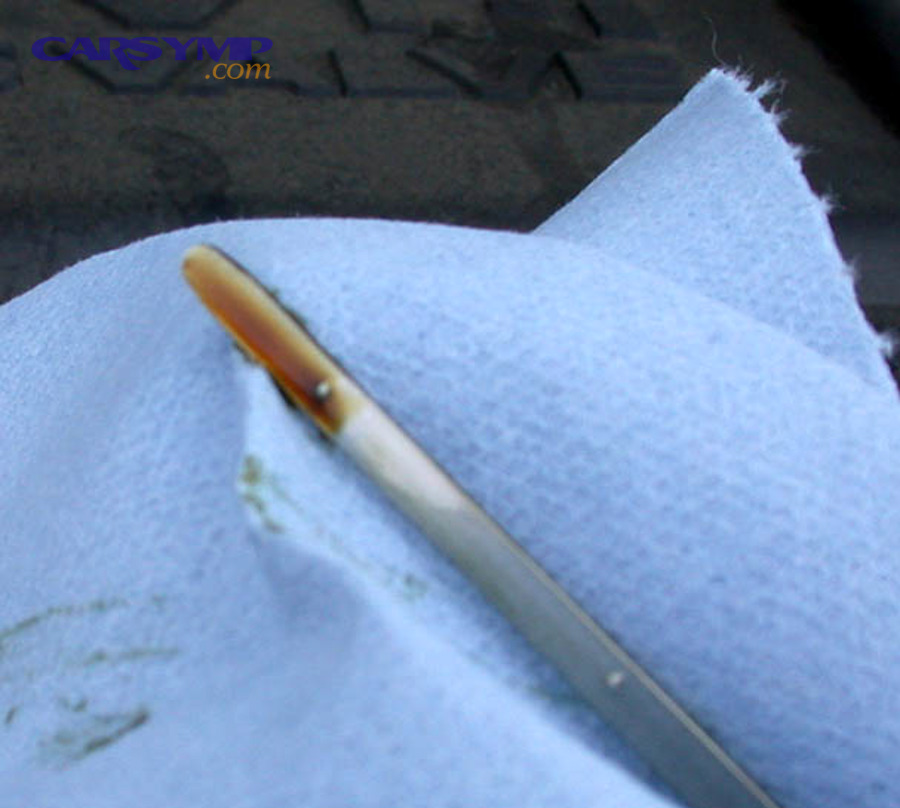
Oil that looks gritty, unusually thick, milky, or strongly burnt-smelling on the dipstick suggests it may be past its prime, because those conditions can signal contamination, moisture, overheating, or additive breakdown.
For example, dark oil alone is not always “bad.” Oil often darkens as it does its job suspending contaminants, and some engines darken oil faster than others. What matters more is texture and consistency. Gritty oil can suggest suspended debris beyond what’s ideal. Milky or foamy oil can suggest moisture contamination or coolant intrusion, which is a separate high-risk issue. Oil that’s extremely thin and smells strongly of gasoline can suggest fuel dilution—often linked to lots of short trips or certain engine conditions.
More importantly, dipstick checks work best when you compare today’s reading to your car’s normal pattern. If the oil suddenly looks very different than usual, that change itself is a warning sign worth acting on.
What performance symptoms (rough idle, sluggishness, poorer MPG) point to overdue oil?
There are 3 common performance symptoms that can point to overdue oil: rougher idle or vibration, sluggish acceleration, and a noticeable drop in fuel economy—based on increased friction and less efficient engine operation.
Specifically, old oil can raise internal friction and reduce the engine’s ability to manage heat, which can slightly reduce efficiency. Drivers often describe it as the car feeling “draggy” or less responsive. In some cases, the engine may also run hotter, causing the cooling system to work harder, which can contribute to the feeling of strain.
On the other hand, these symptoms are not oil-exclusive. Tire pressure, spark plugs, air filters, and sensor issues can also impact MPG and responsiveness. That’s why you should treat performance symptoms as a supporting sign: confirm with a dipstick check, your service reminder status, and any dashboard messages.
What smells or smoke can indicate oil is overdue (or burning)?
There are 4 smell/smoke clues that often indicate overdue or burning oil: a burnt oil smell, smoke from under the hood, blue-ish exhaust smoke, or a persistent “hot” odor after driving—based on where oil is overheating or leaking.
To illustrate, a burnt smell can occur when oil leaks onto a hot exhaust component. Under-hood smoke can also come from oil dripping onto a hot surface. Blue exhaust smoke is often associated with oil burning inside the combustion process, which can be related to engine wear or oil control issues. While overdue oil alone doesn’t automatically cause blue smoke, pushing oil beyond its useful life can contribute to deposit formation and oil control problems over time.
Meanwhile, if you smell burning and also see warning lights or temperature spikes, treat it as a sign to pull over safely and inspect. At minimum, check the oil level and look for visible leaks before deciding to continue driving.
What dashboard lights and alerts are “oil change due” vs “stop now”?
“Oil change due” reminders usually mean schedule service soon, while oil pressure warning lights can mean stop now, because reminders track maintenance timing but oil pressure warnings can signal an immediate lubrication failure risk.
To better understand the dash signals, separate your alerts into two categories: service reminders and safety warnings. Service reminders are designed to keep you on schedule. Safety warnings are designed to prevent damage right now. Confusing those categories is one of the most common reasons drivers either panic unnecessarily—or keep driving when they shouldn’t.
Does an “Oil Change Due” or maintenance reminder mean immediate danger?
No—an “Oil Change Due” reminder usually does not mean immediate danger for at least three reasons: it’s typically time/mileage-based, it assumes typical operating conditions, and it’s intended to prompt scheduling—not emergency stopping.
Specifically, many vehicles use a service reminder or oil life indicator that estimates when routine maintenance should occur. When it triggers, the goal is to book service soon and avoid becoming truly overdue. The reminder becomes more important the longer you ignore it, especially if your driving is severe service.
However, if your reminder appears alongside symptoms like new ticking sounds, burnt smell, or overheating behavior, treat it with more urgency. A reminder plus symptoms often means the oil’s protective margin is already shrinking.
Is the oil pressure light the same thing as the oil change light?
No—oil pressure wins as the critical warning, while the oil change reminder is best for scheduling, because oil pressure warnings indicate lubrication pressure problems, while reminders indicate maintenance timing.
More specifically, the oil pressure warning light (often a red oil can symbol) is not a “time for an oil change” message. It usually means the engine may not be building sufficient oil pressure to circulate oil properly. That can happen due to low oil level, a failing oil pump, a clogged pickup screen, or other mechanical problems. In many cases, continuing to drive can cause rapid engine damage.
To make this practical: if the oil pressure warning appears while driving, prioritize safety, pull over when it’s safe, and shut the engine off. Then check the oil level. If the level is low, adding oil may help temporarily—but you still need to find out why it was low and confirm pressure is normal afterward. If the level is normal, do not keep driving; get professional help.
Can a check engine light be caused by overdue oil?
Yes, a check engine light can be indirectly related to overdue oil for at least three reasons: it can contribute to deposits that affect engine control, it can worsen operating conditions that trigger sensor-related codes, and it can amplify existing problems like misfires or variable valve timing issues.
However, the check engine light is broad. It can reflect many systems unrelated to oil. The correct response is to avoid guessing: read the codes and data if possible, then interpret the result in context. Overdue oil is sometimes part of the story, but it’s rarely the only story. If the check engine light appears alongside the service reminder, treat it as a signal to stop delaying maintenance and diagnose properly.
How can you confirm you’re overdue in under 5 minutes at home?
You can confirm you’re overdue using a simple 4-step method—check the dipstick, compare level and condition, review reminder status, and look for leaks—so you can decide whether to schedule service soon or treat it as urgent.
Then, reconnect this to the earlier warning signs: the goal is to replace uncertainty with verification. If you’ve noticed ticking sounds, a reminder, or changes in performance, a short check at home can either confirm your suspicion or point you toward another issue.
What step-by-step dipstick checks confirm oil condition and level?
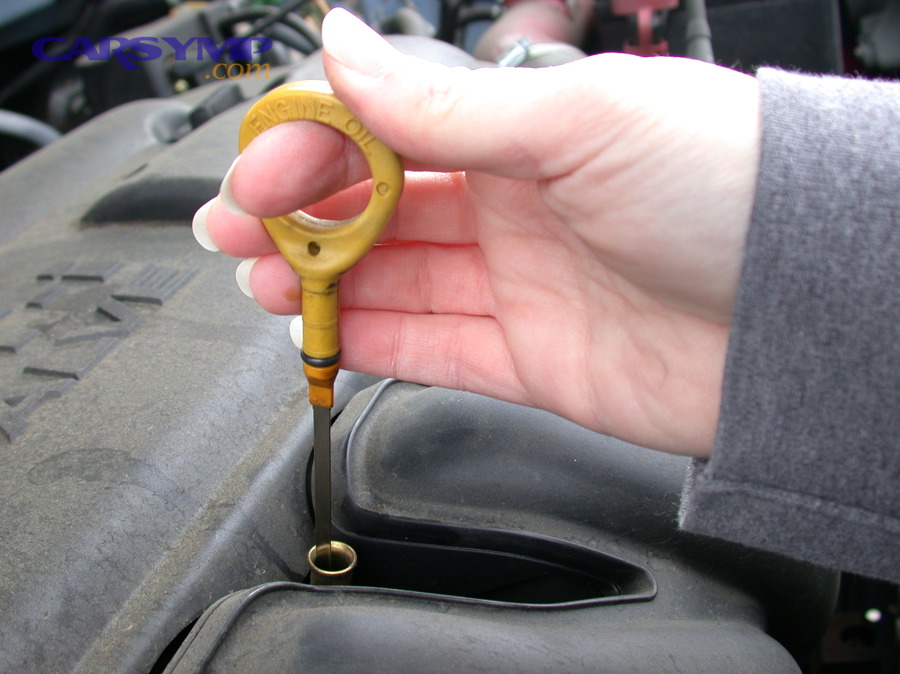
A reliable dipstick check uses 6 steps: park level, wait for oil to settle, pull and wipe, reinsert fully, read level, and inspect color/texture/smell, so you can confirm both quantity and basic condition in minutes.
Specifically, use this sequence:
- Park on level ground and shut the engine off.
- Wait a few minutes so oil drains back into the pan (your manual may specify timing).
- Pull the dipstick, wipe it clean, and reinsert it fully.
- Pull it again and read the oil level relative to the MIN/MAX marks.
- Look at the oil’s color and clarity; rub a small dab between fingers to detect grit (avoid if you’re sensitive to oils).
- Smell the dipstick—strong fuel or burnt odors can be meaningful clues.
More specifically, “normal” often looks like a smooth film with consistent thickness. “Concerning” can look gritty, milky, unusually thin with a fuel smell, or unusually thick and tar-like. If you see milky oil, treat that as a separate urgent issue (possible coolant contamination) rather than just “overdue.”
Should you top off oil or change it when symptoms appear?
Topping off wins when the main problem is low level, while an oil change wins when the oil’s condition is degraded, because adding oil restores quantity but does not remove contaminants or reset the oil filter’s loading.
To illustrate, if your dipstick shows the oil below the safe range, adding the correct oil can be a necessary immediate step to protect the engine. But it’s not the finish line. Low oil level usually means there’s a leak, consumption, or a maintenance gap—and you should address the cause.
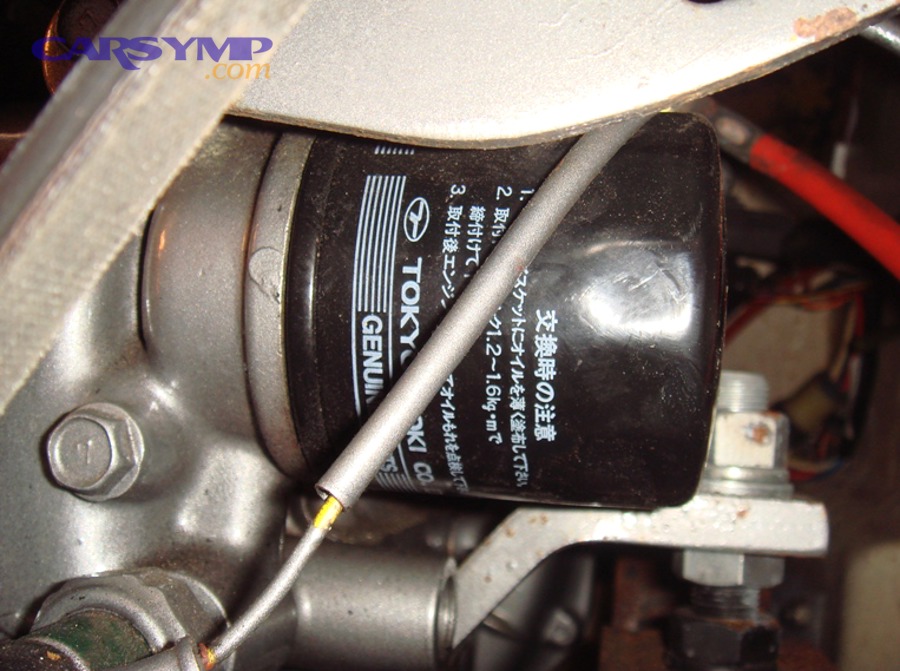
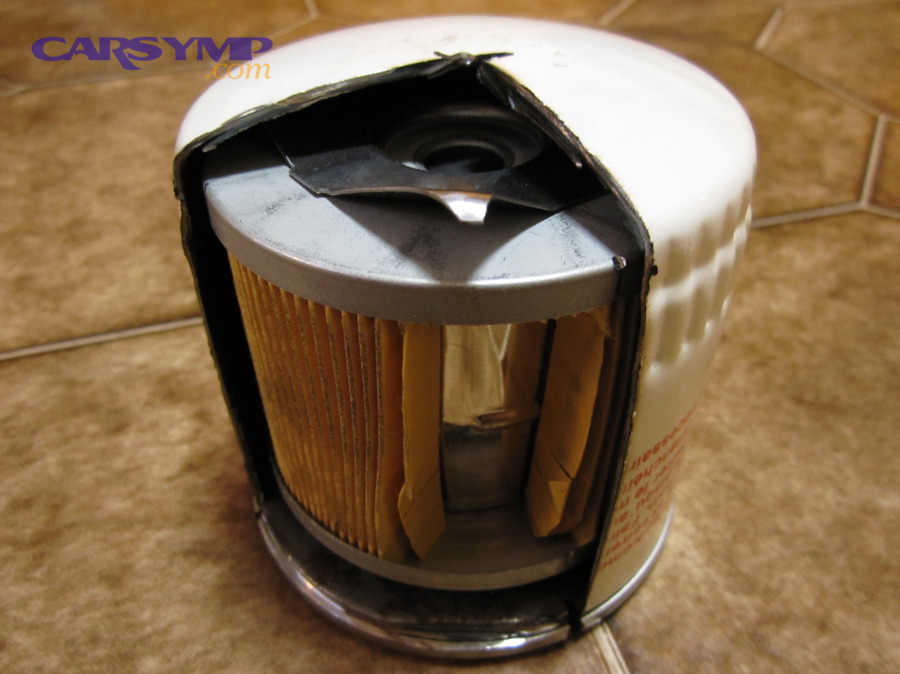
On the other hand, if the oil level is normal but the oil looks gritty, smells burnt, or your service reminder has been ignored for too long, the right move is a full oil change with a filter replacement. That’s also where Oil filter quality differences matter: a better-designed filter can offer stronger media, bypass valve quality, and consistent filtration performance over the service interval, while low-grade filters may reach their limits earlier. The best choice is the filter type and specification recommended for your engine and service interval, not just the cheapest option on the shelf.
Do driving habits (short trips, towing) make you overdue sooner?
Yes—driving habits can make you overdue sooner for at least three reasons: short trips increase moisture and fuel dilution risk, towing increases heat and load, and stop-and-go traffic increases idle time and thermal cycling.
More specifically, “severe service” doesn’t mean you drive aggressively; it means the oil experiences harsher conditions. Short trips are a classic example: the engine may not reach full operating temperature long enough to evaporate moisture and fuel vapors. Towing and heavy loads raise oil temperature and accelerate oxidation. Dusty environments raise contaminant load that the filter must capture.
Besides, if your oil life monitor is calibrated for typical driving but you live in severe-service reality, you can become overdue even when the monitor suggests you still have plenty of “life” left. Your manual’s severe-service schedule is the tie-breaker.
What happens if you keep driving overdue for an oil change?
Keeping driving overdue increases friction, heat, deposits, and wear risk, because the oil’s additives and viscosity stability can degrade until the engine loses part of its protective margin.
More importantly, the risk rises with how far overdue you are and how severe your driving conditions are. A small delay may only slightly increase wear in the short term. A large delay—especially in severe conditions—can contribute to sludge formation, restricted oil flow, and accelerated component wear. The reason is straightforward: oil is a consumable protective system, not a permanent fluid.
According to a study by the University of Life Sciences in Lublin from the Department of Power Engineering and Transportation, in 2025, oil degradation became more pronounced after exceeding the recommended interval by 10,000–15,000 km, and the study observed markedly higher wear indicators (including iron concentration around 131.67 ppm) at the greatest interval exceedance.
What’s the difference between “slightly overdue” and “seriously overdue”?
Slightly overdue is typically a small overrun beyond your service reminder, while seriously overdue is when oil condition or symptoms show the protective margin is compromised, because time/mileage overrun becomes more dangerous when paired with heat, contamination, and warning signs.
To make this useful without turning it into guesswork, treat “slightly overdue” as: you just crossed the reminder threshold and the car shows no new symptoms. Treat “seriously overdue” as: the reminder has been ignored for a long time, or you’re seeing multiple warning signs—new noise, burnt smell, visible smoke, temperature changes, or abnormal dipstick texture.
Meanwhile, the same mileage overrun can have different impacts depending on the engine and how you drive. A turbocharged engine under frequent short trips may reach “seriously overdue” risk sooner than a naturally aspirated engine doing steady highway miles. That’s why symptoms and confirmation checks are the deciding factors—not a single universal mileage number.
When should you stop driving and get help immediately?
There are 4 situations where you should stop driving immediately: the oil pressure warning light turns on, loud knocking appears suddenly, the engine overheats, or you see heavy smoke/leaking oil—because these can indicate rapid damage risk.
Specifically, the oil pressure warning is the clearest “stop now” oil-related signal. Overheating is also a stop-driving condition because heat can escalate problems quickly. Heavy smoke or visible oil pouring out suggests a leak that can rapidly drop the oil level.
In addition, if you top off oil and the warning returns, that’s not a “keep going” message—it’s a sign you need diagnosis. Continuing to drive can turn a manageable repair into a major failure.
What should you do next if you suspect you’re overdue?
If you suspect you’re overdue, the best next move is to confirm oil level/condition, schedule service promptly, and use the correct oil specification and filter, so you resolve the cause and prevent repeat issues.
Next, connect this to what you’ve already seen: if you noticed warning signs and confirmed them with a dipstick check or a dash message, acting quickly is cheaper than waiting. That’s also where people often ask for an Oil change cost estimate, because the price can vary by oil type, engine capacity, and shop labor. In many areas, the cost ranges widely depending on conventional vs synthetic and whether your vehicle needs a specialty oil spec. The fastest way to avoid surprise is to ask for a quote that includes oil type, capacity, filter, shop fees, and disposal fees.
To keep the action plan clear, use this simple sequence:
- Today: Check dipstick level/condition and look for visible leaks.
- This week: Book an oil change if you’re due or showing symptoms.
- At service: Confirm the correct oil grade/spec and choose a quality filter that matches the interval.
- After service: Verify there are no leaks and the reminder system is reset properly.
What information should you bring to the shop (or DIY plan) to get the right oil?
You should bring 5 pieces of information: your vehicle year/make/model/engine, the required oil viscosity, the required oil specification, your typical driving conditions, and your last service date/mileage, so the shop or DIY plan matches what the engine is designed to use.
Specifically, viscosity (like 0W-20 or 5W-30) is only part of the story. Many engines also require an oil that meets a specific standard (API/ILSAC/ACEA or an OEM spec). Using the wrong spec can reduce protection or cause compatibility issues with modern emissions systems. Driving conditions matter too—if you do short trips or towing, you may want to follow severe-service intervals even if the shop defaults to a “normal” schedule.
Besides, if you’re doing it yourself, confirm the correct oil capacity and the correct filter part number. Overfilling and underfilling both create problems, so treat capacity as a measured target, not a guess.
Is synthetic oil worth it if you tend to go overdue?
Synthetic oil wins for stability, conventional oil can be best for budget, and high-mileage formulas are optimal for older engines with consumption, because each option targets a different priority: heat resistance, cost efficiency, or seal/consumption support.
However, synthetic oil is not a permission slip to ignore service. It often resists oxidation and viscosity breakdown better than conventional oil, especially under heat and load, but it still accumulates contaminants and still depends on a functioning oil filter. If you “tend to go overdue,” the real win is building a repeatable routine—then choosing the oil type that fits your engine and usage.
More importantly, don’t forget the final step: Resetting oil life/service reminder. If the reminder isn’t reset after service, you lose a valuable tracking tool and may end up either changing too early or going overdue again because you stopped trusting the reminder system.
To sum up: confirm the right oil spec, use a suitable filter, reset the reminder, and track intervals. That combination prevents most “overdue” scenarios from coming back.
How can you prevent overdue oil-change issues with smarter intervals and monitoring?
You can prevent overdue oil-change issues by using a 4-part system—follow the correct interval for your driving, monitor oil level monthly, reset reminders correctly, and choose an appropriate filter and oil specification—so you avoid both unnecessary early changes and risky late changes.

Now that you’ve learned how to spot and confirm warning signs, prevention becomes a simple consistency game. Your goal is to keep oil changes predictable and boring. That doesn’t just reduce risk—it also reduces stress, because you’re not reacting to sudden symptoms.
How do oil life monitor systems work, and when can they be misleading?
Oil life monitors estimate oil wear based on operating conditions rather than directly measuring oil quality, so they can be misleading when your driving is consistently severe, when the system isn’t reset, or when the vehicle’s assumptions don’t match your real-world use.
Specifically, these systems often consider factors like temperature, trip length, idle time, and engine load. They can be very helpful for typical use because they adapt to conditions better than a fixed mileage number. The weak point is human behavior: if you forget to reset the system after service, the monitor becomes noise instead of guidance.
Also, if you drive short trips in cold weather, idle often, tow, or sit in heavy traffic daily, the oil may degrade faster than the monitor expects. In that case, follow the severe-service schedule in your manual as the default, and treat the oil life monitor as supporting data rather than the only decision-maker.
Which driving patterns count as “severe service” and shorten oil intervals?
There are 5 common severe-service patterns: frequent short trips, stop-and-go traffic, towing/heavy loads, extreme temperatures, and dusty or dirty environments, because each one increases heat, contamination, or moisture/fuel dilution risk.
For example, short trips can prevent full warm-up long enough to evaporate moisture and fuel vapors. Stop-and-go driving increases idle time and thermal cycling. Towing raises oil temperature and load. Dust adds airborne contaminants that the oil and filter must manage. Extreme temperatures stress viscosity behavior and oxidation resistance.
More specifically, if your routine includes two or more of these patterns most weeks, assume you are on a shorter interval than “normal” service. That single adjustment prevents most “I didn’t realize I was overdue” situations.
What’s the difference between synthetic vs conventional intervals and protection?
Synthetic oil wins in thermal stability and oxidation resistance, conventional oil is best for cost sensitivity, and synthetic blends sit in the middle, because the base oil chemistry and additive performance differ under heat and extended use.
However, the interval should still match your engine’s requirements and your driving conditions. A well-chosen synthetic can provide a larger protection buffer under heat and load, but it still needs timely replacement and a filter that can handle the interval. This is where Oil filter quality differences show up again: extended intervals ask more from filter media, sealing, and bypass valve behavior.
In practice, pick the oil type that meets the required spec first, then optimize for your goals (cost, interval, severe-service stability). If you’re not sure, ask the shop to quote both options so your Oil change cost estimate is based on your exact vehicle and oil spec—not a generic average.
When does a used oil analysis (UOA) make sense for long intervals or high-mileage engines?
Yes—used oil analysis makes sense when you’re extending intervals, managing a fleet, tracking a high-mileage engine, or troubleshooting consumption, because it can reveal wear metals, contamination, fuel dilution, and additive depletion trends that the dipstick can’t quantify.
Specifically, a UOA can help you determine whether your interval is appropriate for your engine and driving pattern, especially if you’re aiming for longer intervals or you suspect abnormal wear. It can also help confirm whether fuel dilution or coolant contamination is present. That said, UOA is not required for most everyday drivers who follow the manual’s interval and do basic monthly checks.
In short, prevention is about routine: check oil level monthly, follow the right interval for your real driving, don’t ignore symptoms, and keep the reminder system accurate with Resetting oil life/service reminder after every service. Once you do that, “overdue” becomes an exception instead of a pattern—and your car spends more time driving and less time giving you warning signs.