


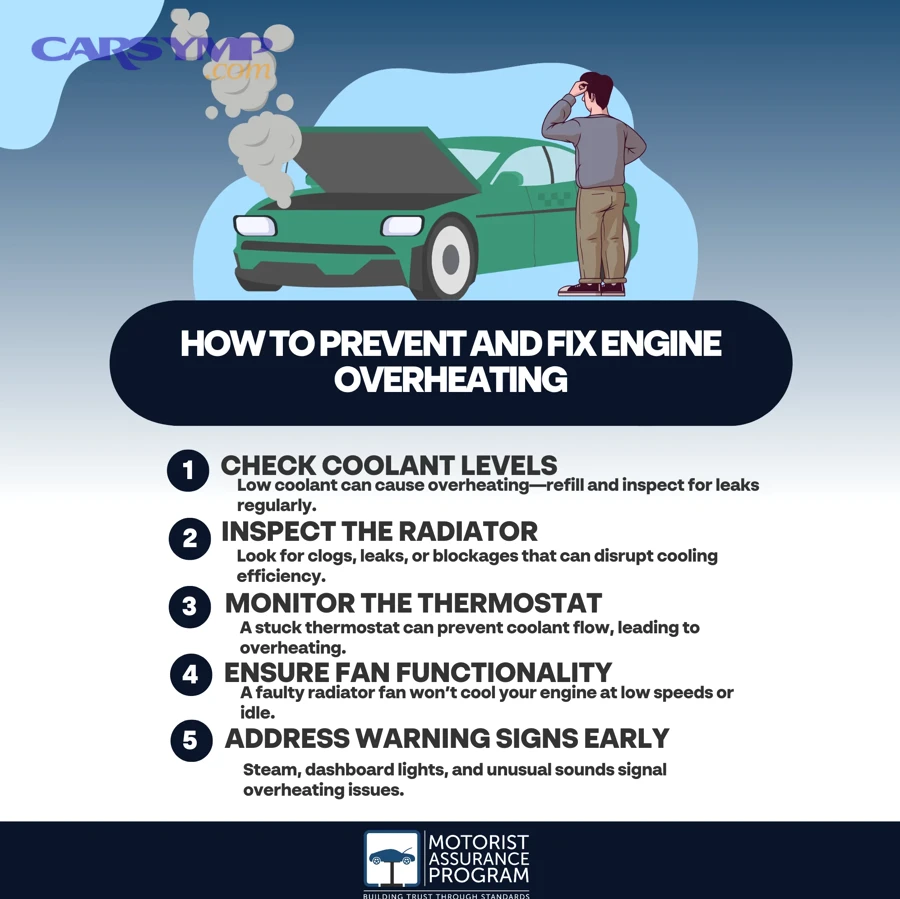
Engine overheating is most often caused by a cooling-system problem (coolant loss, weak airflow through the radiator, stuck thermostat, failing water pump, or an electrical fan issue), and the fastest way to stop guessing is to follow a step-by-step checklist that rules out each root cause in order.
If you want a practical overheating diagnosis that doesn’t skip safety, you’ll start with “protect the engine” actions, then verify the temperature reading, then check coolant level/leaks/pressure, and finally test airflow and circulation components one by one.
If you also need Fan operation and relay troubleshooting and a Radiator cap and boiling point explanation, this checklist includes both—plus what each finding typically means.
Introduce a new idea: once you finish the checklist, you’ll also know the Typical repair costs by root cause and when it’s safe to drive versus when you must shut down immediately.
What should you do first when your engine starts overheating?
You should treat overheating as an engine-protection emergency by reducing heat load immediately, because continuing to drive while hot can warp cylinder heads, blow head gaskets, or seize the engine.
To begin, use this “first 2 minutes” sequence to stabilize the situation before you diagnose anything:
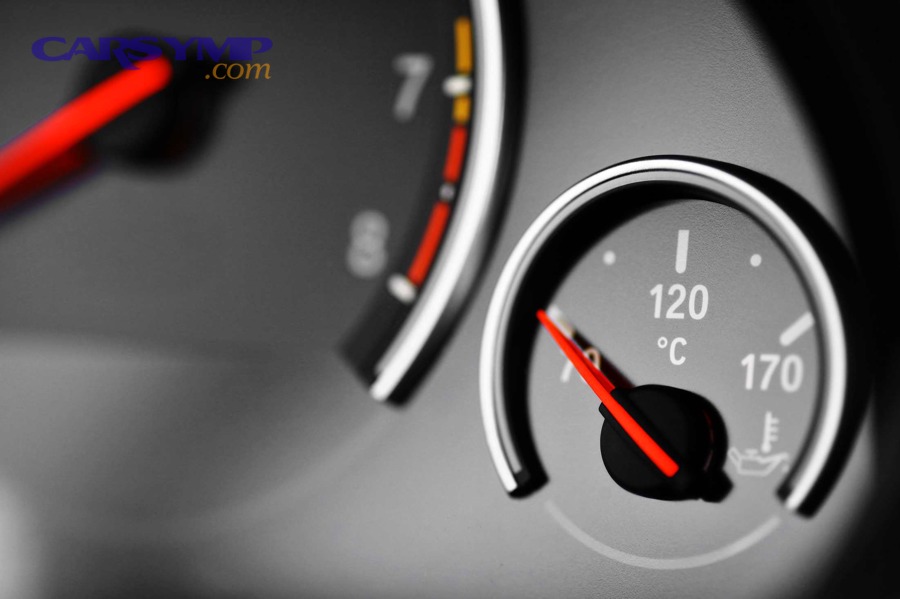
- Turn A/C off, heater on full hot, fan on high.
- This dumps heat through the heater core (a small radiator).
- If cabin heat is hot and strong, coolant is likely circulating (at least somewhat).
- If cabin heat is cold or weak, you may be low on coolant or have an air pocket blocking flow.
- Reduce engine load.
- Ease off the throttle, avoid hills, and don’t idle in place if the temp is climbing.
- If you’re in traffic and the gauge keeps rising, pull over safely.
- If the temperature is still rising: shut the engine off.
- The “one more mile” habit is what turns a simple leak into an expensive head-gasket job.
- Do not open the radiator cap while hot.
- A pressurized system can spray boiling coolant.
Then, reconnect to the diagnostic goal: once you’ve stopped the temperature from climbing, the checklist becomes about identifying why the cooling system couldn’t remove heat.
Is the overheating reading real or a sensor/gauge issue?
Overheating is real if the engine shows consistent physical symptoms (steam, boiling overflow, power loss, hot smell) and/or scan-tool temperature confirms an over-temp condition—otherwise you may be chasing a faulty sender, wiring, or gauge.
Next, confirm the reading using at least two of the methods below:
Quick confirmation checks (low risk)
- Scan tool / OBD app: Look at ECT (engine coolant temperature).
- Many cars run roughly 190–230°F (88–110°C) depending on design and conditions.
- If the scan tool shows normal but the dash shows hot, suspect the gauge circuit.
- Cabin heater performance:
- Hot air + overheating gauge can still be real (fans/airflow issues can overheat at idle), but it’s a helpful clue that coolant exists and is moving.
- Radiator fan behavior:
- If the temp climbs in traffic and you never hear/see fans, overheating is likely real.
Physical symptoms that strongly indicate real overheating
- Steam from the engine bay or a sweet coolant smell
- Coolant pushed into the overflow bottle or venting out
- Boiling/gurgling sounds after shutdown
- Power reduction, pinging, or “hot” warnings
If you confirm the overheating diagnosis is real, the next step is to locate the failure mode: coolant quantity/pressure, airflow, or circulation.
How do you check coolant level, leaks, and air pockets safely?
You can check coolant level and most leaks safely only after the engine cools down, then you can identify whether the system lost coolant, ingested air, or can’t hold pressure.
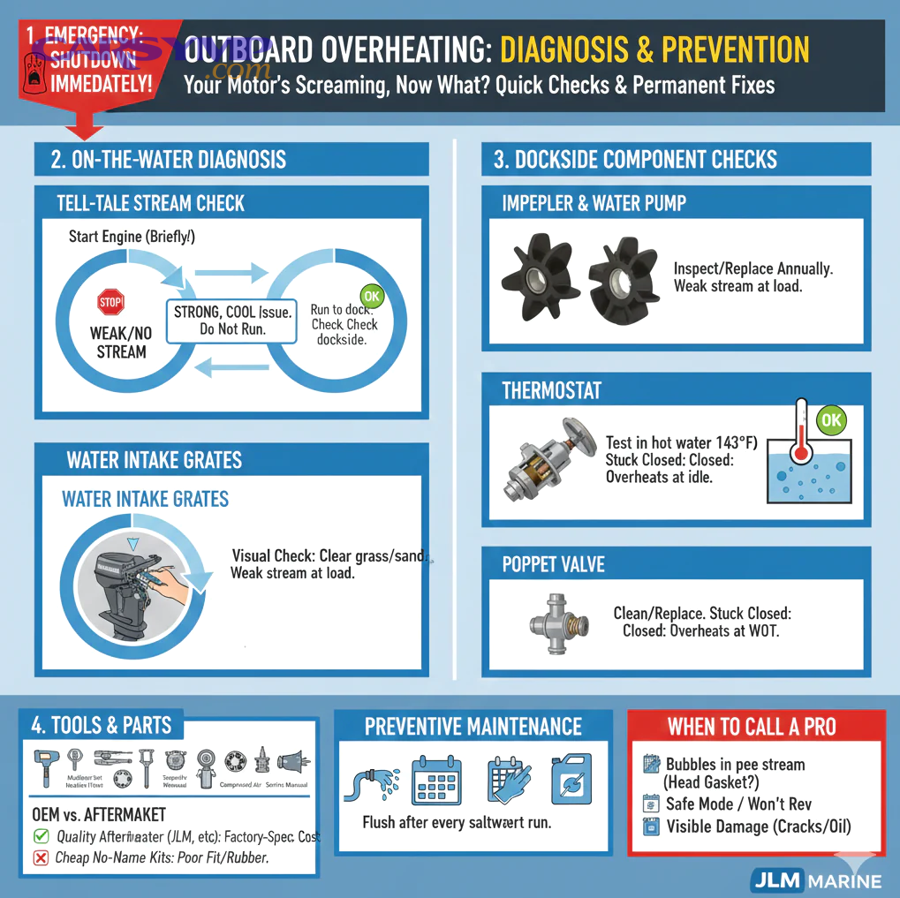
Then, follow this safe workflow:
Step 1: Cool down and inspect before touching the cap
- Wait until the upper radiator hose is cool enough to squeeze.
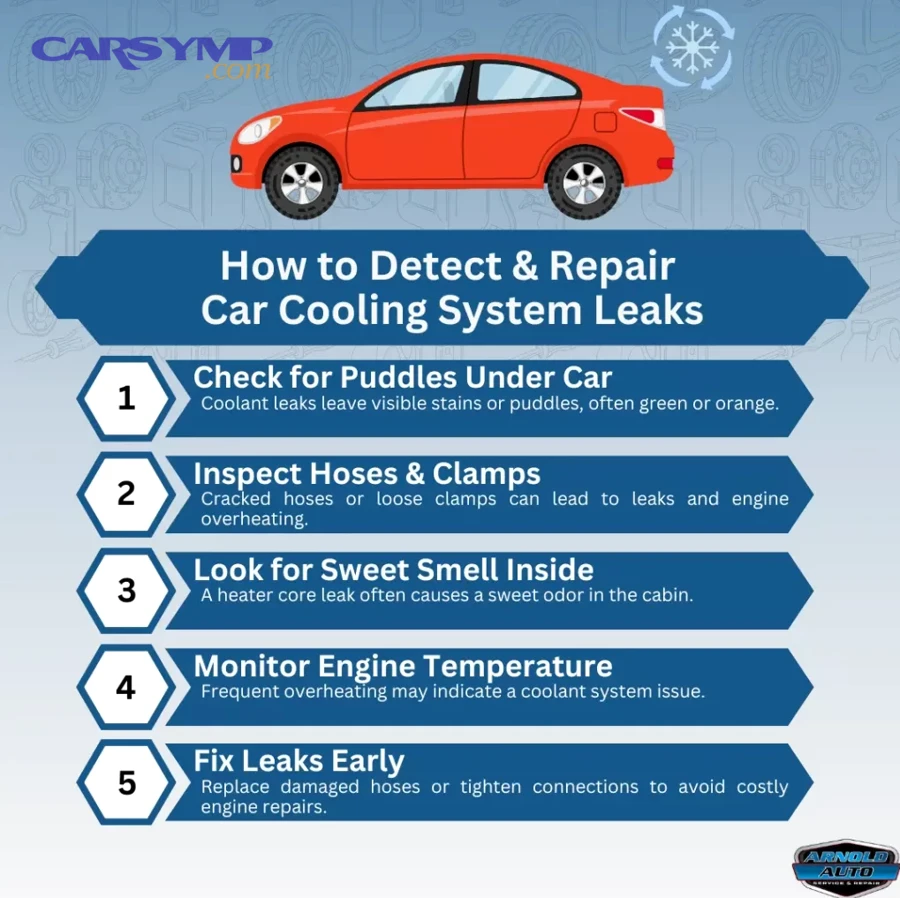
- Look for puddles under the vehicle and wet areas around hoses, radiator end tanks, and the water pump weep hole.
Step 2: Check the overflow bottle level first
- If the reservoir is below MIN or empty, you likely lost coolant.
- If it’s overfull after overheating, the system may be boiling/venting due to pressure loss.
Step 3: Check radiator level (only when cool)
- Remove the cap slowly (cool engine only).
- Radiator should be full to the neck on many designs (some modern systems are “degas bottle” style—follow the manufacturer layout).
Step 4: Identify leak types by “where it’s wet”
- Hose clamp area wet: loose clamp, split hose, or plastic neck crack
- Radiator seams wet: end tank crimp or core leak
- Water pump area wet: weep hole leak or gasket failure
- Inside cabin damp/sweet smell: heater core leak
Step 5: Suspect air pockets when symptoms are “weird”
Air pockets are common after low coolant or improper refilling and can cause overheating that comes and goes. Signs include:
- Temperature spikes quickly after startup
- Heater blows cold at idle but warmer at higher RPM
- Gurgling in dash/heater core area
A practical fix path is: top up correctly with the proper coolant mix, bleed air per vehicle procedure, and re-check after a heat cycle.
How does a radiator cap affect boiling point and overheating?
A radiator cap is a pressure-regulating valve that raises coolant boiling temperature by increasing system pressure, which prevents localized boiling and loss of heat transfer inside the engine.
To better understand why the cap matters, remember: coolant can “boil” in hot spots even when the gauge isn’t pegged yet, and boiling creates vapor pockets that insulate metal surfaces from liquid coolant.
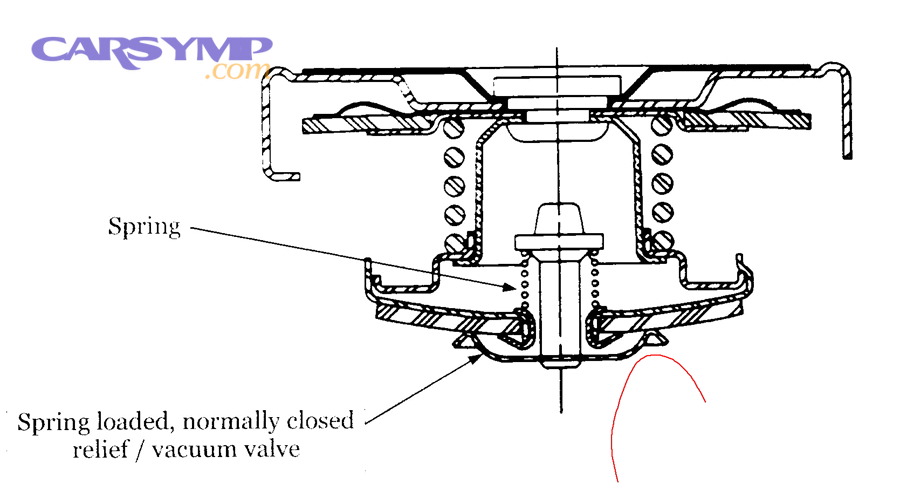
Radiator cap and boiling point explanation
- With a typical 50/50 antifreeze-water mix, boiling point is roughly ~220°F at atmospheric pressure.
- Pressurizing the system raises boiling point, which increases the cooling system’s margin before vapor forms.
- According to MACS, coolant boiling point rises about ~3°F per PSI, and a 15 PSI cap increases boiling point by about ~45°F (to about 265°F from ~220°F).
How a bad cap creates “mystery overheating”
- Let pressure escape early → coolant boils sooner → temp spikes at idle or after shutdown
- Push coolant into overflow and not pull it back on cooldown (vacuum valve issue)
- Mimic a head-gasket symptom (overflow “burping”) even when the engine is fine
Simple cap checks
- Look for cracked rubber seals, corrosion on sealing surfaces, or coolant crust at the neck.
- If you have repeated boil-over with no obvious leak and fans are working, the cap becomes a prime suspect.
If the cap and coolant level are good, move to airflow and electrical controls next—because many overheating complaints are actually fan-control failures.
How do you test radiator fan operation and relays step by step?
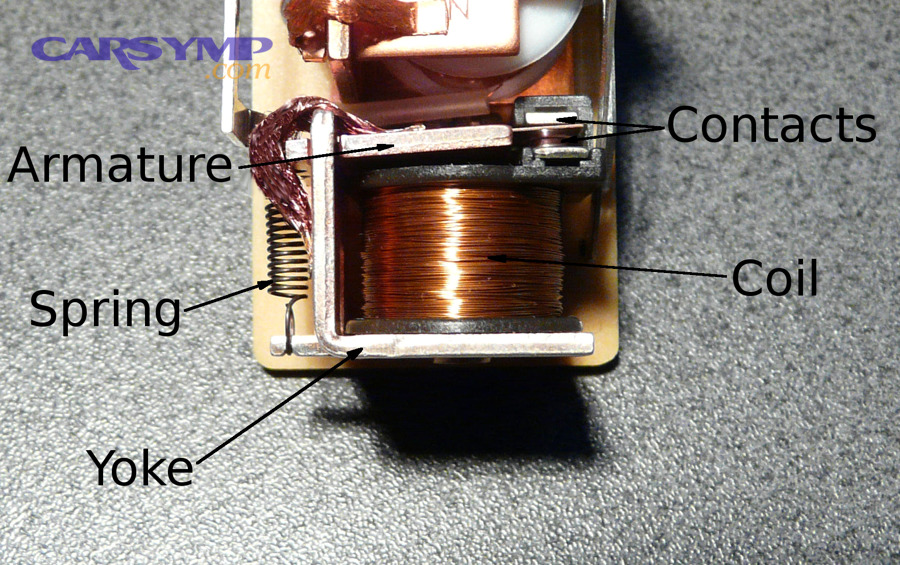
You can diagnose fan-related overheating by confirming (1) the fan should be on, (2) power reaches the fan circuit, and (3) the relay/control signal actually switches the fan on.
Next, use this Fan operation and relay troubleshooting sequence:
Step 1: Confirm when the fan should run
- Many vehicles turn fans on when coolant reaches a set temperature and/or when A/C is commanded on.
- A quick test is to turn on A/C (if ambient conditions allow); on many cars, at least one fan should run.
Step 2: Verify the fan can physically spin
- With engine OFF, check for debris, broken blades, or a fan that feels stuck.
- A seized fan motor can blow fuses or overheat wiring.
Step 3: Check fuses first (fastest electrical win)
- Locate under-hood fuse/relay box diagram.
- Check cooling fan fuse(s) and any maxi-fuses feeding the fan circuit.
Step 4: Relay swap test (if identical relay exists)
- If the fan relay matches another relay (same part number), swap temporarily and re-test.
- If the fan works after the swap, you likely found the issue.
Step 5: Power/ground test at the fan connector
- If you have 12V power and good ground when the fan is commanded on, the fan motor is likely bad.
- If you do not have power when commanded on, suspect relay/control/wiring.
Step 6: Understand “relay vs motor” misdiagnosis
RepairPal notes that the fan motor is often replaced when the relay was the real problem.
If the fans pass these checks, the overheating is more likely a circulation restriction (thermostat, radiator blockage, pump) or a pressure/coolant issue.
How do you check thermostat function and coolant flow without guessing?
You can check thermostat-related overheating by verifying coolant flow behavior during warm-up and looking for signs the thermostat is stuck closed (overheats quickly) or stuck open (runs cool, weak heater at speed may vary).
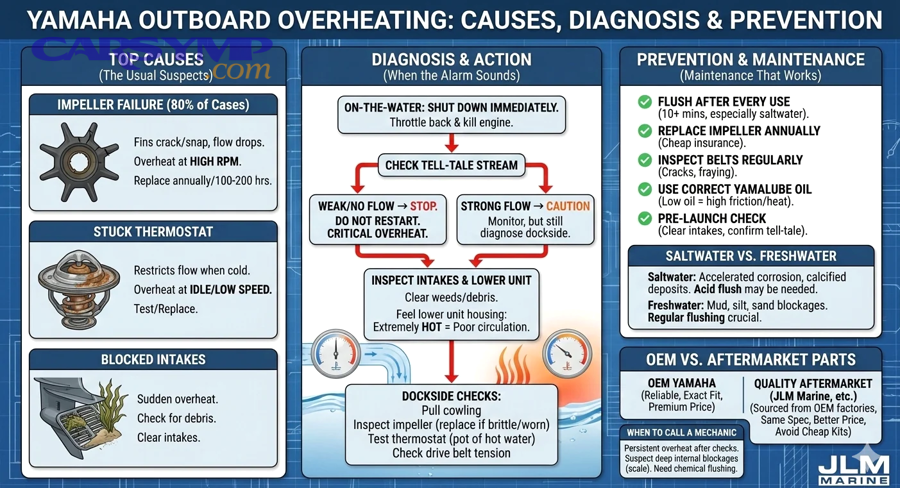
Then, run this no-nonsense coolant-flow check:
Step 1: Warm-up observation (cold start)
- Start cold and monitor the upper radiator hose temperature by touch (carefully) or with an infrared thermometer.
- Normal behavior: hose stays relatively cool, then warms rapidly when thermostat opens.
Step 2: Signs the thermostat may be stuck closed
- Temp rises fast, upper hose stays cool longer than expected
- Heater may blow hot initially but overheating accelerates
- Coolant may push into overflow due to localized boiling
Step 3: Signs the thermostat may be stuck open
- Slow warm-up, temperature never stabilizes properly
- Weak cabin heat in cold weather
- Fuel economy may drop
Step 4: Best practice when replacing
- Replace thermostat with a quality part and new gasket/seal.
- Refill and bleed air correctly (air pockets can mimic thermostat failure).
Cost reality check: RepairPal estimates thermostat replacement averages $574–$667 (labor and parts combined, varies by vehicle/location).
If thermostat behavior looks normal but overheating persists, focus on radiator heat rejection and airflow restrictions.
How do you diagnose radiator restriction and low-speed airflow problems?
You can diagnose radiator-related overheating by checking for external airflow blockage and internal flow restriction, because a radiator can “look fine” but still fail to shed heat at idle and low speeds.
Next, split the diagnosis into outside and inside:
External airflow checks (outside the radiator)
- Debris in fins: leaves, plastic bags, bugs, mud—especially between condenser and radiator.
- Bent fins: reduce airflow and heat exchange.
- Fan shroud missing/damaged: fans pull air from the easiest path; a shroud forces air through the core.
Internal restriction checks (inside the radiator)
- Hot/cold spots: Use an IR thermometer across the radiator face.
- A restricted core often shows uneven temperature patterns.
- Lower hose collapse: A weak hose can collapse at RPM, starving flow.
Quick clue: “overheats at idle, cools while driving”
That pattern strongly suggests insufficient airflow at low speed (fans/shroud/condenser blockage) or a radiator that can’t reject heat well at low airflow.
If the radiator appears restricted or damaged, replacement may be the most reliable fix. RepairPal lists radiator replacement averages $1,307–$1,471.
If the radiator is healthy and airflow is good, the next suspect is pump performance and circulation under load.
How can you assess water pump performance and weak circulation?
You can assess water pump problems by looking for leakage, bearing noise, and circulation weakness under heat load, because a pump can spin without moving enough coolant if the impeller is damaged or the belt drive is slipping.
Then, use this layered approach:
Step 1: Check for water pump leakage
- Look for coolant trails or wetness near the pump and pulley area.
- Many pumps leak from a weep hole when the seal fails.
Step 2: Listen for bearing noise
- A failing bearing often whines or grinds and may wobble the pulley.
Step 3: Check belt drive condition (for belt-driven pumps)
- A glazed, loose, or contaminated belt can slip and reduce pump speed.
- Tensioners and idlers matter too.
Step 4: Understand impeller failure (the hidden killer)
Some pumps fail because the impeller erodes or spins on the shaft (less common but real). Symptoms can look like:
- Overheating under load
- Heater output changes with RPM
- No obvious external leak
Cost context: RepairPal estimates water pump replacement averages $857–$1,106 (updated estimates vary by vehicle and location).
If the pump checks out, you’re left with “system pressure/boiling,” “fan control,” “radiator efficiency,” or engine-side issues (combustion gases in coolant)—and your checklist results will point to which one.
What does a “cooling system testbed” study suggest about diagnosing faults?
Cooling system faults can be isolated more accurately when you track both temperature and pressure trends, because different failures (leaks, restrictions, air ingestion) create distinct patterns in these signals.
In addition, research shows structured diagnosis is not just a mechanic’s habit—it’s measurable. According to a study by Vanderbilt University from the Department of Electrical Engineering and Computer Science, in 2000, researchers evaluated diagnosis of engineered faults on an automobile cooling system using temperature and pressure sensors, with recorded ranges showing pressures on the order of 0–100 kPa and temperatures up to about 100°C in example datasets used for leak fault isolation.
That evidence supports the practical takeaway: your checklist works best when it uses observable signals (fan on/off, coolant level, pressure behavior, temperature behavior) rather than replacing parts by hunch.
What are typical repair costs by root cause of overheating?
There are 5 main cost buckets for overheating repair—coolant leak fixes, pressure-control fixes, airflow/fan fixes, thermostat fixes, and circulation/radiator fixes—based on which part of the cooling system failed.
Next, use this table to connect your diagnosis result to realistic budget planning (these are “average estimate” ranges from a national estimator and will vary by vehicle and location):
| Root cause (diagnosis result) | Typical repair action | Typical estimate (average range) | Why the cost lands here |
|---|---|---|---|
| Thermostat stuck / erratic | Thermostat replacement | $574–$667 | Labor varies by accessibility; parts can be modest but labor can dominate |
| Water pump leak/noise/weak circulation | Water pump replacement | $857–$1,106 | Pump access can require major disassembly; some are timing-belt driven |
| Radiator restricted/leaking | Radiator replacement | $1,307–$1,471 | Parts cost + labor; modern radiators/assemblies raise parts pricing |
| Fan not running (motor failure) | Radiator fan motor replacement | $809–$922 | Assembly replacement can be straightforward or require front-end removal |
Important note for accuracy: “fan not running” might be a relay, fuse, wiring, or control issue rather than the motor, so diagnosing first can save hundreds.
If you want to reduce cost risk, the checklist goal is to identify the root cause category before buying major parts.
Is it safe to drive when your car is overheating?
No—driving while overheating is not safe for the engine because it can rapidly cause permanent damage, and the three most common “it might be okay” situations are narrow and time-limited.
More importantly, make the decision using this simple rule set:
Not safe to drive (stop immediately)
- Temperature warning light on or gauge near red and climbing
- Steam from under hood or coolant boiling/overflowing
- Heater blows cold while gauge is hot (possible low coolant/air pocket)
- Knocking/pinging, power loss, or misfires during overheat
Potentially safe only to move a very short distance (risk-managed)
You might limp to a safer spot (not “drive home”) if:
- Temperature starts dropping quickly after A/C off + heater on, and
- No steam/boiling is present, and
- You can keep RPM/load low and airflow high (rolling, not stop-and-go)
What to do after shutdown
- Let it cool, then check coolant level and obvious leaks.
- If coolant is low and you don’t know why, assume there’s a leak until proven otherwise.
- If it repeatedly overheats, tow it—because repeated overheating is how engines get expensive.
Finally, reconnect to the whole checklist: if you follow the steps above in order, you’ll know whether you’re dealing with coolant loss, pressure/boiling, airflow/fan control, radiator efficiency, or circulation—and that’s the fastest path from “overheating” to the correct fix.