


When a radiator (cooling) fan won’t run—or runs at the wrong time—the fastest fix is not “replace the fan.” It’s to diagnose the fan operation circuit: the relay, its power feed (fuses), the fan motor load, and the control signal that commands the relay.
Most DIY owners get stuck on one question: “Is it the fan relay?” This guide answers it with symptom patterns, quick checks, and relay tests that separate a failed relay from a bad fan motor, blown fuse, wiring issue, or a missing command from the ECU.
You’ll also learn safe, practical test methods that don’t require guessing—relay swapping (when appropriate), multimeter checks, and simple “command conditions” like A/C-on behavior—so your troubleshooting ends with a confirmed cause, not a pile of replaced parts.
Introduce a new idea: once you can prove which side is failing (control side vs load side), the rest of the radiator fan relay troubleshooting becomes a clean step-by-step flow.
What is a radiator (cooling) fan relay and what does it control?
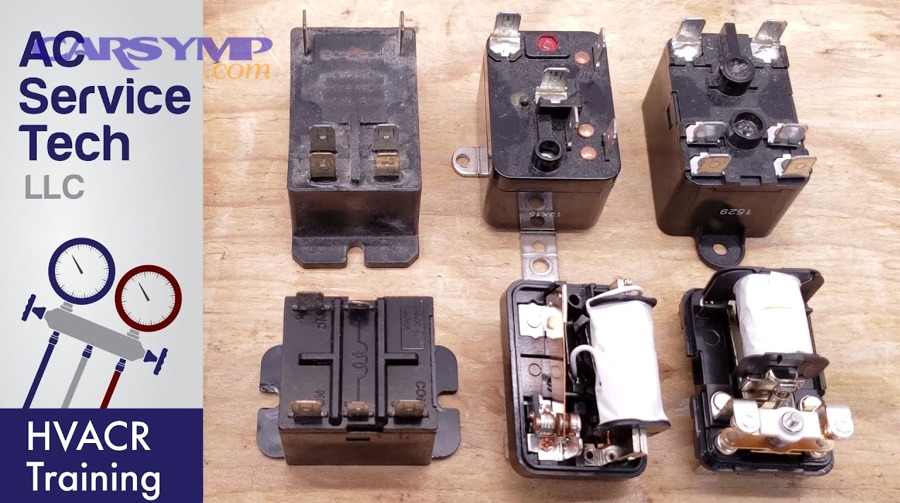
A radiator (cooling) fan relay is a high-current electrical switch that uses a low-current control signal to turn the radiator fan motor on or off, often in stages (low/high speed) based on temperature and A/C demand.
Next, because the relay sits between the battery and the fan motor, understanding its two internal circuits makes troubleshooting faster and safer.
What are the two circuits inside a fan relay (control side vs load side)?
Inside the relay are two linked circuits:
- Control side (coil circuit): A small electromagnetic coil energizes when the ECU, temperature switch, or fan control module provides a command (often by grounding one side of the coil). This side draws relatively low current.
- Load side (contact circuit): When the coil energizes, metal contacts close and send battery power to the fan motor through a high-current path.
This split matters because a relay can “click” but still fail under load if the contacts are burned or pitted. It also matters because a relay can test “good” on the bench yet never receive a control signal in the car—meaning the true fault is upstream (sensor, wiring, ECU command, etc.).
A practical way to think about it:
- If the control side fails: the relay never energizes → the fan never gets power.
- If the load side fails: the relay energizes, but the fan still doesn’t receive usable power (or power is inconsistent).
To keep terminology consistent for the rest of this guide:
- Fan operation = when and how the fan is commanded and powered (single speed, two speed, dual fan, A/C assist).
- Fan relay = the switching device controlling fan motor power.
Where is the fan relay usually located and how do you identify it safely?
Most vehicles place radiator fan relays in the under-hood fuse/relay box (sometimes labeled “FAN,” “COOL FAN,” “RAD FAN,” or “FAN HI/LO”). Some cars use a separate fan control module, but relays are still common.
To identify the correct relay safely:
- Check the lid diagram of the fuse/relay box (often the fastest).
- Use the owner’s manual relay chart if the lid diagram is missing.
- Look for multiple fan relays if the vehicle has:
- Two-speed fan operation (often “LO” and “HI” relays)
- Dual electric fans (fan 1/fan 2 relays)
Safety rules while identifying relays:
- Keep fingers and tools away from the fan blades (some fans can start unexpectedly).
- Don’t “probe” random terminals with metal tools; use a proper test probe or multimeter leads.
- If you’re unsure which relay is which, label before removing to avoid mixing critical relays.
Is it safe to keep driving when the radiator fan isn’t working?
No—driving with a radiator fan operation fault is not safe because (1) the engine can overheat quickly at idle/low speed, (2) overheating can damage head gaskets, cylinder heads, and catalytic converters, and (3) repeated heat spikes can turn a small cooling fault into an expensive engine repair.
Besides, the decision depends on what your temperature gauge is doing right now and whether you can restore airflow immediately.
Yes/No: Should you shut the engine off if the temperature climbs at idle?
Yes—shut it down if temperature continues climbing after you take immediate cooling steps, because the fastest way to prevent severe overheating is to stop heat production.
Use this practical threshold approach:
- If the gauge is rising above normal and still climbing: pull over safely, shift to park/neutral, and turn A/C off to reduce heat load.
- If the gauge reaches the hot zone or warning light appears: shut the engine off as soon as you’re safely stopped.
- If you see steam or smell coolant: treat it as a serious overheat event and stop.
This matters because overheating isn’t only about inconvenience—it’s about preventing secondary damage. During an overheating diagnosis, you’re trying to avoid the kind of thermal stress that leads to Head gasket signs during overheating (coolant loss without visible leaks, bubbling in the reservoir, persistent overheating afterward, milky oil, or white exhaust smoke).
What quick checks reduce risk before troubleshooting (coolant level, obvious leaks, fan obstruction)?
Before you test relays and wiring, do quick checks that prevent a “false” diagnosis:
- Coolant level check (only when safe):
- If the engine is hot, do not open a pressurized radiator cap.
- Check the overflow reservoir level if accessible.
- Obvious leak scan:
- Look under the vehicle for fresh coolant.
- Inspect hose connections and the radiator end tanks.
- Fan obstruction check:
- Ensure nothing is physically blocking the fan blades or shroud.
Also, don’t overlook Coolant mixture ratio and overheating. If the coolant is severely diluted or incorrectly mixed, the cooling system may lose boiling protection and heat-transfer stability under load. Even if the relay is fine, poor coolant condition can make temperatures spike sooner during idle or A/C operation—making the fan system look like the culprit when it’s not.
What are the most common symptoms of a bad cooling fan relay vs other fan-operation faults?
There are three main symptom patterns that point toward relay trouble vs other faults: (A) fan never runs, (B) fan runs intermittently, and (C) fan runs all the time—each pattern narrows whether the relay’s contacts, coil, or the command signal is failing.
More importantly, matching symptoms to the circuit side (control vs load) prevents guesswork.
Which symptoms strongly suggest a bad relay (no fan, intermittent fan, fan stuck on)?
These symptoms often point directly at the relay:
- Fan never runs, but the engine overheats at idle: could be a relay coil failure, relay contact failure, or no command signal—relay is high on the suspect list.
- Fan works sometimes, especially after tapping the relay box or after cooling down: classic sign of marginal relay contacts or internal relay wear that changes with heat/vibration.
- Fan runs continuously (even cold): can indicate contacts stuck closed or a control circuit that’s commanding “on” all the time. A stuck relay can be the cause, but you must confirm whether the ECU is commanding it.
A relay-specific clue is when:
- You hear a relay click when conditions should command the fan, yet the fan doesn’t spin (contacts may be burned).
- The fan starts after swapping relays with an identical one (strong relay indication).
What symptoms point more to the fan motor, fuse, sensor, or wiring instead of the relay?
These patterns often point elsewhere:
- Blown fan fuse repeats: suggests fan motor overcurrent or a short in the wiring, not “just a bad relay.”
- Fan spins slowly, squeals, or stops randomly while powered: suggests a worn fan motor, failing bearings, or poor ground/connector contact.
- Fan never runs, but relay tests good and there’s no command signal: points toward a control-side issue like a coolant temperature sensor input, A/C pressure logic, ECU conditions, or wiring between ECU/module and relay coil.
- Overheats at speed, not at idle: often points away from the fan relay and toward airflow through the radiator, thermostat issues, coolant flow problems, or radiator restriction.
Good troubleshooting doesn’t “rank parts.” It proves which part of the chain is broken.
How do you troubleshoot radiator fan operation step-by-step (fastest to most conclusive)?
The quickest method is a 4-step troubleshooting flow—(1) verify command conditions, (2) check fuses, (3) swap/test the relay, and (4) confirm power and ground at the fan—so you can identify whether the failure is in the relay, the fan motor load, or the control signal.
To better understand why this works, treat the fan system like two paths you must verify: the power path and the command path.
Does the fan run when A/C is turned on (and what does that result mean)?
Yes/No test: Turn the engine on, set A/C to max, and watch/listen.
- If the fan runs with A/C on:
That suggests the relay load path and fan motor may be capable of running. Your overheating at idle could then be caused by:- Fan not running at the correct speed (two-speed system fault)
- Fan running too late (control/temperature input issue)
- Cooling system issues outside the fan circuit (coolant level, air pockets, radiator flow)
- If the fan does not run with A/C on:
That points toward a fault in the fan operation chain: fuse, relay, wiring, fan motor, or control module/ECU command logic.
This test doesn’t “prove” the relay alone—but it quickly tells you whether the fan can be commanded under a common condition.
Which fuses and fusible links should you check first for fan operation?
Start with the simplest hard-stops:
- High-current fan fuse / fusible link (feeds the relay contacts and fan motor)
- Control-side fuse (feeds relay coil/control circuit or module)
- Any labeled ECU/IGN fuse tied to fan control logic on your fuse chart
How to check:
- Use a test light or multimeter to confirm power on both sides of the fuse.
- If a fuse is blown, don’t just replace it and move on—a blown fan fuse can mean the fan motor is drawing excessive current or wiring is shorted.
Can you swap the fan relay with a matching relay to confirm failure?
Yes—if the relay is identical and non-critical, swapping is a fast confirmation tool because it changes only one variable: the relay.
Do it correctly:
- Match part number and pin layout (not just physical size).
- Swap with a relay that has the same function type (some are normally-open, some include internal diodes or resistors).
- After swapping, repeat the same command condition:
- A/C on test
- Warm-up until fan should command on
Interpretation:
- Fan now works: the original relay is strongly suspect.
- No change: the problem may be elsewhere, or the command condition isn’t being met.
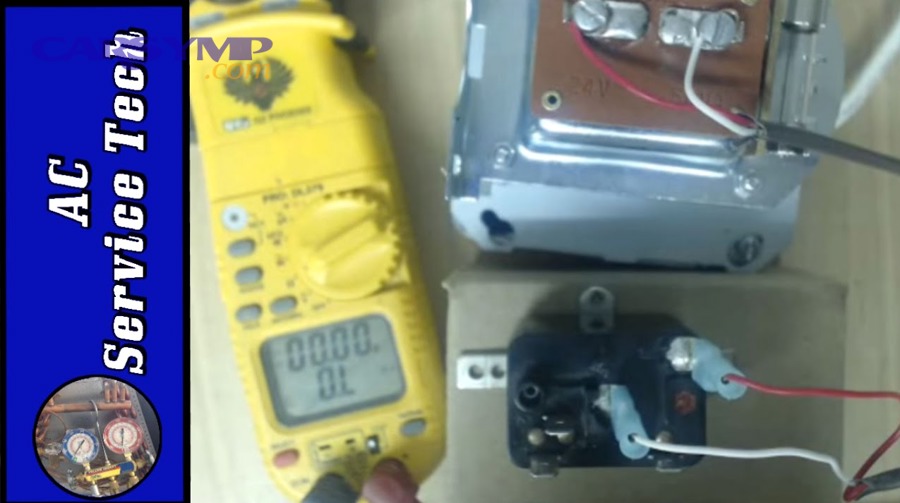
How do you test the relay with a multimeter (coil resistance + continuity under activation)?
A multimeter relay test has two parts:
1) Coil (control side) resistance
- Measure resistance across the coil terminals (often labeled 85 and 86 in many relay styles).
- Results:
- Open/infinite resistance: coil is broken → relay won’t energize.
- Near zero resistance: coil shorted → relay may blow control fuse or behave erratically.
- Reasonable resistance (varies by relay): coil likely intact.
2) Contact (load side) continuity
- With the relay not energized, the normally-open contacts should show no continuity.
- Energize the coil (using the vehicle command condition or a controlled power source) and the contacts should show continuity with low resistance.
Important detail: A relay can pass a continuity test and still fail under real fan current. If you suspect that, you move to voltage-drop tests later.
How do you test the fan motor and wiring to rule out “relay is fine” situations?
You can rule out “relay is fine” scenarios by directly verifying fan motor capability and the wiring’s ability to deliver current, using (1) a direct power test for the motor and (2) voltage and ground integrity checks under load.
However, the goal is not to “make it spin once”—it’s to confirm it can run at full speed consistently without overheating wiring or popping fuses.

Will the fan spin freely and run when powered directly (and what if it only runs slowly)?
Yes/No test: With the engine off and keys safe, check:
- Fan blades spin freely by hand (some resistance is normal; grinding is not).
- Then perform a controlled direct power test (often best done with fused jumper leads).
Interpret the outcome:
- Fan runs strong immediately: motor is likely healthy.
- Fan runs but is weak/slow: suspect motor wear, high resistance in connectors, or poor ground.
- Fan won’t run on direct power: motor is likely failed or seized.
Why “slow fan” matters: A slow fan can still move air, but not enough at idle, leading to overheating. That creates confusing symptoms where the relay clicks and “the fan runs,” yet the engine still overheats—especially with A/C on.
What voltage and ground checks confirm the load side is healthy?
A proper check verifies that the fan receives usable voltage under load, not just “some voltage.”
- Voltage at the fan connector (fan commanded on):
- If you see significantly less than system voltage, suspect:
- high resistance in wiring
- relay contacts with high resistance
- corrosion at terminals
- If you see significantly less than system voltage, suspect:
- Ground integrity (voltage drop test):
- Measure voltage drop between the fan ground and battery negative while the fan is commanded on.
- High drop = weak ground path, which can reduce fan speed and cause overheating.
This is where overheating diagnosis becomes precise: you’re identifying whether the fan is failing due to lack of current delivery rather than guessing parts.
Relay vs fan control module vs ECU command: which is your vehicle likely using?
Relay-only systems are common, but many vehicles use multi-relay speed staging or a fan control module that receives ECU commands—so your diagnosis must first identify whether you’re troubleshooting a simple relay circuit or a commanded control strategy.
Meanwhile, recognizing the architecture prevents you from “chasing” a relay that isn’t actually the decision-maker.
Do you have single-speed, two-speed, or dual-fan systems ?
There are three common fan operation configurations, based on how the vehicle achieves airflow:
- Single-speed, single fan
- One relay, one fan, on/off behavior
- Two-speed fan (or staged speed)
- Often multiple relays and sometimes a resistor or series/parallel switching
- You may see “FAN LO” and “FAN HI” relays
- Dual fans
- Two fan motors, sometimes with separate relays, sometimes staged together
How to tell quickly:
- Look at the fan shroud: one motor vs two motors.
- Look at the fuse/relay box diagram: one fan relay vs multiple fan relays.
- Observe behavior: fan may run at low speed first, then ramp to high.
A common mistake: diagnosing a two-speed system as if it were single-speed. If low speed fails but high speed works, the fan may run only when very hot—too late to prevent idle overheating.
What does it mean if the relay tests good but never receives a control signal?
If the relay coil never gets a command, the relay isn’t the root cause. It usually means the control side is failing, such as:
- The ECU isn’t commanding the fan because it doesn’t “see” the correct temperature (sensor input issue)
- Wiring between ECU/module and relay coil is open or corroded
- A/C pressure or request logic is preventing fan command
- A fan control module is faulty (if the vehicle uses one)
This is where symptom context matters:
- If the engine is clearly overheating but the ECU never commands the fan, treat it as a control logic/input problem, not a relay problem.
When should you replace the relay, and what should you do after the fix to prevent repeat failures?
You should replace the relay when testing proves the relay coil or contacts are faulty, and you should prevent repeat failures by confirming the fan motor current draw isn’t excessive, the connectors are clean, and post-repair fan operation matches real driving conditions.
Moreover, a relay replacement should be the end of a diagnosis—not the start.

Yes/No: Should you replace the relay if the fuse keeps blowing?
No—replacing the relay is not the correct first move when a fuse keeps blowing because (1) repeated fuse failure usually indicates an overcurrent load (often the fan motor), (2) a short to ground in wiring can blow the fuse regardless of relay condition, and (3) installing a new relay won’t reduce current draw or repair damaged insulation.
In addition, always solve the reason for the blown fuse before you risk overheating the harness or melting connectors.
A better approach:
- If the fan fuse blows when the fan is commanded on, test the fan motor directly and inspect the harness near the fan shroud where vibration and heat can chafe wiring.
What post-repair checks confirm the system is fixed (idle test, A/C test, temperature ramp)?
After relay replacement (or any fan circuit repair), confirm fan operation under real command conditions:
- Idle warm-up test
- Let the engine reach operating temperature while monitoring the gauge.
- Confirm the fan turns on before the gauge climbs into the hot zone.
- A/C-on functional test
- Turn A/C on and confirm fan operation as expected for your vehicle.
- Temperature ramp check
- Confirm the fan cycles (on/off) or changes speed appropriately (if applicable).
- Re-check coolant condition
- Ensure coolant is full and correctly mixed—coolant mixture ratio and overheating are linked because mixture affects boiling protection and heat transfer characteristics.
Evidence: According to a study by Kırıkkale University from the Faculty of Engineering and Architecture, Mechanical Engineering, in 2021, experiments in an automobile radiator across 0%, 25%, 50%, 75%, and 100% ethylene glycol (by volume) observed that as ethylene glycol ratio increased, heat transfer decreased, highlighting why mixture choices can affect cooling performance.
What advanced diagnostics help when fan relay tests “good” but the fan still fails intermittently?
When the relay tests “good” yet the fan still fails, the best advanced approach is load-based diagnostics—voltage-drop testing, control strategy verification (low-side vs high-side coil control), and heat-soak/intermittency checks—because intermittent faults often come from resistance, heat expansion, or marginal connectors rather than a completely dead component.
Especially with intermittent overheating at idle, these tests turn “random behavior” into measurable results.
How do voltage-drop tests find hidden resistance in fan power and ground circuits?
Voltage-drop testing works because it measures loss under load—exactly what kills fan speed.
How to do it conceptually:
- Command the fan on.
- Measure drop across:
- Battery positive to relay output
- Relay output to fan positive
- Fan ground to battery negative
What it tells you:
- A large drop on the power side suggests bad relay contacts, corroded terminals, or damaged wiring.
- A large drop on the ground side suggests poor chassis ground, corroded eyelets, or loose fasteners.
This is one of the most effective tools for intermittent faults because a connection can look “fine” visually but fail electrically under heat and current.
What’s the difference between ECU low-side control and high-side control of the relay coil?
Control strategy affects how you test:
- Low-side control: The coil gets power from a fuse, and the ECU/module turns it on by providing ground.
- High-side control: The ECU/module provides power to the coil, and the ground is constant.
Why it matters:
- You can misread a test light or meter if you assume the wrong strategy.
- Probing the wrong terminal can accidentally short a commanded circuit.
If you’re unsure, use a wiring diagram for your specific vehicle, or test carefully using non-invasive back-probing.
Why do some fan failures only happen after heat soak or in stop-and-go traffic?
Heat soak and idle conditions amplify weaknesses because:
- Fan current demand is steady and high at idle (no ram airflow).
- Relay contacts expand with heat; marginal contact pressure can become intermittent.
- Connectors soften slightly and lose spring tension, raising resistance.
- Fan motors with worn bearings draw more current when hot.
This is why you may see an intermittent pattern:
- “Works fine on the highway” but “overheats at idle,” especially after the engine bay is heat-soaked.
If your troubleshooting keeps circling back to “it only fails when hot,” treat it like a load-and-heat problem, not a simple continuity problem.
When is a scan tool or bidirectional fan command necessary (and what can it confirm)?
Yes—use a scan tool when you can’t confirm ECU command behavior because it can separate a control problem from a power problem.
A bidirectional command can confirm:
- The ECU is capable of commanding fan on/off
- The fan control module responds
- The power side can deliver current when commanded
Evidence: According to a study by Luleå University of Technology from the Department of Applied Physics and Mechanical Engineering (Division of Fluid Mechanics), in 2007, CFD fan modeling using the Multiple Reference Frame (MRF) method matched measured fan performance with less than 3.5% difference in airflow rate for most cases and produced good results for idle conditions, supporting why verifying airflow delivery under idle load is critical.
(If you want a deeper engineering perspective on the chaotic airflow environment fans face at idle, research also reports strong unsteady velocity components around automotive fans, which helps explain why small electrical or airflow restrictions can become big cooling problems in stop-and-go conditions.)