Diagnose Engine Overheating: A Step-by-Step Cooling System Troubleshooting Checklist for Car Owners (Thermostat vs Radiator vs Water Pump)
Overheating diagnosis is fastest when you treat it like car diagnostics: confirm the symptom, protect the engine, then test the cooling system in a strict order so you don’t replace good parts. This guide helps car owners diagnose engine overheating by matching when it overheats (idle, highway, A/C on, only after long climbs) to the most likely cooling-system failure.
Next, you’ll learn the first safety decisions to make when a car overheats on the road, plus what symptoms mean you should stop driving immediately. Those “Safe steps when car overheats on road” prevent warped heads, failed gaskets, and repeat breakdowns.
Then, you’ll walk through a Step-by-step overheating diagnostic checklist—from coolant level and trapped air to fan operation, thermostat function, radiator restriction, water pump flow, and radiator-cap pressure behavior. Each step includes what to look for, what it means, and what to test next.
Introduce a new idea: overheating patterns are clues—and once you can read those clues, you can choose the right test (like a cooling-system pressure test) and estimate typical repair costs before you commit to a shop visit.
Is it safe to drive a car while diagnosing overheating?
No—overheating diagnosis should not be done by “driving it to see what happens,” because continuing to drive while overheating risks severe engine damage for at least three reasons: coolant can boil and stop cooling, metal expands and warps, and oil thins and loses protection.
Next, because safety comes first, use these “safe steps when car overheats on road” before you do any hands-on checks.

Safe steps when car overheats on road
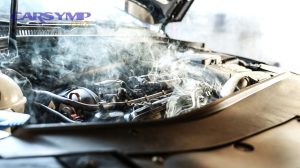
When the temperature gauge spikes, the steam appears, or the warning light comes on, do this in order:
- Turn A/C off immediately (A/C adds heat load and raises idle fan demand).
- Turn cabin heat on full hot + fan high to pull heat from the coolant loop. (It’s uncomfortable, but it’s a real heat sink.)
- Find a safe place to pull over; avoid idling in traffic if the gauge is climbing.
- Do not shut off instantly if it’s pegged—let it idle for 30–60 seconds only if the gauge starts dropping; otherwise shut down to prevent heat soak damage.
- Never open the radiator cap hot. Wait until it cools enough that hoses are not hard and the system is no longer pressurized.
“Stop now” signs (don’t limp it home)
Stop and tow if you see any of the following:
- Temperature gauge pegged hot and not dropping with heater on
- Steam or coolant spraying from under hood
- Coolant puddle forming rapidly
- Engine runs rough, misfires, or loses power (possible coolant intrusion)
- “Milkshake” oil on dipstick or oil cap (possible internal leak)
- Sweet smell plus thick white exhaust after overheating (possible Head gasket signs during overheating)
How long can you drive after it cools down?
If the gauge returns to normal and you can maintain temperature, you may drive only a short distance to a safe location if:
- Coolant level is adequate,
- No active leak is visible,
- The cooling fan is working,
- And the temperature remains stable under light load.
If it overheats again in minutes, the diagnosis phase should shift from “on-road” to “in-place testing,” including a Cooling system pressure test explained later.
What does engine overheating mean in an overheating diagnosis?
Engine overheating means the engine is producing or retaining more heat than the cooling system can remove, usually because coolant can’t circulate, air can’t flow through the radiator, pressure can’t be held, or the system has lost coolant.
Then, to make overheating diagnosis accurate, you need to understand what normal temperature control looks like and what changes when it fails.

What “normal” looks like
Most modern engines warm up to a regulated operating range and stay there because:
- The thermostat controls when coolant flows through the radiator.
- The radiator transfers heat from coolant to air.
- The fan(s) force airflow at idle/low speed.
- The water pump circulates coolant through the engine and radiator.
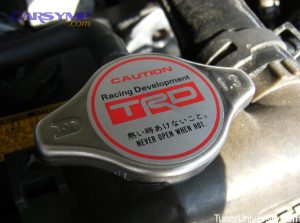
- The radiator cap maintains pressure to raise boiling point and control expansion flow.
What “overheating” indicates (root causes)
In practical car diagnostics terms, overheating usually comes from one of these buckets:
- Coolant problem: low level, air pockets, wrong mixture ratio, contamination/sludge.
- Airflow problem: fan not running, shroud missing, blocked fins, A/C condenser clogged.
- Flow problem: thermostat stuck, pump impeller damaged, collapsed hose, internal restriction.
- Pressure problem: radiator cap weak, leak in system, head gasket pressurizing the system.
- Heat load problem: heavy towing, extreme ambient heat, A/C load, timing/fuel issues (less common, but real).
A key point: overheating diagnosis is less about “what part is famous” and more about which bucket fits your pattern.
What is a step-by-step overheating diagnostic checklist?
A step-by-step overheating diagnostic checklist is a sequence of tests that moves from easiest/most common to harder/less common, so you isolate the failure without guessing.
Next, because overheating can come from coolant, airflow, flow, or pressure, follow the checklist in this order so each result “hooks” into the next step.

Step 1: Confirm the symptom (pattern logging)
Before you touch anything, write down:
- Overheats at idle, low speed, highway, or all the time?
- Overheats only with A/C on?
- Overheats after 10 minutes or after 45 minutes?
- Heater output: hot / lukewarm / cold when it overheats?
- Coolant loss: none / slow / rapid?
These notes guide the rest of the Thermostat vs radiator vs water pump diagnosis.
Step 2: Basic visual check (cold engine)
Cold checks prevent burns and prevent false readings:
- Coolant in reservoir at “COLD” line
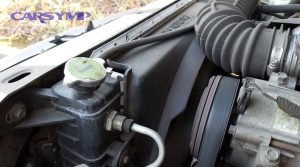
- Radiator hose condition: cracks, swelling, soft spots
- Wetness: radiator end tanks, hose clamps, water pump weep hole area
- Coolant color: clean, rusty, oily sheen, or muddy sludge
- Belt condition/tension (if belt-driven water pump)
Step 3: Check coolant level correctly (radiator + reservoir)
Many cars show “full reservoir” while the radiator is low. If safe and cool:
- Remove radiator cap (or pressurized reservoir cap) and confirm radiator is full.
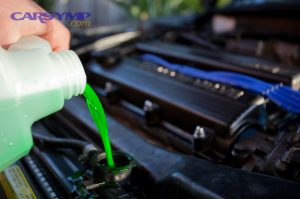
- If low, top up with correct Coolant mixture ratio and overheating considerations and bleed air.
Step 4: Test fan operation at idle (key overheating-at-idle fork)
If overheating occurs mostly at idle/low speed, the fan path is high priority:
- Do fans run when gauge rises or A/C is turned on (many cars command fans with A/C)?
- If not, move to Fan operation and relay troubleshooting.
Step 5: Verify thermostat behavior (warm-up profile)
A thermostat stuck closed can cause rapid overheating; stuck open can cause slow warm-up but may still overheat under load if other issues exist.
Step 6: Check radiator heat exchange (restriction/blocked fins)
At highway speed, airflow is high—so if it overheats on the highway, restriction or flow problems rise in probability.
Step 7: Check water pump flow signs
Water pump issues often show as overheating under load or at speed, sometimes with poor heater performance.
Step 8: Check radiator cap pressure behavior
A weak cap can lower boiling point and cause boil-over, especially after shutdown heat soak.
Step 9: Pressure test / combustion gas checks (advanced)
If you’ve ruled out basics, confirm leak sources and internal pressurization using a pressure test.
This is the backbone of a reliable overheating diagnosis—exactly the kind of logic-driven workflow you’d see on carsymp.com, but laid out so you can follow it step by step.
Is low coolant or an air pocket a common root cause in overheating diagnosis?
Yes—low coolant and trapped air are among the most common overheating diagnosis outcomes, because they reduce heat transfer, create hot spots, and can stop heater function, all while making other parts look “guilty.”
Then, because coolant volume and air removal are foundational, fix this first before you judge fans, thermostats, or pumps.
Low coolant and air pockets at idle
Low coolant often shows up as overheating at idle because:
- At idle, pump speed is lower, so circulation is weaker.
- Small air pockets expand with heat and can block flow through the thermostat housing or heater core.
- The temperature sensor may sit in steam/air and read incorrectly—sometimes sudden spikes.
Common symptoms:
- Heater blows cold or fluctuates when the gauge climbs
- Gurgling/sloshing behind dash
- Coolant level drops after you fill it and run the engine (air burping out)
Coolant mixture ratio and overheating
Coolant isn’t just “antifreeze”—it’s a heat-transfer fluid plus corrosion protection. Too much antifreeze can reduce heat transfer; too much water can reduce boil/freeze protection and corrosion inhibition.
A practical rule for most passenger cars is staying near the manufacturer’s recommended mix (often around 50/50), because it balances:
- Heat transfer efficiency
- Boiling margin when pressurized
- Freeze protection and inhibitor package
Evidence: According to a study by Kırıkkale University from the Department of Mechanical Engineering, in 2021, increasing ethylene glycol ratio reduced heat-transfer performance compared with water in an automobile radiator test setup, highlighting why mixture choice matters in overheating diagnosis.
Bleeding air properly (what DIYers miss)
Air removal is make-or-break. Best practices:
- Use the correct fill point (radiator or pressurized reservoir).
- Open factory bleed screws if equipped.
- Park nose-up or use ramps if the radiator cap isn’t the highest point.
- Run heater on full hot to open heater core flow.
- Squeeze upper hose carefully (engine cool-to-warm, never when scalding hot).
- Watch for steady stream at bleed points; top off repeatedly.
If air returns quickly or coolant disappears, that’s a leak/pressure problem—move to the pressure test section later.
Is your radiator fan system working correctly for overheating diagnosis?
Yes/no—your fan system is “correct” only if it turns on at the right time, at the right speed, and pulls air through the radiator, and fan failure is a top cause of overheating at idle for three reasons: airflow drops to near-zero, condenser heat stacks in front of the radiator, and the engine relies on the fan instead of vehicle speed.
Next, because fan checks are central to overheating diagnosis at low speed, validate both mechanical airflow and electrical control.
Fan operation and relay troubleshooting
Work through these checks in order:
- Command test using A/C
- Turn A/C on. Many cars command fans immediately.
- If fans don’t run with A/C, the issue may be power, relay, fan motor, or control signal.
- Check fuses and relays
- Find the cooling fan fuse/relay in the under-hood box.
- Swap identical relays (if applicable) as a quick A/B test.
- Verify fan direction and shroud
- A fan that spins the wrong direction (after wiring repair) moves the wrong airflow.
- Missing shrouds drastically reduce pull-through at idle.
- Temperature sensor vs fan control
- Some vehicles use an ECT sensor for fan control; others use a separate switch.
- A faulty sensor can prevent fan command even if the engine is hot.
- Two-speed/variable fans
- Many vehicles have low and high speed. Low speed may work, high speed may fail.
- Symptom: fine in mild weather, overheats with A/C or heavy traffic.
Quick airflow reality check
A simple field check:
- With engine warm and fan running, hold a strip of paper near the radiator side (not the fan blades). You should see consistent pull-through airflow.
- Weak airflow can be caused by a failing fan motor, damaged blades, or a blocked radiator/condenser stack.
Evidence: According to a dissertation by Clemson University from the Department of Mechanical Engineering, in 2016, experimental work analyzed multi-electric-fan radiator configurations and highlighted how fan configuration materially affects cooling performance—supporting why fan faults often show up first at idle.
Is the thermostat a likely culprit in Thermostat vs radiator vs water pump diagnosis?
Yes/no—the thermostat is likely if overheating happens quickly after warm-up or if hose temperature behavior is abnormal, because a stuck-closed thermostat blocks radiator flow, a stuck-open thermostat slows warm-up and can destabilize regulation, and a thermostat that opens late can mimic a “random” overheating complaint.
Then, because thermostat checks can be done without removing parts, confirm behavior before replacement.

Thermostat symptoms that match overheating diagnosis
Common “thermostat-leaning” patterns:
- Rapid spike from normal to hot within a few minutes after reaching operating temp
- Upper radiator hose stays cool while engine gets hot (possible thermostat stuck closed)
- Heater blows hot, then suddenly goes cool as the gauge spikes (flow disruption)
Quick non-invasive thermostat test
Start cold engine, then feel the upper radiator hose carefully (keep away from belts/fans). It should stay cooler at first, then warm quickly when the thermostat opens.
If it warms gradually from the start, it may be stuck open; if it never warms and the engine overheats, it may be stuck closed.
Replacement realities
Thermostats are relatively inexpensive, but modern cars may require:
- Access under intake components
- Bleeding procedures afterward
- Correct temperature-rated part
If replacing, always follow correct bleeding steps—otherwise you create the air pocket that causes the next overheating event.
Is the radiator clogged or externally blocked in overheating diagnosis?
Yes/no—a clogged or blocked radiator is likely if overheating happens at speed, under load, or after long climbs, because the engine is generating more heat and the radiator can’t shed it when restriction reduces heat exchange, coolant flow, or airflow through fins.
Next, because the radiator is both an airflow and coolant-flow component, you must check outside and inside.
External blockage checks (air side)
Look between grille and radiator for:
- Packed bugs/leaves
- Mud or debris (common after off-road driving)
- Bent fins restricting airflow
- A/C condenser blockage (it sits in front on many cars)
A helpful habit: shine a light from behind; you should see consistent light through fins.
Internal restriction checks (coolant side)
Internal clogging often comes from:
- Rust/corrosion in neglected coolant
- Stop-leak products
- Mixed incompatible coolants forming gel/sludge
Signs:
- Radiator feels cool in some areas and hot in others after warm-up (cold spots can indicate clogged tubes)
- Overheats at highway speed but may be okay at idle (because fans can’t fix internal restriction)
“Hot tank / cold tank” reading
Use a scan tool and an infrared thermometer if available:
- Expect a temperature drop across the radiator when it’s working.
- A very small drop can indicate reduced heat transfer or insufficient airflow.
If you suspect restriction, a professional flow test or radiator replacement may be more effective than flushing—especially on heavily scaled cores.
Is a weak water pump flow causing overheating diagnosis to point the wrong way?
Yes/no—water pump weakness is likely if overheating worsens with RPM/load or heater output is poor despite correct coolant level, because circulation fails to move heat away from the engine fast enough, cavitation can form hot spots, and impeller damage can reduce real flow even when the pulley spins.
Then, because water pump issues can mimic thermostat or radiator problems, focus on flow clues rather than guesswork.
Water pump weak-flow symptoms
Patterns that raise water-pump probability:
- Overheats more at highway speed or during acceleration (higher heat production)
- Heater output stays lukewarm at idle and doesn’t improve consistently
- Coolant movement in radiator is weak (on vehicles where this is visible safely)
- Noise or leak at pump area (weep hole stains, grinding bearing noise)
When “it’s not the pump”
Be careful: many people replace the pump because it’s “popular,” but the real cause is:
- Air pockets
- Collapsing lower hose under suction
- Blocked radiator
- Head gasket pressurizing system
So treat the pump as a later step unless the pattern strongly supports it.
Confirming pump issues
Better confirmation methods:
- Observe heater performance changes with RPM (if safe)
- Check for hose collapse under rev (collapsed lower hose can mimic pump failure)
- Look for leaks at pump weep hole and belt slip
If the pump uses a plastic impeller (common on some designs), impeller slip or erosion can create “looks fine from outside” failures.
Is the radiator cap pressure and boiling point part of overheating diagnosis?
Yes—the radiator cap is a pressure regulator, and pressure raises the coolant’s boiling point, which matters because boiling creates steam pockets that reduce cooling, and a weak cap can cause boil-over, overflow, and overheating after shutdown.
Next, because many overheating complaints happen “after I parked,” you need a clear Radiator cap and boiling point explanation to avoid missing an easy fix.
Radiator cap and boiling point explanation (why pressure matters)
When coolant is pressurized, its boiling point rises. In practical terms:
- A system that can’t hold pressure can boil earlier.
- Boiling creates steam that insulates metal surfaces, increasing localized temperatures fast.
Multiple automotive references summarize this relationship and provide typical temperature increases per psi of cap pressure.
Symptoms that suggest a cap problem
- Coolant pushed into overflow bottle and doesn’t return after cool-down
- Boil-over smell after shutdown
- Repeated need to top off with no obvious external leak
- Overheats more in hot weather or with A/C
What to do
- Replace the cap with the correct pressure rating for your vehicle (don’t “upgrade” blindly).
- Better: test the cap with a cap tester (many pressure-test kits include this function).
If replacing the cap improves symptoms but coolant still disappears, you likely have a leak or internal pressurization—go to pressure testing.
Which overheating pattern best matches Thermostat vs radiator vs water pump diagnosis?
Thermostat “wins” for sudden post-warm-up spikes, radiator “wins” for highway/load overheating, and water pump “wins” for circulation-related overheating under load plus weak heater—and your pattern is the fastest way to stop guessing.
Then, because many vehicles show mixed symptoms, use the comparison table below to choose your next test.
Here’s a pattern-to-cause table that summarizes what different overheating behaviors usually indicate (it’s not perfect, but it sharply improves first-pass car diagnostics):
| Overheating pattern | Most likely bucket | Best next test |
|---|---|---|
| Overheats at idle, improves when driving | Airflow (fan/shroud) | Fan command, relay/fuse, airflow check |
| Overheats at highway speed, not at idle | Radiator restriction / flow issue | Radiator temp drop, fin blockage, flow test |
| Rapid spike shortly after warm-up | Thermostat stuck/late | Upper hose warm-up test, thermostat replace/verify |
| Overheats with A/C on, especially in traffic | Fan high-speed / condenser load | Fan speed stages, relays, condenser cleanliness |
| Heater goes cold when it overheats | Low coolant / air pocket / flow interruption | Bleed air, check level, pressure test for leaks |
| Repeated boil-over after shutdown | Pressure/boiling issue | Cap test, pressure test, check for hot spots |
| Bubbles in reservoir, hoses rock-hard quickly | Possible combustion gas intrusion | Block test, pressure test, compression/leak-down |
Typical repair costs by root cause (what to expect)
Costs vary widely by vehicle, labor access, and region, but this rough table helps you plan:
| Root cause (diagnosis result) | Typical fix | Cost drivers |
|---|---|---|
| Low coolant / small leak | Hose, clamp, reservoir, small repair | Leak location, coolant type, bleed time |
| Fan relay/fuse/motor | Electrical repair or fan assembly | Fan module design, access, calibration |
| Thermostat | Thermostat + gasket + coolant | Housing design, bleeding complexity |
| Radiator clogged/leaking | Radiator replacement | OEM vs aftermarket, condenser removal |
| Water pump | Pump + belt/chain-related labor | Access, timing components, gasket surfaces |
| Radiator cap | Cap replacement | Correct pressure rating, cap test |
| Head gasket (rare but expensive) | Gasket + machining | Overheat severity, head warpage |
Use this table to decide whether you should immediately pressure test the system or start with the fan/thermostat checks.
What advanced checks confirm rare causes in overheating diagnosis?
Advanced checks confirm rare causes by proving whether the system leaks under pressure, whether pressure is being generated internally, and whether cooling capacity is being lost under specific loads, which helps you avoid replacing parts based on vibes.
Next, because these checks sit “after” the main checklist, they expand your micro-semantics coverage: they don’t replace basic diagnostics—they confirm what basics couldn’t.

Cooling system pressure test explained
A cooling-system pressure test checks for leaks by pumping the system to a specified pressure (typically near cap rating) and observing pressure drop and visible seepage.
How to use it safely:
- Only test on a cool engine.
- Pump to the recommended pressure—don’t exceed cap rating.
- Watch the gauge: a steady drop indicates a leak.
- Inspect common leak points: radiator end tanks, hose joints, heater hoses, thermostat housing, water pump weep hole, reservoir seams.
What results mean:
- Pressure drops + visible leak: fix external leak first.
- Pressure drops + no visible leak: check cabin (heater core), under intake, or internal leak possibility.
- Holds pressure but still overheats: airflow/flow/heat-exchange issue more likely.
Head gasket signs during overheating (block test logic)
Head gasket trouble can cause overheating by:
- Pressurizing the cooling system with combustion gases
- Displacing coolant
- Creating hot spots and steam pockets
Clues that increase suspicion:
- Hoses become rock-hard quickly after cold start
- Persistent bubbles in reservoir
- Sweet smell + white exhaust after warm-up
- Unexplained coolant loss with no external leak
Confirm with:
- Combustion-gas block test
- Compression test / leak-down test
- Cooling system pressure test
When temperature readings lie (sensor vs reality)
Sometimes the gauge spikes due to:
- Sensor in an air pocket
- Wiring/ground issues
- ECU strategy changes (some gauges are “buffered”)
Use scan-tool ECT data and (if safe) an infrared thermometer at thermostat housing and radiator tanks to correlate real temps.
Preventing recurring overheating (after you fix it)
Once the root cause is resolved, prevent repeats by:
- Refilling with correct coolant type and coolant mixture ratio per manufacturer
- Bleeding air thoroughly
- Replacing old caps/hoses if they’re near end-of-life
- Keeping radiator/condenser fins clean
- Verifying fan stages work with A/C and at high temp
- Scheduling coolant service intervals so corrosion and sludge don’t rebuild
In short, overheating diagnosis is best when it’s systematic: protect the engine first, match the overheating pattern, then prove the failure using airflow, flow, and pressure tests—so the repair is correct the first time.