


A radiator cap (also called a cooling-system pressure cap) raises coolant’s boiling point by sealing the cooling system and allowing it to build controlled pressure, which delays boiling and helps prevent steam pockets and boil-over during normal operating temperatures. That “extra boiling margin” is the real reason the cap matters.
Next, the same cap also manages coolant expansion and recovery by venting excess pressure to the overflow/expansion tank and then pulling coolant back as the engine cools. This pressure-and-recovery cycle keeps the radiator topped up and the system stable.
Then, the pressure rating on the cap (psi/bar) tells you when the cap will vent, which directly affects how much boiling-point margin you get—without changing the thermostat setting. The “right” cap is almost always the one that matches the vehicle’s design limits.
Introduce a new idea: once you understand the boiling-point logic, you can spot the symptoms of a cap that cannot hold pressure and avoid common mistakes that lead to overheating complaints that look like bigger problems.
What does a radiator cap do in a pressurized cooling system?
A radiator cap is a spring-loaded pressure control valve that seals the cooling system, holds a calibrated amount of pressure, and safely vents and recovers coolant so the engine can run without boiling the coolant during normal heat loads. Next, to understand why it works, you need to connect each cap function to what you actually see on the car—boil-over, coolant loss, or a low radiator.
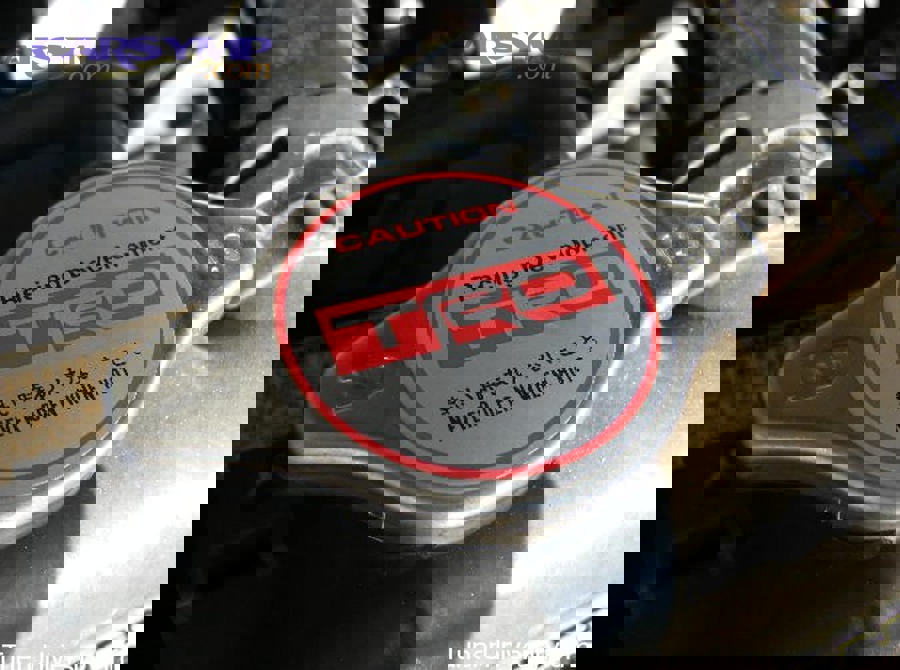
What is a “cooling-system pressure cap” and why is it the same thing as a radiator cap?
A “cooling-system pressure cap” is simply the functional name for what most drivers call a radiator cap: the cap’s primary job is to maintain system pressure up to its rating, not to “cap the radiator” cosmetically. More specifically, modern vehicles may place that pressure cap on the radiator neck or on a pressurized expansion tank (sometimes called a degas bottle). The location can change, but the purpose stays the same: the cap is the calibrated gateway that decides when pressure is held and when it is released.
In practice, the synonym matters because it prevents a common mistake: buying a cap that “fits” physically but does not match the system style. A radiator-neck cap typically seals at the radiator filler neck and routes overflow through a small tube to a bottle. A pressurized expansion tank cap seals the tank itself and may be the only “cap” in the system. When the wrong style is used, the system may never build stable pressure, which lowers the boiling point and encourages boil-over.
What are the core functions of a radiator cap in order (seal → build pressure → vent → recover)?
There are 4 core radiator-cap functions, in a predictable order: seal, build pressure, vent, and recover, based on how temperature changes the coolant volume and pressure during operation.
- Seal the system
The cap’s rubber gasket and metal seating surfaces prevent air from entering and coolant from escaping at the filler neck. A poor seal lets pressure leak away, which directly reduces boiling-point margin. - Build and hold pressure (to its rating)
As coolant heats and expands, pressure rises. The cap’s spring holds the pressure valve shut until the pressure reaches the cap rating. Holding pressure is what raises the boiling point. - Vent excess pressure safely (overflow/expansion path)
Once the pressure reaches the rating, the pressure valve opens and routes expanding coolant to the overflow/expansion tank. This keeps pressure from spiking high enough to damage hoses, radiators, or heater cores. - Recover coolant during cool-down (vacuum return)
When the engine cools, coolant contracts and can create vacuum. The cap’s return (vacuum) valve opens to draw coolant back from the tank into the radiator, keeping the radiator full rather than leaving the coolant stranded in the bottle.
That sequence is why a radiator cap can “cause problems” even though it is small. If it fails at any stage, you can get symptoms that look like much larger issues—coolant pushed out, a low radiator, or repeated overheating at idle.
Does the radiator cap directly cool the engine?
No—the radiator cap does not directly cool the engine because it does not remove heat; it protects the cooling system from boiling by maintaining pressure and stabilizing coolant circulation. To illustrate, boiling creates vapor (steam) that transfers heat poorly compared with liquid coolant. When steam pockets form, metal temperature can climb fast even if the coolant level looks “okay,” especially around hot spots like the cylinder head. That is why cap pressure matters: it helps keep the coolant in the liquid phase, which preserves heat transfer and prevents a chain reaction into overheating.
According to a study by the University of Illinois at Chicago from the Department of Mechanical Engineering, in 2001, experiments on flow boiling examined boiling heat transfer behavior under controlled system pressure and highlighted how boiling conditions are strongly tied to pressure and saturation temperature relationships in the coolant loop.
How does radiator-cap pressure raise coolant’s boiling point?
Radiator-cap pressure raises coolant’s boiling point by increasing the system pressure above atmospheric pressure, which means the coolant must reach a higher temperature before it can change phase from liquid to vapor (boil). Then, once you connect “pressure” to “boiling,” the rest becomes intuitive: higher boiling point means fewer steam pockets and less chance of pushing coolant out at the overflow.
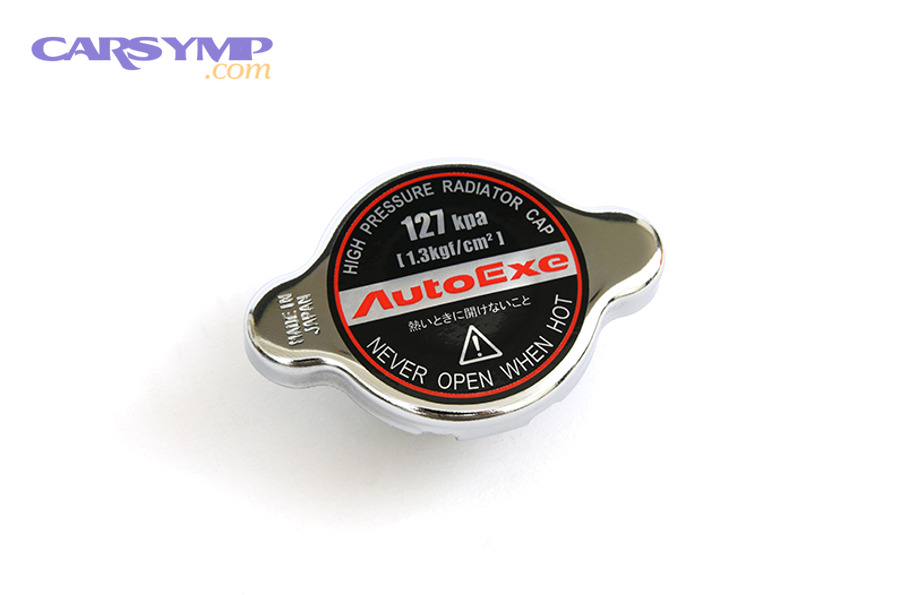
What is boiling point, and how does pressure change it in a closed system?
Boiling point is the temperature where a liquid rapidly turns into vapor because the liquid’s vapor pressure matches the surrounding pressure. In a closed cooling system, the “surrounding pressure” is the system pressure the cap allows. Specifically, when pressure increases, the coolant needs more energy (higher temperature) to form stable vapor bubbles. In an engine, that matters because bubble formation is not just a “coolant” event—it can become a heat-transfer failure at the metal surface.
Think of boiling point as your safety margin. If your engine normally operates near the edge of boiling, small increases in load—traffic, A/C use, steep climbs—can trigger localized boiling. By holding pressure, the radiator cap moves that edge upward.
A common rule of thumb is that boiling point rises by about 3°F per 1 psi of added pressure, which is why a typical cap rating can add meaningful margin.
How does boiling behavior differ between an open cooling system and a pressurized cooling system?
A pressurized cooling system behaves differently from an open one because it is designed to operate above atmospheric pressure, while an open system always boils at the atmospheric boiling point for that liquid. However, the difference is not abstract—it changes what happens under stress:
- Open system: boiling begins earlier; steam escapes; coolant loss happens quickly; temperature spikes can become runaway events.
- Pressurized system: boiling is delayed; coolant stays liquid longer; heat transfer remains strong; overflow is controlled rather than explosive.
That is why “it boils over” is often more about pressure loss than about the thermostat setting. Your thermostat can be perfect, yet the system can still boil if the cap cannot hold pressure.
How does coolant mix (water vs 50/50 antifreeze) compare in boiling protection—and where does the radiator cap fit in?
Water wins in raw heat capacity, but a 50/50 coolant mix wins in overall protection because it raises boiling point and adds corrosion inhibitors—then the radiator cap adds another layer by increasing pressure. More specifically, coolant protection is a stack: chemistry + pressure. A 50/50 mix may boil around 220°F at atmospheric conditions, and under typical cap pressure it can boil closer to 250°F (illustrative values vary by system and mixture).
This is why “just add more antifreeze” is not the right solution when a car boils over. If the cap is leaking pressure, the system loses boiling margin regardless of mixture. The fix is to restore the system’s designed pressure control, then confirm mixture concentration and system health.
How do radiator caps work mechanically (pressure valve and vacuum/return valve)?
Radiator caps work through two coordinated valves—a pressure relief valve and a vacuum/return valve—so the cooling system can safely manage expansion while hot and recover coolant while cooling down. Next, you can use this mechanical picture to interpret symptoms more accurately during an overheating diagnosis instead of guessing based on “it lost coolant.”
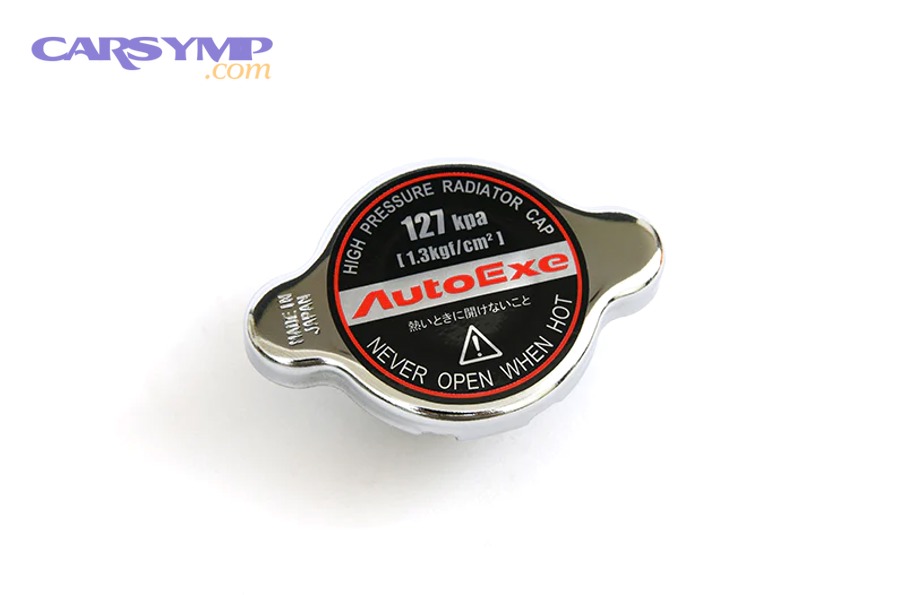
What is the pressure relief valve in a radiator cap, and when does it open?
The pressure relief valve is a spring-loaded valve that stays closed to hold pressure until the system reaches the cap’s rated pressure, then opens to vent excess pressure (and often coolant) to the overflow path. To better understand, picture the spring as a calibrated “gate.” When coolant heats and expands, pressure pushes against the valve. Once the force exceeds the spring setting, the valve lifts and releases pressure in a controlled way.
If that valve opens too early (weak spring, damaged seal, wrong rating), the system cannot build designed pressure, so boiling point falls and boil-over becomes easier. If it fails to open (stuck valve), pressure can climb too high and stress hoses, the radiator core, or the heater core.
This is why a “high-pressure cap” is not automatically an upgrade. It changes when the valve opens, which changes system stress. Guidance from performance and parts references emphasizes that higher pressure primarily raises boiling point rather than “cooling the engine,” and should be used only when the system is built for it.
What is the vacuum/return valve, and why does it matter after shutdown?
The vacuum/return valve is a small one-way valve that opens when the system cools and pressure drops below atmospheric pressure, allowing coolant to return from the overflow/expansion tank back into the radiator. Moreover, this valve prevents two common outcomes after shutdown:
- Collapsed upper radiator hose: vacuum forms, the hose softens, and it can suck inward if the valve does not admit fluid/air appropriately.
- Low radiator but “full” reservoir: the system pushed coolant out when hot but failed to pull it back in during cool-down.
The return valve is why a functioning recovery system can be nearly “hands-off.” When it fails, drivers often chase leaks that are not leaks—they are recovery failures.
Can a bad radiator cap cause overheating or boil-over at idle?
Yes—a bad radiator cap can cause overheating or boil-over at idle because (1) it cannot hold pressure so the coolant boils at a lower temperature, (2) boiling creates steam pockets that reduce heat transfer, and (3) repeated venting lowers coolant level and circulation margin. Besides, idle is the perfect storm: airflow is lower, heat soak is higher, and any reduction in boiling margin shows up quickly.
Here is how the chain reaction typically looks:
- Cap can’t hold pressure → system pressure stays low.
- Boiling point drops → localized boiling begins earlier around hot surfaces.
- Steam pockets form → liquid contact with metal decreases; heat transfer falls.
- Coolant vents to bottle → level drops; more vapor forms; temperature rises.
This is also where people confuse symptoms with causes. Repeated boil-over can lead a driver to suspect Head gasket signs during overheating (like persistent bubbling, coolant loss, or exhaust-gas intrusion), but a weak cap can imitate the beginning of those symptoms by allowing boiling and aeration. The correct approach is to confirm the cap’s ability to hold rated pressure before jumping to expensive conclusions.
According to a study by the University of Illinois at Chicago from the Department of Mechanical Engineering, in 2001, experiments on flow boiling examined boiling heat transfer behavior under controlled system pressure and highlighted how boiling conditions are strongly tied to pressure and saturation temperature relationships in the coolant loop.
How do you read radiator-cap pressure ratings (psi/bar) and choose the right one?
Radiator-cap pressure ratings tell you the maximum pressure the cap is designed to hold before venting, and the right choice is the OEM-specified rating and style because it matches the cooling system’s structural limits and recovery design. Then, once you read the rating correctly, you can stop treating caps as interchangeable and avoid “fixes” that trade one problem for another.
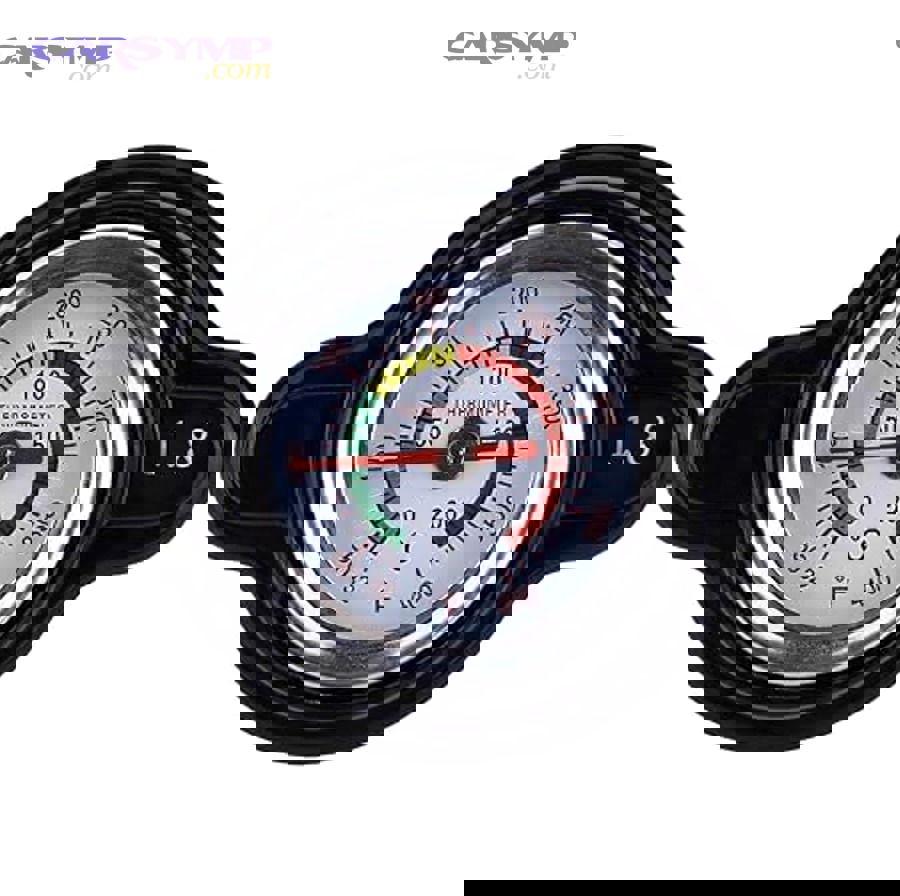
What does a radiator cap’s psi/bar rating mean in real driving terms?
A radiator cap’s psi/bar rating is the relief pressure—the point where the cap begins to vent pressure (and often coolant) rather than continue to increase system pressure. For example, a 15–16 psi cap does not mean the system always sits at 15–16 psi; it means the system can build pressure up to that range before the cap opens. Under light driving, pressure may be lower. Under heat load, pressure climbs until it approaches the cap’s limit.
This matters because your boiling point margin depends on the pressure you can actually hold. A cap rated correctly but unable to seal behaves like a low-pressure cap: the system vents early and boils early.
Is a higher-pressure radiator cap better than the OEM cap?
A higher-pressure cap wins in boiling-point margin, the OEM cap is best for system reliability, and an “upgrade” cap is only optimal when the cooling system components and operating conditions justify the extra stress. However, the decision should be made with the system, not the cap, in mind:
- Higher pressure cap (pros): increases boiling point margin; reduces likelihood of overflow during peak heat loads.
- Higher pressure cap (cons): increases stress on aging hoses, radiator seams, heater core, and clamps; can expose weak points as “new leaks.”
- OEM cap (pros): balanced for the vehicle’s radiator, hoses, water pump seals, and heater core; predictable recovery behavior.
If you are considering higher pressure because the car “runs hot,” treat that as an overheating diagnosis problem first. A cap can protect against boiling, but it does not fix restricted airflow, a failing fan, a clogged radiator, or coolant circulation problems.
What common radiator cap mismatches cause confusion (wrong depth, wrong neck, wrong system type)?
There are 3 main types of radiator cap mismatches—wrong geometry, wrong pressure rating, and wrong system style—based on how the cap seals and how the system routes overflow and recovery.
- Wrong geometry (depth/reach/neck design):
The cap may twist on but fail to compress the seal against the correct seat. This creates a slow pressure leak that is hard to see. - Wrong pressure rating:
Too low vents early (lower boiling margin). Too high stresses the system and can create leaks elsewhere. - Wrong system style:
Radiator-neck caps are not the same as pressurized expansion tank caps. Installing the wrong style can disable recovery or pressure holding entirely.
A simple “fits the neck” test is not enough. The cap must seal the right seat, open at the right pressure, and match the recovery design.
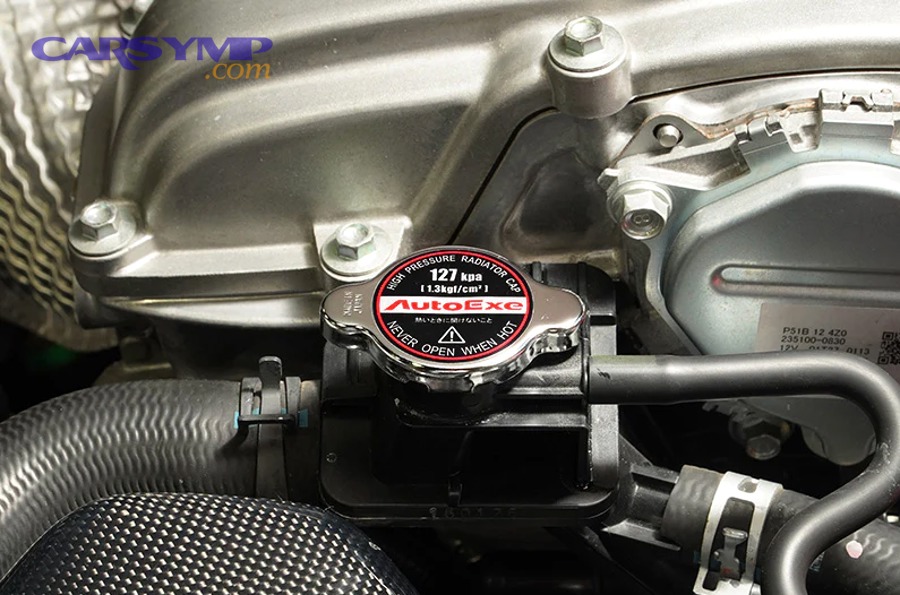
What symptoms indicate the radiator cap isn’t maintaining pressure ?
A radiator cap that isn’t maintaining pressure typically shows (1) repeated coolant loss into the reservoir or out the overflow, (2) boiling/steam events at lower temperatures than expected, and (3) unstable radiator level after cool-down. In addition, these symptoms often trigger avoidable panic because they resemble more severe failures; the goal is to connect symptoms back to the pressure-and-boiling mechanism.
What are the most common signs of a failing radiator cap?
The most common signs cluster into leak clues, recovery clues, and boiling clues:
- Leak clues near the cap/neck
- Wetness around the filler neck
- Crusty coolant residue on the cap ears or neck
- Sweet coolant smell after a drive
- Recovery clues (hot vs cold mismatch)
- Reservoir level rises when hot but does not return when cold
- Radiator is low after cool-down even though the bottle is not empty
- Upper hose looks “sucked in” after cooling (vacuum valve issue)
- Boiling clues
- Gurgling sounds after shutdown
- Sudden overflow in traffic that improves at highway speeds
- Visible steam near the overflow tube
When you see these, separate the symptom from the cause. A failing cap can be the cause, but it can also be the first component to “give up” when the system is already overheating for another reason.
How is “boiling over” different from “running hot” on the gauge—and why does cap pressure change both?
Boiling over is primarily a pressure-and-phase-change failure, while running hot is primarily a heat-rejection or circulation failure, but cap pressure can influence both by changing when boiling begins and whether steam pockets interrupt heat transfer. Meanwhile, the dashboard gauge is a blunt instrument: it reacts slower than metal temperature at hot spots, and it can miss the early stage of localized boiling.
- Boiling over: often triggered by low system pressure, low coolant, or localized boiling; coolant escapes or floods the reservoir.
- Running hot: often driven by insufficient airflow (fans), restricted radiator, stuck thermostat, weak water pump, or heavy load; the gauge climbs steadily.
This distinction matters for repair decisions and budgeting. If you skip the cap and chase major parts immediately, you can spend money without restoring boiling margin. When people ask about Typical repair costs by root cause, this is the fork in the road: a cap is inexpensive compared with a radiator, fan assembly, or head gasket—but it must be validated as the actual root cause rather than a coincidence.
Is it safe to open the radiator cap when the engine is hot?
No, it is not safe to open the radiator cap when the engine is hot because the system is pressurized, and releasing that pressure can flash-boil hot coolant into steam, causing severe burns; additionally, sudden pressure loss can trigger violent boil-over. More importantly, use Safe steps when car overheats on road instead of reaching for the cap: pull over safely, shut the A/C off, turn the heater on if needed to bleed heat, and let the engine cool before checking levels at the reservoir. If coolant is low, top up only when the system is cool enough to avoid pressure release hazards.
If you are seeing repeated overheating and you suspect a cap issue, treat it as a controlled test scenario—never a roadside gamble. Confirm that the cap is the correct type and rating, inspect the neck sealing surface, and pressure-test if possible. If the system continues to pressurize abnormally or forces coolant out consistently, then escalate the diagnosis to leaks, combustion-gas intrusion, or restricted cooling capacity.
According to a study by the University of Illinois at Chicago from the Department of Mechanical Engineering, in 2001, experiments on flow boiling examined boiling heat transfer behavior under controlled system pressure and highlighted how boiling conditions are strongly tied to pressure and saturation temperature relationships in the coolant loop.
What radiator-cap edge cases change the boiling-point story in real life?
Radiator-cap “edge cases” usually come down to system design differences, operating environment, and component age—meaning the same pressure rating can behave differently depending on whether the system is radiator-cap-controlled, expansion-tank-controlled, high-altitude operated, or already weakened. Next, these micro-scenarios help you avoid false confidence after “replacing the cap,” especially when the original problem was bigger than pressure control.
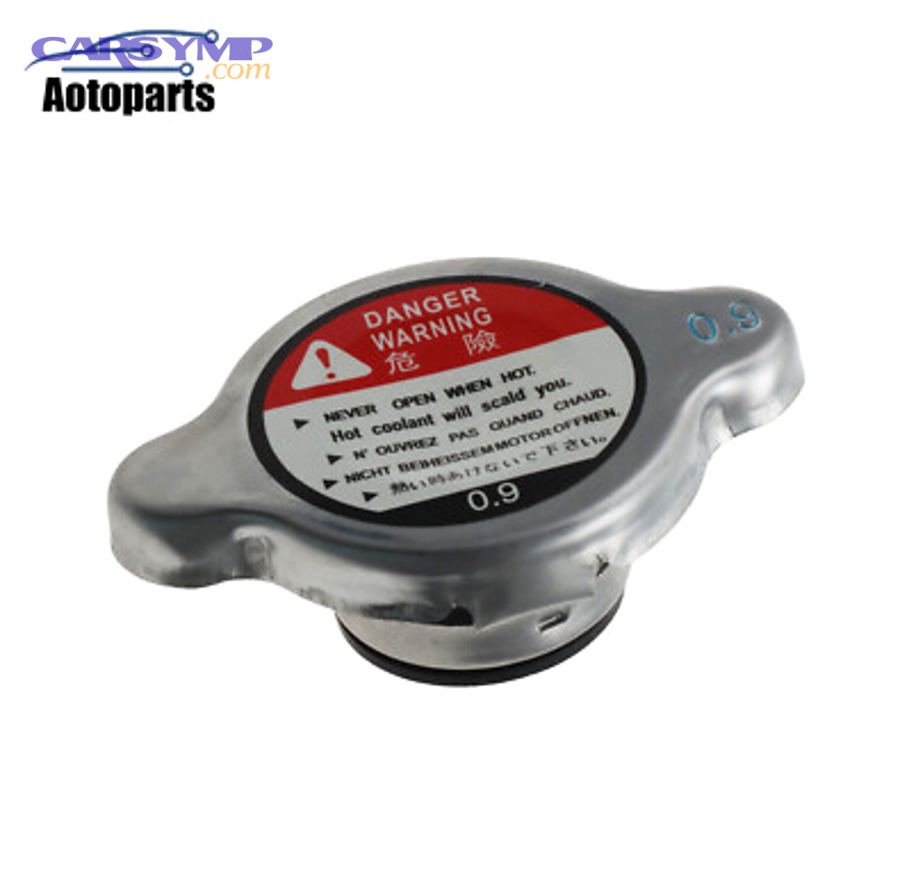
How do pressurized expansion tanks differ from radiator-neck caps, and why does that matter?
Pressurized expansion tanks differ because the tank cap is the primary pressure cap for the system, while the radiator may have no cap at all (or may have a non-pressurized fill point), so replacing “the radiator cap” is meaningless if the pressure cap is actually on the tank. Specifically, pressurized expansion systems often keep the radiator sealed and use the tank as the high point for filling and degassing. The cap on that tank controls system pressure and boiling margin.
If you install a standard radiator-neck cap where the system expects a pressurized tank cap (or vice versa), you can create chronic pressure loss, air ingestion, and recovery failure. The outcome is familiar: boiling under moderate loads, coolant pushed out, and inconsistent levels.
How does altitude affect boiling point, and does a radiator cap fully offset that?
Altitude lowers atmospheric pressure, which lowers the boiling point baseline; a radiator cap helps by adding pressure, but it does not “reset physics,” so your total margin can still shrink in high-altitude driving. For example, at altitude, the system starts from a lower ambient pressure environment, so the same cap rating may deliver a different net pressure behavior depending on venting, recovery, and local conditions.
The practical takeaway is not to fear altitude—it is to respect margin. If you live or travel in mountains and notice boil-over that does not happen at sea level, pressure integrity becomes even more critical: cap sealing, hose condition, radiator fins, fan performance, and coolant mixture concentration must all be correct.
What happens if you install a “high-pressure” cap on an aging cooling system?
A high-pressure cap can increase boiling margin, but it can also expose weak components by increasing system stress, so the most common outcome on an aging system is new leaks, hose swelling, or heater core seepage rather than a “cooler-running engine.” On the other hand, if the system is refreshed—hoses, clamps, radiator, and heater core in good condition—a modest pressure increase may be acceptable for specific use cases.
This is where cost and risk meet. A cap is cheap, but the failures it can provoke in a weak system are not. If you are weighing Typical repair costs by root cause, a “cap upgrade” that leads to a radiator seam leak or heater core replacement can become far more expensive than simply restoring the OEM pressure cap and fixing the true overheating cause.
Why can localized boiling happen even when the dash temperature looks “normal”?
Localized boiling can occur with a “normal” dash reading because the dash sensor may measure coolant temperature at one location while the hottest metal surfaces experience hot spots, reduced flow, or vapor formation that the sensor does not immediately capture. Especially, steam pockets can form near combustion chambers or in restricted passages. Once vapor forms, heat transfer drops sharply, metal temperature rises, and the situation can escalate quickly into overheating—even if the gauge only begins to climb after the damage window has already opened.
This is why persistent boiling/overflow events deserve careful follow-up. If pressure is confirmed good (cap and system), and the vehicle still forces coolant out or shows suspicious behavior, revisit the broader overheating diagnosis—fans, radiator restriction, thermostat operation, and leak testing—and consider escalation checks if Head gasket signs during overheating are present (such as repeated pressurization, unexplained coolant loss, or continuous bubbling in the reservoir).
According to a study by the Society of Automotive Engineers from the SAE Technical Paper program, in 1966, a pressure-temperature relationships paper described how coolant boiling anticipation depends on pressure-and-temperature relationships, reinforcing that boiling risk is fundamentally tied to pressure control and local saturation conditions in the system.