


A rough idle caused by a PCV vacuum leak is fixable when you treat it as an “unmetered air leak” problem: confirm the leak is real, isolate the PCV path, repair the failed part, and then verify the idle and fuel trims stabilize.
Next, you’ll learn the fastest ways to confirm the PCV system is the source (not just “a vacuum leak somewhere”), including simple isolation checks and what “normal” behavior looks like when you pinch or block the PCV line correctly.
Then, you’ll get a clear explanation of what the PCV system does at idle and why it can behave like a calibrated leak when it’s healthy—but like a random air leak when a hose, grommet, or diaphragm fails.
Introduce a new idea: below is a step-by-step workflow that starts broad (symptoms and quick checks), narrows to proof (isolation and smoke/spray testing), and ends with a durable fix plus After replacement: idle relearn checks so your rough idle stays gone.
Is a PCV vacuum leak a common cause of rough idle (yes/no)?
Yes—rough idle from a PCV vacuum leak is common because (1) idle airflow is low so even a small leak is a big percentage, (2) the PCV path is connected to manifold vacuum, and (3) hoses/diaphragms age and crack from heat and oil vapor. To better understand why this matters at idle, focus on what the engine controller is trying to do: hold a stable idle speed while metering a tiny amount of air and fuel.
At idle, manifold vacuum is high and the throttle is almost closed, so the engine has very little “airflow budget.” A split PCV hose and separator issues situation (cracked molded line, torn diaphragm, leaking grommet) lets extra air enter that the ECU didn’t plan for. The ECU then chases idle speed with the throttle body or idle air control strategy, and you feel the result as hunting, shaking, or occasional stalls.
What “common” looks like in the real world
- The idle is worse when the engine is warm and in closed-loop fuel control (ECU is actively correcting fueling).
- The idle improves when you raise RPM slightly (more airflow masks the leak percentage).
- You may hear a hiss or whistle near the valve cover, intake, or PCV connections.
In Car Symptoms diagnostics, PCV-related leaks show up often because they’re not just rubber hoses anymore—many modern engines integrate the PCV valve into a valve cover assembly, where a hidden diaphragm can tear and create a steady vacuum leak.
Does rough idle usually get worse at idle but improve off-idle if it’s a vacuum leak (yes/no)?
Yes—rough idle from a vacuum leak typically worsens at idle and improves off-idle because (1) idle vacuum is highest, (2) the leak is a larger fraction of total airflow, and (3) the ECU has more control authority once airflow rises. More specifically, when you blip the throttle, you temporarily reduce vacuum and increase measured airflow, so the same leak becomes less disruptive.
What you’ll often notice:
- Idle: shaky, surging, “hunting,” sometimes dipping low and catching itself.
- Light throttle / 1500–2500 RPM: smoother, sometimes almost normal.
- Decel back to idle: stumble, then a surge as the ECU tries to recover.
If the idle is rough all the time and doesn’t improve with RPM, you should keep “fuel delivery” and “ignition misfire” on the suspect list—but don’t assume; confirm with a couple quick checks in the diagnosis section.
Can a PCV valve stuck open act like an intake leak (yes/no)?
Yes—a PCV valve stuck open can act like an intake leak because (1) it creates a constant unmetered airflow path into the intake, (2) it leans the mixture at idle, and (3) it disrupts crankcase pressure control, which can destabilize idle control. Next, the key is to understand the synonym that ties this together: a PCV leak is often an unmetered air leak.
On many cars, “PCV valve replacement” is straightforward and inexpensive. On others, the “PCV valve” is really a built-in orifice or diaphragm in the valve cover, and the repair becomes a valve cover or PCV module replacement. Either way, the mechanism is the same: the intake is getting air it didn’t measure or expect.
What is a PCV vacuum leak and why does it create a rough idle?
A PCV vacuum leak is an unintentional airflow path from outside the intake system into manifold vacuum through the PCV/crankcase ventilation circuit, usually caused by deteriorated hoses, seals, or a torn diaphragm, and it stands out by creating “unmetered air” that destabilizes idle fueling. To begin connecting the dots, you only need one mental model: idle is a balancing act, and unplanned air makes the balance wobble.
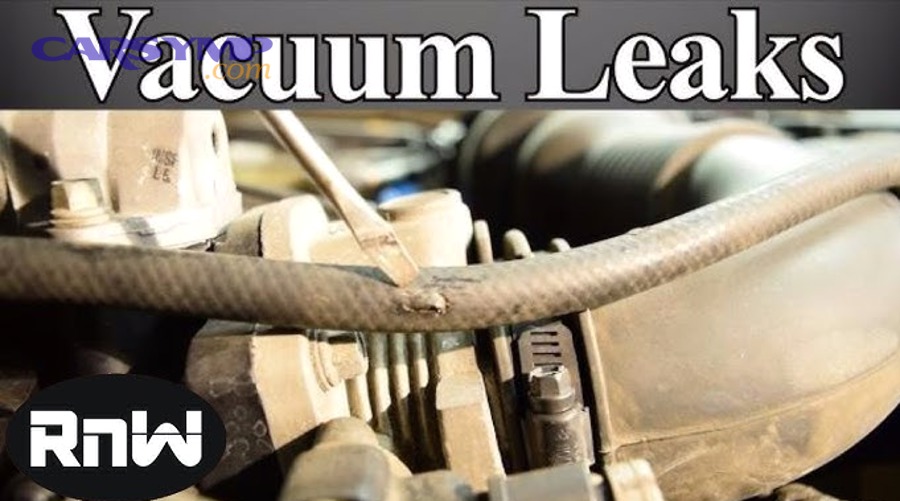
The PCV system exists to pull blow-by vapors out of the crankcase and route them back into the engine to be burned. That’s good for emissions, oil health, and sealing. But because it uses intake vacuum, the PCV circuit is effectively “wired into” the same vacuum environment that makes vacuum leaks so disruptive.
A healthy PCV system meters flow. A failed PCV circuit leaks flow.
What does “unmetered air leak” mean in plain English?
An “unmetered air leak” means extra air is entering the engine without being properly accounted for by the airflow measurement strategy (MAF or MAP), so the ECU adds fuel reactively instead of predictively, which makes idle unstable. Then, the roughness you feel is the ECU constantly correcting.
In plain terms:
- The engine needs a certain air-fuel ratio to idle smoothly.
- The ECU estimates how much air is entering.
- A leak adds surprise air.
- The ECU sees oxygen in the exhaust and adds fuel.
- The cycle repeats, creating surging/hunting.
This is why you’ll often see fuel trims go positive at idle with a leak (more on that in the diagnosis section).
How does the PCV system normally control crankcase vapors at idle vs cruise?
The PCV system normally controls crankcase vapors by metering flow based on manifold vacuum: at idle (high vacuum) it restricts flow to prevent a large vacuum draw, and at cruise (lower vacuum) it allows more flow to evacuate vapors efficiently. More importantly, this “metering” is why healthy PCV flow does not behave like a random vacuum leak.
At idle:
- Vacuum is high.
- The PCV valve (or calibrated orifice/diaphragm) limits flow.
- The engine stays stable because the ECU expects that flow.
At cruise:
- Vacuum is lower.
- PCV flow can increase.
- Vapors are still routed into the intake stream.
When a diaphragm tears or a hose splits, the restriction is gone and the system can pull too much air—like opening an extra throttle bypass.
Why do vacuum leaks show up most at idle?
Vacuum leaks show up most at idle because idle airflow is minimal, manifold vacuum is high, and the engine controller is operating near its tightest control limits—so a small, steady leak can overwhelm the ECU’s idle corrections. Specifically, the leak becomes a large “percentage error” when total airflow is low.
A practical way to remember it:
- At idle, the engine might be ingesting a small amount of air.
- Add a small leak, and you’ve changed airflow by a large fraction.
- The ECU scrambles to correct, and you feel the scramble.
What symptoms and warning signs point to rough idle from a PCV vacuum leak?
There are 4 main groups of symptoms that point to rough idle from a PCV vacuum leak: (A) idle behavior, (B) sound/feel clues, (C) scan-data patterns, and (D) visual PCV-circuit damage—grouped by how directly they indicate unmetered air. Next, you’ll use those groups to decide whether to go straight to PCV inspection or broaden to other leak sources.
Which drivability symptoms are most typical (and which are less typical)?
Typical vacuum-leak/PCV-leak drivability symptoms include rough or hunting idle, stumble on return-to-idle, and light-throttle hesitation; less typical (but possible) symptoms include strong misfire under load or high-RPM breakup, which more often suggest ignition or fuel delivery issues. However, you shouldn’t rely on “feel” alone; pair symptoms with a quick inspection and one confirming test.
Most typical
- Rough idle that varies (surges, hunts, “can’t settle”)
- Occasional stall when coming to a stop
- Hesitation right off idle
- Slightly higher-than-normal idle (on some engines)
Less typical
- Consistent high-RPM misfire
- Heavy shaking under load
- Severe loss of power everywhere
A PCV leak can trigger misfire codes, but the “signature” is often strongest at idle.
Which scan-tool clues support a vacuum leak diagnosis?
Scan-tool clues that support a vacuum leak include positive fuel trims at idle, trims improving when RPM rises, and lean-condition codes—because the ECU is adding fuel to compensate for unmetered air entering at idle. To illustrate, compare your trims at idle versus around 2,500 RPM; that comparison is often more useful than the absolute number.
If you have a basic scan tool:
- Watch STFT (short-term fuel trim) at idle.
- Watch LTFT (long-term fuel trim) at idle.
- Raise RPM and hold around 2,500, then compare.
Common “leak pattern”
- Trims are significantly positive at idle
- Trims get closer to normal at 2,500 RPM
This doesn’t prove it’s PCV specifically, but it proves the engine is compensating for a lean condition consistent with unmetered air.
Where are the most common PCV leak points to check first?
The most common PCV leak points are (1) the PCV hose and fittings, (2) the valve cover PCV diaphragm/valve assembly, (3) the PCV grommet or O-ring seals, and (4) the separator/breather connections—ranked by failure frequency from heat, oil vapor, and plastic brittleness. Besides, these spots are fast to inspect and often reveal obvious cracks or oil staining.
Start with the easiest:
- PCV hose and quick-connect ends (cracks, loose clips, hardened seals)
- Valve cover PCV diaphragm area (whistling, suction at oil cap, oily residue)
- PCV grommet (shrunken rubber, loose fit)
- Separator/breather box and lines (especially on some turbo platforms)
This is where the phrase PCV hose and separator issues belongs: many “PCV leaks” are actually the hose, the connector seal, or the separator housing—not the valve itself.
How do you diagnose a PCV vacuum leak step-by-step at home?
Diagnose a PCV vacuum leak with a 5-step method—(1) confirm the idle pattern, (2) inspect the PCV circuit, (3) isolate the PCV path, (4) confirm the leak with smoke or a safe alternative, and (5) validate with trims/idle stability—so you can pinpoint the actual failure point. Then, once you’ve isolated it, you’ll know whether you’re doing a simple PCV valve replacement or replacing a hose, seal, or diaphragm assembly.

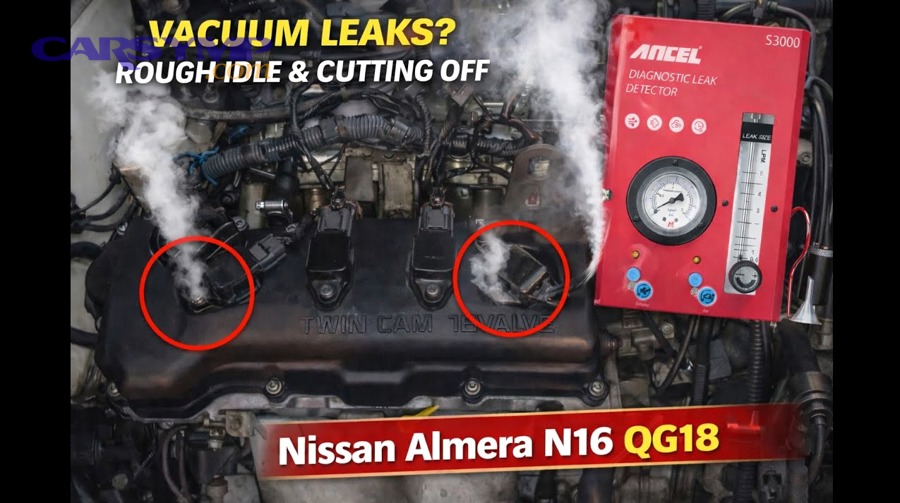
If you can do only one “professional-grade” test, make it a smoke test. A smoke test gently pressurizes the intake/vacuum system and reveals exactly where smoke escapes, which is why many shops rely on it.
What is the fastest “no-tools” check you can do in 2 minutes?
The fastest no-tools check is to listen and feel for a vacuum leak around the PCV circuit because (1) hissing/whistling often points directly to the leak, (2) brittle hoses can show obvious cracks, and (3) idle behavior changes when you disturb the leak area gently. Next, you’ll turn that suspicion into proof using isolation.
Do this safely with the engine idling:
- Listen near the valve cover and intake for a steady hiss or whistle.
- Look for a collapsed, split, or oil-soaked PCV hose.
- Gently wiggle the PCV hose ends and connectors (don’t touch belts/fans).
- If your engine has an accessible oil filler cap, loosen it slightly and note whether the idle changes dramatically (this is a clue, not a final diagnosis).
A strong whistling noise near the valve cover often correlates with a torn diaphragm in an integrated PCV valve cover design.
How do you isolate the PCV system to confirm it’s the leak source?
You isolate the PCV system by temporarily restricting the PCV vacuum line (briefly and correctly) and observing whether idle smooths out, because (1) removing the unmetered-air path stabilizes fueling, (2) idle control stops hunting, and (3) trims begin trending back toward normal. However, isolation must be done carefully: you’re testing a theory, not “permanently sealing” the crankcase.
A safe, practical approach:
- Identify the PCV line to the intake manifold (not the fresh-air breather line).
- Use a smooth-jaw clamp tool or your fingers to pinch a rubber section briefly (if it’s rubber).
- If it’s a hard plastic line, do not crush it—disconnect at a service point and cap briefly with a proper plug.
- Observe idle quality for 10–20 seconds.
What “supports PCV leak” looks like
- Idle immediately becomes smoother
- RPM stabilizes
- Hissing changes or stops
What “doesn’t support” looks like
- No meaningful idle change
- Idle worsens or becomes unstable in a different way
Important: On some engines, sealing the PCV path can change crankcase pressure enough to alter idle in non-obvious ways. Treat this as a short diagnostic step, not a long-running “fix.”
Which leak-finding method is best: smoke test vs spray test vs propane?
Smoke testing wins for pinpoint accuracy, spray testing is best for quick DIY confirmation, and propane is optimal for controlled enrichment—because smoke shows the exact leak location, spray changes RPM when it’s drawn in, and propane enriches cleanly when applied precisely. Meanwhile, safety and repeatability matter more than speed.
Here’s a quick comparison table so you know what you’re trading off and why:
| Method | What it does | Strength | Main risk/limitation |
|---|---|---|---|
| Smoke test | Pressurizes system with visible smoke | Pinpoints tiny leaks precisely | Requires equipment (or shop visit) |
| Spray test (brake cleaner/carb cleaner) | Changes mixture when sucked into leak | Cheap and fast | Flammable + messy; can damage rubber/paint |
| Propane enrichment | Adds fuel near suspected leak | Cleaner than sprays | Still flammable; needs careful control |
If you can access a smoke machine (or pay for a shop smoke test), it’s usually the fastest way to stop guessing. A smoke test is widely used to locate intake/vacuum leaks because smoke will escape at the leak point under gentle pressure.
How do you interpret fuel trims to confirm a vacuum leak vs something else?
Fuel trims confirm a vacuum leak when trims are strongly positive at idle but improve at higher RPM, while fueling problems usually keep trims high across RPM and load—because vacuum leaks are airflow-percentage errors and fueling faults are supply/measurement errors. More specifically, you’re looking for a pattern, not a single number.
Use this decision logic:
- Idle trims high, 2,500 trims closer to normal → likely vacuum leak/unmetered air
- Idle trims high, 2,500 trims also high → possible fuel pressure/injectors/MAF bias
- Trims negative → possible rich condition (leaky injectors, high fuel pressure, sensor issues)
This is also where you avoid a common trap: blaming the PCV valve when the real culprit is a split brake booster hose, intake gasket leak, or EVAP purge valve leak. You’ll cover those “look-alikes” in the supplementary section.
What fixes actually solve rough idle from a PCV vacuum leak?
There are 4 main fix categories for rough idle from a PCV vacuum leak: (1) PCV valve/diaphragm repair, (2) PCV hose and fitting repair, (3) seal/grommet/O-ring replacement, and (4) related intake-side leak repair—chosen based on which component is actually leaking. Next, you’ll match the fix to the failure so you don’t waste money replacing parts that aren’t broken.

A “real fix” restores the PCV system’s intended metering and sealing. Tape, silicone globs, and mismatched hose sizes often fail quickly because the PCV circuit sees vacuum, oil vapor, and heat cycling.
Should you replace the PCV valve, the hose, or the whole PCV assembly?
The PCV valve wins when the valve mechanism is stuck or contaminated, the hose wins when there are visible cracks or loose connectors, and the full assembly is optimal when the PCV is integrated (diaphragm/orifice in a valve cover module) or when multiple sealing points are failing at once. To better understand your best choice, identify your PCV design first.
Common design patterns:
- Old-school standalone PCV valve in a grommet: often a simple PCV valve replacement
- Threaded PCV valve: replaceable valve + inspect hoses
- Integrated PCV diaphragm in valve cover: may require a diaphragm kit or valve cover replacement
- Turbo engines: often have multiple check valves, separators, and pressure-dependent flow paths (see below)
If you replace a valve but ignore a brittle molded hose, the rough idle can return immediately—this is why “PCV hose and separator issues” belong in the same repair decision.
How do you fix a leaking PCV grommet, quick-connect, or O-ring seal?
You fix a leaking PCV seal by replacing the hardened grommet/O-ring and restoring a tight, correctly-sized connection because (1) vacuum will exploit tiny gaps, (2) heat shrinks rubber over time, and (3) quick-connect seals flatten and leak under vibration. Then, the goal is a snug, correctly seated joint—no wobble, no oil seep, no hiss.
A durable approach:
- Replace the grommet with an OEM-quality part sized for your valve and cover.
- Inspect quick-connect ends for cracked plastic “ears” or damaged lock tabs.
- Lightly lubricate O-rings with a compatible lubricant (avoid swelling rubber with harsh chemicals).
- Confirm the connector “clicks” and cannot be pulled off easily.
If a connector is cracked, replace it—don’t rely on clamp pressure to hold fractured plastic together.
When is the “PCV leak” actually an intake gasket or brake booster hose?
An “apparent PCV leak” is actually an intake gasket or brake booster hose when the leak persists after PCV isolation, smoke reveals leakage at the manifold perimeter or booster line, and fuel trim behavior matches a general vacuum leak rather than PCV-path-specific flow. Moreover, these leaks can sound like PCV because they’re often near the same side of the engine bay.
Clues it’s not (only) PCV:
- Pinching/blocking the PCV line doesn’t improve idle
- The hiss is strongest at the intake manifold seam
- Brake pedal feel changes or hissing is tied to brake booster area
- Smoke test reveals smoke at gasket edges or booster hose
If your rough idle is driving you in circles, do a smoke test. It’s designed to end guessing by revealing the exact escape point.
How do you verify the repair and prevent the rough idle from coming back?
Verify the repair with a 4-part checklist—(1) stable idle quality, (2) no hissing/whistling, (3) fuel trims trending toward normal, and (4) no recurring codes—so you know the unmetered air leak is truly gone. In short, you’re confirming both the mechanical seal and the ECU’s correction behavior.
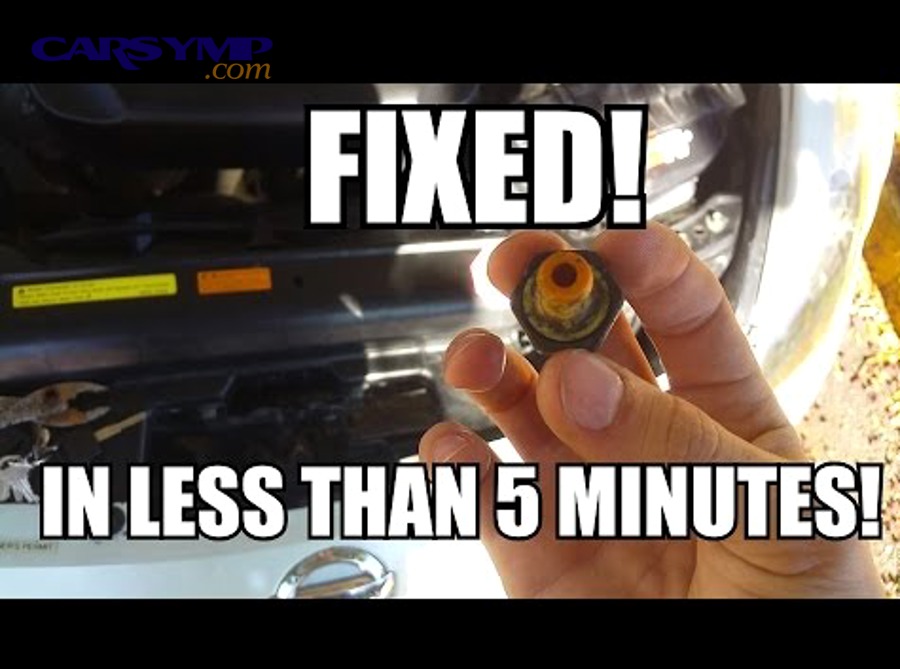
After any PCV repair—especially PCV valve replacement—expect the ECU to take a little time to relearn. That’s why After replacement: idle relearn checks should be part of your process, not an afterthought.
Do you need to reset the ECU or perform an idle relearn after the fix (yes/no)?
Yes, you often benefit from an idle relearn after fixing a PCV vacuum leak because (1) fuel trims and airflow adaptations may be biased from compensating, (2) the ECU may have learned idle air targets around the leak, and (3) relearn helps stabilize idle sooner after restoring proper airflow. Then, the simplest “relearn” is just a correct warm-up and short drive cycle—unless your vehicle has a specific procedure.
Practical guidance:
- Clear codes if you have a scan tool (optional but helpful).
- Let the engine reach full operating temperature at idle.
- Turn off major loads (AC, defrost) for the first minute, then test with loads on.
- Drive a short loop with steady cruise and a few gentle decel-to-idle events.
Some vehicles have a manufacturer-specific idle relearn procedure. If your idle is still unstable after a correct repair, look up your exact make/model procedure.
What should fuel trims look like after the fix?
After the fix, fuel trims should move closer to zero and become steadier at idle because the ECU no longer needs to add large amounts of fuel to compensate for unmetered air, and its corrections become small, routine adjustments. More importantly, compare “before vs after” under the same conditions: warmed up, idling, then holding 2,500 RPM.
What “good” typically looks like:
- STFT oscillates in a small range rather than pegging high
- LTFT gradually improves over trips if it had learned a big correction
- Idle feels calmer and less “searchy”
If trims remain strongly positive everywhere, broaden your diagnosis to include MAF accuracy, fuel pressure, or injector flow—topics that overlap with leak symptoms.
Which preventive steps reduce repeat PCV leaks?
There are 5 preventive steps that reduce repeat PCV leaks: (1) replace brittle PCV hoses before they split, (2) use correct clamps/seals, (3) keep the PCV passage/separator maintained, (4) avoid oil overfill, and (5) address excessive blow-by early—grouped by heat, sealing, and contamination control. Besides, prevention matters because PCV circuits live in one of the harshest environments in the engine bay: hot oil vapor + vacuum + plastic.
Practical prevention checklist:
- Inspect PCV hoses at every oil change for cracks and soft spots.
- Replace grommets/O-rings if the valve feels loose or the seal looks flattened.
- If your engine uses a separator/breather box, keep it clear and properly routed.
- Fix oil leaks that contaminate hoses and seals.
- If you notice excessive crankcase pressure (oil cap blowing off, recurring leaks), investigate ring wear or restricted ventilation.
(Contextual Border)
At this point, you have a complete workflow to confirm a PCV-related vacuum leak, repair it, and verify the rough idle is resolved. The section below expands into closely related edge cases that mimic the same symptoms, so you can avoid false positives and wasted parts.
What problems can mimic a PCV vacuum leak rough idle, and how do you tell them apart?
EVAP purge faults win in “intermittent idle lean events,” MAF/MAP errors are best explained by “wrong airflow measurement,” and throttle body/IAC issues are optimal for “idle control instability without true unmetered-air leaks” because each failure mode creates rough idle through a different mechanism. Meanwhile, the fastest way to tell them apart is to combine one physical isolation test with one data pattern check.

This matters even more with Turbo engines and PCV system complexities, where multiple valves and pressure-dependent paths can make a turbo-platform idle issue look like “PCV” when it’s actually charge plumbing, diverter routing, or a purge strategy problem.
How is an EVAP purge valve leak different from a PCV vacuum leak at idle?
An EVAP purge valve leak differs from a PCV vacuum leak because it often appears intermittently (especially after refueling or during commanded purge), it introduces fuel vapor flow patterns that don’t match PCV behavior, and it can create lean idle episodes that come and go rather than a steady hiss-and-trim pattern. Then, the quick separation test is isolation: clamp or disconnect the purge line temporarily (where safe and appropriate) and see if the symptom changes.
Practical clues:
- Rough idle appears shortly after refueling
- Idle issue comes and goes, sometimes tied to purge commands
- Smoke test may show no intake leak, yet trims spike intermittently
If you can log purge command and trims together, you can often “catch” the purge valve leaking when it shouldn’t.
How do MAF/MAP sensor errors create “false” unmetered-air symptoms?
MAF/MAP sensor errors create “false unmetered-air” symptoms because the ECU’s airflow estimate is wrong even when the intake is sealed, so trims move to compensate, and the idle can surge as the controller corrects based on faulty inputs. However, the key difference is this: a sensor bias doesn’t usually respond to smoke testing the way a real leak does.
How to separate:
- A true leak: smoke escapes somewhere physical; isolation changes idle clearly.
- A sensor bias: smoke test shows nothing; trims may stay skewed across RPM ranges; cleaning or verifying sensor readings may reveal inconsistency.
Be cautious with “quick fixes” like parts-cannon MAF swaps. Confirm with data and a physical test.
Can throttle body/IAC issues cause rough idle even with no vacuum leak (yes/no)?
Yes—throttle body or IAC issues can cause rough idle even with no vacuum leak because (1) carbon buildup reduces precise airflow control, (2) the idle controller overshoots and undershoots, and (3) load changes (AC, steering) magnify control errors without necessarily producing leak-like trim patterns. More specifically, you may see idle instability with trims that aren’t strongly positive like a classic vacuum leak.
What points to airflow control rather than leakage:
- Idle surges with loads (AC on/off) more than with engine warm-up
- No consistent hissing or leak response
- Trims are not strongly positive at idle
Cleaning and relearning can help—but only after you’ve confirmed the intake is sealed.
Why can sealing the PCV hose sometimes make idle worse (metered vs unmetered flow)?
Sealing the PCV hose can make idle worse because the PCV system is designed as a metered flow path, and fully blocking it can change crankcase pressure dynamics, alter idle airflow assumptions, and create temporary instability that doesn’t mean “PCV wasn’t the problem.” In addition, turbo platforms can have multiple check valves and separator paths, so “blocking one hose” doesn’t always isolate the system cleanly.
This is one reason Turbo engines and PCV system complexities deserve extra caution:
- Under vacuum, PCV flow is pulled one direction.
- Under boost, flow control may rely on check valves and alternate routing.
- A blocked path can create pressure where the system expects flow, changing idle behavior.
Use PCV blocking only briefly for diagnosis, and prefer a smoke test that shows the exact leak point without altering the system’s intended pressure balance. A smoke test is widely used to identify leaks by pressurizing the intake system and watching where smoke escapes.
Evidence (if any)
According to a report by Purdue University (Road School publication), in 2015, crankcase ventilation controls were credited with eliminating about 20% of hydrocarbon emissions (in the context of early vehicle emissions control discussions), illustrating why PCV function—and PCV sealing—matters beyond drivability.
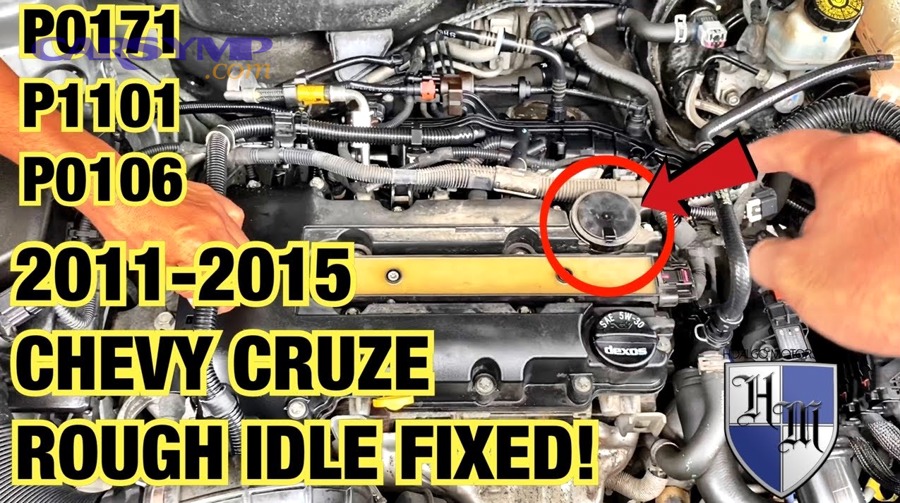
According to a research thesis available through Library and Archives Canada from 2014 on crankcase pressure control and ventilation modeling, PCV/ventilation flow behavior is strongly tied to engine operating conditions (speed/load) and valve flow characteristics—supporting the practical diagnostic approach of comparing idle behavior and airflow-dependent changes when chasing rough idle from PCV-related leaks.