


A fan circuit fault occurs when an electrical disruption—such as a loose connection, damaged wire, or failed component—prevents your ceiling fan from operating correctly. Wiring repairs for fan circuit faults involve systematically diagnosing the root cause and restoring safe, reliable electrical flow through the fan’s circuit. Whether your fan refuses to turn on, runs intermittently, or trips the breaker every time you flip the switch, each of these symptoms points to a specific wiring problem with a defined solution. This guide covers nine of the most common fan circuit faults and walks you through the step-by-step process of repairing each one.
Before touching any wiring, understanding the warning signs of a fan circuit fault is essential. Symptoms range from obvious—a completely dead fan—to subtle, such as a faint burning smell near the ceiling canopy or a fan that only works on certain speed settings. Recognizing these symptoms early allows you to pinpoint the exact fault and choose the right repair approach before a minor annoyance escalates into a safety hazard.
Safety must come first in every fan wiring repair. Shutting off power at the circuit breaker, verifying with a voltage tester, and assembling the correct tools are non-negotiable steps that protect you from electric shock and prevent further damage to the circuit. These precautions apply equally whether you are tightening a single wire nut or replacing an entire speed control switch.
Not every fan circuit fault is a DIY project. Some repairs—like resetting a tripped breaker or swapping a wall switch—are well within a homeowner’s ability, while others involving rewiring, aluminum conductors, or code compliance demand a licensed electrician. Below, each of the nine common problems is broken down with clear diagnosis steps, repair instructions, and guidance on when professional help is the smarter choice.
What Are Fan Circuit Wiring Faults and Why Do They Occur?
A fan circuit wiring fault is any electrical disruption within the wiring path—from the breaker panel to the fan motor—that prevents normal operation. These faults include short circuits, open circuits, and ground faults caused by wire degradation, mechanical vibration, thermal stress, and natural aging of electrical components.
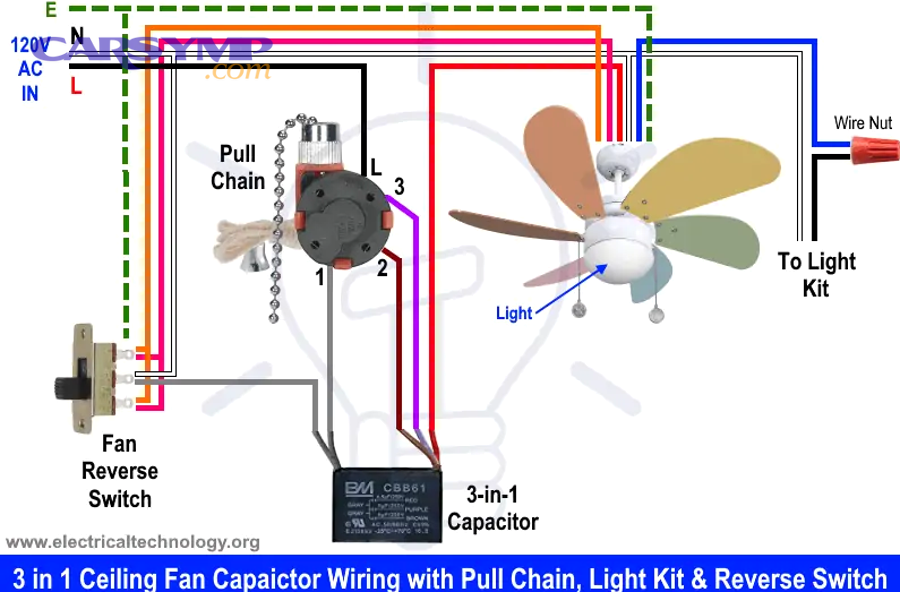
To better understand why these faults develop, consider what happens inside your ceiling over years of use. The fan motor generates constant vibration that gradually loosens wire nut connections. Heat cycling from the motor and seasonal temperature changes causes wire insulation to become brittle and crack. Moisture intrusion in poorly sealed ceiling boxes accelerates corrosion on copper conductors. Each of these factors alone can introduce a fault; combined, they make fan circuit wiring problems almost inevitable in older installations.
Overloaded circuits represent another frequent cause. When a fan shares a circuit with several other high-draw devices, the wiring carries more current than it was designed for, generating excess heat that degrades insulation and weakens connections over time. Understanding these underlying causes helps you not only fix the immediate problem but also prevent recurrence.
What Are the Most Common Symptoms of a Fan Circuit Wiring Fault?
There are six primary symptoms of fan circuit wiring faults: the fan not turning on, intermittent operation, audible buzzing or humming, flickering attached lights, a burning smell near the fan, and a repeatedly tripping circuit breaker. Each symptom typically maps to a specific underlying wiring issue.
Specifically, a fan that is completely dead usually indicates a tripped breaker, a faulty wall switch, or a severed wire somewhere in the circuit. Intermittent operation—where the fan starts and stops unpredictably—most often points to a loose connection at the wire nuts inside the canopy or at the wall switch terminals. A buzzing or humming sound without blade rotation frequently signals a failed capacitor that can no longer provide the startup boost the motor requires.
Flickering lights on a fan’s integrated light kit suggest a loose neutral wire or a connection that is making and breaking contact as the fan vibrates. A burning smell is the most urgent symptom, indicating overheated insulation, an arcing connection, or a wire touching the motor housing. A breaker that trips immediately when the fan is switched on almost always means a short circuit—bare conductors making contact where they should not.
Can a Fan Circuit Fault Cause an Electrical Fire?
Yes, a fan circuit fault can cause an electrical fire. Loose connections generate heat through increased electrical resistance, damaged insulation allows conductors to arc, and overloaded circuits push wiring beyond its rated capacity—all three conditions are documented precursors to residential electrical fires.
More specifically, when a wire nut loosens inside a ceiling canopy, the imperfect contact creates a high-resistance point that converts electrical energy into heat rather than transmitting it to the motor. Over time, this heat chars the surrounding insulation, which can eventually ignite nearby materials. Similarly, a bare wire touching the metal motor housing or junction box creates an arc fault—a miniature lightning bolt that reaches temperatures high enough to ignite wood framing and drywall paper.
According to data published by the U.S. Fire Administration, faulty electrical wiring and related equipment contribute to more than 24,000 residential fires annually in the United States. Many of these incidents originate in junction boxes and fixture connections where degraded wiring goes unnoticed because it is hidden behind walls and ceilings. This statistic underscores the importance of addressing fan circuit faults promptly rather than dismissing minor symptoms like occasional flickering or a faint hum.
What Safety Precautions Should You Take Before Repairing Fan Wiring?
There are three essential safety precautions before any fan wiring repair: shut off power at the circuit breaker, verify the circuit is de-energized with a voltage tester, and set up your workspace with the proper tools and stable ladder positioning.
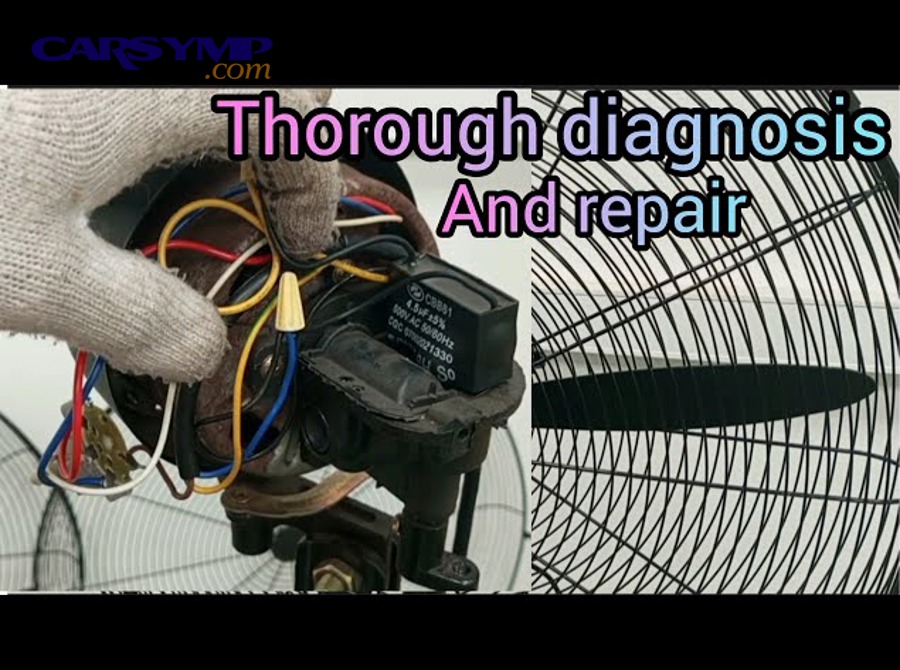
However, these steps are only effective when performed correctly and in the right order. Skipping the verification step—or relying solely on the wall switch to cut power—accounts for a significant share of DIY electrical injuries. The sections below detail exactly how to perform each precaution.
How Do You Safely Shut Off Power to a Fan Circuit?
Shutting off power safely requires three actions: locate the correct breaker in your electrical panel, flip it to the OFF position, and confirm the circuit is dead using a non-contact voltage tester before touching any wiring.
To begin, go to your home’s main electrical panel and identify the breaker that controls the fan’s circuit. In many homes, breakers are labeled, but labels can be inaccurate or missing entirely. Flip the breaker you believe controls the fan, then return to the fan location and hold a non-contact voltage tester near the wiring inside the canopy or switch box. If the tester indicates voltage is still present, return to the panel and try adjacent breakers until you find the correct one.
It is critical to understand that the wall switch alone does not provide adequate protection. A single-pole wall switch only interrupts one conductor—the hot wire—while the neutral remains connected. In some miswired installations, the switch may interrupt the neutral instead, leaving the hot wire energized even when the switch is off. Only the circuit breaker disconnects all conductors from the panel, and only a voltage tester provides physical confirmation that the wires are safe to handle.
What Tools Do You Need for Fan Circuit Wiring Repairs?
There are seven essential tools for fan circuit wiring repairs: a non-contact voltage tester, a digital multimeter, wire strippers, wire nuts (assorted sizes), electrical tape, a set of insulated screwdrivers, and a circuit tester.
For example, the non-contact voltage tester is your primary safety device—it detects the presence of voltage without requiring you to touch bare conductors. The digital multimeter serves a diagnostic role, allowing you to measure voltage at specific points, check continuity through a suspect wire, and measure resistance across a capacitor to determine whether it has failed. Wire strippers and wire nuts are the core repair materials; when you cut out a damaged section of wire, you will strip fresh insulation and rejoin the conductors with properly sized wire nuts.
A stable, non-conductive ladder is equally important. Position it on a flat surface with a 4-to-1 ratio: for every four feet of height, the base should sit one foot from the wall. Aluminum ladders should be avoided when working near electrical wiring because they conduct electricity. A fiberglass ladder is the safest choice for any overhead electrical work.
What Are the 9 Most Common Fan Circuit Wiring Problems and How Do You Fix Them?
There are nine common fan circuit wiring problems, categorized by failure type: connection faults (loose wiring, damaged wires), component faults (faulty switch, failed capacitor, defective pull chain or remote), and circuit-level faults (tripped breaker, short circuit, overloaded circuit, faulty speed control). Each has a distinct diagnosis and repair procedure.
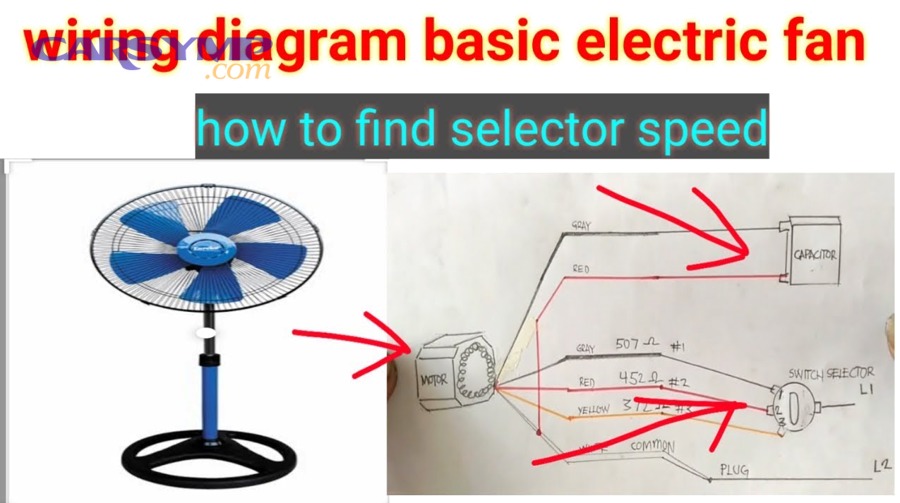
Below, each problem is addressed individually with symptoms, step-by-step diagnostic procedures, and repair instructions. The order moves from the simplest and most common faults to the more complex issues that may require advanced tools or professional assistance.
How Do You Fix Loose Wiring Connections in a Ceiling Fan?
Fixing loose wiring connections involves opening the fan canopy, inspecting all wire nut junctions, re-stripping corroded or damaged conductor ends, and re-securing each connection with properly sized wire nuts.
Specifically, loose connections are the single most common cause of intermittent fan operation and flickering lights. Vibration from the motor gradually backs wire nuts off their conductors, creating gaps that interrupt current flow. To repair, first shut off the breaker and verify with a voltage tester. Remove the canopy cover to expose the wire junctions. Inspect each wire nut—gently tug on every wire to check for looseness. If a connection pulls free, strip approximately three-quarters of an inch of fresh insulation from each conductor, twist them together clockwise, and secure with a new wire nut. Make sure no bare copper is visible below the wire nut.
After re-securing all connections, carefully tuck the wires back into the junction box so that none contact the motor housing, as this can create a short circuit. Replace the canopy, restore power, and test the fan on all speed settings.
How Do You Reset or Replace a Tripped Circuit Breaker for a Fan Circuit?
Resetting a tripped breaker requires locating it in the electrical panel, flipping it fully to OFF and then back to ON, and monitoring for repeated tripping that indicates a deeper wiring fault.
For instance, a tripped breaker is often the reason a fan goes completely dead. Open your electrical panel and look for a breaker that is in the middle position—neither fully ON nor fully OFF. Push it firmly to the OFF position first, then flip it to ON. If the fan operates normally and the breaker holds, the trip was likely caused by a momentary surge or a temporary overload.
However, if the breaker trips again within seconds of turning the fan on, this signals a persistent fault—typically a short circuit in the fan wiring or a ground fault in the motor. Do not continue resetting the breaker, as repeated tripping generates heat in the breaker mechanism and can damage the panel. At this point, proceed to inspect the fan’s internal wiring for short circuits using the diagnostic steps in the sections below.
How Do You Diagnose and Replace a Faulty Fan Wall Switch?
Diagnosing a faulty wall switch involves bypassing it to test whether the fan operates on direct power, and replacing it if the bypass confirms the switch has failed.
To illustrate, remove the switch cover plate and unscrew the switch from the electrical box. Use a voltage tester to confirm the power is off. Disconnect the two black (hot) wires from the switch terminals, twist their bare ends together with a wire nut, and temporarily restore power. If the fan runs with the switch bypassed, the switch is defective and needs replacement. Turn the power off again, remove the wire nut, and connect the wires to the terminals of a new single-pole switch rated for the fan’s amperage.
Wall switches wear out over their lifespan because the internal contacts erode from repeated arcing each time the switch is toggled. Older toggle switches are especially prone to this degradation. When replacing, consider upgrading to a switch specifically rated for motor loads, which handles the inrush current of a fan motor more reliably than a standard lighting switch.
How Do You Repair Damaged or Frayed Fan Wiring?
Repairing damaged wiring requires identifying the compromised section, cutting it out, stripping fresh insulation on both ends, and rejoining the conductors with wire nuts or solder and heat-shrink tubing.
More specifically, damaged insulation often appears as darkened, cracked, or melted sheathing along a section of wire. This damage exposes bare copper, which can contact the grounded metal junction box or other conductors, creating a short circuit or ground fault. After shutting off power, inspect all accessible wiring in the canopy, junction box, and switch box for visible damage.
If the damage is localized to a small section, cut out the compromised area, strip three-quarters of an inch of insulation from both freshly cut ends, and rejoin them with a wire nut. For a more durable repair—particularly in areas subject to vibration—solder the splice and cover it with heat-shrink tubing. Electrical tape alone is considered a temporary fix and should not be the final solution in a permanent installation. When performing radiator fan repair on automotive systems, similarly damaged wiring near the engine compartment demands heat-resistant connectors rather than standard wire nuts.
How Do You Replace a Failed Ceiling Fan Capacitor?
Replacing a failed capacitor involves identifying the correct capacitor specifications from the old unit, disconnecting the old capacitor, and wiring the replacement into the same position in the fan’s circuit.
For example, the capacitor is a small cylindrical component inside the fan housing that provides the phase-shifted current needed to start the motor spinning. When it fails, the motor may hum without turning, operate only on certain speeds, or refuse to start at all. To diagnose, use a multimeter set to capacitance mode and measure across the capacitor’s terminals. A reading significantly lower than the rated value printed on the capacitor’s label confirms failure.
To replace, note the microfarad (µF) rating and voltage rating on the old capacitor. Purchase an exact match—using a capacitor with incorrect specifications can damage the motor or cause erratic operation. Disconnect the old capacitor’s wires (typically two or three leads), connect the replacement to the same terminals, and secure it inside the housing with the mounting clip or adhesive pad. Restore power and test all speed settings to verify proper operation.
How Do You Locate and Fix a Short Circuit in a Fan?
Locating a short circuit requires a systematic inspection of all wiring for bare conductors touching grounded surfaces, followed by repairing or replacing the compromised wire section.
Specifically, a short circuit in a fan manifests as an immediate breaker trip the moment the fan is energized, often accompanied by a brief spark or burning smell. After shutting off the breaker, open the canopy and inspect every wire for pinched insulation, bare copper touching the metal junction box, or wires pressed against the motor housing. Use a multimeter set to continuity mode to check between the hot conductor and ground—a reading near zero ohms confirms a short.
Once the short is located, repair the damaged insulation or replace the wire entirely. Ensure all wires are routed away from metal edges and the motor housing before reassembling. If the short is inside the motor windings rather than in the external wiring, the motor itself must be replaced, as internal winding shorts cannot be practically repaired in a residential setting.
How Do You Fix an Overloaded Fan Circuit?
Fixing an overloaded circuit involves identifying all devices sharing the circuit, calculating the total electrical load, and redistributing devices or installing a dedicated circuit for the fan.
To begin, an overloaded circuit occurs when the combined draw of all devices on the circuit exceeds the breaker’s rated amperage—typically 15 or 20 amps in residential installations. A ceiling fan alone draws relatively little current, but when it shares a circuit with space heaters, window air conditioners, or multiple high-wattage light fixtures, the total load can push the circuit past its limit. Understanding the AC performance impact of fan repairs means recognizing that competing loads on the same circuit reduce the fan’s efficiency and reliability.
To diagnose, add up the wattage of every device on the circuit and divide by 120 volts to get the total amperage. If this exceeds 80 percent of the breaker’s rating—12 amps on a 15-amp breaker—the circuit is overloaded. The ideal solution is to move some devices to other circuits. For a permanent fix, hire an electrician to run a dedicated circuit from the panel to the fan, ensuring it never competes for power with other loads.
How Do You Repair or Replace a Faulty Speed Control Switch?
Repairing a faulty speed control switch involves testing the switch with a multimeter for continuity at each setting and replacing it with a matching unit if any position fails to conduct.
For instance, when a fan operates on high speed but not on medium or low—or vice versa—the speed control switch is the most likely culprit. This switch directs current through different capacitor taps to change the motor speed. Internal contacts wear out over time, losing the ability to complete the circuit at certain positions. Fan relay and resistor repair options also apply in systems where speed regulation uses resistor packs rather than capacitor-tap switching, such as in some automotive and industrial fans.
To replace, disconnect power, remove the switch housing, and photograph the existing wire connections before disconnecting anything. Purchase a replacement switch with the same number of speed positions and matching wire configuration. Connect the new switch following your reference photos, secure it in the housing, and test all speed settings after restoring power.
How Do You Fix a Defective Pull Chain or Remote Control Circuit?
Fixing a defective pull chain or remote involves replacing the internal pull chain switch mechanism or re-pairing and replacing the remote receiver module inside the fan canopy.
More specifically, a pull chain that clicks but produces no response indicates the internal switch contacts have worn out. This switch is a self-contained unit inside the fan housing. To replace it, remove the fan housing cover, disconnect the wires from the old switch, and connect them to the new unit in the same configuration. Pull chain switches are inexpensive and widely available at hardware stores.
For remote-controlled fans, the issue may lie in the handheld transmitter or the receiver module inside the canopy. Start by replacing the remote’s batteries. If the fan still does not respond, try re-pairing the remote with the receiver according to the manufacturer’s instructions—this usually involves pressing a specific button sequence. If re-pairing fails, replace the entire receiver module, ensuring the new unit operates on the same frequency as the remote.
Should You Repair Fan Circuit Wiring Yourself or Hire an Electrician?
DIY repair wins in cost savings and speed for simple faults like resetting breakers, replacing switches, and tightening connections, while a licensed electrician is the better choice for complex faults involving rewiring, code compliance, and hidden short circuits.
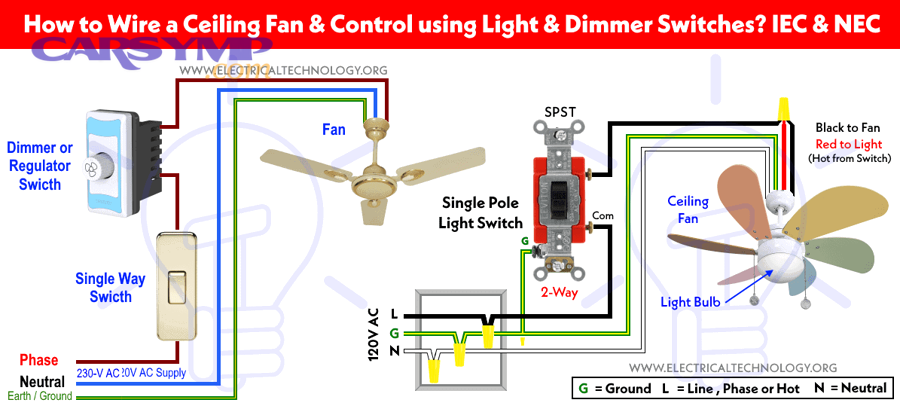
However, the decision is not purely about difficulty—it also involves legal and safety considerations. Many local building codes require a licensed electrician for any work beyond basic switch replacements. Insurance policies may not cover damage caused by improperly performed electrical work. Weighing cost, safety, and code compliance helps you make the right call for each specific fault.
What Fan Wiring Repairs Are Safe for DIY Homeowners?
There are five fan wiring repairs that are generally safe for DIY homeowners with basic electrical knowledge: resetting a tripped breaker, replacing a wall switch, tightening loose wire nut connections, replacing a pull chain switch, and swapping a failed capacitor.
For example, each of these repairs involves working with low-complexity connections that are accessible inside the fan canopy or switch box. They do not require running new wire through walls or ceilings, modifying the electrical panel, or understanding complex wiring configurations. As long as you shut off the breaker, verify with a voltage tester, and follow the step-by-step procedures outlined above, these repairs carry minimal risk.
After repair: verifying fan-on temperatures is an important final step for any DIY fix. Run the fan on each speed setting for at least 30 minutes, then carefully check the canopy, switch plate, and junction box for unusual warmth. Any heat buildup at a connection point indicates the repair was not fully successful and warrants further inspection.
What Fan Circuit Faults Require a Licensed Electrician?
There are four categories of fan circuit faults that require a licensed electrician: rewiring circuits with new cable runs, upgrading electrical panels or junction boxes, working with aluminum wiring in older homes, and diagnosing persistent short circuits that resist basic troubleshooting.
Specifically, any repair that involves opening walls to run new wire, replacing a junction box with a fan-rated box that requires structural mounting changes, or working on aluminum wiring connections demands professional expertise. Aluminum wiring, common in homes built during the 1960s and 1970s, requires specialized anti-oxidant compound and approved connectors to prevent the galvanic corrosion that occurs at aluminum-to-copper junctions. Improper handling of aluminum wiring is a documented fire hazard that no homeowner should attempt without professional training.
Persistent short circuits that cannot be located through visual inspection also call for an electrician, who can use advanced diagnostic equipment—such as a time-domain reflectometer—to locate faults hidden inside walls or conduit.
What Advanced Wiring Issues Can Affect Fan Circuit Performance?
There are four advanced wiring issues that affect fan circuit performance beyond the common faults: dimmer switch incompatibility, inadequate electrical box ratings, legacy wiring configurations, and hidden faults requiring multimeter diagnostics. These issues occupy a specialized niche and typically require deeper electrical knowledge or professional assistance.
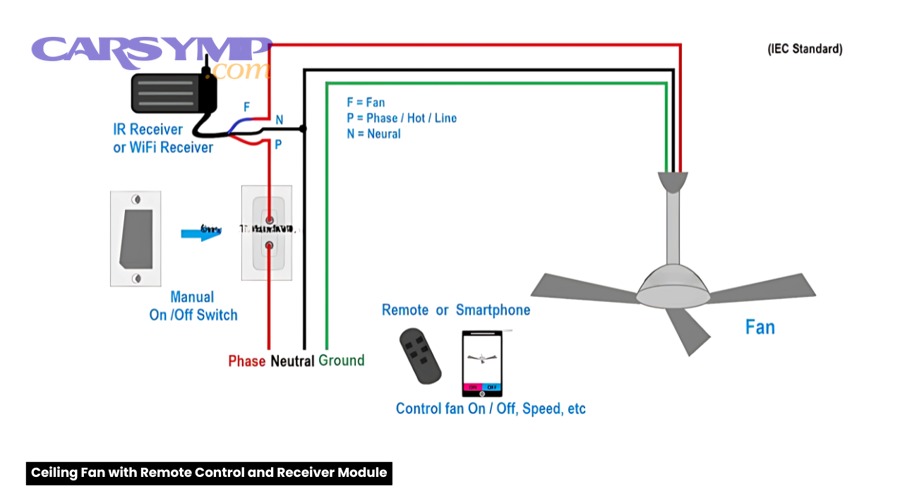
Below, each advanced issue is examined with practical guidance for diagnosis and resolution.
Is a Dimmer Switch Compatible with a Ceiling Fan Motor Circuit?
No, a standard dimmer switch is not compatible with a ceiling fan motor circuit. Standard dimmers reduce voltage to control brightness, but when connected to a fan motor, they cause audible humming, overheating, and accelerated motor degradation because the motor requires full voltage at varying current levels to change speed.
More importantly, the electrical waveform a standard dimmer produces—a chopped sine wave—creates harmonic distortion that fan motors are not designed to handle. This distortion generates excess heat in the motor windings, shortens the motor’s lifespan, and produces a persistent buzzing sound that worsens at lower speed settings.
The correct solution is to replace the standard dimmer with a fan speed control rated for the motor’s amperage. These controls use a different method—typically a variable-impedance design—to reduce current without chopping the voltage waveform, resulting in quiet, safe speed adjustment. Look for a fan speed control labeled with the appropriate amperage rating that matches or exceeds the fan motor’s draw.
Does Your Fan Require a Fan-Rated Electrical Box and How Do You Upgrade It?
Yes, every ceiling fan must be mounted to a fan-rated electrical box. Standard boxes are designed to hold static fixtures weighing a few pounds, while fan-rated boxes are engineered to support the dynamic weight and vibration of a spinning fan—typically up to 70 pounds.
To illustrate, a standard electrical box attached with only two drywall screws can work loose under the constant oscillating force of a ceiling fan. Over time, the box shifts, loosening the wire connections inside and eventually risking a fall that could cause serious injury and property damage. The National Electrical Code requires fan-rated boxes for all ceiling fan installations.
Upgrading involves removing the old box, installing a fan-rated brace bar between the ceiling joists, and mounting the new box to the brace. Retrofit brace bar kits are available that install through the existing ceiling hole without opening the drywall. If your home’s framing does not allow for a standard brace bar, a licensed electrician can assess alternative mounting solutions.
How Do You Troubleshoot Legacy Wiring in Older Homes for Fan Circuits?
Troubleshooting legacy wiring requires identifying non-standard wire colors, testing for absent ground conductors, and checking for aluminum-to-copper junctions that need specialized connectors.
For example, homes built before the 1970s often have wiring that does not follow modern color codes. Black, white, and green conductors—the standard today—may not be present. Instead, you might encounter cloth-insulated wires in colors like brown, tan, or unmarked white that has been used as a hot conductor without proper identification. A multimeter is essential for determining which wire carries power, which is neutral, and whether a ground path exists.
Aluminum wiring presents a particular hazard. Aluminum expands and contracts more than copper when heated, causing connections to loosen over time. At the junction with copper pigtails or copper switch terminals, galvanic corrosion forms a resistive layer that generates heat—a well-documented fire risk. Approved repair methods include using specially rated COPALUM or AlumiConn connectors that prevent direct aluminum-to-copper contact.
How Do You Use a Multimeter to Diagnose Hidden Fan Circuit Faults?
Using a multimeter to diagnose hidden faults involves three tests: a voltage measurement to confirm power delivery, a continuity test to check for broken conductors, and a resistance measurement to evaluate the capacitor and winding integrity.
To begin, set the multimeter to AC voltage mode and measure between the hot and neutral wires at the fan’s junction box. A reading of approximately 120 volts confirms power is reaching the fan. If voltage is absent or significantly low, the fault lies upstream—in the switch, the wiring between the switch and fan, or the breaker itself.
Next, set the multimeter to continuity mode and test each conductor from the switch box to the fan junction box. A continuous beep confirms an intact wire; silence indicates a break somewhere along the run. For the capacitor, switch to capacitance mode and compare the measured value to the rated value printed on the component. A reading below 80 percent of the rated value typically indicates a capacitor that should be replaced. These multimeter diagnostics transform guesswork into precise, data-driven troubleshooting that saves time and prevents unnecessary part replacements.