


Your engine air filter becomes clogged when it accumulates excessive dirt, dust, and debris that restrict airflow to the engine, causing seven critical warning signs: check engine light illumination, decreased fuel economy, reduced power and acceleration, unusual engine noises, black exhaust smoke, rough idling or misfiring, and difficulty starting. These symptoms emerge because a dirty air filter disrupts the precise air-to-fuel ratio required for optimal combustion, forcing your engine to work harder while performing worse. Ignoring these signs can lead to spark plug fouling, cylinder wall damage, and repair costs exceeding $500—all preventable with a $20-30 filter replacement.
Understanding how a clogged air filter affects your vehicle’s performance helps you recognize problems before they escalate into expensive repairs. When airflow becomes restricted, your engine’s combustion process becomes inefficient, triggering a cascade of performance issues that become progressively worse over time. The oxygen sensors detect this imbalance and communicate with the engine control unit, which attempts to compensate by adjusting fuel delivery—often unsuccessfully.
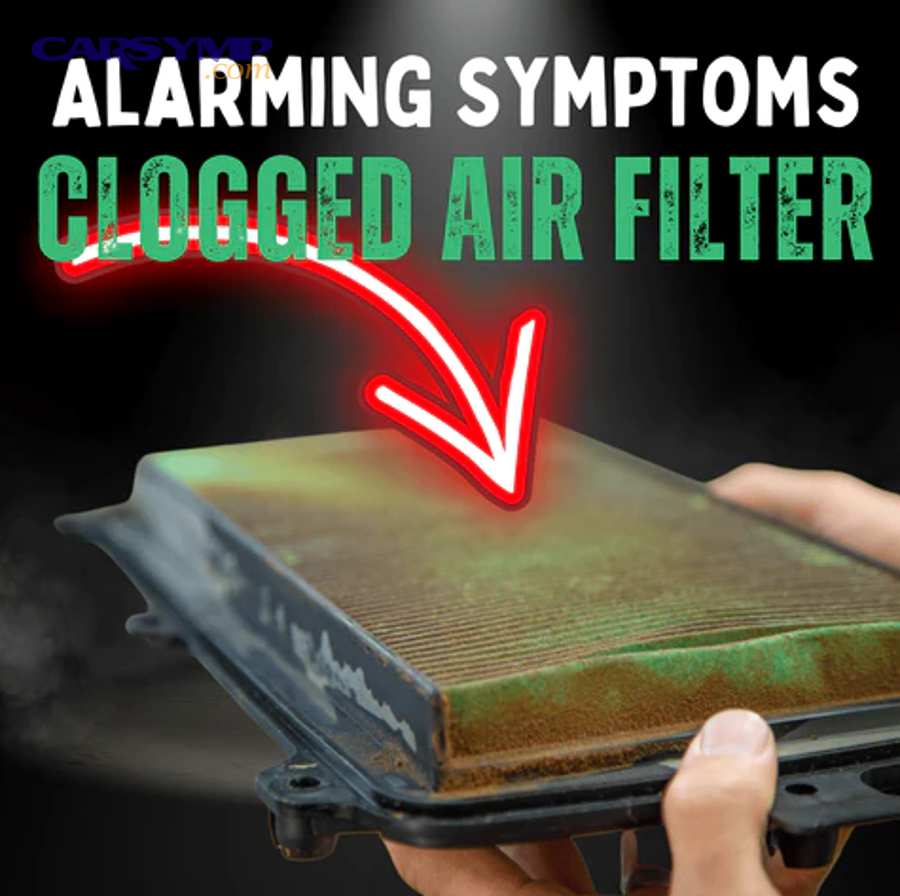
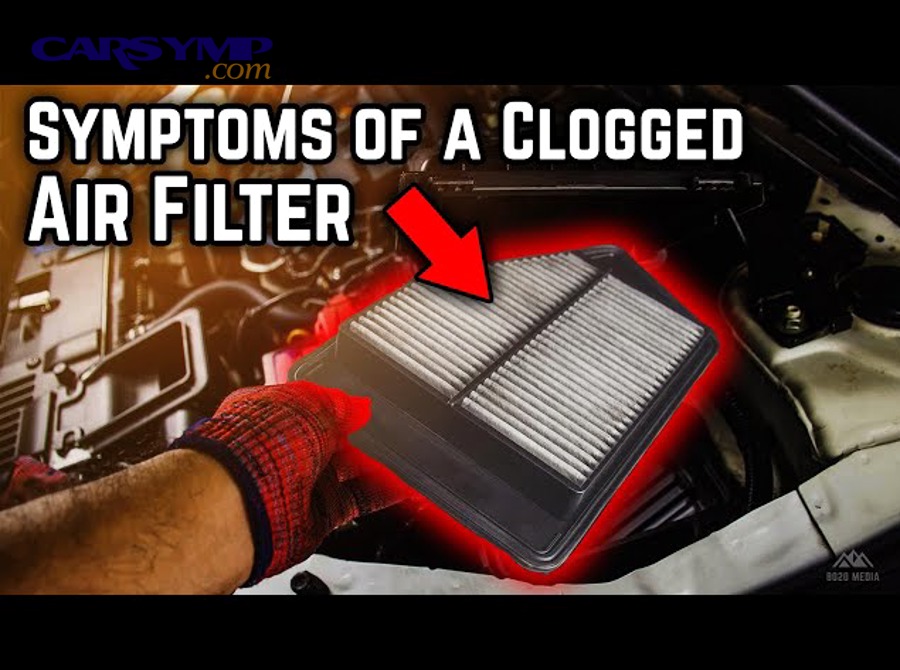
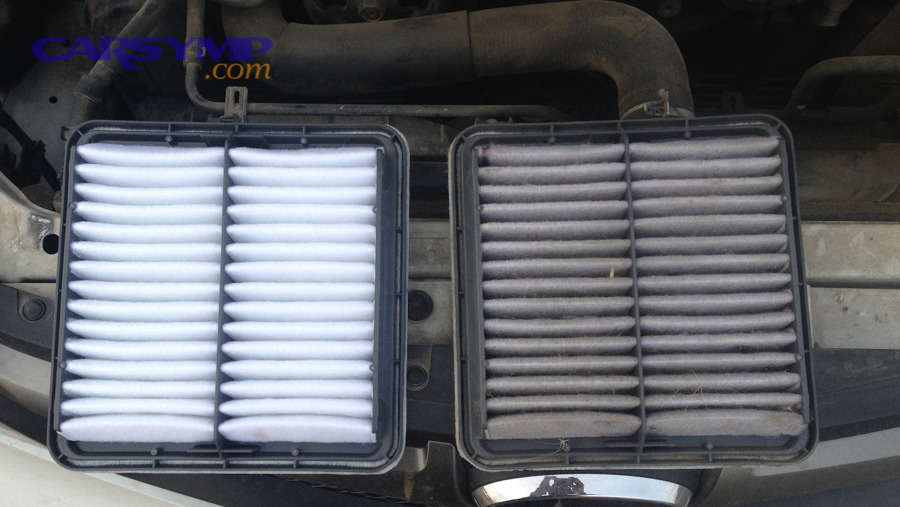
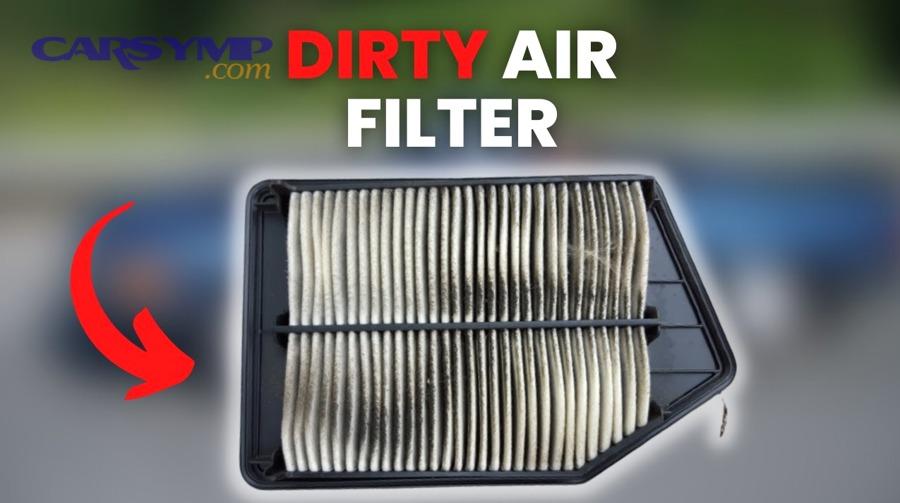
Learning to visually inspect your air filter provides a simple diagnostic tool that requires no special equipment or mechanical expertise. A clean filter appears white or off-white, allows light to pass through its pleats, and feels relatively soft to the touch. In contrast, a clogged filter looks dark gray or black, blocks light completely, and may feel stiff or matted with accumulated contaminants.
Prevention strategies and proper maintenance schedules vary significantly based on your driving conditions, with city drivers and those in dusty environments needing more frequent replacements than highway commuters. Below, we’ll examine each warning sign in detail, explain the underlying mechanical causes, and provide actionable guidance for maintaining optimal engine performance.
What Does a Clogged Engine Air Filter Do to Your Vehicle?
A clogged engine air filter restricts oxygen flow to the combustion chamber, disrupting the optimal 14.7:1 air-to-fuel ratio required for efficient gasoline burning and forcing the engine control unit to compensate by increasing fuel injection. This restriction transforms your engine’s breathing process from smooth and efficient to labored and inefficient, similar to an athlete trying to perform while breathing through a straw.
To understand this impact fully, consider how internal combustion engines rely on precise mixtures of air and fuel. The air filter serves as the engine’s first line of defense, positioned at the intake manifold entrance where it captures contaminants before they enter the combustion chamber. When operating correctly, a clean filter allows unrestricted airflow while trapping particles as small as 5-10 microns—smaller than a human hair’s width.
However, as the filter accumulates dirt and debris over thousands of miles, the spaces between filter fibers gradually fill with contaminants. This buildup creates increasingly dense barriers that air molecules must navigate, reducing the volume of oxygen reaching the engine. The oxygen sensors mounted in the exhaust system detect this oxygen deficiency and signal the engine control unit (ECU) that adjustments are needed.
The ECU responds by enriching the fuel mixture—adding more gasoline to compensate for reduced oxygen. This compensation strategy creates several cascading problems. First, the fuel-rich mixture burns incompletely, wasting gasoline and reducing power output. Second, unburned fuel residue accumulates on spark plugs, cylinder walls, and exhaust components. Third, the engine must work harder to produce the same horsepower, increasing wear on internal components.
Moreover, restricted airflow affects engine vacuum pressure, which impacts multiple systems beyond combustion. Many vehicles use engine vacuum to operate brake boosters, emission control valves, and crankcase ventilation systems. When a clogged filter reduces vacuum strength, these auxiliary systems may also perform suboptimally.
The thermal dynamics also change with a dirty air filter. Incomplete combustion generates higher exhaust temperatures, which can accelerate catalytic converter degradation and increase engine operating temperatures. This thermal stress compounds over time, potentially affecting gaskets, seals, and other heat-sensitive components.
What Are the 7 Critical Warning Signs of a Clogged Air Filter?
There are seven critical warning signs of a clogged air filter: check engine light illumination, noticeable fuel economy decrease, reduced engine power and acceleration, unusual engine noises (coughing or popping), black smoke from the exhaust, rough idling or engine misfiring, and difficulty starting the vehicle. These symptoms typically appear progressively, with fuel economy changes and power loss emerging first, followed by more severe indicators like check engine lights and rough idling as the restriction worsens.
Recognizing these signs early allows you to address the problem before minor inefficiency becomes major engine damage. Below, we’ll examine each warning sign in detail, explaining the mechanical relationship between the symptom and the underlying air restriction problem.
Warning Sign #1 – Does Your Check Engine Light Stay Illuminated?
Your check engine light illuminates when oxygen sensors detect that the air-to-fuel ratio has deviated beyond acceptable parameters, signaling the engine control unit that combustion efficiency has degraded. This dashboard warning represents the ECU’s first-line alert system when it can no longer maintain proper engine operation through automatic adjustments.
The check engine light (CEL) system works through continuous monitoring of multiple sensors. The oxygen sensors positioned before and after the catalytic converter measure oxygen content in exhaust gases, sending voltage signals to the ECU. When these readings indicate consistently lean or rich conditions that the ECU cannot correct, the system stores a diagnostic trouble code (DTC) and triggers the warning light.
Specifically, a clogged air filter typically triggers codes related to mass airflow sensor readings, oxygen sensor performance, or fuel trim adjustments. Common DTCs include P0171 (System Too Lean), P0174 (System Too Lean Bank 2), or P0101 (Mass Air Flow Circuit Range/Performance). These codes indicate the ECU has reached the maximum compensation limit for adjusting fuel delivery.
The timing of CEL illumination varies based on how quickly the filter becomes clogged. Drivers in dusty environments or those who frequently drive on unpaved roads may see this warning within 10,000 miles, while highway commuters in clean environments might not encounter it until 15,000-20,000 miles. However, the CEL alone cannot definitively diagnose a dirty air filter—professional scanning can reveal whether air restriction or another issue triggered the light.
Importantly, ignoring an illuminated check engine light risks missing the early warning window. While the initial trigger might indicate a simple filter change, continued operation with restricted airflow forces the ECU into increasingly aggressive compensation strategies that stress other components. This progression can transform a $25 filter replacement into a multi-hundred dollar repair involving oxygen sensors, spark plugs, or catalytic converters.
Warning Sign #2 – Is Your Fuel Economy Decreasing Noticeably?
Your fuel economy decreases noticeably when a clogged air filter forces the engine to burn 10-25% more gasoline to compensate for restricted oxygen flow, with typical reductions ranging from 2-4 MPG in city driving and 1-3 MPG on highways. This decline occurs because incomplete combustion wastes fuel that burns partially or not at all, requiring additional gasoline to maintain the same power output.
To illustrate this impact, consider a vehicle that normally achieves 28 MPG in combined driving. With a significantly clogged filter, this efficiency might drop to 24-25 MPG—an additional 3-4 gallons consumed per tank. Over a year of driving 12,000 miles, this inefficiency costs approximately $150-200 in wasted fuel at current gasoline prices.
The fuel economy degradation follows a progressive pattern. Initially, you might notice needing to refuel slightly more frequently—perhaps filling up every 320 miles instead of 350 miles. As the restriction worsens, this gap widens. The relationship isn’t linear; a moderately dirty filter might reduce efficiency by 5-7%, while a severely clogged filter can decrease it by 15-25%.
Several factors influence how noticeably you’ll observe this change. Drivers who track fuel consumption meticulously through apps or spreadsheets will detect even small variations quickly. Those who simply fill up when the low fuel light appears might not notice until the change becomes substantial. Similarly, fuel economy naturally varies with driving conditions, seasons, and fuel quality, making filter-related changes harder to isolate without careful monitoring.
The mechanical explanation centers on combustion stoichiometry—the chemical balance between fuel and oxidizer. Gasoline engines operate most efficiently at a stoichiometric ratio of 14.7 parts air to 1 part fuel by weight. When air restriction reduces oxygen availability, the ECU enriches the mixture to perhaps 12:1 or 10:1 to prevent lean misfires. This rich mixture burns less completely, converting less chemical energy into mechanical work and wasting the excess fuel as heat and emissions.
According to testing conducted by the U.S. Department of Energy’s Oak Ridge National Laboratory in 2016, replacing a severely clogged air filter improved fuel economy by an average of 6.7% in older carbureted engines and 2-3% in modern fuel-injected vehicles. The difference reflects how modern ECUs compensate more effectively than carburetors, though even sophisticated engine management systems cannot fully overcome severe airflow restrictions.
Warning Sign #3 – Has Your Engine Lost Power or Acceleration?
Your engine loses power and acceleration when a clogged air filter restricts oxygen intake below the level required for complete fuel combustion, resulting in sluggish throttle response and reduced horsepower output of 5-15%. This power loss becomes most noticeable during acceleration from stops, highway merging, or hill climbing when the engine demands maximum airflow.
Specifically, drivers report that pressing the accelerator pedal produces delayed or muted responses. Where the vehicle previously accelerated smoothly and quickly, it now hesitates or responds lethargically. This sensation stems from the engine’s inability to generate maximum power when oxygen-starved, regardless of how much fuel the ECU injects.
The physics underlying this power loss relates to volumetric efficiency—the engine’s ability to fill its cylinders with air-fuel mixture. A naturally aspirated 2.0-liter engine ideally ingests 2.0 liters of air per complete revolution cycle. A clogged filter might reduce this to 1.7-1.8 liters, directly limiting the combustion potential. Since power output correlates directly with how much air-fuel mixture burns per cycle, any restriction proportionally reduces horsepower.
Turbocharged and supercharged engines experience even more pronounced power loss because forced induction systems amplify the restriction’s effects. The turbocharger or supercharger must work harder to push air through the clogged filter, increasing intake temperatures and reducing the density of air reaching the combustion chamber. This double penalty can reduce boost pressure by 2-4 PSI, translating to 10-20% power loss in performance vehicles.
The power degradation pattern typically follows a curve. Initially, drivers might notice only slight performance differences during aggressive acceleration. As the filter continues clogging, the deficit grows until everyday driving feels noticeably different. Eventually, the vehicle may struggle to maintain highway speeds on inclines or require downshifting for maneuvers that previously required no gear change.
Performance testing by automotive engineering publications demonstrates this relationship quantitatively. One comparison showed a sports sedan with a clean filter accelerating from 0-60 MPH in 6.2 seconds, while the same vehicle with a severely clogged filter required 7.4 seconds—a 19% performance decrease. Peak horsepower measurements revealed similar degradation, dropping from the rated 240 HP to approximately 205 HP.
Warning Sign #4 – Are You Hearing Unusual Engine Noises? [DON’T IGNORE]
You should never ignore unusual engine noises like coughing, popping, sputtering, or whistling sounds because these indicate severe combustion irregularities caused by extreme air restriction, signaling imminent spark plug fouling and potential valve damage. These acoustic warnings represent the engine literally struggling to breathe, with each abnormal sound corresponding to incomplete combustion events or air intake turbulence.
This warning sign deserves special attention—hence its designation as the one you absolutely cannot ignore—because it indicates the problem has progressed beyond simple inefficiency into active component damage. When you hear these noises, the clogged filter has already begun harming other engine parts, making immediate replacement critical to preventing cascading failures.
The specific sounds each indicate different problems:
Coughing or popping sounds emerge when unburned fuel ignites irregularly in the combustion chamber or exhaust system. Instead of smooth, continuous combustion, the engine experiences sporadic mini-explosions as pockets of fuel-rich mixture randomly reach ignition temperature. These sounds typically occur during idle or light acceleration when airflow demands are moderate.
Sputtering noises suggest the engine is cycling between firing properly and misfiring, creating an uneven power delivery rhythm. You’ll often feel this as vibration through the steering wheel or seat, accompanied by the audible stuttering. This pattern indicates some cylinders are receiving adequate air-fuel mixture while others are running excessively rich or lean.
Whistling or sucking sounds from the intake area signal air turbulence as the system struggles to draw sufficient volume through the clogged filter. These high-pitched noises result from increased air velocity through restricted passages, similar to how wind whistling through a small crack sounds different from normal airflow.
Rattling or knocking can occur when combustion timing becomes irregular due to improper mixture ratios. While often associated with low-octane fuel or timing issues, a severely clogged filter can contribute by creating such rich mixtures that combustion wave propagation becomes erratic.
The urgency of addressing these sounds cannot be overstated. Each abnormal combustion event deposits carbon on spark plug electrodes, gradually fouling them until they can no longer produce adequate spark. A fouled spark plug costs $5-15 to replace individually, but the labor to access and replace them can add $100-300 to the repair bill depending on your vehicle’s configuration. More concerning, continued operation with misfiring cylinders allows unburned fuel to wash protective oil films from cylinder walls, accelerating wear and potentially scoring the walls—damage that may require engine rebuild or replacement.
According to diagnostic data from automotive repair facilities, vehicles brought in for unusual engine noises traced to clogged air filters showed spark plug fouling in 73% of cases, with 18% requiring additional repairs to ignition coils or fuel injectors that had been stressed by prolonged operation under abnormal conditions.
Warning Sign #5 – Do You See Black Smoke from Your Exhaust?
Black smoke emitting from your exhaust pipe indicates severely incomplete combustion where excess fuel passes through the engine unburned, creating visible soot particles that appear as dark gray or black clouds. This dramatic symptom represents the most visible evidence of air restriction, signaling that the air-to-fuel ratio has become dangerously imbalanced.
The smoke’s appearance provides diagnostic information. Light gray smoke during acceleration might indicate mild richness, while thick, continuous black smoke during all operating conditions signals severe restriction. The smoke intensifies during acceleration because the ECU increases fuel delivery to meet power demands, but the clogged filter cannot supply proportional oxygen increases.
The chemistry behind black exhaust involves hydrocarbon combustion completeness. Gasoline contains hydrogen and carbon atoms that should combine with oxygen to produce water vapor (H₂O) and carbon dioxide (CO₂)—both invisible gases. When insufficient oxygen exists, carbon atoms bond incompletely, forming larger carbon particles (soot) that remain solid at exhaust temperatures. These particles exit the tailpipe as visible smoke.
Environmental and legal implications accompany this symptom. Black exhaust smoke indicates elevated emissions of carbon monoxide (CO), unburned hydrocarbons (HC), and particulate matter—all regulated pollutants. Vehicles exhibiting this condition will fail emissions testing in areas with mandatory inspection programs. Beyond regulatory concerns, these emissions contribute to local air quality degradation and represent wasted fuel resources.
The safety dimension also matters. In extreme cases, unburned fuel accumulating in the exhaust system can ignite, producing flames or loud backfiring from the tailpipe. This condition poses fire risks and can damage the catalytic converter, exhaust manifold, or muffler. The catalytic converter particularly suffers because it’s designed to handle small amounts of unburned fuel, not the continuous stream produced by severe air restriction.
Differential diagnosis becomes important here because black smoke can also indicate problems beyond air filter restriction—such as faulty fuel injectors, failed fuel pressure regulators, or malfunctioning oxygen sensors. However, the air filter provides the easiest first check. If replacing the filter eliminates the smoke, you’ve identified and solved the problem for minimal cost. If black smoke persists with a new filter, deeper diagnostic investigation becomes necessary.
Warning Sign #6 – Is Your Engine Idling Roughly or Misfiring?
Your engine idles roughly or misfires when a clogged air filter creates such severe air restriction that individual cylinders cannot maintain consistent combustion, causing the engine to vibrate excessively and run unevenly at idle speeds of 600-900 RPM. This symptom manifests as noticeable shaking through the steering wheel, seats, and cabin, often accompanied by fluctuating RPM needle movement on the tachometer.
Rough idling differs from normal engine vibration in both intensity and consistency. A healthy engine produces smooth, barely perceptible vibration at idle, with the tachometer needle remaining steady. A misfiring engine exhibits pronounced shaking—you might see the rearview mirror blur or feel the steering wheel pulse rhythmically. The tachometer needle may swing 100-200 RPM up and down as the engine struggles to maintain stable idle speed.
The mechanical explanation centers on per-cylinder combustion consistency. Each cylinder should fire in sequence, producing equal power pulses that sum into smooth rotation. When a clogged filter restricts airflow, some cylinders may receive adequate air-fuel mixture while others run excessively rich. The rich cylinders misfire intermittently or produce weak combustion, creating uneven power pulses. This imbalance translates directly into physical vibration.
Misfiring specifically occurs when spark plugs become fouled with carbon deposits from prolonged rich operation. The carbon conducts electricity along unintended paths, allowing spark energy to dissipate before crossing the gap to ignite the air-fuel mixture. The result: that cylinder contributes no power during its combustion stroke, creating a “dead” cycle that disrupts the engine’s rotational smoothness.
The progression typically follows this pattern: First, you notice slightly rougher idle only when the engine is cold. As fouling worsens, rough idle persists even when warm. Eventually, the roughness becomes severe enough to make the vehicle uncomfortable to sit in while stopped. At this advanced stage, you may also notice hesitation or stumbling during light acceleration from stops.
Computer diagnostic systems usually detect misfires through crankshaft position sensor monitoring. When a cylinder misfires, the crankshaft momentarily slows because that cylinder didn’t contribute power. The ECU counts these events and stores misfire codes indicating which cylinder(s) are affected. Common codes include P0300 (random misfire), P0301 (cylinder 1 misfire), P0302 (cylinder 2 misfire), and so forth.
Ignoring rough idle and misfiring invites cumulative damage. Each misfire event allows unburned fuel to wash cylinder walls, diluting protective oil films and accelerating wear. The unburned fuel also contaminates engine oil, reducing its lubricating properties and potentially affecting all engine bearings and moving parts. Additionally, the vibration itself can loosen engine mounts, exhaust hangers, and other components designed to operate under normal vibration levels.
Warning Sign #7 – Does Your Car Struggle to Start?
Your car struggles to start and requires multiple ignition attempts when a clogged air filter creates an excessively rich starting mixture that floods the combustion chambers with fuel, preventing spark plugs from generating adequate ignition. This starting difficulty becomes most pronounced during cold starts when the ECU intentionally enriches the mixture to aid cold-weather combustion—an enrichment that becomes problematic when combined with already-restricted airflow.
The starting sequence in modern vehicles involves a carefully choreographed process. When you turn the key or press the start button, the ECU commands the fuel injectors to spray a precise amount of gasoline while the starter motor cranks the engine. Simultaneously, the ignition system charges and fires the spark plugs. In cold conditions, the ECU increases fuel delivery by 20-40% because cold fuel vaporizes less readily than warm fuel.
However, when a clogged filter restricts airflow, this intentional enrichment becomes over-enrichment. The combustion chambers receive excess fuel relative to available oxygen. This fuel-heavy mixture doesn’t ignite easily and can accumulate on spark plug electrodes, further inhibiting ignition. The result: extended cranking time, or in severe cases, complete failure to start until the excess fuel evaporates or drains away.
Drivers typically describe this symptom as “the engine cranks but won’t catch” or “it takes 3-4 tries before it finally starts.” You might hear the starter motor turning the engine over normally—proving the battery and starter work—but the engine fails to fire and run independently. After several seconds of unsuccessful cranking, you might notice a gasoline odor around the vehicle from excess fuel in the exhaust system.
Temperature dependency provides a diagnostic clue. If the vehicle starts relatively normally when warm but struggles significantly when cold (such as first start of the day), air filter restriction combined with cold-start enrichment is likely. Conversely, if starting difficulty remains consistent regardless of temperature, other issues like weak spark plugs, low battery voltage, or fuel pressure problems may be responsible.
The distinction between air filter-related starting problems and other causes matters for proper diagnosis. Battery weakness also causes extended cranking, but typically produces slower, labored cranking sounds—the starter struggles to spin the engine. Fuel pump failure prevents starting entirely—the engine cranks normally but never even attempts to fire. Ignition system failures might cause intermittent starting, but usually without the fuel smell characteristic of over-rich conditions.
Addressing hard starting promptly prevents escalating problems. Repeated extended cranking stresses the starter motor and battery, potentially shortening their service life. The excess fuel washing into the crankcase dilutes engine oil more rapidly during frequent cold starts. Most importantly, the driver develops compensatory habits like “pumping the gas” or holding the throttle open while cranking—techniques that might work temporarily but mask the underlying problem and delay proper repair.
How Can You Visually Inspect Your Air Filter?
You can visually inspect your engine air filter by locating the air filter housing (typically a black plastic box near the engine front), removing the cover clips or screws, extracting the filter element, and examining it for dirt accumulation, holding it to a light source to check airflow restriction. This inspection requires no special tools beyond possibly a screwdriver, takes 5-10 minutes, and provides immediate visual confirmation of whether replacement is needed.
To perform this inspection effectively, follow these systematic steps. First, ensure the engine is off and cool—working near a hot engine poses burn risks and some engine bay components retain heat for extended periods. Open the hood and locate the air filter housing, which usually sits prominently on one side of the engine bay with a large air intake hose connected to it.
The housing design varies by manufacturer but typically consists of a rectangular or cylindrical plastic box secured by spring clips, screw clamps, or Phillips-head screws. Most Japanese and Korean vehicles use spring clips that require simply unclipping and swinging aside. Many European and American vehicles use screws that require removal with a screwdriver. Some performance vehicles use quick-release clamps that you can open without tools.
Once you’ve opened the housing, carefully extract the air filter element. Note its orientation—filters have a top and bottom, front and back, and must be reinstalled in the same position if you’re replacing it. Observe the filter frame for arrows or “AIR FLOW” markings indicating proper installation direction.
Visual inspection criteria:
Color examination: A new or clean filter appears white, off-white, or light gray. A filter ready for replacement looks dark gray, brown, or black—the darker the color, the heavier the contamination. However, don’t rely solely on color; some dusty environments produce light-colored dirt that may not dramatically change filter appearance despite significant clogging.
Light test: Hold the filter up to a bright light source—sunlight, flashlight, or shop light. Observe how much light penetrates through the filter pleats. A clean filter allows substantial light transmission, appearing semi-translucent. A clogged filter blocks most or all light, appearing opaque. If you cannot see light through more than 50% of the filter surface, replacement is advisable.
Physical examination: Gently tap the filter frame against a hard surface. Excessive dust clouds indicate heavy contamination. Examine the pleats for debris wedged between them—leaves, insects, seeds, or gravel. Check for physical damage like torn pleats, crushed frames, or moisture damage. Any of these conditions warrants immediate replacement regardless of mileage.
Debris accumulation: Inspect the filter’s exterior surface (the side facing the air intake) for accumulation layers. A thin, even coating across all pleats indicates normal use. Thick, matted layers or concentrated debris piles in certain areas suggest the filter has exceeded its useful life.
While you have the housing open, inspect its interior as well. Clean air filters shouldn’t allow significant debris past them, but failed or improperly sealed filters might. If you observe dirt, dust, or debris inside the housing beyond the filter—particularly on the “clean” side toward the engine—this indicates either a failed filter or improper installation allowing bypass. Clean this debris before installing a new filter to prevent it from entering the engine.
According to maintenance guidelines published by major automotive manufacturers including Toyota, Honda, and Ford, visual inspection should occur every 12,000 miles or 12 months, with replacement typically recommended every 15,000-30,000 miles depending on driving conditions. However, these intervals represent averages for typical driving; actual replacement needs vary significantly based on your specific environment.
How Do You Prevent Air Filter Clogging and Maintain Optimal Engine Performance?
You prevent air filter clogging and maintain optimal engine performance through scheduled replacements every 12,000-30,000 miles, adjusting intervals based on driving conditions, selecting appropriate filter quality (OEM or premium aftermarket), and understanding the differences between engine and cabin air filters. This preventative approach costs $20-50 annually but protects against repair bills exceeding $500 while maintaining fuel efficiency and engine longevity.
Preventative maintenance fundamentally differs from reactive repairs in both cost and effectiveness. Replacing a filter before it causes problems costs the filter price plus minimal labor—often a DIY task requiring 10 minutes. Addressing problems after they emerge adds diagnostic fees, potential component repairs, and the hidden costs of degraded fuel economy during the restriction period. The economic logic overwhelmingly favors prevention.
Beyond economics, prevention preserves engine health in ways repairs cannot. Once cylinder wall scoring occurs from oil film breakdown, or catalytic converter damage happens from excessive unburned fuel exposure, these components suffer permanent degradation. A new filter cannot reverse this damage—it can only prevent further harm. Starting preventative maintenance before problems emerge protects the engine’s long-term integrity.
How Often Should You Replace Your Engine Air Filter?
You should replace your engine air filter every 15,000 miles under normal driving conditions, every 10,000 miles for frequent city driving or dusty environments, and up to 30,000 miles for predominantly highway driving in clean conditions. These intervals serve as guidelines rather than absolute rules—visual inspection provides the definitive replacement indicator.
Manufacturers specify replacement intervals in owner’s manuals based on testing under controlled conditions. These recommendations typically fall between 15,000-30,000 miles for conventional paper filters. However, real-world conditions often differ dramatically from test conditions, making interval adjustments necessary.
Driving condition factors that accelerate filter clogging:
Urban/city driving: Stop-and-go traffic in urban areas typically involves lower vehicle speeds that move less air through the filter per mile traveled. However, cities concentrate particulate pollution from other vehicles, industrial activity, and construction. The combination of higher particle concentration and frequent idling (when airflow is minimal) accelerates contamination. City drivers should reduce replacement intervals by 30-40%.
Dusty or unpaved roads: Off-road driving, construction sites, or rural areas with unpaved roads expose the air filter to dramatically higher particulate loads. A single hour driving on dusty gravel roads can contaminate a filter as much as hundreds of highway miles. If more than 20% of your driving occurs on unpaved surfaces, consider halving the standard interval.
Agricultural areas: Farming regions present seasonal challenges, particularly during planting and harvest when equipment raises substantial dust. Pollen from crops adds additional fine particles. Drivers in agricultural areas should inspect filters monthly during peak seasons.
Desert or arid climates: Desert environments combine fine sand particles with dry conditions that promote dust suspension. These microscopic particles penetrate filter pleats more readily than larger particles, accelerating clogging despite lower visible dirt accumulation.
High-traffic areas: Commuters in heavy traffic breathe the same polluted air their engines do. Diesel particulates, tire dust, and brake pad residue concentrate in congested areas, particularly in tunnels or depressed highways where dispersion is limited.
Driving condition factors that extend filter life:
Highway driving: Sustained highway speeds move large air volumes through the filter while the vehicle travels significant distances. Moreover, highways typically pass through less polluted areas than urban centers. Predominantly highway drivers might safely extend intervals by 50-100%.
Temperate, clean climates: Regions with regular rainfall, moderate temperatures, and minimal industry produce cleaner air with fewer suspended particles. Coastal areas with onshore breezes often benefit from this effect.
Garage-kept vehicles: Vehicles stored indoors between uses accumulate less atmospheric contamination on the filter’s exterior surface, though this effect is minor compared to driving exposure.
Seasonal considerations also matter. Spring pollen seasons can clog filters rapidly in areas with heavy tree or grass coverage. Fall leaf debris can block air intakes. Winter road salt residue becomes airborne dust. Summer thunderstorms clean the air but create high humidity that can affect filter performance.
How to establish your personal replacement schedule:
Track your mileage at each inspection and replacement. After several cycles, you’ll identify patterns specific to your driving. If filters consistently appear moderately dirty at 12,000 miles and severely clogged at 18,000 miles, establish a 15,000-mile replacement schedule. If filters remain relatively clean at 20,000 miles, you might extend to 25,000-mile intervals with continued monitoring.
Technology offers tools for tracking. Some modern vehicles include filter life monitoring systems that track airflow sensor readings and calculate remaining filter life. While not perfectly accurate, these systems provide reasonable guidance. Alternatively, smartphone apps or simple spreadsheets can track mileage, inspection dates, and visual condition ratings.
The cost-benefit calculation supports conservative intervals. A $25 filter that lasts 15,000 miles costs $0.0017 per mile. Even cutting this interval to 10,000 miles only increases cost to $0.0025 per mile—a difference of $10 over 12,000 annual miles. This minimal added expense provides insurance against the fuel economy losses and repair risks discussed earlier.
What’s the Difference Between Engine Air Filters and Cabin Air Filters?
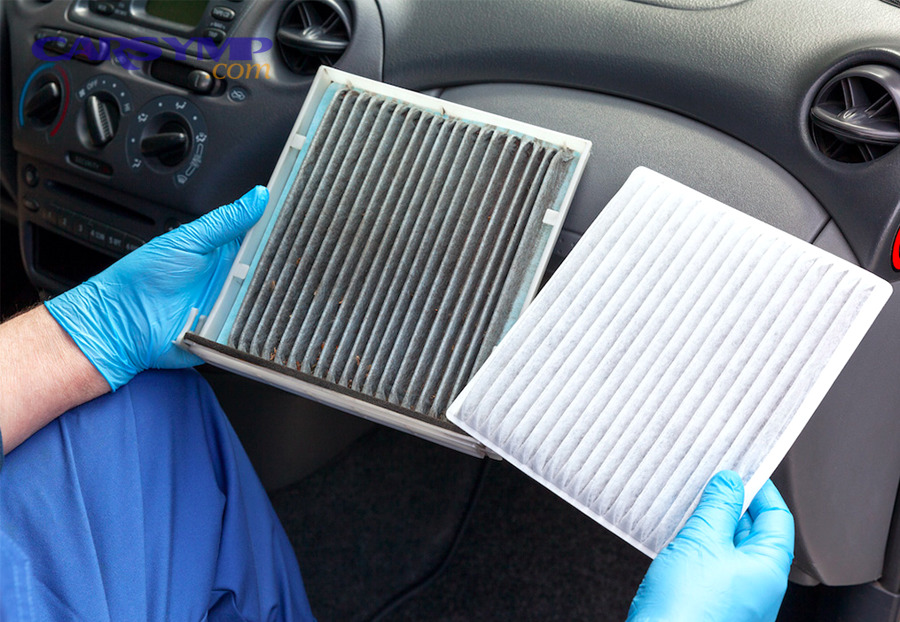
Engine air filters and cabin air filters serve entirely different functions: the engine air filter protects combustion components from contaminants while the cabin air filter protects passengers from pollen, dust, and odors, with the former located in the engine bay air intake and the latter positioned behind the dashboard or under the hood near the windshield. These filters require independent replacement schedules and produce distinct symptoms when clogged.
Many vehicle owners confuse these filters because both involve “air filtration,” but their roles, locations, and maintenance needs differ completely. Understanding these distinctions prevents miscommunication with service providers and ensures proper maintenance of both systems.
Location differences:
The engine air filter sits prominently in the engine bay, usually in a black plastic housing connected to the intake manifold by a large diameter hose. You can typically see it immediately upon opening the hood. Access requires only opening the housing clips or removing a few screws.
The cabin air filter hides behind the dashboard, accessed either from behind the glove compartment (which often must be removed or dropped down) or under the hood near the windshield base where the ventilation system draws outside air. This location makes cabin filter replacement slightly more complex, though still manageable for DIYers.
Functional differences:
The engine air filter performs a mechanical protection role, preventing physical damage to expensive engine components. Its effectiveness is binary—it either blocks particulates or fails and allows them through. Its performance affects engine operation directly.
The cabin air filter serves comfort and health purposes, improving the breathing environment for occupants. It filters pollen, dust, bacteria, viruses, and odors. Its effectiveness exists on a spectrum—a partially clogged cabin filter still provides some filtration, though at reduced efficiency. Its performance affects passenger experience rather than vehicle operation.
Symptom differences when clogged:
A clogged engine air filter produces the seven critical symptoms discussed throughout this article: check engine lights, power loss, fuel economy decrease, unusual noises, exhaust smoke, rough idle, and starting difficulty. These symptoms clearly indicate mechanical problems.
A clogged cabin air filter creates entirely different symptoms: reduced airflow from dashboard vents, whistling noises from the ventilation system, persistent musty odors, increased window fogging, and reduced heating or air conditioning performance. These symptoms affect comfort rather than drivability.
Replacement interval differences:
Engine air filter replacement typically occurs every 15,000-30,000 miles based on driving conditions and visual inspection. The interval focuses on mileage and environment exposure.
Cabin air filter replacement usually follows a time-based schedule (annually or every 12,000-15,000 miles) because effectiveness degrades even without heavy mileage. Biological contamination, moisture absorption, and odor saturation occur over time regardless of miles driven. Additionally, cabin filters often contain activated charcoal layers that become saturated and ineffective with time.
Cost differences:
Engine air filters typically cost $15-40 for quality replacements, with luxury or performance vehicle filters ranging up to $60-80. Labor adds $20-40 if professionally installed, though DIY replacement is straightforward.
Cabin air filters cost $20-50 for standard vehicles, with activated charcoal versions or luxury vehicle filters reaching $40-80. Professional installation labor costs $30-60 due to the more involved access requirements, though determined DIYers can still tackle this task following online guides specific to their vehicle model.
Can they be confused during service?
Yes, and this confusion causes problems. Some quick-lube facilities or dealerships might inspect one filter type while the customer believes they’re checking the other. Always specify which filter you want inspected or replaced. Better yet, learn to inspect both yourself—the visibility provides confidence that maintenance actually occurs.
The table below summarizes these key differences:
| Aspect | Engine Air Filter | Cabin Air Filter |
|---|---|---|
| Primary Function | Protects engine from contaminants | Protects passengers from pollutants |
| Location | Engine bay air intake housing | Behind dashboard or under hood near windshield |
| Access Difficulty | Easy (clips or screws) | Moderate (glove box removal often required) |
| Replacement Interval | 15,000-30,000 miles | 12,000-15,000 miles or annually |
| Clogged Symptoms | Engine performance issues | Reduced HVAC airflow, odors |
| Typical Cost | $15-40 (filter only) | $20-50 (filter only) |
| Impact if Neglected | Engine damage, expensive repairs | Reduced comfort, potential health effects |
Understanding this distinction empowers you to maintain both systems properly, ensuring both engine protection and passenger comfort throughout your vehicle’s life.
Can a Clogged Air Filter Cause Permanent Engine Damage?
Yes, a clogged air filter can cause permanent engine damage through three primary mechanisms: spark plug fouling that requires replacement ($100-300), cylinder wall scoring from inadequate lubrication ($1,500-3,000+ repair), and catalytic converter degradation from excessive unburned fuel exposure ($800-2,500 replacement). The severity of damage correlates directly with how long you continue operating the vehicle after symptoms appear.
The damage progression follows a predictable timeline, though the exact pace varies based on driving severity, engine design, and how severely the filter is clogged. Understanding this progression reveals why timely filter replacement provides such disproportionate value—a $25 filter prevents thousands in potential repairs.
Stage 1: Reversible efficiency loss (0-1,000 miles after restriction begins)
Initially, a moderately dirty filter reduces efficiency without causing component damage. Fuel economy drops, power decreases slightly, but no permanent harm occurs. Replacing the filter at this stage fully restores performance with no lasting effects. Think of this stage as the “warning window”—symptoms appear but damage hasn’t begun.
Stage 2: Spark plug fouling (1,000-3,000 miles of severe restriction)
As restriction worsens and the engine runs increasingly rich, carbon deposits accumulate on spark plug electrodes. Initially, this fouling causes intermittent misfires—the plugs still work but less reliably. Eventually, deposits bridge the electrode gap entirely, preventing spark generation.
Fouled spark plugs require replacement. While individual plugs cost only $5-15, labor to access them varies dramatically by engine design. Inline-4 cylinder engines with plugs on top might require 30 minutes labor ($50-75). V6 or V8 engines with plugs buried beneath intake manifolds or exhaust components might require 2-3 hours labor ($200-300). Some vehicles require removing engine covers, coil packs, or even portions of the intake system.
Additionally, fouled plugs sometimes damage ignition coils through electrical stress. Coils attempting to fire across carbon-bridged gaps experience voltage buildup that can cause internal breakdowns. Replacing failed coils adds $100-300 per coil depending on vehicle type.
Stage 3: Cylinder wall damage (3,000+ miles of severe restriction)
The most serious damage occurs when prolonged rich operation washes protective oil films from cylinder walls. Engine oil creates a micro-thin barrier between piston rings and cylinder walls, preventing metal-to-metal contact. This oil film is essential—without it, the piston’s rapid reciprocation would quickly score and damage the cylinder walls.
Unburned fuel from rich combustion dilutes and washes away this protective oil. Initially, this causes increased blow-by (combustion gases passing the rings into the crankcase) and accelerated oil contamination. Eventually, direct metal contact begins, creating microscopic scratches in the precisely-machined cylinder walls.
Once scoring occurs, compression loss, increased oil consumption, and further contamination accelerate. In severe cases, complete engine rebuild becomes necessary—a $3,000-6,000+ expense for typical passenger vehicles, and $8,000-15,000+ for luxury or performance vehicles. Some severely damaged engines prove uneconomical to repair, effectively totaling the vehicle.
Stage 4: Catalytic converter damage (concurrent with stages 2-3)
Catalytic converters contain precious metal catalysts (platinum, palladium, rhodium) designed to handle normal exhaust composition. They efficiently convert small amounts of carbon monoxide, unburned hydrocarbons, and nitrogen oxides into less harmful compounds.
However, continuous exposure to rich exhaust from a clogged air filter overwhelms the converter’s capacity. The excessive unburned fuel creates extreme heat as it combusts within the converter. This thermal stress can melt the ceramic honeycomb substrate, destroying the converter’s catalytic function.
Replacement costs vary by vehicle but typically range $800-1,500 for aftermarket converters and $1,500-2,500 for original equipment (OE) converters on standard vehicles. Luxury vehicles, trucks with multiple converters, or vehicles requiring California-certified converters can exceed $3,000-4,000.
The cost comparison is stark:
- Air filter replacement (DIY): $20-30
- Air filter replacement (professional): $50-80
- Spark plug replacement due to fouling: $150-350
- Ignition coil replacement: $250-600
- Catalytic converter replacement: $800-2,500
- Cylinder wall repair/engine rebuild: $3,000-15,000+
According to data from automotive repair cost tracking platforms like RepairPal, the average total cost for addressing clogged air filter-related damage (when caught after symptoms appear but before catastrophic failure) ranges $350-800. Cases requiring major repairs average $1,200-2,800. These figures demonstrate why preventative maintenance provides extraordinary return on investment.
How Do Clogged Air Filter Symptoms Differ in Older Carbureted Engines?
Clogged air filter symptoms differ significantly in older carbureted engines compared to modern fuel-injected vehicles, with carbureted engines displaying more dramatic fuel economy losses (15-25% vs. 5-10%), more frequent stalling, and visible carburetor flooding because carburetors cannot dynamically adjust fuel delivery like electronic fuel injection systems. These differences matter primarily for classic car owners and enthusiasts maintaining pre-1990 vehicles.
The fundamental distinction lies in fuel metering technology. Fuel injection systems use sensors, computers, and electronically-controlled injectors to adjust fuel delivery in real-time based on airflow, oxygen content, and dozens of other parameters. This sophisticated control allows modern engines to compensate partially for air restriction—they still suffer, but less severely than carbureted engines.
Carburetors, by contrast, operate purely on mechanical principles and vacuum pressure. They meter fuel based on the venturi effect—airflow velocity through a narrowed passage creates low pressure that draws fuel from the float bowl. This system works beautifully when airflow matches design specifications but cannot adapt when a clogged filter reduces airflow below expected levels.
Specific differences in symptom presentation:
Fuel economy impact: Carbureted engines typically show 15-25% fuel economy loss with severely clogged filters versus 5-10% in fuel-injected engines. This dramatic difference occurs because carburetors continue delivering fuel at the same rate even when airflow decreases, creating excessively rich mixtures. The engine cannot compensate by reducing fuel—it simply wastes the excess.
Stalling and hesitation: Carbureted vehicles experience more frequent stalling when idling with clogged filters. The restricted airflow creates insufficient intake vacuum to properly operate the carburetor’s idle circuit. Drivers often must increase idle speed adjustments or “feather” the throttle to maintain idle—temporary compensations that mask the underlying problem.
Cold starting difficulty: While both engine types struggle with cold starts when filters are clogged, carbureted engines show more severe symptoms. The manual or automatic choke enriches the mixture for cold starts, and combining this enrichment with already-restricted airflow often creates such excessive richness that the engine floods and refuses to start. Drivers learn to use “flooded engine” starting procedures (holding throttle wide open while cranking to admit maximum air) as workarounds.
Black smoke intensity: Carbureted engines produce more visible black exhaust smoke because they run richer overall. The smoke often appears during acceleration and sometimes even at steady-state cruising, whereas fuel-injected vehicles typically show black smoke only under heavy acceleration or severe restriction.
Backfiring through carburetor: A symptom rarely seen in fuel injection, carburetor backfiring occurs when rich mixtures ignite in the intake manifold rather than the combustion chamber. This creates loud popping sounds and sometimes flames through the carburetor throat—a dramatic and alarming symptom unique to carbureted applications.
Adjustment complications: Some carbureted vehicle owners respond to clogged filter symptoms by adjusting the carburetor to compensate—richening idle mixtures or adjusting float levels. These adjustments might temporarily mask symptoms but create new problems once a clean filter is installed, as the engine then runs too rich. Proper sequence requires replacing the filter first, then evaluating whether carburetor adjustment is genuinely needed.
Diagnostic approach differences:
For carbureted vehicles, the air filter check should be the very first diagnostic step when experiencing any performance issues. The mechanical simplicity of carburetors means they have fewer potential failure modes than fuel injection—making air restriction a higher probability cause for symptoms.
Fuel-injected vehicles require more systematic diagnosis because their computer controls can mask air filter restriction while suffering other malfunctions. Mechanics should still check the air filter early but must also consider sensors, injectors, and software issues.
Maintenance implications for classic car owners:
Enthusiasts maintaining carbureted classics should inspect air filters more frequently—every 5,000-8,000 miles rather than 12,000-15,000. The higher sensitivity to restriction justifies the added maintenance attention. Additionally, classic cars often sit unused for extended periods, during which air filters can absorb moisture or become homes for insects and rodents—both requiring inspection before seasonal startup.
Many classic cars use oil-bath air filters or reusable oiled-foam filters rather than disposable paper elements. These require different maintenance: oil-bath filters need periodic oil changes and bath cleaning, while foam filters require washing, drying, and re-oiling. Understanding How to clean reusable filters properly ensures adequate filtration without introducing contaminants during the cleaning process.
The preservation-minded classic car community often debates OEM vs aftermarket air filter comparison questions. Original-style filters maintain authenticity for show vehicles but may use older filter media technology. Modern aftermarket filters offer superior filtration and airflow but alter the engine bay appearance. The choice balances performance, protection, and authenticity preferences.
Ultimately, whether you maintain a carbureted classic or a modern fuel-injected daily driver, the fundamental principle remains: clean air filters protect engines, maximize performance, and prevent expensive repairs. The specific symptoms and severity differ, but the importance of proper maintenance does not. The Cost to replace engine air filter—whether $20 for a modern paper element or $40 for a reusable performance filter—represents one of automotive maintenance’s highest return-on-investment actions.
Your engine air filter stands as one of the simplest yet most critical maintenance items on your vehicle. The seven warning signs discussed—check engine light illumination, fuel economy decrease, power loss, unusual noises, black exhaust smoke, rough idling, and starting difficulty—provide clear indicators that replacement is needed. By learning to recognize these symptoms and performing simple visual inspections, you protect your engine from damage that can cost hundreds or thousands of dollars to repair. Whether you drive a modern fuel-injected vehicle or maintain a classic carbureted car, regular filter inspection and timely replacement ensures optimal performance, fuel efficiency, and engine longevity.