


Engine air filter replacement costs between $20 and $142 total, with parts ranging from $10 to $85 and labor from $20 to $70, making it one of the most affordable maintenance services for vehicle owners. The wide price variation depends primarily on whether you choose professional installation or DIY replacement, along with factors like your vehicle type, filter quality, shop selection, and geographic location. Most drivers pay between $73 and $96 when using professional services, while DIY enthusiasts spend only $10 to $25 on the filter itself, saving $40 to $70 in labor costs.
The cost difference between DIY and professional installation represents the most significant decision factor for car owners evaluating this maintenance task. Professional installation through dealerships typically costs $75 to $142, while independent mechanics charge $50 to $96, and quick lube chains offer competitive rates of $40 to $80. In contrast, replacing the filter yourself requires minimal investment—just the cost of the replacement filter and 15 to 30 minutes of your time, as most vehicles need no specialized tools for this straightforward procedure.
Understanding what factors influence engine air filter replacement pricing helps car owners make informed decisions and avoid overpaying for this routine service. Vehicle make, model, and year significantly impact costs, with luxury European vehicles requiring filters up to $150 compared to economy sedans needing only $10 to $25 filters. Geographic location creates substantial price variations, as urban and coastal markets charge $10 to $40 more than rural areas due to higher labor rates and operating costs. Shop type matters considerably—dealerships use OEM parts and charge premium labor rates, while independent mechanics offer flexibility with aftermarket options at lower prices.
Knowing when to replace your engine air filter and recognizing replacement intervals prevents unnecessary expenses while protecting engine performance and fuel efficiency. Next, let’s explore the complete cost breakdown and examine how different service options compare.
How Much Does Engine Air Filter Replacement Cost?
Engine air filter replacement costs $20 to $142 total, breaking down into $10 to $85 for parts and $20 to $70 for professional labor, with most vehicle owners paying an average of $73 to $96 for complete service. Understanding these cost components helps drivers budget appropriately and identify fair pricing when shopping for this essential maintenance service.
The parts cost for engine air filters varies significantly based on filter type, quality level, and vehicle requirements. Standard paper filters for economy vehicles like Honda Civics, Toyota Corollas, and Ford Focuses typically cost $10 to $25 at auto parts retailers. Mid-range synthetic filters offering better filtration and longer lifespan run $20 to $40 for most sedans and compact SUVs. Premium filters for luxury vehicles, performance cars, or larger trucks range from $40 to $85, reflecting specialized materials, complex designs, or manufacturer-specific requirements. High-performance washable filters from brands like K&N cost $40 to $80 upfront but provide reusable benefits over multiple service intervals.
Labor costs for professional engine air filter replacement reflect the simplicity of this maintenance task but vary widely by shop type and location. Most mechanics complete the actual replacement in 5 to 15 minutes, but shops charge based on minimum labor increments rather than actual time spent. Independent repair shops typically bill 0.2 to 0.3 labor hours at rates of $80 to $150 per hour, resulting in $16 to $45 in labor charges. Dealership service departments command higher hourly rates of $120 to $180 and exclusively use OEM filters, pushing total costs toward the upper range of $75 to $142. Quick lube chains and oil change facilities offer competitive labor pricing of $20 to $35, often bundling air filter replacement with oil change services for added convenience and value.
Geographic location creates substantial cost variations even for identical services. Urban markets in cities like New York, Los Angeles, San Francisco, and Seattle charge $10 to $40 more than rural areas due to higher commercial rent, wages, and operating expenses. Coastal regions typically see premium pricing compared to Midwest and Southern states where lower costs of living translate to more affordable automotive services. Regional competition also affects pricing—areas with numerous independent mechanics tend to offer better rates than markets dominated by dealership service centers.
Vehicle-specific factors influence total replacement costs beyond basic filter prices. Luxury European brands like BMW, Mercedes-Benz, and Audi require premium filters costing $40 to $100 and may demand specialized tools or procedures that increase labor time. Performance vehicles with modified intake systems or twin-engine configurations sometimes need two filters or custom components that double standard costs. Larger vehicles including full-size trucks, SUVs, and commercial vans use bigger filters ranging from $25 to $60, though installation remains equally straightforward. Conversely, compact cars and economy vehicles consistently fall at the lower end of the pricing spectrum due to simple designs and readily available affordable replacement parts.
Filter accessibility significantly impacts labor charges when professionals handle the replacement. Most vehicles position the air filter box prominently in the engine bay with simple clip or screw attachments, enabling quick 5-minute swaps. However, some manufacturers place filters in cramped locations behind other components, requiring removal of intake tubes, covers, or even bumper sections that extend labor time to 30 minutes or more. These difficult-access situations can increase professional installation costs to $60 to $100 even when the filter itself costs only $15 to $25.
Is Engine Air Filter Replacement Worth Doing Yourself?
Yes, engine air filter replacement is worth doing yourself for most vehicles because it requires no specialized skills, takes only 5 to 15 minutes, needs minimal or no tools, and saves $40 to $70 in labor costs while being classified as a beginner-friendly DIY task. This maintenance procedure ranks among the easiest automotive services that car owners can confidently perform at home, making professional installation an unnecessary expense for capable individuals.
Specifically, the simplicity of DIY engine air filter replacement steps stems from standardized designs across most vehicle manufacturers. The typical process involves locating the rectangular or cylindrical air filter housing in the engine bay, releasing clips or removing a few screws, lifting out the old filter, inserting the new filter in the correct orientation, and securing the housing back in place. This straightforward procedure requires no mechanical expertise, no diagnostic equipment, and creates no risk of damaging vehicle systems when performed correctly.
What Are the Steps to Replace an Engine Air Filter Yourself?
Replacing an engine air filter yourself follows five simple steps that most car owners complete in under 15 minutes without professional assistance. Below, we detail each step to guide you through this straightforward maintenance task.
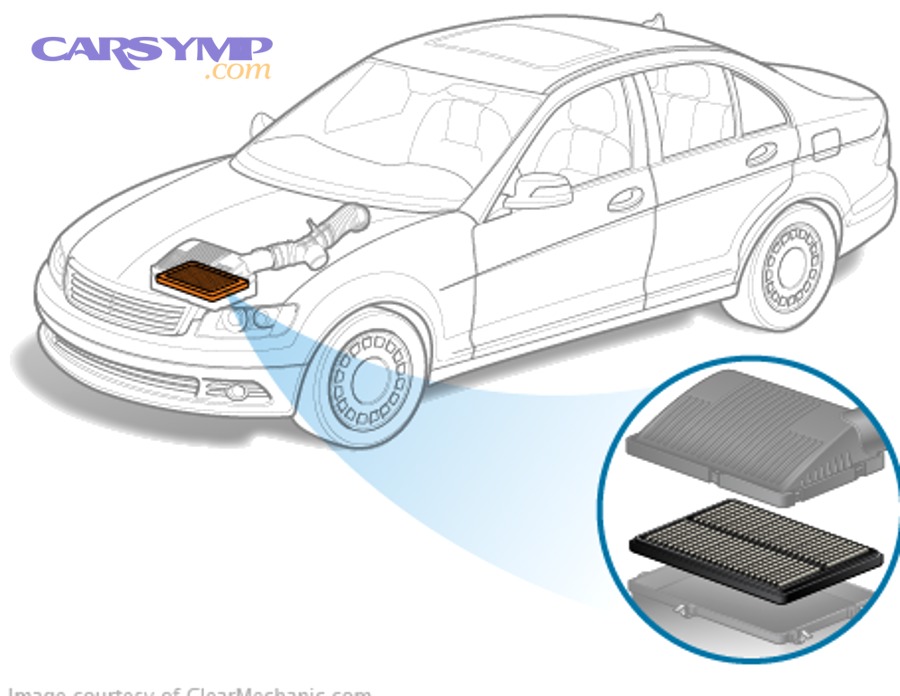
Step 1: Locate the air filter housing under your hood. Open your vehicle’s hood and look for a black plastic box positioned near the front of the engine bay, typically on the driver’s side or center. This rectangular or cylindrical housing connects to a large intake tube leading to the engine. Consult your owner’s manual if you’re uncertain about the location, as some vehicles position the housing in less obvious spots.
Step 2: Open the air filter housing. Most air filter boxes secure with metal clips that snap open by hand, plastic tabs that release with gentle pressure, or 4 to 6 screws requiring a screwdriver or socket wrench. Release all fasteners completely before attempting to lift the cover—forcing it can break mounting tabs or crack the housing. Some vehicles use wing nuts that unscrew by hand without any tools.
Step 3: Remove the old filter and inspect the housing. Lift the old filter straight out of the housing and examine its condition—heavy dirt accumulation, tears, or oil contamination indicate replacement was necessary. Check inside the empty housing for leaves, debris, or road grime that entered past the filter. Wipe out any visible dirt with a clean rag to prevent contamination of your new filter.
Step 4: Install the new filter in the correct orientation. Examine the new filter for directional arrows or markings indicating airflow direction, ensuring you insert it matching the original filter’s position. The filter should sit flat and flush within the housing without forcing or bending. Rubber gaskets or foam seals around the filter edges must align properly to prevent unfiltered air from bypassing the filtration media.
Step 5: Secure the housing and verify proper installation. Replace the cover exactly as you removed it, ensuring all clips snap firmly into place or screws tighten evenly. Give the closed housing a gentle tug to confirm it’s seated correctly. Start your engine and listen for unusual sounds or check for warning lights—proper installation produces no changes in engine behavior.
The tools required for DIY engine air filter replacement remain minimal for most vehicles. Approximately 60% of cars need absolutely no tools—the housing opens with hand-operated clips or tabs. Another 30% require only a Phillips or flathead screwdriver to remove 4 to 6 screws. The remaining 10% may need a socket wrench with 7mm, 8mm, or 10mm sockets for bolt-secured housings. These basic tools cost $5 to $15 if you don’t already own them, representing a one-time investment that still saves money compared to professional service.
Time investment for DIY replacement averages 15 minutes for first-time attempts and drops to 5 to 7 minutes once familiar with your specific vehicle’s setup. This time efficiency makes the task practical even for busy car owners with limited garage time. Unlike complex repairs requiring multiple hours or specialized knowledge, air filter replacement fits easily into lunch breaks or quick evening maintenance sessions.
The skill level needed for successful DIY engine air filter replacement qualifies as absolute beginner, making it an ideal first project for car owners new to automotive maintenance. The procedure involves no electrical components, no fluid draining, no calibration requirements, and no risk of serious vehicle damage if performed incorrectly. The worst-case scenario—installing the filter backward—simply reduces filtration efficiency temporarily and corrects easily by reopening the housing and rotating the filter 180 degrees.
When Should You Take It to a Professional Instead?
Taking engine air filter replacement to a professional makes sense in four specific situations: hard-to-access filter locations requiring component removal, time constraints preventing DIY work, physical limitations affecting your ability to reach engine bay components, and warranty considerations for leased vehicles. More importantly, bundling air filter replacement with other scheduled maintenance services often provides better value than DIY for the filter alone.
Hard-to-access filter locations occur in certain vehicles where manufacturers positioned the housing behind bumper covers, beneath intake manifolds, or under other engine components that must be removed first. Some luxury European vehicles, performance cars, and compact models with cramped engine bays fall into this category. If accessing your filter requires removing more than a simple intake tube or cover panel, professional service becomes more practical. The additional time and complexity eliminate the typical DIY cost advantage, making the $50 to $96 professional charge reasonable for the complete service.
Time constraints make professional installation worthwhile when your schedule doesn’t accommodate even 15 minutes for DIY work. Combining air filter replacement with already-scheduled oil changes or routine maintenance creates efficiency without requiring separate garage time. Most quick lube facilities and dealership service centers offer air filter replacement as an add-on service for $20 to $40 in additional labor when performed simultaneously with oil changes, tire rotations, or multi-point inspections. This bundled approach provides convenience without the premium pricing of standalone filter replacement appointments.
Physical limitations including mobility restrictions, back problems, arthritis, or limited upper body strength can make engine bay access challenging even for simple tasks. Professional technicians work with hydraulic lifts, proper lighting, and ergonomic positioning that reduces physical strain. If bending over an engine bay or applying pressure to release housing clips causes discomfort, the $40 to $70 professional installation fee represents money well spent for your health and safety.
Warranty considerations become relevant for leased vehicles or cars under manufacturer warranty periods. Some lease agreements require documented professional maintenance to avoid penalties or charges at lease end. New vehicle warranties rarely mandate dealership service exclusively, but maintaining detailed service records from reputable shops protects warranty coverage for major component failures. Check your specific lease or warranty terms before assuming DIY maintenance poses no contractual risks.
How Often Should You Replace Your Engine Air Filter?
You should replace your engine air filter every 12,000 to 15,000 miles or once per year, whichever comes first, though manufacturer recommendations vary from 10,000 to 30,000 miles based on vehicle design and driving conditions. Following your specific vehicle’s maintenance schedule ensures optimal engine performance and fuel efficiency while preventing premature filter replacement that wastes money.
Specifically, manufacturer recommendations provide the baseline replacement interval tailored to your vehicle’s engine design and expected operating conditions. Check your owner’s manual or maintenance schedule booklet for the exact mileage or time interval specified by the manufacturer. Most mainstream vehicles from Honda, Toyota, Ford, and Chevrolet recommend 15,000 to 30,000-mile intervals under normal driving conditions. Luxury and performance vehicles from BMW, Mercedes-Benz, and Audi often specify shorter 10,000 to 15,000-mile intervals due to higher airflow requirements and more sensitive engine management systems.
Environmental factors dramatically affect actual filter lifespan regardless of manufacturer recommendations. Drivers in dusty, rural, or desert environments should cut recommended intervals by 30% to 50% because airborne particles clog filters faster than typical suburban or highway driving. Urban drivers dealing with heavy traffic, construction zones, or industrial areas also benefit from more frequent inspections every 7,500 to 10,000 miles. Conversely, vehicles operated primarily on clean highways with minimal stop-and-go traffic often exceed manufacturer intervals without performance impacts.
Visual inspection provides the most reliable method for determining actual replacement needs between scheduled intervals. Remove your air filter every 5,000 to 7,500 miles and hold it up to bright light—you should see light passing through the filter media. Heavily soiled filters appear dark brown or black with visible debris accumulation between pleats. If the filter shows oil contamination, tears in the media, or collapsed pleats, replace it immediately regardless of mileage. Clean filters with minimal discoloration can remain in service until the next inspection, extending replacement intervals and reducing unnecessary expenses.
What Are the Signs Your Engine Air Filter Needs Replacement?
The signs your engine air filter needs replacement include visible dirt accumulation blocking filter pleats, reduced fuel economy of 1 to 3 mpg, decreased engine performance during acceleration, check engine light illumination, and rough idling or engine misfires. These symptoms indicate restricted airflow compromising engine efficiency and potentially causing long-term damage.
Visible dirt and debris accumulation represents the most obvious indicator requiring immediate filter replacement. A properly functioning filter traps contaminants in its pleated media, gradually darkening from white or tan to brown and eventually black. When dirt fills the spaces between pleats completely, airflow restriction begins affecting engine performance. Holding a used filter to bright light provides a simple test—if no light penetrates the media, replacement is overdue. Additionally, presence of leaves, insects, or road debris embedded in the filter indicates complete saturation requiring immediate service.
Reduced fuel economy signals that a clogged filter forces your engine to work harder to draw sufficient air for combustion. Modern engines maintain precise air-fuel ratios through computer controls, but restricted airflow from a dirty filter disrupts this balance. Drivers typically notice 1 to 3 mpg decreases in fuel efficiency before other symptoms appear. Tracking your fuel economy through consecutive fill-ups helps identify gradual declines suggesting filter replacement needs. If your normally efficient vehicle shows unexplained consumption increases without changes in driving habits, inspect the air filter as a primary suspect.
Decreased engine performance manifests most noticeably during acceleration when your engine demands maximum airflow. A clogged filter cannot supply adequate air for aggressive throttle inputs, causing sluggish response, hesitation, or reduced power output. Performance and MPG impact of air filter condition becomes especially apparent in turbocharged or high-performance engines requiring enormous air volumes. If your vehicle feels slower than normal or struggles climbing hills that previously posed no challenge, a saturated air filter likely restricts the necessary airflow.
Check engine light illumination can result from air filter-related issues when oxygen sensors detect improper air-fuel mixture ratios. Severely restricted airflow creates a “rich” condition with excess fuel relative to available air, triggering diagnostic trouble codes related to fuel trim, oxygen sensor readings, or mass airflow sensor malfunctions. While many issues can illuminate the check engine light, a clogged air filter represents one of the simplest and cheapest root causes to investigate before pursuing expensive diagnostic testing.
Rough idling or engine misfires indicate extreme airflow restriction preventing proper combustion in one or more cylinders. When a filter becomes completely saturated, the engine may idle roughly, produce unusual sounds, or even stall at low RPM. Misfires occur when individual cylinders receive insufficient air to completely burn the injected fuel, creating rough operation and potentially damaging catalytic converters over time. These severe symptoms warrant immediate filter inspection and replacement to prevent cascading problems throughout the engine management system.
According to research by the U.S. Department of Energy’s Oak Ridge National Laboratory in 2021, replacing a clogged air filter can improve acceleration performance by 6% to 11% in older carbureted engines, though modern fuel-injected engines show smaller but measurable improvements in airflow efficiency and throttle response.
What Should You Expect When Getting Professional Air Filter Replacement?
When getting professional air filter replacement, you should expect a service appointment lasting 15 to 30 minutes total, a visual inspection procedure where technicians assess filter condition, actual installation time of 5 to 15 minutes, minimum labor charges of $20 to $70 even for quick work, and documentation including warranty coverage for the replacement part. Understanding this process helps you evaluate fair pricing and service quality when choosing professional installation.
The service appointment process begins when you schedule your visit either by phone, online booking, or walk-in availability at quick lube chains. Dealerships and independent shops typically prefer appointments scheduled 1 to 3 days in advance, while quick lube facilities accept walk-ins with wait times averaging 15 to 45 minutes depending on customer volume. When scheduling, specify that you need only air filter replacement unless bundling with other services—this ensures proper time allocation and parts availability.
The inspection procedure starts with the technician locating your air filter housing and removing the cover to assess the current filter’s condition. Professional mechanics examine the filter for dirt saturation, physical damage, and proper fit within the housing. They also inspect the housing interior for debris accumulation, cracks, or seal damage that could allow unfiltered air to bypass the filter. Reputable shops show you the old filter and explain why replacement is or isn’t necessary at that moment, helping you make informed decisions rather than accepting unnecessary services.
Installation time for actual filter replacement ranges from 5 to 15 minutes depending on vehicle design and filter accessibility. The technician removes the old filter, cleans any debris from the housing, installs the new filter in the correct orientation, and secures the housing cover. For easily accessible filters in most sedans and compact SUVs, the entire process takes under 10 minutes. Vehicles with filters positioned behind other components or requiring tool access extend the job to 15 to 20 minutes. Despite the brief actual work time, shops charge based on minimum labor increments rather than exact minutes spent.
Minimum labor charges reflect shop business models rather than actual time invested in your specific service. Most repair facilities bill in 0.1 to 0.5 hour increments at their standard hourly rate, meaning even a 5-minute job generates $16 to $75 in labor charges at rates of $80 to $150 per hour. This explains why DIY replacement saves $40 to $70—you avoid paying for the minimum billable time that far exceeds actual work duration. Quick lube chains often offer more competitive labor pricing of $20 to $35 because they process higher service volumes and operate on thinner per-customer margins.
Documentation and warranty coverage conclude the professional service experience. Reputable shops provide written invoices detailing parts installed (including part numbers), labor charges, and total cost. The replacement filter typically includes a manufacturer’s warranty against defects, ranging from 90 days to 12 months or 12,000 miles depending on brand and quality level. Some shops offer their own labor warranty guaranteeing proper installation, usually covering 30 to 90 days for comebacks related to installation errors. Keep this documentation for your vehicle maintenance records and potential warranty claims on major engine issues where proper filter maintenance proves relevant.
How Do Costs Compare Across Different Shop Types?
Costs compare across different shop types with dealerships charging $75 to $142, independent mechanics pricing $50 to $96, quick lube chains offering $40 to $80, and mobile mechanics commanding $60 to $100 for engine air filter replacement. These price variations reflect different business models, parts sourcing strategies, labor rates, and service approaches that impact your total cost and overall value.
Dealership service departments represent the highest-cost option at $75 to $142 for complete air filter replacement, but provide specific advantages justifying premium pricing in certain situations. Dealerships exclusively use Original Equipment Manufacturer (OEM) filters identical to the factory-installed component, ensuring perfect fit and meeting manufacturer specifications exactly. Their technicians receive brand-specific training and work with vehicles from that manufacturer daily, providing specialized expertise. Hourly labor rates range from $120 to $180, reflecting higher overhead costs for facility maintenance, specialized diagnostic equipment, and manufacturer certifications. Choose dealership service when your vehicle remains under warranty, requires documented service history for lease returns, or needs brand-specific expertise for complex European or luxury models.
Independent mechanic shops charge $50 to $96 for air filter replacement, offering the best balance of professional expertise and reasonable pricing for most vehicle owners. These locally-owned businesses maintain hourly labor rates of $80 to $120—substantially less than dealerships while still employing ASE-certified technicians with broad experience across multiple vehicle brands. Independent shops offer flexibility in parts selection, providing options between OEM filters at dealership prices, premium aftermarket brands offering superior filtration, or budget-friendly alternatives meeting basic specifications. Their smaller overhead compared to dealerships translates to better pricing without sacrificing service quality or warranty coverage on installed parts.
Quick lube and chain service centers price air filter replacement at $40 to $80, delivering the most competitive professional installation costs through high-volume operations and streamlined processes. Facilities like Jiffy Lube, Valvoline, and Grease Monkey specialize in rapid oil changes and basic maintenance, performing dozens of air filter replacements daily. This specialization enables efficient service, typically completing filter replacement in under 10 minutes. However, these chains primarily stock mid-grade aftermarket filters rather than premium or OEM options, and technicians may have less experience with complex or unusual vehicle designs. Quick lube centers excel for straightforward mainstream vehicles when cost and convenience outweigh parts selection and specialized expertise.
Mobile mechanics charge $60 to $100 for air filter replacement, including a convenience premium for coming to your home or workplace. These independent professionals eliminate your travel time and waiting room experiences by performing service at your location. The higher cost compared to shop-based independents reflects travel time, fuel expenses, and reduced efficiency from working outside equipped service bays. Mobile mechanics make financial sense when bundling air filter replacement with other maintenance tasks during a single visit, when your schedule absolutely cannot accommodate shop visits, or when vehicle mobility issues prevent driving to traditional service locations.
The table below compares total costs across shop types for a typical mid-size sedan requiring a standard engine air filter:
| Shop Type | Parts Cost | Labor Cost | Total Cost | Typical Duration | Best For |
|---|---|---|---|---|---|
| Dealership | $30-$50 (OEM) | $45-$92 | $75-$142 | 30-60 min | Warranty service, luxury vehicles |
| Independent | $15-$40 | $35-$56 | $50-$96 | 20-45 min | Best value, flexible options |
| Quick Lube | $12-$25 | $28-$55 | $40-$80 | 10-20 min | Budget-conscious, convenience |
| Mobile | $15-$30 | $45-$70 | $60-$100 | 15-30 min | At-home service, bundled tasks |
This pricing comparison demonstrates that shop selection can create $35 to $100 cost differences for identical maintenance services, making research and comparison shopping worthwhile for budget-conscious vehicle owners.
What Are the Additional Costs and Considerations Beyond Basic Replacement?
Beyond basic replacement, additional costs and considerations include performance filter upgrades ranging from $40 to $80, bundled service packages combining air filter with cabin filter or MAF sensor cleaning totaling $150 to $250, comparative analysis between engine and cabin air filters, and specialty vehicle applications requiring premium filters up to $150. These expanded topics help car owners make comprehensive maintenance decisions aligned with their specific needs and budgets.
Should You Upgrade to a Performance or Reusable Air Filter?
You should upgrade to a performance or reusable air filter if you drive a high-performance vehicle, want long-term cost savings through washable filters lasting 50,000+ miles, prioritize improved airflow over standard filtration, or value environmental sustainability by avoiding disposable filter waste. However, standard disposable filters remain the better choice for typical commuter vehicles where the $40 to $80 upgrade cost doesn’t provide proportional benefits.
K&N and other washable filter brands cost $40 to $80 upfront compared to $10 to $25 for standard disposable filters, representing an initial premium of $30 to $55. This investment makes financial sense only when you plan to own your vehicle long enough for the reusable filter to pay for itself through eliminated replacement purchases. A washable filter lasting 50,000 miles before requiring replacement eliminates 3 to 4 standard filter purchases at $15 to $25 each over the same period. The cumulative savings reach $45 to $100 over five years, offsetting the higher initial cost while reducing landfill waste from discarded disposable filters.
Long-term cost analysis favors reusable filters for higher-mileage drivers and long-term vehicle owners but disadvantages low-mileage drivers and frequent vehicle traders. Calculate your break-even point by dividing the price premium by per-replacement savings. For example, a $60 K&N filter versus $20 disposable filters creates a $40 premium. At recommended 15,000-mile replacement intervals, you’ll purchase three disposable filters over 45,000 miles ($60 total) while the reusable filter needs only cleaning supplies costing $5 to $10 annually. This generates break-even around 30,000 to 40,000 miles, with increasing savings thereafter. Drivers covering fewer than 10,000 miles annually require 3 to 4 years to achieve payback, reducing the financial attractiveness of reusable options.
Performance benefits versus standard filters remain minimal for daily-driven street vehicles but become meaningful for modified engines or performance applications. High-flow reusable filters reduce intake restriction by 15% to 25% compared to standard paper filters, potentially adding 1 to 3 horsepower at high RPM in naturally aspirated engines. Turbocharged and supercharged applications benefit more substantially from reduced restriction, sometimes gaining 3 to 7 horsepower at peak boost levels. However, typical commuter driving rarely operates engines at these extreme conditions, making the performance gains imperceptible in real-world use. Additionally, aggressive high-flow filters may allow slightly larger particles past the filtration media, creating minor long-term engine wear concerns in dusty environments.
Cleaning and maintenance requirements for washable filters add time investment that some owners find burdensome. Proper cleaning requires specialized filter cleaner ($8 to $12 per bottle), filter oil for re-treatment ($6 to $10 per bottle), drying time of 24 hours, and careful application technique to avoid damaging the filter media. The complete cleaning process takes 30 to 45 minutes of active work plus overnight drying, repeated every 25,000 to 50,000 miles depending on driving conditions. Car owners comfortable with this maintenance routine appreciate the environmental benefits and long-term savings, while those preferring simplicity find the 10-minute disposal-and-replacement approach of standard filters more convenient.
What Related Services Are Often Bundled With Air Filter Replacement?
Related services often bundled with air filter replacement include cabin air filter replacement ($78-$106), mass airflow (MAF) sensor cleaning ($70-$150), throttle body cleaning ($100-$180), comprehensive oil change packages, and multi-point inspection services that create value through combined pricing and reduced shop visits. Understanding these bundling opportunities helps maximize maintenance efficiency and cost-effectiveness.
Cabin air filter replacement pairs logically with engine air filter service since both filters require periodic replacement at similar intervals and affect vehicle air quality. The cabin filter cleans air entering your vehicle’s HVAC system, trapping dust, pollen, and odors before they reach passengers. Professional cabin filter replacement costs $78 to $106 including parts and labor, but many shops offer package pricing of $120 to $160 for both engine and cabin filters together—saving $15 to $30 compared to separate services. This bundled approach makes sense because technicians already have your vehicle on the lift and can access both filter locations efficiently during a single service appointment.
MAF sensor cleaning addresses a common issue where oil from reusable filters or general contamination affects the mass airflow sensor’s accuracy. This sensor measures incoming air volume to calculate proper fuel delivery, and dirty sensors cause rough idling, poor fuel economy, and check engine lights. Professional MAF sensor cleaning costs $70 to $150 depending on sensor accessibility and whether removal is necessary. Some shops include MAF inspection and cleaning when installing new air filters, particularly when addressing customer complaints about performance issues or fuel economy concerns. Combining these services during scheduled air filter replacement prevents return visits and addresses related air intake system maintenance comprehensively.
Throttle body cleaning removes carbon deposits from the throttle plate and intake manifold that accumulate over time and restrict airflow similar to a dirty air filter. Professional throttle body cleaning costs $100 to $180 and involves removing the intake tube, spraying specialized cleaner on internal surfaces, and sometimes recalibrating the throttle position sensor after cleaning. This service makes sense every 50,000 to 75,000 miles or when experiencing idle quality issues, hesitation, or stalling. Bundling throttle body cleaning with air filter replacement during major service intervals provides convenience and often reduces combined labor charges since technicians access the same intake system components.
Oil change package deals frequently include air filter replacement as an add-on service at discounted rates. Quick lube facilities offering $40 to $70 oil changes typically add engine air filter replacement for an additional $20 to $35 in labor when using customer-supplied or budget aftermarket filters. This bundled pricing beats standalone air filter appointments and eliminates separate service visits. Additionally, many oil change packages include complimentary multi-point inspections covering fluid levels, tire pressure, wiper blades, and lights—creating comprehensive vehicle checkups during a single 30-minute service window.
Comprehensive tune-up services represent the most extensive bundling option, combining air filter replacement with spark plugs, fuel filter, PCV valve, and other wear items in packages ranging from $300 to $600 depending on vehicle requirements. These major service intervals occur at 30,000, 60,000, or 90,000 miles and address multiple maintenance items simultaneously. While the upfront cost seems high, itemized pricing for individual services totals significantly more, and consolidating work into one appointment reduces multiple shop visits and associated downtime. Tune-up packages make the most sense when approaching manufacturer-recommended major service intervals rather than performing each item separately as components wear.
How Does Engine Air Filter Cost Compare to Cabin Air Filter?
Engine air filter costs compare similarly to cabin air filter expenses, with both ranging from $40 to $106 professionally installed, but differ significantly in purpose, accessibility, and DIY difficulty, making them complementary maintenance items with distinct cost-benefit considerations. Understanding these differences helps vehicle owners prioritize maintenance spending and identify appropriate service approaches for each filter type.
The fundamental purpose differences between engine and cabin air filters create distinct maintenance priorities despite similar replacement costs. Engine air filters protect your engine’s internal components by trapping contaminants before they enter the combustion chambers, directly affecting engine performance, fuel efficiency, and longevity. Neglecting engine filter replacement causes measurable power loss, reduced fuel economy, and potential long-term engine damage. Cabin air filters clean air entering your vehicle’s passenger compartment through the HVAC system, improving interior air quality and reducing allergens but creating no mechanical consequences when neglected. This makes engine filters essential maintenance while cabin filters remain comfort-focused upgrades.
Cost comparison reveals surprising parity between these two distinct filter types. Professional cabin filter replacement averages $78 to $106 compared to $73 to $96 for engine filters, reflecting similar labor requirements and comparable parts costs. Both filters typically cost $15 to $40 for aftermarket versions and $30 to $60 for OEM replacements. The slight premium for cabin filter service reflects less convenient access locations—many cabin filters hide behind glove compartments or under dashboards rather than prominently in engine bays. However, combined pricing for both filters often ranges from $120 to $160, creating $15 to $30 savings versus separate service appointments.
DIY difficulty comparison shows engine air filters as substantially easier to replace yourself compared to cabin filters. Engine filter replacement requires no tools for 60% of vehicles and takes 5 to 15 minutes in accessible engine bay locations. Cabin filter access varies dramatically by vehicle—some models allow simple glove compartment removal and filter sliding, while others require dashboard panel removal, tools, and contorted positions to reach hidden housings. This accessibility difference makes DIY engine filter replacement nearly universal while cabin filter DIY remains vehicle-dependent. Consequently, cost-conscious owners often replace engine filters themselves while paying professionals for cabin filter service.
Replacement interval comparison indicates cabin filters need more frequent service than engine filters in many driving conditions. Standard engine filter intervals range from 12,000 to 30,000 miles, while cabin filters require replacement every 10,000 to 25,000 miles or annually in high-pollen, high-dust, or urban environments. The shorter cabin filter interval reflects finer filtration media that clogs faster when trapping microscopic particles, odors, and pollutants. Vehicle owners in dusty rural areas, high-traffic urban zones, or regions with significant seasonal pollen often replace cabin filters twice yearly while maintaining standard engine filter intervals. This creates higher annual maintenance costs for cabin filters despite similar per-replacement pricing.
Both filters share the characteristic that neglect causes gradual performance degradation rather than catastrophic failure. A completely clogged engine filter reduces power and fuel economy but rarely causes immediate breakdown or safety hazards. Similarly, a saturated cabin filter decreases airflow from dashboard vents and increases interior odors but doesn’t prevent vehicle operation. However, the cost of neglecting engine filters over extended periods potentially includes expensive engine repairs from ingested contaminants, while cabin filter neglect creates only comfort and air quality consequences. This risk differential justifies prioritizing engine filter maintenance when budgets require choosing between the two services.
Are There Cost Differences for Specialty Vehicles?
Yes, there are cost differences for specialty vehicles, with luxury and European models requiring $40 to $150+ for premium filters, performance and modified engines needing $50 to $100 for high-flow options, diesel vehicles using $30 to $80 heavy-duty filters, and commercial vehicles demanding $50 to $200 for larger capacity filters. These specialty applications create pricing premiums of 100% to 400% compared to standard economy vehicle filters while requiring similar labor for installation.
Luxury and European vehicle air filters command premium pricing due to sophisticated engine management systems, specific filtration requirements, and OEM part markups. Brands like BMW, Mercedes-Benz, Audi, Porsche, and Land Rover specify filters costing $40 to $100 for parts alone, compared to $10 to $25 for mainstream vehicles. These higher costs reflect complex multi-stage filtration designs, integrated sensors or electronics in some housings, and manufacturer requirements for specific filtration efficiency ratings. Additionally, European vehicle dealerships charge labor rates of $150 to $200 per hour, pushing total replacement costs to $120 to $200 even for straightforward filter swaps. Vehicle owners can reduce these expenses by purchasing OEM filters from online parts retailers at 30% to 50% discounts and performing DIY installation, though some luxury models position filters in difficult locations discouraging self-service.
Performance and modified engines utilize high-flow aftermarket filters from brands like K&N, AEM, and Injen costing $50 to $100 for enhanced airflow supporting increased horsepower. Turbocharged vehicles, supercharged applications, and naturally aspirated performance cars benefit from reduced intake restriction, potentially gaining 1 to 7 horsepower depending on boost levels and tuning. These specialized filters use oiled cotton gauze or synthetic materials allowing greater airflow while maintaining adequate filtration for street use. However, aggressive track or racing applications sometimes require even more specialized filters costing $100 to $200 with extreme flow characteristics unsuitable for daily driving. Modified engines producing 400+ horsepower may need dual filter setups or custom intake systems where filter costs reach $150 to $300 total for complete replacement components.
Diesel vehicle air filters cost $30 to $80 for heavy-duty variants designed for diesel engines’ higher air volume requirements and longer service intervals. Diesel engines ingest 25% to 40% more air than equivalent gasoline engines due to compression ignition principles, necessitating larger filters with greater surface area. Heavy-duty diesel filters in pickup trucks like Ford Super Duty, Ram Cummins, and Chevrolet Duramax models use reinforced media and robust housings lasting 20,000 to 30,000 miles between replacements. Commercial diesel trucks and equipment use even larger filters costing $60 to $150, though longer intervals of 30,000 to 50,000 miles reduce annualized maintenance costs to levels comparable with gasoline vehicles.
Hybrid and electric vehicle considerations create unique scenarios where engine air filters may not exist or require different maintenance approaches. Plug-in hybrid vehicles (PHEVs) like the Toyota Prius Prime or Honda Clarity still use gasoline engines with conventional air filters, though reduced engine running time extends intervals to 20,000 to 40,000 miles. However, these vehicles still specify similar filter costs of $15 to $40 for parts. Fully electric vehicles eliminate engine air filters entirely, redirecting maintenance budgets toward cabin filters and battery cooling system filters where applicable. Some EVs use specialized air filters for battery thermal management systems costing $40 to $100, though these require replacement only every 3 to 5 years.
Commercial vehicles and fleet pricing creates volume discounts offsetting higher per-unit costs for heavy-duty filters. Fleet managers purchasing filters for 10+ vehicles negotiate wholesale pricing of 30% to 50% below retail, while establishing maintenance contracts with service providers for bundled labor rates. A commercial van fleet might pay $200 per vehicle annually for complete air filter service including parts and labor, compared to $300+ for individual owners seeking the same services. However, small business owners operating 1 to 3 commercial vehicles rarely access these volume discounts, paying standard retail pricing plus potential premiums for heavy-duty components.
Engine air filter replacement represents one of the most cost-effective maintenance services available to vehicle owners, with professional costs ranging from just $20 to $142 and DIY options as low as $10 to $25. The substantial savings potential of up to $70 through DIY installation, combined with the beginner-friendly difficulty level, makes this an ideal first maintenance project for car owners seeking to reduce operating costs while learning basic automotive skills. Understanding the cost breakdown, replacement intervals, and professional service expectations empowers informed decisions that balance convenience, quality, and budget considerations for this essential maintenance task.