


Bedding-in new brake pads is a critical procedure that transfers a thin layer of friction material from the pads onto the rotor surface, creating optimal braking performance through controlled heating and cooling cycles. This process ensures maximum stopping power, eliminates vibrations, prevents premature wear, and extends the lifespan of both brake pads and rotors. Without proper bedding-in, drivers experience reduced braking effectiveness, uneven pad wear, brake fade under heavy use, and potentially dangerous pulsing or squealing during stops.
Understanding what happens during material transfer helps you execute the process correctly. The bedding-in procedure works by applying graduated heat and pressure to new brake components, allowing microscopic pad particles to fill the imperfections on the rotor surface and create an even friction layer. This transformation changes how your brakes respond, converting rough, inefficient contact into smooth, consistent stopping power that you can feel immediately after proper completion.
Knowing the exact steps prevents costly mistakes that permanently damage your brake system. The bedding-in process requires specific speeds, braking intensities, repetition counts, and cooling periods that work together to condition the friction surfaces without overheating or glazing the components. Many drivers skip this procedure entirely or execute it incorrectly, leading to warped rotors, glazed pads, and compromised safety that could have been avoided with 20-30 minutes of proper attention.
Beyond the initial installation, bedding-in applies to multiple scenarios throughout your vehicle’s maintenance cycle. Next, we’ll explore everything from the fundamental science behind material transfer to advanced techniques for performance applications, ensuring you have complete knowledge to maximize your brake system’s potential in any situation.
What Is Brake Pad Bedding-In and Why Is It Required?
Brake pad bedding-in is the controlled process of transferring friction material from new brake pads onto the rotor surface through graduated heating and cooling cycles, creating an even layer that optimizes braking performance and prevents common brake problems.
To better understand this essential procedure, consider what happens at the microscopic level when metal meets friction material. New brake rotors arrive from the factory with countless microscopic peaks and valleys across their surface, even though they appear smooth to the naked eye. Similarly, new brake pads contain binding resins and friction materials that haven’t yet been heat-activated or properly mated to the rotor’s unique surface topology.
The bedding-in process serves multiple critical functions that directly impact your safety and vehicle performance. First, it creates a transfer layer—a microscopically thin coating of pad material embedded into the rotor’s surface imperfections. This layer acts as a permanent friction interface that significantly improves bite and stopping power compared to bare metal contact. Second, the controlled heating allows the chemical binders in the pad material to cure properly, releasing gases and volatile compounds that would otherwise create inconsistent braking feel. Third, bedding-in physically conforms the pad surface to match the rotor’s exact contours, maximizing the contact area between the two components.
Without this process, your brake system operates at substantially reduced capacity. The consequences of skipping bedding-in include extended stopping distances that could mean the difference between avoiding an accident and a collision, uneven material deposits that cause steering wheel vibration and brake pedal pulsing, premature glazing of the pad surface that creates a hard, smooth layer with minimal friction, accelerated rotor wear from concentrated high-pressure contact points, and brake fade during sustained use when the improperly conditioned materials overheat.
What Happens During the Material Transfer Process?
The material transfer process involves two distinct types of friction working simultaneously to create the optimal braking surface. Abrasive friction occurs when the brake pads physically scrape against the rotor during each application, generating intense heat that softens both surfaces at the molecular level. This heat—typically reaching 400-600°F during proper bedding—causes microscopic particles of pad material to break free and bond with the rotor surface.
Adherent friction then takes over as the primary braking mechanism once the transfer layer is established. Instead of the pad grinding against bare metal, the friction material on the pad now contacts the friction material embedded in the rotor surface. This pad-to-pad contact creates more consistent friction coefficients, generates less heat for the same stopping power, and produces smoother, more predictable braking feel throughout the pedal travel.
The chemical changes happening during this process are equally important. Modern brake pads contain phenolic resins that must be thermally cured to achieve their designed friction characteristics. During the initial bedding-in heating cycles, these resins undergo a chemical transformation called cross-linking, where molecular chains bond together to form a more stable, heat-resistant structure. The controlled cooling periods between brake applications allow this cured material to harden properly on both the pad and rotor surfaces.
Temperature management determines whether material transfer succeeds or fails. Gradual temperature increases allow the pad material to soften and flow into the rotor’s microscopic valleys without overheating. If temperatures rise too quickly or too high, the pad material liquefies excessively and creates thick, uneven deposits that later cause vibration problems. If temperatures remain too low, insufficient material transfers and the pads never achieve their full friction potential.
What Problems Occur If You Skip the Bedding-In Process?
Skipping the bedding-in procedure creates immediate and long-term performance issues that compromise both safety and component longevity. The most dangerous consequence is significantly reduced stopping power, particularly during the first several hundred miles of driving when the pads desperately need proper conditioning. Drivers who skip bedding-in often report that their new brakes feel worse than their old, worn-out brakes—a counterintuitive result that stems from poor surface preparation.
Brake fade becomes a serious concern during sustained braking situations such as mountain descents, highway traffic, or spirited driving. Without the proper transfer layer, the pad material cannot dissipate heat efficiently and begins to break down at lower temperatures than properly bedded pads. This thermal degradation creates a phenomenon called green fade, where the braking power progressively diminishes as the pads heat up, forcing the driver to apply more pedal pressure to achieve the same deceleration.
Vibration and pulsing issues develop when random, uneven deposits of pad material accumulate on the rotor surface. Instead of a uniform friction layer, skipping bedding-in creates thick patches in some areas and bare metal in others. When the brake pads clamp onto this uneven surface during subsequent stops, the varying friction levels transmit pulses through the brake pedal, steering wheel, and sometimes the entire vehicle chassis. These vibrations are often misdiagnosed as warped rotors, leading to unnecessary rotor replacement when proper bedding-in would have prevented the problem entirely.
Glazing represents another common failure mode when bedding-in is neglected. Excessive heat from hard braking on unconditioned pads causes the surface to form a hard, glass-like layer that offers minimal friction. Once glazed, brake pads often cannot be recovered and must be replaced—or at minimum, sanded down and re-bedded through an extended procedure. The characteristic symptoms include a shiny, smooth pad surface visible upon inspection, high-pitched squealing during braking, and dramatically increased stopping distances.
Premature wear accelerates when pads and rotors work against each other without the protective transfer layer. The abrasive friction continues at high levels throughout the pad’s life instead of transitioning to the more efficient adherent friction. This constant grinding wears both components faster and generates excessive brake dust that coats your wheels. Drivers report replacing brake pads 30-50% more frequently when proper bedding-in was skipped during installation.
What Do You Need Before Starting the Bedding-In Procedure?
Before beginning the bedding-in procedure, you need a vehicle with properly installed brake pads and rotors, an empty stretch of road at least one mile long where you can safely reach 50-60 mph, and 20-30 minutes of uninterrupted time to complete the full process without stopping completely.
Specifically, the bedding-in process requires certain environmental conditions and equipment to ensure both safety and effectiveness. The road surface must be dry, clean asphalt or concrete with good traction—wet, icy, gravel, or dirt roads prevent proper material transfer and create safety hazards. Traffic conditions matter significantly; you need isolation from other vehicles so you can perform repeated braking cycles without interference from cars behind you or cross-traffic. The ideal location is an industrial park on weekends, a little-used highway during off-peak hours, or a large, empty parking lot where you can safely build speed.

Your vehicle must be in proper mechanical condition before attempting bedding-in. The brake system requires a thorough pre-inspection checking for proper caliper operation, adequate brake fluid level, absence of air in the brake lines, correct rotor installation with proper torque on mounting bolts, and new pads seated fully in their caliper brackets without binding or interference. Any existing problems in the brake system will be amplified during the bedding-in process and could lead to dangerous situations at highway speeds.
Optional but helpful equipment includes an infrared temperature gun to monitor rotor surface temperatures during the procedure, confirming you’re achieving adequate heat without exceeding safe limits. Most street brake pads bed properly at rotor temperatures between 400-600°F, while performance pads may require 600-800°F. Having this data removes guesswork and prevents overheating damage. A passenger or smartphone mount can help track your speed and count repetitions without taking your eyes off the road for extended periods.
Safety gear appropriate for the procedure includes ensuring your vehicle’s tires have adequate tread and proper inflation pressure to handle repeated hard braking, confirming your seatbelt is fastened and the driving position is secure, and removing any loose items from the passenger compartment that could become projectiles during firm deceleration. While bedding-in doesn’t involve emergency-level braking, the repeated firm stops generate forces that could shift unsecured objects.
How Do You Choose the Right Location for Bedding-In?
The right location for bedding-in combines adequate straight-line distance, minimal traffic interference, and appropriate speed limits that accommodate the procedure’s requirements. Industrial areas with wide, straight service roads offer ideal conditions during evenings or weekends when commercial traffic disappears. These locations typically feature well-maintained pavement, clear sight lines, and minimal residential presence that could be disturbed by repeated brake applications.
Highway on-ramps and off-ramps can work effectively in some situations, particularly those with long merge lanes and light traffic patterns. The descending section of an exit ramp provides a natural speed-building opportunity, while the straight merge area offers adequate distance for braking and cooling cycles. However, you must remain vigilant for other vehicles and never compromise traffic flow or safety to complete bedding-in procedures.
Large parking lots represent the most accessible option for many drivers, though they require more laps to achieve the necessary speeds. Shopping centers, office complexes, or sports venue parking areas during closed hours provide safe, controlled environments. The main limitation is space—you’ll need an exceptionally large lot to reach 50-60 mph safely, making this option more suitable for lower-speed bedding procedures or smaller vehicles.
Surface quality dramatically affects bedding-in success rates. Smooth, uniform pavement allows consistent friction generation and even heat distribution across the brake components. Rough, deteriorated, or patchy road surfaces create inconsistent braking forces that interfere with proper material transfer. Avoid surfaces with loose gravel, potholes, significant cracks, or areas with pooled water that could splash onto hot brake components and cause thermal shock.
How Do You Bed-In Brake Pads Step-by-Step?
To bed-in brake pads properly, perform an initial warm-up phase with 3-4 moderate stops from 40 mph to 10 mph, followed by 8-10 firm braking cycles from 60 mph to 15 mph, and conclude with a 5-10 minute cool-down period driving at moderate speeds without using the brakes.
More specifically, the complete bedding-in procedure follows a carefully structured progression that builds heat gradually, establishes the transfer layer through repetition, and allows proper cooling to cure the deposited material. Each phase serves a distinct purpose in the conditioning process, and skipping or rushing any phase compromises the final results.
The procedure begins once you’ve driven your vehicle to the selected bedding location and confirmed the brake system is functioning normally through gentle test stops. Position yourself at a point where you can safely accelerate to the required speeds and have adequate distance to complete each braking cycle without reaching intersections, driveways, or other obstacles. Mental preparation helps too—commit to following the procedure completely without interruption, as stopping midway leaves the job incomplete.
What Is the Warm-Up Phase and How Do You Perform It?
The warm-up phase gradually increases brake component temperatures from ambient to working levels without thermal shock, preventing damage to the friction materials while initiating the first layer of material transfer. This phase consists of 3-4 moderate braking cycles from 40 mph down to approximately 10 mph, using smooth, progressive pedal pressure rather than sudden hard stops.
To execute the warm-up phase correctly, accelerate your vehicle to 40 mph on the empty road or parking area. Apply steady, moderate brake pressure—roughly 50% of maximum pedal force—to slow the vehicle down to 10 mph. The entire stop should take 3-4 seconds of sustained braking. As you approach 10 mph, release the brake pedal and allow the vehicle to coast or apply gentle throttle to avoid stopping completely. This partial stop prevents hot pad material from imprinting onto the rotor in one location.
Wait approximately 30-60 seconds between each warm-up stop to allow some heat dissipation while maintaining elevated component temperatures. During this interval, accelerate back to 40 mph and prepare for the next cycle. You should feel the brake pedal response becoming slightly firmer and more consistent with each successive warm-up stop as the initial material transfer begins.
The sensations during warm-up provide valuable feedback about the process. Normal warm-up characteristics include a slight burning smell from the brake area as resins begin to cure, possible light squeaking or chirping sounds as the surfaces mate together, gradual improvement in pedal feel and braking confidence, and even, progressive deceleration without grabbing or fading. Abnormal symptoms requiring immediate attention include severe vibration suggesting incorrect installation, dramatic fade or soft pedal indicating air in the system or fluid problems, grinding noises pointing to metal-to-metal contact, or smoke from the wheel area signaling overheating or contamination.
After completing 3-4 warm-up cycles, drive at moderate speed for one minute to stabilize temperatures before proceeding to the hard braking phase. This brief interval lets the brake system equilibrate and prepares it for the more demanding cycles ahead.
What Is the Hard Braking Phase and How Do You Execute It?
The hard braking phase establishes the primary transfer layer through repeated firm stops from 60 mph to 15 mph, performed 8-10 times with consistent intensity to deposit an even coating of friction material across the rotor surface. This phase generates the highest temperatures of the bedding process and creates the microscopic bonding that determines final brake performance.
For proper execution, accelerate to 60 mph and apply firm brake pressure—approximately 70-80% of maximum without engaging the anti-lock braking system (ABS). The goal is strong, assertive braking that generates significant heat and pressure without locking the wheels or triggering electronic intervention. Maintain this pressure consistently as the vehicle decelerates through 50 mph, 40 mph, 30 mph, and down to 15 mph, where you release the pedal and allow the vehicle to coast or roll forward.
The critical rule during hard braking cycles is never coming to a complete stop while the brakes are hot. Allowing the vehicle to halt with heated pads pressed against the rotor creates pad material deposits—thick accumulations that imprint the pad pattern onto the rotor surface. These deposits become permanent high spots that cause vibration and pulsing during all subsequent braking. If you must stop due to traffic or obstacles, shift to neutral and allow the vehicle to roll slightly while waiting, keeping the pads separated from the rotors.
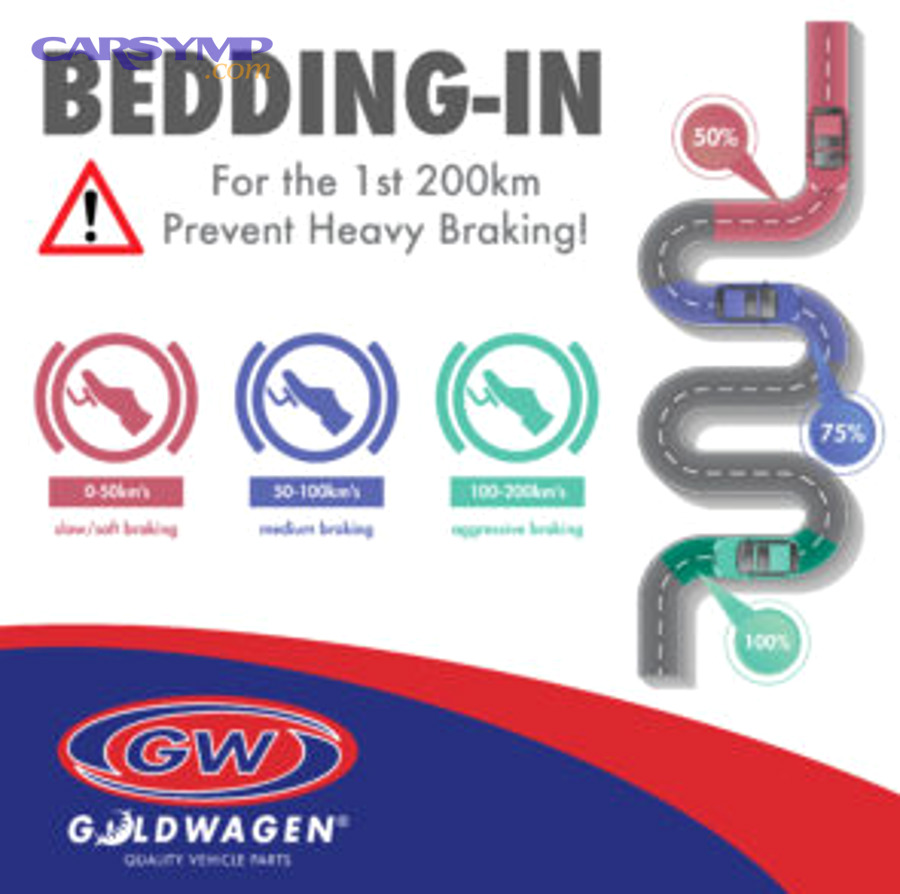
Spacing between hard braking cycles should be approximately 60-90 seconds, giving adequate time to accelerate back to 60 mph and allowing slight cooling between applications. However, don’t wait so long that the brakes cool completely—the goal is maintaining elevated temperatures throughout the 8-10 repetitions to keep the material transfer active. During intervals, pay attention to how the brake pedal feels; properly progressing bedding-in shows increasingly firm pedal response and more immediate bite as the transfer layer builds.
Sensations indicating successful hard braking phase completion include progressively improving brake feel with each cycle, a distinct burning odor from the curing resins and friction materials, possible light blue or purple tint visible on the rotor surface through wheel spokes (indicating proper heat), and consistent, smooth deceleration without fade or grabbing. Warning signs that require stopping the procedure include brake fade where pedal pressure increases but stopping power decreases, excessive smoke from the wheel area, strong vibration that worsens with each cycle, or fluid boiling indicated by a spongy pedal.
After completing 8-10 hard braking cycles, the transfer layer is established but not yet fully cured. The final phase becomes critical for solidifying this layer into a permanent, high-performance surface.
What Is the Cool-Down Phase and Why Is It Critical?
The cool-down phase allows the deposited friction material to cure and harden properly on both pad and rotor surfaces through gradual temperature reduction, achieved by driving 5-10 minutes at moderate speeds (30-45 mph) with minimal brake use. This final phase determines whether the transfer layer becomes permanent or fails prematurely.
Immediately after completing the last hard braking cycle, begin driving at a steady, moderate speed without touching the brake pedal. Air flowing over the brake components carries away heat gradually, allowing the chemical curing process to complete. The elevated temperatures from the hard braking phase have left the pad material and transfer layer in a semi-molten state; rapid cooling or pressure at this stage disrupts the bonding process.
If you must slow down during cool-down, use engine braking by downshifting to a lower gear rather than applying the brake pedal. For vehicles with automatic transmissions, gently lift off the throttle and use the transmission’s grade braking mode if available. The objective is keeping the brake pads separated from the rotors while they cool from approximately 500-600°F down to normal operating temperatures around 150-200°F.
Duration matters significantly—rushing the cool-down phase by stopping too soon prevents complete curing and may require repeating the entire bedding process. Five minutes represents the minimum cooling period for street brake pads, while high-performance or racing pads may need 10-15 minutes to stabilize fully. The exact time depends on ambient temperature, vehicle speed during cool-down, and the specific pad compound used.
You can confirm adequate cooling through several indicators: the burning smell dissipates and disappears completely, any blue or purple rotor discoloration fades to a uniform gray, the temperature gun (if using) shows rotor surface temperatures below 200°F, and no heat shimmer is visible rising from the brake area. Once these conditions are met, the bedding-in procedure is complete and the brakes are ready for normal use.
The science behind cool-down phase importance relates to the metallurgical and chemical changes occurring in the friction materials. As the transfer layer cools, the phenolic resins complete their cross-linking process, creating strong chemical bonds between molecules. The pad material simultaneously undergoes a phase transition from a semi-liquid state back to solid, and this transition must occur slowly for optimal crystal structure formation. Rapid cooling creates internal stresses and weak bonding, while properly controlled cooling produces dense, durable material deposits.
How Do You Know If Bedding-In Was Successful?
Successful bedding-in produces smooth, responsive braking feel without vibration or noise, creates a visible uniform gray coating across the rotor surface, and delivers consistent stopping power from the first brake application without break-in symptoms.
Specifically, properly bedded brakes exhibit several distinct characteristics that you can assess through both driving feel and visual inspection. The most immediate indicator is brake pedal response—well-bedded systems provide firm, progressive pedal feel with excellent bite from the moment you apply pressure. There’s no spongy sensation, no excessive travel before the brakes engage, and no variation in pedal height or pressure required between stops.
Performance metrics confirm successful bedding when you notice shorter stopping distances compared to the pre-bedding test stops you performed, immediate brake response without the lag or weak initial bite common with unbedded pads, consistent braking force that doesn’t fade or vary during normal driving conditions, and complete absence of pulling to either side during straight-line braking. These improvements should be apparent during your first normal driving session after completing the bedding procedure.
The absence of negative symptoms provides equally important confirmation. Successfully bedded brakes produce no steering wheel vibration at any speed, no brake pedal pulsing or surging during application, no squealing or grinding noises beyond brief chirps when cold, no excessive brake dust accumulation on the wheels, and no burning smell during normal brake use. If any of these problems appear after bedding-in, the procedure either was performed incorrectly or the brake system has underlying issues requiring diagnosis.
When to repeat the bedding process becomes necessary if you notice bedding symptoms returning after several hundred miles, such as reduced braking performance or developing vibration. Some brake pad compounds require a second bedding cycle after initial wear removes the outermost layer. Additionally, if you experienced problems during the first bedding attempt—such as coming to complete stops with hot brakes or insufficient heating—a second properly executed bedding procedure can often salvage the installation without replacing brake pads.
What Does a Properly Bedded Brake Rotor Look Like?
A properly bedded brake rotor displays a uniform, matte gray coating across the entire friction surface, showing no shiny metal patches, dark deposits, or uneven coloration patterns. This transfer layer appears as a consistent finish that differs subtly from the raw metal underneath, similar to the difference between brushed and polished aluminum.
To inspect your rotors after bedding-in, allow the brake components to cool to ambient temperature, then remove the wheels or look through the wheel spokes with adequate lighting. The friction surface—the area where the brake pads make contact—should show even coloration from the inside diameter to the outside edge. Any variation in this coating indicates incomplete or improper bedding that may cause performance issues.
The characteristics of a successful transfer layer include a slightly textured appearance rather than mirror-smooth, even gray coloration across 100% of the pad contact area, no visible grooves or scratches that stand out as brighter metal, subtle circular scoring marks that are uniform in depth and spacing, and consistent finish on both sides of the rotor and across all four wheels. This coating may appear lighter or darker depending on the specific pad compound used—semi-metallic pads often create darker deposits than ceramic compounds.
Visual indicators of bedding problems include shiny metal patches showing bare rotor surface where no material transferred, dark or black spots indicating thick material deposits from stopping while hot, rainbow coloring or blue/purple tint suggesting overheating damage, concentric rings of varying darkness indicating uneven pressure distribution, and visible ridges or steps at the inside and outside edges of the pad contact area. Any of these symptoms requires corrective action, either through a repeat bedding procedure or component replacement depending on severity.
Comparing properly bedded versus improperly bedded rotors side by side makes the difference obvious. A properly bedded rotor has uniform color and texture, shows smooth transition from the friction surface to the hat section, displays no thermal discoloration, and maintains a consistent cross-sectional thickness. An improperly bedded rotor exhibits patchy appearance with varied colors, visible thickness variation causing parallelism problems, heat damage markers like blueing or warping, and irregular wear patterns that create steps or grooves.
What Are the Most Common Bedding-In Mistakes to Avoid?
The most common bedding-in mistakes include coming to complete stops while brakes are hot, overheating components through excessive repetition or insufficient cooling intervals, using inadequate braking force that fails to generate proper transfer layer, and rushing or skipping the cool-down phase.
More specifically, these errors compromise the bedding process in distinct ways that create long-lasting performance issues. Understanding why each mistake damages your brake system helps you avoid them during your bedding procedure. The majority of bedding-related problems stem from just these four categories of errors.
Coming to a complete stop with hot brakes ranks as the single most damaging mistake during bedding-in. This error creates permanent pad material deposits—thick accumulations of friction material that imprint onto specific locations on the rotor. When drivers ignore the “never stop completely” instruction, they allow molten pad material to pool in one spot while pressure holds the pad against the rotor. This material hardens into a raised deposit that causes vibration and pulsing during every subsequent brake application, often misdiagnosed as warped rotors.
Overheating damage occurs when drivers perform too many repetitions without adequate cooling intervals or apply excessive braking force beyond what the pad compound can handle. Symptoms include glazed pad surfaces with a shiny, glass-like appearance, blue or purple rotor discoloration indicating temperatures exceeded safe limits, fade during the bedding procedure itself showing the pads have exceeded thermal capacity, and a acrid, chemical smell suggesting resin breakdown. Once overheating damage occurs, the pads often cannot be recovered and require replacement.
Insufficient heating represents the opposite problem but creates equally poor results. Drivers who use gentle braking force or perform too few repetitions fail to generate adequate heat for proper material transfer. The resulting bedding is incomplete, leaving bare metal patches where no friction material deposited. These brakes work but never achieve their designed performance potential, exhibiting weak initial bite, extended stopping distances compared to properly bedded pads, gradual improvement over hundreds of miles as street driving slowly completes the bedding process, and inconsistent feel that varies with temperature.
Rushing the procedure by eliminating the cool-down phase or stopping completely before adequate cooling prevents the transfer layer from curing properly. The deposited material remains soft and unstable, gradually wearing away during initial use rather than forming a permanent friction surface. Drivers who skip cool-down often find their brakes feel good immediately after bedding but deteriorate rapidly during the first few days of driving, requiring a complete re-bedding procedure to correct.
Why Should You Never Come to a Complete Stop During Bedding?
Never coming to a complete stop during bedding prevents pad material imprinting, which creates permanent high spots on the rotor that cause vibration and pulsing throughout the brake system’s remaining life. The physics behind this problem relates to the molten state of pad material at elevated temperatures and the pressure distribution when stationary.
During the hard braking phase, rotor temperatures reach 500-600°F, which heats the brake pads to similar temperatures through conductive heat transfer. At these temperatures, the friction material’s binding resins soften significantly, making the pad surface semi-liquid. When you continue rolling after each braking cycle, the pads separate from the rotors and the softened material cools evenly across the pad surface. This even cooling creates the desired uniform transfer layer.
However, stopping completely changes the thermal dynamics entirely. The pressure from the caliper pistons holds the pads firmly against specific points on the rotor—wherever the rotor happened to stop rotating. The localized pressure squeezes the softened pad material into the rotor’s microscopic surface irregularities at these contact points while simultaneously maintaining high temperatures through direct contact. This combination creates thick deposits of pad material at discrete locations rather than a uniform coating around the entire rotor circumference.
The deposited material hardens as it cools, forming raised areas that stand proud of the rotor surface by thousands of an inch—enough to create noticeable vibration when the brakes engage. Each time you brake afterward, the pads strike these high spots, generating a pulsing sensation transmitted through the brake pedal and steering wheel. The frequency of pulsing corresponds to rotor rotation speed; at highway speeds, deposits create rapid pulsing that feels like vibration, while at low speeds, the individual pulses become distinct.
Correcting pad imprinting after it occurs requires either resurfacing the rotors to remove the deposits (which shortens rotor life and requires re-bedding), replacing the rotors entirely if deposits are severe, or attempting a heat cycling procedure that sometimes redistributes material (rarely successful), or in the worst cases, replacing both pads and rotors and starting over. All these solutions cost significantly more time and money than simply avoiding complete stops during the initial bedding procedure.
The rolling requirement applies even if you must pause during bedding—if traffic appears, an obstacle blocks your path, or you need to briefly interrupt the procedure, shift to neutral and allow the vehicle to creep forward at 1-2 mph rather than depressing the brake pedal fully. This small rolling motion prevents localized pressure while the brakes remain hot.
How Do You Avoid Overheating the Brakes During Bedding-In?
Avoiding overheating during bedding-in requires maintaining 60-90 second intervals between braking cycles, limiting total repetitions to the recommended count for your specific pad compound, and immediately stopping if you detect fade, excessive smoke, or chemical odors indicating thermal distress.
To better understand the balance required, consider that bedding-in walks a fine line between generating adequate heat for material transfer while staying below the temperature threshold where damage begins. Street brake pads typically bed properly at 400-600°F but begin degrading at 800-1000°F depending on compound. Performance pads operate at higher temperatures but still have upper limits. Your job during bedding-in is finding the sweet spot that generates sufficient heat without crossing into the danger zone.
Recognizing early warning signs prevents catastrophic overheating damage. The first indicator usually appears as gradual fade—the brakes require progressively more pedal pressure to achieve the same deceleration with each successive cycle. This fade signals that the pad material is approaching its thermal limit and needs recovery time. If you experience fade during bedding-in, immediately extend the cooling intervals to 2-3 minutes between cycles or temporarily suspend the procedure for 5-10 minutes to allow components to cool.
Visual smoke indicators help assess heating levels. A small amount of white or light gray smoke during the first few bedding cycles is normal, resulting from manufacturing oils and resins burning off the new components. However, heavy smoke, black smoke, or smoke that continues throughout the entire procedure indicates overheating. The smoke may have a distinct chemical or burning plastic smell as the binding resins break down. If this occurs, stop the bedding procedure, allow complete cooling, inspect the pads for glazing damage, and resume with reduced braking intensity or longer intervals.
Temperature management techniques include using an infrared temperature gun to monitor rotor surface temperatures between cycles, confirming they stay within the pad manufacturer’s recommended bedding range. Target specific cooling intervals based on actual temperature readings rather than just time. For example, if temperatures are climbing above 700°F with street pads, extend intervals until temperatures stabilize around 500-600°F. Additionally, performing the procedure during cooler ambient temperatures (morning or evening rather than midday heat) provides more thermal margin before reaching critical limits.
Ambient conditions significantly affect overheating risk. High ambient temperatures reduce the brake system’s ability to dissipate heat, effectively lowering the threshold where damage occurs. On hot summer days (above 90°F), extend cooling intervals by 50% compared to cool weather bedding. Similarly, high humidity can affect certain pad compounds, while direct sunlight heating the rotors before bedding begins raises baseline temperatures. Whenever possible, choose moderate weather conditions for bedding-in procedures.
When Else Do You Need to Bed-In Your Brakes?
You need to bed-in brakes whenever you install new pads or rotors, after rotor resurfacing, when replacing brake pads step-by-step due to contamination, and occasionally when attempting to recover glazed pads through re-bedding procedures.
Specifically, several maintenance scenarios beyond initial installation require bedding-in to ensure optimal brake performance. Each situation demands slightly different approaches because the starting conditions vary from brand-new components. Understanding when bedding becomes necessary helps you maintain consistent brake performance throughout your vehicle’s maintenance cycle and prevents the performance degradation that occurs when this step is skipped.
The pad replacement scenario represents the most common situation requiring bedding. Compressing caliper piston safely during pad replacement is important, but equally critical is bedding the new pads to the existing rotors. If the old pads were a different compound or brand than the new ones, the existing transfer layer on the rotors may not be compatible with the new friction material. This incompatibility requires establishing a fresh transfer layer matched to the new pad chemistry, even though the rotors themselves show no wear or damage.
Mixed component situations create unique bedding requirements. Installing new pads on used rotors follows a modified procedure focusing on depositing fresh material over the old transfer layer. Installing new rotors with used pads that still have adequate thickness requires removing the glazed surface from the old pads (through light sanding) before bedding to the fresh rotor surface. Installing both new pads and new rotors together represents the ideal scenario, allowing optimal bonding between completely fresh surfaces.
Environmental contamination sometimes necessitates re-bedding even without component replacement. Brake fluid leaking onto pad surfaces, oil contamination from mechanical work, road chemicals splashing onto hot brakes, or parking brake engagement after vigorous driving can all damage the transfer layer or pad surface. In these cases, thoroughly cleaning the contaminated components and performing a complete bedding procedure may restore functionality without replacement, though severely contaminated pads usually require replacement.
Do You Need to Bed-In Brakes After Rotor Resurfacing?
Yes, you must bed-in brakes after rotor resurfacing because the machining process removes the existing transfer layer and creates a fresh, rough surface that requires new material deposition for optimal friction and performance.
The resurfacing process—whether done on a bench lathe or on-vehicle lathe—cuts away a thin layer of rotor material to restore a flat, parallel friction surface. This machining operation completely removes the carefully established transfer layer from the previous bedding, leaving bare metal with uniform machine marks but zero friction material deposits. Skipping bedding after resurfacing wastes the benefits of having restored the rotor to true parallel surfaces.
The bedding procedure after resurfacing follows the standard process with one important modification: the initial warm-up phase may require additional cycles (5-6 instead of 3-4) because the machined surface has deeper tool marks than a factory-finished new rotor. These tool marks must be filled with friction material through slightly extended conditioning. Otherwise, follow the same warm-up, hard braking, and cool-down sequence described for new components.
Timing considerations affect resurfacing bedding success. Ideally, bed-in the brakes immediately after rotor resurfacing while both the pads and rotors are in optimal condition. Delaying bedding while continuing to drive allows the unconditioned surfaces to develop random deposits and inconsistent friction, requiring a more aggressive bedding procedure to correct. If you cannot complete bedding immediately after installation, at minimum avoid heavy braking until you can dedicate time to proper bedding.
Some brake shops perform a brief bedding sequence before returning the vehicle to the customer, but this shop bedding rarely achieves the heat levels and repetitions needed for complete material transfer. Even if the shop claims they bedded the brakes, perform the full bedding procedure yourself to ensure optimal results. The 20-30 minutes invested guarantees the resurfacing expense provides maximum value.
Can You Re-Bed Glazed or Contaminated Brake Pads?
Re-bedding can sometimes recover glazed brake pads if the glazing is mild and caught early, achieved by sanding the pad surface to remove the hard layer, then performing an extended bedding procedure with gradual heat building to re-establish proper friction characteristics.
However, the success rate for re-bedding glazed pads depends heavily on the severity of glazing and the underlying cause. Surface glazing—a thin, shiny layer limited to the outermost pad surface—often responds well to corrective measures. Deep glazing that penetrates into the pad material’s internal structure typically indicates the binding resins have been permanently damaged, making recovery impossible through re-bedding alone.
To attempt glazed pad recovery, first remove the pads and inspect them thoroughly. Mild glazing appears as a shiny, smooth surface with darker coloration than normal pad material. Use 80-grit sandpaper to scuff this surface, removing approximately 1-2 millimeters of material until you expose the underlying friction material with its normal matte finish. Sand in multiple directions to create a cross-hatched pattern that provides good initial bite. Clean the sanded surface with brake cleaner to remove all dust and particles.
The re-bedding procedure for recovered pads requires more gradual heat building than standard bedding. Start with 5-6 very gentle warm-up cycles from 30 mph to 5 mph, using light pedal pressure. Progress to 6-8 moderate cycles from 45 mph to 10 mph with medium pressure. Finally, perform 8-10 firm cycles from 60 mph to 15 mph matching the standard hard braking phase intensity. This extended progression allows the damaged pad material to recondition gradually without re-glazing from excessive initial heat.
Success indicators include progressively improving pedal feel throughout the re-bedding procedure, absence of squealing or fading during cycles, uniform gray transfer layer visible on rotors after completion, and normal braking performance during subsequent test drives. If the pads still exhibit squealing, fade quickly, or show poor performance after proper re-bedding, the damage exceeds what can be recovered and replacement becomes necessary.
Contaminated pads face different recovery challenges. Oil, grease, or brake fluid contamination penetrates deep into the porous pad material, often reaching areas that cannot be removed through sanding. While you can attempt cleaning with aggressive solvents followed by baking in an oven to drive out contaminants, success rates are low and the safety risks of compromised brakes make replacement the recommended solution in most contamination cases.
How Is Bedding-In Different for Performance or Track Brake Pads?
Performance and track brake pads require higher bedding temperatures (600-800°F versus 400-600°F for street pads), more aggressive braking cycles, and ideally should be bedded on the racetrack rather than public roads to reach their designed operating temperature range safely.
The fundamental difference stems from the friction materials and binder resins used in performance compounds. While street brake pads are formulated to provide consistent friction across a wide temperature range starting from cold, track pads are engineered for optimal performance at elevated temperatures where street pads would fade. This design philosophy means track pads often feel wooden and provide minimal stopping power until they reach their operating temperature window—typically 400-800°F or higher for aggressive compounds.
Track pad bedding procedures start with several moderate laps to gradually bring component temperatures up without shocking the system. The first lap should include only light brake applications to check functionality. Laps 2-3 progress to medium braking at 50-60% pressure, feeling the brake response improve as temperatures climb. Laps 4-5 introduce hard braking at 70-80% pressure from higher speeds, generating substantial heat and initial material transfer. Finally, laps 6-8 involve near-maximum braking effort from track speeds, building the transfer layer through high heat and pressure.
The critical difference from street bedding is that track pads must reach temperatures well beyond what’s safe or legal to generate on public roads. A proper track bedding session might see rotor temperatures exceeding 1000°F—temperatures that would damage street pads but are necessary for track compounds to develop their full friction potential. This requirement makes genuine track bedding impossible to complete on the street, leading manufacturers to provide street-based break-in procedures that partially condition the pads but achieve final bedding during the first actual track session.
Manufacturer-specific procedures vary significantly for performance compounds. Carbotech recommends moderate stops followed by hard near-stops until fade is felt, then complete cooling. Brembo’s high-performance procedure specifies 30 light applications followed by several miles of gentle driving. Hawk Performance provides different bedding instructions for each of their pad compounds, from the street-focused HPS series to the track-only DTC series. Always consult the specific instructions included with your performance pads rather than following generic bedding advice.
Cooling procedures after track bedding require special attention. After completing the bedding laps, continue driving at moderate pace for 1-2 cool-down laps with minimal braking. Upon returning to the paddock, do not engage the parking brake and do not wash the wheels or spray water on hot components—the thermal shock can crack rotors or permanently damage pads. Allow natural air cooling for 30-60 minutes before touching components or performing post-session inspection.
What’s the Difference Between Bedding-In Cars vs. Motorcycles vs. Bicycles?
Car brake bedding uses 50-60 mph speeds with 8-10 repetitions, motorcycle bedding employs 40-50 mph with 10-15 cycles due to smaller rotor mass, and bicycle disc brake bedding requires only 15-20 cycles from 15-20 mph to walking pace because of significantly lower speeds and lighter weight.
The scaling of bedding procedures across vehicle types reflects the dramatic differences in brake system mass, operating temperatures, and kinetic energy management. Each vehicle category requires procedures calibrated to its specific characteristics while following the same fundamental principles of gradual heating, material transfer, and controlled cooling.
Automotive bedding represents the baseline procedure described throughout this guide. Four-wheel systems with large rotor diameters (11-15 inches typical), substantial rotor mass (10-25 pounds per rotor), and high vehicle weight (3000-5000+ pounds) require the extended heating and repetition counts to achieve adequate material transfer. The thermal mass of automotive rotors helps maintain temperature between cycles, requiring moderate intervals to prevent overheating while keeping components adequately hot.
Motorcycle brake bedding must account for smaller rotor diameters (typically 11-13 inches front, 9-11 inches rear), lighter rotor mass (2-4 pounds each), and intermediate vehicle weight (400-600 pounds). These factors mean motorcycles heat faster and cool faster than cars. The bedding procedure increases repetition count to 10-15 cycles to compensate for the rapid heat dissipation, while reducing speeds slightly to 40-50 mph due to handling and safety considerations. Motorcycles also require bedding front and rear brakes through different procedures—front brakes handle most braking force and need aggressive bedding, while rear brakes receive gentler treatment.
Bicycle disc brake bedding operates at dramatically different scale entirely. With tiny rotors (140-203mm diameter), minimal weight (50-150 grams per rotor), and light system weight (20-40 pounds including rider), bicycle brakes heat very quickly from minimal energy input. The bedding procedure reduces to 15-20 cycles from moderate riding speed (15-20 mph) down to near-stop, using firm lever pressure to generate heat without skidding the tire. The entire procedure takes 10-15 minutes and can be performed in a parking lot or quiet street.
The table below compares the key bedding parameters across vehicle types:
| Parameter | Automotive | Motorcycle | Bicycle |
|---|---|---|---|
| Starting Speed | 60 mph | 40-50 mph | 15-20 mph |
| Ending Speed | 15 mph | 10 mph | Walking pace |
| Warm-up Cycles | 3-4 | 4-5 | 5-6 |
| Hard Cycles | 8-10 | 10-15 | 15-20 |
| Cycle Interval | 60-90 sec | 45-60 sec | 30-45 sec |
| Total Time | 20-30 min | 20-25 min | 10-15 min |
| Target Temp | 400-600°F | 350-500°F | 250-350°F |
Additional vehicle-specific considerations include that heavy trucks and SUVs may require extended bedding with additional repetitions due to greater mass, performance motorcycles with racing brake compounds follow track-style bedding procedures similar to performance cars, electric bicycles and e-scooters with regenerative braking need modified procedures accounting for reduced brake use, and commercial vehicles with air brakes follow entirely different bedding procedures specified by manufacturers. The common thread across all these variations is the requirement to gradually build heat, establish material transfer through repetition, and allow proper cooling—the specific parameters simply scale to match each vehicle’s characteristics.