


Protecting exhaust resonators from rust requires a multi-layered approach combining regular maintenance, protective coatings, and material upgrades to combat both internal moisture and external environmental damage. Resonators face accelerated corrosion because they’re attacked simultaneously from inside by condensation and exhaust gases, and from outside by road salt, mud, and moisture—making them one of the most vulnerable components in your exhaust system. The seven most effective prevention methods include regular undercarriage washing, high-temperature coatings, stainless steel upgrades, waxing, extended driving sessions, internal exhaust coatings, and strategic undercoating applications.
Understanding why resonators rust faster than other exhaust components helps you choose the right protection strategy for your specific situation. The dual-attack nature of resonator corrosion means that single-method approaches often fail, especially in high-salt environments like coastal regions or snow belt states where roads receive heavy winter treatments. Material composition plays a crucial role—standard 409 stainless steel resonators develop surface rust far more quickly than premium 304 stainless steel alternatives, though both outperform traditional aluminized or mild steel construction.
Selecting the appropriate rust prevention method depends on your budget, regional climate conditions, expected vehicle ownership duration, and DIY capabilities. Budget-conscious car owners in moderate climates can achieve significant protection through simple washing and coating routines, while those in aggressive salt exposure areas may need to invest in stainless steel resonator replacement or professional ceramic coatings to avoid premature failure. Each prevention method offers distinct advantages and limitations that make it more suitable for specific scenarios.
Beyond prevention, understanding what to do when rust already exists on your resonator can save hundreds in unnecessary replacement costs. Next, we’ll explore the underlying causes of resonator rust before diving into the seven proven methods that extend resonator life and protect your investment.
Why Do Exhaust Resonators Rust So Quickly?
Exhaust resonators rust rapidly because they face simultaneous corrosion from internal moisture condensation and external environmental exposure to salt, water, and debris, while being constructed from materials that readily oxidize under thermal cycling stress. This dual-attack mechanism accelerates deterioration far beyond what single-source corrosion would produce alone.
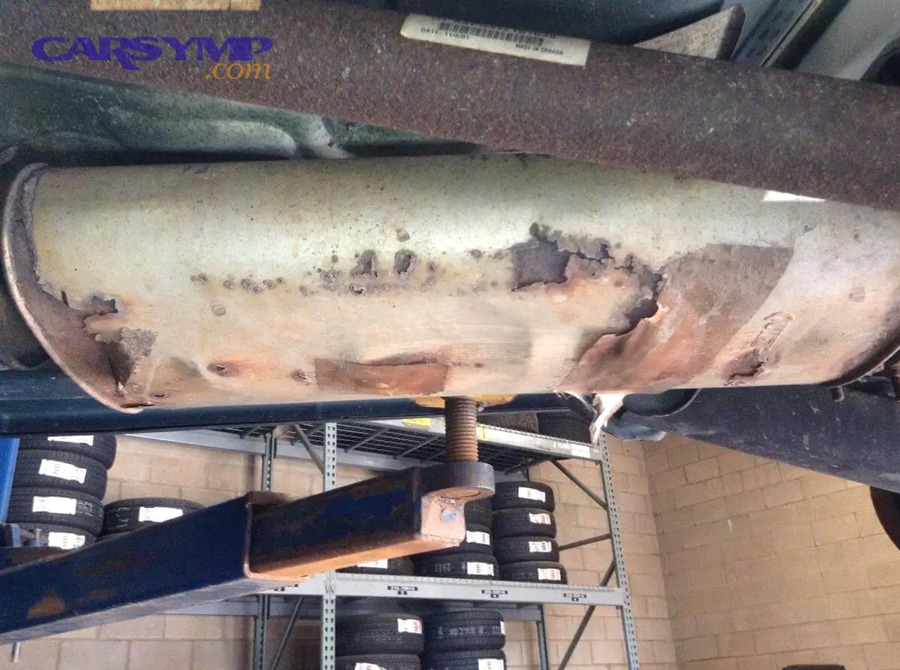
To better understand this accelerated rust formation, we need to examine both the internal and external factors at work. The combination creates a perfect storm of conditions that can destroy a resonator in just 3-4 years in harsh climates, compared to 10-15 years in milder environments with proper protection.
What Causes Internal Rust in Resonators?
Internal rust in resonators develops when combustion byproducts create water vapor that condenses inside the resonator chamber during short trips, remaining trapped and continuously corroding the metal from within. Every gallon of gasoline burned produces approximately one gallon of water vapor as a combustion byproduct, and this moisture doesn’t simply blow out through the tailpipe—it accumulates in cooler sections of the exhaust system.
Short trips under 30 minutes pose the greatest internal rust threat because the resonator never reaches sufficient temperature to evaporate trapped moisture. When you drive only 5-10 minutes to work or run errands, the exhaust system warms up but doesn’t achieve the 200-300°F sustained temperatures needed to dry interior surfaces completely. This moisture sits inside the resonator between uses, creating a constant corrosive environment. The thermal cycling that occurs with repeated cold starts and shutdowns actually intensifies corrosion by causing metal expansion and contraction that breaks down any protective oxide layers.
Exhaust gas composition adds another layer of complexity to internal corrosion. Modern fuel formulations and emission control systems produce exhaust containing sulfuric and carbonic acids formed when sulfur compounds and carbon dioxide combine with water vapor. These acidic condensates are far more corrosive than pure water, actively eating through metal surfaces. Resonators positioned farther from the engine run cooler than components like catalytic converters, making them prime locations for acidic condensation to accumulate.
What Environmental Factors Accelerate Resonator Rust?
Environmental factors accelerate resonator rust primarily through road salt exposure, coastal salt air, and debris accumulation that traps moisture against metal surfaces. Road salt used for winter ice control represents the single most aggressive external corrosion factor in cold-climate regions, with calcium chloride and sodium chloride compounds actively breaking down protective oxide layers and promoting rapid oxidation.
Coastal environments create year-round corrosion challenges even without winter road treatments. Salt spray and salt-laden air settle on exhaust components, and the hygroscopic nature of salt means it continuously absorbs atmospheric moisture to maintain a wet, corrosive environment on metal surfaces. Cars parked within five miles of ocean coastlines experience dramatically accelerated rust compared to inland vehicles, with resonators often showing significant corrosion in just 2-3 years without protection.
Mud, road grime, and tar accumulation magnify corrosion by creating pockets where moisture collects and persists against the resonator surface. These debris accumulations act like sponges, holding water and salt in direct contact with metal even after rain stops or road spray ends. The underside of vehicles receives constant bombardment from road debris kicked up by tires, and resonators—suspended beneath the vehicle without protective shields—catch and retain this corrosive mixture. Seasonal temperature swings contribute additional stress through freeze-thaw cycles that expand and crack accumulated debris, breaking through any protective coatings and exposing fresh metal to attack.
What Are the 7 Most Effective Methods to Prevent Resonator Rust?
The seven most effective resonator rust prevention methods are regular undercarriage washing, high-temperature protective coatings, stainless steel material upgrades, wax applications, extended driving sessions, internal exhaust coatings, and strategic undercoating—each addressing different aspects of the dual corrosion threat. These methods range from simple maintenance routines to permanent material solutions, allowing car owners to build layered protection strategies matching their climate and budget.
Below, we examine each method in detail to help you determine which combination provides optimal protection for your specific situation. The most successful prevention strategies typically combine three or four of these methods rather than relying on any single approach.
Method 1: Does Regular Undercarriage Washing Prevent Rust?
Yes, regular undercarriage washing prevents rust by removing salt, road chemicals, and debris before they cause significant corrosion, making it one of the most cost-effective prevention methods when performed 1-2 times monthly. This simple maintenance routine addresses the external corrosion factors by eliminating the contaminants that accelerate oxidation.
For maximum effectiveness, undercarriage washing should occur more frequently during winter months in salt-treated regions and after any beach or coastal driving. Most automatic car washes offer undercarriage spray options that target the exhaust system and suspension components, though DIY washing with a garden hose attachment provides better access and more thorough cleaning. Focus spray on areas where debris accumulates—around resonator mounting brackets, seams, and the joints where the resonator connects to exhaust pipes.
Water temperature and pressure matter less than thoroughness and frequency. Cold water rinses work perfectly well for removing salt and loose debris, and high pressure isn’t necessary (though it helps). The key is consistency—washing every two weeks during winter provides far better protection than monthly washing, and even brief 5-minute rinses between major cleanings help reduce salt exposure time. Timing matters too; washing your vehicle soon after road salt applications (ideally within 24-48 hours) prevents salts from forming the hard, adherent deposits that become difficult to remove and maintain constant moisture contact with metal surfaces.
Some car owners supplement washing with periodic inspections using a flashlight to check for debris buildup in hard-to-reach areas around the resonator. Visible mud packs or tar accumulation indicate areas needing focused cleaning attention. According to automotive corrosion research from the University of Michigan Transportation Research Institute, vehicles receiving regular undercarriage cleaning in salt-exposed environments showed 40-60% less corrosion damage compared to unwashed vehicles over a five-year study period.
Method 2: Should You Use High-Temperature Coatings on Resonators?
Yes, you should use high-temperature coatings on resonators because properly applied 1500°F-rated paints create a protective barrier against moisture and chemicals, extending resonator life by 2-4 years when maintained correctly. These specialized coatings bond to metal surfaces and resist the extreme heat cycling that exhaust components endure, unlike standard paints that burn off quickly.
Specifically, high-temperature exhaust paints and clear coatings designed for exhaust applications withstand the 300-800°F temperatures resonators experience during normal operation. Products rated for 1500°F provide substantial safety margin above typical operating temperatures, preventing coating breakdown and maintaining protection even during extended highway driving or performance use. Clear coat formulations offer invisible protection that preserves the factory appearance of stainless steel resonators while preventing oxidation.
Application technique significantly impacts coating durability and effectiveness. Surface preparation is critical—the resonator must be free of all rust, scale, oil, and contaminants for proper paint adhesion. Wire brushing or light sandblasting removes loose rust and creates the slightly roughened surface that promotes mechanical bonding. Degreasing with acetone or dedicated metal preparers eliminates oils that prevent paint adhesion. Apply coatings only to completely dry, room-temperature resonators in dust-free environments, using multiple thin coats rather than single heavy applications to prevent runs and ensure even coverage.
Curing represents the most critical application step that many DIYers skip or perform incorrectly. Most high-temperature paints require heat curing to achieve full hardness and temperature resistance, following a specific temperature ramp schedule. A typical cure cycle starts the engine and idles for 10 minutes, then drives at moderate speeds for 20 minutes, then highway speeds for 30 minutes—this gradual temperature increase allows the coating to cure without bubbling or burning. Skipping proper curing results in soft coatings that scrape off easily and fail to provide lasting protection.
Reapplication becomes necessary every 1-2 years depending on driving conditions and climate severity. Check coatings during regular oil changes for signs of wear, flaking, or bare metal exposure. Touch up small damaged areas promptly to prevent corrosion from spreading beneath the coating. While high-temperature coatings require maintenance, they cost $15-40 per application versus $200-600 for resonator replacement, delivering excellent return on investment.
Method 3: How Do Stainless Steel Resonators Compare to Standard Materials?
Stainless steel resonators dramatically outperform standard materials, with 304 stainless steel offering near-complete rust resistance lasting 15-20+ years, 409 stainless steel providing good corrosion resistance for 8-12 years, and aluminized steel delivering moderate protection for 5-7 years compared to just 3-4 years for mild steel in harsh environments. The material choice represents the single most impactful long-term rust prevention decision.
However, understanding the specific metallurgical differences helps explain the performance and cost variations between stainless grades. Type 304 stainless steel contains 18% chromium and 8% nickel, creating an austenitic structure that resists both atmospheric and chemical corrosion exceptionally well. This material won’t rust under normal automotive conditions and shows only minor surface discoloration after years of exposure. The chromium content forms a self-healing passive oxide layer that continuously repairs itself when scratched, providing automatic protection. Type 304 stainless is non-magnetic, which provides a simple field test—if a magnet doesn’t stick to your resonator, it’s likely 304 stainless steel.
Type 409 stainless steel contains 11% chromium with minimal nickel, creating a ferritic structure that costs significantly less than 304 but still offers superior corrosion resistance compared to mild or aluminized steel. Most OEM exhaust systems use 409 stainless steel as a compromise between cost and durability. While 409 develops surface rust over time, especially in salt-exposed areas, the corrosion progresses slowly and typically doesn’t cause structural failure for 8-12 years. Type 409 stainless is magnetic, helping distinguish it from 304 stainless.
Aluminized steel consists of mild steel coated with an aluminum-silicon alloy that provides sacrificial protection—the aluminum corrodes preferentially, protecting the underlying steel. This material costs less than stainless steel but more than uncoated mild steel, delivering a middle-ground option. Once the aluminum coating breaks down at stress points, seams, or welds, the underlying steel begins rusting rapidly. Aluminized steel resonators typically last 5-7 years in moderate climates but may fail in 3-4 years under heavy salt exposure.
Cost-benefit analysis reveals that stainless steel upgrades pay for themselves over vehicle ownership periods. A 304 stainless steel resonator costs $300-600 versus $150-250 for aluminized steel or $100-150 for mild steel, but eliminates the need for replacement during typical vehicle ownership. If you plan to keep your vehicle 10+ years, especially in harsh climates, the premium for 304 stainless steel represents sound financial investment. For shorter ownership periods or mild climates, 409 stainless offers good value without the premium 304 cost.
Method 4: Can Waxing Extend Resonator Life?
Yes, waxing can extend resonator life by 1-2 years when applied monthly because the wax coating repels water and prevents salt and mud from adhering directly to metal surfaces, though it requires more frequent reapplication than other protective methods. This approach works best as a supplementary protection layer rather than a standalone solution.
More specifically, automotive wax creates a hydrophobic barrier that causes water to bead and run off rather than spreading across metal surfaces and penetrating into crevices. This water-repelling property significantly reduces the time moisture spends in contact with the resonator, limiting corrosion opportunity. The wax also prevents hygroscopic road salt from bonding directly to metal, forcing it to adhere to the wax layer instead where it can be washed away more easily.
Application frequency and technique determine waxing effectiveness for exhaust protection. Unlike body panels where wax lasts 4-6 weeks, exhaust wax coatings degrade much faster due to heat, road spray, and chemical exposure. Monthly application provides consistent protection, with increased frequency to every 2-3 weeks during winter months when salt exposure peaks. Apply wax to completely cool, clean resonators—never to hot exhaust components as this causes wax to burn immediately. Use paste wax rather than spray formulas for better heat resistance and durability, working it into seams, welds, and mounting brackets where corrosion typically starts.
Product selection matters significantly. High-temperature automotive waxes or specialized exhaust waxes withstand heat better than standard car waxes, though even these have temperature limitations. Some enthusiasts report success with marine-grade corrosion inhibitors designed for boat trailers and underwater metal components, as these products handle salt water exposure and elevated temperatures. Avoid silicone-based products near oxygen sensors as silicone can poison sensor elements and trigger check engine lights.
Limitations include labor intensity and temporary protection duration. Waxing requires crawling under the vehicle monthly and applying product by hand—a 15-20 minute task that some owners find burdensome. The wax coating wears off progressively, providing diminishing protection between applications. Still, for DIY enthusiasts already performing regular vehicle maintenance, waxing adds minimal time and cost while delivering measurable corrosion reduction. Combining waxing with regular washing creates a powerful protection combination, as washing removes contaminants and waxing prevents new buildup from bonding.
Method 5: Does Driving Longer Distances Reduce Interior Rust?
Yes, driving longer distances reduces interior rust because extended trips allow resonators to reach 200-300°F temperatures that evaporate internal moisture condensation before it causes significant corrosion, with 30-45 minute drives providing optimal protection. This method addresses the internal rust mechanism without requiring purchases or applications.
To better understand this effect, consider that short trips never allow exhaust components to reach full operating temperature. A 5-10 minute commute warms the engine and begins heating the exhaust, but the resonator—positioned several feet away from the engine—barely reaches 150°F before you shut down. Water vapor from combustion condenses throughout the exhaust during these brief operating periods, then sits as liquid water inside the resonator until the next trip. This pattern of condensation without evaporation creates perpetual interior moisture that steadily corrodes from within.
Extended driving changes this dynamic completely. After 20-30 minutes of continuous operation, exhaust gas temperatures elevate substantially and heat soaks through the resonator walls, raising internal temperatures above water’s boiling point. This sustained heat evaporates condensed moisture, blowing it out as steam through the tailpipe. Highway driving proves especially effective because steady speeds and engine loads maintain consistent high exhaust temperatures, while stop-and-go city driving produces variable heating that may not fully dry interior surfaces.
Practical implementation means consciously planning longer trips when possible rather than making multiple short journeys. Combine errands into single extended outings, take scenic routes occasionally instead of direct paths, or schedule weekly longer drives specifically for vehicle health. Weekend trips, highway commutes, or monthly road trips provide excellent opportunities for interior moisture evaporation. Even one 45-60 minute drive weekly substantially reduces internal corrosion compared to exclusive short-trip driving.
Climate and seasonal factors influence this method’s effectiveness. Winter driving in extremely cold temperatures may require longer trip durations to achieve adequate evaporation temperatures, as ambient cold robs heat from exhaust components. Conversely, summer driving reaches protective temperatures more quickly. Humid climates produce more combustion water vapor than arid regions, potentially requiring more frequent extended drives for equivalent protection. According to research from the Society of Automotive Engineers, exhaust systems subjected primarily to short trips (under 15 minutes) experience 3-5 times faster internal corrosion rates compared to vehicles driven regularly for 30+ minute sessions.
Method 6: Should You Apply Internal Exhaust Coatings?
Yes, you should apply internal exhaust coatings because specialized products like Eastwood High Temp Internal Exhaust Coating withstand up to 1800°F while reducing interior corrosion and lowering exhaust surface temperatures, providing protection that external methods cannot achieve. These coatings address the internal rust mechanism directly by creating a barrier between acidic condensation and metal surfaces.
Specifically, internal coatings work by sealing the interior resonator surfaces with a ceramic-based thermal barrier that resists both heat and chemical attack. The coating prevents moisture and acidic exhaust condensates from contacting bare metal, blocking the electrochemical reaction that causes rust. Additionally, the thermal insulation properties keep exhaust gases hotter, which maintains velocity and reduces the temperature differential that causes condensation formation. This dual benefit makes internal coatings particularly effective for vehicles primarily driven short distances where exterior protection alone proves insufficient.
Application requires specialized equipment and careful technique. Internal coating products typically come with extended 2-foot aerosol nozzles that reach deep into exhaust components, featuring 360-degree spray patterns that coat all interior surfaces evenly. The resonator must be removed from the vehicle for proper application unless you have exceptional access. Spray from both ends of the resonator, using the extended nozzle to reach the center chamber completely. Multiple light coats applied from different angles ensure complete coverage without runs or buildup that could restrict flow.
Timing application correctly maximizes coating durability. Apply internal coatings to brand new resonators before installation for best results, as this seals fresh metal before any corrosion begins. Applying to used resonators still provides benefits but requires thorough cleaning to remove existing rust and deposits first—internal wire brushes attached to drill extensions help scrub interior surfaces. After coating application, the exhaust requires heat curing through a gradual temperature ramp similar to external coatings, though the curing heat comes from normal engine operation after reassembly.
Cost considerations and availability sometimes limit internal coating use. Products like Eastwood High Temp Internal Exhaust Coating cost $25-40 per can, with most resonator applications requiring one can. However, the application process involves resonator removal and reinstallation, adding labor time for DIYers or shop charges for professional installation. Despite these costs, internal coating significantly extends resonator life in harsh conditions and delivers better long-term value than premature resonator replacement. Combining internal and external coatings creates the most comprehensive protection system possible for standard steel resonators.
Method 7: Is Undercoating Worth It for Resonator Protection?
Undercoating provides moderate resonator protection and is worth considering for new vehicles or recent resonator replacements, but the mixed results—with some coatings burning off quickly or emitting foul odors—mean it should supplement rather than replace other prevention methods. The effectiveness varies significantly based on product quality, application skill, and operating conditions.
More specifically, rubberized undercoatings create a thick protective layer between metal and environmental exposure, sealing out moisture, salt, and debris when properly applied. Professional-grade undercoatings adhere tenaciously and flex with thermal expansion, maintaining their seal through temperature cycling. However, exhaust components experience more extreme temperatures than suspension or frame components, challenging even quality undercoatings. Resonators can reach 600-800°F during extended operation or performance driving, temperatures at which some rubberized coatings soften, drip, or emit burning rubber odors.
Product selection critically determines undercoating success on exhaust components. Petroleum-based undercoatings generally perform poorly near exhaust heat, burning off within months. Wax-based undercoatings like Fluid Film or Woolwax tolerate moderate exhaust temperatures better and don’t harden or crack, though they require annual reapplication. Ceramic-enhanced undercoatings specifically formulated for exhaust proximity offer the best heat resistance and durability but cost significantly more than standard products. Always verify that any undercoating product specifically lists exhaust system compatibility before application.
Application technique influences both effectiveness and odor issues. Applying undercoating in excessively thick layers guarantees burning and odor problems as the excess material closest to hot metal degrades. Multiple thin coats applied in layers builds adequate protection without the thick deposits that cause issues. Avoid coating oxygen sensors, flexible joints, or the resonator’s inlet/outlet pipes within 6 inches of connections—these areas experience the highest temperatures and require free movement. Focus undercoating on the resonator body, mounting brackets, and areas where debris accumulates.
Best practice involves applying undercoating to new or freshly painted resonators before exposure to road salt and moisture. Trying to undercoat already-rusted components simply seals in existing corrosion and accelerates failure by trapping moisture against damaged metal. For used resonators, remove all loose rust, apply a rust converter or encapsulator first, then top with undercoating after the converter fully cures. This layered approach addresses existing damage while preventing new corrosion.
How Do You Choose the Right Rust Prevention Method for Your Situation?
Choosing the right rust prevention method requires analyzing your regional climate severity, vehicle ownership timeline, available budget, and DIY capability to match protection strategies with your specific corrosion risk level. The optimal approach for a coastal California car differs dramatically from what works best in Minnesota or Arizona.

Let’s explore how different environmental conditions and personal factors should shape your prevention strategy. Understanding these decision criteria helps you invest resources where they provide maximum protection value rather than applying one-size-fits-all solutions that may over-protect or under-protect your resonator.
What’s the Best Method for High-Salt Environments?
The best method for high-salt environments combines stainless steel resonator upgrades with weekly undercarriage washing and high-temperature coatings, as this three-layer approach addresses the aggressive corrosion that destroys standard resonators in just 2-3 years in coastal or heavy snow-belt conditions. Single-method protection proves insufficient when salt exposure occurs year-round or intensively during winter months.
Specifically, upgrading to 304 stainless steel resonators provides the foundation for long-term survival in salt-heavy environments. Even with minimal additional protection, 304 stainless resists the electrochemical corrosion that salt accelerates, showing only minor surface discoloration rather than structural deterioration. This material investment ($300-600) eliminates the repeated replacement cycle that plagues standard resonators in harsh climates, where owners might replace resonators every 3-4 years at $200-300 each time.
Weekly washing during salt season (typically November through April in snow regions, year-round in coastal areas) removes salt deposits before they establish the persistent moisture contact that drives rapid corrosion. High-salt environments require more aggressive washing schedules than the standard 1-2 times monthly recommendation. Some automotive corrosion experts recommend washing within 24 hours after each major salt application event for maximum protection. This frequent washing prevents the thick salt crust buildup that becomes extremely difficult to remove and maintains near-constant corrosive contact.
Adding high-temperature coatings or waxing provides additional barriers against salt penetration, particularly protecting seams, welds, and mounting brackets where even stainless steel can develop crevice corrosion. Apply coatings or wax immediately after installation, before salt exposure begins. Reapply coatings annually before winter and check condition monthly during salt season, touching up any damaged areas promptly to prevent corrosion from breaching the protective layer.
Regional variations matter significantly. Coastal environments deliver constant salt air exposure but avoid the freeze-thaw cycles that open cracks in protective coatings. Snow belt regions concentrate salt exposure into 4-6 months but apply it intensively, often multiple times weekly during peak winter. Adjust your protection strategy accordingly—coastal cars benefit most from stainless steel and regular washing, while snow belt vehicles may additionally need seasonal undercoating reapplication. Cars in the Mid-Atlantic or Pacific Northwest face both rain and occasional snow/ice with lighter salt use, potentially succeeding with mid-tier 409 stainless and bi-weekly winter washing.
What Are the Most Cost-Effective DIY Prevention Methods?
The most cost-effective DIY prevention methods are monthly undercarriage washing combined with annual high-temperature coating application and bi-weekly waxing during salt season, delivering 80-90% of the protection provided by expensive solutions at just $50-100 annually versus $400-800 for stainless steel upgrades. This combination addresses both internal and external corrosion without professional labor costs.
Breaking down the costs reveals the value proposition clearly. Undercarriage washing costs essentially nothing if done at home with a garden hose (water costs pennies) or $3-8 per wash at automated car washes offering undercarriage spray options. Monthly washing throughout winter (November-April) totals $18-48 annually. High-temperature exhaust coating runs $15-25 per can with one can covering a resonator completely, requiring annual reapplication for $15-25 yearly. Automotive paste wax costs $8-15 per container lasting 6-12 months, totaling approximately $10-20 annually. Combined, this three-method approach costs $43-93 per year.
Labor investment remains modest with minimal mechanical skill required. Washing takes 5-10 minutes per session, coating application requires 45-60 minutes including surface prep and application (done annually), and waxing adds 15-20 minutes monthly. Total annual time investment runs approximately 4-5 hours—easily accomplished by most car owners during regular maintenance schedules. No special tools are needed beyond wire brushes for coating prep and wax applicator pads.
Effectiveness data from automotive forums and owner communities demonstrates that diligent application of these basic methods extends resonator life from the typical 3-4 years to 6-8 years in moderate-to-harsh salt environments. While not matching the 15-20 year lifespan of 304 stainless steel, this represents a doubling of service life for approximately 1/8 the upfront cost. For budget-conscious owners, the economics favor this DIY approach even if it requires one additional resonator replacement over vehicle ownership.
Scaling the approach to match climate severity optimizes cost-effectiveness further. Mild climate regions might skip waxing and reduce washing frequency to monthly year-round, cutting costs to under $30 annually. Severe environments might add internal coating ($25-40 additional one-time cost) to the base method, increasing total investment to $75-135 annually but providing protection approaching premium methods. This flexibility lets each owner calibrate protection level to actual need rather than over-protecting or under-protecting based on generic advice.
How Do You Apply Rust Prevention Treatments to Resonators?
Applying rust prevention treatments requires proper surface preparation, selecting appropriate products for exhaust temperatures, and following specific application and curing protocols to ensure protective coatings bond permanently and withstand thermal cycling stress. Skipping preparation steps or improper curing causes coating failure within weeks, wasting time and materials.
Below we detail the critical preparation and application techniques that separate successful long-lasting protection from failed coating attempts. Professional-quality results require attention to these processes rather than expensive tools or materials.
What’s the Proper Way to Prep a Resonator for Coating?
Proper resonator preparation requires wire brushing all loose rust and scale, thoroughly degreasing with acetone or metal prep solvent, and ensuring completely dry surfaces at 60-80°F ambient temperature in dust-free conditions before coating application. Surface preparation accounts for 80% of coating success or failure.
Specifically, mechanical rust and scale removal creates the clean metal surface that coatings need for strong adhesion. Hand wire brushing works for light surface rust, but power wire wheel attachments for drills remove heavy rust, scale, and old coatings far more efficiently. Work methodically across the entire resonator surface, paying special attention to seams, welds, and mounting bracket areas where rust typically starts. The goal isn’t achieving bare shiny metal (which is unnecessary and difficult) but rather removing all loose, flaking material and creating a slightly roughened surface texture. This surface roughness provides mechanical adhesion beyond just chemical bonding.
Degreasing eliminates the oils, road film, and contamination that prevent paint adhesion. Even resonators that appear clean carry invisible oil residue from manufacturing, road spray, or previous undercoating. Acetone effectively dissolves most oils and evaporates completely without residue, making it the preferred degreaser for coating prep. Apply acetone liberally with clean rags, wiping until rags show no discoloration—this typically requires 2-3 wipe-downs. Dedicated metal prep products like DuPont PrepSol or 3M General Purpose Adhesion Cleaner work equally well. Avoid brake cleaner for this application as some formulations leave slight residues.
Temperature and environmental conditions during application significantly affect coating success. Apply coatings only when both the resonator and ambient air temperature range between 60-80°F—coatings applied to cold metal cure improperly and may not bond securely. Humidity should stay below 70% to prevent moisture from interfering with curing. Work in dust-free environments (closed garage rather than open driveway on windy days) to prevent debris from settling on wet coating. Allow freshly degreased resonators to air dry completely for 10-15 minutes before beginning coating application—wet or damp metal causes adhesion failures.
Masking protects areas that shouldn’t receive coating. Use high-temperature aluminum tape or masking designed for automotive painting to cover oxygen sensor ports, flexible joints, and connection flanges. These components either operate at temperatures exceeding coating limits or require bare metal contact for proper sealing. Masking adds 10-15 minutes to prep time but prevents problematic coating overspray that could cause sensor failures or exhaust leaks.
How Do You Apply High-Temp Paint to a Resonator?
Apply high-temp paint to resonators using multiple thin coats from 6-8 inches distance with 5-10 minute flash time between coats, building 3-4 layers for complete coverage, then heat cure following the manufacturer’s specific temperature ramp schedule for maximum durability. Proper application technique prevents runs, ensures even coverage, and achieves the coating hardness needed for long-term protection.
More specifically, shake aerosol cans vigorously for 2-3 minutes before use and periodically during application to keep pigments and resins properly mixed—inadequate mixing causes uneven coating properties and premature failure. Hold the spray can 6-8 inches from the resonator surface, using steady sweeping motions with 50% overlap between passes. Start spraying before reaching the part and continue past the edge to prevent buildup at start and stop points. Each coat should appear semi-transparent—if you can’t see the underlying metal or previous coat showing through slightly, you’re applying too heavily and risking runs.
Flash time between coats allows solvents to evaporate without trapping them beneath subsequent layers, which causes soft spots and blistering. Five minutes minimum between coats works for most high-temp paints in 60-80°F conditions, extending to 10 minutes in cooler or more humid environments. Apply 3-4 total coats for adequate protection—fewer coats leave thin spots that fail quickly, while excessive coats waste material without improving protection. Rotate the resonator between coats if possible to ensure all surfaces receive equal coverage, paying special attention to the underside where road spray hits hardest.
Final coat application should focus on achieving uniform appearance and filling any thin spots identified during previous layers. Inspect the work under good lighting to identify missed areas or light coverage zones, touching these up during the final coat. Allow the final coat to dry for a minimum of 30 minutes before handling—longer is better, with overnight drying providing complete solvent evaporation before curing begins.
Heat curing transforms the coating from a soft, vulnerable state into a hard, durable finish that resists scraping and temperature cycling. Most high-temp exhaust paints require specific curing schedules such as 10 minutes at 200°F, 10 minutes at 300°F, and 30 minutes at 400°F. Achieve this through controlled engine operation: start the cold engine and idle for 10 minutes (warming phase), then drive gently for 10 minutes (intermediate heating), then drive at highway speeds for 30 minutes (full cure). Do not exceed recommended temperatures during curing—overheating can damage coatings before they fully cure. Expect some odor and smoke during initial curing as residual solvents burn off—this is normal and dissipates after the first complete cure cycle.
What Products and Materials Work Best for Resonator Rust Prevention?
The best resonator rust prevention products include Rustoleum High Heat Ultra 1200°F coating and VHT Flameproof 2000°F paint for external protection, E-TECH Exhaust Stop Rust for rust conversion, Eastwood High Temp Internal Coating for interior surfaces, and Fluid Film or Woolwax for undercarriage protection, each excelling in specific applications and temperature ranges. Product selection should match your specific protection needs and application scenario.

To better understand which products suit different situations, let’s examine the temperature ratings, application methods, and ideal use cases for each category. The right product choice significantly impacts protection durability and cost-effectiveness.
Which High-Temperature Paints Are Rated for Exhaust Use?
High-temperature paints rated for exhaust use include VHT Flameproof (2000°F), Rustoleum High Heat Ultra (1200°F), POR-15 High Temp (1500°F), and Eastwood High Temp Coating (1200°F), with 2000°F-rated products providing the widest safety margin for all resonator applications. These specialized formulations resist the thermal cycling and chemical exposure that destroys standard paints within days.
Specifically, VHT Flameproof represents the premium option for exhaust components, rated to 2000°F continuous exposure—well above the 600-800°F maximum temperatures resonators typically reach. This ceramic-based formula creates an extremely hard, glass-like finish that resists chipping and chemical attack. Available in multiple colors plus clear coat, VHT allows either protective coloring or invisible protection over stainless steel. The formula requires proper heat curing to achieve full temperature rating and hardness. Cost runs $12-18 per 11-ounce can, with one can covering a typical resonator with proper application technique.
Rustoleum High Heat Ultra offers excellent value with its 1200°F rating and wide availability at automotive and hardware stores. While rated lower than VHT, 1200°F exceeds resonator operating temperatures by substantial margin under normal driving conditions. The formula provides good adhesion and durability at a lower price point ($8-12 per can). Rustoleum proves particularly suitable for budget-conscious DIYers or applications where occasional recoating fits the maintenance schedule. The formulation cures through heat cycling like VHT but achieves full hardness more quickly due to different resin chemistry.
POR-15 High Temp ($15-20 per can) specializes in adhesion to difficult surfaces and excellent chemical resistance, making it ideal for resonators operating in harsh environments. The 1500°F rating handles all normal operating conditions with safety margin. POR-15’s reputation for tenacious adhesion means properly applied coatings often outlast competitive products even with equivalent temperature ratings. The company also offers a complete system approach with dedicated metal prep and top coat products for maximum durability.
Temperature rating selection should account for anticipated operating conditions. Standard passenger vehicles driven normally rarely exceed 600-700°F at the resonator, making 1200°F-rated products perfectly adequate. Performance vehicles, frequent towing, or track use can push resonator temperatures toward 900-1000°F, where 1500-2000°F ratings provide necessary safety margin. When in doubt, choose the higher temperature rating—the cost difference is minimal ($4-8 per can) and the added protection margin prevents coating failure during occasional high-load operation.
What Are the Best Rust Encapsulator Products for Resonators?
The best rust encapsulator products for resonators are E-TECH Exhaust Stop Rust, POR-15 Rust Preventive Coating, and Eastwood Rust Encapsulator, which chemically convert existing rust while creating protective barriers, with E-TECH specifically formulated for exhaust system temperatures and environments. These products address existing corrosion rather than just preventing new rust on clean metal.
More specifically, E-TECH Exhaust Stop Rust was developed exclusively for exhaust applications, including resonators, pipes, brackets, and hangers. The formula creates a chemical transformation in rust structure, converting iron oxide to a stable compound that won’t continue spreading. After conversion, the product forms a protective barrier preventing moisture and oxygen from reaching metal surfaces. The exhaust-specific formulation handles the temperature cycling and chemical exposure that general-purpose rust converters cannot withstand. Application requires wire brushing loose rust, degreasing, applying the product to a cool resonator, allowing 2-4 hours drying time, then optionally top-coating with high-temp paint for additional protection. One bottle ($18-25) treats multiple resonator applications.
POR-15 Rust Preventive Coating provides industrial-strength protection with a different approach—it seals existing rust beneath an impervious barrier that stops corrosion progression even when rust remains present. The coating cures through moisture exposure, achieving rock-hard, fuel-resistant finish that withstands extreme abuse. While not specifically designed for exhaust applications, POR-15’s temperature rating (continuous to 260°F, intermittent to 500°F) handles resonator applications acceptably when top-coated with POR-15 High Temp paint for additional temperature protection. The coating’s legendary durability and adhesion make it popular for severely rusted components where rust removal proves impractical.
Eastwood Rust Encapsulator splits the difference between E-TECH and POR-15, offering good temperature resistance, rust conversion properties, and UV protection in a user-friendly formula. The product flows smoothly, self-levels to minimize brush marks, and provides a suitable base for top coating. Temperature rating handles resonator applications well (up to 500°F continuous), though Eastwood recommends their separate high-temp products for maximum heat resistance. Cost runs $25-35 per quart, sufficient for multiple resonator treatments.
Application timing and surface prep significantly influence encapsulator effectiveness. Apply rust encapsulators to lightly rusted components where the base metal remains structurally sound—these products stop rust progression but don’t restore strength to heavily corroded, scale-covered metal. Remove all loose rust and scale through wire brushing, leaving only firmly adhered rust that resists mechanical removal. Degrease thoroughly, as oils prevent encapsulators from penetrating rust and bonding to underlying metal. Apply encapsulators to completely cool resonators (below 100°F), allowing full cure time (typically 24-72 hours depending on product) before reinstalling or exposing to heat and weather.
What Should You Do If Your Resonator Already Has Rust?
If your resonator already has rust, assess the corrosion severity to determine whether rust encapsulator treatment and protective coating can salvage the component or whether the structural damage requires resonator replacement, with surface rust responding well to treatment while perforated or heavily scaled resonators requiring replacement. Acting quickly on early-stage rust prevents minor issues from becoming expensive replacement situations.

Understanding the progression of resonator rust helps determine the right remedial approach. Below we examine repair viability assessment, advanced protection technologies, material selection for replacement scenarios, and premium corrosion-resistant options that eliminate future rust concerns.
Can You Repair a Rusted Resonator or Should You Replace It?
You can repair resonators with surface rust or small isolated rust spots using encapsulators and coatings, but resonators with holes, perforations, heavy scaling, or structural weakness require replacement because rust damage compromises exhaust sealing and sound control. The decision hinges on rust severity and remaining metal integrity.
Specifically, surface rust appearing as brown or orange discoloration without pitting or metal loss responds excellently to rust encapsulator treatment followed by high-temp coating. Wire brush the affected areas to remove loose rust and scale, treat with rust converter or encapsulator, allow proper curing time, then apply protective coating. This approach stops rust progression and often delivers 3-5 additional years of service life for resonators showing early-stage corrosion. Cost runs $30-50 for materials versus $150-600 for resonator replacement, making repair extremely cost-effective for minor damage.
Isolated rust spots or small rust-through areas may warrant temporary patch repairs using high-temperature metal putties or exhaust repair tape. Products like JB Weld High Heat Epoxy Putty or Permatex Muffler & Tailpipe Sealer can seal small holes and cracks temporarily, buying time until resonator replacement fits your maintenance budget. These repairs rarely last more than 6-12 months under real-world conditions but provide interim solutions for financially strained owners or when replacement parts face supply delays. Apply these temporary fixes only to small damaged areas (under 1 square inch) where surrounding metal remains solid.
Replacement becomes mandatory when rust creates multiple perforations, causes heavy external scaling indicating severe internal corrosion, or weakens metal to the point where resonator flex occurs during road vibration. Perforated resonators leak exhaust before the catalytic converter fully treats it, potentially causing emissions test failures and exposing vehicle occupants to carbon monoxide. Heavy scaling indicates the metal has lost significant thickness throughout, meaning failure could occur suddenly and completely. Flexing resonators create exhaust leaks at connection points and may crack catastrophically, leaving you stranded.
Safety considerations sometimes override economic repair decisions. A marginally functional resonator may pass visual inspection but leak carbon monoxide into the passenger compartment through gaps around seals, creating serious health risks. When evaluating repair-or-replace decisions, consider that resonators serve critical exhaust sealing and sound dampening functions beyond simple exhaust flow. A $200-300 replacement delivering proper function and safety exceeds the value of a $40 temporary repair that introduces risks or solves problems only partially. According to guidance from the National Institute for Automotive Service Excellence, exhaust components showing rust perforation should be replaced rather than repaired for safety and emissions compliance reasons.
How Does Ceramic Coating Compare to Traditional Rust Prevention?
Ceramic coating outperforms traditional rust prevention through superior heat resistance, permanent chemical bonding, and dual functionality providing both corrosion protection and thermal management, but costs $300-800 professionally applied versus $20-60 for DIY traditional methods. This premium option suits performance applications and permanent solutions for harsh environments.
More specifically, professional ceramic coatings like Zircotec’s exhaust treatment use plasma-spray application to deposit multi-layer protective systems on resonator surfaces. The base layer consists of high-density nickel alloy that bonds at the molecular level to the substrate metal, creating a corrosion barrier that cannot flake or peel like painted coatings. This nickel layer blocks oxygen and moisture completely, preventing any electrochemical corrosion. The top ceramic layer provides thermal insulation and chemical resistance, withstanding temperatures up to 1800°F continuously without degradation.
Thermal benefits beyond corrosion protection distinguish ceramic coatings from simpler rust prevention methods. The ceramic insulation keeps exhaust heat contained within the resonator, maintaining exhaust gas velocity and promoting more complete internal moisture evaporation. Lower external surface temperatures reduce heat radiated into the vehicle cabin and protect nearby components. These thermal properties improve both corrosion resistance and overall vehicle performance—a value proposition that straight rust prevention products cannot match.
Application requirements limit ceramic coating accessibility for many owners. Professional ceramic coating requires specialized plasma spray equipment and technical expertise not available to DIY mechanics. The resonator must be removed, shipped to the coating facility, processed, and returned—adding logistics complexity and cost beyond the coating itself. Total installed cost including resonator removal, shipping, coating, and reinstallation typically runs $400-1000 depending on resonator type and coating specification. This substantial investment makes sense for custom performance exhausts, rare vehicles, or situations where permanent rust elimination justifies premium cost.
Durability and warranty coverage often justify ceramic coating costs for appropriate applications. Quality ceramic coatings carry warranties of 5-10 years or even lifetime coverage, compared to annual reapplication needs for traditional coatings. Once applied, ceramic coatings require no maintenance beyond normal washing—no recoating, no inspections, no touch-ups. For owners planning long vehicle ownership in harsh climates, ceramic coating’s lifetime cost may equal or undercut traditional methods requiring annual reapplication over 10-15 years, while delivering superior protection throughout.
What’s the Difference Between OEM and Aftermarket Resonators for Rust Resistance?
OEM resonators typically use aluminized steel or 409 stainless steel with 5-8 year longevity in moderate climates, while aftermarket resonators range from budget mild steel lasting 3-4 years to premium 304 stainless steel delivering 15-20+ years, making material specification rather than OEM/aftermarket status the critical factor for rust resistance. Understanding this distinction prevents overpaying for OEM parts that offer no corrosion advantage.
Specifically, most factory OEM exhaust systems use aluminized steel for cost-sensitive components or 409 stainless steel for mid-range protection, balancing manufacturing cost against acceptable warranty-period durability. OEM resonators generally last the vehicle’s warranty period (3-5 years) without corrosion issues in moderate climates, which meets manufacturer obligations. In harsh salt environments, OEM resonators frequently fail within 4-6 years—acceptable to manufacturers who consider exhaust components “wear items” with limited life expectancy. OEM part prices remain high ($200-500) despite using mid-grade materials because manufacturers price replacement parts for profit rather than competitive market pressure.
Aftermarket resonator market spans enormous quality range from economy imports to premium performance brands. Budget aftermarket resonators ($75-150) often use mild steel with minimal coating, delivering inferior rust resistance compared to OEM parts and failing within 2-3 years in salt climates. These budget options suit vehicle owners planning short-term ownership or operating in mild climates where corrosion progresses slowly. However, their short lifespan makes them poor long-term values despite low initial cost.
Premium aftermarket brands like MagnaFlow, Borla, and Walker offer stainless steel resonators at competitive prices ($200-400 for 304 stainless). These products meet or exceed OEM fit and function while providing dramatically superior rust resistance through better materials. Many premium aftermarket resonators carry lifetime warranties against rust-through, demonstrating manufacturer confidence in corrosion resistance. For owners prioritizing longevity and rust prevention, premium aftermarket 304 stainless resonators deliver the best value—comparable or lower cost than OEM with 2-3X the service life.
Material verification prevents purchasing misrepresented products. When shopping aftermarket resonators, confirm the specific stainless steel grade (304 vs. 409) rather than accepting vague “stainless steel” claims. Use a magnet to test—304 stainless is non-magnetic while 409 stainless and aluminized/mild steel are magnetic. Reputable sellers provide material certifications and clearly specify grade. Avoid sellers unable or unwilling to confirm exact materials, as these often sell mild steel masquerading as stainless.
Warranty and return policies indicate manufacturer confidence and provide recourse if premature rust develops. Lifetime or 10+ year warranties against rust perforation suggest quality materials and construction. Limited warranties of 1-3 years or warranties excluding rust damage indicate questionable corrosion resistance. When comparing options, factor warranty coverage into value assessment—a premium resonator with lifetime warranty may cost less long-term than budget options requiring replacement every few years.
Are Titanium Alloy Resonators Worth the Investment for Rust Prevention?
Titanium alloy resonators offer essentially permanent rust immunity and 50-60% weight reduction compared to steel, but their $800-2000 cost makes them worthwhile only for dedicated performance builds, motorsport applications, or exotic vehicles where weight and corrosion elimination justify extreme premium pricing. For typical street vehicles, even premium 304 stainless steel provides sufficient rust resistance at 1/4 the cost.
More specifically, titanium alloys used in exhaust fabrication (typically Grade 2 commercially pure titanium) provide inherent corrosion resistance exceeding even 304 stainless steel. Titanium forms a self-healing passive oxide layer similar to stainless steel but more robust, resisting both atmospheric corrosion and chemical attack from road salt, acids, and caustic substances. Properly fabricated titanium resonators last indefinitely in any climate without rust, scaling, or degradation—essentially permanent components with no corrosion maintenance requirements.
Weight reduction represents titanium’s second major benefit, particularly relevant for performance applications. Titanium offers similar strength to steel at approximately 45% of the weight, allowing substantial mass reduction in exhaust systems. A steel resonator weighing 15-20 pounds becomes an 8-10 pound titanium equivalent, reducing unsprung and overall vehicle weight. This weight savings improves vehicle dynamics, reduces rotational mass, and enhances performance—valuable benefits for track cars, autocross builds, or high-performance street vehicles where every pound matters.
Cost barriers restrict titanium to specialized applications. Raw titanium costs 10-15X more than stainless steel, and fabrication requires specialized equipment and expertise due to titanium’s reactivity when heated. TIG welding titanium demands inert gas purging on both sides of the weld to prevent contamination and requires extremely clean conditions—complexity that drives labor costs higher. The result: titanium resonators priced at $800-2000 compared to $200-400 for premium stainless steel alternatives delivering 95% of the corrosion resistance.
Value analysis reveals titanium makes sense only for niche applications. Motorsport teams prioritize weight reduction and permanent reliability, justifying titanium costs through competitive advantage. Exotic vehicle owners expect premium materials and may prefer titanium for exclusivity and permanence. Performance enthusiasts building show-quality or maximum-performance street cars might justify titanium for weight and appearance benefits beyond simple rust prevention. However, the typical daily driver owner gains little practical benefit from titanium versus premium stainless steel—both materials outlast normal vehicle ownership periods, and the weight difference rarely impacts street driving experience noticeably. According to automotive materials research from MIT’s Department of Materials Science and Engineering, titanium exhaust components provide meaningful performance advantages primarily in motorsport applications where total vehicle weight optimization justifies extreme material costs.
Protecting exhaust resonators from rust requires understanding that corrosion attacks from both internal moisture and external environmental exposure, making multi-method prevention strategies essential for long-term success. The seven proven methods presented—regular washing, high-temperature coatings, stainless steel upgrades, waxing, extended drives, internal coatings, and strategic undercoating—address different aspects of the corrosion threat and work synergistically when combined. Your optimal protection strategy should match your regional climate severity, vehicle ownership timeline, and budget constraints, with high-salt environments demanding more aggressive protection than mild climates.
For most car owners, combining 2-3 complementary methods delivers the best value. Budget-conscious DIYers in moderate climates succeed with monthly washing plus annual coating application, while those in harsh snow belt or coastal regions benefit from investing in 304 stainless steel resonators supplemented by regular washing. Early intervention when surface rust first appears prevents minor issues from becoming expensive failures, and proper application technique for any protective product proves more important than brand or price. Remember that resonator replacement decisions should prioritize safety when perforations or structural weakness develop, as temporary repairs cannot restore proper exhaust sealing or sound control.
By implementing appropriate rust prevention methods now and maintaining them consistently, you’ll extend resonator life by 200-300% compared to unprotected components, saving hundreds in premature replacement costs while maintaining proper exhaust system function and vehicle safety.