


Choosing aftermarket resonators for superior exhaust sound requires evaluating three critical factors: resonator design type (bottle-style, bullet-style, or glasspack), material construction (stainless steel versus aluminized steel), and size specifications that match your exhaust diameter and sound goals. The right aftermarket resonator eliminates unwanted drone frequencies between 1700-2500 RPM while preserving the aggressive tone you want during acceleration, transforming a harsh or monotonous exhaust note into a refined, purposeful sound that enhances your driving experience without creating interior fatigue.
Understanding the different types of aftermarket resonators available helps you target specific sound problems effectively. Bottle-style resonators with larger internal volumes excel at eliminating low-frequency drone on highway cruises, while straight-through bullet designs maintain maximum flow for performance applications where minimal restriction matters most. Glasspack and chambered resonators offer traditional muscle car tones or modern refined sounds depending on your aesthetic preferences, and each design interacts differently with your existing muffler and mid-pipe configuration.
Comparing top aftermarket resonator brands reveals significant differences in sound quality, durability, and value. Vibrant’s Ultra Quiet resonators use stainless steel mesh packing to target drone frequencies aggressively, Magnaflow’s straight-through perforated core designs balance flow with sound control, and Borla’s XR-1 technology delivers premium sound refinement with aerospace-grade construction. Budget options from Walker and DynoMax provide adequate performance for street applications, though they typically sacrifice longevity and precise frequency tuning compared to premium alternatives.
Proper resonator sizing and installation methods determine whether your modification succeeds or disappoints. Below, we’ll explore how resonator diameter affects exhaust velocity and backpressure, why resonator length directly correlates with the frequency ranges you can eliminate, and whether Welding vs clamp replacement options better serve your long-term goals and budget constraints.
What Are Aftermarket Resonators and How Do They Improve Exhaust Sound?
Aftermarket resonators are tuned acoustic chambers installed in your exhaust system that use destructive interference to cancel specific sound frequencies, particularly the droning and harsh tones that occur at cruising RPMs, while allowing desirable exhaust notes to pass through freely. To better understand their function, consider how resonators differ fundamentally from mufflers in both design intent and acoustic principles.
How Do Resonators Work to Control Exhaust Sound?
Resonators control exhaust sound through destructive interference, where sound waves reflecting inside the resonator chamber meet incoming waves of the same frequency 180 degrees out of phase, effectively canceling each other out. The resonator’s internal volume and chamber length determine which frequencies get targeted for elimination, making it possible to remove annoying 100-150 Hz drone while preserving the aggressive 200-400 Hz range that creates a satisfying growl during acceleration.
Specifically, when exhaust gases enter a resonator, they encounter an expansion chamber that forces sound waves to reflect off the internal walls. The chamber dimensions create a specific resonant frequency based on the formula f = c / (4L), where c represents the speed of sound and L represents the chamber length. Sound waves matching this calculated frequency experience maximum cancellation as the reflected wave meets the incoming wave at precisely the opposite phase point. This principle explains why a 14-inch resonator targets different frequencies than a 24-inch unit—the longer chamber creates nodes at lower frequencies, making it more effective against deep drone.
The internal construction varies significantly between designs. Perforated core resonators allow exhaust gases to pass straight through while sound energy enters side chambers for cancellation. Chambered resonators force gases through directional baffles that create multiple reflection points. Packed resonators combine perforated tubes with sound-absorbing materials like fiberglass or stainless steel wool that dampen high-frequency components through friction. Each construction method offers different tradeoffs between flow restriction, durability, and frequency targeting precision.
What Makes Aftermarket Resonators Different from Stock Resonators?
Aftermarket resonators differ from stock resonators in three fundamental ways: construction quality prioritizes durability over cost savings, internal designs target specific frequency ranges rather than broad sound suppression, and material choices emphasize performance longevity instead of meeting minimum warranty periods. Stock resonators typically use single-wall aluminized steel that rusts within 5-7 years in salt-belt climates, incorporate sound-absorbing fiberglass that deteriorates under heat cycles, and employ simple expansion chamber designs that reduce both unwanted and desirable exhaust frequencies indiscriminately.
More specifically, factory engineers design stock resonators to achieve maximum silence at the lowest production cost, which means they often create excessive backpressure through restrictive internal baffles and prioritize eliminating all sound character rather than refining it. When examining a stock resonator that’s been cut open, you typically find thin stamped baffles spot-welded in place, minimal chamber volume relative to overall size, and fiberglass packing that’s compressed or blown out after 50,000 miles of heat exposure. These components fail progressively—internal baffles break loose and rattle, packing material disintegrates and exits through the tailpipe, and the external canister develops rust-through holes that introduce hissing leaks.
Aftermarket resonators address these shortcomings through upgraded materials and purpose-built designs. Premium units feature 304 or 409 stainless steel construction with mandrel-bent tube connections and full circumference MIG or TIG welding rather than spot welds. Internal components use heavier gauge perforated cores that resist vibration fatigue, and high-temperature packing materials like stainless steel wool maintain their acoustic properties through hundreds of heat cycles. The chamber volumes are calculated specifically for automotive exhaust frequencies rather than simply copying dimensions that fit packaging constraints on the assembly line. This engineering approach means aftermarket resonators can eliminate drone at 2000 RPM without muffling the aggressive note at 4000 RPM—something stock components cannot achieve because they weren’t designed with that goal.
What Are the Different Types of Aftermarket Resonators Available?
There are four main types of aftermarket resonators: bottle-style resonators with large expansion chambers for maximum drone reduction, bullet-style straight-through designs for minimal flow restriction, traditional glasspacks with packed fiberglass cores, and chambered resonators using directional baffles, each optimized for different sound control priorities and performance requirements. Let’s explore how each design achieves its acoustic goals and which applications suit each type best.
What Are the Sound Characteristics of Bottle-Style Resonators?
Bottle-style resonators produce deep, refined exhaust tones while eliminating low-frequency drone between 80-150 Hz through their large internal expansion chambers that create multiple reflection points for sound wave cancellation. The distinctive bottle or canister shape—typically 4-6 inches in diameter and 12-18 inches long—provides substantially more internal volume than the connecting exhaust pipes, forcing sound waves to expand rapidly and lose energy through turbulence while gases flow through relatively unrestricted.
However, this design philosophy creates specific acoustic characteristics you should understand before installation. The large chamber volume excels at targeting the fundamental drone frequencies that create interior cabin resonance during highway cruising, but it also slightly mellows the overall exhaust note compared to straight-through designs. When you accelerate hard, a bottle-style resonator still allows the aggressive upper harmonics to pass through, but it removes some of the raw edge that bullet resonators preserve. This makes bottle designs ideal for daily drivers where comfort matters during the 90% of driving that occurs at steady cruise, while performance applications that prioritize maximum sound aggression may find them too refined.
The internal construction of quality bottle resonators features a perforated core tube running through the center, surrounded by the expansion chamber and often packed with stainless steel mesh or wool. As exhaust pulses enter, high-velocity gases continue straight through the perforated core with minimal restriction, while sound energy radiates outward through the perforations into the chamber. Inside this chamber, sound waves reflect chaotically off the walls, interfering with each other and converting acoustic energy into small amounts of heat. The packing material, if present, absorbs additional high-frequency content through friction. This multi-stage approach explains why bottle resonators reduce drone more effectively than simple expansion chambers—they combine reflection, interference, and absorption simultaneously.
Popular bottle-style resonators include the Vibrant 1141 Ultra Quiet (17.75 inches long with stainless steel construction), the Magnaflow 10416 (14 inches with straight-through perforated core), and the Borla ProXS (variable lengths with patented internal design). Installation considerations include ensuring adequate ground clearance since the large diameter extends below the exhaust pipe centerline, and accounting for the weight increase compared to smaller resonators—bottle designs typically add 8-12 pounds versus 3-5 pounds for bullet types.
How Do Bullet-Style Resonators Compare for Performance Applications?
Bullet-style resonators win for performance applications requiring maximum exhaust flow because their straight-through perforated core design creates minimal backpressure (typically under 0.5 PSI) while still reducing high-frequency rasp and harshness by 3-5 decibels across the RPM range. More specifically, these compact cylindrical units measure 2.5-4 inches in diameter and 10-18 inches long, with the exhaust pipe diameter determining the core size to maintain consistent velocity through the system.
The performance advantage comes from unrestricted gas flow—exhaust pulses travel straight through the perforated tube without directional changes, expansion chambers, or internal baffles that create turbulence and pressure drops. For boosted applications pushing 400+ horsepower, this minimal restriction preserves exhaust velocity that improves turbocharger spooling and scavenging efficiency. Dyno testing shows that replacing restrictive stock resonators with bullet-style units can recover 5-8 horsepower at peak RPM on forced induction engines, though naturally aspirated applications typically see negligible power gains unless the stock system is severely restrictive.
Sound characteristics differ substantially from bottle designs. Bullet resonators maintain the raw, aggressive character of your exhaust while removing the particularly harsh frequencies that cause interior fatigue and exterior rasp. Think of them as high-pass filters rather than broad-spectrum silencers—they let the deep, purposeful tones pass through freely while damping the piercing 4000-6000 Hz frequencies that create raspiness during deceleration and light throttle. This makes them perfect for track cars, weekend performance builds, and applications where you’ve already deleted catalytic converters or installed high-flow units that increase sound levels significantly.
The internal construction uses a straight perforated tube wrapped with sound-absorbing material and contained within an outer shell. Quality units pack stainless steel wool between the core and shell rather than fiberglass, as the metallic packing withstands higher exhaust gas temperatures (up to 1600°F continuously) without degrading. The perforation pattern matters—smaller, more numerous holes (typically 0.125-0.25 inch diameter) allow more sound energy to escape into the packing material for absorption, while larger, fewer holes prioritize flow over sound control.
Leading bullet-style options include the Vibrant 1794 Street Power (10-inch length with 304 stainless), the DynoMax 24250 Race Bullet (18 inches optimized for V8 applications), and the Magnaflow 10415 (12 inches with straight-through design). When selecting bullet resonators, match the core diameter precisely to your exhaust pipe size—a 2.5-inch resonator on 3-inch piping creates a restriction point that defeats the purpose of the straight-through design.
When Should You Choose Glasspack or Chambered Resonators?
You should choose glasspack resonators when you want traditional hot rod sound character with moderate volume reduction and can accept a service life of 3-5 years, while chambered resonators suit applications requiring precise frequency tuning with long-term durability but at higher cost than glasspacks. These two designs represent opposite approaches to the same problem—controlling exhaust sound through internal construction rather than expansion chamber physics.
Glasspack resonators, also called cherry bombs or turbo mufflers, feature a perforated tube surrounded by fiberglass packing, all contained in a cylindrical steel shell. The fiberglass absorbs sound energy through friction as sound waves pass through the perforations, with absorption effectiveness increasing at higher frequencies. This creates the characteristic glasspack tone: relatively loud at idle with a crispy, aggressive quality, but smoother at higher RPMs where the fiberglass dampens harshness. The classic muscle car sound you associate with 1960s-70s American V8s often came from glasspacks installed as both resonators and mufflers.
However, glasspack technology has significant limitations for modern applications. The fiberglass packing degrades rapidly under thermal cycling—after 30,000-50,000 miles of daily driving, the packing material compresses, carbonizes, or simply blows out through the perforations, leaving you with a hollow tube that provides almost no sound control. This deterioration happens faster on turbocharged applications where exhaust gas temperatures regularly exceed 1400°F. Additionally, glasspacks offer minimal drone reduction compared to bottle or chambered designs because they rely purely on absorption rather than wave cancellation. They work best as secondary resonators in systems that already have substantial muffling, or on vintage builds where authentic period sound matters more than longevity.
Chambered resonators take an entirely different approach, using internal baffles and chambers to redirect exhaust flow multiple times, creating interference patterns that cancel specific frequencies. The chambers are typically welded steel partitions that force gases through directional paths—perhaps entering the center, flowing to the sides, then back to center before exiting. Each directional change creates a reflection point where sound waves interfere with each other. By calculating chamber volumes and path lengths precisely, engineers can target specific frequency ranges for cancellation.
The advantage of chambered resonators lies in their durability and tuning precision. With no packing material to deteriorate, they maintain consistent acoustic performance for the life of the vehicle, assuming the steel doesn’t rust through. The interference patterns they create can eliminate drone more effectively than glasspacks while preserving aggressive tones at other RPM ranges. High-end systems from Borla and Corsa often use chambered resonator technology combined with chambered mufflers to create refined, drone-free exhaust notes with substantial volume during acceleration.
The disadvantage is cost and weight—chambered resonators require complex internal fabrication with multiple welded baffles, making them 2-3 times more expensive than equivalent glasspacks. They also tend to be heavier since they use thicker steel shells and internal components. For budget builds, glasspacks offer acceptable performance at low cost, while serious enthusiasts building keeper cars should invest in chambered designs that won’t require resonator replacement every few years.

Which Aftermarket Resonator Brands Deliver the Best Sound Quality?
Vibrant delivers the best drone elimination with their Ultra Quiet line featuring stainless steel mesh packing, Magnaflow excels at balancing flow and sound control through precision-perforated straight-through cores, and Borla provides premium refinement using patented multi-chamber technology, each brand optimizing for different performance priorities and budget levels. To better understand these differences, let’s examine how each manufacturer’s approach translates into real-world sound characteristics and durability.
How Do Vibrant, Magnaflow, and Borla Resonators Compare?
Vibrant resonators win for aggressive drone elimination at the lowest premium price point, typically costing $80-150 per unit with 304 stainless steel construction and high-density packing that targets 80-200 Hz frequencies specifically. Their Ultra Quiet series (model 1141 and variants) uses a bottle-style design with a perforated core surrounded by multiple layers of stainless steel mesh rather than traditional fiberglass or steel wool. This packing density creates exceptional sound absorption without deteriorating under heat—Vibrant resonators maintain their acoustic properties even after 100,000 miles of hard use, including turbocharged applications where exhaust gas temperatures exceed 1500°F regularly.
The sound signature Vibrant produces leans toward refined and civilized while still maintaining character. Users consistently report 70-80% drone reduction when adding Vibrant Ultra Quiet resonators to systems with aftermarket mufflers, transforming interior cruising noise from fatiguing to tolerable during long highway drives. The tradeoff is a slight mellowing of the overall tone—if your goal is maximum aggression and you don’t care about drone, Vibrant may overdo the silencing. But for daily drivers, particularly luxury or touring vehicles where comfort matters, Vibrant represents the best value in serious drone elimination.
Magnaflow resonators excel at maintaining exhaust flow while providing moderate sound control, using straight-through perforated core designs with minimal internal volume that creates under 0.3 PSI backpressure across the operating range. Their construction philosophy prioritizes performance—mandrel-bent stainless steel tubes with consistent diameter, precisely calculated perforation patterns (typically 0.1875-inch holes on 0.375-inch centers), and limited packing material to prevent restriction as the packing ages. This makes Magnaflow the preferred choice for modified engines producing 300+ horsepower where even small pressure drops affect performance.
Sound-wise, Magnaflow resonators reduce rasp and harshness without significantly lowering volume or removing aggressive character. They’re particularly effective at eliminating the high-frequency raspiness that occurs during deceleration and light throttle—that unpleasant buzzing tone that sounds cheap and unrefined. However, they provide minimal drone reduction compared to Vibrant because their smaller internal volume and limited packing doesn’t target low frequencies as effectively. Magnaflow resonators work best in systems where you’ve kept stock or high-quality mufflers that already handle drone, and you simply want to remove rasp from an otherwise good-sounding setup. Pricing typically runs $70-130 depending on size and configuration.
Borla resonators deliver premium sound refinement using patented XR-1 multi-chamber technology that costs $150-280 per unit but provides class-leading durability with million-mile warranties and precise frequency tuning that eliminates drone without mellowing the tone. The XR-1 design uses directional chambers and tuned passages rather than packing material, making it completely maintenance-free and immune to the thermal degradation that affects packed resonators over time. Internal construction features aerospace-grade stainless steel with full-penetration MIG welding and sophisticated baffle arrangements that create interference patterns targeting specific frequencies.
The Borla sound signature is noticeably more refined than Magnaflow while maintaining more aggression than Vibrant—they manage to eliminate drone and harshness while preserving the crisp, immediate throttle response that enthusiasts want. This makes them ideal for high-end builds where you’re spending $1500+ on a complete exhaust system and want every component engineered to the same standard. The durability justifies the cost for long-term ownership—Borla resonators outlast the vehicle in most cases, whereas budget options may need replacement every 5-7 years due to rust or internal component failure.
What Budget-Friendly Resonator Options Provide Good Sound Control?
Budget-friendly resonator options from Walker, DynoMax, and Cherry Bomb provide adequate sound control for street applications at $40-80 per unit, though they sacrifice longevity (typically 3-5 years before rust-through) and precise frequency tuning compared to premium alternatives. These brands target the enthusiast market segment that wants improvement over stock without spending $150+ per resonator, accepting tradeoffs in materials and engineering to hit competitive price points.
Walker resonators, widely available through auto parts chains, use aluminized steel construction with simple expansion chamber or glasspack designs that reduce overall volume without sophisticated frequency targeting. They’re essentially improved versions of OEM resonators—better welding than factory components, slightly thicker steel, and sometimes upgraded packing materials, but still using the same cost-reduction philosophy. Expect Walker resonators to rust out in 4-6 years in harsh climates, though they’ll last longer in dry regions. Sound control is moderate—they’ll reduce volume by 3-5 decibels and remove some harshness, but don’t expect drone elimination or refined tone characteristics. These work fine for budget builds on older vehicles where you need functional resonators for emissions testing or to quiet down an excessively loud system.
DynoMax offers better value in the budget category, with their Super Turbo and Race Bullet lines providing more sophisticated designs at moderate price points. The Super Turbo combines fiberglass packing with directional flow paths that approximate chambered resonator performance at glasspack prices, while the Race Bullet uses straight-through perforated cores for performance applications. Construction quality sits between Walker’s basic approach and premium brands—usually 409 stainless steel rather than 304, but with better welding and thicker shells than true budget options. You’ll get 5-7 years of service in typical climates before rust becomes an issue, and the sound control is noticeably better than Walker equivalents. DynoMax resonators make sense for weekend cars or modified vehicles where you’re balancing budget against results.
Cherry Bomb glasspacks occupy a unique niche—they’re budget-priced ($35-65) but deliver a specific sound signature that some enthusiasts specifically want rather than settling for. The classic glasspack tone has become synonymous with American V8 muscle cars, and Cherry Bomb invented this design category. If you’re building a retro muscle car tribute or simply prefer the crispy, aggressive character of glasspacks over more refined modern designs, Cherry Bomb delivers authentic sound at low cost. Just understand that the fiberglass packing will deteriorate within 3-4 years of daily driving, requiring replacement to maintain the intended sound level.
The key consideration with budget resonators is matching expectations to reality. They’ll improve sound over a straight-pipe setup or failed stock resonators, but they won’t provide the refined, drone-free experience that premium options deliver. If you’re planning to keep the vehicle long-term and drive it regularly, spending an extra $70-100 per resonator for stainless steel construction and sophisticated acoustic engineering pays off through better daily driving comfort and eliminating the need for resonator replacement down the road. But for beater cars, flips, or builds where you’re experimenting with sound and may change the exhaust again next year, budget options minimize your investment while providing functional improvement.
Are Premium Resonators Worth the Investment for Sound Quality?
Yes, premium resonators are worth the investment for sound quality when you plan to keep your vehicle for 5+ years because they deliver superior drone elimination, more refined tone characteristics, and 2-3 times longer service life compared to budget alternatives, though the 100-150% price premium only makes sense for daily drivers where interior comfort significantly impacts your driving experience. Let’s examine the specific value proposition to determine when premium resonators justify their cost.
The acoustic performance difference between premium and budget resonators becomes most apparent during highway cruising where drone occurs. Testing shows that premium resonators like Vibrant Ultra Quiet or Borla XR-1 reduce drone frequencies by 8-12 decibels at the resonance peak (typically 1700-2200 RPM under light load), while budget options provide 3-5 decibel reduction. This translates to a subjective loudness difference of approximately 60-70%—the premium resonator makes drone barely noticeable, while the budget option makes it tolerable but still present. If you commute 30+ minutes daily at highway speeds, this comfort difference compounds over hundreds of hours annually, significantly improving long-distance driving enjoyment.
Durability represents the second major value factor. Premium stainless steel resonators maintain their acoustic properties and structural integrity for 10-15 years even in salt-belt climates where road salt accelerates corrosion. Budget aluminized steel units typically develop rust-through failures within 5-7 years in these conditions, requiring resonator replacement and installation labor costs that negate the initial savings. When you calculate total cost of ownership over a 10-year period, a $150 premium resonator that lasts the entire decade costs less than two $70 budget resonators at $50 installation each: $150 versus $240 total. The premium option also avoids the inconvenience of scheduling replacement and the environmental waste of discarding failed components.
The third consideration involves resale value and system coherence. If you’re building a high-quality exhaust system with premium headers, high-flow catalytic converters, and performance mufflers totaling $2000+, installing budget resonators creates an acoustic weak point that undermines the system’s overall refinement. Knowledgeable buyers recognize quality component selection and will value a cohesive system more highly than one with obvious cost-cutting in specific areas. Additionally, premium resonators allow the rest of your exhaust system to perform as designed—when engineers develop a cat-back system, they calculate resonator performance characteristics into the overall acoustic tuning. Substituting inferior resonators disrupts this engineering, potentially creating new drone frequencies or harshness that the system was designed to avoid.
However, premium resonators don’t make sense for every application. Track-only cars that see minimal street miles and won’t experience weather exposure can use budget options without significant durability concerns. Older vehicles with unknown remaining service life may not justify premium component costs when the entire car might be retired before the resonators fail. Budget builds where you’re experimenting with different configurations benefit from lower-cost components that reduce the expense of trial and error. And vehicles in dry climates without road salt see minimal corrosion anyway, reducing the longevity advantage of stainless steel construction.

How Do You Select the Right Resonator Size and Specifications?
Selecting the right resonator size requires matching the internal diameter precisely to your exhaust pipe size to avoid flow restrictions, choosing a length between 12-24 inches based on the frequency range you need to eliminate (longer for lower drone frequencies), and deciding between weld-in permanent installation or clamp-on flexibility based on your modification goals and budget. More specifically, improper sizing creates either performance loss or ineffective sound control, making this the most critical specification to understand before purchasing.

What Diameter Resonator Do You Need for Your Exhaust System?
You need a resonator with an internal core diameter matching your exhaust pipe outer diameter exactly—2.5-inch pipes require 2.5-inch resonators, 3-inch pipes need 3-inch resonators—because diameter mismatches create restriction points that increase backpressure and reduce the horsepower gains from your exhaust modifications. To determine your pipe size correctly, measure the outer diameter of the exhaust pipe where you plan to install the resonator using a caliper or measuring tape, as visual estimates frequently misjudge actual dimensions.
The physics behind diameter matching relates to exhaust velocity and pressure dynamics. When exhaust gases flowing through a 3-inch pipe suddenly encounter a 2.5-inch restriction, the gases must accelerate through the smaller opening, creating a pressure increase upstream of the restriction and turbulence as they exit back into the larger pipe downstream. This pressure increase translates directly to backpressure that the engine must work against during the exhaust stroke, consuming power that could otherwise reach the wheels. Dyno testing demonstrates that a single diameter mismatch creating a 0.5-inch restriction can cost 3-5 horsepower on a naturally aspirated engine producing 300 horsepower, with larger losses on forced induction applications where exhaust velocity is already elevated.
Common diameter standards in the automotive aftermarket include 2.0 inches (compact imports and economy cars), 2.25 inches (sport compacts and smaller V6 engines), 2.5 inches (performance four-cylinders and V6 engines), 2.75 inches (performance V6 and mild V8 applications), 3.0 inches (V8 performance applications and turbocharged engines), and 3.5 inches (high-horsepower V8 and large displacement engines). Most vehicles fall into the 2.5-3.0 inch range for aftermarket exhaust systems, though you should never assume—always measure before ordering components.
Adapter reducers and expanders can accommodate diameter mismatches when you absolutely cannot source a resonator in the correct size, but they represent a compromise solution. A 3.0-to-2.5-inch reducer followed by a 2.5-inch resonator and then a 2.5-to-3.0-inch expander allows installation, but the transitions create turbulence and minor restriction. Use adapters only when the resonator you need for specific acoustic properties doesn’t come in your pipe diameter, and accept that you’ll sacrifice a small amount of flow compared to a perfectly matched system.
Step-down sizing occasionally makes sense for specific applications. Running 3-inch piping through most of the system but stepping down to 2.5-inch resonators can actually improve low-end torque on street-driven vehicles by increasing exhaust velocity at lower RPMs, though this sacrifices top-end flow. Some enthusiasts deliberately use slightly smaller resonators to recover low-RPM response lost when installing larger exhaust piping, accepting the minor restriction in exchange for improved daily drivability. This technique works best on naturally aspirated engines where exhaust velocity directly affects scavenging efficiency.
How Does Resonator Length Affect Sound and Drone Reduction?
Resonator length directly determines which frequency ranges get targeted for elimination, with longer resonators (18-24 inches) canceling lower frequencies including highway drone around 100-150 Hz, while shorter units (10-14 inches) focus on higher-frequency rasp and harshness above 200 Hz, making length selection critical for solving your specific sound problem. The relationship follows acoustic physics principles where longer chambers create resonant nodes at lower frequencies based on wavelength calculations.
Specifically, a resonator’s ability to cancel a given frequency depends on creating a chamber length that equals one-quarter of that frequency’s wavelength. Sound travels through exhaust gases at approximately 1,700 feet per second (accounting for elevated temperature), so a 100 Hz drone frequency has a wavelength of 17 feet. One-quarter wavelength equals 51 inches—meaning a 24-inch resonator approaches optimal length for 100 Hz cancellation, while a 12-inch unit works better for 200 Hz frequencies with their shorter wavelengths. This explains why adding short bullet resonators often fails to eliminate highway drone but successfully reduces rasp—they’re physically incapable of affecting low frequencies regardless of internal design quality.
Practical application requires understanding your specific drone frequency. Most highway cruising drone occurs between 80-150 Hz depending on engine configuration, exhaust system design, and the RPM range where your vehicle cruises on the highway. Four-cylinder engines with unequal exhaust pulse spacing tend to drone at higher frequencies (120-150 Hz), V8 engines with equal-length headers typically drone lower (80-120 Hz), and V6 engines fall somewhere between. Turbocharged applications may experience drone at different frequencies than naturally aspirated equivalents due to exhaust backpressure affecting resonance characteristics.
If you’re unsure about your drone frequency, use a smartphone sound analyzer app during highway cruising to identify the peak frequency causing interior resonance. This data allows you to calculate the optimal resonator length: divide 5,100 (one-quarter wavelength in inches at typical exhaust temperatures) by your measured frequency to get the ideal chamber length. A 110 Hz drone suggests a 46-inch quarter-wave length, making a 24-inch resonator reasonably effective since it approaches half of the optimal length and will still create significant cancellation through harmonic relationships.
Length also affects overall system packaging and ground clearance. Longer resonators require more straight sections in your exhaust routing, which may not exist on vehicles with complex underbody layouts or limited space between the catalytic converters and rear axle. You may need to compromise by using the longest resonator that physically fits rather than the theoretically optimal length. In these cases, consider using two shorter resonators in series (for example, two 12-inch units totaling 24 inches) if you have space in multiple locations but not enough continuous length for a single larger unit.
The table below compares resonator length effectiveness across different frequency ranges:
| Resonator Length | Primary Target Frequency | Effective Range | Best Applications |
|---|---|---|---|
| 10-12 inches | 200-250 Hz | 180-300 Hz | Rasp reduction, high-RPM harshness, compact installations |
| 14-16 inches | 150-180 Hz | 130-220 Hz | Mid-range drone, balanced applications, V6 engines |
| 18-20 inches | 120-140 Hz | 100-180 Hz | Light highway drone, four-cylinder turbo applications |
| 22-24 inches | 100-110 Hz | 80-150 Hz | Heavy highway drone, V8 cruising, maximum ground clearance permitting |
This table illustrates how length selection focuses your sound control efforts on specific problem areas, making it essential to diagnose what frequencies bother you most before selecting components.
Should You Choose Weld-In or Clamp-On Resonator Installation?
You should choose weld-in installation when you’re committed to the resonator location and specification long-term because welding provides leak-free, permanent mounting that eliminates potential rattle or loosening issues, while clamp-on installation makes sense for temporary testing or if you lack welding equipment and skills, accepting higher initial cost and potential maintenance needs. Each method offers distinct advantages that align with different modification strategies and skill levels.
Weld-in installation delivers superior durability and acoustic performance by creating continuous, sealed connections between the resonator and exhaust pipes. Professional-quality TIG or MIG welding fuses the metals completely, eliminating any possibility of exhaust leaks at the joints that would introduce hissing sounds and disrupt the acoustic tuning you’re trying to achieve. The rigid connection also prevents any movement between components—even properly tightened clamps can allow microscopic shifting under vibration and thermal cycling, eventually creating rattles or stress cracks. For permanent modifications where you’ve calculated the optimal resonator placement and specifications, welding provides the most reliable long-term solution.
The installation process requires cutting your exhaust pipe at the desired location, sliding the resonator into position with proper alignment, and welding completely around both connections. This demands either personal welding skills and equipment or paying a professional exhaust shop $50-100 in labor depending on access difficulty and local rates. The permanent nature means you cannot easily remove or relocate the resonator if you’re unsatisfied with the results—you’ll need to cut it out and weld in a different unit, essentially doubling your labor costs. This makes weld-in installation best suited for situations where you’re confident in your component selection based on research, previous experience with similar setups, or professional recommendations from installers familiar with your vehicle platform.
Clamp-on installation provides flexibility for testing different resonator configurations without permanent commitment. Band clamps or V-band clamps secure the resonator to your exhaust pipes using friction and compression, allowing removal by simply loosening the clamps. This installation method suits enthusiasts experimenting with resonator placement, trying multiple lengths or designs to find optimal sound characteristics, or installing resonators temporarily to evaluate whether they solve your specific drone or rasp problems before investing in permanent welding. The ability to swap components in 15-20 minutes without special equipment enables iterative testing that would cost hundreds in welding labor if using permanent installation.
However, clamps introduce several compromises. Quality band clamps cost $15-25 each, and you’ll need two per resonator plus adapter pipes if the resonator inlet/outlet don’t match your pipe diameter perfectly, adding $60-120 to your total cost. The clamp connections require regular inspection and occasional retightening as thermal cycling and vibration work the joints loose over time—expect to check and possibly retighten clamps every 6-12 months. Poor-quality clamps or improper installation can allow exhaust leaks that create hissing sounds and smell, defeating the purpose of resonator installation. Additionally, clamps create slight diameter increases at the joints (typically 0.1-0.2 inches) that may interfere with heat shields or create minimal clearance issues on tight exhaust routing.
A hybrid approach combines both methods strategically. Use clamp installation initially to test resonator placement and specifications, then have the setup professionally welded once you’ve confirmed it solves your sound problems. This minimizes experimental costs while achieving permanent installation quality in the final configuration. Some enthusiasts also use clamps for one resonator location while welding others—for example, welding in resonators before the rear axle where access is difficult, but clamping in additional resonators after the axle where you might want to adjust or remove them seasonally.
How Can Aftermarket Resonators Solve Common Exhaust Sound Problems?
Aftermarket resonators can solve common exhaust sound problems including eliminating highway drone through targeted low-frequency cancellation, reducing high-pitched rasp by dampening 3000-6000 Hz harmonics, and controlling excessive volume without sacrificing the aggressive tone you want during acceleration, achieving these improvements through strategic placement and proper specification matching. Below, we’ll examine how resonators address each specific problem and what installation approaches work best for different scenarios.
Can Aftermarket Resonators Eliminate Highway Drone?
Yes, aftermarket resonators can eliminate highway drone by targeting the specific 80-150 Hz frequencies that create interior cabin resonance at cruising RPM, typically reducing drone sound pressure levels by 8-12 decibels when properly sized and positioned, transforming fatiguing constant noise into barely noticeable background sound. The key to success lies in understanding where your drone occurs and selecting resonators engineered to cancel those exact frequencies.
Highway drone results from resonance between your engine’s firing frequency at cruise RPM, the acoustic properties of your exhaust system, and your vehicle’s cabin dimensions. When these three factors align at complementary frequencies, they create a standing wave that amplifies sound pressure inside the cabin far beyond what you’d expect from the external exhaust volume. This explains why removing catalytic converters or installing performance mufflers sometimes creates unbearable drone at 70 mph even though the exhaust sounds acceptable at idle and full throttle—you’ve altered the system’s resonant characteristics to align with cabin resonance.
Diagnosing your specific drone frequency requires some basic testing. Use a smartphone frequency analyzer app (several free options exist for both iOS and Android) while driving at the speed where drone occurs most intensely. Position the phone at ear level in the driver’s seat and record several seconds of audio during steady cruise. The app will display a frequency spectrum showing which frequencies have the highest amplitude—you’re looking for a dominant peak somewhere between 80-150 Hz for typical V8 drone, or potentially 100-180 Hz for four-cylinder applications. This measured frequency determines what resonator length you need, as discussed in the previous length section.
Placement significantly affects drone elimination effectiveness. The optimal location positions the resonator approximately 18-30 inches before your rear muffler, allowing the resonator to cancel drone frequencies before they enter the muffler where additional reflections can regenerate resonance. Installing resonators immediately after catalytic converters or in the mid-pipe section provides less effective drone control because the subsequent muffler reflections partially restore the cancelled frequencies. Some severe drone situations require dual resonators—one after the cats and another before the muffler—to achieve adequate cancellation across the full RPM range.
Real-world results vary based on system complexity. Single-exhaust systems with one muffler typically achieve 80-90% drone elimination with a properly selected 18-24 inch resonator installed before the muffler. True dual exhaust systems (with separate exhaust paths for each cylinder bank) may require resonators in both pipes, effectively doubling the cost but necessary since each pipe experiences its own resonance characteristics. X-pipe and H-pipe mid-pipe designs can complicate drone behavior by creating cross-coupling between cylinder banks—you may need to experiment with resonator placement relative to the crossover point to find optimal results.
Will Changing Resonators Reduce Rasp and Harshness?
Yes, changing to aftermarket resonators will reduce rasp and harshness by dampening the high-frequency 3000-6000 Hz harmonics that create the unpleasant metallic buzzing sound during deceleration and light throttle, typically lowering these frequencies by 5-8 decibels and producing a smoother, more refined exhaust note without significantly reducing overall volume. Rasp represents one of the most common complaints after installing aftermarket exhaust components, and resonators offer the most targeted solution.
Rasp originates from several sources in modified exhaust systems. Removing catalytic converters eliminates the sound-dampening effect of the honeycomb substrate and coating materials, allowing high-frequency harmonics to pass through unrestricted. Installing larger-diameter piping increases exhaust velocity in the upper RPM range, which elevates the amplitude of high-frequency pressure pulses. Straight-through muffler designs prioritize flow over sound control, letting raspy frequencies exit with minimal dampening. The combination creates that characteristic “buzzy” quality that sounds cheap and unrefined rather than powerful and purposeful.
Bullet-style resonators excel at rasp reduction because their straight-through perforated cores specifically target mid-to-high frequencies for absorption. As exhaust pulses travel through the perforated tube, high-frequency sound energy radiates outward through the small holes into the surrounding packing material. The packing absorbs this energy through friction—the sound waves force the packing fibers or mesh to vibrate, converting acoustic energy into tiny amounts of heat. Low frequencies with their longer wavelengths and higher energy don’t couple effectively into the packing and pass through relatively unaffected, explaining why bullet resonators reduce rasp without killing your aggressive exhaust tone.
Installation location for rasp control differs from drone elimination. Rasp reduction works best when resonators are installed after the muffler but before the exhaust tips, allowing the muffler to perform its primary volume reduction while the resonators polish the final tone by removing harshness. This placement also means the resonators experience slightly lower exhaust temperatures (since the muffler acts as a heat sink), potentially extending service life of packed resonators. Some systems use resonators both before and after the muffler for comprehensive frequency control—pre-muffler resonators target drone, post-muffler units address rasp.
The degree of improvement depends on how severe your rasp problem is initially. Mild rasp from an otherwise quality exhaust system typically disappears completely with appropriate resonators. Severe rasp from a straight-piped system with no catalytic converters may improve substantially but not eliminate entirely because resonators can only absorb so much energy before becoming saturated. In extreme cases, you may need to combine resonators with less aggressive mufflers or reinstate catalytic converters (at least high-flow units) to achieve acceptable refinement.
Do You Need Multiple Resonators for Optimal Sound Control?
You need multiple resonators for optimal sound control when your exhaust system creates both low-frequency highway drone (requiring 18-24 inch resonators before the muffler) and high-frequency rasp (requiring 10-14 inch resonators after the muffler), as single resonators cannot effectively target both frequency ranges simultaneously due to the acoustic physics governing chamber length and wavelength relationships. The decision to use multiple resonators depends on your specific sound problems and how much you’re willing to invest in comprehensive acoustic tuning.
Single resonator systems work adequately when you have one dominant sound problem—either drone or rasp, but not both severely. If your primary complaint centers on highway drone and you find the overall tone acceptable otherwise, one properly sized resonator installed 18-30 inches before the muffler solves the problem. Similarly, if drone doesn’t bother you but rasp during deceleration drives you crazy, a single bullet-style resonator after the muffler provides targeted high-frequency dampening. This minimizes cost and complexity while addressing your specific concern.
Dual resonator configurations deliver comprehensive sound refinement by targeting different frequency ranges with purpose-selected components. The typical arrangement uses a larger bottle-style or long bullet resonator (18-24 inches) in the mid-pipe section approximately 24-36 inches after the catalytic converters, targeting 80-150 Hz drone frequencies. A second, shorter bullet resonator (10-14 inches) installs after the muffler or in place of a secondary muffler position, focusing on 200+ Hz rasp and harshness. This combination creates the refined, drone-free, non-raspy exhaust character that premium factory performance exhausts exhibit—plenty of volume and aggression during acceleration, but civilized and comfortable during steady cruising.
True dual exhaust systems require careful consideration of resonator quantity. You have three main options: install resonators in both pipes for symmetric sound control (four resonators total if addressing both drone and rasp), install resonators in only one pipe to create slight asymmetry that can reduce drone through interference effects, or use H-pipe or X-pipe mid-sections to balance exhaust pulses and potentially reduce the number of resonators needed. The first option costs most but provides most predictable results. The second option saves money and sometimes works surprisingly well, but you’re essentially experimenting. The third option (if not already present in your system) requires mid-pipe replacement but can significantly improve sound quality independent of resonator selection.
Budget constraints often dictate a staged approach. Start with one resonator targeting your most annoying sound problem, evaluate the improvement, then add additional resonators if needed to address remaining issues. This prevents over-spending on resonators you may not need while ensuring you solve your primary concern first. Many enthusiasts find that a single well-chosen resonator improves their exhaust note sufficiently that additional units aren’t worth the investment, especially when you consider that each resonator adds $100-200 in parts plus installation costs.
The law of diminishing returns applies to resonator quantity. The first resonator typically delivers 60-80% of the total improvement potential in your sound quality. The second resonator addresses remaining issues and might add another 15-25% improvement. Beyond two resonators, you’re making incremental refinements that most drivers won’t perceive as significant enough to justify the added cost and weight. Exceptions exist for extremely loud straight-piped systems where you’re essentially rebuilding complete sound control from scratch, but for typical performance exhaust systems with quality mufflers, one or two resonators achieve optimal results.

What Material and Construction Features Should You Look For?
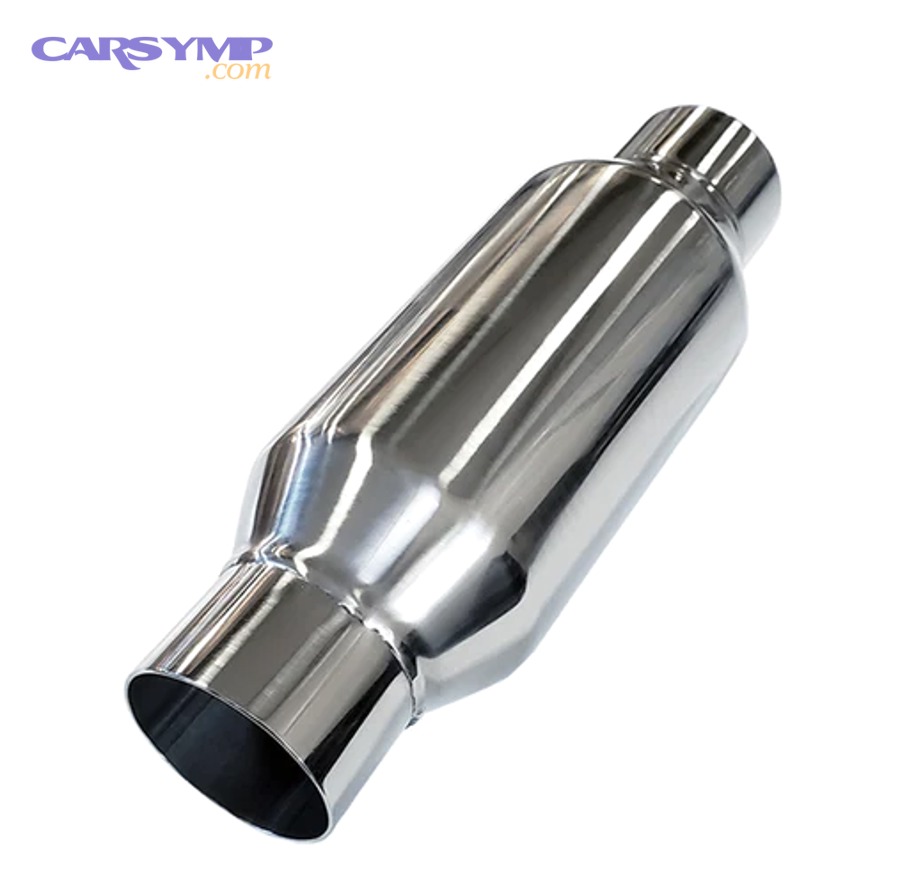
You should look for 304 stainless steel construction with full-circumference MIG or TIG welding, perforated cores using 16-gauge or thicker steel, and packing materials rated for continuous 1600°F+ temperatures when selecting resonators for durability and consistent acoustic performance, as these features determine whether your resonator maintains its sound control properties through years of thermal cycling and weather exposure. Below, we’ll examine why each construction element matters and how to identify quality indicators when comparing products.
Is Stainless Steel Worth the Extra Cost Over Aluminized Steel?
Yes, stainless steel is worth the 40-60% cost premium over aluminized steel if you live in climates with road salt, plan to keep your vehicle more than 5 years, or drive aggressively with high exhaust temperatures, because stainless steel resists rust-through corrosion indefinitely while aluminized steel typically fails within 5-8 years in harsh conditions, making the higher initial investment cost-effective over the ownership period. The decision between materials represents one of the most important resonator selection factors for long-term satisfaction.
The corrosion resistance difference stems from fundamental material composition. Stainless steel contains chromium (typically 10.5-18% depending on grade) that forms a passive oxide layer on the surface when exposed to oxygen. This transparent chromium oxide layer prevents iron oxidation (rust) from occurring even when the steel surface is scratched or abraded, as the chromium oxide rapidly reforms in the presence of air. The most common exhaust-grade stainless steels are 409 (used in OEM applications, containing 11% chromium) and 304 (aftermarket premium, containing 18% chromium and 8% nickel), with 304 offering superior corrosion resistance and weld quality.
Aluminized steel uses mild steel coated with an aluminum-silicon alloy through a hot-dip process. The coating provides rust protection as long as it remains intact, similar to galvanized steel. However, exhaust system components experience constant thermal cycling (ambient to 600-1200°F during operation), stone impacts, and exposure to road salt and moisture that gradually damage the coating. Once the coating is breached, the underlying mild steel begins rusting rapidly, with rust spreading underneath the coating from the breach point. The result is inevitable failure within a predictable timeframe based on environmental severity.
Cost analysis over a 10-year ownership period favors stainless steel in most scenarios. A quality 304 stainless resonator costs approximately $120-180, lasts the entire decade (or longer), and may even outlast the vehicle itself. An aluminized steel equivalent costs $70-100 but requires replacement after 5-7 years in salt-belt states or areas with high humidity, meaning you’ll purchase two units at $140-200 total plus pay for installation twice (approximately $100 additional assuming $50 per install). The stainless option costs less overall while providing better acoustic performance throughout its service life since the internal components don’t degrade from corrosion.
Climate significantly influences whether stainless steel justifies its premium. Vehicles driven exclusively in dry climates with minimal road salt see much slower aluminized steel degradation—potentially 8-12 years before failure. In these conditions, aluminized steel might outlast your ownership period, making it a defensible choice if you’re budget-constrained or planning to sell the vehicle within a few years. However, even in dry climates, stainless steel eliminates the risk of premature failure and provides higher resale value to buyers who recognize quality component selection.
Performance applications with high exhaust gas temperatures strongly favor stainless steel because its heat resistance exceeds aluminized steel. Turbocharged engines regularly produce 1400-1600°F exhaust temperatures at the turbine outlet, with temperatures remaining above 1000°F even at the resonator location. At these sustained temperatures, aluminized coatings degrade faster, and the base steel becomes more susceptible to stress cracking. Stainless steel maintains its structural properties and corrosion resistance at elevated temperatures, making it essential for forced induction applications or any vehicle seeing track use.
The table below compares material properties and typical service life:
| Material | Chromium Content | Cost Premium | Service Life (Salt Belt) | Service Life (Dry Climate) | Heat Resistance | Best For |
|---|---|---|---|---|---|---|
| Aluminized Steel | 0% (coating only) | Baseline | 5-7 years | 8-12 years | Fair (to 1000°F) | Budget builds, short-term ownership |
| 409 Stainless | 11% | +30-40% | 10-15 years | 15+ years | Good (to 1400°F) | OEM replacement, value builds |
| 304 Stainless | 18% | +50-70% | 15+ years | 20+ years | Excellent (to 1600°F+) | Premium builds, performance applications, long-term ownership |
This comparison illustrates how material selection aligns with your specific priorities and usage patterns, making it worth serious consideration rather than defaulting to the cheapest option.
What Internal Construction Features Improve Sound Quality?
Internal construction features that improve sound quality include perforated core tubes with 0.125-0.25 inch hole diameters on 0.375-inch centers for optimal sound energy transmission, stainless steel wool or mesh packing that maintains acoustic properties through thermal cycling, and chamber designs with adequate internal volume (minimum 3-4 times the pipe volume) to create effective resonance cancellation, with each element contributing to both immediate sound control and long-term performance consistency. Understanding these features helps you evaluate resonator quality beyond external appearances and marketing claims.
Perforated core design directly affects how efficiently sound energy transfers from the exhaust gas stream into the resonator’s damping mechanism. The perforation pattern must balance two competing requirements: enough open area to prevent flow restriction, but sufficient solid area to maintain structural rigidity under pressure and vibration. Premium resonators typically use 3/16-inch (0.1875″) holes drilled or punched on 3/8-inch centers in a 60-degree staggered pattern, creating approximately 40-45% open area. This provides adequate flow while directing substantial sound energy into the surrounding chamber for absorption or interference.
The core tube material gauge matters for durability and resonance characteristics. Thin-wall cores (18-gauge or thinner) can crack from vibration fatigue where the perforations create stress concentrations, particularly at the inlet and outlet ends where exhaust pulses hit most intensely. Quality construction uses 16-gauge (0.0625″) or 14-gauge (0.078″) stainless steel for the perforated core, providing sufficient stiffness to resist vibration while maintaining manageable weight. Thicker gauges also prevent the core itself from creating unwanted resonances—thin tubes can actually generate harmonic vibrations that add new frequencies to your exhaust note rather than removing unwanted ones.
Packing material selection dramatically impacts both initial sound control and long-term performance maintenance. The common options include:
Fiberglass packing – lowest cost, effective high-frequency absorption initially, but degrades rapidly at sustained temperatures above 1200°F. Fiberglass particles compress, carbonize, and eventually blow out through the perforations, leaving a hollow resonator that provides minimal sound control. Service life typically 30,000-60,000 miles depending on driving patterns.
Stainless steel wool – moderate cost, maintains properties through thermal cycling, effective across broader frequency range than fiberglass. The metallic structure doesn’t degrade from heat, providing consistent acoustic performance for 100,000+ miles. Can settle or compact slightly over time but doesn’t deteriorate completely like organic materials.
Stainless steel mesh – highest cost, premium option using woven or layered mesh screens rather than wool. Provides most consistent long-term performance with zero degradation from heat or vibration. Used in premium resonators like Vibrant Ultra Quiet. Essentially permanent within the resonator’s service life.
Basalt fiber or ceramic fiber – specialty high-temp materials occasionally used in racing applications. Resist temperatures to 2000°F+, suitable for extreme performance use. Expensive and generally unnecessary for street applications.
Chamber volume and shape influence which frequencies the resonator can effectively target. The internal chamber must provide sufficient volume for sound waves to expand, reflect, and interfere with each other. Inadequate chamber volume (less than 2-3 times the pipe volume) limits effectiveness because the sound waves can’t develop the path-length differences necessary for interference. Bottle-style resonators achieve large volumes through their distinctive shape, while bullet resonators compensate with longer lengths and efficient packing density.
Weld quality indicates overall manufacturing precision and durability. Full-penetration circumferential welds at all joints prevent exhaust leaks and ensure the resonator maintains structural integrity under thermal stress and vibration. Spot welds or skip welds save manufacturing cost but create potential failure points where thermal expansion mismatches can crack the unwelded sections. TIG (tungsten inert gas) welding provides the cleanest, strongest joints for stainless steel, while quality MIG (metal inert gas) welding offers acceptable strength at lower cost. Examine weld appearance—consistent bead width, even penetration, and absence of gaps or voids indicate good manufacturing process control.
End cap design affects installation fit and leak prevention. Stepped end caps that neck down from the chamber diameter to match the pipe diameter create a smooth transition and facilitate slip-fit welding or clamping. Some designs use flat end caps with inlet/outlet pipes welded perpendicular, which can create turbulence at the transitions. The inlet and outlet pipe extensions should be at least 1.5-2 inches long to provide adequate welding or clamping surface—short stubs make leak-free installation difficult.
How Do Resonators Work With Other Exhaust Components for Optimal Sound?
Resonators work with other exhaust components through acoustic coupling, where each element affects how sound waves propagate through the system, meaning your muffler selection influences which resonator specifications will work best, and your mid-pipe design (X-pipe vs H-pipe vs straight) determines where resonators should be positioned for maximum effectiveness, requiring a holistic system approach rather than treating resonators as standalone components. Below, we’ll explore how component interactions shape your final exhaust note and what modification sequencing produces the best results.

Should You Modify Resonators Before or After Changing Your Muffler?
You should modify your muffler first, then address remaining sound issues with resonators afterward, because the muffler creates the foundational exhaust tone and volume level while resonators fine-tune specific frequency problems that become apparent only after your primary muffler establishes the baseline sound signature. This sequencing prevents wasting money on resonators that become unnecessary or inadequate once you change mufflers, since muffler swaps can completely alter which frequencies create problems.
The acoustic logic behind muffler-first modification stems from the muffler’s role as the primary sound control device. Mufflers reduce overall exhaust volume across the full frequency spectrum through internal chambers, packing materials, and directional flow paths that dissipate sound energy broadly. When you replace a restrictive stock muffler with a performance unit, you fundamentally change the acoustic character—perhaps increasing volume by 10-15 decibels, removing excessive dampening of mid-range frequencies, but potentially introducing new drone or rasp that the stock muffler suppressed. Until you hear this new baseline, you cannot accurately diagnose what additional sound control you need from resonators.
Real-world modification scenarios illustrate why sequencing matters. Consider a scenario where you install expensive 24-inch bottle resonators targeting highway drone while still running your stock muffler. The combination achieves minimal drone and acceptable sound. Then you install a performance muffler seeking more aggressive tone, only to discover the new muffler has different acoustic properties that create drone at a completely different frequency than before—your existing resonators now target the wrong frequency range and provide inadequate control. You’ll need to purchase new resonators with different lengths, essentially wasting your initial resonator investment.
The reverse sequence avoids this problem. Install your desired performance muffler first, drive the vehicle for several weeks to identify exactly what sound issues emerge, then select resonators specifically chosen to address those confirmed problems. If highway drone appears at 2000 RPM during light cruise, you know you need 18-24 inch resonators before the muffler. If rasp during deceleration bothers you, add 10-14 inch bullet resonators after the muffler. The targeted approach solves actual problems rather than anticipated ones.
Budget considerations support muffler-first sequencing as well. Mufflers represent the larger expense ($200-600 for quality units) and create the most dramatic acoustic change. Spending your modification budget on the muffler first achieves the maximum impact per dollar, and you may find the muffler alone provides acceptable results without needing resonators at all. Many enthusiasts discover that selecting the right muffler (perhaps a less aggressive model than initially planned) eliminates the need for drone-control resonators, saving $150-300 in additional parts and installation labor.
There are exceptions to muffler-first sequencing. If you’re planning a complete cat-back system replacement where the muffler and resonators are integrated into a single kit, you’ll install everything simultaneously by default. Systems from reputable manufacturers like Borla, Corsa, or MagnaFlow are already engineered with resonator placement and specifications matched to their mufflers, so the component interaction is pre-optimized. Similarly, if you’re retaining stock mufflers but need to address drone caused by other modifications (header installation, catalytic converter changes), then adding resonators without muffler replacement makes sense since you’re not planning muffler modifications.
How Do X-Pipes and H-Pipes Interact With Resonator Selection?
X-pipes and H-pipes interact with resonator selection by balancing exhaust pulses between cylinder banks, which smooths pressure waves and can reduce drone by 3-5 decibels even without dedicated resonators, but they also create new acoustic coupling that may require different resonator placement strategies compared to true dual systems without crossover pipes. Understanding how these mid-pipe designs affect sound helps you position and size resonators effectively.
X-pipe mid-sections create a crossover point where the left and right exhaust paths intersect and share gases, allowing pressure pulses from one cylinder bank to partially equalize with the other bank. This pulse equalization reduces the pressure amplitude variations that create drone and harsh exhaust notes, resulting in a smoother, more refined sound signature. The X-junction also creates some frequency cancellation through interference—pulses arriving from opposite banks at different phases partially cancel each other. For these reasons, X-pipes naturally produce less drone than systems without crossovers, potentially reducing or eliminating your need for drone-control resonators.
However, X-pipes introduce high-frequency content that some listeners perceive as raspy or metallic, particularly on V8 engines where the mixing of exhaust pulses eliminates some of the traditional burble character. If you’re running an X-pipe and experiencing this rasp, adding bullet-style resonators after the muffler specifically targets these high frequencies without removing the flow benefits of the X-pipe design. Position resonators at least 12 inches downstream of the X-junction to allow the mixed exhaust pulses to stabilize before entering the resonators.
H-pipe mid-sections use a crossover tube perpendicular to the main exhaust flow, creating a balance pipe that equalizes pressure between cylinder banks without forcing all exhaust gases to mix thoroughly. The H-pipe design preserves more of the traditional V8 burble character while still providing some pressure balancing that reduces drone. The partial mixing creates less high-frequency content than X-pipes, meaning you’re less likely to need rasp-control resonators but may still benefit from drone-control resonators if your system generates low-frequency resonance.
Resonator placement relative to crossover pipes requires strategic thinking. Installing resonators before the crossover (between the catalytic converters and the X/H junction) means each resonator works on a single cylinder bank’s exhaust characteristics. This allows precise tuning if one bank creates more problematic frequencies than the other, but it also means you need two resonators for symmetric control. Installing resonators after the crossover allows a single resonator to affect the combined exhaust stream, reducing cost and complexity, though you sacrifice the ability to tune each bank independently.
True dual systems without any crossover pipes experience the strongest drone tendencies because each exhaust path resonates independently without pressure balancing. These systems almost always benefit from resonators, and you may need one resonator per side (two total) to adequately control drone. The resonators don’t need to be identical—you can use different lengths on each side to target slightly different frequencies, creating broader-spectrum control. However, using matched pairs produces more predictable, symmetric results unless you have specific reason to believe one bank creates more problematic frequencies.
The acoustic interaction between mid-pipe type and muffler selection complicates resonator decisions further. An X-pipe paired with aggressive straight-through mufflers creates substantially more rasp than the same mufflers on true dual pipes, meaning you’ll need more or larger resonators to achieve acceptable refinement. An H-pipe with moderate chambered mufflers may need no resonators at all. Test and evaluate your complete system before adding resonators to avoid over-muffling and losing the aggressive character you paid for.
What Role Do Catalytic Converters Play in Resonator Performance?
Catalytic converters play a significant role in resonator performance by creating acoustic dampening through their ceramic honeycomb substrate that reduces overall sound energy by 8-12 decibels before exhaust reaches your resonators, meaning systems with high-flow or deleted cats require larger or additional resonators to achieve the same final sound control as systems retaining stock catalytic converters. This interaction explains why many cat-delete installations create unbearable drone even when keeping stock mufflers—removing the cats eliminates substantial passive sound dampening.
The acoustic properties of catalytic converters stem from their internal construction. The ceramic monolith contains thousands of small channels (typically 400-900 cells per square inch) that create a massive surface area where exhaust gases contact catalyst coating materials. These channels act as thousands of tiny resonance chambers and friction surfaces that absorb sound energy across a broad frequency spectrum. Additionally, the sudden expansion from the inlet pipe to the full converter diameter, followed by contraction back to the outlet pipe, creates reflection points where some sound waves cancel through interference. The combined effect produces significant sound dampening as a secondary benefit of the converter’s primary emission control function.
High-flow catalytic converters reduce this dampening effect substantially by using larger cell counts (200-400 CPSI versus 400-900 CPSI stock) and less restrictive substrate materials that prioritize exhaust flow over sound control. While high-flow cats still provide more acoustic dampening than completely deleted cats, the difference compared to stock is noticeable—typically 3-5 decibels louder across the frequency range. This elevation in baseline noise means you’ll need more aggressive resonator specifications to achieve the same final sound level you’d get with stock cats and smaller resonators.
Catalytic converter placement affects resonator strategy significantly. Cars with close-coupled cats (mounted directly to exhaust manifolds or headers) position the cats before the mid-pipe section where resonators typically install. This means resonators work on exhaust that has already been dampened by the cats, requiring less aggressive specifications. Vehicles with under-floor cats position them after common resonator locations, meaning resonators must control undampened exhaust directly from the headers—requiring larger or more sophisticated designs.
When planning cat modifications, anticipate the resonator implications. If you’re considering high-flow cats, budget for adding or upgrading resonators simultaneously to maintain acceptable sound levels. If you’re running a track car with cat-deleted test pipes for competition use, plan for substantial resonator investment (potentially 2-4 resonators) to make the car tolerable for street driving. Some enthusiasts run switchable systems with quick-disconnect flanges that allow installing cats for street use and removing them for track days, but this creates maintenance complexity.
The practical consideration for Diagnosing rattles from resonator internals becomes relevant when discussing cats and resonators together. Both components contain internal structures (honeycomb substrates in cats, perforated cores and baffles in resonators) that can break loose and create rattling sounds that are difficult to differentiate by ear. If you experience rattling at idle or under light acceleration, determine whether the noise originates from the cat or resonator by tapping each component with a rubber mallet while the engine is off—loose internal pieces will create distinct rattling sounds when struck. Resonator failure symptoms typically include rattling that increases with RPM, while cat failure often produces substrate particles exiting the tailpipe as gray or brown dust.
Can You Combine Stock and Aftermarket Resonators Effectively?
Yes, you can combine stock and aftermarket resonators effectively when budget constraints prevent replacing all resonators simultaneously or when stock resonators provide adequate control in some positions while aftermarket units address specific problem frequencies elsewhere, typically retaining stock resonators after the muffler while adding aftermarket units before the muffler to eliminate drone without over-dampening the overall exhaust note. This hybrid approach balances cost management with targeted acoustic improvement.
The acoustic rationale for hybrid resonator systems recognizes that different positions in your exhaust serve different purposes. Pre-muffler resonators primarily target low-frequency drone (80-150 Hz) since these frequencies carry substantial energy that mufflers alone often cannot eliminate adequately. Post-muffler resonators address high-frequency rasp and harshness (200+ Hz) that the muffler’s primary dampening might miss. Since these frequency ranges differ substantially, you can use different resonator types and qualities in each location without creating acoustic conflicts.
A common effective hybrid configuration retains stock post-muffler resonators (which typically provide adequate rasp control and cost $0 since you already own them) while adding a premium aftermarket resonator like a Vibrant Ultra Quiet in the pre-muffler position to eliminate highway drone that the stock system cannot control. This approach costs $100-200 plus installation for one aftermarket resonator rather than $300-600 for replacing the entire resonator complement, while still solving your primary sound problem. The stock resonators continue functioning in their original role, and the aftermarket unit addresses the specific deficiency in the factory design.
Sizing and placement considerations matter when mixing stock and aftermarket components. Ensure the aftermarket resonator’s diameter matches your exhaust piping—you may need to cut out a section of stock pipe to weld in the new resonator. Position the aftermarket unit at least 24 inches from any stock resonators to prevent acoustic coupling that could create unpredictable interference patterns. The separation allows each resonator to target its intended frequency range independently rather than interacting in complex ways that might actually generate new resonance problems.
Some enthusiasts use hybrid systems as diagnostic tools to identify optimal configurations before committing to complete resonator replacement. Install one high-quality aftermarket resonator in the position most likely to solve your primary complaint, evaluate the improvement, then decide whether additional changes justify their cost. If the single aftermarket resonator solves your drone problem completely, you’ve saved $200-400 compared to replacing all resonators. If improvement is partial, you know where to focus additional investment.
The limitation of hybrid approaches involves potential mismatch in sound character and longevity. Mixing stainless steel aftermarket resonators with aluminized stock components means some parts will outlast others by years, creating a situation where you’ll eventually need to replace the stock pieces anyway. From a total cost perspective, if you’re planning to keep the vehicle 8+ years, installing all stainless components initially may cost less than replacing stock resonators as they fail while your aftermarket units continue functioning. However, for shorter ownership timeframes or vehicles of uncertain future, the hybrid approach minimizes immediate expense while providing functional improvement.
This complete guide provides the foundation for selecting aftermarket resonators that transform your exhaust from harsh or monotonous into refined and purposeful. By understanding resonator types, brand differences, proper sizing, and system interactions, you can eliminate drone and rasp while preserving the aggressive character that makes driving engaging. Whether you’re building a track weapon or refining a daily driver, choosing the right resonators represents one of the most cost-effective modifications for exhaust sound quality.