


Cosmetic curb rash repair options range from DIY touch-up kits costing $15-50 to professional powder coating services reaching $150-300 per wheel, with each method offering distinct advantages in quality, durability, and cost-effectiveness for different damage severities. Vehicle owners facing wheel damage need to understand these seven primary repair approaches—DIY repair kits, professional mobile services, shop-based refinishing, powder coating, paintless repair, partial wheel restoration, and full wheel replacement—to select the solution that balances their budget, timeline, and quality expectations.
Understanding the severity of your curb rash determines which repair method delivers optimal results. Minor scuffs affecting only the clear coat respond well to basic DIY solutions, while moderate gouges penetrating the paint layer require more intensive repair techniques, and severe damage compromising wheel integrity may necessitate professional intervention or complete replacement. The cosmetic versus structural distinction separates simple aesthetic fixes from safety-critical repairs that demand expert assessment.
Cost comparisons reveal significant price variations across repair methods, with DIY kits offering the most economical entry point but limited effectiveness on extensive damage. Professional rim repair services command premium pricing but deliver factory-quality finishes with warranties, while mobile repair options provide convenience at moderate price points between DIY and shop-based services. The Alloy wheel crack detection and risks assessment becomes crucial when determining whether repair remains viable or replacement becomes necessary for safety.
The decision between handling repairs yourself or hiring professionals extends beyond simple cost considerations. Next, we’ll examine each repair option’s technical requirements, expected outcomes, and ideal use cases to help you select the most appropriate solution for your specific wheel damage scenario.
What Is Curb Rash and Can It Be Repaired Cosmetically?
Curb rash is surface damage to vehicle wheels caused by contact with curbs, characterized by scrapes, gouges, and scratches that range from minor paint chips to deep metal deformation. This cosmetic damage occurs most frequently on the outer rim edge where wheels meet curb surfaces during parking maneuvers, creating visible imperfections that diminish vehicle appearance without necessarily affecting wheel functionality.
To better understand curb rash repair feasibility, wheel owners must distinguish between purely cosmetic damage and structural compromise. Most curb rash incidents produce superficial damage affecting only the wheel’s finish layers—clear coat, paint, and occasionally the uppermost metal surface—making them excellent candidates for cosmetic repair. However, severe impacts can bend wheel rims, crack alloy structures, or compromise wheel integrity in ways that extend beyond aesthetic concerns into safety territory.
What Are the Different Levels of Curb Rash Severity?
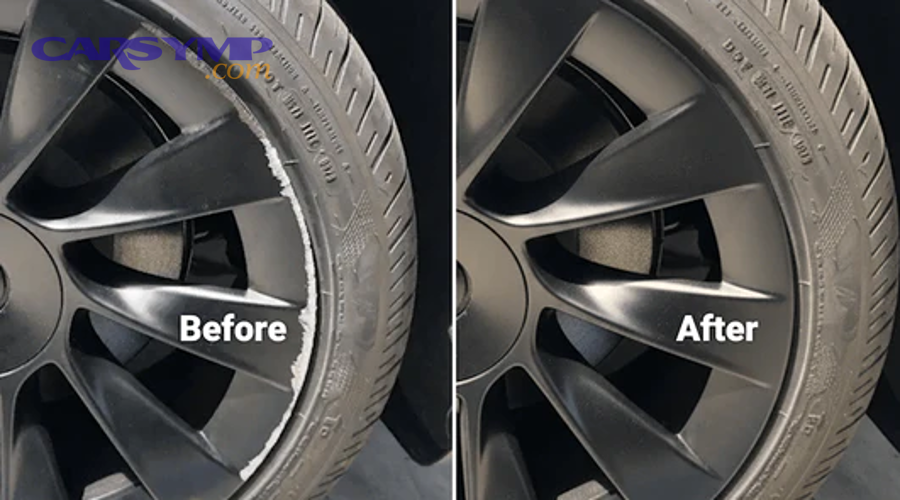
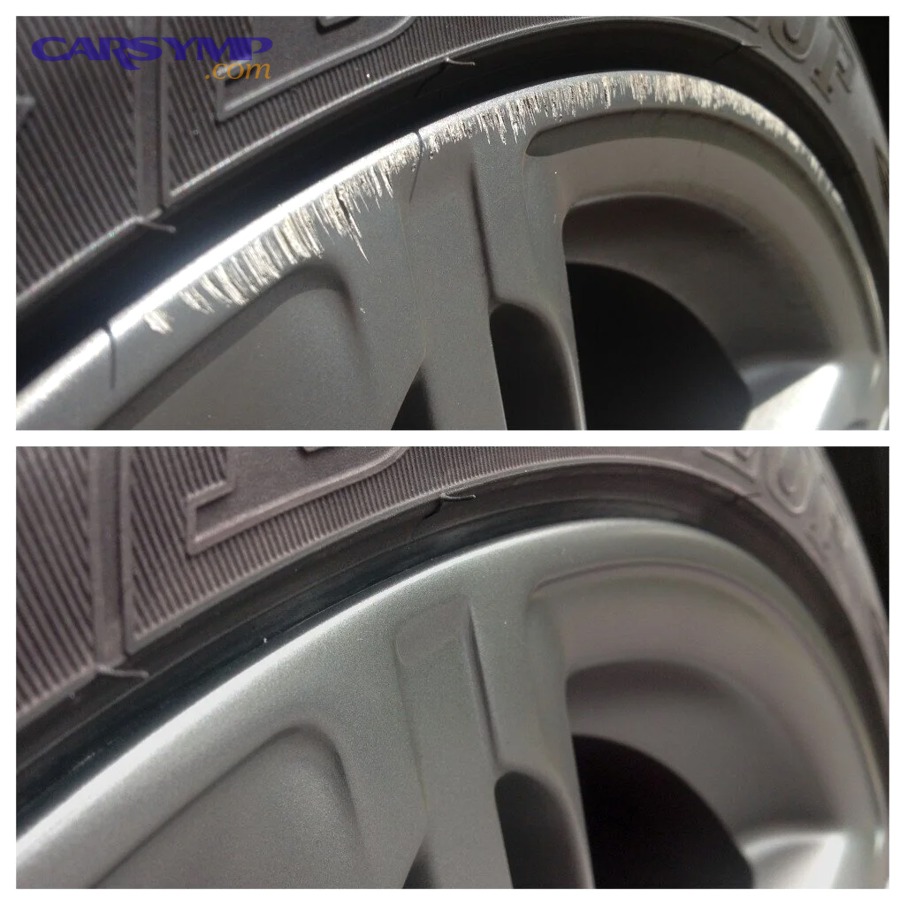
Curb rash severity falls into four distinct categories that determine repair approach and success probability. Minor curb rash represents the least severe damage level, featuring light scuffs and scratches confined to the clear coat layer without penetrating the underlying paint or primer. These surface-level imperfections appear as white or silver marks on darker wheels and typically measure less than one inch in length, making them prime candidates for simple DIY touch-up solutions.
Moderate curb rash penetrates through the clear coat and paint layers, exposing the primer or bare metal beneath while creating visible gouges between 1-3 inches long. This intermediate damage level reveals bright metal or gray primer when inspected closely and requires more intensive repair involving sanding, filling, painting, and refinishing to restore the wheel’s original appearance. The exposed metal becomes vulnerable to oxidation and corrosion without prompt treatment, potentially accelerating damage progression.
Severe curb rash combines deep gouging with visible wheel deformation, creating damage that extends beyond surface layers into the wheel’s structural material. These impacts produce gouges exceeding 3 inches in length, often accompanied by bent rim edges, chunks of missing material, or visible warping that affects wheel roundness. Professional assessment becomes essential at this severity level, as cosmetic repair may prove insufficient if structural integrity has been compromised.
Critical damage represents the most severe category, where impact forces have created cracks, fractures, or significant deformation that threatens wheel safety and vehicle operation. Hairline cracks radiating from impact points, rim edges bent more than 1/8 inch out of true, or chunks of alloy missing from load-bearing areas all indicate damage requiring immediate professional inspection and likely wheel replacement rather than cosmetic repair.
Is Your Curb Rash Purely Cosmetic or Structurally Damaging?
Cosmetic damage affects only the wheel’s appearance through surface-level imperfections without compromising structural integrity or safety performance. Wheel owners can identify purely cosmetic curb rash through visual inspection that reveals damage confined to finish layers—scratches, scrapes, and gouges that haven’t penetrated deeply enough to weaken the wheel’s metal structure or alter its dimensional accuracy. These aesthetic defects allow wheels to continue functioning safely while simply looking damaged or worn.
Structural damage extends beyond surface aesthetics into the wheel’s load-bearing material, potentially affecting safety, handling, and long-term durability. Testing for structural compromise involves several inspection methods: running your hand along the inner rim edge to feel for cracks or sharp edges invisible from the outside, checking for air pressure loss indicating rim seal damage, and having wheels professionally balanced to detect weight distribution changes caused by deformation. A bent rim that no longer sits flush against the tire bead or maintains perfect roundness when spinning indicates structural damage requiring professional evaluation.
The boundary between cosmetic and structural damage sometimes appears ambiguous, particularly with deep gouges approaching or reaching the wheel’s base metal. Professional rim repair specialists use specialized equipment including dial indicators that measure rim runout (wobble) to 0.001-inch precision, dye penetrant testing to reveal microscopic cracks, and X-ray inspection for high-value wheels to definitively assess structural soundness. Wheels showing radial runout exceeding manufacturer specifications (typically 0.050-0.080 inches) or lateral runout beyond acceptable limits require correction before safe operation.
Safety considerations mandate conservative assessment when distinguishing cosmetic from structural damage. Any curb rash accompanied by vibration during driving, difficulty maintaining tire pressure, unusual handling characteristics, or visible rim deformation warrants immediate professional inspection regardless of apparent damage severity. According to industry safety standards established by the Tire Industry Association, wheels with structural damage pose risks of sudden failure, loss of tire pressure, or handling unpredictability that far outweigh cosmetic repair cost savings.
What Are the 7 Main Cosmetic Curb Rash Repair Options Available?
There are seven main cosmetic curb rash repair options: DIY repair kits, professional mobile repair, shop-based refinishing, powder coating restoration, paintless repair methods, partial wheel restoration, and complete wheel replacement, each categorized by repair complexity, cost level, and damage severity suitability. Vehicle owners select among these approaches based on damage extent, budget constraints, desired finish quality, and time availability for completing repairs.
Specifically, these repair options span a spectrum from simple at-home solutions requiring minimal investment to comprehensive professional services delivering factory-quality results. The repair method hierarchy progresses from least to most intensive, with DIY kits addressing minor surface damage through touch-up application, while professional refinishing tackles moderate to severe cosmetic issues through complete wheel restoration. Understanding each option’s capabilities, limitations, and appropriate use cases enables informed decision-making aligned with specific repair needs.
The table below summarizes the seven primary repair options with their key characteristics:
| Repair Option | Damage Severity | Cost Range | Time Required | Skill Level | Durability |
|---|---|---|---|---|---|
| DIY Repair Kits | Minor scuffs | $15-$50 | 1-3 hours | Beginner | 6-12 months |
| Professional Mobile Repair | Minor to moderate | $75-$150/wheel | 1-2 hours | Professional | 2-3 years |
| Shop-Based Refinishing | Moderate to severe | $100-$200/wheel | 1-3 days | Professional | 3-5 years |
| Powder Coating | Moderate to severe | $150-$300/wheel | 3-7 days | Professional | 5+ years |
| Paintless Repair | Minor surface only | $50-$100/wheel | 30-60 minutes | Professional | 2-4 years |
| Partial Restoration | Moderate damage | $125-$250/wheel | 2-4 days | Professional | 3-5 years |
| Complete Replacement | Severe/structural | $200-$1000+/wheel | 1-2 weeks | N/A | Original lifespan |
This cost and capability matrix illustrates how repair options progress from economical quick fixes to premium comprehensive solutions.
Which Repair Options Work Best for Minor vs Severe Curb Rash?
Minor curb rash responds optimally to DIY repair kits, paintless repair methods, or basic professional mobile services that address surface-level damage without extensive wheel preparation. These lightweight repair approaches work effectively on damage confined to clear coat and paint layers, delivering satisfactory cosmetic improvement for scratches and scuffs measuring less than one inch in length or depth. The repair success rate for minor damage using appropriate methods exceeds 85%, with results lasting 6 months to 2 years depending on application quality and environmental exposure.
Moderate curb rash requires professional mobile repair or shop-based refinishing services that incorporate multi-step processes including sanding, filling, priming, painting, and clear coating. Damage extending into primer layers or exposing bare metal demands proper surface preparation, metal treatment to prevent corrosion, and skilled color matching to blend repairs seamlessly with original wheel finish. Professional technicians achieve superior results on moderate damage through controlled environmental conditions, specialized equipment, and experience-based technique refinement unavailable in DIY applications.
Severe curb rash necessitates comprehensive shop-based refinishing, powder coating restoration, or partial wheel restoration services that completely strip and rebuild wheel finish layers. Deep gouges, chunks of missing material, or damage combined with minor deformation require welding, metal filling, precision machining, and complete refinishing to restore both appearance and dimensional accuracy. These intensive repairs transform severely damaged wheels back to like-new condition when structural integrity remains intact, with success rates approaching 90% for skilled technicians working on salvageable wheels.
The matching process between damage severity and repair method follows a logical progression where repair intensity must equal or exceed damage depth. Attempting minor repair methods on severe damage produces poor results with rapid failure, while applying intensive repair approaches to minor damage creates unnecessary expense without proportional benefit. This alignment principle ensures repair investments deliver appropriate value relative to damage extent and vehicle worth.
What Materials and Tools Does Each Repair Method Require?
DIY repair kits contain pre-packaged materials including sandpaper (typically 400-2000 grit progression), putty or filler for deeper scratches, touch-up paint matched to common wheel colors, clear coat spray, and basic application tools like applicators and microfiber cloths. These entry-level kits require minimal additional equipment beyond items most vehicle owners possess—masking tape, clean water, and adequate workspace lighting—making them accessible for beginners attempting simple repairs. Premium DIY kits add specialized items like primer spray, rubbing compound, and polishing pads that enhance finish quality when applied correctly.
Professional mobile repair technicians carry portable equipment including battery-powered rotary tools with grinding and polishing attachments, portable LED lighting for proper color matching, HVLP (High Volume Low Pressure) spray guns for paint application, and mobile workstations that create controlled environments. Their material inventory encompasses multiple sandpaper grits (80-3000), professional-grade fillers and primers, extensive paint color libraries with custom mixing capability, multi-stage clear coats, and finishing compounds that deliver showroom-quality results. The Rim repair cost estimate for mobile services reflects both material quality and technician expertise in utilizing these professional-grade supplies.
Shop-based refinishing facilities employ industrial equipment unavailable in mobile or DIY contexts: pneumatic spray booths with filtered air and temperature control, precision lathe machines for correcting minor deformities, media blasting cabinets for complete paint removal, high-temperature curing ovens that accelerate paint hardening, and computerized color matching systems ensuring perfect OEM color replication. These facilities stock commercial quantities of industrial primers, multi-component paints, urethane clear coats, and specialized chemicals for aluminum preparation and protection. The equipment investment in professional shops typically exceeds $50,000-$100,000, justifying higher service pricing through superior finish durability and appearance.
Powder coating operations require the most specialized infrastructure: electrostatic spray guns that charge powder particles for even application, large curing ovens maintaining 400°F temperatures for proper powder fusion, complete chemical stripping systems that remove all existing finishes, and sandblasting equipment that creates the surface profile necessary for powder adhesion. The powder coating process demands materials including liquid chemical strippers, sandblasting media (aluminum oxide or glass bead), polyester or epoxy powder coatings in various colors and finishes, and post-coating sealers that enhance durability. This method’s material and equipment requirements explain its premium pricing while delivering the longest-lasting repair results.
How Do DIY Curb Rash Repair Kits Work and Are They Effective?
Yes, DIY curb rash repair kits work effectively for minor surface damage, delivering visible cosmetic improvement through a multi-step process involving cleaning, sanding, filling, painting, and clear coating that restores wheel appearance when damage remains confined to finish layers. These kits succeed primarily on light scuffs and scratches measuring under one inch in depth and length, producing results that satisfy appearance expectations for 6-12 months under normal conditions before requiring touch-up or reapplication.
However, the effectiveness of DIY repair kits depends heavily on damage severity, user skill level, and environmental conditions during application. Minor curb rash confined to clear coat layers responds well to DIY intervention, with skilled applicators achieving 70-80% aesthetic restoration compared to professional refinishing results. Conversely, moderate to severe damage exposing bare metal or creating deep gouges exceeds DIY kit capabilities, resulting in visible repair lines, color mismatches, and rapid finish degradation that often looks worse than unrepaired damage.
The repair process requires meticulous attention to manufacturer instructions and proper technique execution across multiple stages. First, thorough wheel cleaning removes road debris, brake dust, and contaminants that prevent proper adhesion. Second, progressive sanding with increasingly fine grits (400 to 2000) smooths damaged areas and feathers edges to create seamless transitions. Third, filler application and sanding creates level surfaces where material has been gouged away. Fourth, primer application prepares surfaces for paint adhesion. Fifth, careful paint application in thin, even coats builds color coverage. Finally, clear coat layers protect paint and restore shine, followed by wet sanding and polishing for professional-appearing results.
What Are the Best DIY Curb Rash Repair Kits on the Market?
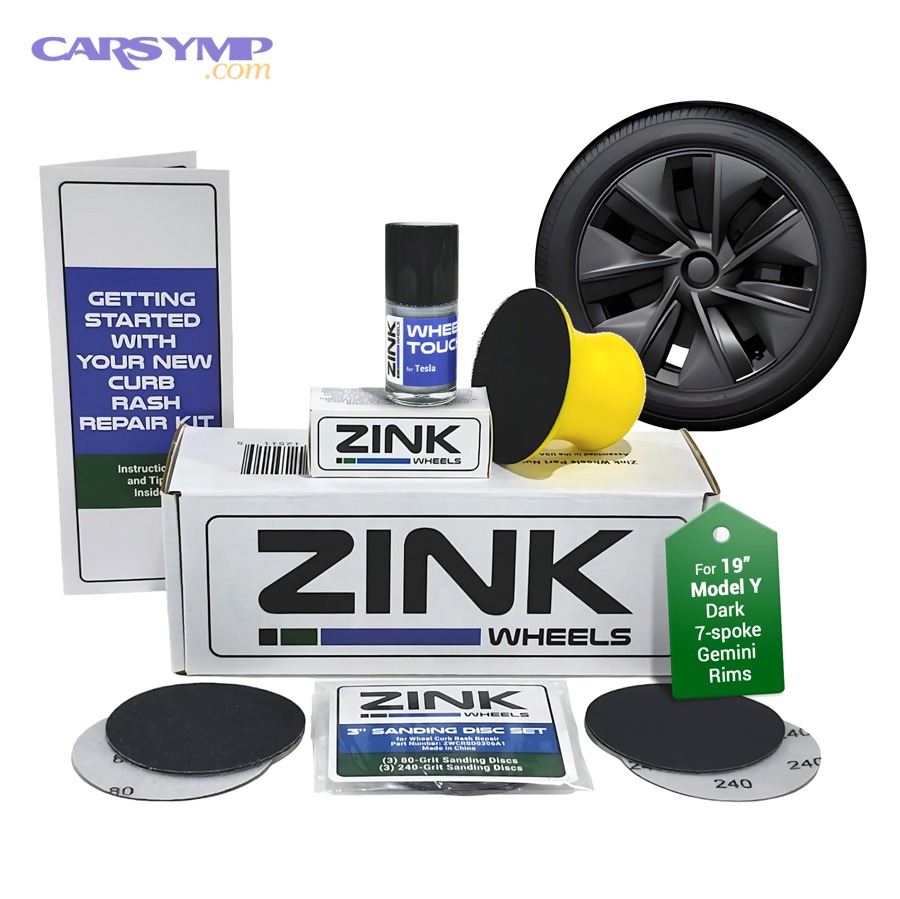
The best DIY curb rash repair kits balance comprehensive material inclusion, user-friendly instructions, and effective formulations that deliver satisfactory results for beginners and experienced DIYers alike. Dr. ColorChip Road Rash Squash Kit ranks among top-performing options, featuring proprietary SealAct technology that ensures paint leveling and blending while including pre-measured paint doses matched to factory wheel colors, specialized applicators, and sealant that protects repairs from environmental damage. This kit retails between $55-75 and receives consistent positive reviews for color matching accuracy and ease of application.
Dupli-Color Wheel Coating System offers another highly-rated solution specifically designed for complete wheel refinishing rather than spot repairs. The system includes wheel cleaner, high-build primer, color coat in multiple metallic and solid finishes, and clear coat formulated for flexibility on aluminum alloy surfaces. Priced around $30-45, this kit suits users tackling multiple wheels or larger damage areas where complete refinishing produces better results than spot treatment. Customer feedback highlights the kit’s durability and professional appearance when proper surface preparation precedes application.
Custom Shop Premium Automotive Wheel Repair Kit provides a middle-ground option with professional-grade materials in beginner-accessible packaging. Contents include aluminum filler for deeper gouges, multiple sandpaper grits, tack cloth for dust removal, brush-on primer, color-matched paint with mixing guide, and high-gloss clear coat that resists yellowing. The $40-60 price point reflects superior material quality compared to budget kits while remaining affordable for single-wheel repairs. Users report success rates above 75% for moderate damage when following the detailed instruction manual.
Budget-conscious options like the Rust-Oleum Wheel Restoration Kit deliver basic repair capability at $15-25 price points, though material quality and longevity suffer compared to premium alternatives. These economy kits work adequately for temporary repairs or vehicles nearing end-of-life where investment in premium solutions lacks justification. The performance gap between budget and premium kits becomes apparent within 3-6 months as budget repairs show fading, chipping, or color shift while premium repairs maintain appearance.
What Results Can You Realistically Expect from DIY Repairs?
Realistic expectations from DIY curb rash repairs center on visible improvement rather than perfect restoration, with results typically achieving 60-80% of professional refinishing quality depending on user skill, damage severity, and environmental conditions during application. Skilled DIYers working on minor surface damage under controlled conditions can produce repairs that closely match surrounding wheel finish, remain durable for 6-12 months, and prove virtually undetectable from 5-10 feet away. However, close inspection typically reveals slight color variations, texture differences, or clear coat irregularities that distinguish DIY work from factory or professional finishes.
The most common DIY repair outcomes include improved cosmetic appearance with visible repair evidence upon close examination. Color matching represents the greatest challenge, as wheel finishes incorporate complex metallic or pearl effects difficult to replicate with rattle-can paints or brush-on formulas. Even carefully selected colors often appear slightly off under certain lighting conditions, creating noticeable boundaries between repaired and original areas. This color discrepancy becomes more pronounced on premium wheels with custom finishes, chrome accents, or multi-tone designs where precise matching proves nearly impossible.
Durability expectations for DIY repairs should anticipate 6-12 month lifespans before requiring touch-up or reapplication, considerably shorter than professional repairs lasting 2-5+ years. The durability difference stems from several factors: DIY clear coats lack the hardness and UV resistance of professional two-part urethanes, application without temperature and humidity control creates weak adhesion, and limited surface preparation compared to professional methods allows premature failure. Environmental exposure accelerates DIY repair degradation, with harsh climates, frequent washing, and road salt exposure reducing effective lifespan to 3-6 months.
Success factors determining DIY repair quality include meticulous surface preparation that consumes 60-70% of total repair time, patience in applying multiple thin paint and clear coat layers rather than fewer heavy coats, and environmental control that maintains 65-85°F temperatures with low humidity during application and curing. Wheels repaired outdoors in variable conditions or rushed through steps to save time consistently produce inferior results with rapid failure. According to automotive refinishing experts, proper surface preparation and controlled application environment contribute more to repair success than paint brand or kit cost, explaining why patient DIYers with basic kits often achieve better results than rushed users with premium materials.
How Does Professional Mobile Curb Rash Repair Compare to Shop-Based Services?
Professional mobile curb rash repair excels in convenience and speed for minor to moderate damage, while shop-based services deliver superior quality and durability through controlled environments and comprehensive processes suited to severe damage. Mobile technicians complete repairs in 1-2 hours at customer locations, charging $75-150 per wheel for results lasting 2-3 years, whereas shop services require 1-3 days, cost $100-200+ per wheel, and produce finishes approaching factory quality with 3-5+ year durability.
More specifically, the service model differences create distinct advantages for each approach depending on customer priorities and damage characteristics. Mobile repair optimizes convenience by eliminating vehicle transport requirements, offers flexible scheduling including evening and weekend appointments, and completes cosmetic restoration while customers maintain normal daily activities. Shop-based refinishing prioritizes quality through climate-controlled spray booths maintaining precise temperature and humidity, curing ovens that accelerate paint hardening to maximum durability, and comprehensive processes including wheel removal, tire dismounting, complete stripping, and multi-stage refinishing that mobile operations cannot replicate.
What Does the Professional Repair Process Involve?
The professional repair process begins with comprehensive damage assessment where technicians evaluate curb rash severity, measure damage depth and extent, photograph wheel condition for documentation, and determine appropriate repair approach based on damage characteristics and customer expectations. This initial inspection identifies any structural issues requiring additional attention, confirms wheel repairability, and establishes realistic outcome expectations before work commences. Technicians check for hairline cracks using dye penetrant or visual inspection under magnification, assess rim straightness with dial indicators, and evaluate whether complete refinishing or spot repair produces optimal results.
Surface preparation constitutes the foundation of quality repairs, consuming 40-50% of total repair time through systematic steps that ensure proper adhesion and smooth finish. Technicians begin by thoroughly cleaning wheels with industrial degreasers that remove brake dust, road tar, and embedded contaminants, followed by chemical paint stripping for full refinishing or localized sanding for spot repairs. Damaged areas receive progressive sanding with 80-320 grit abrasives that remove damaged material and create feathered edges blending seamlessly into surrounding surfaces. Deep gouges require filling with aluminum-specific fillers or welding rod material for structural voids, followed by precision sanding that creates level surfaces matching original wheel contours.
Material application follows multi-stage processes developed through decades of automotive refinishing evolution. High-build primers seal prepared surfaces, fill minor imperfections, and create uniform bases for color application. After primer curing and light sanding with 400-600 grit papers, technicians apply basecoat paint in 2-4 thin layers, allowing flash-off time between coats for proper solvent evaporation. Color-matched paints replicate factory finishes through computerized color matching systems that account for wheel age, sun exposure, and metallic particle orientation. Professional two-part urethane clear coats follow basecoat application, providing chemical resistance, UV protection, and high-gloss shine through 2-3 coat applications.
Final finishing procedures elevate repair quality from acceptable to exceptional through detail-oriented steps many lower-quality services omit. After clear coat curing (24-48 hours for full hardness), technicians wet-sand surfaces with ultra-fine 1500-2000 grit papers, removing any texture irregularities, dust nibs, or orange peel effects. Machine polishing with progressively finer compounds restores deep gloss and removes sanding marks, followed by final inspection under varied lighting to identify any imperfections requiring correction. Quality-focused shops apply ceramic sealants or wax protection that enhances shine while providing additional environmental protection extending repair longevity.
Is Mobile Wheel Repair Quality as Good as Shop Refinishing?
No, mobile wheel repair quality typically does not match shop refinishing standards due to environmental limitations, equipment constraints, and process abbreviations necessary for on-site service completion, though skilled mobile technicians produce results satisfying most customers seeking convenient cosmetic improvement. The quality gap stems primarily from environmental control differences—mobile repairs occur in driveways, parking lots, or garages with variable temperature and humidity that affect paint flow and curing, while shop booths maintain optimal 70°F temperature with 50% humidity and filtered air eliminating dust contamination.
Environmental factors significantly impact finish quality through several mechanisms. Temperature variations cause paint viscosity changes affecting spray pattern consistency and flow characteristics, potentially creating orange peel texture, dry spray, or runs that diminish appearance. Humidity levels influence solvent evaporation rates and clear coat leveling, with high humidity causing slow drying and potential hazing while low humidity creates rapid drying that prevents proper flow-out. Airborne contaminants including pollen, dust, and insect debris settle on wet finishes applied outdoors or in unfiltered environments, creating surface defects that require additional sanding and polishing to remove.
Equipment limitations further separate mobile from shop-based quality levels. Mobile technicians utilize portable spray equipment with smaller compressors limiting continuous air volume for extended spraying, potentially causing pressure fluctuations affecting finish uniformity. Shop facilities employ industrial compressors with moisture separators and multi-stage filtration producing clean, consistent air pressure through HVLP spray guns optimized for automotive finishes. The absence of curing ovens in mobile operations extends paint hardening time from hours to days, creating vulnerability to environmental damage during the critical curing phase when finishes remain soft and susceptible to water spotting, dust adhesion, or chemical etching.
Process scope represents the final differentiator between mobile and shop services. Mobile repairs typically address visible damaged areas through spot refinishing that blends into existing finish, limiting work to outer rim faces while leaving inner barrel and spoke areas untouched. Shop refinishing often includes complete wheel restoration with tire removal, full stripping to bare metal, comprehensive refinishing of all wheel surfaces, and post-paint balancing ensuring dimensional accuracy. This comprehensive approach eliminates finish age differences, prevents future peeling from incompletely removed old coatings, and delivers uniform appearance matching factory standards. According to refinishing industry standards published by the Society of Collision Repair Specialists, properly executed shop refinishing outlasts mobile repairs by 200-300% while achieving superior color match and gloss retention.
How Much Do Different Curb Rash Repair Options Cost?
Different curb rash repair options cost between $15 for basic DIY kits and $1,000+ for premium wheel replacement, with pricing determined by repair method intensity, professional labor requirements, material quality, and damage severity. Mid-range professional services including mobile repair ($75-150/wheel) and shop refinishing ($100-200/wheel) represent the most common solutions balancing quality and affordability, while specialized treatments like powder coating ($150-300/wheel) command premium pricing through superior durability.
To illustrate the pricing landscape more clearly, repair costs align directly with service complexity and expected longevity. Entry-level DIY solutions minimize upfront expense but often require reapplication within 6-12 months, potentially equalizing long-term costs with durable professional repairs lasting 3-5 years. Geographic location significantly influences pricing, with metropolitan areas charging 25-40% premiums over rural markets due to higher overhead costs, skilled labor scarcity, and increased customer willingness to pay for convenience and quality.
The following table details comprehensive pricing across all repair options:
| Repair Method | Per Wheel Cost | Full Set (4 wheels) | Materials Included | Labor Time | Warranty Period |
|---|---|---|---|---|---|
| Basic DIY Kit | $15-$30 | $60-$120 | Paint, sandpaper, clear coat | 2-4 hrs (DIY) | None |
| Premium DIY Kit | $40-$75 | $160-$300 | Filler, primer, paint, clear coat, tools | 3-6 hrs (DIY) | None |
| Paintless Repair | $50-$100 | $200-$400 | Professional materials | 30-60 min | 6-12 months |
| Mobile Repair | $75-$150 | $300-$600 | Full refinishing materials | 1-2 hours | 1-2 years |
| Shop Refinishing | $100-$200 | $400-$800 | Complete stripping & refinishing | 1-3 days | 2-3 years |
| Powder Coating | $150-$300 | $600-$1,200 | Industrial coating materials | 3-7 days | 3-5 years |
| OEM Replacement | $200-$1,000+ | $800-$4,000+ | New factory wheel | 1-2 weeks | Lifetime |
This pricing matrix demonstrates how repair method selection creates cost differences exceeding 5000% between lowest and highest options.
What Factors Influence the Cost of Curb Rash Repair?
Damage severity represents the primary cost driver, with minor surface scuffs requiring minimal material and labor while severe gouges demanding extensive preparation, filling, and refinishing multiply repair expenses proportionally. Shallow scratches confined to clear coat layers require only light sanding and reapplication of finish coats, consuming 30-60 minutes of professional time, whereas deep gouges penetrating to base metal necessitate welding or filler application, metal treatment, priming, painting, and clear coating that extends service time to 2-4 hours per wheel. The material and labor multiplication creates cost escalations where severe damage repairs cost 3-5 times more than minor damage fixes using identical service providers.
Wheel size and design complexity significantly impact repair pricing through increased material requirements and labor intensity. Standard 16-17 inch wheels with simple five-spoke designs allow efficient refinishing with straightforward masking and paint application, while oversized 20-22 inch wheels demand more materials covering greater surface area and extended application time. Multi-spoke designs featuring 10-20 thin spokes create masking challenges requiring detailed tape work protecting undamaged areas, potentially doubling labor time compared to simple designs. Specialty finishes including two-tone paint schemes, machined faces with painted pockets, or chrome inserts require specialized techniques and materials commanding 30-50% price premiums over standard refinishing.
Geographic location creates substantial pricing variations reflecting local labor costs, market competition, and regional economic conditions. Metropolitan markets including Los Angeles, New York, and Miami charge $125-200+ for shop refinishing services that cost $75-125 in smaller cities or rural areas offering identical quality. The rim repair cost estimate in premium markets reflects both higher skilled labor wages ($40-80/hour vs $25-40/hour) and increased overhead including rent, utilities, insurance, and regulatory compliance. Conversely, markets with multiple competing repair shops demonstrate price compression where businesses reduce margins maintaining market share.
Wheel material composition influences repair costs through different process requirements and material compatibility. Standard aluminum alloy wheels represent the most economical repair category with well-established techniques and widely available materials, while chrome-plated wheels require specialized stripping chemicals, re-chroming processes, or alternative powder coating solutions that increase costs 50-100%. Forged aluminum wheels used on performance vehicles demand extra care avoiding heat exposure that softens aluminum structure, limiting repair methods to those avoiding high-temperature curing. Carbon fiber or magnesium wheels fall outside standard refinishing capabilities entirely, typically requiring manufacturer repair or complete replacement at premium pricing.
Which Repair Option Offers the Best Value for Money?
Professional mobile repair offers the best value for money for most curb rash damage scenarios, delivering 75-85% of shop refinishing quality at 50-75% of the cost while adding convenience through on-site service and 1-2 hour completion times. This balanced approach addresses the primary cost-benefit criteria: repair quality adequate for daily driver cosmetic improvement, pricing accessible to average vehicle owners ($75-150/wheel versus $100-200+ for shop services), and time savings eliminating vehicle transport and multi-day shop commitments. The 2-3 year durability expectation for mobile repairs provides acceptable longevity justifying the cost for vehicles retained 3-5 years before trading or selling.
However, value optimization depends on specific circumstances aligning repair method characteristics with vehicle value, damage extent, and owner priorities. For vehicles worth under $10,000 or approaching end-of-ownership, DIY kits maximize value by delivering visible improvement at minimal cost ($15-50), making economic sense when repair investment should remain proportional to vehicle value. Conversely, high-value vehicles exceeding $40,000, leased vehicles requiring return in pristine condition, or enthusiast-owned cars where appearance matters significantly benefit most from shop-based refinishing or powder coating despite premium pricing, as the investment preserves vehicle value and owner satisfaction.
The value calculation extends beyond immediate cost to include longevity-adjusted pricing revealing true ownership cost. Mobile repairs costing $100/wheel with 2-year lifespan create effective annual costs of $50/wheel/year, while shop refinishing at $150/wheel lasting 4 years reduces annual cost to $37.50/wheel/year, demonstrating superior long-term value despite higher upfront investment. This durability consideration particularly benefits owners retaining vehicles 5+ years or those in harsh climates where frequent re-repair of inferior work compounds costs over time.
Environmental and usage factors modify value propositions across repair options. Vehicle owners in moderate climates with covered parking maximize returns from mid-tier repairs facing minimal environmental stress, while those in harsh winter climates with road salt exposure or desert regions with intense UV exposure benefit from premium powder coating’s exceptional durability justifying higher costs through extended service life. Similarly, daily drivers accumulating 15,000+ annual miles experience faster wear degradation than weekend vehicles with 3,000 annual miles, shifting value calculations toward more durable but costly repair methods that withstand heavy use.
Should You Choose DIY or Professional Curb Rash Repair?
Yes, you should choose professional curb rash repair for moderate to severe damage, visible wheel areas, vehicles exceeding $20,000 in value, or situations where appearance quality and repair longevity justify the 3-5x cost premium over DIY methods. Professional services deliver superior results through controlled environments, specialized equipment, expert technique, and quality materials that DIY approaches cannot replicate, making them optimal choices when repair quality directly affects vehicle value, lease return conditions, or owner satisfaction with vehicle appearance.
Conversely, DIY repair makes economic and practical sense for minor surface damage, inconspicuous wheel areas, lower-value vehicles, or situations where owners accept cosmetic improvement rather than perfect restoration as acceptable outcomes. The decision framework balances multiple factors including available budget, mechanical aptitude and patience for detailed work, damage severity assessment, vehicle usage and retention plans, and personal standards for appearance quality. Each factor carries different weight depending on individual circumstances, requiring customized evaluation rather than universal recommendations.
What Are the Pros and Cons of DIY vs Professional Repair?
DIY repair advantages center on cost savings (70-90% less than professional services), schedule flexibility allowing work completion at convenient times without appointments, learning opportunities developing useful automotive maintenance skills, and immediate action without waiting for service availability. These benefits make DIY attractive for budget-conscious owners, those with mechanical interest and patience, situations requiring quick temporary fixes, and minor damage where imperfect results remain acceptable. The satisfaction of successful self-repair provides intangible value beyond monetary savings, building confidence for future automotive projects while eliminating dependence on service providers for minor issues.
DIY disadvantages include higher failure risk creating worse appearance than original damage, limited material quality and selection compared to professional options, lack of environmental control affecting finish quality, steep learning curves for quality results, and significant time investment (4-8 hours per wheel for first attempts). Color matching represents a particular DIY challenge, with rattle-can paints rarely achieving factory finish replication despite manufacturer claims. The absence of specialized equipment including spray guns, air compressors, sanding tools, and curing lamps forces reliance on brush or aerosol application methods producing inferior finishes with visible texture, uneven coverage, and premature degradation.
Professional repair advantages encompass superior finish quality approaching factory standards, expert color matching through computerized systems, warranty protection (typically 1-3 years) guaranteeing repair durability, time savings (2-3 hours vs 6-12 hours DIY), and comprehensive damage assessment identifying hidden issues. Skilled technicians apply experience-based knowledge addressing unique challenges each wheel presents, adapting techniques to wheel material, finish type, and damage characteristics. The controlled environment with proper temperature, humidity, and air filtration eliminates common DIY problems including dust contamination, improper curing, and texture defects from environmental conditions.
Professional repair disadvantages involve significantly higher costs ($75-300 per wheel vs $15-75 for DIY kits), scheduling constraints requiring appointments days or weeks ahead, vehicle downtime lasting hours to days, and transportation logistics delivering wheels to service locations. Mobile services mitigate some inconveniences but command premium pricing for on-site convenience. For minor damage on lower-value vehicles, professional costs may exceed reasonable proportional investment, making economic justification difficult despite quality advantages.
When Is Professional Repair Worth the Extra Cost?
Professional repair justifies premium pricing when vehicle value exceeds $25,000, creating situations where wheel appearance directly impacts overall condition assessment and resale value preservation. High-value vehicles including luxury brands, sports cars, and premium SUVs demand appearance quality matching their status, making visible wheel damage particularly detrimental to perceived value and owner satisfaction. Professional refinishing preserves the 2-5% residual value that pristine wheels contribute to overall vehicle worth, potentially returning $500-2000 in maintained value against $400-800 repair investment.
Leased vehicles represent another scenario where professional repair delivers clear financial advantage despite premium costs. Lease return inspections assess excessive wear charges based on damage exceeding normal use standards, with curb rash commonly triggering $100-300 per wheel penalties totaling $400-1200 for all wheels. Professional repairs costing $400-600 for all four wheels eliminate these penalties while restoring like-new appearance, creating net savings of $100-600 plus avoiding potential lease-end negotiations over damage severity and excessive wear definitions.
Severe damage situations demanding complete refinishing benefit from professional expertise unavailable through DIY methods. Deep gouges requiring metal filling or welding, damage affecting multiple wheel surfaces, or repairs on specialty finishes including chrome, two-tone paint, or powder coating exceed DIY capability limitations. Professional shops possess specialized equipment for these complex repairs including welding equipment, media blasting cabinets, powder coating ovens, and chrome plating facilities that DIY enthusiasts cannot access, making professional services the only viable option for comprehensive restoration.
The alloy wheel crack detection and risks assessment warrants professional involvement when damage severity raises structural safety questions. Cracks radiating from impact points, rim deformation affecting tire sealing, or gouges penetrating beyond cosmetic layers into load-bearing material require expert evaluation determining repair feasibility versus replacement necessity. Professional technicians utilize dye penetrant testing, X-ray inspection, and dimensional measurement equipment providing definitive structural integrity assessment protecting against catastrophic wheel failure risks that DIY assessment might overlook.
How Do You Choose the Right Repair Method for Your Wheels?
Choosing the right repair method for your wheels requires systematic evaluation of damage severity, vehicle value, budget constraints, timeline flexibility, and quality expectations through a decision framework that matches repair method capabilities to specific situation requirements. This selection process begins with honest damage assessment determining whether curb rash qualifies as minor surface scuffs, moderate paint penetration, or severe structural concern, as damage extent eliminates inappropriate repair options and narrows viable choices.
Moreover, the decision framework incorporates multiple evaluation criteria beyond damage severity alone. Vehicle value establishes proportional repair investment limits—spending $600 professionally refinishing wheels on a $5,000 vehicle makes poor economic sense, while identical investment on a $50,000 vehicle represents sound value preservation. Budget availability creates hard constraints where limited funds necessitate DIY or economy professional options regardless of ideal quality preferences. Timeline urgency separates situations allowing multi-day shop refinishing from those requiring same-day mobile repair or immediate DIY fixes. Quality standards reflecting personal expectations, vehicle usage, and appearance priorities determine whether “good enough” cosmetic improvement suffices or factory-quality restoration represents the minimum acceptable outcome.
What Questions Should You Ask Before Selecting a Repair Option?
Critical questions beginning the selection process include “How severe is the damage?” requiring honest assessment distinguishing minor scuffs from moderate gouges or severe structural damage. This fundamental determination eliminates inappropriate repair methods—DIY kits cannot address severe damage, while professional powder coating represents overkill for tiny scratches. Accurate damage assessment prevents wasted investment in insufficient repair approaches or excessive spending on over-engineered solutions, establishing the foundation for appropriate method selection.
“What is my vehicle worth and how long will I keep it?” provides economic context for repair investment decisions. Vehicles worth under $10,000 or planned for trade within 12 months justify minimal repair investment through DIY kits or economy professional services, as extensive repair costs cannot be recovered through increased value or extended ownership satisfaction. Conversely, high-value vehicles exceeding $30,000 or those retained for 5+ years merit premium repair methods protecting long-term value and maintaining pride of ownership throughout extended service life.
“What is my realistic budget for this repair?” establishes spending boundaries guiding method selection within financial constraints. Stating maximum available funds ($100, $500, $1000) immediately eliminates options exceeding budget limits while focusing comparison among affordable alternatives. This budget-first approach prevents pursuing ideal solutions financially unattainable, channeling energy toward maximizing value within spending capacity. Flexibility around budget boundaries allows consideration of financing options or phased repairs addressing wheels sequentially rather than simultaneously when cash flow limits prevent complete four-wheel service.
“How important is wheel appearance to my satisfaction and vehicle value?” reveals quality expectations influencing repair method appropriateness. Enthusiast owners prioritizing pristine appearance and premium vehicle presentation demand professional refinishing or powder coating delivering factory-quality results, while practical owners accepting “good enough” cosmetic improvement find adequate satisfaction from DIY or economy professional services. This subjective quality threshold varies dramatically among individuals, making honest self-assessment essential for avoiding either over-spending on unnecessary perfection or under-investing creating disappointing results.
Does Wheel Material Affect Which Repair Option to Choose?
Yes, wheel material significantly affects repair option selection through compatibility limitations, process requirements, and cost variations that make certain methods optimal while rendering others ineffective or economically impractical. Standard aluminum alloy wheels offer the widest repair option compatibility, accepting DIY kits, all professional repair methods, and powder coating with equally good results across approaches. Their forgiving nature, widespread repair familiarity, and material availability make alloy wheels ideal candidates for any repair method matching damage severity and budget constraints without additional material-specific considerations.
Chrome-plated wheels require specialized attention narrowing repair options to professional services equipped for chrome-specific processes. Surface damage to chrome plating cannot be addressed through standard paint refinishing, as paint adhesion to chrome surfaces remains poor without extensive preparation removing chrome finish benefits. Professional shops either strip damaged chrome through chemical or mechanical processes followed by powder coating or conventional painting, or send wheels to specialized re-chroming facilities where damage is repaired and fresh chrome plating applied. These additional process steps increase repair costs 50-100% over standard alloy refinishing while eliminating DIY as viable option due to chemical stripping dangers and specialized equipment requirements.
Painted wheels with factory color finishes present moderate complexity affecting repair method selection primarily through color-matching challenges. Factory paint codes assist professional shops achieving accurate color reproduction, though aged finishes with sun fading or oxidation may require custom color adjustment matching current appearance rather than original specifications. DIY repairs face significant color-matching difficulty on painted wheels, as touch-up paints rarely account for finish aging or environmental exposure effects. The visibility of color mismatches on painted wheels exceeds that on polished or machined finishes where metallic appearance variations attract less attention than paint color shifts.
Forged aluminum wheels used on performance vehicles demand careful repair method selection avoiding high-temperature processes that soften the forged aluminum structure compromising strength advantages. Powder coating’s 400°F curing temperature exceeds recommended exposure limits for some forged wheels, potentially reducing structural integrity and safety margins. These specialty wheels benefit most from low-temperature paint refinishing processes or specialized repair facilities familiar with forged aluminum requirements. According to metallurgical research from the Aluminum Association, forged wheels exposed to temperatures exceeding 350°F for extended periods may experience strength reduction up to 20%, creating safety risks that outweigh cosmetic repair benefits.
How Can You Prevent Curb Rash and Protect Your Wheels?
You can prevent curb rash and protect your wheels through three primary approaches: installing physical protection products, developing cautious parking techniques, and utilizing vehicle technology features that enhance spatial awareness during curb-proximity maneuvers. These preventive strategies reduce curb rash occurrence by 60-90% according to wheel protection product manufacturers, saving vehicle owners hundreds to thousands in repair costs while maintaining pristine wheel appearance throughout ownership.
Specifically, prevention proves far more cost-effective than repair across all scenarios, with protective products costing $50-200 providing multi-year service protecting against damage requiring $400-1200 in professional repair expenses. The prevention-focused approach particularly benefits new vehicle buyers, lease customers facing return condition requirements, and enthusiast owners prioritizing appearance who face repeated curb rash risk through normal daily driving in urban environments with tight parking and narrow streets.
Do Curb Rash Guards and Wheel Protectors Actually Work?
Yes, curb rash guards and wheel protectors work effectively when properly installed, reducing curb impact damage by 70-95% through resilient barrier materials that absorb contact forces preventing wheel finish damage while remaining virtually invisible from normal viewing distances. These protective products utilize flexible polymer or rubber compounds engineered to compress upon curb contact, distributing impact energy across protective material rather than concentrating force on wheel finish. The absorption mechanism prevents paint chipping, clear coat scratching, and metal gouging that occurs when unprotected wheel edges strike solid curb surfaces.
Product effectiveness varies significantly across design types and installation quality levels. Rimblades and AlloyGators represent popular rim protection solutions featuring continuous protective strips that mount into wheel rim grooves, creating 3-8mm barriers extending beyond wheel face protecting edges during curb contact. These products successfully prevent damage from parking contacts, minor curb scrapes, and inadvertent brushes against obstacles while maintaining effectiveness through 2-4 years before requiring replacement due to material degradation or installation loosening. Customer satisfaction surveys indicate 85-90% of users report successful damage prevention with properly installed rim protectors.
Installation precision directly impacts protective performance, with poor installation creating gaps allowing curb contact reaching wheel surfaces or generating excessive material visibility that detracts from wheel aesthetics. Professional installation costing $50-100 ensures proper product seating, secure adhesion, and invisible appearance from typical viewing angles, while DIY installation saves costs but risks improper fitting that compromises protection and appearance. The installation learning curve means first-time DIY installers often require 2-3 hours per wheel achieving acceptable results, compared to 15-30 minutes per wheel for experienced professionals.
Protective product limitations include vulnerability to severe impacts exceeding absorption capacity, gradual material degradation from UV exposure and road chemical contact, and aesthetic preferences among some owners who prefer unadorned wheel appearance. Direct impacts at speeds exceeding 5-10 mph or forceful curb strikes from aggressive parking maneuvers can overwhelm protective material capacity, allowing damage through to wheel finish despite protection presence. Additionally, certain wheel designs with complex contours or ultra-thin rim edges may not accommodate protective products without visible gaps or improper seating that reduces effectiveness.
What Driving Techniques Help Avoid Wheel Damage?
Cautious parking techniques represent the most effective damage prevention approach, with deliberate low-speed maneuvering, conservative curb approach angles, and visual verification of wheel position relative to curb edges reducing accident occurrence by 80-95% regardless of vehicle type or wheel protection status. The primary technique involves approaching parking spaces at shallow angles allowing continuous visual monitoring of front wheel position during final positioning, maintaining 3-6 inch separation between wheel edge and curb rather than attempting close proximity that risks misjudgment and contact.
Reference point development creates consistent parking accuracy through identifying fixed vehicle interior markers aligned with external curb positions. Drivers establish personal reference points by noting dashboard features, window frame positions, or mirror adjustments that coincide with safe wheel-to-curb spacing, then repeatedly using these references for parking consistency. For example, many drivers find the left windshield wiper rest position aligns with proper curb clearance when viewed from the driver’s seat, providing quick visual confirmation of safe positioning without requiring exact measurement or guesswork.
Turn radius awareness during low-speed maneuvers prevents rear wheel curb contact often overlooked by drivers focused on front wheel positioning. Vehicles with longer wheelbases and wider turning radii create situations where front wheels clear obstacles while rear wheels track inside front wheel paths, striking curbs during tight parking space entry or parallel parking maneuvers. Understanding individual vehicle turn radius characteristics through practice in open areas before attempting tight spaces builds spatial awareness preventing rear wheel damage.
Technology assistance through parking sensors, backup cameras, and 360-degree camera systems provides electronic confirmation of curb proximity, alertating drivers before wheel contact occurs. These systems prove particularly valuable for new drivers building spatial awareness, owners of large vehicles with limited visibility, and situations involving unfamiliar vehicles where reference points remain unestablished. Modern parking assistance detects obstacles within 12-18 inches, providing audible warnings that escalate in frequency as clearance decreases, effectively preventing contact when drivers respond appropriately to alerts.
Does Repairing Curb Rash Affect Your Wheel Warranty or Vehicle Resale Value?
Repairing curb rash through professional methods generally preserves or improves vehicle resale value by 1-3% compared to leaving damage unaddressed, while DIY repairs produce mixed effects ranging from value maintenance to potential reduction depending on repair quality and visibility. Professional refinishing restores wheel appearance to like-new condition, eliminating negative impressions during buyer inspections and preventing buyers from using visible damage as price negotiation leverage. Vehicles presented with pristine wheels command premium pricing reflecting overall condition care, with wheel appearance serving as visible indicator of general maintenance attention and owner fastidiousness.
The resale value equation balances repair investment against recovered value during sale. Professional four-wheel refinishing costing $400-800 on a $25,000 vehicle potentially preserves $500-1500 in asking price sustainability by eliminating buyer objections and creating positive first impressions. This 60-200% return on repair investment justifies professional service for vehicles sold within 2-3 years of repair. Conversely, repairs on vehicles approaching end-of-life (15+ years, 200,000+ miles) rarely generate equivalent value return, as overall vehicle condition and market demand diminish repair investment recovery regardless of wheel appearance.
Warranty considerations vary significantly between aftermarket wheel warranties and original equipment manufacturer coverage. Factory wheel warranties typically exclude cosmetic damage including curb rash from coverage, classifying such damage as owner responsibility resulting from improper vehicle operation rather than manufacturing defects. Repairing curb rash through any method—professional or DIY—does not void mechanical warranties covering wheel structural failure, bearing assemblies, or mounting components, as cosmetic refinishing does not alter load-bearing structures or safety-critical components. However, wheel refinishing using improper high-temperature processes on forged wheels could potentially void specific performance warranties if heat exposure damages wheel structure.
Aftermarket wheel warranties from specialty manufacturers sometimes include cosmetic damage coverage providing repair cost reimbursement for curb rash occurring during warranty periods. These specialized warranties typically cost $100-300 annually per wheel and cover professional repair expenses up to predetermined limits ($200-500 per incident). The warranty value proposition depends on curb rash probability for individual drivers—those frequently parking in tight urban environments with high curb contact risk benefit from coverage, while suburban drivers with spacious parking rarely facing damage risk find warranties economically unjustifiable.
Can Insurance Cover Curb Rash Repair Costs?
Standard automotive insurance policies typically do not cover curb rash repair costs under comprehensive or collision coverage, as most insurers classify wheel cosmetic damage as preventable owner negligence rather than covered accident or unavoidable incident. Insurance companies distinguish between damage from unavoidable road hazards (pothole impacts, debris strikes) that may qualify for coverage and damage from driver error during parking maneuvers considered preventable through proper vehicle operation. The classification means curb rash claims face denial in 90-95% of cases regardless of policy type or coverage levels.
Comprehensive coverage occasionally extends to curb rash when damage occurs during covered incidents including theft recovery, vandalism, or accidents involving other parties. If wheels sustain curb damage during a covered collision where another driver bears fault, the at-fault party’s liability coverage typically pays repair costs as part of overall vehicle damage assessment. Similarly, comprehensive claims following theft recovery may include curb rash repair when police or perpetrators damaged wheels during theft, though coverage application requires documentation proving damage occurred during covered incident rather than pre-existing condition.
Deductible considerations make insurance claims economically impractical for curb rash repair even when coverage technically applies. Standard collision and comprehensive deductibles ranging from $500-1000 exceed typical professional curb rash repair costs ($300-800 for four wheels), meaning policyholders pay full repair expenses even with successful claims. Additionally, filing claims for minor cosmetic damage risks future premium increases disproportionate to received benefits, as some insurers consider multiple small claims indicative of risky driver behavior warranting rate adjustments. According to insurance industry data compiled by the Insurance Information Institute, filing claims under $1,000 creates average premium increases of 15-30% over subsequent 3-year periods, potentially costing thousands in elevated premiums to recover hundreds in repair expenses.
Specialty wheel and tire insurance packages offered through dealerships, tire retailers, and third-party providers specifically cover cosmetic wheel damage including curb rash without standard auto insurance limitations. These supplemental policies cost $200-500 annually and provide coverage for professional repair or replacement of damaged wheels without deductibles, offering value for high-risk drivers or owners of expensive wheel packages exceeding $2,000 value. The specialty coverage proves particularly relevant for leased vehicles where return condition requirements create financial exposure for any wheel damage, with policy costs often recovering through single repair incident avoiding lease-end penalties.