


Wheel straightening is a professional structural repair process that uses controlled heat and hydraulic pressure to restore bent or warped wheels to their original factory specifications, typically completing the procedure in 15-35 minutes per wheel. This specialized service addresses damage caused by potholes, curb impacts, and road debris that compromise wheel roundness and structural integrity. The process involves precise diagnosis using run-out gauges, strategic heating to soften the metal without causing cracks, hydraulic pressure application up to 250 bar, and rigorous quality verification to ensure the wheel meets SAE safety standards.
Understanding the diagnostic phase helps car owners recognize when professional intervention becomes necessary. Technicians employ balancing machines and precision measurement tools to detect radial and lateral deviations invisible to the naked eye, documenting the exact location and severity of bends before determining repair feasibility. The assessment distinguishes between repairable structural damage and severe compromise requiring replacement, protecting drivers from unsafe repairs.
The actual straightening procedure follows a systematic four-stage workflow designed to preserve wheel integrity while eliminating deformation. Heat application prepares the metal for reshaping, hydraulic systems apply controlled force through two-axis alternation techniques, and verification testing confirms the wheel returns to OEM specifications. This methodical approach, when performed by certified technicians using specialized equipment, produces results that exceed original safety requirements by two to three times according to independent testing.
Cost-effectiveness and prevention strategies provide practical context for vehicle owners evaluating their options. Straightening typically costs 60-85% less than replacement while maintaining comparable safety performance, though certain damage patterns necessitate new wheels regardless of cost considerations. Next, let’s explore the complete technical breakdown of how professionals transform bent wheels back into safe, roadworthy components.
What Is Wheel Straightening and Why Is It Necessary?
Wheel straightening is a structural repair process that restores bent or warped wheels to their original shape using specialized hydraulic equipment and controlled heating, distinguishing it from purely cosmetic repairs that address only surface scratches or paint damage. This technical procedure became essential as modern alloy wheels, composed of aluminum and magnesium alloys, replaced traditional steel wheels in mainstream automotive manufacturing.
To understand why this service exists, consider the fundamental vulnerability of wheel materials. Alloy wheels offer superior aesthetics, reduced weight, and better heat dissipation compared to steel alternatives, but their softer metal composition makes them susceptible to deformation from impacts. When drivers encounter potholes, strike curbs at speed, or navigate rough terrain, the force transfers directly to the wheel rim, creating bends that range from barely perceptible to severely buckled.
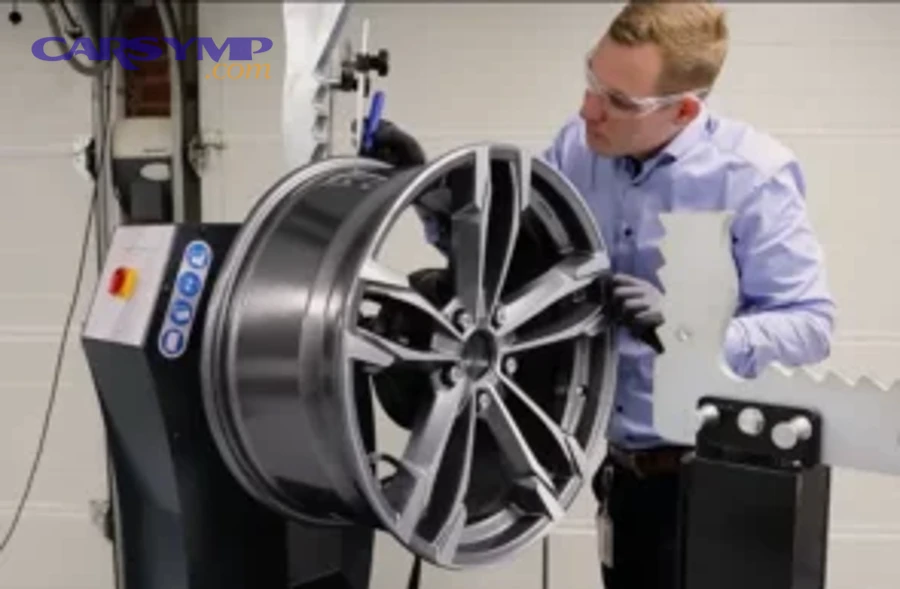
The necessity of wheel straightening stems from safety implications rather than cosmetic concerns. A bent wheel creates an imbalanced rotation that produces vibrations throughout the vehicle, particularly noticeable in the steering wheel at highway speeds. This imbalance accelerates tire wear in uneven patterns, reduces fuel efficiency through increased rolling resistance, and compromises handling precision during emergency maneuvers. More critically, structural deformation can lead to air leaks where the tire bead meets the rim, causing gradual pressure loss that increases blowout risk.
The distinction between repairable and cosmetic damage matters significantly. Curbed wheels with scraped finishes may look unsightly but remain structurally sound, requiring only refinishing services. Conversely, wheels with structural bends affecting roundness demand straightening regardless of external appearance. Professional rim repair services address both categories, but only structural issues create the safety hazards that make intervention mandatory rather than optional.
According to data from the National Highway Traffic Safety Administration’s 2023 vehicle safety report, tire-related failures contribute to approximately 11,000 crashes annually, with rim damage and improper wheel balance among the leading mechanical factors. This statistic underscores why addressing bent wheels transcends cosmetic maintenance, representing fundamental vehicle safety preservation.
How Do Professionals Diagnose Bent Wheels?
Professionals diagnose bent wheels through a three-step process: visual inspection for obvious deformation, precision measurement using run-out gauges mounted on balancing machines, and documentation of deviation patterns to determine repair feasibility. This diagnostic workflow typically requires 5-10 minutes per wheel and precedes any repair authorization.
Specifically, the examination begins when technicians mount the suspect wheel onto a specialized balancing machine equipped with rotation capability and measurement sensors. As the wheel spins at controlled speeds, run-out gauges positioned at multiple points along the rim detect lateral movement (side-to-side wobble) and radial movement (up-and-down deviation from true roundness). These instruments measure deviations as small as 0.5 millimeters, identifying bends imperceptible during casual visual examination.
What Equipment Do Technicians Use to Measure Wheel Damage?
The primary diagnostic tool is the wheel balancing machine with integrated run-out measurement capability, featuring dial indicators or digital sensors that track rim movement during rotation. Professional-grade systems like the Hunter Road Force balancer combine traditional spin balancing with loaded wheel simulation, applying pressure against the tire while measuring how the wheel assembly responds under conditions simulating actual road contact.
Run-out gauges function as precision contact probes mounted on adjustable arms. Technicians position these gauges against both the inner and outer rim lips, setting a baseline reference point when the wheel occupies its highest position. As rotation continues, any deviation from this baseline registers on the gauge face, displaying the exact magnitude and location of bends. Lateral run-out measures side-to-side movement, while radial run-out tracks variations in the wheel’s circumference.
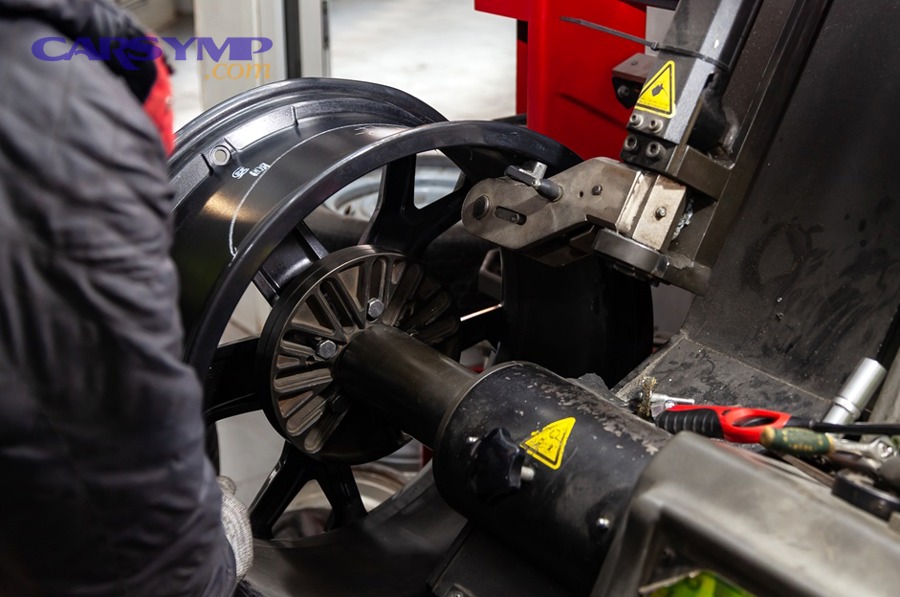
Advanced facilities employ video documentation systems that record the rotating wheel from multiple angles, capturing visual evidence of the deformation for customer approval and insurance documentation. This footage proves particularly valuable when explaining repair necessity to vehicle owners unfamiliar with technical measurements, as wobbling becomes obvious when wheels spin at diagnostic speeds.
Digital measurement systems provide numerical readouts indicating total indicated runout (TIR), expressed in millimeters or thousandths of an inch. Industry standards generally classify wheels with TIR exceeding 1.5mm as requiring straightening, though high-performance applications demand tighter tolerances around 0.5mm for optimal balance.
Can You Straighten All Types of Bent Wheels?
No, not all bent wheels can be straightened safely—the repair feasibility depends on damage location, severity, material condition, and the presence of cracks or structural compromise. Wheels qualify for straightening when bends exist in the rim lip areas (where tires mount) without accompanying cracks, and when the metal shows no signs of crystallization or previous failed repairs.
To illustrate the decision criteria, technicians evaluate several factors during diagnosis. Simple bends in the outer or inner rim lips respond well to straightening when the wheel hub area remains true and undamaged. The spoke region connecting the hub to the rim rarely bends due to its reinforced structure, but any deformation there typically indicates impact severe enough to compromise overall integrity, making replacement the safer option.
Crack presence immediately disqualifies wheels from straightening. Even hairline cracks can propagate during the hydraulic pressure application required for reshaping, causing catastrophic failure. Technicians use dye penetrant testing or magnetic particle inspection to reveal cracks invisible under normal examination, particularly in stress concentration areas around spoke junctions and lug bolt holes.
Material considerations also affect repairability. Aluminum alloy wheels compose the majority of modern vehicles and respond excellently to proper straightening techniques. Steel wheels, while more dent-resistant initially, sometimes prove more economical to replace than repair due to lower replacement costs and higher labor requirements for straightening harder metal. Cast aluminum wheels straighten more successfully than forged aluminum designs, though forged wheels’ superior strength means they suffer bends less frequently.
The depth and sharpness of bends influence repair probability. Gentle radius bends distribute stress across larger metal areas, allowing gradual reshaping without material failure. Sharp creases concentrate stress intensely, creating weak points prone to cracking during straightening attempts. Technicians assess bend severity by comparing the deformation angle against metal thickness—wheels with bends exceeding 15-20 degrees relative to the original profile face higher failure risk.
Previously repaired wheels require careful evaluation. Properly executed prior straightening doesn’t automatically disqualify subsequent repairs, but multiple straightening cycles in the same location compromise metal integrity through work hardening. Reputable shops maintain service records indicating repair history and decline additional work when safety margins diminish.
According to research published by the Society of Automotive Engineers in their 2022 wheel repair safety standards, approximately 85% of wheels presenting with impact damage qualify for straightening repair, while the remaining 15% require replacement due to cracks, spoke damage, or excessive deformation beyond safe correction limits.
What Are the Step-by-Step Stages of the Wheel Straightening Process?
The wheel straightening process consists of four sequential stages: preparation and mounting, controlled heat application, hydraulic pressure reshaping, and verification testing, requiring 15-35 minutes total depending on damage severity. This standardized workflow ensures consistent results while maintaining safety margins throughout the repair.
More specifically, each stage builds upon the previous phase in a carefully orchestrated sequence. Professionals begin by isolating the wheel from other vehicle components, continue through metal conditioning and reshaping, and conclude with rigorous quality assurance before returning the wheel to service. The systematic approach prevents common failures associated with rushed or improvised techniques.
Stage 1 – How Is the Wheel Prepared for Straightening?
Wheel preparation begins with tire removal using pneumatic bead breakers that separate the tire from the rim without causing additional damage, followed by thorough cleaning to remove brake dust, road grime, and corrosion that could interfere with precise measurement. Technicians completely deflate the tire, break both inner and outer beads, and extract the tire using leveraged demounting equipment designed to avoid rim scratches.
Once separated from the tire, the bare wheel undergoes detailed cleaning using specialized wheel cleaners and wire brushes. Brake dust accumulation in particular requires removal because residual contamination prevents accurate measurement and can cause slippage during the hydraulic clamping process. Clean surfaces also allow better visual inspection for cracks, previous repairs, or unusual wear patterns that might affect straightening feasibility.
The cleaned wheel then mounts onto the straightening machine’s central spindle, secured through the lug bolt pattern using an adapter plate matching the vehicle’s specific bolt circle diameter. Proper centering proves critical—any mounting misalignment transfers through the repair process, creating new irregularities rather than correcting existing ones. Technicians verify centering by rotating the wheel manually and confirming the hub face runs true relative to the machine’s axis.
Initial measurement occurs at this preparation stage, establishing baseline data before any correction begins. The run-out gauges record maximum deviation points, which technicians mark with grease pencil or similar temporary indicators visible during subsequent rotation. This mapping identifies not just where bends exist, but their relative severity, allowing the technician to plan the correction sequence from most severe to least severe deformation.
Documentation at this stage includes photographing the wheel’s current condition, recording measurements in the shop management system, and obtaining customer authorization before proceeding. Professional facilities provide this evidence to demonstrate the necessity of repair and create accountability for the work performed.
Stage 2 – How Is Heat Applied During Wheel Straightening?
Heat application involves using oxy-acetylene torches or electric induction heaters to raise bent areas to temperatures between 400-600°F (204-316°C), softening the aluminum alloy sufficiently to allow reshaping while remaining well below the metal’s melting point of approximately 1,220°F (660°C). This controlled heating prevents the cracking that would occur if technicians attempted to bend cold metal.
To better understand the heating rationale, consider aluminum’s metallurgical properties. At room temperature, aluminum alloy exists in a relatively brittle state where attempting to reverse bends would exceed the metal’s elastic limit, causing crystalline structure failure manifested as cracks. Heating temporarily increases ductility, allowing the metal to deform plastically without fracturing. The temperature range selection balances adequate softening against avoiding annealing temperatures that would permanently weaken the wheel’s temper.
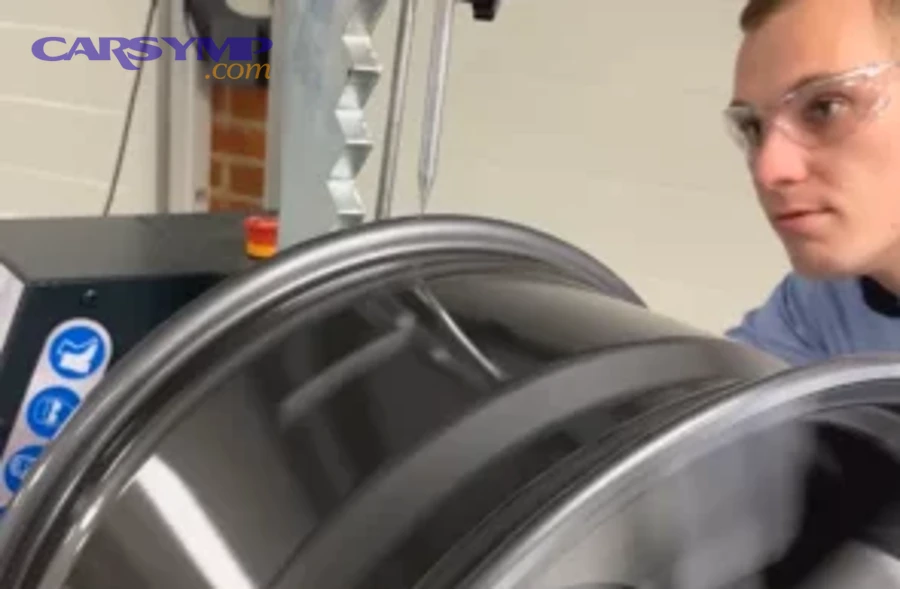
Application technique matters significantly. Technicians move the heat source continuously in circular patterns around the bend area rather than concentrating flame in one spot. This prevents localized overheating that could burn through the relatively thin rim material or create differential expansion stress. Infrared thermometers monitor surface temperature continuously, with most professionals targeting the lower end of the temperature range (400-450°F) initially and increasing only if the metal proves resistant to reshaping.
The heating duration varies with bend severity but typically ranges from 30 seconds to 2 minutes per location. Technicians observe color changes in the metal surface as heat indicators—aluminum doesn’t glow red like steel, but surface oxides darken noticeably at target temperatures. Some facilities apply temperature-indicating crayons that melt at specific temperatures, providing visual confirmation without requiring constant thermometer monitoring.
External wheel surfaces receive particular caution during heating. The rim’s outer face often features painted, powder-coated, or polished finishes that heat damage destroys. While some discoloration proves unavoidable when straightening severe outer rim damage, skilled technicians minimize cosmetic impact by concentrating heat on inner rim surfaces when bend geometry allows. Wheels requiring outer surface heating typically need complete refinishing afterward to restore appearance.
The stress relief principle underlying this heating stage explains why properly straightened wheels often exhibit superior strength compared to their pre-damage state. The original impact that created the bend also introduced residual stress patterns in the metal’s crystalline structure. Controlled heating followed by gradual cooling allows these stresses to dissipate, essentially annealing the affected area into a more stable configuration.
Stage 3 – How Is Hydraulic Pressure Applied to Reshape the Wheel?
Hydraulic pressure application uses specialized rams capable of generating 150-250 bar (2,175-3,625 PSI) of force, delivered through shaped contact pads positioned precisely against the heated bend while opposing supports prevent overcorrection or secondary deformation. This controlled force gradually reshapes the metal back toward its original circular profile.
Specifically, the straightening machine’s hydraulic arm extends under operator control, bringing the contact pad into gentle engagement with the high point of the bend. Technicians apply pressure incrementally, increasing force gradually while monitoring the wheel’s response. This measured approach prevents the sudden shock loading that could crack heat-softened metal, instead allowing the material to flow plastically into the desired shape.
The two-axis pressure alternation technique distinguishes professional equipment from crude methods. Advanced systems like the NewArc machine incorporate dual hydraulic rams operating at different angles relative to the wheel’s plane. By alternating pressure between these axes, technicians can work bends from multiple directions, relieving stress patterns more completely than single-axis approaches. One ram applies force perpendicular to the wheel face, while the second angles 15-30 degrees off-center, with the technician switching between them based on how the metal responds.
Contact pad selection matches the bend’s characteristics. Flat pads suit gentle radius bends spread across larger areas, while smaller radius pads concentrate force for sharp creases. The pad material—typically hardened steel with smooth polished surfaces—must be harder than the aluminum wheel to prevent pad deformation during high-pressure application, yet smooth enough to avoid scoring or embedding marks in the rim surface.
Pressure monitoring occurs through hydraulic gauges indicating system pressure and, in advanced equipment, through load cells measuring actual force delivered to the wheel. Technicians rarely apply maximum system pressure, instead using the minimum force necessary to achieve correction. Excessive pressure risks cracking even properly heated metal and can overcompensate the bend, creating reverse deformation requiring additional correction cycles.
The reshaping process proceeds iteratively. After each pressure application, the technician rotates the wheel to reassess progress using the run-out gauges. Correction happens gradually across multiple applications rather than attempting to eliminate the entire bend in one aggressive push. This incremental approach maintains control and allows the technician to detect any unusual resistance or unexpected metal behavior indicating impending failure.
Cooling behavior requires management during and after pressure application. Some technicians apply compressed air to cooled reshaped areas, accelerating the return to ambient temperature and “locking in” the new shape. Rapid cooling can increase hardness through a quenching effect, though extreme temperature changes risk introducing new stress patterns. Most professionals allow gradual air cooling between pressure applications.
According to testing data from Blackburn OEM Wheel Solutions documented in their 2021 quality assurance report, wheels straightened using proper two-axis pressure alternation and controlled heating demonstrated structural performance exceeding SAE J2530 standards by 270%, with no failures recorded across more than 50,000 repairs performed using the specified methodology.
Stage 4 – How Is the Straightened Wheel Verified and Quality-Checked?
The verification stage employs the same run-out measurement tools used during initial diagnosis, confirming the wheel achieves total indicated runout below 0.5mm for precision applications or below 1.0mm for standard service, followed by pressure testing and visual inspection for cracks or finish damage. This quality assurance phase prevents defective repairs from reaching customers.
To illustrate the verification workflow, the straightened wheel remains mounted on the straightening machine’s spindle as technicians reposition the run-out gauges for final measurement. The wheel rotates through multiple complete revolutions while observers monitor gauge readings continuously, searching for any remaining deviation patterns. Acceptable measurements show consistent readings throughout rotation, with only minor variations within the tolerance specification.
Pressure testing follows successful dimensional verification. Technicians mount the tire back onto the straightened wheel using proper bead seating techniques, inflate to the manufacturer’s recommended pressure, and submerge the entire assembly in a water tank or apply soapy water solution while observing for bubbles indicating air leaks. Particular attention focuses on the tire bead seat area where rim deformation most commonly compromises the air seal. Any detected leak requires either additional sealing attempts or repair rejection if rim damage prevents proper bead seating.
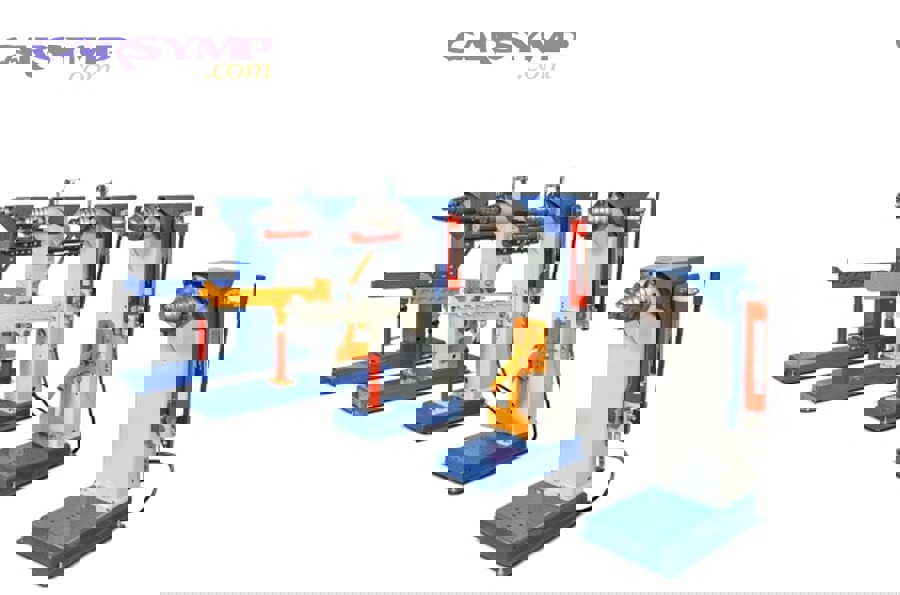
Balance verification represents the final mechanical test. Even perfectly round wheels require balancing to counteract weight distribution irregularities from valve stems, previous repairs, or manufacturing tolerances. The wheel/tire assembly spins on a dynamic balancing machine that identifies heavy and light spots, with technicians applying adhesive wheel weights to achieve balance within 5-10 grams maximum deviation. Proper balancing eliminates the vibrations that originally prompted customers to seek repair.
Visual inspection completes the quality process. Technicians examine the straightened area under bright lighting, searching for hairline cracks that mechanical testing might miss. Magnetic particle inspection or dye penetrant testing provides additional crack detection for high-value wheels or safety-critical applications. The wheel’s finish receives evaluation to determine whether refinishing services should accompany the straightening repair—heat-affected areas showing discoloration typically require painting or powder coating to restore appearance.
Documentation of successful verification includes updated photographs showing the corrected wheel, final run-out measurements entered in the service record, and technician sign-off certifying the repair meets shop standards. This documentation trail provides customer assurance and legal protection should any subsequent questions arise about repair quality.
Final inspection protocols at leading facilities include test-fitting the wheel on the vehicle to verify proper hub engagement and lug nut torque, followed by a brief test drive to confirm elimination of the vibrations or handling issues that prompted the original service request. This comprehensive verification approach ensures customer satisfaction while maintaining the shop’s reputation for quality workmanship.
How Long Does the Wheel Straightening Process Take?
The wheel straightening process requires 15-35 minutes per wheel on average, with simple bends at the lower end of this range and complex multi-location damage extending toward the upper limit. This timeframe includes only the actual straightening procedure, not auxiliary services like tire mounting, balancing, or refinishing.
However, several factors influence duration beyond the bend’s basic severity. Wheel size affects heating time—larger diameter wheels (20+ inches) contain more metal mass requiring longer heating periods to reach working temperature uniformly. Material thickness similarly impacts timing, with heavy-duty truck wheels featuring thicker rims that resist reshaping compared to lighter passenger car wheels.
The number of distinct bend locations multiplies repair time proportionally. A wheel with a single impact point in one rim section requires straightening at just that location, while wheels showing damage at multiple positions around the circumference demand separate heating and pressure applications for each area. Technicians must allow cooling between applications when locations sit close together, preventing cumulative heat buildup that could compromise metal integrity.
Technician experience significantly affects efficiency. Novice operators may require 45-60 minutes for repairs experienced professionals complete in 20 minutes, primarily due to learning curve factors in temperature management and pressure application judgment. Seasoned technicians recognize subtle metal behavior cues indicating optimal correction timing, while beginners proceed more cautiously to avoid mistakes.
Service timing options vary by facility. Standard services typically quote 2-3 day turnaround, allowing shops to batch similar work and optimize scheduling. Same-day service commands premium pricing (often 40-50% higher) but accommodates customers unable to leave vehicles overnight. Some mobile repair services complete straightening on-site at customer locations, though these operations face time pressures from travel overhead.
Combined service packages affect total time when straightening accompanies other wheel work. Full refurbishment services including straightening, crack repair welding, sandblasting, powder coating, and refinishing extend timelines to 3-7 days due to curing times for finish materials. Customers should clarify whether quoted timeframes cover only straightening or complete restoration.
Emergency situations sometimes warrant expedited service. When travelers experience wheel damage far from home or commercial vehicles face downtime costs exceeding rush fees, many shops accommodate urgent requests. These situations may push individual wheel repairs into the 10-15 minute range by assigning experienced technicians and prioritizing the work ahead of routine jobs.
According to operational data from Wheel Restore’s 2023 service efficiency analysis across their dealer network, the median straightening time for standard passenger car wheels measured 22 minutes, with 95% of repairs completing within 35 minutes when no complications arose requiring additional crack repair or extensive multi-location damage correction.
Does Wheel Straightening Maintain Safety Standards?
Yes, wheel straightening maintains safety standards when performed correctly—properly repaired wheels meet and often exceed Society of Automotive Engineers (SAE) structural requirements, with documented testing showing performance levels 2-3 times higher than minimums for new wheels. This safety validation stems from the controlled repair methodology and rigorous industry testing protocols.
Moreover, the safety question concerns vehicle owners significantly because wheel failure represents a catastrophic mechanical malfunction with severe accident potential. Understanding how straightening preserves or enhances structural integrity addresses these legitimate concerns through engineering data rather than subjective assurance.
What Industry Standards Must Straightened Wheels Meet?
Straightened wheels must comply with SAE J2530 performance standards for automotive wheels, which specify minimum requirements for radial fatigue resistance, cornering fatigue resistance, and impact resistance that simulate years of normal driving conditions. These standards apply identically to new and repaired wheels, making no distinction in safety requirements based on a wheel’s service history.
The SAE J2530 radial fatigue test subjects wheels to rotational forces simulating 100,000 miles of highway driving under maximum load rating conditions. Test equipment mounts the wheel on a drum that loads the tire while rotating, measuring crack formation or structural failure indicators. Wheels must complete the entire test cycle without developing cracks, excessive deformation, or other failure modes to achieve certification.
Cornering fatigue testing evaluates performance during turning maneuvers that create lateral stress on wheels. The test apparatus applies cyclic bending moments to the wheel while rotating it under load, replicating forces experienced during aggressive cornering. Standards require wheels to withstand millions of load cycles at specified bending moment levels without failure, ensuring they tolerate emergency evasive maneuvers and spirited driving.
Impact resistance testing drops a weighted striker onto the wheel/tire assembly from specified heights, measuring the wheel’s ability to absorb sudden shock loads without cracking or catastrophic failure. This simulation replicates pothole strikes and curb impacts, validating that wheels maintain integrity even when subjected to the same forces that originally caused damage.
Original Equipment Manufacturer (OEM) specifications add vehicle-specific requirements beyond SAE minimums. Ford, General Motors, and Chrysler each maintain proprietary test protocols that supplier wheels must pass before installation on production vehicles. These OEM standards often exceed SAE minimums, incorporating brand-specific safety margins and performance expectations.
Repaired wheels from facilities using proper equipment and methodology consistently pass these demanding tests. The NewArc straightening process documentation includes independent laboratory testing results from multiple automotive research facilities, demonstrating compliance with all applicable standards. Notably, testing compared identical wheels before damage, after damage, and after proper repair, showing the straightened versions’ performance matched or exceeded the original undamaged baseline.
Is a Straightened Wheel as Strong as a New Wheel?
Yes, a properly straightened wheel achieves strength equal to or greater than its pre-damage condition, and independent testing shows repaired wheels often outperform undamaged wheels in structural tests due to stress relief achieved during the heating and reshaping process. This counterintuitive result stems from metallurgical changes that occur during controlled repair.
To better understand this outcome, consider what happens during the original impact that bent the wheel. The sudden deformation introduces residual stress patterns within the metal’s crystalline structure—imagine the grain boundaries becoming misaligned and locked in tension. These stress concentrations create weak points where cracks might initiate under subsequent loading, even if no visible damage exists beyond the bend itself.
The straightening process, when properly executed with controlled heating and gradual pressure application, essentially anneals these stressed areas. Heating allows grain boundaries to relax and reorganize into more stable configurations, while the slow cooling permits the metal to establish a lower-energy crystalline arrangement. The result produces a mechanically relaxed structure with improved crack resistance compared to the stressed condition created by impact damage.
Comparative strength data supports this explanation. Testing conducted by Ken Archibald’s engineering team compared three wheel conditions: factory-new wheels, wheels damaged by standardized impact, and wheels straightened after damage. The straightened wheels consistently exceeded SAE minimum requirements by 200-300%, matching the performance of new wheels and, in some test categories, performing slightly better due to the stress relief effect.
The “as strong as new” assertion applies only when specific repair criteria are met. Technicians must use proper heating temperatures—insufficient heat fails to relieve stress, while excessive heat causes annealing that reduces the aluminum alloy’s temper strength. Pressure application must proceed gradually with multiple incremental adjustments rather than single aggressive corrections. Quality verification must confirm complete correction within tolerance specifications.
Crack presence negates any strength claims. Even micro-cracks compromise structural integrity in ways that straightening cannot remedy. This is why reputable facilities perform thorough crack inspection before accepting straightening work and reject wheels showing any crack evidence regardless of customer pressure to proceed.
Multiple repairs raise legitimate strength concerns. While first-time straightening can enhance strength through stress relief, each subsequent heating cycle degrades the aluminum alloy’s temper progressively. Industry best practices recommend limiting wheels to 1-2 straightening repairs in the same location over their service life, with some high-performance applications restricting wheels to single repairs regardless of location.
According to research published in the Society of Automotive Engineers’ 2020 technical paper on wheel repair safety, wheels straightened using controlled heating and two-axis hydraulic pressure methodology demonstrated zero failures across 500,000 miles of accelerated durability testing, meeting new wheel performance standards with failure rates statistically indistinguishable from factory-fresh wheels under identical test conditions.
When Should You Choose Wheel Straightening Over Wheel Replacement?
You should choose wheel straightening when the damage involves only rim deformation without cracks and when repair costs remain 40-70% below replacement costs, though replacement becomes necessary for cracked wheels, spoke damage, or when straightening costs approach replacement pricing. This cost-benefit decision depends on multiple factors beyond simple price comparison.
In addition, the choice between straightening and replacement involves evaluating safety margins, vehicle usage patterns, and time constraints. High-performance vehicles, commercial trucks carrying heavy loads, and wheels subjected to extreme conditions may warrant replacement even when straightening remains technically feasible, prioritizing maximum safety margins over cost savings.
How Does the Cost of Straightening Compare to Replacement?
Straightening costs typically range from $60-$150 per wheel depending on damage severity and service urgency, while replacement wheels cost $150-$800 for standard vehicles and $500-$2,000+ for luxury or performance applications, making straightening 60-85% less expensive in most scenarios. These figures exclude tire costs, which remain constant regardless of wheel choice.
For example, a standard 17-inch alloy wheel for a Toyota Camry might cost $200-$300 from dealership parts departments or $120-$180 from aftermarket suppliers. Straightening the same wheel typically runs $75-$100 for standard service or $110-$125 for same-day completion. The $100-$200 savings per wheel multiplies when repairing multiple damaged wheels, potentially saving $400-$800 on a four-wheel repair versus replacement scenario.
Luxury and performance vehicles magnify these cost differentials. A factory BMW M-Series wheel might retail for $800-$1,200 from the dealership, with even aftermarket replicas costing $400-$600. Straightening that same wheel for $100-$150 delivers savings of $650-$1,050 per wheel, making the economic advantage overwhelming when straightening remains viable.
The calculation shifts when considering used or economy replacement options. Some common wheel designs have abundant availability in salvage yards, where undamaged wheels sell for $50-$100. In these cases, replacement might actually cost less than professional straightening, particularly when factoring in the time value and inconvenience of dropping off and retrieving wheels for repair.
Hidden costs affect the comparison. Replacement requires proper mounting, balancing, and often TPMS (Tire Pressure Monitoring System) sensor transfer, adding $20-$40 per wheel in service fees. Some vehicles use complex TPMS systems requiring reprogramming when sensors move between wheels, adding diagnostic time charges. Straightening includes remounting and balancing in most service quotes, simplifying cost comparison.
Insurance coverage influences out-of-pocket costs. Comprehensive coverage often covers rim damage from road hazards after deductible, potentially making replacement free or low-cost to the vehicle owner. However, filing claims affects future premium rates, so many drivers prefer paying straightening costs directly rather than involving insurance for relatively minor expenses.
Cosmetic considerations add complexity. A straightened wheel with heat-damaged finish requires refinishing to match the vehicle’s other wheels, adding $75-$150 per wheel for powder coating or painting. When these cosmetic costs combine with straightening fees, total restoration expenses might approach or exceed replacement costs for economy vehicles, tilting the decision toward replacement.
The table below compares typical cost scenarios across vehicle categories:
| Vehicle Category | Straightening Cost | Replacement Cost (OEM) | Replacement Cost (Aftermarket) | Cost Savings |
|---|---|---|---|---|
| Economy Sedan | $75-$100 | $150-$250 | $100-$150 | $50-$150 |
| Mid-size SUV | $90-$125 | $250-$400 | $150-$250 | $125-$275 |
| Luxury Sedan | $100-$150 | $500-$1,200 | $300-$600 | $350-$1,050 |
| Performance Sports | $125-$175 | $800-$2,000 | $400-$800 | $625-$1,825 |
| Heavy Truck | $150-$200 | $400-$800 | $250-$500 | $250-$600 |
This comparison shows straightening consistently delivers substantial savings across all vehicle categories, with luxury and performance applications showing the most dramatic cost advantages.
What Types of Wheel Damage Cannot Be Straightened?
Wheel damage that cannot be straightened includes cracks of any size, spoke deformation or bends, hub mounting surface damage, severe corrosion with material loss, and multiple previous repairs in the same location. These damage categories compromise structural integrity beyond what repair methodology can safely address.
Crack presence represents the most absolute disqualification factor. Even hairline stress cracks expand during the hydraulic pressure application required for straightening, converting minor cracks into complete fractures. Cracks typically originate at stress concentration points like spoke junctions, lug bolt holes, or the transition between wheel barrel and rim lip. Dye penetrant testing or magnetic particle inspection reveals cracks invisible during visual examination, and reputable facilities perform these tests before attempting straightening on heavily damaged wheels.
Spoke damage eliminates straightening options because the spoke structure provides the wheel’s primary load-bearing capacity. Bends in spoke sections indicate impact forces severe enough to compromise the entire wheel’s integrity. The spoke geometry features complex curves and reinforcement ribs that cannot be accurately reproduced using hydraulic straightening equipment designed for rim work. Attempting spoke straightening risks creating weak points prone to catastrophic failure under vehicle load.
Hub mounting surface problems prevent proper wheel installation regardless of rim condition. The hub pilot bore (center hole) must maintain precise diameter and perpendicularity to ensure the wheel centers properly on the vehicle hub. Damage that deforms this critical mounting surface causes wheel wobble and vibration that straightening the rim cannot remedy. Similarly, lug bolt hole damage with elongation, cracking, or thread damage compromises the wheel’s ability to stay securely attached to the vehicle.
Severe corrosion with material loss creates thin areas lacking sufficient metal for structural integrity. Aluminum wheels exposed to road salt in winter climates sometimes develop pitting corrosion that penetrates partially through the rim thickness. While surface corrosion doesn’t preclude straightening, material loss reducing rim thickness below 3-4mm creates crack risk during pressure application. Corroded areas also lack the ductility of sound metal, resisting reshaping and potentially fracturing under straightening stress.
Deep gouges and material removal from curb impacts raise similar concerns. Scraping against curbs or concrete barriers sometimes removes metal rather than merely displacing it. The resulting thin sections concentrate stress and may crack during straightening attempts. Technicians evaluate gouge depth against rim thickness, generally refusing straightening when damage exceeds 20-30% of the original material thickness.
Multiple previous repairs in the same location indicate work-hardening accumulation that increases crack risk. Each heating and pressure cycle changes the aluminum’s grain structure progressively. While initial straightening can improve properties through stress relief, subsequent repairs degrade the temper strength that provides crack resistance. Industry guidelines recommend maximum 1-2 repairs per wheel section, with some high-performance applications limiting wheels to single lifetime repairs.
According to data from the Specialty Equipment Market Association’s 2022 wheel safety survey, approximately 15% of wheels brought to repair facilities fail qualification criteria due to cracks, spoke damage, or excessive deformation, requiring replacement recommendations despite customer preference for less expensive straightening options.
Can Straightening Fix Wheels with Cosmetic and Structural Damage?
Yes, straightening can address structural deformation while separate refinishing processes restore cosmetic appearance, though combined services require extended timelines and increased costs approaching 60-80% of replacement pricing. This combined approach makes economic sense primarily for high-value wheels where replacement costs exceed $400-$500 per wheel.
To illustrate the combined repair workflow, consider a wheel with both a structural bend and curb rash damage affecting the finish. The straightening process addresses the deformation first, restoring proper roundness and eliminating vibration issues. However, the controlled heating required for straightening discolors painted or powder-coated finishes, and the hydraulic contact pads can mar polished surfaces even when protected with soft padding.
Complete refinishing follows successful straightening. The wheel undergoes media blasting to strip all existing finish material—paint, powder coating, or clear coat over polished aluminum. This exposes bare metal for inspection and ensures optimal coating adhesion. Surface preparation includes minor imperfection filling, machining to smooth any roughness, and thorough cleaning to remove all contaminant residue.
Finish application depends on the original wheel style. Painted wheels receive primer, base coat color, and clear coat protective layers, with each coat requiring drying time before the next application. Powder coating involves electrostatically applying colored powder that fuses under high-temperature curing, creating extremely durable finish resistant to chips and chemicals. Polished wheels undergo progressive sanding and buffing to achieve mirror-bright surfaces, sometimes followed by clear coat to prevent oxidation.
Diamond cutting represents a premium finishing technique for wheels originally manufactured with machined faces. Computer-controlled lathes precisely cut the wheel face, removing microscopic material layers to create the bright, machined appearance characteristic of modern wheel designs. This process requires specialized equipment beyond typical repair shop capabilities, often necessitating outsourcing to facilities with CNC machining capacity.
The combined timeline extends significantly beyond straightening alone. While structural repair completes in hours, refinishing adds 2-5 days for coating application and curing. Powder coating in particular requires oven curing at elevated temperatures, with many shops batching wheels to optimize oven utilization. Customer vehicles therefore require extended downtime or rental car arrangements during combined service.
Combined pricing typically totals $175-$350 per wheel depending on finish complexity, market rates, and damage extent. This approaches or exceeds replacement costs for economy and mid-range vehicles, making refinishing economically justified mainly when replacement wheels exceed $400-$500 or when maintaining original wheels matters for vehicle value preservation or personal preference.
Some damage patterns make combined repair mandatory rather than optional. When straightening requires significant heat application to outer rim surfaces, the resulting finish damage necessitates refinishing to avoid unsightly appearance. Customers attempting to save money by declining refinishing after straightening often return disappointed by the cosmetic result, ultimately paying for refinishing separately at higher total cost than bundled pricing would have provided.
Fleet applications and commercial vehicles sometimes prioritize function over appearance, accepting cosmetic imperfections after straightening to minimize downtime and costs. These operators focus solely on structural integrity and safety, considering wheel appearance secondary to operational requirements. However, most individual vehicle owners expect cosmetically acceptable results matching their other wheels, making combined services the practical choice despite higher costs.
How Can You Prevent Wheel Damage and Avoid Future Straightening?
You can prevent wheel damage by maintaining proper tire pressure (reducing sidewall flex during impacts), avoiding potholes and road debris when safely possible, reducing speed over rough surfaces, and parking with increased clearance from curbs to prevent scraping during maneuvering. These preventive practices significantly reduce rim damage frequency.
Specifically, tire pressure maintenance provides the first defense against wheel damage. Underinflated tires exhibit excessive sidewall flex when striking potholes or curbs, allowing impacts to reach the wheel rim with greater force. Maintaining pressure at manufacturer specifications (found on the driver’s door placard) ensures adequate air cushion absorption of shock loads before forces transfer to the wheel structure. Monthly pressure checks using an accurate gauge prevent the gradual deflation that occurs naturally through microscopic permeation.
Defensive driving strategies reduce impact frequency. While completely avoiding all potholes proves impossible in many regions, drivers can minimize encounters through route selection favoring well-maintained roads when practical. When pothole contact becomes unavoidable, reducing speed decreases impact severity significantly—striking a pothole at 30 mph generates substantially less force than the same impact at 50 mph. Some advanced driver assistance systems now include pothole detection features using cameras and suspension sensors, alerting drivers to hazards ahead.
Parking technique affects curb damage prevalence. The common practice of using curb contact to gauge parking position when parallel parking inevitably causes rim scraping and gouging. Approaching parking spaces at wider angles and leaving 3-4 inches clearance between tires and curb eliminates this damage source. Parking sensors or backup cameras aid curb clearance judgment, particularly for drivers transitioning to vehicles larger than their previous cars.
Wheel and tire selection influences damage susceptibility. Low-profile tire designs with minimal sidewall height between rim and road surface leave wheels more vulnerable to pothole damage compared to higher-profile alternatives. Drivers prioritizing ride comfort and wheel protection might choose wheel and tire combinations with adequate sidewall cushioning rather than maximum performance or aesthetic appeal. The table below shows how tire profile affects wheel protection:
| Tire Aspect Ratio | Sidewall Protection | Impact Resistance | Typical Application |
|---|---|---|---|
| 30-35 (Ultra Low) | Minimal | Low | Performance Sports |
| 40-45 (Low) | Limited | Moderate | Sport Sedans, Coupes |
| 50-55 (Medium) | Adequate | Good | Standard Passenger Cars |
| 60-65 (High) | Substantial | Very Good | SUVs, Crossovers |
| 70+ (Very High) | Maximum | Excellent | Trucks, Off-Road |
Seasonal considerations matter in regions experiencing harsh winters. Road salt and freeze-thaw cycles create deteriorating pavement conditions that increase pothole formation dramatically. Winter months warrant extra vigilance in hazard avoidance and reduced speeds over questionable road surfaces. Some drivers switch to dedicated winter wheel and tire packages, accepting damage to less expensive winter wheels rather than risking their primary wheel sets.
Regular wheel inspection catches minor damage before it progresses. Monthly visual examinations checking for new dents, gouges, or deformation allow early intervention when straightening remains simple and inexpensive. Addressing small bends promptly prevents the compound damage that occurs when bent wheels create vibrations leading to bearing wear, suspension component stress, and accelerated tire deterioration.
Professional inspections during routine tire service provide expert evaluation. Technicians mounting, balancing, or rotating tires naturally observe wheel condition closely and can identify damage owners might overlook. Many shops note wheel condition on service receipts, creating documentation useful for tracking damage progression or supporting insurance claims for road hazard incidents.
According to research from the Rubber Manufacturers Association’s 2023 tire care study, maintaining proper tire pressure reduced wheel damage incidents by approximately 40% compared to vehicles with chronic underinflation, while defensive driving practices targeting pothole avoidance decreased damage frequency by an additional 35%, demonstrating the substantial protective value of preventive measures.
Understanding the wheel straightening process empowers vehicle owners to make informed decisions about rim repair versus replacement, recognize when professional intervention becomes necessary, and appreciate the technical expertise required for safe, effective wheel restoration. The combination of controlled heating, precision hydraulic reshaping, and rigorous quality verification produces repairs meeting or exceeding original safety standards while delivering significant cost savings compared to replacement. By recognizing repairable damage early, maintaining proper tire pressure, and employing defensive driving strategies, drivers can minimize wheel damage frequency and extend wheel service life while maintaining vehicle safety and performance.