


Welded wheel repairs present seven critical safety risks that every driver must understand before choosing repair over replacement: structural weakness from heat-affected zones, heat distortion compromising integrity, dangerous DIY or poor-quality welds, aluminum strength degradation, hidden micro-crack propagation, unsafe repairs in critical wheel zones, and inadequate post-repair testing. These risks can lead to catastrophic wheel failure, loss of vehicle control, and serious accidents if not properly addressed by qualified professionals using correct techniques and thorough inspection protocols.
Understanding what makes welded wheel repairs potentially dangerous requires examining the fundamental repair process and its impact on wheel metallurgy. When a wheel develops a crack from pothole impacts or curb strikes, welding introduces extreme heat that permanently alters the metal’s molecular structure, creating zones of weakness that may not be immediately visible. The welding process itself becomes a double-edged sword—while it can restore structural continuity to a cracked wheel, it simultaneously introduces new failure points through heat distortion, improper penetration, and degraded material properties that compromise long-term safety.
Evaluating whether a welded wheel repair is safe or dangerous demands specific knowledge of warning signs and professional standards. Drivers need concrete criteria to assess repair quality, including understanding which questions to ask repair shops, what certifications matter, and how to recognize the symptoms of failed or failing welds before they cause accidents. Without this evaluation framework, vehicle owners risk driving on compromised wheels that appear fine but contain hidden structural weaknesses ready to fail under normal driving conditions.
The decision between welding and replacement carries significant safety implications that extend beyond immediate cost savings. While welding may seem economically attractive, certain types of wheel damage simply cannot be safely repaired regardless of technique or expertise. Moreover, modern alternatives to traditional welding offer safer repair options that avoid many of the risks associated with heat-based repairs. Below, we’ll explore each of these critical safety risks in detail to help you make informed decisions about your vehicle’s wheels.
What Makes Welded Wheel Repairs Potentially Dangerous?
Welded wheel repairs become potentially dangerous because the welding process introduces extreme heat that permanently alters aluminum or steel metallurgy, creating heat-affected zones with reduced strength, while simultaneously risking improper weld penetration, heat distortion, and hidden structural weaknesses that can fail catastrophically under normal driving loads.
To understand these dangers fully, we must examine both the repair process itself and the fundamental reasons why drivers consider welding despite these risks.
What is Wheel Welding and How Does It Work?
Wheel welding is a metal repair process that uses controlled heat and filler material to restore structural continuity to cracked or fractured wheels, typically employing TIG (Tungsten Inert Gas) or MIG (Metal Inert Gas) welding techniques depending on wheel material and damage severity. The repair process begins with thorough cleaning of the damaged area to remove all contaminants, followed by beveling the crack edges to create proper weld penetration channels. Technicians then apply precise heat through an electric arc while feeding compatible filler material into the crack, building up the damaged section layer by layer until structural continuity is restored.
For aluminum alloy wheels—the most common type on modern vehicles—TIG welding is the preferred method because it provides the precise heat control necessary to avoid warping these heat-sensitive materials. The tungsten electrode creates a focused arc that melts the base metal and filler rod together without excessive heat spread. The entire process occurs in an inert gas atmosphere (typically argon) that prevents oxidation and contamination of the weld pool, which is critical for aluminum’s chemical reactivity.
Steel wheels can be welded using either TIG or MIG techniques, with MIG offering faster repair times through its continuous wire feed system. However, steel’s higher melting point and better heat tolerance make the welding process more forgiving compared to aluminum. After welding completes, technicians grind and shape the repaired area to match the wheel’s original profile, then perform balancing and testing to ensure the wheel meets safety standards.
The metallurgical challenge centers on aluminum alloy wheels, which are typically manufactured from 356-T6 aluminum—a material that achieves its strength through a specific heat treatment process during manufacturing. When welding heat is applied, it locally reverses this heat treatment in the areas surrounding the weld, creating what metallurgists call the heat-affected zone where material properties degrade significantly.
Why Do Vehicle Owners Consider Welding Instead of Replacement?
Vehicle owners consider welding instead of replacement primarily for cost savings, with professional wheel welding typically ranging from $150-$300 per wheel compared to $300-$1,500 or more for replacement wheels, especially for luxury, performance, or rare vehicles where original equipment manufacturer (OEM) wheels command premium prices.
Beyond immediate cost considerations, availability drives many welding decisions. Discontinued wheel models, custom wheels, or wheels for classic vehicles may be completely unavailable as replacements, making welding the only option to keep matching sets. Performance enthusiasts and collectors particularly value maintaining original wheels on their vehicles, viewing replacement with aftermarket alternatives as compromising authenticity and potentially affecting resale value.
Environmental factors increasingly influence repair-versus-replace decisions as well. Welding a cracked wheel generates significantly less waste and requires fewer manufacturing resources compared to producing a new wheel from raw aluminum, appealing to environmentally conscious consumers. A single aluminum wheel requires approximately 15-20 pounds of raw material and substantial energy for casting, machining, and finishing—all of which can be avoided through successful repair.
Time constraints also play a role, particularly in regions where same-day wheel repair services operate. Drivers facing urgent mobility needs may choose immediate welding repair over waiting days or weeks for replacement wheel delivery, especially for uncommon sizes or specifications. However, this convenience factor should never override safety considerations when damage severity exceeds safe repair limits.
What Are the 7 Critical Safety Risks of Welded Wheel Repairs?
The 7 critical safety risks of welded wheel repairs are: structural weakness from heat-affected zones reducing load capacity by up to 50%, heat distortion causing dangerous wheel imbalance and vibrations, DIY or poor-quality welds creating immediate failure points, aluminum strength degradation from reversed heat treatment, hidden micro-crack propagation from unaddressed stress damage, unsafe welding in critical load-bearing zones near lug holes or spokes, and inadequate post-repair testing failing to detect weld defects before catastrophic failure occurs.
Each of these risks represents a distinct failure mode that can compromise vehicle safety. Let’s examine them in detail to understand how they develop and why they matter.
Risk #1 – Can Welded Wheels Fail Due to Structural Weakness?
Yes, welded wheels can fail catastrophically due to structural weakness created in the heat-affected zone, where welding temperatures reaching 1,200°F for aluminum cause the metal to lose its engineered strength properties, reducing load-bearing capacity by approximately 50% and creating brittle areas prone to sudden fracture under normal driving stresses.
The structural weakness mechanism centers on metallurgical changes that occur during the welding process. Aluminum alloy wheels are manufactured using 356-T6 aluminum, where the “T6” designation refers to a specific heat treatment that creates microscopic structures within the metal that provide strength. When welding heat is applied, it locally anneals the metal surrounding the weld, reversing these engineered properties and creating a zone of softer, weaker material that extends several millimeters from the weld itself.
This heat-affected zone becomes the wheel’s weakest link, concentrating stress during normal driving operations. Every time the wheel encounters a bump, pothole, or cornering force, these stresses preferentially load the weakened area. Unlike the original wheel material that can flex and absorb impact energy, the heat-affected zone may respond with brittle fracture—a sudden, catastrophic failure mode that gives no warning before complete structural collapse.
Real-world failure scenarios typically occur during high-stress driving situations: hitting a pothole at highway speeds, hard cornering that loads the wheel laterally, or emergency braking that creates extreme rotational forces. In these moments, the weakened weld zone cannot handle the sudden stress spike and fractures completely, leading to immediate tire deflation, loss of vehicle control, and potential accidents. The failure often propagates rapidly through the entire wheel structure once initiated, leaving the driver with no time to safely respond.
Load-bearing capacity degradation affects not just impact resistance but also fatigue life. Wheels experience millions of stress cycles during normal use as they rotate, brake, and absorb road irregularities. The heat-affected zone develops fatigue cracks much faster than original wheel material, potentially failing after months or even weeks of use despite appearing sound immediately after repair. This time-delayed failure mode makes structural weakness particularly insidious—the wheel may pass initial inspection but fail unexpectedly later.
Risk #2 – Does Heat Distortion Compromise Wheel Integrity?
Yes, heat distortion from welding significantly compromises wheel integrity by warping the wheel’s circular geometry, creating runout (wobble) that causes dangerous vibrations at highway speeds, uneven tire wear, compromised bead seating that leads to air leaks, and imbalanced rotation that stresses suspension components and reduces vehicle control.
Heat distortion occurs because welding applies intense, localized heat to one area of the wheel while surrounding areas remain relatively cool. This temperature differential causes the heated metal to expand significantly while cooler areas constrain that expansion, creating internal stresses that warp the wheel’s shape once it cools. Even when skilled welders use heat sinks and controlled welding techniques, some distortion remains inevitable due to the extreme temperatures required to melt aluminum or steel.
The warping manifests as several distinct geometric problems. Radial runout describes up-and-down wobble as the wheel rotates, while lateral runout refers to side-to-side wobble. Both types create vibrations that drivers feel through the steering wheel and seat, intensifying with speed. At highway velocities, even minor runout of 1-2 millimeters can generate severe vibrations that make the vehicle difficult to control and extremely uncomfortable to drive.
Tire bead seating problems arise when heat distortion warps the rim’s bead seat area—the precisely machined surface where the tire’s edge seals against the wheel. Any deviation from perfect circularity in this critical area allows air to escape between tire and rim, causing slow leaks that require constant pressure monitoring. In severe cases, the tire may not seat properly at all, creating dangerous blowout risks or complete loss of tire pressure during driving.
Wheel imbalance from heat distortion stresses the entire suspension system beyond what manufacturers designed for. The unbalanced rotation creates harmonic vibrations that accelerate wear on wheel bearings, ball joints, tie rods, and shock absorbers. These secondary failures compound the safety risks, potentially leading to suspension component failures that cause loss of vehicle control even if the welded wheel itself doesn’t fracture.
Professional wheel repair shops attempt to mitigate heat distortion through post-weld straightening operations using hydraulic presses, but this introduces additional risks. Straightening applies mechanical force to bend the warped wheel back to round, but this cold working of the metal further stresses the already-compromised heat-affected zone and can create new crack initiation points that weren’t present before straightening.
Risk #3 – Are DIY or Poor-Quality Welds Dangerous?
Yes, DIY or poor-quality welds are extremely dangerous because they typically exhibit insufficient penetration that creates surface-only repairs with no structural strength, improper heat control that causes excessive warping or burn-through, contaminated welds filled with porosity and inclusions, and complete lack of proper inspection that allows critically flawed repairs to be placed into service where they will fail catastrophically.
The fundamental problem with amateur welding attempts centers on the specialized skill and equipment requirements for proper wheel repair. TIG welding aluminum requires precise control of arc length, travel speed, filler rod feeding, and heat input—variables that take professional welders years to master. Without this expertise, DIY welders typically produce welds that look superficially acceptable but contain fatal flaws invisible to untrained eyes.
Insufficient penetration represents the most common DIY welding failure mode. The weld must penetrate through the full thickness of the crack and fuse with base metal on both sides to create true structural continuity. Amateur welders often create surface welds that merely fill the visible crack opening without achieving this deep penetration, essentially creating a cosmetic patch with zero structural strength. These surface welds fail immediately when subjected to driving loads, often fracturing along the original crack line as if no repair had been performed.
Improper heat control causes multiple problems simultaneously. Too much heat creates excessive heat-affected zones, warps the wheel severely, and can burn completely through thin wheel sections, creating holes that must then be filled with excessive filler material that has no structural integrity. Too little heat produces cold welds where the filler material doesn’t properly fuse with the base metal, creating a mechanical joint rather than a metallurgical bond. This joint separates easily under stress, leading to sudden failure.
Contamination and porosity plague DIY welds because amateur welders rarely understand the critical importance of cleanliness in aluminum welding. Any oil, grease, paint, or oxidation in the weld area becomes trapped in the weld pool, creating voids, inclusions, and weak spots throughout the repair. These contamination sites act as crack initiators, concentrating stress and providing easy fracture paths through the weld. Professional welders use aggressive pre-weld cleaning, dedicated brushes for aluminum, and sometimes chemical etching to ensure complete cleanliness—steps DIY repairers typically skip.
The absence of proper inspection after DIY welding means these flawed repairs enter service without any verification of quality or safety. Professional shops perform leak testing, dye penetrant inspection to reveal surface cracks, and sometimes x-ray examination to detect internal voids. DIY repairs receive none of these checks, gambling the driver’s safety on repair quality that cannot be verified without proper testing equipment and procedures.
Risk #4 – Can Aluminum Welds Lose Their Strength Over Time?
Yes, aluminum welds lose significant strength over time through multiple degradation mechanisms: the heat-affected zone remains permanently weakened at approximately 50% of original strength and cannot recover, corrosion preferentially attacks the weld area due to galvanic differences between weld metal and base metal, cyclic loading creates fatigue cracks that propagate from weld defects, and stress corrosion cracking develops when tensile stresses combine with environmental exposure.
The permanent strength loss stems from irreversible metallurgical changes during welding. The 356-T6 aluminum used in wheel manufacturing achieves its strength through a carefully controlled heat treatment process that creates fine precipitates within the aluminum matrix. These precipitates block dislocation movement within the metal’s crystal structure, providing strength. Welding heat dissolves these precipitates in the heat-affected zone, and they cannot be reformed without subjecting the entire wheel to the full T6 heat treatment process—which is impractical and would likely cause unacceptable distortion.
This means the heat-affected zone remains permanently at T-0 condition (annealed, soft aluminum) rather than the T6 condition of the surrounding wheel. The strength difference is dramatic: T6 aluminum has tensile strength around 35,000 PSI while T-0 aluminum measures only 15,000-18,000 PSI. This 50% strength reduction creates a permanent weak zone that will never regain full load-bearing capacity regardless of how much time passes or how well the weld was executed.
Corrosion acceleration occurs because the weld metal and heat-affected zone have different electrochemical potentials compared to the base wheel material. When exposed to road salt, moisture, and other corrosive environments, these potential differences create galvanic cells where the weld area corrodes preferentially, much like how dissimilar metals corrode when in electrical contact. This corrosion pitting creates stress concentrators that accelerate crack formation and propagation.
Fatigue crack development represents perhaps the most insidious time-dependent failure mode. Every rotation of the wheel creates a stress cycle, and wheels typically see millions of cycles during their service life. Any microscopic defects in the weld—tiny voids, inclusions, or lack of fusion areas—act as fatigue crack initiation sites. These cracks grow incrementally with each stress cycle, eventually reaching critical size where they propagate catastrophically through the entire wheel structure. This explains why some welded wheels fail months or years after repair despite appearing fine initially.
Stress corrosion cracking combines mechanical stress with corrosive environments to create crack propagation even at stress levels below the material’s normal fracture threshold. The heat-affected zone’s altered microstructure makes it particularly susceptible to this failure mode, especially in regions that experience sustained tensile stress such as the inner barrel area of the wheel. Over time, microscopic cracks develop and grow even without obvious overload events, eventually leading to sudden failure during normal driving.
Risk #5 – Do Hidden Micro-Cracks Spread After Welding?
Yes, hidden micro-cracks that exist in the wheel structure beyond the visible damage zone spread aggressively after welding because the repair process does nothing to address these secondary cracks, welding heat creates additional stress concentrations that accelerate crack propagation, and the cyclic loading of normal driving provides the mechanical energy needed for crack growth through fatigue mechanisms.
The micro-crack problem originates from the original damage event that created the visible crack. When a wheel hits a pothole or strikes a curb with sufficient force to create a visible crack, that impact also creates a stress wave that propagates through the entire wheel structure. This stress wave can initiate numerous microscopic cracks in areas away from the visible damage—cracks too small to see with the naked eye but large enough to serve as failure initiation points under subsequent loading.
Welding addresses only the visible crack location, leaving these hidden micro-cracks completely untouched. Worse, the welding heat can actually extend some of these micro-cracks as thermal stress from heating and cooling cycles provides additional mechanical driving force for crack tip advancement. After welding, the driver operates the vehicle assuming the wheel is fully repaired, but in reality, multiple crack sites continue developing throughout the wheel structure.
Crack propagation through fatigue follows well-understood engineering principles. Each stress cycle from wheel rotation, braking, or cornering provides energy that advances the crack tip by a microscopic amount. Over thousands and millions of cycles, these incremental advances accumulate until the crack reaches visible size. At this point, the crack may suddenly extend across a critical cross-section, causing catastrophic failure with little or no warning.
The stress concentration effect of the weld itself accelerates nearby crack growth. The weld creates a stiffness discontinuity in the wheel structure—an area of different mechanical properties compared to surrounding material. This discontinuity concentrates stress in adjacent areas, intensifying the local stress fields around any nearby micro-cracks. These elevated stresses accelerate crack growth rates, causing failures to occur much sooner than would happen in an unwelded wheel.
Professional inspection techniques like dye penetrant testing or magnetic particle inspection can reveal surface-breaking micro-cracks if performed before welding, but many cracks remain subsurface and escape detection. X-ray or ultrasonic inspection can detect some subsurface defects, but these advanced techniques are rarely used in wheel repair due to cost and time requirements. As a result, most welded wheel repairs proceed with incomplete knowledge of the full extent of crack damage, gambling that no critical hidden cracks exist.
Risk #6 – Is Welding Safe in Critical Wheel Zones?
No, welding is not safe in critical wheel zones including lug holes where wheel mounting loads concentrate, spoke attachment points that transmit all driving and braking forces, the outer bead seat where tire pressure loads apply, and any location that carries primary structural loads or experiences high cyclic stresses, because repairs in these areas cannot achieve sufficient strength to reliably handle operational loads without risk of catastrophic failure.
The lug hole region represents the most critical no-weld zone on any wheel. Each lug hole experiences enormous concentrated loads as the lug bolts clamp the wheel to the vehicle hub. These loads include not only the vertical force of the vehicle’s weight but also braking torque, acceleration torque, and cornering forces—all transmitted through five or six small contact points. Any weakness in the lug hole area compromises the fundamental wheel-to-vehicle attachment, creating risks of complete wheel separation during driving.
Cracks originating from or extending into lug holes indicate severe structural damage that typically results from loose lug bolts, improper torque, or previous impact damage that stressed the mounting system. Welding cannot reliably repair this type of damage because the heat-affected zone extends directly into the highest-stress region. Even a perfect weld creates a permanent weak zone exactly where maximum strength is required, virtually guaranteeing eventual failure under normal driving loads.
Spoke attachment points present similar challenges. The spokes connect the wheel’s center mounting surface to the outer rim, transmitting all rotational forces, braking torque, and lateral loads from cornering. On cast aluminum wheels, the spoke junctions represent carefully engineered transitions where thickness and geometry gradually change to distribute stress. Cracks in these areas indicate that stress concentrations have exceeded the wheel’s design limits, and welding introduces additional weaknesses into an already overstressed structure.
The outer bead seat area must maintain precise dimensional accuracy and surface finish to create an airtight seal with the tire bead. Welding in this region invariably causes some heat distortion, compromising the circular geometry needed for proper tire mounting. Additionally, the bead seat experiences cyclic stress from tire pressure loading and unloading during driving, making it susceptible to fatigue failure if weakened by welding heat-affected zones.
Industry standards and experienced wheel repair professionals identify specific safe zones for welding: primarily the inner barrel area away from mounting surfaces and structural transitions, and sometimes the outer rim lip if the crack is small and located away from the bead seat. These areas experience lower stress levels and have greater material thickness to accommodate heat-affected zone weakening without immediate safety concerns. However, even repairs in “safe” zones carry increased failure risk compared to undamaged wheels.
Risk #7 – Can Inadequate Post-Repair Testing Lead to Failures?
Yes, inadequate post-repair testing leads directly to catastrophic failures because untested welds can contain invisible defects like lack of penetration, internal porosity, or incomplete fusion that create weak points, undetected air leaks from heat distortion allow gradual pressure loss that stresses tire sidewalls, and skipped wheel balancing leaves dangerous vibrations that accelerate suspension wear and reduce vehicle control, all allowing fundamentally unsafe repairs to enter service without detection of critical flaws.
The testing gap exists because many wheel repair operations skip crucial quality verification steps to reduce costs and turnaround time. Professional-grade wheel repair should include multiple inspection stages: visual examination for surface defects, leak testing to verify air-tightness, runout measurement to detect distortion, balancing to ensure smooth rotation, and sometimes non-destructive testing like dye penetrant inspection or radiography to reveal hidden flaws. Budget repair shops may perform only cursory visual inspection, leaving serious defects undetected.
Leak testing reveals whether the weld created an airtight seal and whether heat distortion compromised bead seat geometry. The test involves mounting a tire on the repaired wheel, inflating to recommended pressure, submerging in water, and observing for bubbles that indicate air leaks. This simple test catches a surprising number of failed repairs, yet many shops skip it entirely, instead simply mounting the tire and assuming it will hold air. Slow leaks from welding defects cause repeated tire pressure loss, requiring constant monitoring and creating driving hazards when pressure drops significantly.

Runout measurement detects heat distortion that creates wobble in the wheel’s rotation. A dial indicator measures both radial runout (high and low spots around the circumference) and lateral runout (side-to-side wobble). Acceptable runout tolerances are typically 1.0mm radial and 0.8mm lateral—anything beyond these values creates noticeable vibrations during driving. Without this measurement, severely distorted wheels enter service, causing vibrations that drivers mistake for balance problems or tire defects rather than recognizing as weld-related structural problems.
Wheel balancing becomes critical after welding because the repair adds material to one location, shifting the wheel’s mass distribution. Even small imbalances create vibrations at highway speeds that stress suspension components, cause uneven tire wear, and make the vehicle difficult to control. Proper balancing requires computerized equipment that spins the wheel at high speed, detects imbalance locations, and guides placement of counterweights to restore smooth rotation. Skipping this step leaves the driver with a vibrating wheel that may feel unsafe and accelerates wear on expensive suspension parts.
Non-destructive testing represents the gold standard for weld quality verification but remains rare in wheel repair due to cost. Dye penetrant inspection reveals surface-breaking cracks invisible to naked eye examination by applying a penetrating dye that seeps into defects, then using developer to make them visible. Radiographic (X-ray) inspection detects internal voids, porosity, and lack of penetration that cannot be seen from outside. These advanced techniques identify serious weld defects before catastrophic failure, but few repair shops invest in the equipment and training required to perform them.
The consequence of inadequate testing is that fundamentally unsafe wheels pass visual inspection and return to service, where they present unpredictable failure risks. The weld may contain internal voids that will propagate into cracks, insufficient penetration that provides no structural strength, or severe distortion that will cause control problems at speed. Without proper testing, these defects go undetected until they cause failure during driving, potentially leading to accidents, injuries, or deaths that could have been prevented by thorough quality verification.
How Can You Tell if a Welded Wheel Repair is Safe or Dangerous?
You can tell if a welded wheel repair is safe or dangerous by evaluating five critical indicators: professional certifications and documented welding procedures, comprehensive post-repair testing including leak tests and runout measurement, absence of warning signs like vibrations or air pressure loss, crack location outside critical structural zones like lug holes or spokes, and provision of written warranties that demonstrate shop confidence in repair quality and longevity.
Understanding these evaluation criteria requires examining both the warning signs that indicate problems and the questions that reveal repair shop competence and standards.
What Are the Warning Signs of a Failed or Failing Weld?
The warning signs of a failed or failing weld include persistent air pressure loss requiring frequent inflation despite no visible tire damage, noticeable vibrations in the steering wheel or vehicle body that intensify at highway speeds, unusual handling characteristics like pulling to one side or instability during cornering, visible cracks appearing near the weld site or extending from it, and unusual tire wear patterns particularly on the repaired wheel that indicate alignment or balance problems.
Air pressure loss represents one of the earliest and most reliable failure indicators. A properly welded wheel should hold air pressure exactly like an undamaged wheel, requiring inflation only at normal intervals based on natural permeation through the tire rubber. If a repaired wheel requires inflation weekly or even monthly when other wheels maintain pressure normally, this indicates either incomplete weld penetration allowing air to leak through micro-voids, or heat distortion that compromised bead seat geometry and allows air to escape between tire and rim.
Vibrations signal either heat distortion that warped the wheel out of round, or weld mass addition that created imbalance that wasn’t corrected through balancing. These vibrations typically appear as a rhythmic pulsing felt through the steering wheel, intensifying proportionally with vehicle speed. At low speeds (under 30 mph), vibrations may be barely noticeable, but they amplify dramatically at highway speeds, sometimes becoming severe enough to make the vehicle difficult to control and extremely uncomfortable to drive. If vibrations appeared immediately after weld repair or developed gradually in subsequent weeks, the weld is the likely cause.
Handling changes indicate more serious structural problems. If the vehicle pulls to one side, responds unpredictably to steering inputs, or feels unstable during cornering or braking, the welded wheel may have suffered structural failure that altered its geometry or strength. These symptoms suggest the wheel is no longer transmitting forces correctly through the suspension system, creating unpredictable vehicle dynamics that compromise safety during emergency maneuvers or accident avoidance situations.
Visual crack inspection reveals the most dangerous failure mode: crack propagation from the weld site. Cracks appearing adjacent to the weld indicate the repair failed to arrest crack growth or that the heat-affected zone developed new cracks under operational stress. Cracks extending from the weld site in new directions suggest the weld created stress concentrations that redirected crack paths. Any visible cracking after weld repair demands immediate wheel replacement—continued driving risks catastrophic failure.
Tire wear patterns provide indirect evidence of wheel problems. Uneven wear on the tire mounted to the repaired wheel, particularly feathering, cupping, or wear concentrated on inner or outer edges, indicates the wheel isn’t rotating true or maintaining proper alignment geometry. While some wear patterns can result from suspension misalignment, when they appear only on the repaired wheel and other tires wear normally, the weld likely caused distortion that created the uneven loading pattern.
What Questions Should You Ask a Wheel Repair Shop?
You should ask wheel repair shops these critical questions to evaluate their competence and standards: “What welding certifications do your technicians hold and how long have they specialized in wheel repair?”, “What specific welding process do you use for my wheel material and why?”, “What post-repair testing do you perform including leak testing, runout measurement, and balancing?”, “Do you provide written documentation of the repair procedure and test results?”, and “What warranty do you offer on welded wheel repairs and what does it cover?”.
The certification question reveals whether the shop employs qualified welders or simply allows any technician to attempt aluminum welding. Professional wheel welders should hold AWS (American Welding Society) certification for aluminum welding or equivalent credentials, demonstrating they’ve passed standardized competency tests. Experience matters as much as certification—ask how many wheel repairs the specific technician has completed and how long they’ve specialized in this work. Wheel welding requires specialized skills beyond general welding; a certified structural welder may lack the specific expertise needed for thin-wall aluminum wheel repair.
The welding process question tests the shop’s technical knowledge. For aluminum wheels, the answer should be TIG welding using 4043 or 5356 filler alloy chosen based on the specific wheel alloy. If they mention MIG welding for aluminum wheels or can’t specify filler alloy selection criteria, this indicates insufficient technical expertise. They should explain why TIG provides better heat control and penetration for aluminum compared to other processes, demonstrating they understand the metallurgical challenges involved.
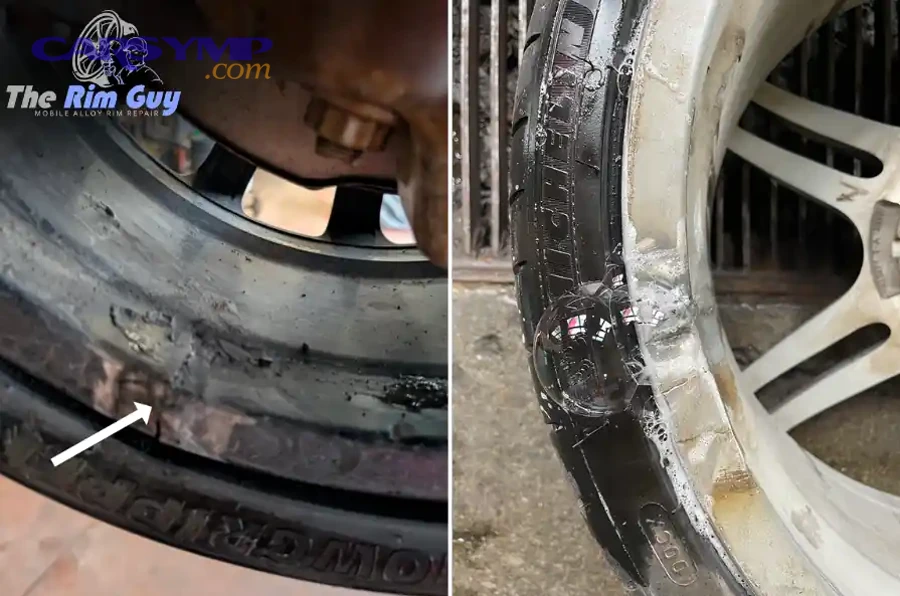
Post-repair testing procedures separate professional operations from budget shops cutting corners. The shop should describe a multi-step inspection process: visual examination of weld quality, leak testing using water immersion or soap solution, dial indicator measurement of runout in both radial and lateral directions, and computerized wheel balancing. If they can’t articulate a specific testing protocol or claim testing isn’t necessary, take your wheel elsewhere—untested repairs are fundamentally unsafe regardless of welding skill.
Documentation requests reveal shops’ confidence in their work and willingness to stand behind it. Professional operations maintain repair records documenting crack location and size, welding parameters used, test results, and technician identity. This documentation serves both quality control purposes and provides liability protection if failures occur. Shops refusing to provide written documentation likely lack confidence in their repair quality or want to avoid accountability for failures.
Warranty terms demonstrate shop confidence most clearly. A reputable wheel repair operation should offer at minimum a 30-day warranty against weld failure, with some offering 90 days or even one year. The warranty should specifically cover weld integrity failure, not exclude reasonable use scenarios, and provide clear remedies if failure occurs. Shops offering no warranty or extremely limited terms essentially admit they can’t guarantee their repairs will hold—a clear signal to seek service elsewhere.
Additional questions can provide further insight: “Have you refused to weld any wheels this week, and why?” tests whether they apply safety judgment rather than welding everything regardless of safety. “Can I see examples of previous repair work?” reveals actual quality standards. “What types of damage are not weldable?” demonstrates understanding of repair limitations. Shops that claim they can weld anything or have never refused a job likely prioritize revenue over safety.
When Should You Replace Instead of Weld a Damaged Wheel?
You should replace instead of weld a damaged wheel when cracks appear in critical structural zones like lug holes or spoke junctions, multiple cracks exist indicating widespread stress damage, crack length exceeds 25% of the wheel’s circumference, the wheel has been previously welded creating cumulative weakness, severe corrosion or porosity compromises base material, or heat distortion from previous repairs has already altered wheel geometry beyond acceptable tolerances.
The replacement decision involves weighing multiple safety and economic factors. Let’s examine how these repairs compare and which damage types exceed safe repair limits.
Welding vs. Replacement – Which is Safer?
Replacement is definitively safer than welding because a new wheel provides 100% of original design strength with no heat-affected zones, maintains perfect dimensional accuracy ensuring proper tire seating and vehicle control, comes with manufacturer warranty against defects, and carries no cumulative damage from previous impacts or repairs that could compromise long-term reliability.
The safety comparison breaks down across several critical dimensions. Here’s a comprehensive comparison table showing how welding and replacement differ:
| Safety Factor | Welded Repair | New Wheel Replacement |
|---|---|---|
| Structural Strength | Reduced ~50% in heat-affected zone | 100% of original design strength |
| Long-term Reliability | Unknown; depends on weld quality and hidden damage | Predictable based on OEM specifications |
| Dimensional Accuracy | Compromised by heat distortion; may not meet tolerances | Perfect within manufacturing tolerances |
| Failure Predictability | Unpredictable; micro-cracks and fatigue make timing uncertain | Predictable wear patterns following normal service life |
| Warranty Coverage | Limited or none; typically 30-90 days on weld only | Full manufacturer warranty; typically 1-3 years |
| Load Rating Verification | Cannot be verified post-repair; assumed maintained | Certified and labeled with load capacity |
| Cost (Initial) | $150-$300 per wheel | $300-$1,500+ per wheel depending on vehicle |
| Cost (Long-term) | Potential for repeat failures, secondary damage to suspension | No additional costs beyond normal maintenance |
| Insurance Implications | May void coverage if failure causes accident | Maintains full coverage |
| Resale Value Impact | Reduces value; repaired wheels disclosed | Maintains value with OEM wheels |
The strength differential represents the fundamental safety distinction. Even perfectly executed welds create permanent weak zones that cannot be eliminated. New wheels provide uniform strength throughout their structure, distributing stress as engineers intended. This means replacement wheels handle impact loads, potholes, and normal driving stresses with significantly greater safety margins compared to repaired wheels operating with degraded capacity.
Reliability predictability matters because welded wheels introduce uncertainty into maintenance planning. An undamaged wheel follows known wear patterns, allowing scheduled replacement based on age, mileage, or condition. Welded wheels may fail suddenly without warning due to crack propagation, weld defects, or fatigue—creating unpredictable safety risks that require constant vigilance and create anxiety about wheel integrity.
Insurance and liability considerations increasingly favor replacement. Some insurance policies explicitly exclude coverage for accidents caused by repaired wheels, viewing welding as an owner modification that alters the vehicle from manufacturer specifications. If a welded wheel fails and causes an accident, the vehicle owner may face denied claims and potential personal liability if injuries occur. Replacement wheels maintain full insurance coverage and shift liability to the wheel manufacturer.
Cost analysis must include long-term factors beyond initial repair expense. While welding appears dramatically cheaper initially ($200 vs. $800 for a premium wheel), failed welds require complete replacement anyway, meaning the repair cost was wasted. Additionally, failed welds can damage suspension components when wheels collapse or separate, adding hundreds or thousands of dollars in secondary repairs. When considering total cost of ownership including failure risk, replacement often proves more economical than gambling on repair longevity.
What Types of Wheel Damage Are Too Severe to Weld?
Wheel damage too severe to weld safely includes multiple cracks in the same wheel indicating widespread structural failure, cracks exceeding one inch in length suggesting excessive stress damage, any crack involving lug holes or spoke junctions where maximum strength is critical, previously welded wheels requiring re-repair showing cumulative weakness, severe corrosion or pitting that compromises base material integrity, and impact damage that bent or warped the wheel beyond 2mm of runout.
Multiple cracks signal that the wheel experienced catastrophic stress overload that damaged its entire structure, not just one localized area. When two or more cracks appear, this indicates stress waves from the impact event exceeded the wheel’s design limits across a wide area, creating numerous failure initiation points. Welding addresses only the visible crack locations while leaving the overall structure in an overstressed, damaged condition prone to developing additional cracks in new locations.
Crack length correlates directly with stress severity and repair feasibility. Industry guidelines suggest cracks under 1 inch (25mm) in non-critical areas may be weldable by skilled technicians, while longer cracks indicate more severe damage that compromised larger structural areas. Cracks exceeding 1 inch also require more extensive welding with correspondingly larger heat-affected zones, greater distortion risk, and higher probability of introducing additional weaknesses through the repair process itself.
Bent rim symptoms such as persistent vibration even after balancing, visible wheel wobble when rotating, or measurement showing radial or lateral runout exceeding 2mm indicate plastic deformation of the wheel structure. This bending creates work-hardening in some areas and residual stresses throughout the structure that predispose it to cracking. Attempting to weld bent wheels compounds problems because the underlying geometry issues remain even after crack repair, ensuring continued stress concentration and eventual failure.
When to replace tire after rim damage depends on impact severity. If rim damage caused tire sidewall damage, bulging, or tread separation, the tire must be replaced immediately regardless of tread depth remaining. Even if the tire appears visually intact, severe rim impacts can damage the tire’s internal structure through compression against the road surface, creating weak points that will fail unpredictably. Professional tire inspection using shearography or other advanced techniques may be warranted after significant rim damage events.
What Are Safer Alternatives to Traditional Wheel Welding?
Safer alternatives to traditional wheel welding include cold-spray aluminum repair which deposits metal particles at high velocity without melting, achieving better material properties than fusion welding; epoxy-based composite repairs for small cracks in low-stress areas; professional wheel straightening without welding for bent rims with no cracks; and ultimately wheel replacement which eliminates all repair-related risks by restoring 100% of original manufacturer specifications and safety margins.
These alternatives address different damage scenarios and offer varying levels of safety improvement over traditional welding. Let’s examine each option’s capabilities and limitations.
How Does Cold-Spray Aluminum Repair Compare to Welding?
Cold-spray aluminum repair outperforms traditional welding by depositing metal particles at supersonic velocities (500-1200 meters per second) below aluminum’s melting point, creating metallurgical bonds without heat-affected zones, maintaining parent material strength properties, producing minimal distortion due to low process temperatures typically under 200°F, and achieving repair strength approaching 90% of base material compared to welding’s 50% degradation.
The cold-spray process fundamentally differs from fusion welding. Instead of melting metal with heat, cold-spray equipment accelerates fine aluminum powder particles to extremely high velocities using compressed gas in a specially designed nozzle. When these particles impact the wheel surface at supersonic speeds, their kinetic energy creates intense local pressure and temperature at the particle-base metal interface—sufficient to create metallurgical bonding through solid-state diffusion without melting either the particles or the base wheel material.
This solid-state bonding mechanism preserves the base metal’s heat treatment and microstructure. The wheel material outside the immediate deposit area experiences minimal temperature rise, avoiding the strength-degrading T6-to-T0 transformation that plagues fusion welding. The deposited material itself achieves relatively high density and strength because the particle impact creates mechanical interlocking and true atomic bonding at interfaces.
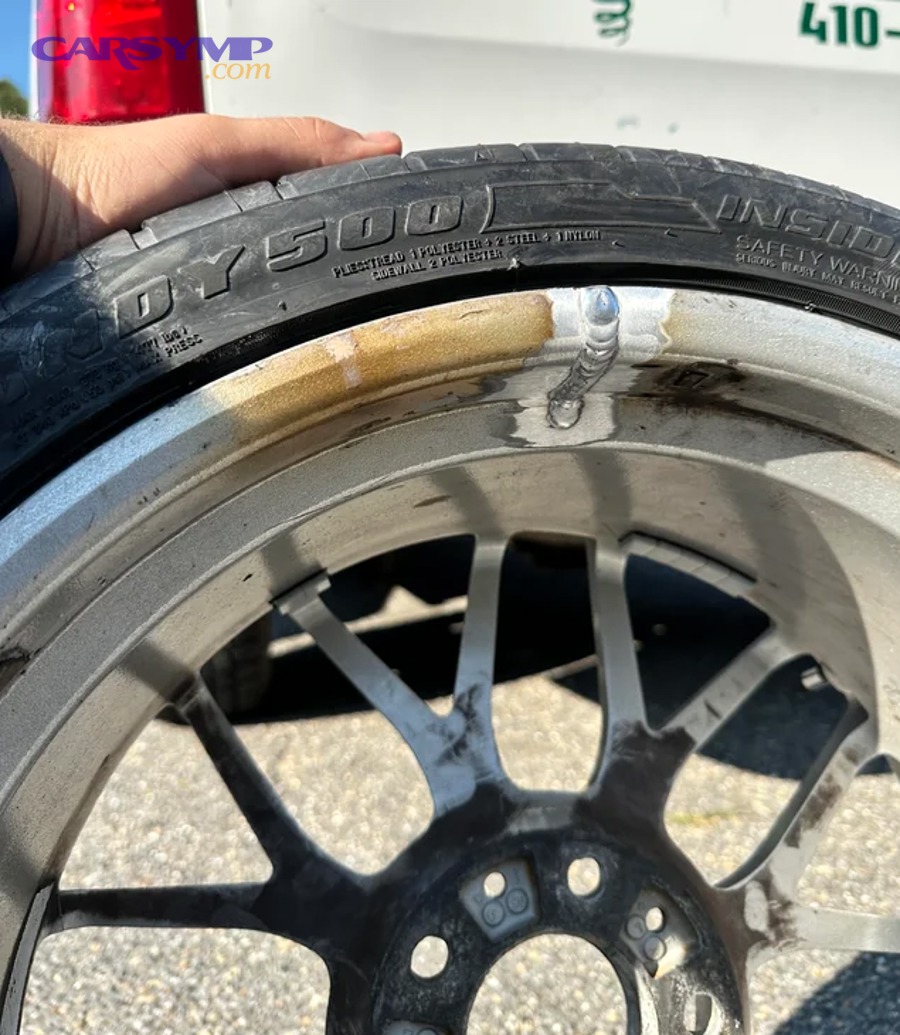
Material properties in cold-spray repairs measure significantly better than fusion welds. Testing shows cold-spray aluminum deposits achieve tensile strengths of 25,000-30,000 PSI compared to parent T6 material at 35,000 PSI and heat-affected zone material at only 15,000-18,000 PSI. This means cold-spray repairs retain approximately 70-85% of original strength versus welding’s 40-50% retention. The improvement directly translates to higher safety margins and longer fatigue life.
Distortion reduction represents another major advantage. Because process temperatures remain below 200°F—compared to welding’s 1,200°F+—thermal stresses and associated warping are minimal. Cold-spray repaired wheels typically show runout changes under 0.5mm, well within acceptable tolerances, while welded wheels frequently require extensive straightening to bring runout back to acceptable levels. This dimensional stability means cold-spray repairs need less post-process correction and maintain more predictable geometry.
Cost and availability limitations restrict cold-spray applications. The equipment costs hundreds of thousands of dollars, limiting technology to specialized facilities rather than general wheel repair shops. Per-repair costs run higher than conventional welding—typically $400-$600 compared to $150-$300 for welding. Additionally, cold-spray works best on certain aluminum alloys and crack geometries; it’s not universally applicable to all wheel damage. These factors currently limit cold-spray to high-value wheels on performance or luxury vehicles where the safety and quality improvements justify premium pricing.
What is the Difference Between TIG and MIG Welding for Wheels?
TIG (Tungsten Inert Gas) welding for wheels provides superior control through separate heat source and filler material, allowing precise heat input management critical for thin aluminum sections, produces cleaner welds with less spatter and contamination, and achieves better penetration in tight crack geometries, while MIG (Metal Inert Gas) welding offers faster deposition rates through continuous wire feed but sacrifices control and often creates excessive heat input that increases distortion and heat-affected zone size.
The fundamental process distinction centers on how filler material is added. TIG welding uses a non-consumable tungsten electrode that creates the welding arc while the operator separately feeds filler rod into the weld pool, providing independent control over heat input (controlled by arc current) and material deposition (controlled by filler rod feed). This separation allows extremely fine control, essential when welding thin-wall aluminum wheel sections that can easily burn through with excessive heat or suffer incomplete penetration with insufficient heat.
MIG welding combines the electrode and filler material in a continuously fed consumable wire that simultaneously provides the arc and supplies filler material. This integration increases deposition rates dramatically—MIG can lay down weld material 3-4 times faster than TIG. However, this speed comes at the cost of control. The operator cannot independently adjust heat input versus material deposition, making it difficult to optimize parameters for varying crack depths, wall thickness transitions, and heat-sensitive aluminum alloys.
Weld quality characteristics differ significantly between processes. TIG produces extremely clean welds because the inert argon shielding gas provides excellent protection from atmospheric contamination, and the process generates minimal spatter or fumes. The weld bead appears smooth and uniform with excellent fusion to base metal. MIG welding, while improved with modern equipment, typically produces more spatter, may trap shielding gas porosity if parameters aren’t optimized, and creates coarser weld beads requiring more grinding and finishing to achieve acceptable surface quality.
Heat control implications for aluminum alloy wheels make TIG the strongly preferred choice despite its slower speed. Aluminum’s high thermal conductivity means heat spreads rapidly through the wheel structure, potentially creating large heat-affected zones if not carefully managed. TIG’s independent heat control allows welders to use minimum necessary heat input, confining thermal damage to smaller areas. MIG’s higher heat input and continuous operation mode typically create larger heat-affected zones with correspondingly greater strength degradation and distortion.
Professional wheel repair facilities universally choose TIG for aluminum wheel welding despite the speed penalty because quality and safety requirements outweigh productivity concerns. The superior control, cleaner welds, and better heat management justify the additional time required. MIG welding finds application primarily on steel wheels where aluminum’s heat sensitivity issues don’t apply and faster repair times provide economic benefits without compromising quality.
Can Non-Destructive Testing Guarantee Welded Wheel Safety?
No, non-destructive testing cannot absolutely guarantee welded wheel safety, but it significantly increases confidence by detecting internal voids, incomplete penetration, and subsurface cracks invisible to visual inspection, with methods including dye penetrant inspection revealing surface-breaking defects, radiography (X-ray) exposing internal porosity and lack of fusion, ultrasonic testing measuring through-thickness soundness, and eddy current detection of surface and near-surface cracks, though even comprehensive testing cannot predict long-term fatigue life or detect micro-damage below detection thresholds.
Dye penetrant inspection represents the most accessible and widely used non-destructive method for welded wheels. The process involves applying a brightly colored or fluorescent liquid that penetrates into any surface-breaking defects through capillary action. After allowing penetration time, excess dye is removed from the surface, then a developer is applied that draws the penetrated dye back out of defects, creating visible indications. This method excels at finding tight cracks, porosity, and incomplete fusion areas where the crack breaks the surface, but it cannot detect subsurface defects or predict whether the weld will withstand long-term cyclic loading.
Radiographic inspection (X-ray) provides the most comprehensive internal examination, revealing porosity, inclusions, lack of penetration, and internal cracks throughout the weld volume. X-ray energy passes through the wheel and weld, creating an image on film or digital detector where defects appear as light or dark areas depending on their density relative to surrounding material. This method catches internal flaws that other techniques miss, but it requires expensive equipment, radiation safety protocols, and trained technicians to interpret results. Few wheel repair shops invest in radiographic capability due to these barriers.
Ultrasonic testing uses high-frequency sound waves transmitted through the weld to detect internal discontinuities. When sound encounters a void, crack, or interface, some energy reflects back to the transducer while the remainder continues through the material. Analysis of these reflections reveals defect location, size, and character. Ultrasonic testing works well for detecting lack of fusion and subsurface porosity in welds, but it requires significant operator skill and doesn’t work well on complex geometries or thin sections common in wheel construction.
Despite testing capabilities, fundamental limitations prevent absolute safety guarantees. No testing method reliably predicts fatigue life—the number of stress cycles a welded wheel will survive before fatigue crack initiation and propagation lead to failure. A weld may pass all non-destructive tests immediately after repair yet develop fatigue cracks after months of service due to cyclic loading. Additionally, all testing methods have detection limits below which defects escape detection. Micro-voids or micro-cracks smaller than these limits may still serve as fatigue crack initiation sites even in “passed” welds.
The practical testing approach in professional wheel repair typically involves visual inspection and leak testing as minimum requirements, with dye penetrant added for high-value or critical repairs. Radiographic and ultrasonic testing remain rare due to cost, available only at specialized facilities repairing racing wheels or extremely valuable classic car wheels where testing costs are justified. Even with comprehensive testing, welded wheels carry inherently higher failure risk than unwelded wheels due to the heat-affected zone weakness that no amount of testing can eliminate.
How Do Insurance and Legal Regulations Apply to Welded Wheels?
Insurance and legal regulations for welded wheels vary significantly by jurisdiction, with some regions requiring certification of wheel repairs and inspecting repaired wheels during safety inspections, insurance policies often excluding coverage for accidents caused by non-OEM wheel modifications including repairs, legal liability potentially falling on repair shops if improper welding causes accidents, and increasing regulatory scrutiny of wheel repair practices as authorities recognize safety risks from poor-quality repairs.
Insurance coverage complications arise because welded wheels represent modifications to the vehicle’s original equipment manufacturer (OEM) specifications. Some insurance policies explicitly exclude coverage for any damage caused by non-factory modifications, which could include welded wheels if the insurer determines the repair contributed to an accident. For example, if a welded wheel fails causing loss of control and a collision, the insurer might deny the claim arguing the owner assumed liability by choosing to weld rather than replace the damaged wheel.
Liability considerations create significant legal exposure for both repair shops and vehicle owners. If a wheel repair shop welds a wheel improperly and that weld fails causing an accident with injuries or deaths, the shop faces potential lawsuits for negligence, product liability, or even criminal charges in severe cases. The shop’s liability insurance may not cover claims if investigators determine the shop welded a wheel they should have rejected as unrepairable, or if they failed to follow industry standards for testing and quality assurance.
Vehicle owners also carry liability when operating vehicles with welded wheels. If an owner chooses to weld a wheel against professional advice, or uses an unqualified shop to save money, they assume responsibility for consequences if that wheel fails. In fault-based insurance systems, this could mean the owner bears financial responsibility for accidents they cause due to weld failure, potentially facing personal bankruptcy if injuries or property damage exceed their insurance coverage limits.
Regulatory frameworks differ dramatically between countries and even between regions within countries. The European Union generally maintains stricter wheel repair standards than the United States, with some EU nations requiring specific certifications for wheel repair operations and periodic inspection of repaired wheels during mandatory vehicle safety inspections (MOT in UK, TÜV in Germany). These inspection systems can flag poorly repaired wheels and require replacement before allowing the vehicle back on public roads.
United States regulations vary by state, with most states having minimal specific regulations for wheel repair beyond general automotive repair business licensing requirements. However, Federal Motor Vehicle Safety Standards (FMVSS) technically apply, and wheel failures causing accidents can trigger National Highway Traffic Safety Administration (NHTSA) investigations if patterns emerge. Some states require disclosure of material modifications including major wheel repairs when selling vehicles, creating additional compliance burdens for sellers with welded wheels.
The regulatory trend moves toward increased scrutiny as government authorities recognize wheel repair safety implications. Recent years have seen several jurisdictions implement or propose new regulations requiring wheel repair certification, mandatory testing protocols, and repair documentation that must accompany the vehicle throughout its service life. These regulations respond to accident investigations that revealed poor-quality wheel repairs as contributing factors, though comprehensive regulation remains inconsistent across most regions.
This comprehensive exploration of welded wheel repair safety risks reveals the complex considerations drivers face when choosing between repair and replacement. The seven critical risks—structural weakness, heat distortion, poor-quality welds, aluminum strength degradation, micro-crack propagation, repairs in critical zones, and inadequate testing—represent distinct failure modes that compound each other when multiple risks appear simultaneously. While professional welding can successfully repair some wheel damage under specific circumstances, the fundamental metallurgical limitations of heat-based joining processes create permanent weaknesses that never fully restore original wheel integrity.
The decision framework requires honest assessment of crack location, damage severity, repair shop capabilities, and personal risk tolerance balanced against economic considerations. When cracks appear in critical structural zones, exceed safe size limits, or occur in wheels with previous repairs or severe impacts, replacement eliminates uncertainty and provides predictable, reliable safety margins. For small cracks in non-critical areas repaired by certified professionals using proper techniques and comprehensive testing, welding may provide acceptable service life at significantly lower cost than replacement.
Emerging alternatives like cold-spray repair technology offer promising improvements over traditional fusion welding, though limited availability and higher costs currently restrict their application to specialized facilities and high-value wheels. As these technologies mature and become more accessible, they may shift the repair-versus-replace equation for moderate damage cases that currently present difficult decisions. Until then, drivers must carefully weigh the seven critical safety risks against their specific circumstances, ultimately recognizing that new wheel replacement remains the only option that truly eliminates all repair-related failure risks and restores complete manufacturer-certified safety margins.