


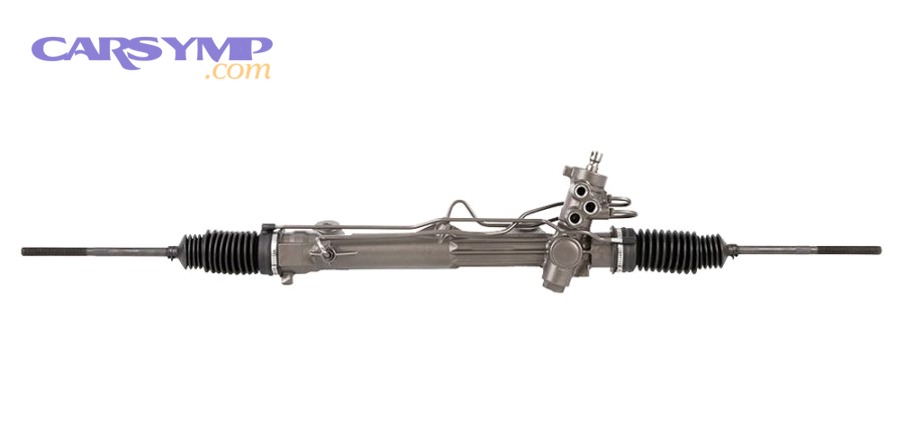
Steering rack replacement typically takes between 3 to 8 hours of labor, depending on your vehicle type, steering system design, and the complexity of accessibility to the rack assembly. Most compact sedans require 3-4 hours, mid-size SUVs need 4-6 hours, while luxury European vehicles often demand 6-8+ hours due to subframe removal requirements and electronic calibration needs. This timeframe directly impacts your total repair cost, as labor charges represent the largest portion of steering rack replacement expenses.
Understanding how labor time varies by vehicle category helps you evaluate repair quotes accurately and avoid overcharges. Different makes and models present unique challenges during steering rack work—front-wheel-drive compact cars typically offer easier access to the steering assembly, while all-wheel-drive luxury vehicles may require extensive disassembly of suspension components, engine mounts, or even the front subframe. Mechanics use “book time” as a standardized estimate, but actual hours can fluctuate based on vehicle condition, rust, and technician experience.
Several critical factors influence the final labor duration beyond just vehicle type. The steering system itself—whether hydraulic power steering or modern electric power steering (EPS)—affects replacement complexity, with EPS systems requiring additional time for steering angle sensor calibration and electronic programming. Vehicle age and maintenance history also play significant roles, as corroded fasteners, seized bolts, and previous accident damage can add 1-4 hours to the base estimate.
Calculating your total Steering rack repair cost estimate requires multiplying labor hours by your mechanic’s hourly rate, which varies significantly between independent shops ($80-120/hour), chain facilities ($100-150/hour), and dealerships ($125-200/hour). Below, we’ll break down exact labor hour ranges for specific vehicle categories, explain what drives these variations, and help you budget accurately for this essential steering system repair.
How Long Does It Take to Replace a Steering Rack?
Steering rack replacement takes an average of 3 to 8 hours, with most vehicles falling in the 4-5 hour range, plus an additional 1-1.5 hours for mandatory wheel alignment after installation. To better understand this timeframe, it’s essential to distinguish between “book time” estimates used for billing and the actual hours a technician spends on your specific vehicle.
What Is the Average Labor Time for Steering Rack Replacement?
The average labor time for steering rack replacement varies systematically by vehicle class and design complexity. Compact cars and standard sedans generally require 2-4 hours, as their simpler front-end architecture and more accessible engine bays allow mechanics to reach the steering rack without removing major components. Mid-size SUVs and pickup trucks typically demand 4-6 hours due to larger chassis dimensions, heavier components, and more complex suspension systems that must be partially disassembled.
Luxury and European vehicles represent the most time-intensive category, often requiring 5-8+ hours for complete replacement. These vehicles frequently incorporate integrated subframe designs where the steering rack mounts directly to a removable front subframe rather than the main chassis. This engineering approach requires mechanics to support the engine, disconnect multiple mounting points, and lower the entire subframe assembly—adding 2-4 hours to base labor time.
The table below illustrates specific labor hour ranges across common vehicle categories:
| Vehicle Category | Labor Hour Range | Typical Examples |
|---|---|---|
| Compact Cars | 2-4 hours | Honda Civic, Toyota Corolla, Mazda3 |
| Mid-Size Sedans | 3-4.5 hours | Honda Accord, Toyota Camry, Nissan Altima |
| SUVs & Crossovers | 4-6 hours | Toyota RAV4, Honda CR-V, Ford Explorer |
| Pickup Trucks | 4.5-6 hours | Ford F-150, Chevrolet Silverado, RAM 1500 |
| Luxury Vehicles | 5-8+ hours | BMW 3/5 Series, Mercedes C-Class, Audi A4 |
These estimates assume normal working conditions with a vehicle in average condition. However, regional factors like climate can significantly impact actual hours—vehicles from salt-belt states (Northeast and Midwest) often experience severe corrosion on steering components and fasteners, potentially adding 1-3 hours for penetrating oil treatment, seized bolt extraction, or broken stud removal.
What Is the Difference Between Book Time and Actual Labor Time?
Book time represents standardized labor estimates published in flat-rate manuals used throughout the automotive repair industry, while actual labor time reflects the real hours a technician spends completing your specific repair. Book time serves as a baseline for billing purposes, derived from manufacturer service guidelines and industry databases like Mitchell1, AllData, or Motor’s Labor Guide, which compile average completion times under ideal shop conditions.
The fundamental difference lies in variability. Book time for a Honda Accord steering rack might list 3.8 hours, providing a consistent billing standard regardless of which shop performs the work. Actual time, however, fluctuates based on vehicle condition, technician skill level, tool availability, and unexpected complications. An experienced dealership technician specializing in Honda vehicles might complete the same job in 3.2 hours using manufacturer-specific tools and procedures, while a general independent mechanic encountering rusted components might require 5.5 hours.
Several factors cause deviations between book and actual time:
- Vehicle condition: Rust, corrosion, and seized fasteners commonly add 0.5-2 hours beyond book time, especially in older vehicles or those exposed to road salt
- Previous repairs: Improper prior work, stripped threads, or non-standard components can add 1-3 hours for corrective measures
- Technician experience: ASE-certified specialists familiar with your vehicle make often work at or below book time, while less experienced mechanics may exceed it by 20-50%
- Tool availability: Specialized tools like power steering line disconnect tools, steering column locks, and proper lifting equipment reduce time, while improvising adds delays
Understanding this distinction matters when evaluating repair quotes. Shops typically charge based on book time even if actual completion is faster—this “flat-rate” system incentivizes efficiency and allows customers to know costs upfront. However, if complications arise, reputable shops communicate with customers before exceeding quoted hours. Always ask whether the estimate uses book time or actual anticipated time, particularly for older vehicles where condition unknowns increase likelihood of complications.
How Many Hours Does Steering Rack Replacement Take by Vehicle Type?
Steering rack replacement labor hours vary significantly across vehicle categories, ranging from 2-4 hours for compact sedans to 6-8+ hours for luxury European models, based primarily on steering system accessibility and chassis design complexity. To provide accurate estimates for your specific situation, let’s examine labor timeframes organized by vehicle classification and manufacturer.
How Long Does It Take for Sedans and Compact Cars?
Sedans and compact cars typically require 3-4 hours for steering rack replacement, making them the most economical vehicle category for this repair. Honda Civic models from 2006-2021 average 3.0-3.5 hours of labor, while the larger Honda Accord requires approximately 3.5-4.0 hours due to its more spacious engine bay that paradoxically creates more component overlap. Toyota Corolla and Camry models fall into similar ranges—3.0-4.0 hours and 3.5-4.5 hours respectively—reflecting Toyota’s generally accessible steering system design.
Ford Focus models, particularly 2012-2018 generations, present moderate complexity at 3-5 hours, as these vehicles use a mounted rack position that requires partial removal of the lower control arm assembly. Nissan Altima sedans average 3.5-4.0 hours, with the 2013-2018 generation being particularly straightforward due to improved service accessibility engineered into that platform.
These vehicles share several design characteristics that reduce labor time:
- Transverse engine mounting: Front-wheel-drive architecture places the engine sideways, positioning the steering rack in a more accessible location below the engine
- Minimal subframe interference: The rack typically bolts directly to the chassis or a simple crossmember, avoiding full subframe removal
- Standardized tie rod connections: Ball joint separators and tie rod tools work efficiently without special adapters
- Simpler hydraulic systems: Traditional power steering pumps and lines disconnect easily without complex electronic integration
The efficiency of sedan and compact car steering rack work allows many independent mechanics to complete the job in a single workday, reducing vehicle downtime and garage storage fees. This accessibility also makes these vehicles more suitable for advanced DIY mechanics, though professional Alignment needed after rack work remains essential.
How Long Does It Take for SUVs and Trucks?
SUVs and pickup trucks demand 4-6 hours for steering rack replacement, with the extended timeframe reflecting their heavier-duty components, larger chassis dimensions, and more complex suspension geometries. Ford F-150 trucks from 2009-2020 typically require 4.5-6.0 hours, as mechanics must navigate around larger frame rails, disconnect stabilizer bar links, and manage the vehicle’s greater ground clearance, which necessitates higher lift positioning and more extensive undercarriage work.
Toyota 4Runner and Tacoma models average 4.0-5.5 hours, with four-wheel-drive variants adding approximately 0.5-1.0 hour due to front differential positioning that limits rack access. The Tacoma’s particularly tight engine bay in 2016-2024 models has earned a reputation among technicians for difficult steering work, occasionally pushing labor toward the higher end of estimates.
Jeep Grand Cherokee models require 5-6 hours across most generations (2011-2023), as Chrysler’s design integrates the rack with closely positioned suspension components that must be partially disassembled. Chevrolet Silverado 1500 trucks fall in the 4.5-6.0 hour range, similar to F-150s, with crew cab long-bed configurations sometimes requiring additional time for technician positioning and tool access.

Key factors extending labor time for trucks and SUVs include:
- Weight and size: Steering racks for trucks weigh 15-25 pounds compared to 8-12 pounds for sedans, requiring two-person handling or mechanical support
- Ground clearance: Higher vehicle positioning requires more extensive lift usage and creates awkward working angles for technicians
- Frame-based construction: Body-on-frame trucks require working around substantial frame rails that limit access and tool positioning
- 4WD/AWD systems: Front differential housings and transfer case components create interference, necessitating additional removal steps
According to data from Mitchell1’s labor time database analyzed in 2024, full-size pickup trucks show the greatest variance in actual versus book time, with rust-belt vehicles averaging 1.8 hours above book time compared to just 0.4 hours for similar trucks in dry climates. This significant regional difference reflects the impact of corrosion on large, exposed fasteners and steering system components.
How Long Does It Take for Luxury and European Vehicles?
Luxury and European vehicles represent the most time-intensive category for steering rack replacement, typically requiring 5-8+ hours due to advanced engineering complexity, integrated subframe designs, and sophisticated electronic steering systems. BMW 3-Series models (2006-2023) average 5.5-7.0 hours, with the E90 generation (2006-2011) being particularly complex due to a bolt-through subframe mounting system that requires partial engine support and multiple precision alignment steps during reassembly.
Mercedes-Benz C-Class vehicles demand 6-8 hours across W204 (2008-2014) and W205 (2015-2021) generations, as Mercedes engineering integrates the steering rack with front suspension geometry in ways that require complete lower control arm disconnection and, in some cases, partial subframe lowering. The additional time also accounts for Mercedes’ use of one-time-use fasteners that must be replaced rather than reused, adding parts handling and precision torque procedures.
Audi A4 and A3 models require 5.0-6.5 hours on average, with Quattro all-wheel-drive variants adding approximately 1.0 hour for drivetrain component clearance. Audi’s longitudinal engine mounting (engine positioned front-to-back rather than sideways) creates a tighter working environment that limits technician access to rack mounting points. Volvo XC90 SUVs represent the upper end of complexity at 6-8 hours, particularly 2016-2024 models with integrated chassis dynamics systems that require electronic recalibration after rack installation.
The complexity drivers for luxury vehicles include:
- Subframe-integrated racks: The rack mounts to a removable aluminum subframe rather than directly to chassis, requiring engine support, subframe bolt removal (8-12 bolts), and precision realignment during installation
- Electronic power steering calibration: Modern luxury vehicles use EPS systems with steering angle sensors that must be zeroed using manufacturer-specific diagnostic software, adding 0.5-1.0 hour
- Aluminum construction: Lightweight materials require specific torque procedures and often use torque-to-yield bolts that stretch during installation and cannot be reused
- Advanced driver assistance systems: Lane-keeping assist, adaptive cruise, and parking assistance systems integrate with steering sensors, requiring post-installation calibration procedures
A 2023 study by the Automotive Service Association found that luxury vehicle steering rack replacements exceed book time estimates by an average of 22%, compared to just 8% for domestic sedans, primarily due to unexpected calibration requirements and specialty tool needs. Dealerships typically handle these vehicles more efficiently due to access to proprietary diagnostic equipment and technician familiarity with brand-specific procedures, though their higher labor rates ($150-200/hour) offset time savings.
What Factors Affect Steering Rack Replacement Labor Time?
Multiple variables affect steering rack replacement labor time beyond basic vehicle type, with the most significant factors being vehicle design architecture, steering system technology, overall vehicle condition, and technician expertise level. Understanding these variables helps explain why two seemingly similar vehicles might show different labor estimates and why your specific car may fall at either end of the typical time range.
Does Vehicle Design Impact Replacement Time?
Vehicle design fundamentally determines steering rack replacement complexity, with engine bay layout and rack mounting architecture serving as primary time determinants. Front-wheel-drive vehicles with transverse engine mounting (engine positioned sideways) typically provide superior steering rack access compared to rear-wheel-drive or all-wheel-drive configurations with longitudinal engine orientation. The transverse layout positions the rack directly behind the engine’s front face, allowing technicians to work from below without navigating around a transmission tunnel or driveshaft.
Subframe removal requirements represent the single largest design-related time addition, potentially adding 2-4 hours to base estimates. Vehicles engineered with integrated front subframes—common in Volkswagen, Audi, BMW, and Mercedes models—mount the steering rack, lower control arms, and sometimes the engine directly to a bolt-on subframe assembly. Replacing the rack requires supporting the engine with a jack or support fixture, removing 8-14 subframe mounting bolts, carefully lowering the subframe 6-10 inches while managing brake lines and wiring harnesses, then performing the rack replacement on the partially lowered subframe.

Suspension design also impacts labor duration significantly:
- MacPherson strut suspension: Allows relatively open access to the rack, as the strut tower design creates working space—adds minimal time
- Multi-link suspension: Creates a denser component arrangement with multiple control arms, toe links, and camber arms that may require disconnection—adds 0.5-1.5 hours
- Double wishbone suspension: Upper and lower control arms can obstruct rack access depending on configuration—adds 0.3-1.0 hour
Front-wheel-drive versus rear-wheel-drive configuration creates moderate time differences. FWD vehicles typically require 0.5-1.0 hour less labor because the rack sits in a more accessible position and lacks the front driveshaft tunnel present in RWD vehicles. However, this advantage reverses in performance vehicles where FWD systems use complex torque-vectoring differentials that create access obstacles.
Engine mounting orientation—transverse versus longitudinal—affects working space and tool access angles. Transverse engines create a wider, shallower engine bay that provides better rack visibility and allows technicians to work from multiple angles. Longitudinal engines create a longer, narrower bay that restricts access to mostly from below, limiting tool options and requiring more component removal to achieve necessary clearances.
Does the Type of Steering System Affect Labor Hours?
The steering system type significantly impacts replacement labor time, with electric power steering (EPS) systems generally requiring 0.5-1.5 hours more than traditional hydraulic power steering due to electronic calibration requirements. Hydraulic power steering represents the simpler, traditional approach found in most vehicles manufactured before 2010 and still used in many trucks and commercial vehicles. These systems use engine-driven pumps, high-pressure hoses, and hydraulic fluid to assist steering, requiring mechanics to disconnect pressure and return lines, drain fluid, and reconnect plumbing during rack replacement—a straightforward mechanical process that adds minimal time.
Electric power steering eliminates hydraulic components entirely, using electric motors integrated into either the steering column (column-assist EPS) or the rack assembly itself (rack-assist EPS). Modern vehicles from 2015-onward predominantly use EPS for improved fuel efficiency and advanced driver assistance system integration. While EPS rack replacement eliminates fluid line work, saving approximately 15-20 minutes, it introduces mandatory electronic calibration procedures that more than offset this benefit.
EPS calibration requirements include:
- Steering angle sensor (SAS) zeroing: The vehicle’s electronic stability control system must learn the new rack’s center position, requiring a diagnostic scan tool to perform a specific initialization procedure—adds 20-40 minutes
- Power steering control module programming: Some vehicles require the steering control unit to relearn assist characteristics and torque mapping—adds 15-30 minutes
- Advanced driver assistance system (ADAS) recalibration: Lane-keeping assist, adaptive cruise control, and automated parking features rely on precise steering angle data and may require recalibration—adds 30-60 minutes depending on systems present
Manual steering systems, now extremely rare and found only in stripped-down commercial vehicles or very old cars, require the least time for replacement. Without power assist components of any kind, manual rack replacement involves purely mechanical bolt-removal and reinstallation, typically reducing labor by 0.5-1.0 hour compared to hydraulic systems. However, the manual steering rack itself usually weighs more due to different internal gear ratios, partially offsetting the time savings with more difficult handling.
Electronic stability control integration creates an additional layer of complexity in vehicles manufactured after 2012, when ESC became federally mandated in the United States. The steering angle sensor feeds critical data to ESC systems, anti-lock brakes, and traction control. After rack replacement, these systems may store fault codes or enter reduced-functionality modes until proper calibration confirms sensor accuracy. Clearing these faults and verifying system operation adds 10-20 minutes to the final checkout process.
According to the Automotive Service Association’s 2024 technical bulletin on steering system service, approximately 73% of vehicles currently in operation use electric power steering, and this proportion increases to over 90% for vehicles manufactured after 2018. This shift means most steering rack replacements now include mandatory electronic procedures that weren’t necessary a decade ago, contributing to gradually increasing labor time estimates across the industry.
How Does Vehicle Condition Affect Labor Time?
Vehicle condition represents one of the most variable factors in steering rack replacement labor time, with well-maintained vehicles from dry climates completing near book time while neglected or rust-belt vehicles potentially doubling base estimates. Rust and corrosion stand as the primary condition-related time extender, particularly affecting vehicles operated in regions using road salt for winter maintenance—the Northeast, Midwest, and mountainous areas where de-icing chemicals accelerate metal oxidation on chassis components, fasteners, and the rack assembly itself.
Seized bolts and corroded fasteners can add 0.5-2.0 hours to base labor estimates, as mechanics must apply penetrating oil, allow soaking time (sometimes overnight), use heat from oxy-acetylene torches to break corrosion bonds, or drill out completely seized fasteners and re-tap threads. The tie rod end castle nuts, rack mounting bolts, and steering column coupling pinch bolt are particularly susceptible to corrosion-related seizure. In severe cases, mechanics may need to cut bolts with an angle grinder or plasma cutter and replace them with new hardware, adding both time and parts cost.
Previous accident damage creates unpredictable complications that can add 1-4 hours beyond standard estimates. Even if the steering rack itself wasn’t damaged in a collision, impacts affecting the front-end structure may have shifted mounting points, bent subframe components, or stressed fasteners beyond their designed tolerances. Mechanics encountering accident-related complications often discover:
- Misaligned mounting holes: Frame damage shifts bolt hole positions by millimeters, requiring elongation or repositioning
- Stressed threads: Previous over-torquing or impact loads strip or cross-thread bolt holes, necessitating thread repair inserts like Helicoils
- Aftermarket modifications: Non-standard suspension components, lift kits, or performance modifications require adaptation of standard procedures
Regular maintenance history significantly influences condition-related time additions. Vehicles with documented power steering fluid changes every 30,000-50,000 miles typically show minimal internal rack wear and clean hydraulic components that disconnect easily. Conversely, vehicles that have never had fluid service may show degraded seals, contaminated fluid that has damaged rack internals, and corroded fitting threads on pressure lines—complications that extend labor time through stuck connections and increased likelihood of breaking fragile components during removal.
Age-related rubber deterioration affects multiple components involved in rack replacement. The tie rod dust boots, rack bellows (protective boots covering the rack ends), and steering column coupler bushings all use rubber or synthetic compounds that harden and crack over 10-15 years. Degraded boots often tear during disassembly, and while they should be replaced anyway, the fragments create cleanup work and potential contamination of the new rack. Hardened steering column coupler bushings may require cutting or aggressive prying rather than simple bolt removal, adding 15-30 minutes to that step.
The geographic factor cannot be overstated for condition-related time variations. A comprehensive 2023 analysis by the National Institute for Automotive Service Excellence compared steering rack replacement times across regions and found that vehicles from salt-belt states averaged 4.8 hours for jobs booked at 3.5 hours, while identical procedures on southwestern vehicles averaged just 3.7 hours—a 30% time increase attributable primarily to corrosion complications.
Does Mechanic Experience Level Change the Time Required?
Mechanic experience level and specialization significantly affect actual steering rack replacement time, with skilled technicians often completing jobs at or below book time while less experienced mechanics may require 25-50% additional hours. ASE-certified technicians who specialize in suspension and steering systems bring accumulated knowledge of common complications, proper tool selection, and efficient sequences that streamline the replacement process. A master technician who has completed 50+ steering rack replacements develops muscle memory for fastener locations, proper support points for lowering subframes, and efficient routing of tie rods through suspension components.
Dealership specialists working on a single manufacturer’s vehicles gain brand-specific expertise that reduces time through familiarity with engineering quirks unique to that manufacturer. For example, a Honda dealership technician knows that 2016-2020 Civic racks require loosening specific engine mount bolts for clearance during removal—a detail that might cost a general mechanic 20 minutes of trial-and-error. Similarly, BMW specialists learn that certain 3-Series models require temporarily disconnecting a specific wiring harness clip to achieve necessary subframe lowering clearance—undocumented knowledge that saves significant time.
General independent mechanics working on diverse makes and models typically require book time or slightly above, adding approximately 0.5-1.5 hours for unfamiliar vehicles. These skilled professionals possess strong fundamental knowledge and can complete the work correctly, but lack the refined efficiency of specialists who perform the same procedure repeatedly on similar vehicles. The time difference primarily shows in reduced troubleshooting, fewer tool changes, and confidence in proper torque specifications without constant reference to service manuals.
DIY mechanics and first-time installers should expect 2-3 times book time for steering rack replacement, translating to 6-16 hours for jobs booked at 3-8 hours professionally. The dramatic time increase reflects multiple factors:
- Tool acquisition and familiarization: Locating and learning proper use of specialty tools like ball joint separators, torque wrenches, and rack installation aids
- Reference material consultation: Frequent stops to consult service manuals, online forums, and video tutorials for procedure verification
- Safety considerations: Extra time spent on proper vehicle support, jack placement, and double-checking critical fastener torque
- Learning curve: First encounters with seized fasteners, alignment challenges, or unexpected interference require problem-solving time
The quality-versus-speed trade-off deserves consideration. While experienced technicians work faster, rushing steering system work creates safety risks. Improperly torqued tie rod ends can separate during operation, causing complete loss of steering control. Incorrectly positioned steering column couplers may bind or disengage. Professional mechanics balance efficiency with thoroughness, performing critical safety checks that DIYers might overlook in their time estimates.
According to the Bureau of Labor Statistics’ 2024 Occupational Outlook report, automotive service technicians average 2-5 years to reach full proficiency in complex systems like steering and suspension, during which their efficiency steadily improves from 60% of expert speed to full competency. This data suggests that even among professionals, experience level creates meaningful time variations that customers should consider when comparing shop estimates—a newer technician’s lower labor rate may be offset by longer actual hours worked.
How Much Does Labor Cost for Steering Rack Replacement?
Steering rack replacement labor costs range from $240 to $1,600, calculated by multiplying labor hours (3-8 hours) by the shop’s hourly rate ($80-200/hour), with the final amount depending on vehicle complexity and shop type selection. Understanding this cost structure helps you budget accurately for this significant repair and evaluate whether quoted prices align with industry standards for your specific vehicle and location.
What Are Typical Labor Rates by Shop Type?
Labor rates for automotive repair vary substantially by shop type, with independent mechanics typically charging $80-120 per hour, chain repair facilities at $100-150 per hour, dealerships at $125-200 per hour, and mobile mechanics at $60-100 per hour. These rate differences reflect overhead costs, technician certification levels, warranty offerings, and facility capabilities rather than simple pricing discretion.
Independent mechanics operating small shops maintain lower overhead without corporate infrastructure costs, allowing competitive rates while often providing personalized service. Their $80-120/hour rates typically apply to well-established local businesses with ASE-certified technicians, appropriate insurance, and necessary diagnostic equipment. These shops often build customer relationships through consistent quality work and reasonable pricing, making them ideal for owners of mainstream vehicles seeking balance between cost and expertise.
Chain repair shops like Meineke, Firestone, or Pep Boys charge $100-150/hour, positioned between independent mechanics and dealerships. These facilities offer standardized procedures, corporate warranties that transfer between locations, and often run promotional pricing during slower periods. Their technician experience varies more widely than dealerships—some locations employ highly skilled veterans while others staff newer mechanics—but their systematic approach and purchasing power for parts can provide value for standard repairs.
Dealerships represent the premium option at $125-200/hour, with luxury brands commanding the highest rates. Mercedes-Benz, BMW, and Audi dealerships frequently charge $175-200/hour in metropolitan markets, while domestic brand dealerships (Ford, Chevrolet, Toyota) typically range $125-160/hour. The premium pricing reflects manufacturer-specific training, factory diagnostic equipment, direct access to engineering technical service bulletins, and genuine OEM parts usage. For complex vehicles requiring electronic calibration or specialized procedures, dealership expertise often justifies higher rates through reduced total time and correct first-time completion.
Mobile mechanics charging $60-100/hour represent an emerging alternative, particularly for repairs feasible in a driveway or parking lot. These technicians eliminate shop overhead entirely, passing savings to customers while offering convenience of on-site service. However, steering rack replacement presents challenges for mobile work—the job requires vehicle lifting, extensive tool access, and ideally a controlled environment. While possible, mobile steering rack service typically suits only simpler vehicles and may take longer due to working position limitations.
Geographic location significantly impacts rates within each shop category. Metropolitan areas with high costs of living see rates 20-40% above rural areas. For example, independent mechanics in San Francisco or New York City charge $110-140/hour while similar shops in smaller Midwest cities charge $70-95/hour. This geographic variance reflects local wage requirements, commercial rent costs, and regional market conditions rather than differing service quality.
The calculation formula remains consistent: Total Labor Cost = Labor Hours × Hourly Rate. For a 2018 Honda Accord requiring 4 hours book time:
- Independent shop: 4 hours × $100/hour = $400
- Chain facility: 4 hours × $125/hour = $500
- Dealership: 4 hours × $160/hour = $640
These calculations use book time as the billing basis. If actual time exceeds book time due to complications, reputable shops communicate with customers before exceeding the original estimate—an ethical standard codified in consumer protection laws in many states.
What Is the Total Labor Cost Range?
Total labor costs for steering rack replacement span from approximately $240 to $1,600 depending on vehicle type and shop selection, with most mainstream vehicles falling in the $400-750 range at independent shops or $600-1,000 at dealerships. To illustrate realistic scenarios across the cost spectrum, let’s examine specific examples organized by budget tier.
Budget scenario represents the minimum cost pathway using an independent mechanic for a straightforward compact car replacement. A 2015 Honda Civic requiring 3.0 hours book time at an independent shop charging $80/hour results in 3 × $80 = $240 labor cost. This scenario assumes no complications, normal vehicle condition, and a technician working efficiently on a familiar platform. Adding mandatory alignment ($100-150) brings total labor-related cost to $340-390. This represents best-case pricing available for steering rack work.
Mid-range scenario reflects typical costs for mainstream vehicles at established independent shops or chain facilities. A 2017 Toyota RAV4 requiring 4.5 hours at $120/hour yields 4.5 × $120 = $540 labor cost. Including alignment ($120-150) brings the total to $660-690. This mid-tier pricing applies to most sedan, crossover, and standard SUV repairs performed by competent technicians at fair market rates—the experience most customers encounter for this repair.
Premium scenario covers complex vehicles at dealerships with higher rates but specialized expertise. A 2019 BMW X3 requiring 6.5 hours at a dealership rate of $175/hour calculates to 6.5 × $175 = $1,137.50 labor cost. Adding alignment ($150-200) and required EPS calibration (often bundled) brings total labor to approximately $1,290-1,340. While expensive, this pricing reflects genuine value for vehicles where improper installation risks electronic system damage worth thousands in repairs.
The following table provides comprehensive cost examples across vehicle types and shop categories:
| Vehicle Example | Labor Hours | Independent ($100/hr) | Chain Shop ($125/hr) | Dealership ($160/hr) |
|---|---|---|---|---|
| 2016 Honda Civic | 3.0 hrs | $300 | $375 | $480 |
| 2018 Toyota Camry | 3.8 hrs | $380 | $475 | $608 |
| 2019 Ford F-150 | 5.0 hrs | $500 | $625 | $800 |
| 2017 Jeep Grand Cherokee | 5.5 hrs | $550 | $688 | $880 |
| 2020 Mercedes C-Class | 7.0 hrs | $700 | $875 | $1,120 |
| 2018 Audi A4 Quattro | 6.0 hrs | $600 | $750 | $960 |
Note: Add $100-200 for mandatory post-installation alignment
Regional cost variations create additional ranges within these scenarios. California and Northeast metropolitan areas typically show 15-25% higher labor costs than national averages, while Southern and rural markets often fall 10-20% below average. A steering rack job costing $600 in Nashville might run $750 in Boston for identical work, purely due to geographic market differences.
Hidden labor costs occasionally surprise customers unprepared for necessary related work discovered during rack replacement. Common additions include:
- Tie rod end replacement: If outer tie rod ends show wear, replacement adds $80-150 labor
- Steering fluid flush: Full system flush adds $60-100 labor
- Seized fastener extraction: Broken or stripped bolts add $50-150 depending on severity
- Extended rust penetration time: Overnight soaking for severe corrosion may add facility fee of $25-50
Smart cost management involves requesting detailed written estimates that itemize labor hours, hourly rate, and included services. Comparing three quotes from different shop types provides market calibration—if one estimate dramatically exceeds others without clear justification (specialty tools, unique expertise), it likely represents overpricing. Conversely, suspiciously low quotes may indicate inexperience or plans to add charges during work.
According to the Automotive Aftermarket Suppliers Association’s 2024 consumer survey, steering rack replacement ranks among the top ten most expensive single-component repairs, with average total costs (parts plus labor) of $1,200-1,800. Labor typically represents 40-60% of this total, emphasizing the importance of understanding and negotiating reasonable hourly rates for your specific vehicle and market.
Is Alignment Included in Steering Rack Replacement Time?
No, wheel alignment is not included in standard steering rack replacement labor time estimates, requiring an additional 1-1.5 hours and $75-200 beyond base rack installation costs. This separation exists because alignment represents a distinct service using specialized equipment and procedures performed after mechanical installation completes, making it a separately billable item that customers must budget for as part of total steering rack repair costs.
How Long Does Wheel Alignment Take After Steering Rack Replacement?
Wheel alignment after steering rack replacement typically requires 1-1.5 hours, with four-wheel alignment taking the full timeframe and front-only two-wheel alignment requiring 0.5-1 hour in most cases. However, two-wheel alignment proves inadequate for modern vehicles—most manufacturers specify four-wheel alignment as mandatory after any steering or suspension work to ensure all geometric relationships meet factory specifications.
The alignment process involves positioning the vehicle on a specialized rack equipped with sensors attached to all four wheels. These sensors communicate with computerized alignment equipment that measures three critical angles: camber (wheel tilt viewed from front), caster (steering axis angle viewed from side), and toe (wheel pointing angle viewed from above). The technician compares measured values against manufacturer specifications stored in the alignment machine’s database, then adjusts suspension components to bring all measurements within acceptable ranges.
Four-wheel alignment necessity stems from modern vehicle engineering that links front and rear suspension geometry. Even though steering rack work only directly affects front toe settings (changed when tie rods are disconnected and reconnected), conscientious shops verify all four corners to ensure the vehicle tracks straight and wears tires evenly. Rear toe and camber problems often go unnoticed until discovered during comprehensive alignment following front-end work.
Steering rack replacement specifically affects alignment because removing and installing tie rods changes toe settings with absolute certainty. The outer tie rod ends thread onto the inner tie rod assemblies emerging from each rack end, and their precise threaded position determines how much the wheel points inward or outward. Even if mechanics carefully count threads during removal and match position during installation, manufacturing tolerances in the new rack mean toe will differ from pre-replacement settings. Driving even short distances with incorrect toe causes rapid tire wear—potentially damaging $600-1,000 worth of tires in just a few hundred miles.
Alignment costs vary by shop type and service level:
- Two-wheel alignment: $50-100 (inadequate after rack replacement, not recommended)
- Four-wheel alignment: $100-150 at chain shops
- Four-wheel alignment: $125-200 at dealerships
- Precision alignment with full adjustability: $150-250 at specialty performance shops
Some shops offer lifetime alignment programs where customers pay $150-250 upfront for unlimited alignments as long as they own the vehicle. For customers facing steering rack replacement, purchasing such a program simultaneously makes financial sense if planning to keep the vehicle several more years—the rack replacement alignment plus one future alignment recovers the program cost.
Post-installation test drives verify alignment quality and steering feel. After completing alignment, technicians should road test the vehicle at 30-50 mph on a straight, level road, briefly releasing the steering wheel to confirm the vehicle tracks straight without pulling left or right. The steering wheel should sit centered within a few degrees when driving straight, and steering effort should feel balanced during left and right turns.
Skipping alignment after steering rack replacement creates multiple problems: rapid inside or outside edge tire wear (if toe is incorrect), vehicle pulling to one side during driving (if side-to-side camber differs excessively), and off-center steering wheel position (if total toe is correct but left-right distribution is unequal). Any reputable shop will refuse to return a vehicle after rack replacement without performing alignment, as the safety and tire wear implications create liability concerns.
According to the Tire Industry Association’s 2023 service standards publication, steering rack replacement creates a “mandatory alignment condition” where shops performing the work bear professional responsibility for ensuring proper alignment before customer delivery. This industry standard protects both consumers and repair facilities by establishing clear expectations that alignment constitutes an integral part of complete steering rack service rather than an optional add-on.
What Additional Considerations Affect Steering Rack Replacement?
Several specialized factors beyond basic labor time significantly impact steering rack replacement complexity, cost, and necessary procedures, including electric power steering calibration requirements, all-wheel-drive system interference, subframe removal necessities, and climate-related corrosion complications. Understanding these additional considerations helps you anticipate potential complications specific to your vehicle and avoid surprise charges during the repair process.
How Does Electric Power Steering (EPS) Calibration Add Time?
Electric power steering calibration adds 0.5-1.5 hours to steering rack replacement labor time, as modern EPS systems require electronic relearning procedures that older hydraulic systems did not need. The steering angle sensor (SAS) calibration represents the most critical step, requiring 30-60 minutes using manufacturer-specific diagnostic scan tools to establish the new rack’s center position as the reference point for vehicle stability control, traction control, and advanced driver assistance systems.
The calibration process follows a specific sequence that varies by manufacturer but generally includes: placing the vehicle on level ground with wheels pointed straight ahead, accessing the steering control module through the OBD-II diagnostic port, commanding the module to enter learning mode, rotating the steering wheel slowly to full lock in each direction while the system maps sensor values, then returning to center to establish the zero-degree reference point. This procedure cannot be rushed—the system requires slow, deliberate movements to accurately map the full steering range and identify any sensor irregularities.
Electronic control module programming represents a secondary calibration need in some vehicles, adding 15-45 minutes depending on system complexity. Vehicles with variable-ratio power steering, which adjusts assist levels based on vehicle speed and driving conditions, may need to relearn baseline assist characteristics after rack replacement. The new rack’s internal resistance profile differs slightly from the old unit due to manufacturing tolerances, and the control module must map these characteristics to provide smooth, consistent steering feel.
Advanced driver assistance system (ADAS) integration creates the most time-intensive calibration requirements, potentially adding 30-90 minutes beyond basic SAS zeroing. Lane-keeping assist systems use steering angle data as a primary input to determine whether the vehicle is following lane markings correctly. After rack replacement, these systems may require static calibration (performed with vehicle stationary using specific target boards positioned around the car) or dynamic calibration (performed during a test drive on marked roads meeting specific criteria). The complexity and time requirements increase with each additional ADAS feature—adaptive cruise control, automated parking, and collision avoidance systems all rely on precise steering angle information.
Failure to perform proper EPS calibration creates several problems:
- Warning lights: Check engine, stability control, and power steering warning lights illuminate on the dashboard
- Reduced functionality: ADAS features enter limp mode or disable entirely until calibration completes
- Incorrect assist: Power steering may provide too much or too little assistance, particularly at highway speeds
- Safety system malfunction: Electronic stability control may intervene inappropriately during normal driving
The calibration requirement affects vehicle selection for DIY mechanics—older vehicles with hydraulic power steering remain more accessible to home mechanics, while modern EPS vehicles essentially require professional service with appropriate diagnostic equipment. Consumer-grade OBD-II scanners rarely include manufacturer-specific calibration procedures, and aftermarket professional scan tools like Autel MaxiSys or Launch X-431 cost $2,000-5,000, making them impractical for single-use repairs.
According to a 2024 technical service bulletin from the Alliance of Automobile Manufacturers, approximately 87% of vehicles manufactured after 2016 use electric power steering, and this proportion reaches 95% for vehicles from 2020-onward. This widespread adoption means EPS calibration has transitioned from a specialty procedure to a standard requirement that shops must factor into nearly all modern vehicle steering rack replacements.
Do AWD and 4WD Vehicles Require More Labor Time?
Yes, all-wheel-drive and four-wheel-drive vehicles typically require 0.5-2.0 additional labor hours for steering rack replacement due to drivetrain component interference and more complex chassis architectures. The front differential and transfer case in AWD/4WD systems occupy space in the front suspension and chassis area that would otherwise provide clearer access to the steering rack, forcing mechanics to work around or remove these components to achieve necessary clearances.
Transfer case positioning creates the primary complication in four-wheel-drive truck-based systems like those found in Ford F-150, Chevrolet Silverado, and Toyota Tacoma 4WD models. The transfer case—the component that splits power between front and rear axles—mounts between the transmission and front differential, with its output shaft and front driveshaft routing near the steering rack mounting area. In some vehicle configurations, achieving adequate clearance to remove the rack requires disconnecting the front driveshaft at the transfer case or differential, adding 20-40 minutes for removal and reinstallation plus time for marking position to ensure proper phasing during reassembly.
Front differential considerations apply to all AWD systems and 4WD systems, as the differential housing and attached CV axles create a dense component arrangement in the front suspension area. AWD crossovers and cars use transverse-mounted differentials integrated with the transmission (transaxle configuration), positioned directly in front of or below the steering rack. Examples include Subaru Outback, Toyota RAV4 AWD, and Honda CR-V AWD—vehicles where the differential housing limits technician access to rack mounting bolts and requires working at awkward angles to route the rack past differential components during installation.
Specific vehicles known for AWD-related steering rack complexity include:
- Subaru Outback and Legacy: Boxer engine layout combined with symmetrical AWD creates extremely tight working space, adding 1.0-1.5 hours versus FWD competitors
- Audi Quattro systems: Longitudinal engine mounting with front-biased AWD differential requires partial front subframe lowering, adding 1.5-2.0 hours
- BMW xDrive models: Similar longitudinal AWD configuration with tightly packaged components adds 1.0-1.5 hours versus RWD equivalents
The labor time comparison between drivetrain configurations for similar vehicles illustrates the impact:
| Vehicle Model | FWD Labor Time | AWD Labor Time | Time Addition |
|---|---|---|---|
| Toyota RAV4 | 4.0 hours | 4.8 hours | +0.8 hours |
| Honda CR-V | 3.8 hours | 4.5 hours | +0.7 hours |
| Ford Explorer | N/A (no FWD) | 5.5 hours | N/A |
| Subaru Outback | N/A (AWD only) | 5.2 hours | N/A |
The additional labor time for AWD/4WD vehicles translates directly to increased costs. At typical independent shop rates of $100-120/hour, the 0.5-2.0 hour addition means $50-240 in extra labor charges purely attributable to drivetrain configuration. This cost differential cannot be avoided—it reflects legitimate additional work rather than arbitrary pricing.
Some vehicles combine AWD systems with other complexity factors, creating cumulative time additions. A 2019 Audi A4 Quattro combines all-wheel-drive interference (+1.0 hour), subframe removal requirement (+2.5 hours), and EPS calibration needs (+0.8 hour), resulting in a total 7+ hour job compared to a theoretical 3.5 hour estimate for a simple FWD sedan with hydraulic steering. Understanding these cumulative factors prevents sticker shock when receiving estimates for complex vehicles.
When Does Subframe Removal Add Significant Time?
Subframe removal adds 2-4 hours to steering rack replacement labor time and occurs when the rack mounts directly to a removable front subframe assembly rather than to the main chassis structure—a design approach common in European vehicles, premium brands, and some modern fuel-efficient platforms. This engineering choice improves noise isolation and handling precision but creates significant service complexity during rack replacement.
Vehicles requiring subframe removal or lowering include most Volkswagen models (Jetta, Passat, GTI), all Audi passenger cars, many BMW models (particularly 3-Series, 5-Series, and X3/X5), Mercedes-Benz sedans and SUVs, and some Volvo platforms. The subframe design mounts the steering rack, lower control arms, front stabilizer bar, and sometimes engine mount points to a unitized aluminum or steel cradle that bolts to the vehicle’s unibody structure at 4-8 mounting points.
The subframe removal process requires systematic steps that consume substantial time:
- Engine support installation (20-30 minutes): The engine must be supported from above using an engine support bar or from below with a transmission jack, as one or more engine mounts attach to the subframe
- Component disconnection (30-45 minutes): Power steering lines, brake lines, wiring harnesses, and steering column coupling must disconnect to allow subframe movement
- Subframe bolt removal (15-25 minutes): Removing 6-12 large fasteners, often requiring impact tools for initial breaking of thread lock compound
- Careful lowering (20-30 minutes): The subframe lowers 6-12 inches while technicians guide brake lines, wiring, and other components to prevent damage or binding
- Rack replacement on lowered subframe (standard time): The actual rack bolts and tie rods detach and install more easily with the subframe lowered
- Reassembly and alignment (45-60 minutes): Raising the subframe to precise position, aligning mounting holes, installing new fasteners (many are torque-to-yield and must be replaced), and achieving proper torque specifications
The precision required during subframe reinstallation cannot be overstated. Subframe positioning affects wheel alignment, steering geometry, and suspension operation. Most manufacturers specify subframe-to-chassis alignment within 1-3 millimeters, requiring special alignment pins or measurement procedures. Incorrect subframe position creates handling problems, unusual tire wear patterns, and potentially unsafe steering characteristics that won’t be resolved through normal wheel alignment alone.
Subframe removal also introduces the need for replacement fasteners. Many European manufacturers use torque-to-yield bolts for subframe mounting—these bolts stretch during installation to achieve precise clamping force and cannot be reused. A set of subframe mounting bolts can cost $50-150, adding to parts expenses beyond just the rack itself. Shops must order these specific fasteners in advance or keep stock for common models, and using incorrect or reused bolts creates safety risks through potential subframe loosening during operation.
The labor cost impact of subframe work is substantial. Adding 2.5 hours (average subframe time) at dealership rates of $160/hour adds $400 to the repair bill purely for subframe procedures beyond the rack work itself. This explains why steering rack replacement costs for a BMW 328i ($1,400-1,800 total) dramatically exceed costs for a mechanically similar but subframe-free Toyota Camry ($700-1,000 total) despite similar base vehicle values.
Not all European or premium vehicles require full subframe removal. Some employ partial subframe lowering, where mechanics remove just the rear mounting bolts and tilt the subframe downward, maintaining attachment at front mounts while creating sufficient clearance for rack removal. This compromise reduces time to 1.0-1.5 hours beyond base estimate while maintaining adequate access—common in some Mercedes and Volvo models.
How Does Cold Climate and Rust Impact Labor Duration?
Cold climate operation and resulting rust significantly impact steering rack replacement labor time, potentially adding 1-4 hours to base estimates for vehicles operated in salt-belt regions including the Northeast, Midwest, and mountainous areas where road salt accelerates corrosion. The additional time stems from complications removing corroded fasteners, extracting seized components, and occasionally repairing or replacing damaged parts discovered only after disassembly begins.
Rust affects steering rack replacement at multiple component levels. The tie rod end castle nuts—large hex nuts secured with cotter pins that attach tie rod ends to steering knuckles—represent the most common corrosion failure point. In rust-belt vehicles over 8-10 years old, these nuts frequently seize onto the tie rod stud threads through galvanic corrosion, preventing removal with normal tools. Mechanics must apply penetrating oil, allow soaking time (20 minutes to overnight), heat the components with torch, and sometimes cut the castle nut with an angle grinder or split it with a special nut-splitting tool—processes that can add 30-90 minutes per side compared to rust-free removal.
Steering rack mounting bolts experience similar corrosion problems, particularly where steel bolts thread into aluminum subframe or chassis mounting points. The dissimilar metals create galvanic cells that accelerate corrosion, essentially welding the fasteners in place through oxidation. Removing these bolts may require:
- Penetrating oil treatment: Multiple applications over several hours or overnight soaking—adds waiting time
- Heat application: Using oxy-acetylene torch to expand aluminum threads relative to steel bolt—adds 15-30 minutes per bolt
- Impact tools: High-torque electric or pneumatic impact wrenches to shock-load frozen threads—standard practice but requires additional time for setup
- Extraction: If bolt heads strip or shafts break, drilling out remaining bolt and retapping threads—adds 30-90 minutes per bolt
Broken bolt extraction represents the worst-case scenario, requiring specialized tools and careful technique. The mechanic must center-punch the broken bolt shaft, drill progressively larger holes without damaging surrounding aluminum threads, then use left-hand drill bits or screw extractors to remove the remnant. In severe cases, the mounting boss requires Helicoil or TimeSert thread repair inserts, adding both time (45-90 minutes) and parts cost ($30-80 per insert kit).
Regional labor time variations directly reflect rust impact. The following data from Mitchell1’s 2024 labor time database shows average steering rack replacement times by region for a 2015 Honda Accord (3.8 hour book time):
| Region | Average Actual Time | Variance from Book Time |
|---|---|---|
| Southwest (AZ, NM, NV) | 3.6 hours | -5% |
| Southeast (FL, GA, SC) | 3.9 hours | +3% |
| West Coast (CA, OR, WA) | 4.0 hours | +5% |
| Midwest (OH, MI, IL) | 5.1 hours | +34% |
| Northeast (NY, MA, PA) | 5.3 hours | +39% |
The dramatic 34-39% time increase in salt-belt regions translates to significant cost differences. A steering rack job quoted at $600 in Phoenix might cost $800-900 in Cleveland for identical work, purely due to rust complications. Conscientious shops in rust-prone regions often add 1-2 hours to standard estimates as a rust allowance, while less experienced shops may lowball estimates and request additional payment when encountering corrosion problems.
Preventive measures reduce but don’t eliminate rust-related delays. Shops can spray affected fasteners with penetrating oil immediately upon vehicle arrival, allowing several hours of soaking before work begins. For planned jobs scheduled days in advance, some shops have customers bring vehicles a day early specifically for penetrating oil application and overnight soaking—this advance treatment can reduce actual work time by 0.5-1.0 hour through easier fastener removal.
Seasonal factors influence rust complications. Spring repairs (March-May) encounter worst-case corrosion as components have endured an entire winter of salt exposure followed by freeze-thaw cycles that drive moisture deep into threads and interfaces. Fall repairs (September-November) generally show less severe corrosion as summer heat has dried components and salt concentrations remain lower. Experienced mechanics in cold climates mentally adjust estimates based on season, knowing that spring steering work carries higher complication risk.
According to the National Institute for Automotive Service Excellence, steering and suspension components rank among the most corrosion-affected vehicle systems, with tie rod ends and rack mounting hardware showing advanced deterioration in 60-70% of vehicles over 10 years old operated in salt-exposure regions. This prevalence means rust complications represent the norm rather than exception for older vehicle steering rack work in much of the United States, making geographic location a critical factor in repair budgeting and shop selection.
Conclusion
Steering rack replacement labor time ranges from 3-8 hours depending on vehicle type, steering system design, and mechanical complexity, with costs varying from $240 to $1,600 based on shop selection and regional factors. Understanding these variables—from compact sedan efficiency to luxury vehicle subframe requirements—empowers you to evaluate repair quotes confidently and budget appropriately for this critical steering system service. Always include mandatory wheel alignment in your cost planning, and don’t hesitate to request detailed written estimates that itemize labor hours, shop rates, and additional services to ensure transparent, fair pricing for your specific vehicle’s needs.