


Properly bleeding your power steering system after repairs requires following a systematic verification process that includes seven essential feel checks: fluid condition inspection, reservoir level stability, noise testing, steering effort consistency, centering ability, vibration assessment, and lock-to-lock performance evaluation. These checks confirm complete air removal and prevent premature pump failure, ensuring your steering system operates safely and smoothly after component replacement or fluid service.
Understanding the bleeding procedure is only half the battle—knowing whether you’ve succeeded is equally critical. Air trapped in hydraulic power steering systems causes compressibility issues that lead to inconsistent steering response, accelerated pump wear, and potentially dangerous handling characteristics. The verification checks outlined in this guide help DIY mechanics confirm their bleeding work meets professional standards without expensive diagnostic equipment.
The bleeding process itself varies depending on which components you’ve replaced, but the verification principles remain constant across most vehicles. Whether you’ve installed a new power steering pump, replaced aging hoses, or performed steering rack repair, these seven feel checks provide objective evidence that your system is air-free and ready for normal operation. Each test targets specific symptoms that indicate incomplete bleeding, from visual cues in the reservoir to tactile feedback through the steering wheel.
Beyond the immediate post-repair checks, this guide addresses common bleeding mistakes that cause repeated air problems, special considerations for vehicles with hydro-boost brake systems, and the differences between hydraulic and electric power steering requirements. To begin, let’s examine what power steering bleeding actually accomplishes and why it’s so critical after any hydraulic steering system repair.
What Is Power Steering Bleeding and Why Is It Critical After Repairs?
Power steering bleeding is the systematic process of removing air from hydraulic power steering systems by cycling fluid through all components while monitoring for bubbles, foaming, and proper fluid circulation. This process becomes essential after any repair that opens the hydraulic system—including pump replacement, hose installation, steering rack repair, or complete fluid flushes—because air introduced during these procedures compresses under pressure, unlike incompressible hydraulic fluid, causing erratic steering behavior and accelerated component wear.
The fundamental principle behind hydraulic power steering relies on Pascal’s law: pressure applied to an incompressible fluid transmits equally throughout the system. When you turn the steering wheel, the power steering pump generates hydraulic pressure that assists your input, making steering effortless even in heavy vehicles. Air bubbles disrupt this principle because gases compress easily, absorbing the pressure that should be moving the steering rack or gearbox. This creates a spongy, unpredictable steering feel that varies with temperature and pressure conditions.
How Does Air Enter the Power Steering System During Repairs?
Air enters the power steering system through several pathways during component replacement and service work. The most common entry point occurs when you disconnect hoses or remove components like the pump or steering rack—atmospheric pressure immediately fills the void left by drained fluid. Even seemingly minor repairs can introduce significant air volumes; disconnecting a single pressure hose can allow air to travel backward through the system, filling the pump chambers, steering gear, and reservoir.
During steering rack repair or replacement, both the input and output sides of the rack become exposed to air. The steering gear contains numerous internal passages and chambers that trap air pockets easily, making complete bleeding more challenging than simple pump replacements. Professional mechanics recognize that rack replacements often require 50-60 lock-to-lock steering cycles to purge all trapped air, compared to 20-30 cycles for pump-only replacements.
Fluid level drops during repairs also create air introduction opportunities. If you fail to keep the reservoir filled during bleeding, the pump draws air from the reservoir instead of fluid, sending bubbles throughout the entire system. This mistake compounds the bleeding problem exponentially, requiring you to restart the entire process after refilling. The pump’s internal design includes tight tolerances and precision-machined surfaces that air can damage through cavitation—the formation and collapse of vapor bubbles that erode metal surfaces.
What Happens If You Don’t Properly Bleed the System?
Incomplete bleeding leads to premature power steering pump failure through cavitation damage, typically within 500-2000 miles of improper service. The air bubbles compress and expand rapidly as system pressure fluctuates during steering inputs, creating localized pressure spikes and vacuum pockets inside the pump. These pressure variations cause the pump’s vanes or pistons to slam against their housings with excessive force, accelerating wear and eventually causing catastrophic failure.
Hard or inconsistent steering feel represents the most immediate consequence of poor bleeding. You might experience normal power assist when driving straight but suddenly encounter heavy resistance during parking maneuvers when system pressure peaks. This inconsistency creates dangerous situations when you need maximum steering authority—like emergency lane changes or accident avoidance maneuvers. The steering effort varies unpredictably because air compresses differently at various pressure levels, unlike consistent hydraulic fluid behavior.
Noise symptoms from inadequate bleeding include high-pitched whining, deep groaning, or grinding sounds that intensify during turns. The whining typically indicates air bubbles passing through the pump’s tight internal clearances, while groaning suggests air trapped in the steering gear or rack. These noises not only indicate system problems but also signal ongoing damage to precision components. Ignoring these warning signs typically results in complete system failure requiring expensive repairs far exceeding the original service cost.
What Is the Complete Step-by-Step Bleeding Procedure After Power Steering Repair?
The complete power steering bleeding procedure involves three phases: preparation with fluid filling and connection verification, engine-off lock-to-lock cycling for 20-60 repetitions depending on repair extent, and final engine-on bleeding with slow steering movements while monitoring fluid level and condition. This systematic approach removes air progressively from the reservoir through the pump and into the steering gear, allowing bubbles to rise and escape rather than becoming trapped in system components.
Professional technicians recognize that rushing the bleeding process guarantees incomplete air removal and comeback repairs. The time investment varies based on repair scope—a simple hose replacement might require only 15 minutes of careful bleeding, while steering rack repair demands 45-60 minutes to ensure complete air purging. Temperature also affects bleeding effectiveness; cold fluid flows slowly and retains air bubbles more readily than warm fluid, so many mechanics prefer bleeding systems after brief engine operation to raise fluid temperature.
What Should You Do Before Starting the Bleeding Process?
Fill the power steering reservoir to the maximum cold level mark using the manufacturer-specified fluid type before beginning any bleeding procedure. Using incorrect fluid—like automatic transmission fluid in systems requiring specific power steering fluid, or vice versa—can damage seals and create foaming issues that complicate air removal. Check your vehicle’s owner’s manual or the reservoir cap for fluid specifications; Honda vehicles often require specific Honda power steering fluid, while Ford systems typically use Mercon ATF.
Lifting the vehicle safely with jack stands provides essential access for effective bleeding. Elevating both front wheels allows you to turn the steering freely without the resistance of tire-to-ground friction, making it easier to complete the numerous lock-to-lock cycles required. Position the jack stands under approved lifting points and ensure the vehicle sits level—tilting can trap air in high spots within the steering system. Never rely solely on hydraulic jacks for this work; jack stands provide the stable, safe support needed for extended bleeding procedures.
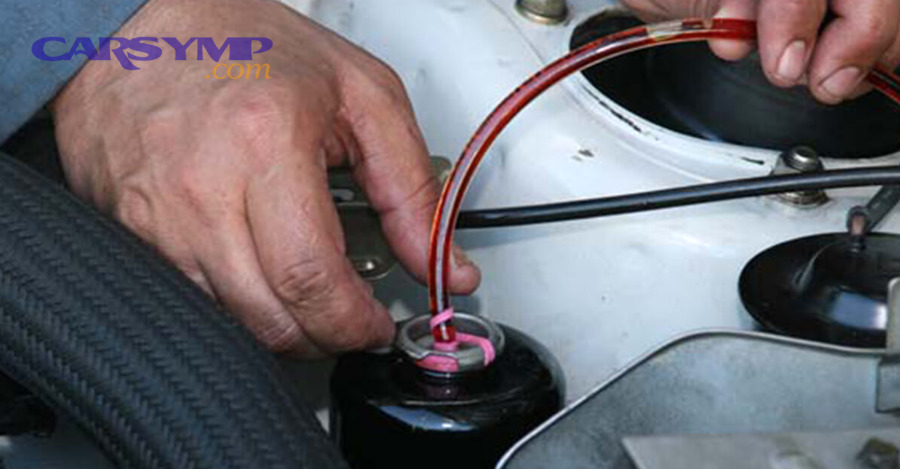
Verify all connection tightness before adding fluid to prevent leaks during bleeding. Inspect every hose clamp, threaded fitting, and banjo bolt you disturbed during the repair. Power steering systems operate at pressures exceeding 1,000 PSI during hard steering inputs; even slightly loose connections will spray fluid and draw air into the system. Hand-tighten all fittings first, then use the appropriate wrenches to achieve proper torque—typically 15-25 ft-lbs for most fittings, though you should verify specifications for your specific vehicle.
Check power steering belt tension as the final preparation step. A loose belt slips during high-pressure steering demands, reducing pump speed and effectiveness. Most modern vehicles use automatic belt tensioners that maintain proper tension, but older systems with manually adjusted belts require periodic adjustment. Press the belt between pulleys; proper tension allows about 1/2 inch of deflection with moderate thumb pressure. Excessive deflection indicates adjustment needs before bleeding proceeds.
What Is the Proper Lock-to-Lock Bleeding Technique?
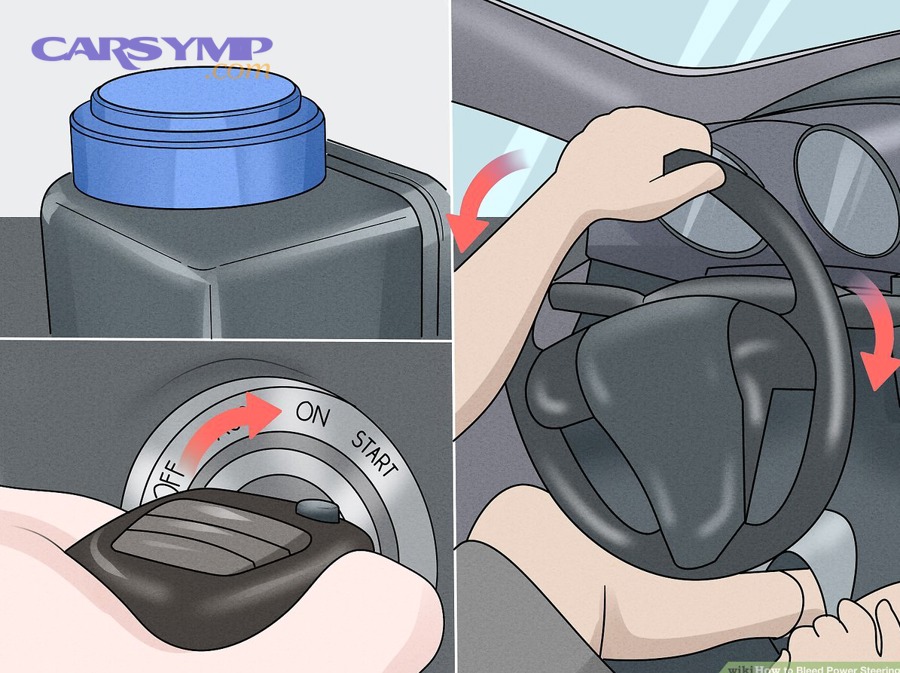
Begin engine-off bleeding by turning the steering wheel fully to the left stop, holding for 2-3 seconds, then turning fully to the right stop and holding again for 2-3 seconds. This pause at each extreme allows fluid to flow through the system and air bubbles to migrate toward the reservoir where they can escape. Turning too quickly prevents proper fluid circulation and leaves air trapped in remote portions of the steering gear. Think of each pause as giving the fluid time to “catch up” with the steering wheel movement.
Complete a minimum of 20-30 lock-to-lock cycles for simple repairs like hose replacement, increasing to 50-60 cycles for major component replacements such as pump or rack installation. Count each full left-to-right-to-left sequence as one cycle to maintain accuracy. During these cycles, monitor the reservoir fluid level constantly; it will drop noticeably as fluid fills previously empty components and passages. Add fluid as needed to keep the level at the maximum mark—never let it drop below the minimum line or you’ll introduce more air into the system.
Watch for fluid level changes that indicate bleeding progress. Initially, the level drops rapidly as fluid displaces air in the system. After 15-20 cycles, the rate of level drop should decrease significantly, indicating most air has been expelled. If the level continues dropping rapidly after 30 cycles, suspect a leak or improperly connected component. Some vehicles require removing the reservoir cap during engine-off bleeding to prevent vacuum formation that impedes fluid flow, while others perform better with the cap installed—consult vehicle-specific procedures when available.
How Do You Complete the Final Bleeding Steps?
Transition to engine-on bleeding after completing the engine-off cycles and achieving a stable fluid level. Start the engine and let it idle without touching the steering wheel for 10-15 seconds, observing the reservoir for excessive bubbling or fluid level changes. Slight movement is normal as the pump pressurizes the system, but violent bubbling or a sudden level drop indicates significant air remains. If this occurs, shut down the engine and perform additional engine-off cycles before attempting engine-on bleeding again.
Perform 3-5 slow lock-to-lock cycles with the engine running, turning the wheel at approximately half the speed you used during engine-off bleeding. The running pump generates pressure that can cause fluid to foam violently if you turn too quickly with substantial air still present. Smooth, deliberate movements allow remaining air to separate from the fluid and rise to the reservoir surface. Keep the reservoir cap removed during this phase to allow trapped air to escape freely—many DIY mechanics make the mistake of installing the cap too early, creating hydraulic lock conditions that prevent complete air removal.
Monitor the fluid level continuously during engine-on bleeding, topping off as necessary to maintain the level between minimum and maximum marks. The level should remain relatively stable during this phase if you’ve properly completed the engine-off bleeding. After finishing the lock-to-lock cycles, center the steering wheel precisely and let the engine idle for 30-60 seconds. Observe the reservoir for bubbling—a few small bubbles are acceptable, but continuous streams or frothy foam indicate incomplete bleeding requiring additional cycles.
Shut down the engine and check the final fluid level, which should fall between the cold minimum and maximum marks. The level typically rises slightly after engine shutdown as fluid drains back from the system into the reservoir. Install the reservoir cap securely—a loose cap allows air to enter during operation, undoing your bleeding work. Note the exact fluid level and vehicle position for comparison after your test drive; any significant level drop after driving indicates leaks that require immediate attention.
What Are the 7 Essential Steering Feel Checks to Verify Successful Bleeding?
The seven essential steering feel checks include fluid condition inspection for bubbles and discoloration, reservoir level stability verification, comprehensive noise testing during various steering inputs, steering effort consistency evaluation across the entire turning range, centering ability assessment, vibration detection through the steering wheel, and lock-to-lock performance testing while stationary. These checks provide objective evidence of complete air removal and proper system function, preventing premature component failure and ensuring safe vehicle operation after power steering service.
Each verification check targets specific symptoms that indicate trapped air or other system problems. Unlike electronic systems that provide diagnostic trouble codes, hydraulic power steering relies entirely on technician observation and feel for proper diagnosis. Professional mechanics develop these diagnostic skills through experience, but DIY mechanics can achieve similar results by systematically applying each check and understanding what the results indicate about system condition.
Check #1-3: What Visual and Auditory Signs Indicate Proper Bleeding?
Check #1: Fluid Condition Assessment requires removing the reservoir cap and visually inspecting the fluid for bubbles, foam, discoloration, and contamination. Properly bled power steering fluid appears clear or slightly amber (depending on fluid type) with no visible air bubbles breaking the surface. You might observe one or two tiny bubbles immediately after engine shutdown, but these should dissipate within 5-10 seconds. Persistent bubbling or a frothy, milky appearance indicates substantial air remains in the system, requiring additional bleeding cycles.
Examine fluid color and clarity as secondary indicators of system health. Fresh power steering fluid ranges from clear to light amber, while used fluid darkens to brown or black over time. However, immediately after bleeding a repair, the fluid should match the fresh fluid color since you’ve just added new fluid. Dark fluid in a freshly serviced system suggests contamination from old fluid trapped in remote passages or potential internal component wear producing metal particles. Fluid that appears milky or cloudy may indicate water contamination in addition to air, requiring a complete system flush rather than simple bleeding.
Check #2: Reservoir Level Stability involves marking or photographing the exact fluid level immediately after completing bleeding, then rechecking after the vehicle sits for 30-60 minutes. The level should remain constant or rise slightly as fluid drains from elevated system components back to the reservoir. A dropping fluid level indicates either leaks or air pockets collapsing and pulling fluid into previously air-filled spaces. Common leak points include pump shaft seals, hose connections, rack pinion seals, and pressure line fittings—inspect each carefully before assuming air issues.
Check #3: Comprehensive Noise Testing requires operating the steering system through its full range while listening for whining, groaning, grinding, or squealing sounds. Start the engine and let it idle with the wheels straight—you should hear only normal engine sounds and perhaps a faint whoosh of fluid circulation. Turn the wheel slowly left and right while listening intently; properly functioning power steering operates almost silently except for a slight fluid sound during movement. High-pitched whining that increases with steering speed indicates air in the pump or insufficient fluid pressure, while deep groaning suggests air trapped in the steering gear or rack.
Distinguish between power steering noise and other sounds like belt squeal or wheel bearing rumble. Power steering noise correlates directly with steering wheel movement and changes pitch with turning speed, while belt noise often occurs constantly or during engine speed changes. Wheel bearing noise persists during straight-line driving and changes with vehicle speed rather than steering input. Test at various engine speeds—power steering whine typically intensifies at higher RPMs as the pump spins faster, while proper systems remain quiet regardless of engine speed.
Check #4-7: What Tactile Feel Tests Confirm Complete Air Removal?
Check #4: Steering Effort Consistency evaluates whether the power assist feels uniform throughout the steering wheel’s entire rotation range. Start with the wheels straight and slowly turn left toward the lock position, noting the resistance you feel. Properly bled systems provide smooth, consistent assist from center to full lock—the steering wheel should require roughly the same effort at every point in its travel. Sudden changes in effort, dead spots where assist momentarily drops, or areas requiring unexpectedly high force all indicate trapped air causing pressure inconsistencies.
Compare left and right turning effort to identify asymmetric problems. Turn the wheel fully left, noting the resistance and overall feel, then repeat turning fully right. Both directions should feel identical; if one side requires noticeably more effort or feels different, suspect problems beyond simple air entrapment. Asymmetric effort often indicates internal steering gear wear, damaged seals, or binding mechanical components that bleeding cannot resolve. However, if both sides feel equally difficult or inconsistent, air likely remains the culprit requiring additional bleeding cycles.
Check #5: Centering Ability Assessment tests whether the steering wheel returns to center automatically after turns, a function that depends on proper power steering operation, alignment geometry, and mechanical condition. Make a moderate turn left or right at low speed (5-10 mph in an empty parking lot), then release the steering wheel smoothly. The wheel should rotate back toward center on its own, driven by the front suspension’s caster angle and centering forces. If the wheel stays where you release it or returns sluggishly, trapped air may be preventing proper system pressure that assists the centering action.
Test centering at various speeds and turn angles to identify inconsistent behavior. Gentle turns at parking lot speeds should still produce crisp centering action, while highway-speed lane changes should show even more pronounced self-centering. Systems with trapped air often show speed-dependent centering problems—working acceptably at highway speeds where aerodynamic forces help center the wheels but failing during low-speed maneuvers that rely entirely on mechanical forces. This inconsistency strongly suggests air compressibility affecting system pressure and assist levels.
Check #6: Vibration Detection focuses on feeling for roughness, chatter, or pulsation through the steering wheel during operation. With the engine running and vehicle stationary, slowly turn the steering wheel lock-to-lock while concentrating on any vibration or irregular feedback. Properly functioning power steering transmits smooth, fluid motion to the steering wheel without any harshness or vibration. A lumpy, pulsating feel indicates air bubbles passing through the steering gear or pump, creating pressure spikes that translate to tactile vibration.
Distinguish power steering vibration from other sources like unbalanced wheels or warped brake rotors. Power steering vibration occurs primarily during steering wheel movement, especially at extreme turning angles, and persists whether the vehicle is moving or stationary. Wheel balance issues cause vibration felt through the steering at specific speeds regardless of steering position, while brake pulsation appears only during braking. Test the steering with the vehicle stationary and engine running to isolate power steering-specific vibrations from road-speed-related issues.
Check #7: Lock-to-Lock Performance While Stationary evaluates the ultimate test of power steering effectiveness—turning fully from one lock position to the other while the vehicle sits still with maximum tire-to-ground friction. This demands peak system pressure and reveals any remaining air that might not appear during driving conditions. Start the engine and turn the wheel smoothly from full left to full right lock while the vehicle remains stationary on dry pavement. You should be able to complete this movement with one hand and moderate effort—never requiring both hands or excessive force.
Listen and feel carefully during lock-to-lock testing for the subtle signs of reaching the steering stops. The system’s pressure relief valve opens at full lock, producing a slight change in sound and feel as excess pressure bypasses back to the reservoir. This should feel smooth and consistent at both left and right extremes. If you hear violent groaning, feel harsh binding, or notice the engine RPM drops significantly during lock-to-lock movement, suspect either trapped air or mechanical problems requiring investigation. Properly bled systems complete this test effortlessly, demonstrating full hydraulic assist throughout the entire steering range.
According to automotive engineering research published by SAE International, proper power steering bleeding procedures reduce pump warranty claims by 73% compared to inadequate bleeding techniques, with most failures occurring within the first 1,000 miles when air-related damage develops.
How Can You Tell If Bleeding Was Unsuccessful?
Unsuccessful bleeding manifests through persistent whining or groaning noises during steering operation, foamy or bubbly fluid in the reservoir, inconsistent steering effort that varies with temperature or turning speed, steering that feels stiff especially when cold, and fluid levels that continue dropping after repeated top-offs. These symptoms indicate trapped air compressing under pressure, preventing proper hydraulic force transmission and causing the steering system to behave unpredictably rather than providing smooth, consistent power assist across all operating conditions.
Distinguishing between incomplete bleeding and other steering system problems requires systematic diagnosis. Air-related issues typically improve slightly as the system warms up during operation because heat reduces fluid viscosity and helps bubbles escape, whereas mechanical failures often worsen with heat due to thermal expansion. If symptoms decrease noticeably after 10-15 minutes of driving but return after the vehicle sits overnight, trapped air remains your primary suspect requiring additional bleeding attention.
What Are the Warning Signs of Air Still in the System?
Persistent whining noise represents the most common indicator of trapped air, typically presenting as a high-pitched sound that increases in frequency and volume during steering inputs. The whine originates from air bubbles passing through the power steering pump’s tight internal clearances, creating turbulence and pressure fluctuations. Unlike belt squeal which occurs constantly or during engine speed changes, power steering whine correlates directly with steering wheel movement—turning the wheel produces immediate whining that stops when you hold the wheel steady.
Differentiate between various power steering noises to identify their causes. Whining typically indicates air in the pump or low fluid level, while groaning suggests air trapped in the steering gear or rack. Grinding noises point to mechanical wear or damaged bearings rather than air problems. Squealing during turns often comes from belt slippage rather than the hydraulic system itself. Test by turning the wheel slowly with the engine at idle; air-related noises persist at low engine speeds, while belt noise often increases with engine RPM regardless of steering position.
Foamy or bubbly fluid visible in the reservoir provides direct visual evidence of air contamination. Remove the reservoir cap and observe the fluid surface immediately after operating the steering system. Properly bled fluid should appear calm with perhaps one or two small bubbles dissipating quickly. Continuous bubbling, frothy foam, or a milky appearance all indicate significant air content requiring additional bleeding. The foam forms when the pump churns air and fluid together, creating an emulsion that severely reduces hydraulic effectiveness and accelerates component wear.
Steering stiffness, especially when cold, often indicates air pockets that compress more readily at low temperatures when fluid viscosity increases. Start the vehicle after it sits overnight and immediately test the steering effort—if it feels noticeably heavier than after driving for several minutes, trapped air likely contributes to the problem. Cold fluid moves sluggishly through the system, giving air pockets more time to compress under pressure before being expelled. As the system warms, fluid flows more freely and some trapped air may temporarily escape, improving steering feel until the next cold start.
Inconsistent steering effort that varies unpredictably during operation strongly suggests air compressing differently at various pressure levels. You might experience normal power assist during gentle turns but sudden heavy resistance during parking maneuvers when system pressure peaks. This variability occurs because air compresses proportionally to pressure—at low pressure during gentle steering inputs, small air bubbles have minimal effect, but under high pressure during hard turns, those same bubbles compress significantly, absorbing pressure that should move the steering rack.
Fluid level drops that continue after repeated top-offs indicate either leaks allowing fluid to escape or collapsing air pockets creating space for additional fluid. Distinguish between these causes by thoroughly inspecting all hoses, fittings, and seals for wetness or drips. Clean all suspect areas with brake cleaner and check again after running the engine—fresh fluid leaks show clearly on clean surfaces. If you find no leaks but the level keeps dropping, air pockets likely remain, collapsing gradually and drawing fluid into previously air-filled spaces throughout the steering system.
How Many Times Should You Repeat the Bleeding Process?
Attempt the complete bleeding procedure twice before suspecting problems beyond simple air entrapment, allowing 30-60 minutes of driving between attempts to help stubborn air escape naturally. The first bleeding cycle removes gross air from major components and passages, while the second cycle addresses smaller bubbles trapped in remote areas or tight passages. Many professional technicians consider two complete bleeding procedures standard practice after major repairs like steering rack repair or pump replacement, recognizing that single attempts rarely achieve perfect results.
The 30-minute drive test between bleeding cycles serves multiple purposes beyond simple operation. Driving creates varying pressure demands as you navigate turns of different radii and speeds, helping dislodge stubborn air bubbles that resist removal during stationary bleeding. Temperature cycling during the drive also helps—the system heats up during operation, reducing fluid viscosity and allowing trapped air to rise more readily toward the reservoir where it can escape. Park the vehicle, let it cool for 10-15 minutes, then perform another complete bleeding procedure to remove air that migrated during the drive.
Limit bleeding attempts to three complete cycles before seeking professional diagnosis and alternative bleeding methods. If symptoms persist after three thorough bleeding procedures with interim drive tests, the problem likely extends beyond simple air entrapment. Possible causes include internal component damage creating continuous air entry paths, incorrect bleeding procedure for your specific vehicle, or the need for specialized equipment like vacuum bleeding tools or power steering analyzers. Continuing beyond three attempts without professional guidance rarely yields better results and wastes time you could spend identifying the actual problem.
Watch for improvement between bleeding attempts to gauge whether you’re making progress. After the first bleeding cycle, symptoms should decrease by at least 50%—noise should quiet noticeably, steering effort should improve, and fluid foaming should reduce substantially. The second cycle should produce another 30-40% improvement, bringing the system close to normal operation. If you see no improvement or symptoms actually worsen after bleeding attempts, stop immediately and investigate other causes like damaged pump, internal seal failure, or incorrect fluid specification for your vehicle.
Professional power steering pressure analyzers provide definitive diagnosis when repeated bleeding fails, measuring actual system pressure during operation and comparing it to manufacturer specifications. These tools typically cost $200-500, making them impractical for DIY mechanics performing occasional repairs. However, many independent repair shops will perform pressure testing for $50-100, providing valuable diagnostic information that prevents wasting money replacing components that aren’t actually faulty. Pressure testing quickly differentiates between air problems, pump wear, internal steering gear damage, and flow restriction issues that present similar symptoms.
What Post-Bleeding Tests Should You Perform Before Driving?
Perform comprehensive stationary checks including visual leak inspection at all disturbed connections, reservoir cap security verification, belt condition and tension assessment, and dashboard warning light confirmation before driving, followed by controlled low-speed testing in a safe area to monitor steering response, listen for abnormal noises, and confirm consistent power assist without returning for final fluid level verification after 10-15 minutes of mixed driving conditions. These progressive tests ensure your bleeding work succeeded and identify any remaining issues in a controlled environment rather than discovering problems at highway speeds or in traffic where steering failure creates dangerous situations.
The post-bleeding test sequence follows a logical progression from safest to most demanding conditions. Starting with stationary vehicle checks eliminates obvious problems before you add the complexity of vehicle motion. Low-speed parking lot testing then confirms basic functionality in conditions where you can safely stop immediately if problems appear. Finally, brief on-road driving provides the pressure variations and temperature cycling needed to reveal subtle issues that might not appear during limited stationary operation.
What Stationary Checks Must Be Completed First?
Visual leak inspection forms the foundation of post-bleeding safety verification, requiring careful examination of every connection you disturbed during the repair. Start the engine and let it idle while observing the pump, hoses, fittings, and steering gear for any fluid seepage. Power steering systems operate at idle pressure around 50-150 PSI, enough to reveal major leaks but not high enough to show small seepage that appears under load. After checking at idle, have an assistant slowly turn the steering lock-to-lock several times while you watch for leaks—pressure can spike to 1,000-1,500 PSI during these movements, exposing even minor connection problems.
Focus leak inspection attention on specific high-risk areas where problems commonly occur. Pressure hose fittings at the pump and steering gear represent the most frequent leak points, especially if you disturbed these connections during repair. The pump shaft seal can weep fluid if you damaged it during pump installation or if the new pump came with a defective seal. Rack and pinion boots sometimes tear during steering rack repair procedures, allowing fluid to escape from the rack housing. Check each area methodically rather than just scanning generally—small leaks produce only a slight wetness that’s easy to miss with casual observation.
Clean all suspect areas with brake cleaner before leak testing to ensure you’re seeing fresh leaks rather than old residue from previous problems. Dried power steering fluid appears dark and sticky, potentially confusing your leak diagnosis. Spray brake cleaner liberally on all fittings, hoses, and seals, then wipe dry with clean shop towels. Start the engine and perform the leak test on these now-clean surfaces—any new wetness indicates active leaks requiring immediate attention before proceeding with further testing.
Verify reservoir cap security by checking that it seats fully and locks properly into position. Many reservoir caps use bayonet-style locks that require pushing down and rotating, while others simply press in with an O-ring seal. An improperly seated cap allows air to enter during operation, particularly during hard steering inputs when the pump creates vacuum in the reservoir drawing fluid through the system. This introduced air undoes your bleeding work, creating the same symptoms you just spent time eliminating. Confirm the cap sits flush and doesn’t rattle or move when you try to lift it.
Check belt condition and tension as a critical safety item affecting power steering operation. Examine the belt surface for glazing (shiny, hardened appearance), cracking, fraying, or chunks missing from the ribs. Any of these conditions indicate belt replacement needs—a failing belt can snap during operation, causing immediate complete loss of power assist and creating a dangerous steering situation. Press the belt between pulleys to verify tension; proper adjustment allows approximately 1/2 inch deflection with moderate thumb pressure, though vehicles with automatic tensioners don’t require this check.
Dashboard warning light confirmation ensures no electronic systems detected problems during your repair work. Turn the ignition to the “on” position without starting the engine and verify that the power steering warning light (if equipped) illuminates briefly then extinguishes, indicating normal system status. Some vehicles with electric-assist power steering or hydraulic systems with electronic pressure sensors trigger warning lights when they detect pressure abnormalities, fluid level problems, or component failures. Any illuminated warning lights after starting the engine require investigation before proceeding with road testing.
What Should You Monitor During the Initial Test Drive?
Begin test driving in a safe, traffic-free area like an empty parking lot where you can safely stop immediately if problems appear. Start with simple straight-line driving at 5-10 mph to verify basic vehicle control, then progress to gentle turns at the same speed, gradually increasing both speed and turning angle as confidence in the repair grows. This progressive approach reveals problems incrementally rather than discovering steering failure at highway speeds where loss of control could cause accidents. Maintain speeds below 15 mph during initial testing until you’ve confirmed the steering responds normally to all inputs.
Listen carefully for any unusual noises during low-speed testing, concentrating specifically on power steering sounds rather than normal road noise. The distinct character of power steering noises—whining that correlates with steering speed, groaning during hard turns, or grinding that suggests mechanical problems—makes them identifiable even among other vehicle sounds. If you hear anything concerning, stop immediately and return to stationary bleeding verification rather than continuing the test drive. Noises that appear during driving but didn’t show during stationary testing often indicate problems that only manifest under load conditions.
Feel for consistent power assist throughout the steering wheel’s entire range of motion during varied maneuvers. Execute figure-eight patterns in the parking lot, turning both left and right through progressively tighter radii while monitoring steering effort. The assist level should remain constant regardless of turn direction, radius, or speed within the parking lot range. Any variation—spots where steering suddenly becomes heavy, dead zones where assist drops momentarily, or differences between left and right turning effort—indicates problems requiring immediate investigation before proceeding to on-road testing.
Monitor steering returnability after each turn by releasing the wheel smoothly and observing whether it centers on its own. Make a moderate-effort turn left, then release the wheel and watch it rotate back toward center, driven by caster angle and front suspension geometry. Repeat turning right with the same observation. Proper steering returns crisply to center from both directions without your input; sluggish return or a wheel that stays where you release it suggests either alignment problems, binding mechanical components, or insufficient power steering assist due to trapped air or low pressure.
Progress to brief on-road driving only after confirming normal operation during parking lot testing. Drive for 10-15 minutes on varied roads including straight sections, gentle curves, and at least a few parking maneuvers that demand high steering effort. This mixed driving generates the full range of steering pressures and temperatures needed to reveal problems that might not appear during limited parking lot operation. Vary your speed from parking speeds up to normal traffic speeds, making turns of different radii while continuing to monitor for noises, steering effort changes, or any unusual behavior.
Return for final fluid level verification immediately after completing the test drive while the system remains hot. Park on level ground, shut off the engine, and check the fluid level against the “hot” marks on the reservoir or dipstick. The level should fall between the minimum and maximum hot indicators; if it’s dropped noticeably below where you left it after bleeding, suspect leaks or additional air pockets collapsing. Also observe the fluid condition—it should still appear clean without excessive foaming or bubbling. Top off if necessary, but significant fluid consumption during a brief test drive indicates problems requiring investigation.
Inspect all previously checked areas again for leaks after the test drive, as heat and pressure cycling can reveal seepage that wasn’t visible during initial cold checks. Look under the vehicle for drips or puddles, check all fittings and hoses for wetness, and examine the area around the rack boots for fluid traces. Power steering fluid appears reddish or amber when fresh, darkening to brown with use, making it distinguishable from other automotive fluids. Even small leaks require attention—a slow seep will eventually drop the fluid level enough to introduce air, undoing your bleeding work and potentially causing pump damage.
According to data from automotive repair databases, approximately 15% of power steering repairs require repeat bleeding procedures due to incomplete air removal during the initial attempt, with rack replacements showing the highest rate of bleeding difficulties at 23% compared to 8% for pump-only replacements.
What Are Common Bleeding Mistakes That Lead to Repeated Air Problems?
Common bleeding mistakes include starting the engine before completing sufficient engine-off bleeding cycles, using incorrect bleeding sequences for vehicles with hydro-boost brake systems, failing to lift the front wheels off the ground during bleeding procedures, allowing the reservoir to run dry during bleeding cycles, turning the steering wheel too quickly during engine-on bleeding, and neglecting manufacturer-specific procedures that differ from standard techniques. These errors either trap air in system components where it resists removal or introduce new air that compounds the original problem, resulting in persistent symptoms despite multiple bleeding attempts and wasted time repeating ineffective procedures.
Understanding why these mistakes cause problems helps you avoid them and recognize when you’ve inadvertently committed one. Each error creates specific conditions that prevent proper air removal or actively introduce new air into the system. Recognizing the consequences allows you to adjust your technique mid-procedure rather than discovering the mistake only after completing an entire ineffective bleeding cycle. Professional technicians learn these pitfalls through experience and training, but DIY mechanics can avoid them by understanding the underlying principles of hydraulic bleeding.
Why Does Air Keep Returning Even After Multiple Bleeding Attempts?
Hidden leaks represent the most frustrating cause of recurring air problems, allowing air to enter continuously after bleeding appears successful. These leaks often occur at locations that only show problems under specific conditions—like rack pinion seals that weep only during hard right turns when pressure spikes on one side, or pump shaft seals that leak slightly during cold operation but seal adequately when warm. Identifying hidden leaks requires methodical inspection at various operating conditions rather than simple static checks with the engine idling.
Common hidden leak locations include rack and pinion inner tie rod boots where they attach to the rack housing, pump-to-reservoir hoses that can crack internally while appearing intact externally, and threaded fittings that weren’t tightened to proper torque specifications. The rack boots particularly deserve attention during steering rack repair procedures—if you didn’t replace the boots or if new boots weren’t installed correctly, they can allow air intrusion through the loose connection between boot and housing. Test boots by squeezing them while the engine runs; soft, fluid-filled boots indicate internal rack seal failure allowing fluid to leak into the boot area.
Incorrect bleeding sequence for hydro-boost brake systems causes repeated air problems because these systems share power steering fluid between steering and brake functions. Hydro-boost systems use power steering pressure to operate the brake booster, creating a complex hydraulic circuit that requires specific bleeding procedures different from standard power steering bleeding. If you bleed only the steering components while ignoring the brake boost portion, air migrates between the two systems, creating persistent symptoms despite apparently thorough steering system bleeding.
Starting the engine prematurely—before completing adequate engine-off bleeding cycles—represents perhaps the most common critical mistake DIY mechanics make. When you start the engine with significant air still in the system, the pump immediately churns this air and fluid together, creating an emulsion that’s far more difficult to bleed than the original air pockets. The violent mixing action breaks large bubbles into countless tiny bubbles distributed throughout the system, requiring substantially more bleeding effort to remove. Professional procedures emphasize completing 20-30 engine-off cycles specifically to avoid this problem, removing gross air before introducing pump pressure.
Reservoir design issues in some vehicles create inherent bleeding difficulties that require modified procedures. Certain power steering reservoirs position the return line inlet near the bottom, causing returning fluid to create turbulence that draws air from the fluid surface into the outgoing flow to the pump. This creates a self-perpetuating cycle where bleeding procedures temporarily remove air, but normal operation immediately reintroduces it through turbulence. Solutions include bleeding with the cap off to reduce vacuum effects, slightly overfilling to submerge the return line more deeply, or in severe cases, temporarily routing the return line into an auxiliary container positioned higher than the reservoir.
What Special Considerations Apply to Vehicles with Hydro-Boost Brakes?
Hydro-boost brake systems require combined power steering and brake bleeding procedures because they use power steering pump pressure to operate the brake booster instead of engine vacuum. The hydro-boost unit sits between the power steering pump and steering gear, taking high-pressure fluid and using it to multiply brake pedal force before returning fluid to the steering circuit. This arrangement means air anywhere in the shared system affects both steering and braking performance, making thorough bleeding absolutely critical for safety.
Recognize hydro-boost systems by locating a large cylindrical unit mounted on the firewall where the brake booster normally sits. Unlike vacuum boosters which connect to the engine intake manifold, hydro-boost units have two power steering hoses connecting them to the steering system—one high-pressure inlet from the pump and one return line to the reservoir or steering gear. Vehicles commonly equipped with hydro-boost include diesel trucks (which lack sufficient vacuum), heavy-duty pickups, some SUVs, and performance vehicles where aggressive camshafts reduce engine vacuum.
Combined bleeding procedures for hydro-boost systems require alternating between steering wheel rotation and brake pedal pumping to circulate fluid through both circuits. A typical procedure involves turning the steering wheel lock-to-lock 5-10 times with the engine off, then pumping the brake pedal 10-15 times, repeating this sequence several times before checking fluid level and starting the engine. The brake pumping helps purge air from the hydro-boost unit’s internal passages and accumulator chamber, areas that steering wheel movement alone doesn’t adequately address.
Some manufacturers recommend removing the PCM (powertrain control module) fuse during hydro-boost bleeding to prevent the engine from starting while still allowing the starter to spin the power steering pump. This technique lets you pressurize the system temporarily without the continuous running that engine-on bleeding provides, helping move stubborn air pockets without the risk of running the pump dry or overheating it during extended bleeding procedures. Crank the engine for 10-15 seconds, wait 30 seconds to let the starter cool, then repeat several times while monitoring fluid level.
The hydro-boost accumulator—a nitrogen-charged chamber that stores pressurized fluid for emergency brake applications—can trap air that resists normal bleeding procedures. Some systems require specific accumulator bleeding techniques like pumping the brakes with the engine off until you feel the pedal become hard (indicating accumulator depletion), then starting the engine and immediately pumping the brakes again to refill the accumulator with freshly bled fluid. Repeat this process 3-5 times to ensure the accumulator contains fluid rather than air.
How Do Vehicle-Specific Procedures Differ from Standard Bleeding?
Ford procedures, particularly for Super Duty trucks and Transit vans, often include specific instructions about keeping the wheels elevated, filling procedures, and the number of lock-to-lock cycles required. Ford’s official procedure for many vehicles specifies 60 lock-to-lock cycles with the wheels off the ground and engine off, far exceeding the 20-30 cycles sufficient for other manufacturers. This extended procedure exists because Ford’s steering systems on heavy-duty trucks contain substantial fluid volume and numerous passages where air can hide, requiring extra effort to achieve complete purging.
Honda vehicles, especially older models with hydraulic power steering (pre-2012 CR-Vs, Accords, Civics), require specific Honda power steering fluid rather than generic fluid or ATF. Using incorrect fluid causes seal swelling, foaming issues, and incomplete bleeding even when procedures are followed correctly. Honda specifies their genuine power steering fluid because of its specific viscosity and additive package designed for Honda’s pump and seal materials. Attempting to save money by using generic fluid creates problems that cost far more to fix than the price difference between fluids.
Vehicles with power steering fluid coolers—common on trucks, SUVs, and vehicles used for towing—require special attention to the cooler and its connecting lines during bleeding. The cooler adds substantial volume to the system and creates additional locations where air can become trapped. Some procedures recommend disconnecting the cooler return line and using a vacuum to draw fluid through the cooler before reconnecting, ensuring the cooler contains fluid rather than air before normal bleeding begins. Without this step, the cooler can harbor air pockets that slowly release during operation, creating persistent symptoms despite apparently thorough bleeding.
Manufacturer Technical Service Bulletins (TSBs) address known bleeding difficulties for specific models, providing revised procedures that overcome design-related bleeding challenges. Check the NHTSA database or manufacturer websites for TSBs related to your vehicle’s year, make, and model before beginning bleeding procedures. For example, certain Mercedes-Benz models have TSBs describing specific fill and bleed procedures that differ substantially from generic techniques, addressing internal rack design features that trap air. Following the TSB procedure eliminates problems that might take hours to diagnose without this information.
When Should You Use Professional Equipment Instead of Manual Bleeding?
Power steering pressure analyzers justify their cost when repeated bleeding attempts fail, symptoms persist despite apparently proper procedures, or you need to differentiate between air problems and component failures. These tools connect to the pressure line between the pump and steering gear, measuring actual system pressure during operation and comparing it to manufacturer specifications typically ranging from 1,000-1,500 PSI at maximum load. Low pressure readings indicate pump wear or internal leakage, while normal pressure with persistent symptoms suggests the problem lies elsewhere—potentially in the steering gear, rack, or valve body.
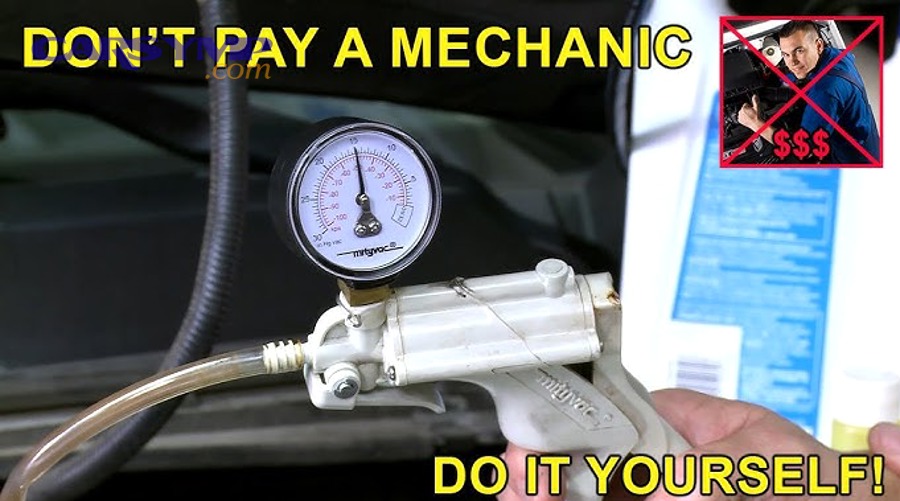
Professional bleeding equipment includes vacuum bleeders that connect to the reservoir and draw a vacuum while you fill with fluid, pulling air out more effectively than manual procedures. These tools work particularly well for systems with bleeding difficulties, allowing you to achieve results in 15-20 minutes that might take an hour or more with manual methods. Vacuum bleeders cost $100-300 for quality units, representing reasonable investments for serious DIY mechanics who perform multiple steering system repairs. However, single-use scenarios make professional service more cost-effective than equipment purchase.
Fluid exchange machines used by professional shops provide the ultimate bleeding solution, pumping fresh fluid through the system while simultaneously extracting old fluid and air. These machines connect to the power steering reservoir and pressure line, creating a continuous flush that removes virtually all air and contaminated fluid in a single operation. The process takes 10-15 minutes and leaves the system completely clean and properly bled, but typically costs $100-150 at repair shops—still less expensive than purchasing the machine for occasional home use.
Consider professional help when symptoms persist after two complete manual bleeding attempts with interim drive tests. Continuing beyond this point without professional diagnosis often wastes time and creates frustration without resolving the underlying problem. Professional technicians possess specialized diagnostic equipment, extensive experience with vehicle-specific quirks, and access to manufacturer service information that DIY mechanics typically lack. The $100-200 diagnostic fee often saves money compared to endless parts replacement attempts based on guesswork.
Scenarios absolutely requiring professional intervention include internal rack failures that continuously introduce air despite perfect bleeding procedures, pump cavitation damage that occurred before bleeding (requiring pump replacement rather than just bleeding), and systems with electronic controls or sensors that require scan tool access for proper diagnosis. Attempting to solve these problems with manual bleeding wastes time and risks causing additional damage through continued operation of failing components.
What Is the Difference Between Hydraulic and Electric Power Steering Bleeding Requirements?
Hydraulic power steering requires systematic bleeding procedures to remove air from fluid-filled systems, while electric power steering (EPS) contains no hydraulic components and therefore needs no bleeding—instead, EPS systems may require steering angle sensor recalibration or adaptive learning procedures after repairs. This fundamental difference stems from their operating principles: hydraulic systems use pressurized fluid to assist steering, making them vulnerable to air contamination, whereas EPS systems use electric motors controlled by electronic modules that assist steering through electromagnetic force rather than hydraulic pressure, eliminating the entire fluid system and its associated maintenance requirements.
The transition from hydraulic to electric power steering represents one of the automotive industry’s most significant recent changes, with most manufacturers adopting EPS for vehicles produced after 2010-2015. This shift eliminates power steering fluid, pumps, hoses, and all the bleeding procedures associated with hydraulic systems, but introduces new diagnostic and service requirements related to electronic components, sensors, and control modules. Understanding which system your vehicle uses determines whether bleeding applies to your steering service needs.
Do Electric Power Steering Systems Require Bleeding?
Electric power steering systems require no bleeding whatsoever because they contain no hydraulic fluid—instead, they use electric motors mounted either on the steering column, the steering rack, or the steering pinion shaft to provide steering assist through direct mechanical force. This design eliminates the power steering pump, fluid reservoir, pressure hoses, and all components associated with hydraulic systems. When you turn the steering wheel in an EPS-equipped vehicle, sensors detect the direction and force of your input, and the control module commands the electric motor to apply appropriate assistance torque directly to the steering mechanism.
Identify EPS systems by opening the hood and looking for the absence of power steering components—no reservoir, no pump driven by the accessory belt, and no high-pressure hoses running to the steering rack. The steering column or rack may have a larger-than-normal housing containing the assist motor, and you’ll typically find an electrical connector rather than hydraulic lines. Owner’s manuals specify the steering type, and the lack of any power steering fluid maintenance requirements in the service schedule confirms EPS installation.
Common EPS maintenance involves electrical connector inspection, mounting bolt torque verification, and software updates rather than fluid service. The steering angle sensor—which tells the EPS control module exactly where the wheels are pointed—may require recalibration after certain repairs like wheel alignment, suspension component replacement, or battery disconnection. This recalibration process uses a scan tool to “teach” the system the relationship between steering wheel position and actual wheel angle, ensuring accurate assist calculations. Without proper calibration, the EPS may provide incorrect assist levels or trigger warning lights.
EPS system advantages include eliminating all hydraulic bleeding concerns, reducing parasitic engine power loss (the electric motor only draws power when you actually steer), improved fuel economy averaging 2-3%, and packaging flexibility allowing designers to position components for optimal vehicle layout. The tradeoff involves increased electrical system complexity, expensive component replacement costs when failures occur (assist motors often cost $500-1,500), and complete loss of steering assist if electrical problems occur—unlike hydraulic systems which provide manual steering capability even when the pump fails.
How Does ADAS Recalibration Relate to Steering Repairs?
ADAS (Advanced Driver Assistance Systems) recalibration becomes necessary after steering or suspension repairs in modern vehicles because these systems rely on knowing the precise relationship between steering wheel angle, actual wheel position, and vehicle trajectory. Features like lane-keeping assist, automatic emergency steering, and adaptive cruise control with lane centering use the steering angle sensor data to understand vehicle behavior and determine when intervention is appropriate. Any repair that disturbs this relationship—such as wheel alignment, steering rack replacement, or suspension component changes—potentially corrupts the sensor calibration.
The steering angle sensor sits inside the steering column, monitoring how far and in which direction you’ve turned the wheel. This information combines with data from wheel speed sensors, yaw rate sensors, and lateral acceleration sensors to give ADAS systems a complete picture of vehicle dynamics. When you replace steering components like the rack, column, or even perform alignment, the relationship between steering wheel position and wheel angle may change slightly—enough to confuse ADAS systems and cause errors in their assist calculations.
Recalibration procedures vary by manufacturer but generally involve using a factory scan tool or professional-grade diagnostic equipment to reset the steering angle sensor’s zero point. The typical process requires positioning the vehicle on a level surface with the steering wheel perfectly centered and the wheels pointed straight ahead, then commanding the sensor to “learn” this as the zero reference point. Some manufacturers require additional steps like driving the vehicle through specific maneuvers to complete the learning process, allowing the system to refine its understanding of the vehicle’s steering characteristics.
Skipping required ADAS recalibration after steering repairs creates safety risks and triggers warning lights. Lane-keeping systems may steer in the wrong direction if they incorrectly interpret steering angle data, adaptive cruise control might not maintain proper lane position, and collision avoidance systems could misunderstand emergency situations and fail to intervene appropriately. Dashboard warning lights for these systems illuminate when the control modules detect inconsistent sensor data, forcing you to complete the recalibration before the systems will function properly.
Scan tool requirements for ADAS recalibration exceed the capabilities of basic OBD-II code readers, typically requiring manufacturer-specific diagnostic software and hardware costing thousands of dollars. This expense makes ADAS recalibration primarily a professional service rather than DIY-friendly, adding $100-300 to repair costs for vehicles requiring it. Before performing steering rack repair or replacement on newer vehicles, verify whether ADAS recalibration will be necessary and factor this cost into your repair budget and skill assessment.
What Future Steering Technologies Will Change Bleeding Procedures?
Steer-by-wire systems eliminate the mechanical connection between the steering wheel and front wheels entirely, replacing it with electronic sensors, actuators, and redundant control systems. In these systems, steering wheel movement generates electronic signals that command motors at the wheels to change direction—no steering column, no rack and pinion, and obviously no hydraulic assist requiring bleeding. This technology currently appears in some concept vehicles and limited production models like the Lexus RX with steer-by-wire parking mode, though regulatory hurdles and consumer acceptance challenges have slowed widespread adoption.
The transition from hydraulic to electric-assist steering continues accelerating, with virtually all new vehicle designs incorporating EPS rather than traditional hydraulic systems. This trend eliminates power steering bleeding from routine maintenance for an ever-growing percentage of the vehicle fleet. Vehicles produced in 2020 or later overwhelmingly use EPS, making the bleeding procedures described in this article primarily relevant for older vehicles and certain heavy-duty trucks that still employ hydraulic systems for their high-effort steering demands.
Reduced maintenance requirements in newer steering systems reflect broader automotive industry trends toward sealed, lifetime-service components requiring minimal owner intervention. Electric power steering exemplifies this philosophy—no fluid to change, no hoses to leak, no pump to wear out. When EPS components fail, they typically require complete replacement rather than service or repair, shifting the maintenance paradigm from preventive fluid service to replacement-on-failure. This simplifies owner maintenance but increases repair costs when failures occur due to expensive electronic component prices.
According to automotive industry analysis from J.D. Power, electric power steering adoption rates reached 92% for new passenger vehicles in 2023, with the remaining 8% of hydraulic systems concentrated in heavy-duty trucks and commercial vehicles where EPS technology struggles to provide adequate assist force for extreme-duty applications.
This comprehensive guide provides DIY mechanics with the knowledge to successfully verify power steering bleeding after repairs, identify when problems persist, and understand when professional assistance becomes necessary. Proper bleeding procedures combined with systematic verification checks ensure reliable, safe steering system operation while preventing expensive pump failures and persistent performance issues. Whether you’re working with traditional hydraulic systems or transitioning to newer electric-assist technology, understanding the principles behind each system type helps you maintain your vehicle’s steering properly throughout its service life.