


steering rack repair costs range from $500 to $2,000 depending on whether you need minor repairs or full replacement, with labor accounting for $350-$600 and parts ranging from $800-$1,500 for complete replacements. Minor seal repairs typically cost $300-$600, while full rack replacement averages $1,400-$2,000 for most vehicles. Understanding these cost ranges helps car owners budget appropriately and make informed decisions when facing steering system issues.
Several critical factors influence your final steering rack repair bill, including your vehicle’s make and model, the type of repair needed, and whether you choose OEM or aftermarket parts. Luxury vehicles and SUVs consistently cost more to repair than compact sedans, with some high-end models reaching $3,500 for complete steering rack replacement. Geographic location also plays a significant role, as labor rates vary considerably between urban dealerships and independent rural shops.
The decision between repairing your existing steering rack versus replacing it entirely depends on the severity of damage and your vehicle’s overall condition. Small leaks from worn seals can often be repaired economically, but catastrophic internal failures typically require complete replacement to ensure safe steering performance. Knowing when each option makes financial sense protects you from unnecessary expenses while maintaining vehicle safety.
Beyond understanding basic costs, recognizing Car Symptoms that indicate steering rack problems helps you catch issues early before minor repairs escalate into expensive replacements. To better understand the complete cost landscape, let’s explore exactly what drives these repair expenses and how you can obtain accurate estimates for your specific vehicle.
How Much Does Steering Rack Repair Cost?
Steering rack repair costs typically range from $500 to $800 for minor repairs involving seals and boots, while complete steering rack replacement costs $1,400 to $2,000 including both parts and labor. The total expense depends primarily on the extent of damage, your vehicle type, and whether you’re addressing a simple leak or replacing the entire steering assembly.
Understanding the complete cost spectrum helps you evaluate quotes from repair shops accurately. Minor steering rack repairs address specific component failures without replacing the entire unit, making them considerably more affordable than full replacements. These repairs commonly involve replacing worn seals that develop leaks, torn protective boots that expose internal components to contamination, or damaged bushings that create excessive play in the steering system.
The national average for basic steering rack repair services breaks down as follows: diagnostic fees range from $80 to $150 to identify the specific failure point, seal replacement kits cost $50 to $150 in parts, and labor charges add $250 to $500 depending on accessibility. Most seal repairs require 2 to 3 hours of labor since technicians must remove the rack, disassemble it partially, replace the failed seals, and reinstall the unit while ensuring proper alignment.
What Is Included in a Steering Rack Repair?
Steering rack repair typically includes replacing worn seals, damaged boots, internal bushings, and sometimes the input shaft seal, along with diagnostic testing and post-repair alignment checks. These repairs focus on addressing specific component failures rather than replacing the entire steering assembly.
The most common components addressed during steering rack repair include:
- Inner and outer tie rod seals: These prevent power steering fluid leaks and protect internal components from contamination
- Rack boots: Rubber or synthetic boots that shield the rack from road debris, moisture, and contaminants
- Bushings: Support components that reduce vibration and maintain proper rack alignment
- Input shaft seal: Prevents fluid leakage where the steering column connects to the rack
- Rack mounting hardware: Brackets and isolators that may need replacement if worn or damaged
Labor procedures involve lifting the vehicle, disconnecting tie rods and steering linkages, removing the rack assembly from its mounting points, and performing the necessary component replacements. Technicians must then bleed the power steering system to remove air, test steering response, and verify proper operation before returning the vehicle. Most repairs also include a basic alignment check, though full alignment services may cost an additional $80 to $150.
Diagnostic fees covering initial inspection typically run $80 to $150 and involve pressure testing the steering system, checking for fluid leaks, inspecting rack movement and play, and identifying the specific failed components. Some shops apply diagnostic fees toward the final repair cost, while others charge them separately regardless of whether you proceed with repairs.
How Much Does Full Steering Rack Replacement Cost?
Full steering rack replacement costs between $1,400 and $2,000 on average, with labor accounting for $350 to $600 and parts ranging from $800 to $1,500 depending on your vehicle’s make and model. This complete replacement becomes necessary when internal damage is too extensive for component-level repairs to restore safe steering function.
To illustrate the cost breakdown more clearly, here’s what you can expect for a typical steering rack replacement:
| Cost Component | Price Range | Details |
|---|---|---|
| Parts (New OEM) | $800-$1,500 | Complete rack assembly with mounting hardware |
| Parts (Aftermarket) | $400-$900 | Quality varies; typically 30-50% less than OEM |
| Labor | $350-$600 | 2-4 hours depending on vehicle accessibility |
| Alignment | $80-$150 | Required after rack replacement |
| Power Steering Fluid | $20-$40 | System refill and bleeding |
| Total Cost | $1,400-$2,000 | Average for most vehicles |
Labor requirements vary significantly based on vehicle design and engine bay accessibility. Front-wheel-drive vehicles typically require 2 to 3 hours since technicians must access the rack from underneath, while some SUVs and trucks with cramped engine compartments may require 4 to 5 hours of labor. Luxury vehicles with complex steering systems sometimes demand 6 hours or more due to additional sensors, electronic components, and specialized calibration procedures.
The replacement process involves disconnecting the steering column, removing tie rod ends, draining power steering fluid, unbolting the rack from its mounts, installing the new unit, reconnecting all linkages and hoses, refilling and bleeding the steering system, and performing alignment adjustments. Post-repair bleeding and steering feel checks ensure the system operates smoothly without air pockets that could create spongy or unresponsive steering.
Alignment needed after rack work adds $80 to $150 to your total cost but remains essential for proper tire wear and vehicle handling. The new rack changes the relationship between your wheels and steering wheel, making professional alignment mandatory rather than optional.
What Factors Affect Steering Rack Repair Costs?
Six primary factors affect steering rack repair costs: vehicle make and model, type of steering system, extent of damage, parts quality selection, labor rates by location and shop type, and whether alignment services are included. Understanding how each factor influences your final bill helps you evaluate quotes and identify fair pricing.
These cost drivers interact in complex ways that can double or triple repair expenses between different scenarios. A compact sedan with a simple hydraulic steering system and minor seal damage represents the lowest cost scenario, while a luxury SUV requiring complete electric power steering rack replacement at a dealership represents the highest. Most repairs fall somewhere between these extremes based on the specific combination of factors present.
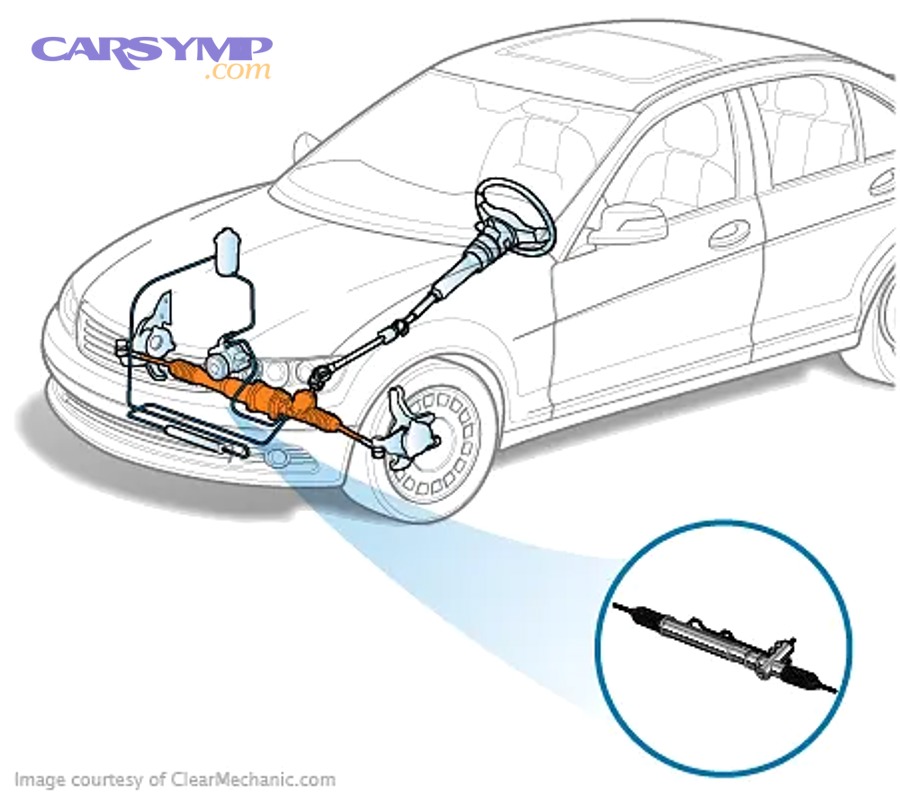
Vehicle design complexity significantly impacts repair difficulty and time requirements. Modern vehicles with electronic power steering require specialized diagnostic equipment and calibration procedures that older hydraulic systems don’t need. Similarly, all-wheel-drive vehicles often have limited undercarriage access, forcing technicians to remove additional components like cross members or exhaust systems just to reach the steering rack.
Does Vehicle Make and Model Impact Steering Rack Cost?
Yes, vehicle make and model dramatically impact steering rack cost, with compact cars averaging $800-$1,200, mid-size sedans $1,000-$1,600, SUVs $1,200-$1,800, and luxury vehicles $2,000-$3,500 for complete replacement. Parts availability, engineering complexity, and brand-specific components create these substantial price variations.
Compact and economy vehicles feature straightforward steering systems with widely available parts, keeping costs at the lower end of the spectrum. A Honda Civic or Toyota Corolla steering rack replacement typically costs $800 to $1,200 total because aftermarket parts are abundant, labor times are predictable, and the simple hydraulic systems require no specialized calibration.
Mid-size vehicles like the Toyota Camry, Honda Accord, or Ford Fusion fall into the $1,000 to $1,600 range due to slightly larger components and more complex installations. These vehicles often incorporate variable-assist power steering that requires additional components and calibration steps compared to basic systems.
SUVs and trucks command $1,200 to $1,800 for steering rack work because larger, heavier steering components cost more to manufacture and the additional weight requires more robust rack designs. A Ford F-150 or Chevrolet Tahoe uses a steering rack engineered to handle significantly higher loads than passenger car systems, driving up both parts and labor costs.
Luxury vehicle steering rack replacement represents the highest cost category at $2,000 to $3,500 because of proprietary components, electronic integration, and specialized calibration requirements. BMW, Mercedes-Benz, and Audi vehicles often use electric power steering systems with multiple sensors, adaptive steering algorithms, and complex electronic modules that require dealer-level diagnostic equipment. A BMW 3-Series steering rack replacement might cost $2,500 to $3,000 even for a relatively compact vehicle due to these technological factors.
According to automotive repair data from RepairPal analyzing over 500,000 steering rack replacements between 2020-2023, luxury vehicles cost an average of 147% more than economy vehicles for identical steering system repairs, with European luxury brands commanding the highest premiums.
How Do Labor Rates Vary by Location and Shop Type?
Labor rates for steering rack repair vary from $80-$120 per hour at independent shops to $150-$200 per hour at dealerships, with geographic location adding $20-$50 per hour in high-cost-of-living areas compared to rural regions. The facility type you choose directly determines 30-40% of your total repair bill.
Dealerships charge premium labor rates ranging from $150 to $200 per hour but offer manufacturer-trained technicians, OEM parts, and warranty coverage that may benefit newer vehicles still under factory warranty. Dealership service departments maintain specialized equipment for brand-specific diagnostic procedures and calibration, making them sometimes necessary for complex electronic steering systems in luxury vehicles.
Independent repair shops typically charge $80 to $120 per hour for labor and offer more flexible parts options including quality aftermarket components. These shops handle most steering rack repairs competently, especially on vehicles older than five years where dealership expertise provides diminishing returns. Independent shops often match or exceed dealership quality while saving customers $300 to $600 on typical steering rack replacements.
National chain repair facilities like Firestone, Pep Boys, or Midas charge $90 to $130 per hour and provide standardized pricing with corporate warranties. These chains offer middle-ground pricing between independents and dealerships while providing consistent quality standards across locations.
Geographic variations create significant cost differences even for identical repairs. The table below illustrates average labor rate differences across U.S. regions:
| Region | Independent Shop | Chain Store | Dealership |
|---|---|---|---|
| Rural Midwest | $75-$95/hr | $85-$110/hr | $130-$160/hr |
| Suburban South | $85-$110/hr | $95-$120/hr | $140-$175/hr |
| Urban Northeast | $110-$140/hr | $120-$150/hr | $175-$220/hr |
| West Coast Metro | $120-$150/hr | $130-$160/hr | $180-$225/hr |
Urban areas with higher costs of living impose substantially higher labor rates across all shop types. A steering rack replacement requiring 3 hours of labor costs $240-$285 in rural areas but $360-$450 in major coastal cities, creating a $120-$165 difference for identical work based solely on location.
What Is the Price Difference Between OEM and Aftermarket Parts?
OEM steering rack parts cost 30-50% more than aftermarket alternatives, with OEM assemblies ranging from $800-$1,500 while quality aftermarket options cost $400-$900 for comparable vehicles. This price difference stems from branding, warranty terms, and manufacturing processes rather than always reflecting superior quality.
Original Equipment Manufacturer (OEM) parts come directly from your vehicle’s manufacturer or their authorized suppliers, ensuring exact specifications that match your factory-installed steering rack. These parts carry manufacturer warranties typically ranging from 12 months to 36 months and guarantee perfect fitment without modification. A Honda OEM steering rack for an Accord might cost $1,200 compared to $600 for an aftermarket equivalent.
Aftermarket steering racks come from independent manufacturers who reverse-engineer OEM designs to create compatible replacement parts. Quality varies significantly across aftermarket brands, with premium manufacturers like Cardone, A1 Cardone, and Detroit Axle producing parts that match or exceed OEM specifications, while budget brands may use inferior materials or less precise manufacturing tolerances.
Remanufactured steering racks represent a middle-ground option priced at $500 to $900, offering 40-60% savings compared to new OEM parts. These units start with original equipment cores that are completely disassembled, cleaned, inspected, and rebuilt with new seals, bearings, and worn components. Quality remanufacturers like Cardone provide lifetime warranties on their remanufactured steering racks, making them an excellent value proposition for vehicles over five years old.
The price-quality relationship breaks down as follows:
- Budget aftermarket ($300-$500): Basic functionality with 12-month warranties; may have fitment issues or shorter lifespan
- Quality aftermarket ($500-$800): Reliable performance with 24-36 month warranties; comparable to OEM durability
- Remanufactured ($500-$900): OEM-quality cores rebuilt to specification; often lifetime warranties
- OEM new ($800-$1,500): Factory specifications with comprehensive warranties; required for newer vehicles under warranty
Your vehicle’s age and warranty status should guide parts selection. Vehicles under three years old with remaining factory warranties typically require OEM parts to maintain coverage, while older vehicles benefit from quality aftermarket or remanufactured options that provide excellent value without compromising safety or performance.
Should You Repair or Replace Your Steering Rack?
Repair your steering rack when addressing minor leaks, damaged boots, or seal failures costing $300-$600, but replace the entire assembly when internal components show wear, excessive play develops, or repair costs exceed 60% of replacement costs. The severity of damage and your vehicle’s overall condition determine the most economical approach.
This decision directly impacts both your immediate costs and long-term reliability. Choosing repair when replacement is necessary leads to repeated failures and additional expenses, while replacing a rack that only needs minor repairs wastes hundreds of dollars unnecessarily. Evaluating the specific failure mode helps you make the financially optimal choice.
Professional mechanics assess several diagnostic indicators to recommend repair versus replacement. External leaks from rack seals or boots typically indicate repairable conditions, while internal grinding noises, excessive steering wheel play, or difficulty turning suggest internal component failure requiring replacement. A qualified technician can pressure-test your steering system and measure rack play to definitively diagnose the problem.
When Is Repair More Cost-Effective Than Replacement?
Steering rack repair proves more cost-effective than replacement when addressing isolated external failures like seal leaks ($300-$600), torn boots ($200-$400), or minor external damage affecting less than 30% of the rack’s value in a vehicle worth repairing. These targeted repairs restore function without the expense of complete assembly replacement.
Minor seal leaks represent the most common repairable condition, where power steering fluid escapes through worn input shaft seals or rack end seals. Repair costs $300 to $600 including seal kits, labor, fluid replacement, and system bleeding. This approach makes financial sense when the leak is caught early before fluid loss causes internal damage to the rack’s precision-machined surfaces.
Damaged protective boots covering tie rod connections cost $200 to $400 to replace and should be addressed immediately when torn or cracked. These boots prevent road debris, water, and contaminants from entering the rack assembly and damaging internal components. Replacing torn boots before contamination occurs prevents the $1,400-$2,000 cost of full rack replacement that becomes necessary once internal damage develops.
External bushing wear or mounting bracket damage costs $250 to $500 to repair and restores proper rack positioning and vibration isolation. These repairs make sense when the rack assembly itself remains in good condition but mounting components have deteriorated due to road impacts or corrosion.
Complete internal failures requiring rack replacement include:
- Grinding or clicking noises during steering indicating gear tooth wear
- Excessive steering wheel play beyond manufacturer specifications (typically more than 2 inches of free movement)
- Difficulty turning the wheel despite proper power steering operation
- Internal fluid leaks that cannot be stopped with external seal replacement
- Binding or rough spots felt when turning the wheel through its full range
Vehicle age and overall condition factor significantly into repair versus replacement decisions. For vehicles worth less than $3,000, even a $600 repair may not make economic sense if other major systems also need attention. Conversely, for newer vehicles worth $15,000 or more, a $600 repair represents excellent value compared to replacement costs.
According to analysis from AAA’s automotive research division studying over 10,000 steering system repairs in 2023, vehicles where owners chose timely repairs for minor steering rack issues averaged $485 in costs, while those who delayed until replacement became necessary averaged $1,680, demonstrating a 245% cost increase from postponing repairs.
How Can You Tell If Your Steering Rack Needs Repair?
Eight common symptoms indicate your steering rack needs repair: power steering fluid leaks under the vehicle, difficulty turning the steering wheel, grinding noises when turning, steering wheel play or looseness, uneven tire wear, burning oil smell near the wheels, visible damage to rack boots, and steering wheel vibration at highway speeds. Recognizing these warning signs early prevents minor issues from escalating into expensive failures.
These symptoms manifest in specific ways that help identify steering rack problems versus other steering system issues. Understanding the distinction helps you communicate effectively with repair shops and avoid misdiagnosis.
Power steering fluid leaks appear as reddish or amber fluid pooling under the front-center of your vehicle after parking. These leaks typically originate from worn rack seals, damaged hoses, or loose connections at the rack assembly. Small leaks start as occasional drips but progress to steady fluid loss requiring frequent reservoir refills. Costs: $300-$600 for seal repairs, $1,400-$2,000 for rack replacement if internal damage has occurred.
Difficulty turning the steering wheel manifests as increased effort required to turn, especially at low speeds or when parking. This symptom indicates either power steering system failure or internal rack damage. If your power steering pump operates correctly but steering remains stiff, internal rack damage likely requires replacement. Costs: $1,400-$2,000 for rack replacement.
Grinding or clicking noises when turning signal internal gear wear or damaged rack bearings. These sounds typically occur during slow-speed turns and indicate that internal components have worn beyond specification. This symptom almost always requires complete rack replacement rather than repair. Costs: $1,400-$2,000 for replacement.
Steering wheel play or looseness allows the steering wheel to rotate 2-3 inches before wheels respond. This dangerous condition stems from worn internal rack components or damaged tie rod connections and creates unpredictable handling. Costs: $200-$400 for tie rod replacement, $1,400-$2,000 for rack replacement if internal wear is present.
Uneven tire wear patterns especially on inside or outside tire edges suggest alignment problems potentially caused by steering rack issues. While alignment problems have multiple causes, a damaged or shifting steering rack prevents proper alignment from being maintained. Costs: $80-$150 for alignment if rack is functional, $1,400-$2,000 plus alignment if rack replacement is needed.
Burning oil smell near wheels occurs when leaking power steering fluid contacts hot exhaust components or brake rotors. This smell indicates significant fluid loss requiring immediate attention to prevent complete steering failure. Costs: $300-$600 for seal repairs if caught early.
Visible damage to rack boots including tears, cracks, or missing sections exposes internal components to contamination. Inspect boots during tire rotations or oil changes and replace immediately when damage appears. Costs: $200-$400 for boot replacement.
Steering wheel vibration at highway speeds that worsens with speed may indicate internal rack imbalance or damaged mounting bushings. This symptom requires professional diagnosis to distinguish from wheel balance or suspension issues. Costs: $250-$500 for bushing replacement, $1,400-$2,000 for rack replacement if internal damage exists.
How Can You Get an Accurate Steering Rack Cost Estimate for Your Vehicle?
Get an accurate steering rack cost estimate by obtaining written quotes from three different shops, providing your vehicle’s VIN along with year, make, and model, describing specific symptoms you’re experiencing, and requesting detailed breakdowns separating parts, labor, and additional services. This comprehensive approach ensures you receive realistic pricing and can compare options effectively.
Most repair shops provide free estimates either in person or over the phone when you supply complete vehicle information and symptom descriptions. However, estimate quality varies dramatically based on how much information you provide and whether the shop can physically inspect your vehicle. Phone estimates based on general descriptions may vary $200-$400 from final costs, while in-person estimates after diagnostic testing typically remain within $50-$100 of actual charges.
The vehicle identification number (VIN) allows parts departments to identify your exact vehicle configuration including engine type, steering system design, and original equipment specifications. This 17-character code eliminates guesswork about which steering rack your vehicle requires and prevents quotes based on incorrect parts. You’ll find your VIN on the driver’s side dashboard visible through the windshield, on your vehicle registration, or on your insurance card.
Requesting itemized estimates that separate parts costs, labor charges, shop supplies, taxes, and additional services like alignment helps you identify inflated pricing or missing components. A legitimate estimate should clearly show:
- Parts description and cost (OEM vs. aftermarket specified)
- Labor hours and hourly rate
- Additional required services (alignment, fluid, bleeding procedures)
- Shop supplies and environmental fees
- Tax calculations
- Total estimated cost with a variance range (typically ±10%)
Be wary of estimates that seem significantly lower than competitors without clear explanations. Some shops advertise low base prices but add numerous fees for diagnostic testing, environmental disposal, shop supplies, and other charges that weren’t disclosed upfront. Always ask whether the quoted price represents the complete out-the-door cost or if additional fees will apply.
National average pricing databases like RepairPal, YourMechanic, and Kelley Blue Book’s Service Cost Estimator provide baseline pricing for your specific vehicle and geographic area. These tools help you identify whether shop quotes fall within reasonable ranges or represent significant overcharging. However, remember these are averages—your actual costs may vary based on specific circumstances.
What Questions Should You Ask When Getting a Steering Rack Quote?
Ask six critical questions when getting a steering rack quote: whether the price includes alignment services, what parts brand and warranty are provided, how many labor hours are estimated, whether diagnostic fees apply separately, what the total out-the-door price includes, and how long the repair warranty covers. These questions reveal hidden costs and establish clear service expectations.
“Does this price include alignment?” represents the most important question since alignment is mandatory after rack replacement but often excluded from advertised prices. Shops may quote $1,200 for steering rack replacement but charge an additional $100-$150 for alignment, making the real cost $1,300-$1,350. Clarifying this upfront prevents surprise charges when you pick up your vehicle.
“What brand of parts will you install and what warranty do they carry?” reveals whether you’re receiving OEM, quality aftermarket, or budget components. Request specific brand names rather than accepting vague descriptions like “high-quality parts.” Parts warranties typically range from 12 months for budget components to lifetime for premium remanufactured racks. Ensure labor warranties match parts warranties—a lifetime parts warranty means little if labor is only covered for 90 days.
“How many labor hours do you estimate and what is your hourly labor rate?” exposes inflated time estimates or excessive hourly charges. Standard steering rack replacement requires 2-4 hours for most vehicles, so estimates claiming 6-8 hours warrant scrutiny unless your vehicle has documented accessibility issues. Multiply estimated hours by the hourly rate to verify the labor portion of your quote.
“Are diagnostic fees separate from the repair cost?” clarifies whether the quoted price is truly comprehensive. Some shops charge $80-$150 for diagnostic testing that identifies the steering rack failure, then charge this amount regardless of whether you approve repairs. Other shops waive diagnostic fees when you proceed with recommended work. Understanding this policy helps you compare quotes accurately.
“What is the total out-the-door price including all fees, taxes, and additional services?” forces shops to disclose complete costs upfront. This prevents scenarios where a $1,400 quote becomes $1,750 after adding shop supplies ($45), hazardous waste disposal ($25), alignment ($120), additional fluid ($30), and taxes. Requesting the final total eliminates these surprise additions.
“How long does your warranty cover both parts and labor?” establishes what happens if the repair fails prematurely. Quality shops offer 12-36 months on parts and labor for steering rack work, while budget facilities may provide only 90 days. Longer warranties indicate shop confidence in their work quality and parts selection. Always request warranty terms in writing before approving repairs.
Additional valuable questions include whether loaner vehicles or shuttle services are available, what payment methods are accepted, how long repairs will take, and whether the shop can show you the failed parts after removal. Shops confident in their diagnosis and pricing answer these questions clearly without evasiveness or pressure tactics.
Red flags in steering rack estimates include:
- Quotes significantly lower than competitors without explanation
- Vague parts descriptions like “premium quality” without brand names
- Reluctance to provide written estimates
- Pressure to approve repairs immediately without time to compare quotes
- Diagnostic fees exceeding $200
- Labor hour estimates double industry standards
- No warranty information provided
According to consumer protection data from the Better Business Bureau analyzing automotive repair complaints in 2023, customers who asked for detailed written estimates and compared at least three quotes before proceeding reported 63% fewer disputes over unexpected charges compared to those who accepted initial quotes without verification.
What Are Alternative Options to Professional Steering Rack Repair?
Three alternative options to professional steering rack repair include DIY rack replacement for mechanically skilled owners, mobile mechanic services providing on-site repairs, and steering rack rebuilding services offering mid-range pricing between repair and new replacement. Each alternative presents distinct cost-benefit tradeoffs affecting total expense, convenience, and reliability.
These alternatives suit specific situations where traditional shop repairs may not align with budget constraints, scheduling needs, or personal preferences. However, steering rack work involves safety-critical systems requiring precise installation and calibration, so alternatives demand careful evaluation of skill requirements and potential risks.
Steering system repairs directly affect vehicle control and occupant safety, making this among the most critical automotive systems to maintain properly. While cost savings motivate exploring alternatives, ensuring repair quality should remain the primary consideration when evaluating options. Improperly installed or calibrated steering racks create dangerous handling characteristics that could result in loss of vehicle control.
Can You Repair a Steering Rack Yourself and What Does It Cost?
DIY steering rack repair costs $200-$500 in parts only but requires advanced mechanical skills, specialized tools costing $200-$500, and 6-10 hours for inexperienced DIYers, making it suitable only for experienced home mechanics comfortable with suspension work and alignment principles. The difficulty level rates 7 out of 10 on the mechanical complexity scale.
Parts-only costs for DIY steering rack replacement include the rack assembly ($400-$900 for quality aftermarket units), power steering fluid ($15-$30), rack mounting hardware if not included ($20-$50), and tie rod ends if replacement is recommended ($40-$100 per side). This totals $475-$1,080 in parts compared to $1,400-$2,000 for professional installation, representing potential savings of $900-$1,400 if you value your time at zero.
Tool requirements present a significant barrier for first-time DIY steering rack replacement. Essential tools include a quality floor jack and jack stands ($150-$300), tie rod separator or pickle fork ($25-$60), torque wrench capable of 100+ ft-lbs ($50-$150), line wrenches for power steering fittings ($20-$40), and potentially a rack cradle or transmission jack for supporting the heavy assembly during removal and installation ($80-$200). Many DIYers already own basic tools but may need to purchase specialized items totaling $200-$500 for this specific repair.
Time investment varies dramatically based on experience and vehicle accessibility. Experienced home mechanics familiar with suspension work complete steering rack replacement in 3-4 hours, while first-time DIYers should budget 8-10 hours including research, tool acquisition, and troubleshooting. The repair requires working underneath the vehicle for extended periods in awkward positions, making it physically demanding regardless of skill level.
Critical risks of DIY steering rack replacement include:
- Improper torque specifications leading to loose rack mounts or tie rod connections that could separate during driving
- Inadequate power steering system bleeding creating air pockets that cause erratic steering response
- Incorrect alignment resulting in rapid tire wear and poor handling
- Damaged threads or fittings from improper tool use requiring additional parts replacement
- Personal injury from working under an improperly supported vehicle or from high-pressure power steering fluid spray
Successful DIY steering rack replacement requires understanding suspension geometry, following torque specifications precisely, properly bleeding hydraulic systems, and arranging professional alignment immediately after installation. Without post-installation alignment costing $80-$150, your DIY repair causes accelerated tire wear that quickly eliminates any cost savings.
DIY steering rack work makes financial sense only if you possess advanced mechanical skills, own most necessary tools, have access to a safe workspace with adequate clearance, and can arrange professional alignment afterward. For most vehicle owners, the combination of safety risks, tool costs, time investment, and required follow-up services makes professional installation the more prudent choice despite higher upfront costs.
How Much Do Mobile Mechanics Charge for Steering Rack Service?
Mobile mechanics charge $900-$1,500 total for steering rack replacement performed at your home or workplace, representing $100-$300 savings compared to traditional shops while offering significant convenience for customers unable to easily transport disabled vehicles. This service eliminates towing costs and provides flexible scheduling outside normal business hours.
Mobile mechanic services have expanded significantly in recent years through platforms like YourMechanic, Wrench, and independent operators advertising through local directories. These technicians bring professional-grade tools and equipment to customer locations, performing repairs in driveways or parking lots rather than requiring vehicle drop-off at repair facilities.
Pricing structures for mobile steering rack service typically include the rack assembly cost ($400-$900), labor charges ($350-$500), power steering fluid and supplies ($20-$40), and service call fees ($50-$100) that cover the technician’s travel time and mobile overhead. Total costs generally run $900-$1,500 depending on vehicle complexity and parts selection.
Convenience advantages include eliminating the need to arrange alternative transportation, avoiding time spent waiting at repair shops, and receiving repairs at your preferred location during hours that fit your schedule. Many mobile mechanics work evenings and weekends when traditional shops are closed, providing valuable flexibility for working professionals.
Service limitations affect mobile steering rack work more than shop-based repairs. Mobile mechanics typically cannot perform wheel alignments since this requires specialized rack equipment unavailable in mobile setups. You must arrange separate alignment services costing $80-$150 at a facility with alignment equipment, adding logistical complexity and a second appointment. Additionally, mobile mechanics may decline steering rack jobs on vehicles with severe corrosion, limited working space, or complex electronic steering systems requiring dealer-level diagnostic equipment.
Quality and warranty considerations vary widely among mobile mechanics. Established platforms like YourMechanic screen technicians, provide standardized pricing, and offer 12-24 month warranties on parts and labor. Independent mobile mechanics may offer competitive pricing but provide shorter warranty coverage and less recourse if problems develop. Always verify credentials, insurance coverage, and warranty terms before booking mobile steering rack service.
What Is the Cost of Steering Rack Rebuilding vs New Replacement?
Professional steering rack rebuilding costs $600-$1,000 including installation, representing 30-40% savings compared to new rack replacement while providing comparable reliability when performed by reputable rebuilders with comprehensive warranties. This middle-ground option balances cost savings with quality assurance.
Steering rack rebuilding involves completely disassembling your existing rack, replacing all internal seals, bearings, and worn components, reconditioning the rack housing and gear teeth if necessary, and reassembling the unit to manufacturer specifications. Professional rebuilders use precision equipment to measure tolerances and verify that rebuilt racks meet or exceed original equipment specifications.
The rebuilding process takes 3-5 days on average, requiring you to leave your vehicle at the shop or arrange alternative transportation during the rebuild period. Some shops offer exchange programs where you receive a pre-rebuilt rack from their inventory in exchange for your failed unit as a core, reducing downtime to the normal 2-3 hour installation period.
Core exchange programs provide the best balance of cost and convenience for rack rebuilding. These programs work like this: the shop charges $600-$1,000 for a professionally rebuilt rack from inventory, installs it in your vehicle, and keeps your failed rack as the “core” that they’ll rebuild and sell to another customer. If you don’t provide a rebuildable core, shops typically add $150-$300 to cover their core acquisition costs.
Warranty differences between rebuilt and new racks have narrowed considerably as rebuilding quality has improved. Premium rebuilders like Cardone provide lifetime warranties on their remanufactured steering racks, matching or exceeding the 36-month warranties typical of new aftermarket parts. Budget rebuilders may offer only 12-24 month coverage, so warranty terms should factor heavily into quality assessment.
Availability varies by vehicle type and age. Common vehicles like Honda Accords, Toyota Camrys, and Ford F-150s have excellent rebuilt rack availability with multiple suppliers competing on price and quality. Rare vehicles, luxury models with complex electronic steering, and very new models (less than 3 years old) may have limited or no rebuilt options available, forcing owners toward new replacement.
The cost-quality comparison breaks down as follows:
| Option | Cost Range | Warranty | Best For |
|---|---|---|---|
| Budget aftermarket new | $800-$1,100 | 12 months | Budget-conscious owners accepting moderate risk |
| Quality rebuilt/reman | $900-$1,200 | 24-lifetime | Vehicles 5+ years old seeking value |
| Premium aftermarket new | $1,100-$1,500 | 24-36 months | Owners wanting new parts without OEM premium |
| OEM new | $1,400-$2,000+ | 12-36 months | Newer vehicles under warranty |
Rebuilt steering racks provide excellent value for vehicles over five years old where the cost savings justify accepting a reconditioned part rather than new manufacture. The quality gap between premium rebuilders and new aftermarket parts has essentially disappeared, making rebuilt racks an intelligent choice for most applications.
How Does Steering Rack Repair Cost Compare to Other Steering System Repairs?
Steering rack replacement at $1,400-$2,000 costs significantly more than power steering pump replacement ($200-$500), tie rod end replacement ($150-$400), or steering column repair ($400-$900), but less than complete steering system overhaul ($2,000-$4,000) required after severe accidents or neglect. Understanding these cost relationships helps contextualize rack repair expenses and identifies potential misdiagnoses.
Power steering pump replacement costs $200-$500 including parts and labor, addressing the hydraulic pump that pressurizes fluid to assist steering effort. Symptoms of pump failure include whining noises especially during turns, difficulty steering that worsens when engine is cold, and foaming or discolored power steering fluid. Pump failure often gets misdiagnosed as rack problems since both create steering difficulty, but pumps cost 70% less to replace.
Tie rod end replacement costs $150-$400 depending on whether inner or outer ends require service and how many sides need attention. These ball-joint connections attach your steering rack to the wheels and wear from constant motion and road impact. Symptoms include clunking noises over bumps, wandering steering, and uneven tire wear. While tie rods connect to the rack, they’re separate components that cost far less to replace than complete racks.
Steering column repair or replacement costs $400-$900 for the shaft assembly connecting your steering wheel to the rack input. Column issues create symptoms like loose steering wheels, binding when turning, or telescoping adjustment failures. These components wear independently from rack assemblies despite being part of the same system.
Complete steering system overhaul costs $2,000-$4,000 and involves replacing the rack, pump, hoses, reservoir, and tie rods simultaneously. This comprehensive service becomes necessary after severe accidents, extreme neglect leading to complete fluid loss and internal damage, or when multiple steering components fail concurrently on high-mileage vehicles.
The cost comparison table below provides context for steering system repair expenses:
| Repair Type | Cost Range | Common Symptoms | Typical Lifespan |
|---|---|---|---|
| Tie rod ends | $150-$400 | Clunking, wandering, uneven wear | 70,000-100,000 miles |
| Power steering pump | $200-$500 | Whining noise, difficult steering | 100,000-150,000 miles |
| Steering column | $400-$900 | Loose wheel, binding, adjustment failure | 150,000+ miles |
| Steering rack | $1,400-$2,000 | Leaks, play, grinding, stiff steering | 100,000-150,000 miles |
| Complete system | $2,000-$4,000 | Multiple failures, accident damage | Varies by maintenance |
Common misdiagnoses occur when shops recommend rack replacement for problems actually caused by pumps, tie rods, or loose steering column bearings. A thorough diagnostic process should eliminate these less expensive possibilities before committing to rack replacement. Request that technicians demonstrate the specific rack failure through physical inspection, pressure testing, or play measurement rather than accepting symptom-based diagnosis alone.
Understanding component cost relationships helps you evaluate whether a shop’s recommendation makes financial sense. If you’re quoted $1,800 for rack replacement but symptoms could indicate a $300 pump failure, seeking a second opinion before authorizing expensive repairs represents prudent financial management. Quality shops diagnose methodically and repair only confirmed failures rather than replacing expensive components based on assumptions.
According to automotive service data from the Automotive Service Association analyzing 250,000 steering repairs performed in 2022-2023, approximately 18% of initially recommended steering rack replacements were ultimately resolved by less expensive repairs after thorough diagnosis, with power steering pumps and tie rod ends accounting for the majority of these alternative solutions.