


tie rod replacement labor time typically ranges from 0.6 to 3.0 hours depending on which component is being replaced, how many sides are involved, and the specific vehicle. Outer tie rod ends are the faster job, often completed in under an hour per side, while inner tie rods demand significantly more time due to the access required inside the steering rack assembly. When alignment time is added — which it always should be — total shop time for the complete job commonly runs between 2.5 and 4.5 hours. Understanding the breakdown before you walk into a mechanic’s shop helps you verify quotes with confidence.
Labor time alone does not tell the full story of what this repair involves. The distinction between inner and outer tie rods is significant: they differ in location, complexity, and the tools required to remove them. Knowing what a complete tie rod replacement job actually includes — and what it does not — prevents you from being caught off guard by add-on charges for alignment, boot replacement, or rack inspection.
How long the job takes also varies meaningfully based on your vehicle. A front-wheel-drive compact sedan has a very different book rate than a four-wheel-drive SUV or a luxury European vehicle. Corrosion, mileage, and drivetrain configuration can all push the actual shop time well beyond what the standard repair time chart suggests.
Once you understand labor hours and alignment requirements, the final question becomes cost. Total repair cost is calculated from three variables — labor hours multiplied by the shop’s hourly rate, plus parts, plus alignment — and the difference between an independent shop and a dealership on this job can be several hundred dollars. Next, this guide walks through every layer of that calculation so you can enter any repair conversation fully informed.
What Is Tie Rod Replacement?
A tie rod is a steering component that belongs to the category of front suspension linkage parts, connecting the steering rack to the wheel hub assembly and transmitting steering input directly to the front wheels.
To better understand what a tie rod replacement job actually involves, it helps to distinguish its two sub-components and clarify exactly what steps a mechanic performs from start to finish.
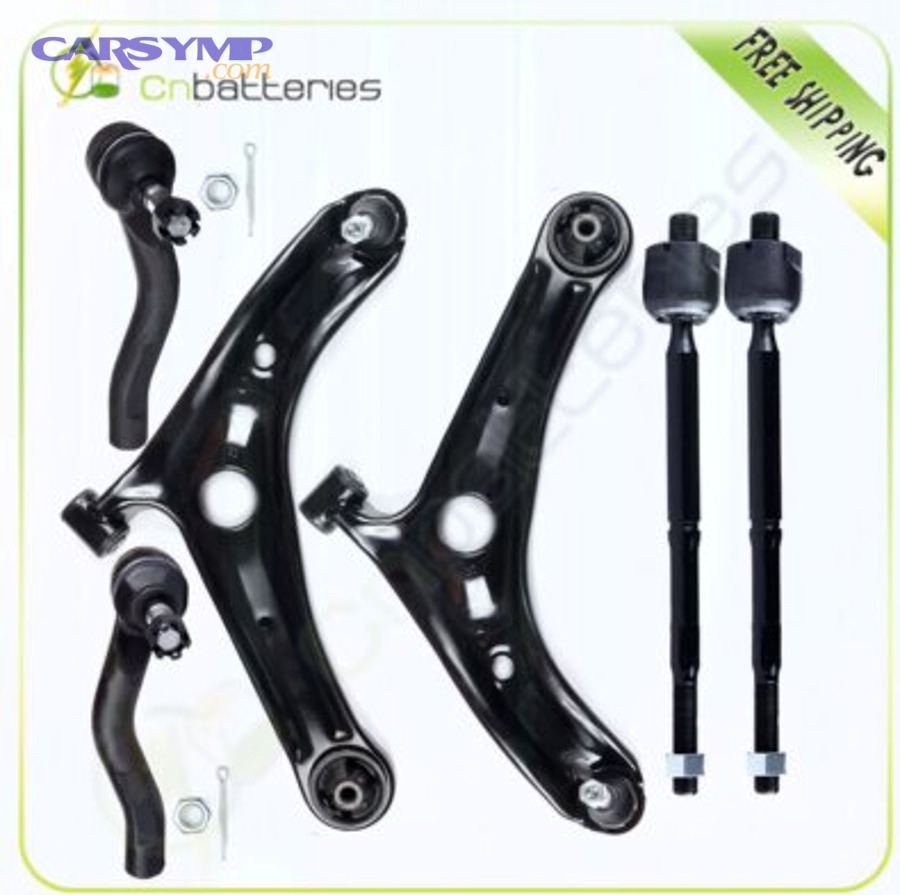
What Is the Difference Between an Inner Tie Rod and an Outer Tie Rod End?
There are two distinct types of tie rod components based on their position in the steering assembly: the inner tie rod end and the outer tie rod end, and understanding Inner vs outer tie rod differences is essential for estimating the correct labor time.
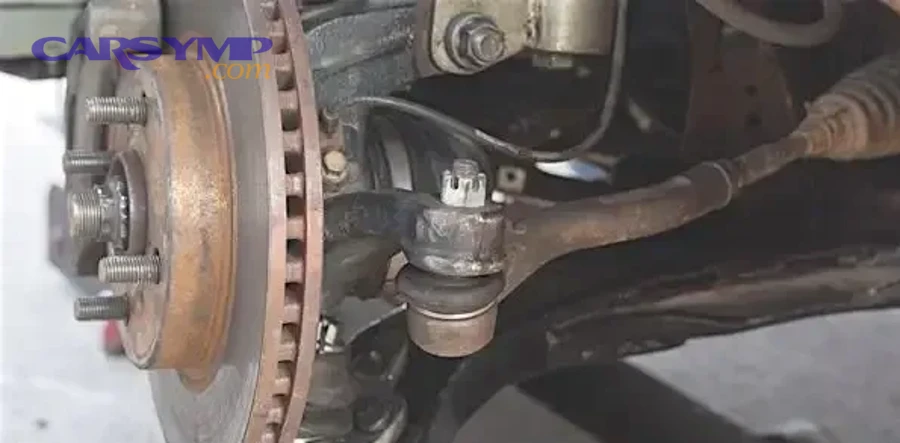
Specifically, the outer tie rod end sits between the inner tie rod and the steering knuckle at the wheel. It is exposed, accessible without removing major components, and connects directly to the hub. This accessibility is the primary reason outer tie rod replacements carry a much shorter labor time — typically 0.6 to 1.0 hour per side — compared to inner tie rods.
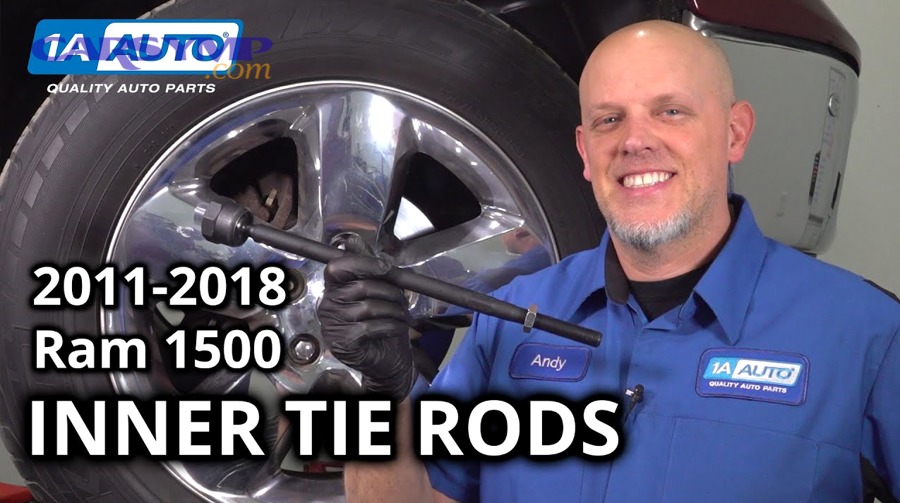
The inner tie rod, by contrast, threads directly into the steering rack body and is covered by a protective rubber boot. Accessing it requires removing the outer tie rod first, sliding off the rack boot, and in some vehicles removing the entire rack from the vehicle. This added disassembly is why inner tie rod replacement consistently carries a labor time of 1.3 to 2.0 hours per side under normal conditions, and up to 3.0 hours on vehicles where rack removal is required.
The two components also wear at different rates. Outer tie rod ends are exposed to road debris, moisture, and impact, making them more commonly replaced. Inner tie rods tend to last longer but are more expensive to service when they do fail — both in parts cost and labor time.
What Does a Tie Rod Replacement Job Actually Include?
A complete tie rod replacement job includes the following steps performed by a mechanic in sequence: lifting the vehicle, removing the wheel, disconnecting the tie rod end from the steering knuckle, threading out the old tie rod, installing the new component to torque specification, reassembling, performing a road test, and then scheduling or performing a wheel alignment.
More specifically, it is important to understand what is not included in the base tie rod labor time quote:
- Wheel alignment is a separate service billed at an additional 1.0 to 1.5 hours of labor
- Boot replacement (if the rack boot is torn) is a separate line item on many invoices
- Rack inspection or steering rack replacement may be recommended but is an entirely different job
- Corrosion removal on high-mileage vehicles can add 30–60 minutes beyond the book rate
Understanding this distinction matters because many shop quotes list only the tie rod labor time. Asking explicitly whether alignment is included — and confirming the parts brand being used — prevents the final invoice from looking very different from the initial estimate.
How Long Does Tie Rod Replacement Take?
There are three main labor time scenarios for tie rod replacement based on component type and scope: outer tie rod only (0.6–1.0 hr per side), inner tie rod only (1.3–2.0 hr per side), and all four tie rod ends combined (1.8–2.6 hrs total), before alignment is added.
The following table summarizes the standard repair time (SRT) ranges mechanics and shops use as book rate benchmarks when billing for this job.
| Scenario | Book Rate (Labor Only) | Notes |
|---|---|---|
| Outer tie rod, one side | 0.6 – 1.0 hr | Faster due to easy access |
| Outer tie rods, both sides | 1.2 – 1.5 hrs | Slight efficiency gain |
| Inner tie rod, one side | 1.3 – 2.0 hrs | Boot removal required |
| Inner tie rod (rack removal required) | 2.9 – 3.0 hrs | Some vehicle platforms |
| Inner + outer, one side | 2.0 hrs (SRT) | Industry standard benchmark |
| All four tie rod ends (both sides) | 1.8 – 2.6 hrs | Package job efficiency |
| Wheel alignment (added separately) | 1.0 – 1.5 hrs | Always required after replacement |
This table reflects standard industry book rates. Actual shop time may exceed these figures for high-mileage vehicles, heavily corroded components, or 4WD/AWD platforms.
How Long Does It Take to Replace an Outer Tie Rod End?
Replacing an outer tie rod end takes approximately 0.6 to 0.7 hours per side under normal conditions, or up to 1.0 hour if corrosion is present on the threads or the taper connection at the steering knuckle.
Specifically, the outer tie rod end’s accessibility is the key factor in its shorter labor time. The component is fully exposed once the wheel is removed, requiring only a tie rod end puller to separate it from the steering knuckle taper and a wrench to thread it off the inner tie rod shaft. Most professional mechanics can complete a single-side outer tie rod replacement in well under an hour on a modern vehicle in reasonable condition.
For both sides together, expect a total labor time of 1.2 to 1.5 hours. The slight efficiency gain comes from the fact that the vehicle is already lifted and the mechanic is already working in the same area. If you are replacing one outer tie rod end, it is worth asking your shop whether both sides show similar wear — replacing them together saves a return visit and a second alignment charge.
How Long Does It Take to Replace an Inner Tie Rod?
Replacing an inner tie rod takes 1.3 to 2.0 hours per side on most vehicles, but can reach 2.9 to 3.0 hours when the vehicle’s design requires removing the entire rack to access the inner tie rod mounting point.
More specifically, inner tie rod replacement involves several steps that outer tie rod work does not. The mechanic must first remove the outer tie rod, then slide back the rubber rack boot to expose the inner tie rod’s threaded connection to the steering rack body. A specialized inner tie rod removal tool — a crowfoot wrench that fits over the rack — is required to break the torque on the inner rod without damaging the rack itself.
On some vehicle platforms, notably certain Chrysler models and vehicles with recirculating ball steering boxes rather than rack-and-pinion systems, the inner tie rod cannot be accessed without dropping the entire rack. In those cases, labor time jumps to approximately 3.0 hours, significantly increasing the total cost of the repair.
Two additional steps affect inner tie rod replacement time that are not required for outer tie rod work:
- Lock washer re-staking or replacement: A tabbed washer locks the inner tie rod in position. Straightening or replacing this component adds time
- Red Loctite application: Many manufacturers and experienced mechanics apply thread-locking compound to the inner tie rod before final torque, requiring clean thread preparation
How Long Does It Take to Replace All Four Tie Rods (Both Sides, Inner and Outer)?
Replacing all four tie rod ends — both inner and outer on both sides — takes approximately 1.8 to 2.6 hours as a combined job, which is notably more efficient than adding up individual side-by-side labor times separately.
This efficiency comes from the mechanic’s workflow when both sides are completed in the same appointment. The vehicle lift is set once, both front wheels are removed together, and the technician works across both sides without repeated setup. The industry SRT (Standard Repair Time) for inner plus outer on one side is 2.0 hours; for all four ends as a package, the combined labor typically runs between 1.8 and 2.6 hours depending on the vehicle and shop data source.
Replacing all four tie rods at once is the most cost-effective approach when both sides show wear, because the alignment — which is billed once regardless of whether one or four tie rods were replaced — represents a significant share of the total labor cost. Paying for alignment twice in two separate appointments is considerably more expensive than completing the full job in one visit.
Does Tie Rod Replacement Require a Wheel Alignment?
Yes, tie rod replacement always requires a wheel alignment immediately after the repair, because removing and reinstalling a tie rod changes the length of the steering linkage, which directly alters the toe angle of the front wheels.

Alignment required after tie rod replacement is not optional — it is a safety and mechanical necessity. Below is a closer look at how much time alignment adds and what happens if it is skipped.
How Long Does a Wheel Alignment Take After Tie Rod Replacement?
A front toe alignment after tie rod replacement takes approximately 1.0 hour, while a full four-wheel alignment takes 1.5 hours, and the appropriate type depends on the vehicle’s suspension design and what other components were disturbed during the repair.
Specifically, there are two alignment scenarios relevant to tie rod replacement:
- Toe-in adjustment only: When only the front tie rods were replaced and the rear suspension was not disturbed, a front-end toe adjustment is the minimum required. This typically takes 1.0 hour.
- Full 4-wheel alignment: Recommended when multiple front suspension components were replaced simultaneously, when rear suspension components are adjustable, or when the vehicle’s geometry readings suggest rear correction is needed as well. This takes 1.0 to 1.5 hours.
Some shops bundle alignment into a flat-rate tie rod package at a promotional price. It is always worth confirming whether the quoted price includes alignment before authorizing the work — if alignment is not included, add $75 to $150 to the total estimate depending on your region and the shop’s hourly rate.
What Happens If You Skip the Alignment After Replacing a Tie Rod?
Skipping wheel alignment after tie rod replacement causes immediate toe misalignment, which leads to uneven and accelerated tire wear, steering pull to one side, and reduced vehicle stability — particularly at highway speeds.
More specifically, the toe angle determines whether your front tires point slightly inward (toe-in) or outward (toe-out) relative to the vehicle centerline. When a tie rod is replaced, the new component’s effective length is rarely identical to the worn part’s final position, meaning the toe setting changes the moment the new tie rod is installed.
Driving even a short distance with incorrect toe causes the outer or inner edges of the front tires to scrub against the road surface with every rotation. Tire wear that would normally develop over 30,000 miles can appear in as few as 5,000 to 10,000 miles without proper alignment. Beyond tire wear, misaligned toe also loads the new tie rod end unevenly, potentially shortening the lifespan of the part that was just replaced.
How Does Labor Time Vary by Vehicle Type?
Tie rod replacement labor time varies across four main vehicle categories — compact sedans, mid-size sedans, SUVs and trucks, and luxury or European vehicles — based on drivetrain configuration, component accessibility, and manufacturer design complexity.

To better understand these differences, the following sections compare how vehicle type and drivetrain affect actual shop time beyond the standard book rate.
Does Labor Time Differ Between Inner and Outer Tie Rod Replacement Across Vehicle Models?
Inner tie rod labor time varies more significantly across vehicle models than outer tie rod labor time, because inner tie rod access depends directly on how the manufacturer designed the steering rack mounting and the surrounding suspension components.
Specifically, the following pattern holds across most vehicle categories:
- Compact FWD sedans (Honda Civic, Toyota Corolla): Outer tie rod 0.6–0.7 hrs per side; inner tie rod 1.3–1.5 hrs per side. Rack is accessible without removal on most models.
- Mid-size FWD sedans (Toyota Camry, Nissan Altima): Outer tie rod 0.6–0.8 hrs; inner tie rod 1.5–2.0 hrs. Inner access varies significantly by model year.
- SUVs and crossovers (4WD/AWD): Outer tie rod 0.8–1.2 hrs due to larger components; inner tie rod 1.8–2.5 hrs.
- European and luxury vehicles (BMW, Audi, Mercedes): Labor times may equal or exceed SUV ranges, and shop rates are significantly higher ($150–$200+/hr), making total cost considerably more.
For all categories, labor time is quoted using AllData or Mitchell1 book rates, which represent the manufacturer-suggested time for an experienced technician. Actual time may exceed book rate for high-mileage vehicles.
Which Vehicles Take the Longest to Replace Tie Rods?
Vehicles that require steering rack removal to access inner tie rod ends take the longest to service, with labor times reaching 2.9 to 3.0 hours for inner tie rod replacement alone — before alignment is added.
More specifically, three factors push any vehicle’s tie rod labor time beyond the standard book rate:
- Rack removal requirement: Certain Chrysler platforms (PT Cruiser, older Dodge models), some European vehicles, and select trucks require the mechanic to fully unbolt and lower the steering rack before the inner tie rod can be reached. This adds 1.0 to 1.5 hours to the inner tie rod labor time.
- 4WD/AWD complexity: Four-wheel-drive and all-wheel-drive vehicles often have additional front axle components and skid plates that must be removed to gain access to tie rod ends. Lifted trucks can add time simply due to component height and working position.
- Corrosion and mileage: High-mileage vehicles — particularly those operated in salt-belt regions — frequently have corroded taper connections and seized threads that require heat, penetrating oil, and additional removal time. This real-world factor alone can double the labor time on a vehicle that should theoretically take 0.7 hours per side by the book.
How Much Does Tie Rod Replacement Cost in Total?
Total tie rod replacement cost is calculated using three variables: labor hours multiplied by the shop’s hourly rate, plus parts cost, plus wheel alignment fee — and the combined total ranges from approximately $120 for a single outer tie rod at an independent shop to over $1,200 for a full four-tie-rod replacement at a dealership.
The following sections break this calculation down by shop type and by repair scenario so you can build an accurate estimate for your specific situation.
What Is the Average Labor Cost for Tie Rod Replacement at an Independent Shop vs. a Dealership?
Independent shops charge $75 to $120 per hour for tie rod replacement labor, while dealerships typically bill $120 to $200 or more per hour — meaning the same 2.0-hour inner tie rod job costs $150 to $240 at an independent shop versus $240 to $400 at a dealership for labor alone.
Specifically, the shop type you choose has a larger impact on total cost than parts selection on most tie rod jobs:
- Independent shops: Lower hourly rates, often willing to use quality aftermarket parts (Moog, TRW, Delphi) that match OEM specifications at lower cost. More likely to negotiate flat-rate packages.
- Dealerships: Higher hourly rates, OEM parts standard, but may offer manufacturer warranty coverage on parts and labor. For vehicles still under powertrain warranty or extended service contracts, dealership service may be the appropriate choice.
- Chain repair shops (Firestone, Midas, Pep Boys): Rates fall between independent and dealer, often in the $90–$130/hr range. Alignment packages are frequently available as a promotional bundle.
Regardless of shop type, always request a written quote that explicitly states the labor hours being charged, the parts brand and part number, and whether wheel alignment is included. This prevents invoice surprises and makes it straightforward to compare quotes across two or three shops.
What Is the Total Estimated Cost to Replace Tie Rods Including Alignment?
The following table provides estimated total repair costs across three common tie rod replacement scenarios, combining labor, parts, and alignment at both independent shop and dealership rates.
| Scenario | Independent Shop Total | Dealership Total | Notes |
|---|---|---|---|
| Outer tie rod, one side + alignment | $120 – $180 | $200 – $320 | Most common single repair |
| Inner tie rod, one side + alignment | $250 – $420 | $400 – $650 | Rack access adds labor |
| All four tie rod ends + alignment | $450 – $750 | $600 – $1,200 | Best value per rod replaced |
Parts quality also affects these estimates. OEM-equivalent aftermarket brands such as Moog and TRW generally cost $25 to $80 per tie rod end, while OEM dealer parts can run $80 to $200 per end on some vehicles. The choice between aftermarket and OEM rarely affects labor time but meaningfully affects parts cost.
To get the most accurate estimate for your vehicle, contact two or three local shops with your vehicle’s year, make, model, and drivetrain, and specify whether you need inner tie rod replacement, outer tie rod replacement, or both sides. Ask each shop to confirm their hourly labor rate and whether alignment is included in the quoted price.
When Should You Replace Your Tie Rods — And Can You Do It Yourself?
There are four primary warning signs that indicate tie rod replacement is needed — steering wheel looseness, clunking sounds over bumps, uneven tire wear, and vehicle pulling — and whether you should replace them yourself depends on your tool availability, mechanical experience, and willingness to handle the mandatory post-repair alignment.
This section expands into the micro-semantic territory of when and how to act on tie rod wear, including How to check tie rod play safely and whether a DIY approach is practical.
What Are the Warning Signs That Your Tie Rods Need Replacing?
The four most common warning signs that tie rods need replacing are: a loose or wandering steering wheel with excessive play, a clunking or knocking sound when driving over bumps or turning, uneven tire wear concentrated on the inner or outer edges, and the vehicle consistently pulling to one side during straight-line driving.
Specifically, each symptom maps to a different stage of tie rod wear:
- Steering wheel play: When a tie rod end’s ball-and-socket joint wears beyond its tolerance, it allows lateral movement that translates into imprecise steering response. You may notice the front wheels do not immediately respond when you begin turning.
- Clunking over bumps: A worn ball joint within the tie rod end knocks against its housing under suspension load changes — such as hitting a pothole or turning into a driveway — producing a distinctive metallic clunk from the front corner of the vehicle.
- Uneven tire wear: Because tie rods directly control toe angle, a worn tie rod that allows the toe to shift causes the tire to drag at an incorrect angle, producing rapid wear on one edge. This is often the first visually observable sign of tie rod wear.
- Vehicle pulling: A significantly worn tie rod on one side can cause the toe setting to deviate enough that the vehicle tracks off-center, requiring the driver to constantly apply corrective steering input.
How to check tie rod play safely at home requires no special tools. With the vehicle safely supported on a jack stand (never on a floor jack alone), grip the front tire at the 9 o’clock and 3 o’clock positions and attempt to push and pull it horizontally. Any detectable lateral movement — clunking or looseness felt through the tire — indicates worn tie rod ends. Repeat with your hands at the 12 o’clock and 6 o’clock positions to check ball joint play instead.
Additionally, torn rubber rack boots are an early warning sign specifically for inner tie rod wear. The boot protects the inner tie rod and steering rack from moisture and debris. Once the boot tears, contamination accelerates wear on the inner tie rod’s ball joint rapidly. If you see a torn or cracked boot during a tire rotation or oil change, have the inner tie rod inspected at the same time.
How Long Does It Take to Replace a Tie Rod Yourself (DIY)?
DIY tie rod replacement takes 2 to 12 hours depending on the technician’s experience level, tool availability, and the condition of the vehicle — compared to 0.6 to 2.0 hours for a professional mechanic working with a full tool set and a hydraulic lift.
More specifically, the wide DIY time range reflects three real variables:
- Experience level: A first-time DIY mechanic working from a repair manual on a moderately corroded vehicle may need a full day. An experienced home mechanic familiar with front suspension work can complete an outer tie rod replacement in 1 to 2 hours.
- Tool availability: Completing this job safely requires a hydraulic floor jack, jack stands, a tie rod end puller (or pickle fork), a torque wrench, and an inner tie rod removal tool for inner tie rod work. Without the correct tools, steps that take a professional minutes can take a DIYer hours.
- Vehicle condition: High-mileage vehicles with rust on the taper connection and tie rod threads are where DIY time diverges most dramatically from book rate. Heat, penetrating oil soak time, and repeated removal attempts can add hours.
One critical point that every DIYer must accept: tie rod replacement always requires a professional wheel alignment afterward, regardless of who performed the tie rod installation. This means a DIYer saves only the tie rod labor cost — not the alignment fee — and must arrange for the vehicle to be driven carefully to an alignment shop immediately after the repair is completed.
Is It Worth Replacing Both Tie Rods at the Same Time?
Yes, replacing both tie rod ends simultaneously is worth it in most cases, because the additional labor time for the second side is minimal — approximately 0.5 to 1.0 extra hours — while the savings on avoiding a second alignment appointment and second visit are significant.
However, the decision depends on the actual condition of both sides. If the opposite tie rod end shows measurable play or visible wear, replacing it in the same appointment is unambiguously the better financial decision. If the opposite side was recently replaced and shows no wear, replacing it prematurely wastes money on parts.
On the other hand, if you are already paying for an alignment — which you must do regardless — and both sides show any degree of wear, the marginal cost of replacing the second side while the vehicle is already lifted and the mechanic is already in position is the lowest it will ever be. Most experienced mechanics recommend symmetric replacement when wear is comparable on both sides.
How Does Tie Rod Replacement Labor Time Compare to Other Steering and Suspension Repairs?
Tie rod replacement sits in the mid-range of steering and suspension repairs in terms of labor complexity, taking longer than sway bar link replacement but significantly less time than rack-and-pinion replacement or control arm replacement with bushing press work.
The following table contextualizes tie rod replacement labor time against the most commonly associated steering and suspension jobs, helping you assess whether a mechanic’s quote is proportionate.
| Repair | Typical Labor Time | Alignment Required? |
|---|---|---|
| Sway bar end links (both sides) | 0.5 – 1.0 hr | No |
| Outer tie rod end (one side) | 0.6 – 1.0 hr | Yes |
| Inner tie rod end (one side) | 1.3 – 2.0 hrs | Yes |
| Ball joint replacement (one side) | 1.5 – 2.5 hrs | Yes |
| All four tie rod ends | 1.8 – 2.6 hrs | Yes |
| Lower control arm (one side) | 2.0 – 3.5 hrs | Yes |
| Rack-and-pinion replacement | 3.0 – 5.0 hrs | Yes |
In short, tie rod replacement is one of the more accessible front-end repairs in terms of labor cost, particularly for outer tie rod ends. The total cost rises most significantly when inner tie rod access requires rack removal, when both sides are done simultaneously with alignment, or when a dealership’s labor rate applies to a luxury vehicle. Armed with these benchmarks, any car owner can evaluate a mechanic’s quote with confidence — and recognize immediately when the quoted hours fall outside the standard range.