


An interference engine is a type of four-stroke internal combustion engine in which the valves and pistons are designed to share the same physical space inside the cylinder — but at carefully timed, separate moments. Under normal operating conditions, this design is perfectly safe and highly efficient. The risk emerges the instant that precise timing is disrupted. When a timing belt or chain fails, the pistons continue moving by inertia while the valves freeze in place, and the resulting collision causes damage so severe it can total an engine in a fraction of a second. Understanding this risk is not optional knowledge for car owners — it is essential.
The single most important factor separating a safe interference engine from a destroyed one is the timing system. The timing belt or timing chain is the mechanical conductor that keeps pistons and valves moving in perfect synchronization. As long as that system holds, an interference engine is no more dangerous than any other. The moment it fails — whether through wear, neglect, or sudden breakage — the engine’s internal geometry becomes its own worst enemy. This is why timing belt replacement is not a suggestion in the owner’s manual; it is a critical maintenance event with a hard deadline.
For many car owners, the immediate follow-up question is: does my car even have an interference engine? The answer, for the vast majority of modern vehicles, is yes. Automakers have adopted interference designs almost universally because they produce higher compression ratios, better power output, improved fuel economy, and lower emissions than non-interference alternatives. The performance benefits are significant — but they come with a maintenance obligation that cannot be ignored.
Finally, if a timing failure has already occurred, car owners face a different and equally important question: how bad is the damage, and is the engine worth saving? The severity of interference engine damage ranges from a handful of bent valves requiring cylinder head work to complete engine destruction demanding a full rebuild or replacement. Next, this article walks through everything you need to know — from the mechanics of how an interference engine works, to the real-world consequences of timing failure, to the practical steps that keep your engine safe.
What Is an Interference Engine?
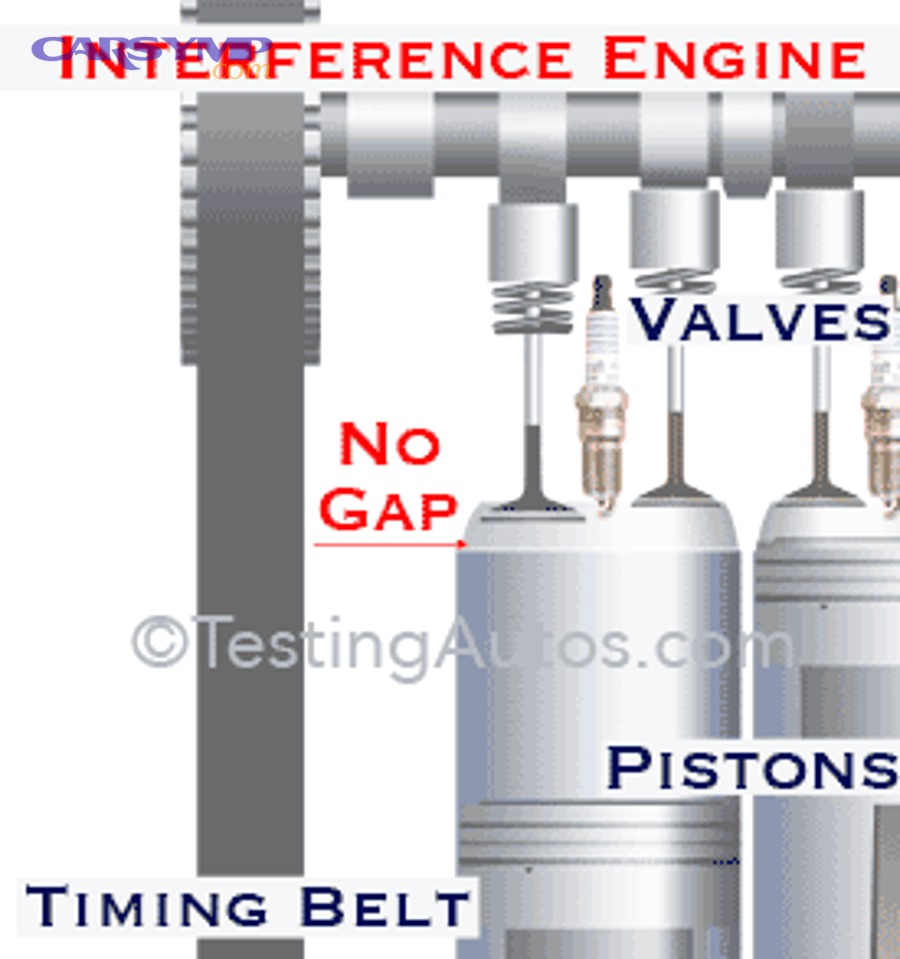
An interference engine is a four-stroke internal combustion piston engine in which one or more valves, when fully open, extend into the travel path of the pistons — occupying the same cylinder space, but at different points in the engine’s cycle.
To better understand what makes this design both powerful and risky, it helps to look closely at how the engine’s internal parts work together — and what keeps them from destroying each other.
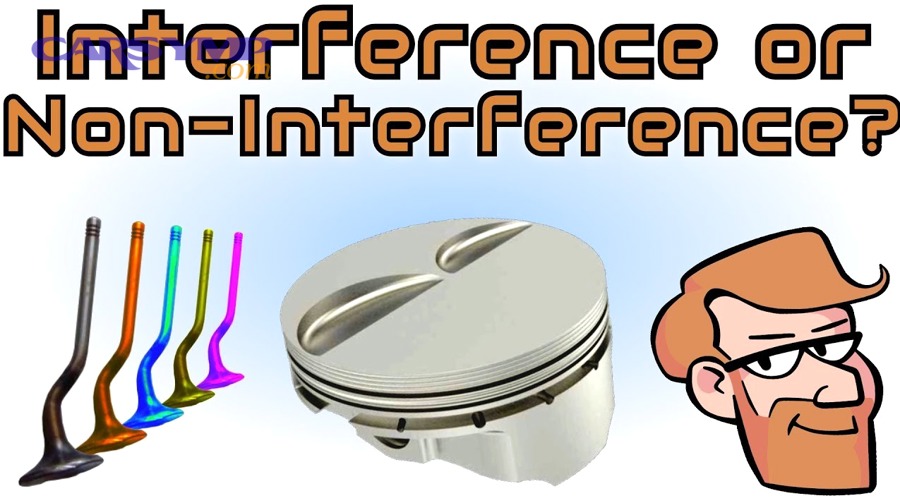
How Does an Interference Engine Work?
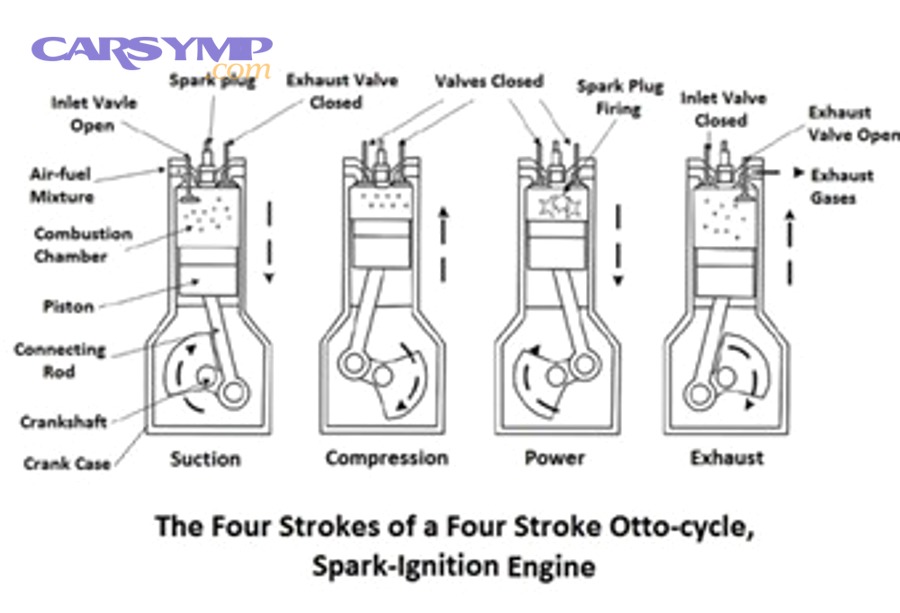
Inside every four-stroke engine, a carefully choreographed sequence of movements takes place thousands of times per minute. The crankshaft converts the up-and-down motion of the pistons into rotational power. The camshaft controls the opening and closing of the intake and exhaust valves. The timing belt or timing chain links these two shafts, ensuring their rotations stay perfectly synchronized.
In an interference engine, the geometry of the combustion chamber is deliberately compact. The valves are designed to open wider and extend further into the cylinder than in a non-interference design. This allows for a smaller combustion chamber volume, which raises the compression ratio and extracts more energy from each fuel-air charge. The result is more power, better efficiency, and lower emissions — all qualities that modern engine regulations demand.
The critical safety mechanism is timing. At the top of the piston’s stroke — a position called Top Dead Center (TDC) — the valves must be fully closed. The timing belt or chain guarantees this. As long as synchronization is maintained, the pistons and valves never physically meet. The moment synchronization is lost, the engine’s design turns against itself.
What Is the Difference Between an Interference Engine and a Non-Interference Engine?
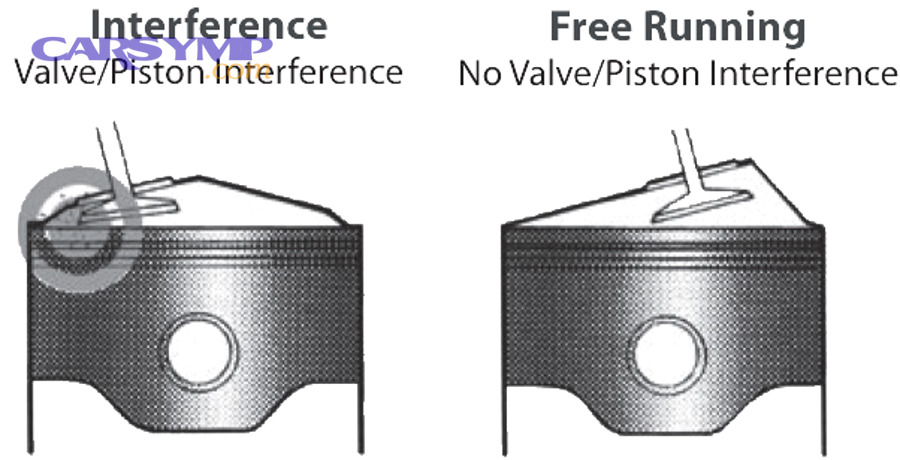
The defining difference between an interference engine and a non-interference engine — also called a free-wheeling engine — lies in whether a gap exists between the fully open valve and the piston at the top of its stroke.
- Non-interference engine: A physical gap always exists between the piston at TDC and any fully open valve. Even if the timing belt breaks, the piston cannot reach the valve. The engine stalls, nothing collides, and the repair is limited to replacing the belt or chain.
- Interference engine: No such gap exists. The piston’s travel path overlaps with the open valve’s position. Timing alone prevents contact. If timing fails, collision is inevitable.
This distinction has enormous practical consequences. In a non-interference engine, a broken timing belt is a breakdown. In an interference engine, a broken timing belt can be a catastrophe. The table below summarizes the key differences:
| Feature | Interference Engine | Non-Interference Engine |
|---|---|---|
| Valve-piston clearance at TDC | None (paths overlap) | Gap always present |
| Compression ratio | Higher | Lower |
| Power and efficiency | Greater | Lesser |
| Timing belt failure consequence | Engine damage likely | Engine stalls only |
| Prevalence in modern cars | Very common | Increasingly rare |
This table illustrates why the interference design dominates modern vehicle production despite its greater risk — the performance trade-off is simply too valuable for automakers to ignore.
What Are the Risks of an Interference Engine?
There are three primary risk levels associated with interference engine timing failure — minor valve damage, moderate internal debris damage, and severe engine destruction — all triggered by the same root cause: loss of timing synchronization.
Specifically, the nature and extent of the damage depends on exactly when and how timing fails, and at what engine speed the failure occurs. Let’s explore each failure scenario in detail.
What Happens When the Timing Belt Breaks in an Interference Engine?
Yes — a broken timing belt can completely destroy an interference engine, and it happens with no warning in the majority of cases.
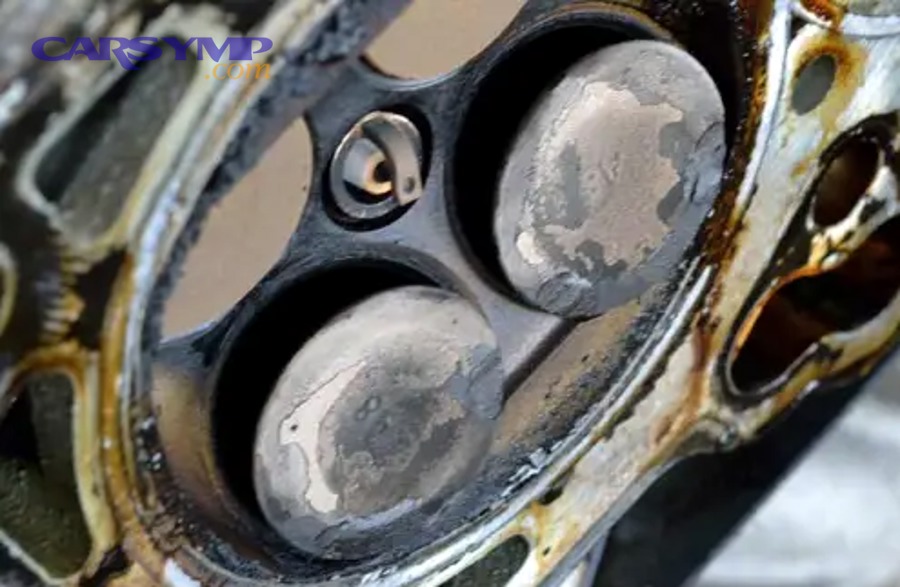
The sequence of events unfolds in milliseconds. The timing belt snaps. The camshaft stops rotating almost instantly. The valves that were open at the moment of failure freeze in their open position. The crankshaft and pistons, driven by the momentum of the engine and vehicle, continue moving. The pistons travel upward, and with no valve to avoid, they slam into the stationary, open valves at high velocity.
The consequences of that impact include:
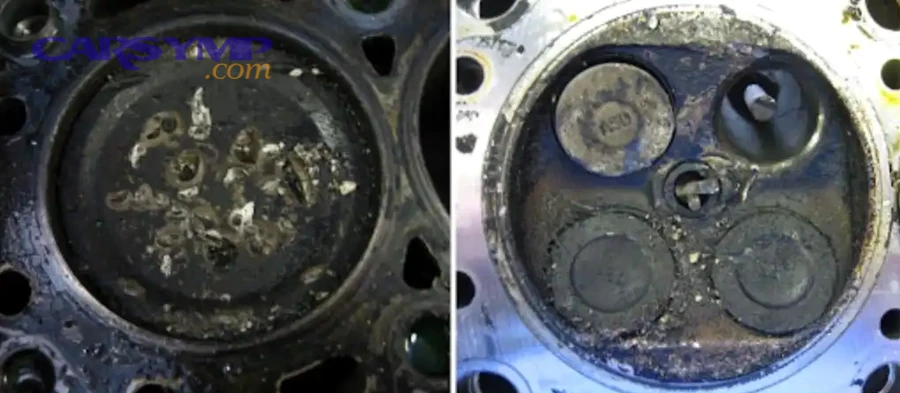
- Bent valves — the most common outcome; a bent valve cannot seal the combustion chamber
- Broken valve stems — more severe; a broken piece of metal is now loose inside the cylinder
- Piston damage — the piston crown can crack or deform on impact
- Cylinder wall scoring — if debris circulates, it gouges the cylinder walls
- Connecting rod damage — in extreme cases, the force propagates down the connecting rod
The engine will not restart. In most cases, a check engine light is the least of the driver’s concerns — the vehicle will be completely undrivable.
What Happens When the Timing Chain Jumps or Skips?
A timing chain jump produces a different failure mode than a full break — one that is often more insidious because the engine may continue running in a degraded state, masking the severity of the problem.
When a timing chain “jumps” — meaning it slips one or more teeth on the crankshaft or camshaft sprocket — the two shafts fall out of phase with each other. The pistons and valves are now operating on a shifted schedule. Depending on how far out of phase they are, the result can range from soft contact (slight valve bending) to hard contact (same damage as a belt break).
Warning signs of a jumped or stretched timing chain include:
- Engine rattling on cold start (slack chain slapping the timing cover)
- Rough idle or misfires
- Reduced power and poor throttle response
- Check engine light with codes related to camshaft or crankshaft position correlation
These symptoms must be treated as urgent. A jumped chain that is not immediately repaired will eventually slip further — or break entirely.
How Severe Is the Engine Damage From an Interference Collision?
Interference engine damage falls into three distinct severity levels, each with different repair paths and costs.
Level 1 — Minor (Bent Valves Only):
A few valves are bent but the pistons and cylinder walls are undamaged. The cylinder head must be removed and sent for valve replacement and resurfacing. Repair cost typically ranges from $1,500 to $3,000 depending on the vehicle. The engine block is reusable.
Level 2 — Moderate (Broken Valve With Debris):
A valve breaks off and the fragment circulates inside the cylinder. The cylinder wall may be scored, and the piston crown may be damaged. Repair requires a cylinder head rebuild plus possible piston and bore work. Costs climb to $3,000–$6,000.
Level 3 — Severe (Full Internal Destruction):
The connecting rod is damaged, multiple cylinders are affected, or the engine block itself is compromised. At this level, the engine must be fully rebuilt or replaced. Costs can reach $5,000–$10,000 or more, and in many cases, the vehicle’s value does not justify the repair.
The RPM at the moment of failure is a key variable. An interference collision at idle produces far less destructive force than one at highway cruising speed. The higher the engine speed when the belt or chain fails, the more catastrophic the damage.
What Causes Timing Failure in an Interference Engine?
Timing failure in an interference engine is caused by four main factors: normal material wear, maintenance neglect, tensioner and idler failure, and coolant or oil contamination of the timing belt.
Understanding these causes helps car owners identify the warning signs before failure occurs — because in most cases, the belt does not announce its imminent failure.
What Are the Warning Signs of a Worn Timing Belt or Chain?
There are several categories of warning signs that a timing belt or chain is approaching failure, organized here by type:
Audible signs:
- High-pitched squealing or chirping from the front of the engine — indicates a glazed or slipping belt
- Rattling or clattering on cold start — indicates a stretched or loose timing chain
Visual signs (requires inspection):
- Visible cracks, fraying, or missing teeth on the timing belt
- Glazed, shiny surface on the belt (indicates hardening and imminent failure)
- Debris or rubber dust inside the timing cover
Performance signs:
- Engine misfires or rough idle without a clear cause
- Difficulty starting, especially when the engine is warm
- Sudden loss of power
The most dangerous reality of timing belt failure is that many belts give no warning at all. They appear intact during visual inspection and then snap without notice. This is precisely why replacement intervals exist — not as conservative suggestions, but as the primary defense against surprise failure.
How Often Should You Replace a Timing Belt on an Interference Engine?
Timing belt replacement should occur at the interval specified by the manufacturer — typically between 60,000 and 100,000 miles, or every five to seven years, whichever comes first.
The interval varies by vehicle and engine design. Some manufacturers specify 60,000 miles; others extend to 105,000 miles. The key rule is to follow the owner’s manual exactly and not to extend the interval based on visual inspection alone, since belts can appear healthy while their internal fiber reinforcement is already compromised.
For timing chains, the guidance is different. Chains are designed to last the engine’s lifetime and do not have a scheduled replacement interval under normal conditions. However, they are not immune to failure. Chain stretch, tensioner wear, and guide deterioration are real failure modes — particularly in high-mileage engines or those that have experienced oil starvation due to infrequent oil changes.
One important piece of Water pump replacement with timing belt advice: on many interference engines, the water pump is driven by the timing belt and is located inside the timing cover. Since accessing the timing belt requires significant labor, most mechanics and manufacturers recommend replacing the water pump at the same time as the timing belt. Replacing both components together costs only marginally more than replacing the belt alone — but avoids repeating the same labor-intensive job if the water pump fails shortly afterward.
How Can You Prevent Interference Engine Damage?
Yes — interference engine damage can be prevented in nearly all cases through disciplined scheduled maintenance, and the cost of prevention is a fraction of the cost of repair.
The prevention strategy is straightforward: replace the timing belt before it fails, monitor the timing chain for early warning signs, and address any timing-related symptoms immediately. More specifically, the following maintenance steps form a complete protection plan.
What Maintenance Steps Protect an Interference Engine?
A complete interference engine protection plan includes five key actions:
1. Replace the timing belt on schedule.
This is the single most important step. Do not extend the interval. Do not wait for symptoms. Replace the belt at or before the manufacturer’s specified mileage or age limit. A belt that looks fine can still be at the end of its service life internally.
2. Replace tensioners and idler pulleys at the same time.
Tensioners maintain the correct belt tension throughout its service life. An old tensioner that fails after a new belt is installed can cause the new belt to jump or slip — recreating the same risk. Replacing the full timing kit (belt, tensioners, idler pulleys) as a set is the recommended approach.
3. Replace the water pump simultaneously.
Following the water pump replacement with timing belt advice means combining both services in one visit. The additional part cost is small relative to the labor already being performed, and it eliminates the risk of a water pump failure contaminating the new timing belt with coolant.
4. Change engine oil at the correct intervals.
Timing chains depend on oil pressure for lubrication and tensioner operation. Dirty, low, or degraded oil accelerates chain wear and tensioner failure. Regular oil changes are part of timing chain maintenance.
5. Address timing-related symptoms immediately.
Any rattling on cold start, misfiring, rough running, or check engine codes related to camshaft or crankshaft timing should be diagnosed without delay. These symptoms often precede failure by days or weeks — enough time to act if the warning is heeded.
Regarding DIY timing belt replacement risks: while timing belt replacement is technically a DIY job on some vehicles, it carries significant risks for non-professionals. Incorrect timing alignment by even one tooth can create an interference condition in an engine that was previously safe. On interference engines especially, a DIY error during timing belt installation can cause immediate valve-piston contact the moment the engine starts. Unless a car owner has the correct tools, a detailed service manual, and verified experience with the specific engine, professional installation is strongly recommended.
Does Having a Timing Chain Instead of a Belt Reduce the Risk?
Yes — a timing chain generally reduces the risk of sudden, unexpected timing failure compared to a timing belt, but it does not eliminate the risk of interference engine damage.
Timing chains are made of metal and are lubricated by engine oil throughout their operational life. They are significantly more durable than rubber timing belts and do not have a scheduled replacement interval. This gives chain-equipped interference engines a meaningful safety advantage: there is no ticking clock counting down to a mandatory belt replacement.
However, timing chains are not failure-proof. The following failure modes are well documented:
- Chain stretch — a worn chain can jump teeth on the sprockets, causing a timing misalignment
- Tensioner failure — hydraulic or mechanical tensioners wear out, allowing chain slack
- Guide wear — plastic timing chain guides can crack or break, allowing the chain to contact the timing cover or slip
The key difference is that chain failure typically develops gradually and announces itself with symptoms (rattling, misfires, codes) before catastrophic failure. Belt failure, by contrast, is often sudden and silent. Both types require attention — chains simply provide more warning time in most cases.
How Do You Know If Your Car Has an Interference Engine?
The majority of modern gasoline and diesel passenger vehicles have interference engines, and car owners can confirm their specific engine type through several reliable methods.
Identifying your engine type is a practical first step — because if your vehicle has an interference engine, timing maintenance immediately becomes a priority item rather than a routine suggestion.
Which Cars and Engines Are Interference Engines?
Most vehicles manufactured from the mid-1990s onward use interference engine designs. This includes the majority of vehicles from Toyota, Honda, Volkswagen, Audi, BMW, Ford, General Motors, Subaru, Mazda, and virtually every other mainstream automaker. Non-interference engines still exist but are increasingly rare in new production.
To confirm whether your specific engine is an interference design, use these methods:
- Owner’s manual and service documentation — some manufacturers explicitly note the interference designation
- Gates Timing Component Application Guide — Gates Corporation, a leading timing belt manufacturer, publishes a guide in which interference engines are marked with a star symbol; this is one of the most widely referenced resources among mechanics
- Wikipedia’s list of interference engines by make and model — frequently updated and useful for quick reference
- Ask your mechanic during the next oil change — any competent technician will know immediately
How Can You Tell If Your Interference Engine Has Already Been Damaged?
Interference engine damage is diagnosed through three main methods: a leak-down test, valve gap measurement, and borescope visual inspection.
Leak-down test:
A leak-down test introduces compressed air into each cylinder through the spark plug hole with the piston at TDC. The percentage of air that escapes — and the location from which it escapes — reveals the condition of the valves, piston rings, and combustion chamber. A high leak-down percentage from a specific cylinder, combined with air escaping from the intake or exhaust, points directly to a bent or broken valve in that cylinder.
Valve gap inspection:
On some engines, the valve cover can be removed to inspect the valve stems and measure valve clearances. A valve gap that is significantly larger than the specified range indicates a bent valve — the stem has deformed and is no longer seating correctly.
Borescope inspection:
A borescope is a small camera inserted through the spark plug hole to visually inspect the inside of the cylinder. Many professional repair shops use borescopes to assess piston crown condition and look for visible valve damage, scoring on cylinder walls, or foreign debris. This method provides direct visual confirmation of damage before any disassembly begins.
Symptoms that suggest interference damage has occurred include: engine cranks but does not start after a known or suspected timing event, extremely rough running with severe misfires, sudden dramatic loss of compression on one or more cylinders, and unusual metallic sounds from the engine after a timing belt or chain replacement.
Is an Interference Engine Worth the Risk Compared to a Non-Interference Engine?
An interference engine wins in performance and efficiency, a non-interference engine is best for simplified maintenance risk, and for most car owners the interference design is the unavoidable reality of modern vehicle ownership — managed effectively through scheduled maintenance.
The comparison between these two engine philosophies is not purely academic. It frames exactly why timing maintenance carries the weight it does, and what car owners are actually trading when they choose — or inherit — an interference-equipped vehicle.
What Are the Performance and Efficiency Advantages of an Interference Engine?
Interference engines outperform non-interference engines across every major performance metric, and this advantage is built directly into their design geometry.
Because the interference design allows the combustion chamber to be made smaller and the valves to open wider and earlier, three compounding benefits emerge:
- Higher compression ratio — more energy is extracted from each combustion event
- Better volumetric efficiency — the wider valve opening allows more air and fuel to enter and more exhaust to exit per cycle
- Valve overlap optimization — in high-performance applications, the timing of valve opening and closing can be tuned more aggressively, allowing the engine to “breathe” better across the RPM range
These advantages translate directly into real-world benefits: more horsepower per liter of displacement, better fuel economy at highway speeds, and lower tailpipe emissions — all of which are required to meet modern fuel economy and environmental standards.
Why Do Almost All Modern Engines Use an Interference Design?
Modern interference engines have become the universal standard because non-interference engines cannot meet the fuel economy and emissions targets mandated by regulators in the United States, Europe, and most major automotive markets.
The EPA’s Corporate Average Fuel Economy (CAFE) standards in the US, and equivalent regulations in Europe, have consistently pushed automakers toward engine designs that extract more energy from less fuel. The compression ratio advantage of the interference design is one of the most cost-effective ways to achieve this. Turbocharging, direct injection, and variable valve timing technologies — all of which are now mainstream — function most effectively when combined with an interference engine architecture.
The result is an industry-wide convergence: almost every new passenger vehicle sold today, regardless of brand or price point, uses an interference engine. For car owners, this means timing maintenance is not a niche concern — it is a universal responsibility.
What Is the True Cost of Owning a Car With an Interference Engine?
The true cost of interference engine ownership is most accurately understood as a risk management equation: the cost of prevention versus the cost of failure.
The following table provides a realistic cost comparison to help car owners frame this decision:
| Maintenance or Repair Event | Typical Cost Range |
|---|---|
| Timing belt replacement (belt only) | $200 – $500 |
| Full timing kit (belt + tensioners + pulleys) | $400 – $900 |
| Timing kit + water pump (combined service) | $600 – $1,200 |
| Timing chain service (tensioner + guides) | $500 – $1,500 |
| Bent valve repair (cylinder head work) | $1,500 – $3,000 |
| Moderate interference damage (head + piston work) | $3,000 – $6,000 |
| Severe damage (full engine rebuild or replacement) | $5,000 – $10,000+ |
This table makes the economic argument for preventive maintenance impossible to ignore. A $700 timing belt service — including the full kit and water pump — can prevent a $7,000 engine replacement. No other single maintenance item offers a comparable return on investment in terms of catastrophic failure prevention.
It is also worth noting that on high-mileage or older vehicles, a severe interference engine failure often results in the vehicle being declared a total loss, since the cost of repair exceeds the vehicle’s market value.
Can an Interference Engine Be Converted to a Non-Interference Design?
In theory, yes — an interference engine can be modified to create sufficient valve-to-piston clearance to function as a non-interference design, but in practice this is not a viable option for the average car owner.
Creating piston-to-valve clearance in an interference engine requires replacing the pistons with units that have deeper valve relief pockets machined into the crown, or reducing the valve lift and duration through camshaft replacement. Both approaches require engine disassembly, custom or aftermarket parts, and precise clearance measurement to verify the modification achieved the intended result.
In performance engine building, this kind of work is sometimes done deliberately — builders creating high-compression race engines often verify and adjust piston-to-valve clearance as a standard step to prevent unintended interference when using aggressive camshaft profiles. However, the goal in those cases is usually to maintain interference while controlling it precisely, not to eliminate it.
For daily-driven vehicles, this type of modification is neither cost-effective nor practical. The correct strategy for managing interference engine risk remains what it has always been: replace the timing belt on schedule, monitor the timing chain for symptoms, and never defer a timing service beyond its recommended interval.
In short, the interference engine is one of the most successful design compromises in automotive engineering — delivering the performance and efficiency that modern drivers and regulators demand, at the cost of a maintenance obligation that is entirely manageable when taken seriously. The risk is real, the damage potential is severe, and the prevention is straightforward. Every car owner with an interference-equipped vehicle now has the knowledge to act accordingly.