


Most car owners know their timing belt needs replacing — but far fewer know exactly when, how often, or what happens when they wait too long. The timing belt is a rubber-toothed belt that synchronizes the rotation of your engine’s crankshaft and camshaft, keeping intake and exhaust valves opening and closing in precise coordination with your pistons. When this belt wears out or snaps, the consequences range from a stalled vehicle to a completely destroyed engine. The general replacement schedule falls between 60,000 and 100,000 miles, or every five to seven years — whichever comes first — but the correct interval for your specific vehicle depends on your make, model, engine type, and driving conditions.
Knowing the right mileage and time interval is only half the equation. Even within that window, your timing belt can send you warning signals — ticking noises, rough idling, difficulty starting — that indicate it is deteriorating faster than expected. Recognizing these signs of timing belt is due or failing early is just as important as following the manufacturer’s schedule, because a belt that breaks without warning on an interference engine can collapse your engine in an instant.
Delaying a timing belt replacement is one of the costliest gambles a car owner can take. The service itself runs between $350 and $1,500 depending on your vehicle — but a snapped belt in an interference engine can lead to bent valves, broken pistons, and cylinder head damage that pushes repair costs into the thousands. Understanding the real cost of waiting versus the cost of timely maintenance reframes this service not as an expense, but as engine insurance.
Beyond the belt itself, a smart replacement also includes the water pump, tensioner pulley, and idler pulleys — components that share the same labor window and carry similar lifespans. Below, this guide covers every dimension of timing belt replacement: what it does, when to replace it, what warning signs to watch for, what it costs, and how it compares to the timing chain systems found in modern vehicles.
What Is a Timing Belt and What Does It Do in Your Engine?
A timing belt is a reinforced rubber-toothed belt that connects the crankshaft and camshaft, synchronizing the four-stroke combustion cycle — intake, compression, power, and exhaust — so that engine valves open and close at precisely the right moment relative to the pistons.
To better understand what is at stake when this belt wears out, it helps to know exactly what role it plays inside your engine.
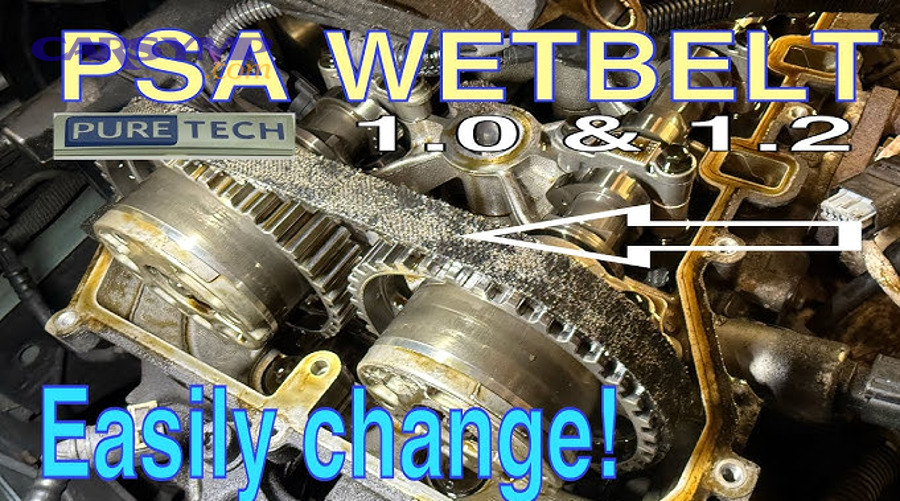
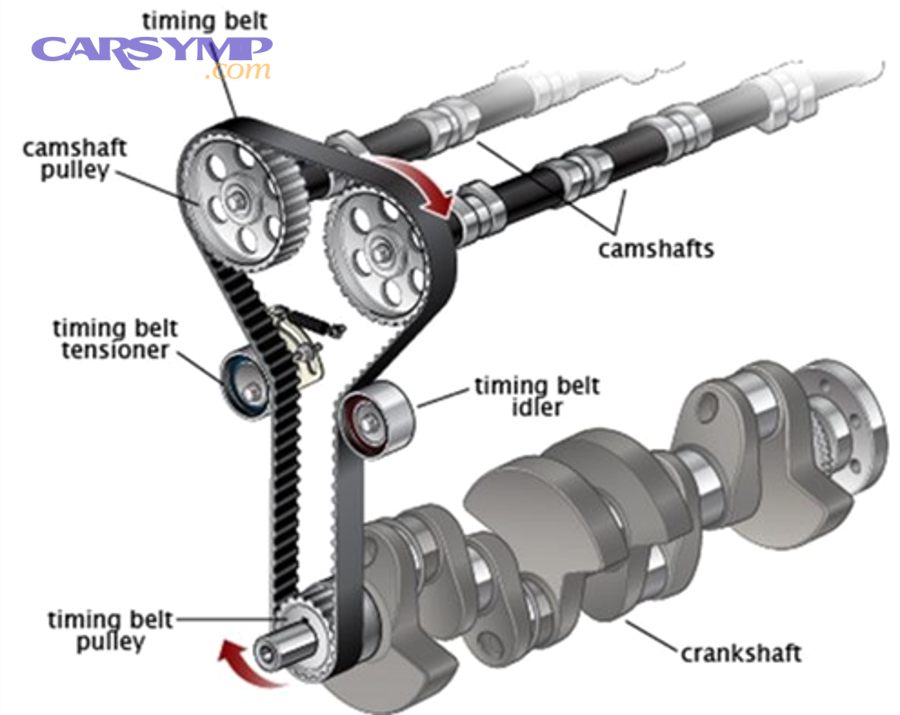
The timing belt runs along the front of the engine, looping around the crankshaft sprocket at the bottom and the camshaft sprocket at the top. Its toothed inner surface grips these sprockets with precision, ensuring that the camshaft turns at exactly half the speed of the crankshaft — the correct ratio for a four-stroke engine. In many vehicles, the same belt also drives the water pump, oil pump, and injection pump, making it responsible for cooling and lubrication as well as valve timing. A rubber belt is used rather than a rigid gear train because it absorbs vibration, operates quietly, and is significantly lighter — but that same rubber construction means it has a finite lifespan and must be replaced on schedule.
What Is the Difference Between a Timing Belt and a Timing Chain?
A timing belt uses a rubber-toothed belt to connect the crankshaft and camshaft, while a timing chain uses a metal roller chain similar to a bicycle chain to accomplish the same task. Both perform identical functions — synchronizing valve and piston movement — but they differ significantly in maintenance requirements, lifespan, and noise characteristics.
- Material: Timing belts are molded rubber reinforced with aramid fiber or steel cords. Timing chains are metal links running on sprockets, similar in construction to a motorcycle drive chain.
- Maintenance: Timing belts require scheduled replacement — typically every 60,000 to 100,000 miles. Timing chains are designed to last the life of the engine with regular oil changes, though they are not truly maintenance-free.
- Noise: Timing belts run quietly. Timing chains produce more mechanical noise and can develop a characteristic rattle when the chain stretches or the tensioner weakens.
- Weight and space: Timing belts are lighter and allow for a more compact engine front end. Timing chains require an oil-lubricated housing and are heavier.
- Cost of failure: When a timing belt fails, it is a scheduled replacement event. When a timing chain fails due to neglect, the repair is typically more expensive because chain systems are not designed for routine removal.
What Is an Interference Engine vs. a Non-Interference Engine?
An interference engine is one where the pistons and valves occupy the same physical space in the cylinder at different points in the combustion cycle — meaning that if the timing belt fails and the crankshaft and camshaft fall out of sync, the pistons will physically collide with the open valves. A non-interference engine is designed with sufficient clearance between pistons and valves so that even if timing is lost, no physical collision occurs.
This distinction completely changes the stakes of a timing belt failure. In a non-interference engine, a snapped timing belt causes the engine to stall immediately and refuse to restart — an inconvenience that requires a tow and a belt replacement, but no internal engine damage. In an interference engine, which includes the majority of modern high-compression engines from Honda, Toyota (on belt-equipped models), Volkswagen, Audi, Subaru, and many European manufacturers, the same failure causes pistons to strike open valves at high speed. The result is bent valves, cracked pistons, cylinder head damage, and in severe cases, a connecting rod punching through the engine block — a total engine loss. Knowing whether your engine is an interference type makes the timing belt replacement schedule non-negotiable rather than merely recommended.
How Often Should You Replace a Timing Belt? (Mileage & Time Intervals)
There are two replacement triggers for a timing belt: mileage and age. Most manufacturers recommend replacement every 60,000 to 100,000 miles, but the belt must also be replaced every five to seven years regardless of mileage, because rubber degrades over time even in a low-mileage vehicle.

Specifically, the correct interval for your vehicle is not a universal number — it is defined by your manufacturer’s maintenance schedule, your engine type, and your driving conditions. The table below provides a reference starting point, but always verify against your specific owner’s manual.
What Are the Recommended Timing Belt Intervals by Car Make and Model?
There are significant variations in recommended timing belt replacement intervals across manufacturers, engine families, and model years. The following table outlines commonly referenced intervals for popular vehicles as a guide — always consult your specific owner’s manual for confirmation.
The table below summarizes factory-recommended timing belt replacement intervals for common makes and models, distinguishing between normal and severe driving conditions where applicable:
| Make / Model | Engine | Normal Interval | Severe Interval | Interference Engine? |
|---|---|---|---|---|
| Honda Accord / CR-V (older) | 2.4L i-VTEC | 105,000 miles | 60,000 miles | Yes |
| Toyota Camry (belt-equipped) | 2.2L 5S-FE | 90,000 miles | 60,000 miles | No |
| Subaru Outback / Forester | 2.5L EJ series | 105,000 miles | 60,000 miles | Yes |
| Volkswagen Golf / Jetta (1.8T / 2.0 TDI) | 1.8T / TDI | 80,000 miles | 40,000 miles | Yes |
| Audi A4 (pre-chain era) | 1.8T | Inspect at 75K, replace at 90K | — | Yes |
| Volvo S40 / V70 | 2.4L / T5 | 105,000 miles | — | Yes |
| Hyundai Sonata (older) | 2.4L DOHC | 60,000 miles | — | Yes |
| Nissan Qashqai | 1.5 dCi diesel | 72,000 miles / 72 months | — | Yes |
| Mitsubishi Eclipse / Galant | 2.4L 4G69 | 60,000 miles | — | Yes |
| Ford Escape (2.3L Duratec) | 2.3L Duratec | 120,000 miles | — | No |
According to Gates Corporation — the global OEM timing belt supplier — replacement intervals for interference engines operating under severe conditions should be treated as hard limits, not suggestions, because the cost of a single belt failure far exceeds the cost of multiple scheduled replacements.
Does Driving Condition Affect How Often You Should Replace a Timing Belt?
Yes, driving conditions significantly affect the timing belt replacement interval. Severe driving conditions — including extreme heat, frequent short trips, heavy stop-and-go traffic, towing, high altitudes, and dusty or humid environments — can reduce the recommended replacement mileage by 30 to 50 percent compared to normal conditions.
The reason is straightforward: the timing belt is a rubber component operating in a heat-intensive environment. Under severe conditions, that heat exposure is amplified and sustained. Frequent cold starts followed by rapid warm-ups cause repeated expansion and contraction cycles that harden and crack rubber faster than sustained highway driving. Towing places added load on the belt and its tensioner. In high-humidity climates, moisture accelerates the degradation of the rubber compound and the adhesion between the reinforcing cords and the belt body. A vehicle driven primarily in city traffic in a hot climate may legitimately require timing belt replacement at 60,000 miles even if the manufacturer’s published normal-duty interval is 105,000 miles.
Should You Replace a Timing Belt Based on Age Even If the Mileage Is Low?
Yes, a timing belt should be replaced based on age even when mileage is low, because rubber degrades through heat cycles, oxidation, and ozone exposure over time — independently of how many miles the vehicle has been driven.
A common and costly misconception is that a low-mileage vehicle is automatically a low-risk vehicle. A ten-year-old car with 40,000 miles on the original timing belt is not a safe vehicle — it is a vehicle with a decade-old rubber belt that has experienced thousands of heat cycles, seasonal temperature swings, and sustained oil vapor exposure inside the timing cover. The fibers reinforcing the belt degrade whether or not the engine is running. Industry consensus from major manufacturers and belt suppliers sets a maximum age threshold of seven years regardless of mileage. When purchasing a used vehicle with unknown service history, the conservative and correct action is to assume the timing belt is overdue and replace it immediately rather than wait for a mileage milestone that may already be past.
What Are the Warning Signs That Your Timing Belt Needs Replacing?
There are four main categories of warning signs that a timing belt is due or failing: audible noise from the engine front end, visible physical deterioration on the belt surface, engine performance symptoms such as misfires and rough idling, and non-start conditions caused by complete belt failure.

However, the most important caveat about warning signs is this: timing belts frequently fail without any prior warning at all. The signs listed below are indicators that a belt may be approaching or past failure, but the absence of these signs does not mean the belt is safe. Adherence to the scheduled replacement interval is the only reliable protection.
What Does a Failing Timing Belt Sound Like?
A failing timing belt most often produces a high-pitched squealing, ticking, or slapping noise from the front of the engine, typically during startup or acceleration. These sounds originate from three distinct failure modes that are worth distinguishing.
- Ticking or clicking: Often caused by missing or cracked belt teeth that cause the belt to slip partially on the camshaft or crankshaft sprocket. This sound is intermittent at low RPM and worsens under load.
- High-pitched squealing: Typically produced by a worn or glazed tensioner pulley or idler pulley rather than the belt itself. The belt rides over a bearing that is beginning to seize, creating a bearing-on-rubber squeal that can sound similar to a slipping serpentine belt.
- Slapping or flapping: Indicates that belt tension has been lost — either because the tensioner has weakened or because the belt has stretched beyond its serviceable length. A loose belt can slap against the timing cover, producing a rhythmic noise that changes with engine speed.
None of these sounds should be ignored or diagnosed without removing the timing cover for visual inspection.
What Are the Visual Signs of a Worn Timing Belt?
Visual inspection of a timing belt reveals several clear indicators of wear: cracking on the outer surface, fraying along the belt edges, missing or sheared teeth on the inner surface, a glazed or shiny appearance, and visible oil or coolant contamination.
When the timing cover is accessible, a proper visual inspection evaluates the following:
- Surface cracking: Fine surface cracks are acceptable on a belt within service interval. Spider-web cracking across the belt face, deep transverse cracks between teeth, or cracking that extends to the reinforcing cords indicates a belt that is past serviceable life.
- Missing teeth: Any missing or significantly worn belt teeth require immediate replacement. Teeth bear the entire load of synchronizing the crankshaft and camshaft sprockets, and a single missing tooth can allow the belt to skip under load.
- Glazed surface: A shiny, glass-like inner belt surface indicates heat hardening and loss of the rubber’s grip properties. A healthy belt has a matte, slightly textured surface.
- Oil contamination: Oil from a leaking camshaft seal, crankshaft seal, or valve cover gasket that reaches the timing belt dissolves the rubber compound over time. A belt with oil staining must be replaced even if it appears otherwise intact.
- Tension check: On accessible belts, pressing the longest run of the belt between sprockets with your thumb should produce approximately ¼ to ½ inch of deflection. More than that indicates a worn or failed tensioner.
Can Engine Misfires or Rough Idling Be Caused by a Timing Belt?
Yes, engine misfires and rough idling can be directly caused by a timing belt that has stretched or partially skipped on its sprocket, throwing off the precise valve timing the engine requires for correct combustion.
When a timing belt wears, it can elongate slightly, allowing the camshaft to lag behind the crankshaft. This shift in valve timing — even by a few degrees — alters when intake and exhaust valves open and close relative to piston position. The result is incomplete combustion, which manifests as misfires under load, rough idling at low RPM, hesitation during acceleration, and reduced fuel economy. In more advanced cases where the belt has partially jumped a tooth on the sprocket, valve timing can be sufficiently disrupted to cause the engine to run on fewer cylinders, stall repeatedly, or refuse to start. A persistent misfire with no obvious ignition or fuel system cause should always include timing belt condition as a diagnostic consideration, especially on a vehicle approaching its replacement interval.
What Happens If You Don’t Replace Your Timing Belt on Time?
Failing to replace the timing belt on schedule puts the engine at risk of catastrophic internal damage when the belt breaks, including bent valves, broken pistons, cylinder head damage, and in severe cases, complete engine destruction — with repair costs ranging from $3,000 to over $10,000.

The financial logic of timely timing belt replacement is unambiguous. A full timing belt replacement service, including the water pump and tensioner kit, typically costs between $350 and $1,500. An engine rebuild following interference engine belt failure routinely costs $3,000 to $5,000. A complete engine replacement on a mid-size sedan can reach $7,000 to $10,000 or more in parts and labor. The belt replacement is not an optional maintenance item — it is the least expensive version of the only two outcomes available to the engine.
Can a Broken Timing Belt Destroy Your Engine Instantly?
Yes, a broken timing belt can destroy an interference engine instantly — in milliseconds — because the pistons and open valves collide at high velocity the moment the crankshaft and camshaft lose synchronization.
In an interference engine running at highway speed, the pistons travel at extraordinary velocity. When the timing belt snaps, the crankshaft continues to spin freely while the camshaft stops. Within a fraction of a revolution, pistons moving upward strike valves that are still in the open position. Bent valves are the minimum consequence. In more severe failures, the valve stem punches through the piston crown, connecting rods are bent by the sudden mechanical shock, and the cylinder head sustains damage that renders it irreparable. The driver experiences an abrupt loss of power, possibly a loud bang, and the engine refuses to restart. In a non-interference engine, the same belt failure results in an immediate stall with no internal damage — the vehicle must be towed, but the engine is intact.
Is It Safe to Continue Driving With a Worn Timing Belt?
No, it is not safe to continue driving once a timing belt has exceeded its replacement interval or has shown visible signs of wear, because the belt can fail at any moment without further warning and without any relationship to how it appeared during the last inspection.
Rubber fatigue does not follow a linear or predictable progression once a belt passes its serviceable life. A belt that appears intact during a Monday morning inspection can snap on Tuesday afternoon at highway speed. Unlike a worn brake pad that provides an audible wear indicator, or a low tire that provides visible deflection, a timing belt gives no consistent pre-failure signal. The only reliable safety margin is replacement on schedule. Drivers who are aware that their belt is overdue and choose to delay because the car is “still running fine” are making a high-stakes gamble on a component that fails instantaneously and irreversibly.
What Parts Should You Replace at the Same Time as the Timing Belt?
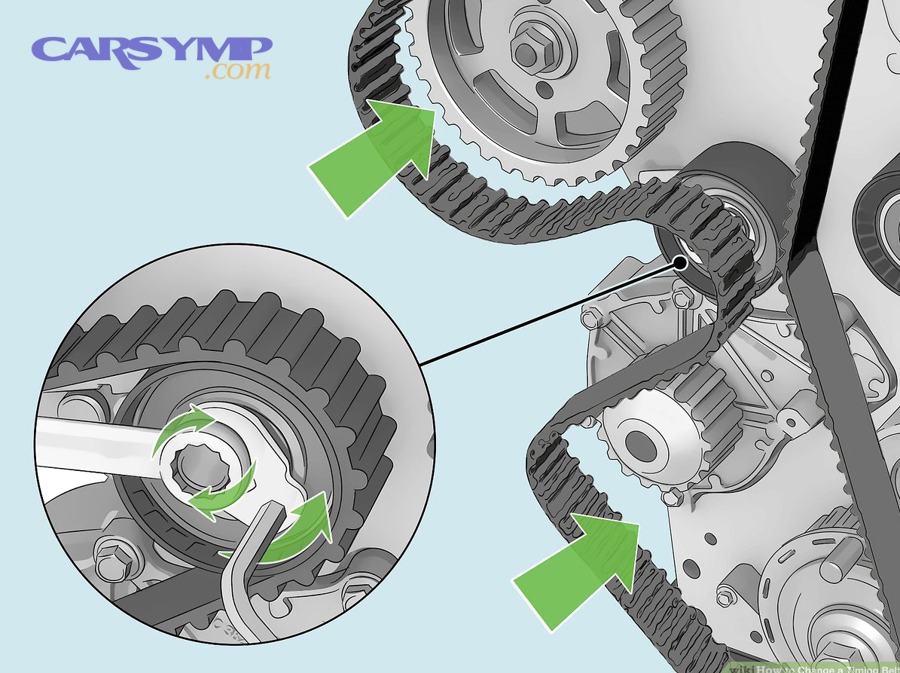
There are five main components that should be replaced during a timing belt replacement: the timing belt itself, the water pump, the belt tensioner, the idler pulley, and the camshaft and crankshaft seals — because these components share the same labor access window and carry comparable service lifespans.

The logic is purely economic. A timing belt replacement requires the disassembly of the front of the engine, including removal of engine covers, drive accessories, and in many cases the engine mount. The labor cost of this access — often three to five hours — represents the majority of the total service cost. Replacing adjacent components during the same job adds modest parts cost but adds no significant labor cost. Replacing those same components six months later because one failed requires paying the full labor cost again from scratch.
Should You Replace the Water Pump When Changing the Timing Belt?
Yes, the water pump should almost always be replaced during a timing belt service, because on engines where the timing belt drives the water pump — which includes the majority of belt-equipped engines — the water pump bearings have the same service life as the belt and are fully accessible only when the belt is removed.
A water pump that fails after a fresh timing belt replacement forces the technician to disassemble the entire front of the engine again, paying full labor costs a second time for a job that could have been completed in one visit. More critically, a water pump failure in service can leak coolant onto the new timing belt, saturating the rubber and causing premature belt failure. The cost of a replacement water pump — typically $30 to $120 for the part — is negligible compared to either outcome. The only exception is on engines where the water pump is driven by the serpentine belt rather than the timing belt, in which case the water pump is accessible independently and the shared-labor argument does not apply.
What Other Components Should Be Included in a Timing Belt Kit?
A complete timing belt service kit should include the timing belt, tensioner pulley, idler pulley, water pump, camshaft seal, and crankshaft seal — with optional inclusion of the valve cover gasket and thermostat depending on mileage and vehicle condition.
The following table describes each component, its failure risk at the timing belt interval, and the consequence of skipping its replacement:
| Component | Why Replace Now | Risk if Skipped |
|---|---|---|
| Tensioner pulley | Bearing wears on same schedule as belt | Bearing failure causes belt to lose tension or snap |
| Idler pulley | Guides belt under constant load | Seized idler shreds or derails the belt |
| Water pump (belt-driven) | Shares labor access; similar lifespan | Leak contaminates new belt; repeat labor cost |
| Camshaft seal | Degrades with heat cycling over same period | Oil leak saturates and destroys new belt |
| Crankshaft seal | Same age and exposure as camshaft seal | Oil leak at crank pulley destroys belt |
| Valve cover gasket | Often degraded at same mileage | Oil seepage into timing area; optional but prudent |
Gates, Dayco, and Continental all offer pre-packaged timing component kits that bundle these parts at a lower combined cost than purchasing each separately — a practical option that also ensures component compatibility.
How Much Does Timing Belt Replacement Cost?
Timing belt replacement costs between $350 and $1,500 in total, with the majority of the expense attributable to labor rather than parts, because accessing the timing belt requires significant disassembly of the engine front end — typically three to eight hours of technician time.
The wide cost range reflects genuine variation across vehicle platforms, labor markets, and service providers. A straightforward replacement on a Honda CR-V at an independent shop may cost $400 to $600. The same service on a Volkswagen TDI diesel, with its tighter packaging and diesel-specific tensioner hydraulics, can reach $900 to $1,200 at a dealer. Luxury European vehicles with complex timing systems can exceed $1,500. In every case, opting for a complete kit replacement — belt, tensioner, idler, water pump, and seals — adds $100 to $300 in parts but eliminates the risk of a repeat labor charge within the next service interval.
Why Is Timing Belt Replacement So Expensive?
Timing belt replacement is expensive primarily because of labor time — accessing the belt requires removing the engine’s front accessories, harmonic balancer, timing cover, and in some vehicles a portion of the engine mount — a process that takes four to eight hours on many platforms.
The belt itself is typically an inexpensive component, ranging from $25 to $75 for a quality OEM-equivalent belt. It is the disassembly required to reach it that drives the cost. On transversely mounted four-cylinder engines, access is relatively straightforward. On inline six-cylinder and V-configuration engines, the timing system sits deeper in the engine bay, and removal may require supporting the engine on a jack while removing the engine mount for clearance. Once the system is open, the reinstallation requires precise alignment of camshaft and crankshaft timing marks — a step that, if performed incorrectly, results in the engine being reassembled with incorrect valve timing, causing misfires, power loss, or engine damage. This precision requirement means timing belt replacement is not a job for inexperienced DIY mechanics, and the DIY timing belt replacement risks — including incorrect timing mark alignment, improper tensioner preload, and seal re-installation errors — are significant enough that most professionals recommend leaving this service to a qualified technician.
How Do You Know If a Timing Belt Has Already Been Replaced in a Used Car?
The most reliable evidence of a previous timing belt replacement is a dated service record from a repair shop or dealer, a sticker placed on the timing cover by the replacing technician, or physical inspection of the belt and adjacent components by a qualified mechanic who can assess wear relative to the vehicle’s mileage.
When purchasing a used vehicle, always request the complete service history and specifically ask when the timing belt was last replaced. Reputable shops typically place a small sticker on the timing cover — or on a sticker sheet in the door jamb — noting the mileage and date of the replacement. If no documentation exists and the vehicle is within 20,000 miles of its replacement interval, or if the vehicle is more than five years old with no documented replacement, the correct action is to budget for a replacement immediately. The cost of a proactive belt replacement on a used car purchase is a known, manageable expense. The cost of assuming it was already done — and being wrong — is an unpredictable engine failure that may total the vehicle.
Timing Belt vs. Timing Chain: Which Engine Design Wins for Long-Term Reliability?
The timing chain wins for long-term reliability in vehicles with high annual mileage and consistent oil change discipline, while the timing belt wins for lower short-term ownership cost and reduced engine weight — making the better choice dependent on how long you keep the vehicle and how diligently you maintain it.
This comparison matters to every car buyer and owner, because the choice between a belt-driven and chain-driven engine has direct implications for total maintenance cost over the vehicle’s service life.
Do Timing Chains Ever Need to Be Replaced?
Yes, timing chains can and do need replacement, typically between 150,000 and 250,000 miles when properly maintained — but certain engine families are known to require chain replacement significantly earlier due to design weaknesses in the chain tensioner or oil supply to the chain system.
The most common symptoms of a worn timing chain are a rattling or clattering noise from the front of the engine on cold starts — caused by a slack chain slapping the timing chain guide before oil pressure builds — and a check engine light indicating camshaft position timing error codes. BMW N47 diesel engines, Ford EcoBoost 1.6L engines, and certain GM 3.6L V6 engines have documented histories of premature timing chain wear that has resulted in class-action litigation and extended warranty coverage. In these cases, chain replacement at 80,000 to 120,000 miles is not unusual. Regular oil changes at the correct interval using the correct viscosity oil are the single most effective preventive measure for a timing chain system, because chain lubrication is entirely dependent on oil quality and pressure.
Which Car Brands Have Switched From Timing Belts to Timing Chains?
Several major manufacturers have transitioned their primary engine families from timing belts to timing chains over the past two decades, driven by consumer demand for reduced maintenance costs and improved engine longevity.
Notable transitions include:
- Honda: The K-series four-cylinder engine family (introduced 2001) uses a timing chain and replaced the belt-driven B-series and F-series engines in the Civic, Accord, and CR-V. This is one of the most significant transitions in mainstream automotive history.
- Toyota: The 2AZ-FE and later GR-series engines moved to chains. The 5S-FE and 3S-FE belt engines in older Camry and RAV4 models have been completely retired.
- Volkswagen / Audi: The EA888 Gen 3 engine family uses a timing chain where earlier EA113 1.8T engines used belts. However, the TDI diesel range has retained timing belts in many configurations.
- Ford: The Duratec HE family (Focus, Mondeo) transitioned to chains, though the EcoSport and older Ka retained belt systems in certain markets.
- Hyundai / Kia: Newer Theta II and Smartstream engine families use chains, replacing the belt-driven engines found in older Sonata and Optima platforms.
For used car buyers, identifying which side of a brand’s transition history a specific model year falls on can mean the difference between a low-maintenance and a high-maintenance purchase.
Should You Buy a Car With a Timing Belt or a Timing Chain?
A timing chain engine is the better choice for buyers who prioritize low long-term maintenance costs and plan to keep the vehicle beyond 100,000 miles, while a timing belt engine is acceptable for buyers who prefer lower upfront cost, plan to follow the maintenance schedule diligently, and understand the replacement interval requirement before purchasing.
The total cost of ownership calculation depends heavily on how long the vehicle is kept. A buyer who keeps a car for 150,000 miles will pay for one to two timing belt replacements on a belt-driven engine — a known, budgetable cost. A buyer who keeps the same car to 250,000 miles may face two to three belt replacements, potentially approaching the cost of a single timing chain repair. On the other hand, a timing chain engine that develops premature wear due to oil neglect can produce a repair bill that exceeds the combined cost of all scheduled timing belt services on a well-maintained belt engine. The decision is not simply belt versus chain — it is a question of maintenance commitment, ownership duration, and vehicle-specific reliability history.
Does a Timing Belt Fail Differently on Diesel Engines Than on Petrol Engines?
Yes, timing belts on diesel engines are subject to additional stresses compared to petrol equivalents, resulting in shorter recommended replacement intervals and different failure modes driven by higher compression ratios, injector pump loads, and elevated operating temperatures.
Diesel engines operate at compression ratios of 15:1 to 23:1, compared to 9:1 to 12:1 for petrol engines. This higher compression places substantially greater rotational load on the timing belt, because the belt must overcome the resistance of compressing a much denser air charge on every compression stroke. Additionally, most diesel timing systems drive not only the camshaft but also the high-pressure injection pump, adding a third driven component that increases belt tension and fatigue. The result is that many diesel timing belts carry intervals of 60,000 miles or 60 months — significantly shorter than petrol equivalents on the same vehicle platform. Volkswagen’s 2.0 TDI engine, for example, recommends a 40,000-mile severe-duty interval on engines used for towing or commercial operation. Soot contamination from diesel blow-by that enters the timing cover area also accelerates belt degradation in a way that has no equivalent in clean-burning petrol engines. Diesel owners, fleet operators, and commercial vehicle managers should treat the manufacturer’s timing belt interval as an absolute maximum rather than a target, and should adopt a calendar-based replacement cycle even when mileage has not been reached.
Proper timing belt maintenance is not a discretionary service — it is the single most consequential scheduled maintenance item on any belt-driven engine. Whether your vehicle calls for replacement at 60,000 miles or 100,000 miles, whether you drive a diesel or a petrol engine, whether your car is new or has an unknown service history, the principle is the same: replace the belt on schedule, replace it with a complete kit, and verify correct timing after replacement. After replacement, timing verification and test procedures — confirming that camshaft and crankshaft timing marks align correctly and that the engine starts, idles, and accelerates without misfires — are the final step that separates a proper timing belt replacement from one that simply looks complete. The cost of doing this right, on time, every time, is always lower than the cost of doing it wrong once.