


Engine repair cost is determined by two structural forces above all others: how your engine is physically arranged inside the vehicle, and how many hours a technician must spend working around that arrangement. When either variable rises, your final bill rises with it — and understanding why that happens puts you in a far stronger position before you ever walk into a shop.
The layout of your engine — whether it sits inline or in a V-configuration, whether it mounts transversely or longitudinally, whether it runs one camshaft or two — dictates how much of the surrounding drivetrain must be dismantled before the actual repair can even begin. An engine buried sideways in a compact front-wheel-drive bay forces a technician to remove far more components than one sitting upright in a rear-wheel-drive truck, and every extra component removed adds billable time to the job.
Labor hours are the multiplier that turns layout complexity into real dollars. Shops charge using flat-rate labor guides that assign a standardized time to each job by engine type and configuration. When your engine’s layout falls into a high-complexity category, the guide assigns more hours — and your invoice reflects that before a single part is purchased. The gap between a simple and complex repair on the same vehicle platform can run to thousands of dollars, driven almost entirely by labor time.
Beyond layout and labor hours, a range of secondary variables quietly inflate engine repair costs in ways most vehicle owners never see coming. Collateral repairs triggered by accessing the engine, VVT system complexity, interference engine risk, and the difference between what a shop posts as its hourly rate versus what it actually costs per hour all compound one another. To better understand how each of these layers builds your final bill, the sections below break down every major cost driver in full detail.
What Is Engine Repair Cost and What Does It Actually Include?
Engine repair cost is a composite figure made up of three distinct billing categories — parts, labor, and incidental charges — each shaped by the engine’s layout and the scope of work required. Understanding all three prevents invoice shock and helps you evaluate competing quotes accurately.
Specifically, the number that appears on your final invoice is rarely as straightforward as “parts plus an hour of work.” To better understand where that number comes from, it helps to examine what each line item on a repair bill actually represents.

What Is “Book Time” and Why Does It Determine What You Pay?
Book time is the standardized labor hour figure assigned to a specific repair job on a specific engine by a flat-rate labor guide such as AllData, Mitchell ProDemand, or the vehicle manufacturer’s own dealer guide. It is the single most important number on your repair estimate, because most shops charge you for book time — not for the actual clock hours the technician spends on your car.
This distinction matters enormously. A technician who completes a job in fewer hours than book time still earns the full book-time charge for the shop. Conversely, a job that runs over book time is absorbed by the shop, not passed on to the customer — at least in theory. In practice, shops use book time to build predictable pricing, and because book time is set per engine type and layout, your engine’s configuration directly determines how many hours you are billed from the moment you hand over your keys.
Book time values are not universal. The same head gasket replacement on a four-cylinder inline engine may carry a book time of 5 to 7 hours, while the same repair on a transverse V6 with DOHC heads may be assigned 12 to 16 hours in the same guide. The engine layout is doing the pricing work before a wrench is lifted.
What Is Included in an Engine Repair Bill Beyond Parts and Labor?
Beyond the parts cost and the labor charge calculated from book time, a complete engine repair invoice typically includes shop supply fees, diagnostic labor, fluid replacement costs, gasket and seal kits, and charges for any collateral repairs identified during disassembly.
Shop supply fees cover consumables such as rags, solvent, thread locker, and assembly lubricant — these are often a percentage-based line item rather than itemized. Diagnostic labor covers the time spent identifying the failure before repair begins, and this is charged separately from the repair labor on most professional invoices. Fluid replacement is nearly always required after major engine work: coolant, oil, and sometimes transmission fluid must be drained and replaced as part of reassembly.
The most significant hidden cost category, however, is collateral repair. When a technician disassembles the front of the engine to access a head gasket or timing component, they physically pass through or remove the water pump, timing tensioners, cam seals, and front cover gaskets. Replacing these components at the same time adds parts cost but minimal incremental labor, because the labor to access them has already been charged. Skipping them saves money in the short term but often leads to a repeat teardown within months — at full labor cost again.
How Does Engine Layout Directly Drive Up Labor Hours and Cost?
There are four primary engine layout variables — configuration (inline, V, boxer), valvetrain design (SOHC vs. DOHC), mounting orientation (transverse vs. longitudinal), and cylinder count — each of which increases or decreases the base labor hours assigned to virtually every repair job on that engine.

However, these variables do not operate in isolation. A transverse-mounted V6 DOHC engine stacks all four complexity factors simultaneously, producing labor hour totals that can be two to three times higher than a comparable repair on a simple longitudinal inline-four. To better understand how each layout variable contributes, it is useful to examine them individually before considering how they combine.
How Do Inline, V6, and Boxer Engine Layouts Compare in Repair Labor Time?
Inline engines win on accessibility, V6 engines require moderate additional time, and boxer engines demand the most specialized procedures of the three common configurations.
An inline-four engine, mounted longitudinally, presents a clean vertical profile with clear overhead access to the valve cover, timing system, and head. Most repairs approach from a single direction, and removal of surrounding components is limited. Labor hour benchmarks for major jobs on inline-four engines tend to sit at the lower end of guide ranges as a result.
V6 and V8 engines introduce a second cylinder bank, which immediately creates access competition. The rear bank — the one pressed against the firewall — is physically difficult to reach on most vehicles, and repairs to rear-bank components regularly require the removal of intake manifolds, accessory brackets, and in tight installations, partial subframe work. Labor hour assignments on V6 engines typically run 30 to 60 percent higher than equivalent inline-four jobs for this reason.
Boxer engines, used by Subaru and Porsche among others, mount cylinders horizontally on either side of the crankshaft. Their low center of gravity is a performance and handling advantage but a servicing challenge: the engine must often be partially or fully removed to access the heads, making head gasket replacement on boxer engines one of the most labor-intensive jobs in mainstream automotive repair.
Why Do Transversely Mounted Engines Cost More to Repair Than Longitudinal Engines?
Transversely mounted engines cost more to repair because their sideways orientation within a compact engine bay forces technicians to work around, and frequently remove, components that longitudinally mounted engines leave completely clear.
In a longitudinal layout — most common in rear-wheel-drive and many all-wheel-drive vehicles — the engine sits with its crankshaft running front-to-back. The front of the engine, where the timing system and accessory drive live, faces the front of the vehicle with open access. Crane extraction for major work is relatively straightforward.
In a transverse layout — standard in most front-wheel-drive vehicles — the engine sits with its crankshaft running side-to-side. The timing system may face either the wheel well or the firewall depending on the specific installation, and meaningful access often requires removing the wheel, the inner fender liner, axle components, or in complex cases, dropping the subframe and tilting the powertrain. Each of those steps carries labor time, and in a transverse V6, the combination of V-configuration and transverse mounting creates a situation where the repair labor bill regularly exceeds the parts cost by a significant margin.
Does DOHC vs. SOHC Layout Affect How Much You Pay for Engine Service?
Yes, DOHC engine service consistently costs more than equivalent SOHC service, primarily because DOHC designs involve more camshafts, more timing components, more seals, and stricter reassembly verification requirements — all of which add hours.
A SOHC (Single Overhead Cam) engine uses one camshaft per cylinder head. Timing system disassembly involves fewer components, camshaft removal is simpler, and reassembly verification — confirming correct cam timing — requires fewer steps and less specialized tooling.
A DOHC (Double Overhead Cam) engine uses two camshafts per head, one governing intake valves and one governing exhaust valves. Disassembly requires removal of both cam carriers or caps, careful documentation of cam timing positions, and in many cases, the use of engine-specific locking tools to hold cam positions during reassembly. On a four-cylinder DOHC, this adds roughly one to two hours over an equivalent SOHC job. On a V6 DOHC — with four total camshafts across two banks — the added complexity multiplies accordingly.
When Variable Valve Timing (VVT) is present, which it is on the majority of DOHC engines built in the last two decades, additional procedures are required to inspect and correctly position cam phasers and oil control valves. According to data compiled by automotive labor guide publisher Mitchell ProDemand, DOHC timing system service jobs average 40 percent more labor hours than SOHC equivalents on the same engine displacement.
Which Specific Repair Jobs Are Most Sensitive to Engine Layout and Labor Hours?
There are three repair categories where engine layout creates the most dramatic cost variation: head gasket replacement, timing belt and chain service, and full engine swap. Each of these jobs requires deep disassembly that exposes every layout-driven complexity factor at once.
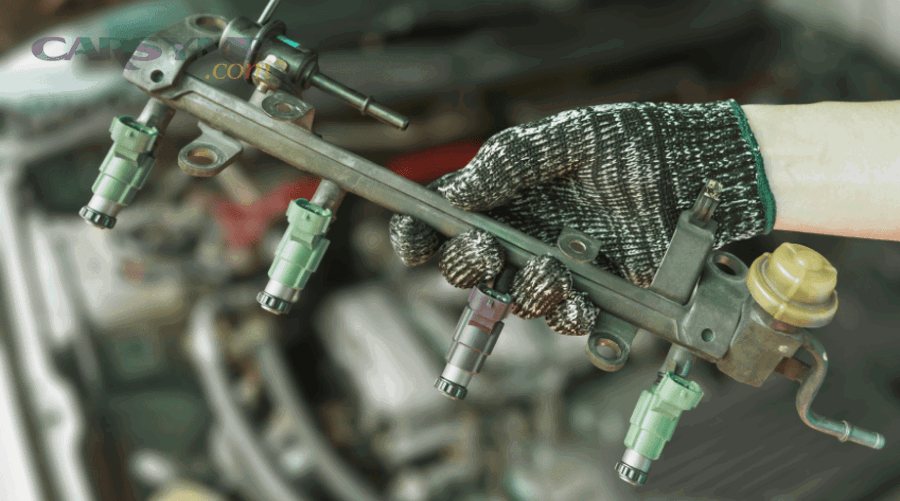
More specifically, these are the jobs where the difference between a simple and complex engine layout can mean the difference between a $900 repair and a $4,500 repair — with identical parts costs. Understanding which jobs fall into this high-sensitivity category helps you budget accurately and evaluate whether repair or replacement makes more financial sense.
Why Does a Head Gasket Replacement Cost So Much More on Certain Engines?
Head gasket replacement costs more on DOHC transverse engines because accessing the head requires dismantling the timing system, cam carriers, VVT components, and in many cases the accessory drive — all before the gasket itself is ever touched.
On a simple SOHC longitudinal engine, a head gasket job involves removing the valve cover, timing cover, cam belt or chain, and head bolts. The path to the gasket is relatively direct. On a transverse DOHC V6, the technician must first gain access to the engine’s front or side (which may involve wheel well removal), then disassemble a four-camshaft timing system with VVT hardware, then remove the head while correctly preserving cam timing marks on two separate banks.
The collateral repair opportunity during this job is substantial. A timing belt replacement cost incurred separately later in the vehicle’s life represents an additional full-disassembly event. Replacing the timing belt, water pump, tensioner, and cam seals simultaneously during head gasket service eliminates that future labor cost entirely and represents the single most cost-effective maintenance bundling available on belt-driven engines.
How Does Engine Layout Affect Timing Belt and Timing Chain Replacement Costs?
Timing belt replacement cost varies from approximately $300 on accessible inline engines to over $1,200 on complex transverse V6 or DOHC platforms, with labor representing the majority of the difference in every case.
Belt-driven engines require physical replacement of the belt on a manufacturer-specified interval — typically every 60,000 to 105,000 miles depending on engine design. The timing belt replacement cost includes the belt itself, tensioner, idler pulleys, and typically the water pump, but the labor hours assigned to the job scale directly with layout complexity. A front-accessible longitudinal inline-four might carry 2 to 3 hours of book time. A transverse DOHC V6 may carry 6 to 9 hours for the same fundamental job.
Timing chains theoretically last the life of the engine, but chain guide wear, tensioner failure, and stretch-related timing errors create significant repair events. Chain service on DOHC engines involves the same full timing system disassembly required by belt jobs, and the labor hours assigned are comparable. The difference is that chain service is unscheduled — it arrives without the budget preparation that a mileage-triggered belt replacement allows.
The Consequences cost of belt failure on interference engines makes layout-driven labor costs even more significant. On an interference engine design — where pistons and valves occupy the same cylinder space at different points in the cycle — a snapped timing belt does not merely strand the vehicle. It causes immediate piston-to-valve contact, bending valves and potentially destroying the head. The resulting repair bill, which combines head rebuild or replacement with a full timing system service, frequently exceeds $3,000 to $5,000 on complex layout engines.
Typical service time and downtime for a timing belt job range from same-day turnaround on simple engines to two to four shop days on complex DOHC transverse configurations, particularly when collateral repairs are identified during disassembly.
Warranty on timing belt jobs varies by shop and parts tier. OEM or OEM-equivalent parts with professional installation typically carry a 12-month or 12,000-mile warranty on labor, with parts warranties extending to 24 months on premium components. Aftermarket belt kits may carry shorter coverage periods, and it is worth confirming warranty terms in writing before authorizing the repair.
What Makes Engine Swap Labor Hours So Variable Across Vehicle Models?
Engine swap labor hours vary because the scope of the swap — whether it is a straight assembly exchange, a long-block installation, or a short-block rebuild — and the engine bay packaging of the specific vehicle combine to create job-time ranges from as few as 6 hours to as many as 20 or more.
The table below summarizes typical book-time ranges by swap scope to give you a realistic baseline before requesting quotes.
| Swap Scope | Typical Book Time | What’s Included |
|---|---|---|
| Straight assembly swap (R&R) | 6–10 hours | Remove old engine, install complete replacement, reconnect |
| Long-block installation | 12–16 hours | Transfer accessories, intake, exhaust, sensors to new long-block |
| Short-block with head R&R | 16–20+ hours | Full disassembly, head transfer, gasket replacement, reassembly |
These figures represent averages across common platforms. Vehicles with transverse V6 engines, tight firewall clearances, or complex accessory routing regularly exceed the upper end of each range. Engine bay packaging — particularly the routing of the wiring harness, coolant lines, and power steering components — adds incremental time that book time may not fully capture on unusual or heavily modified vehicles.
According to AllData labor guide data cited by automotive service training platforms, the spread between the lowest and highest book-time engine swap on a single vehicle platform can be as large as 12 hours, driven entirely by the scope classification and access complexity.
Is Engine Repair Always More Expensive When Labor Hours Are Higher?
Yes, higher labor hours produce a higher final bill in every scenario, but three important nuances — shop hourly rate, overlap labor savings, and scope selection — determine how large that increase actually is and whether it can be partially offset.

However, the relationship between labor hours and total cost is not simply linear once you account for rate variation and bundling opportunities. To better understand how to control the outcome even when layout complexity is fixed, it is worth examining each of these variables directly.
How Do Shop Hourly Rates Multiply the Impact of Engine Layout Complexity?
Shop hourly labor rates multiply the effect of engine layout complexity because the same book-time figure produces dramatically different dollar totals depending on whether it is multiplied by $85 per hour at an independent shop or $175 per hour at a franchised dealership.
Independent shops in most U.S. markets post rates between $80 and $120 per hour. Dealerships typically range from $140 to $200 per hour, with import and luxury brand dealerships sometimes exceeding that range. Specialty shops — those focused on a specific brand or engine family — often charge rates comparable to or higher than dealerships, offset by faster book-time performance due to specialization.
The practical impact is significant. A 10-hour book-time job at $90 per hour produces a $900 labor charge. The same job at $160 per hour produces $1,600. When layout complexity pushes a job from 10 hours to 16 hours, the independent shop’s charge grows from $900 to $1,440. At the dealership rate, the same jump goes from $1,600 to $2,560. Layout complexity and shop rate are multiplicative, not additive — and the combination of a high-complexity layout with a high-rate shop represents the most expensive repair scenario by a wide margin.
Can Bundling Repairs Reduce the Total Labor Hours You Pay For?
Yes, bundling repairs that share disassembly steps reduces the total billable labor hours because access work already charged to one repair is not charged again for the second — this is called overlap labor, and capturing it is one of the most effective cost-control strategies available to vehicle owners.
The clearest example is the timing belt and water pump combination. On most belt-driven engines, reaching the water pump requires removing the same timing covers and belt that the timing belt job already accesses. Replacing the water pump alone, outside of a belt service, might carry a book time of 2 to 4 hours depending on the engine. When performed simultaneously with the belt replacement, the incremental labor added is typically 30 to 60 minutes because the disassembly path is already open.
Additional overlap opportunities during major engine work include: cam seals replaced during timing service, thermostat replaced during coolant system access, valve cover gaskets replaced during head work, and front main seal replaced during any job that involves removing the harmonic balancer. Each of these adds modest parts cost and minimal incremental labor when performed together, but carries full access labor when performed separately.
The most effective way to capture overlap savings is to ask your shop directly: “What components share access with this repair, and what is the incremental parts-only cost to replace them while you’re already in there?” A transparent shop will walk you through the options and provide itemized pricing.
How Can You Estimate Engine Repair Costs Before Visiting a Shop?
Estimating engine repair costs before visiting a shop involves identifying four key variables — engine layout, valvetrain design, job scope, and local labor rate — and using them to build a realistic cost range that protects you from both underestimating and overpaying.
Next, applying that framework consistently across multiple quotes allows you to identify whether price differences between shops reflect genuine scope variation or simply rate and margin differences. The following sections break down exactly what information to gather and how to use it.
What Are the Key Variables You Need to Know Before Getting an Engine Repair Quote?
There are five key variables you need to gather before requesting an engine repair quote: your engine’s configuration type, its valvetrain design, its mounting orientation, the intended scope of the repair, and the prevailing labor rate tier in your local market.
- Engine configuration: Identify whether your engine is an inline-four, V6, V8, or boxer design. This is available on the manufacturer’s window sticker, in the owner’s manual under engine specifications, or on the emissions label under the hood.
- Valvetrain design: Confirm whether your engine is SOHC or DOHC. DOHC engines are the majority on vehicles built after 2005 and will carry higher book times for most major repairs.
- Mounting orientation: Determine whether your engine is transversely or longitudinally mounted. FWD vehicles are almost universally transverse; RWD and most AWD vehicles are longitudinal. This single variable has the largest effect on access labor for engine-forward jobs.
- Job scope: Before calling a shop, determine whether you need a straight R&R (remove and replace complete assembly), a long-block installation, or a short-block rebuild. Each scope carries a significantly different book time, and quotes cannot be accurately compared without agreeing on scope first.
- Local labor rate: Use resources such as RepairPal or AAA’s shop locator to identify the average labor rate range in your ZIP code. This sets your cost baseline before the layout complexity multiplier is applied.
Why Do Two Shops Quote Different Prices for the Same Engine Repair?
Two shops quote different prices for the same engine repair because they are often not quoting the same job — one shop includes collateral repairs and “smart extras” in its estimate while the other prices only the bare minimum scope, and both may be using different labor guide sources that assign different book times to the same engine.
The most common source of quote divergence is scope inclusion. A thorough shop quoting a head gasket replacement on a DOHC engine will include the timing belt, water pump, tensioner, cam seals, and thermostat as part of the job because accessing the gasket exposes all of those components. A shop quoting only the gasket, head resurfacing, and bolts produces a lower number — but the additional work will need to be performed separately, at full labor cost, in the near future.
The second source of divergence is labor guide selection. AllData, Mitchell ProDemand, and manufacturer dealer guides do not always assign identical book times to the same job. Differences of one to three hours between guides on complex DOHC jobs are common, and those hours translate directly into dollar differences at any rate tier.
A third source is parts quality tier. OEM parts, OEM-equivalent parts, and aftermarket economy parts carry meaningfully different price points, and a quote built on economy-tier timing components will read lower than one built on OEM-equivalent parts even at the same labor rate and book time.
To compare quotes accurately, ask each shop to provide a written estimate with: the specific labor hours allocated, the labor rate per hour, the parts brand and tier for all major components, and a list of what collateral repairs are or are not included.
What Other Hidden Factors Can Inflate Your Engine Repair Bill Beyond Layout and Labor?
Four additional variables can significantly inflate engine repair costs beyond layout and labor hours: VVT system complexity, the difference between burdened and posted labor rates, interference engine failure consequences, and the economic tipping point at which repair cost exceeds vehicle replacement value.
In addition, these factors are less commonly discussed in standard repair estimates, which means most vehicle owners encounter them only after they have already authorized work. Understanding them before that moment gives you the ability to ask the right questions and make genuinely informed financial decisions.
How Does Variable Valve Timing (VVT) Technology Add to Engine Service Labor Costs?
VVT technology adds to engine service labor costs because cam phasers, oil control valves, solenoids, and phaser locking tools require additional disassembly steps, diagnostic verification, and in some cases, specialty equipment that non-VVT engines do not involve.
VVT systems are present on the majority of DOHC engines manufactured after approximately 2005, and their presence changes the character of timing system service. Before a technician can remove a VVT-equipped camshaft, the phaser must be correctly positioned and in many cases locked using an engine-specific locking tool to prevent the spring-loaded phaser from moving during disassembly. After reassembly, the VVT system must be verified functional — confirming that solenoids respond correctly and that cam position targets are achieved across the RPM range.
In diagnostic scenarios, VVT complexity also increases pre-repair labor. Misfires, rough idle, and compression loss on a DOHC VVT engine can originate from the cam phaser, the oil control valve, the timing system, or the head itself — and distinguishing between these causes requires additional diagnostic time before repair scope can even be defined.
What Is a Burdened Labor Rate and How Is It Different From the Rate on Your Invoice?
A burdened labor rate is the true cost of employing a technician per hour, including base wages, payroll taxes, health insurance, workers’ compensation, tool allowances, training costs, and facility overhead — a figure that is almost always higher than the posted shop rate visible on your invoice.
The posted shop rate is the per-hour figure used to calculate your labor charge. The burdened rate is an internal shop accounting figure that determines whether the shop is actually profitable on each job. According to the National Automotive Service Task Force and industry accounting frameworks, burdened labor rates in U.S. automotive shops typically run 40 to 70 percent above base technician wages once all employer costs are included.
This distinction matters to vehicle owners for one practical reason: a shop posting a $95 per hour rate may not have meaningful pricing room, while a shop posting $130 per hour may include higher-grade technicians, better tooling, and faster book-time performance that results in lower actual hours billed. Evaluating shop cost on posted rate alone without considering technician efficiency and parts quality tier produces misleading comparisons.
How Does an Interference Engine Design Change the True Cost of a Timing Failure?
An interference engine design changes the true cost of a timing failure from a roadside inconvenience into a potential engine-destroying event, because when the timing belt or chain fails, pistons and valves collide — bending valves, cracking pistons, and in severe cases damaging cylinder walls.
Non-interference engines are designed with sufficient clearance between pistons and valves that a timing failure, while stranding the vehicle immediately, produces no internal contact. The repair is limited to timing system replacement plus any diagnosing and reinstallation costs — typically $400 to $900 depending on layout.
Interference engines carry no such safety margin by design. The reduced clearance allows higher compression ratios and better thermodynamic efficiency but eliminates the failure buffer. A timing belt snap at highway speed on an interference DOHC transverse V6 typically produces bent exhaust valves across both heads, and sometimes cracked pistons. The repair bill in that scenario includes head removal, valve replacement or head exchange, full timing system service, and reassembly verification — a job that commonly runs $2,500 to $5,500 on complex layout platforms.
The interference vs. non-interference status of a specific engine is documented in the manufacturer’s service manual and on databases maintained by timing component manufacturers such as Gates Corporation. Verifying your engine’s interference status before evaluating whether to defer a timing belt service is one of the highest-value pieces of information available to any vehicle owner.
When Does Engine Layout Make Repair Uneconomical Compared to Replacement?
Engine layout makes repair uneconomical when the combined labor and parts cost of the repair approaches or exceeds 80 percent of the vehicle’s current market value, a threshold at which the financial logic of repair collapses regardless of sentimental or practical attachment to the vehicle.
The scenario where this threshold is most frequently crossed is the transverse V6 DOHC engine in an aging front-wheel-drive vehicle. The layout places the highest-complexity engine design in the highest-access-difficulty orientation, producing labor costs that are structurally elevated regardless of shop efficiency. When that engine, at 150,000 miles, requires a head gasket replacement with collateral timing and VVT service on a vehicle valued at $6,000, the repair estimate of $3,500 to $5,000 represents a 58 to 83 percent investment in a depreciating asset.
The break-even decision framework begins with three numbers: the current market value of the vehicle (use Kelley Blue Book or comparable market listings), the total repair estimate including all collateral work, and the estimated remaining service life of the vehicle if the repair is performed correctly. If the repair cost exceeds 70 to 80 percent of market value, or if the remaining service life is uncertain due to additional deferred maintenance, the financial case for replacement becomes stronger than the case for repair.
However, layout-driven repair cost is not the only input. A vehicle with low remaining loan balance, strong ownership history, and no other deferred maintenance may represent a better financial outcome when repaired — even at high cost — than entering a new vehicle payment at current interest rates. The repair-vs.-replace decision is ultimately a full financial analysis, not a single ratio, and engine layout cost is one important input among several.
Understanding what drives engine repair costs — from the foundational architecture of your engine’s layout to the multiplying effect of labor hours, shop rates, and collateral repairs — gives you the tools to approach any major repair estimate with clarity and confidence. Engine configuration is not something you can change, but the decisions you make around scope, timing, shop selection, and bundling are entirely within your control, and they have a direct and meaningful effect on the number at the bottom of your invoice.