


A full timing belt kit costs meaningfully more upfront than replacing the belt alone — but in nearly every real-world scenario, the kit delivers significantly better value per dollar spent. The price gap between a belt-only service and a complete kit replacement is often just $100 to $200 in parts, yet the protection that gap buys is enormous. Understanding why requires looking at what each option actually includes, what labor costs look like for both, and where the hidden financial risk truly lives.
The first thing every car owner needs to settle is what these two options actually are. A timing belt kit bundles the belt itself with the tensioner, idler pulleys, and usually a water pump and seals — all components that wear on the same cycle. A belt-only replacement swaps out just the rubber belt, leaving every surrounding component in place. That distinction sounds minor until you understand that the labor required to reach the timing belt is virtually identical for both jobs, which completely changes the cost-per-value equation.
Once the definitions are clear, the pricing comparison becomes straightforward but revealing. Parts costs vary widely — a bare belt may run $25 to $80, while a complete kit with water pump ranges from $150 to $500 — yet labor, which runs $210 to $900 depending on the vehicle, dominates both bills equally. The result is a total service cost that is surprisingly close between the two options, making the belt-only path a difficult choice to justify on financial grounds alone.
Beyond the numbers, the real cost story is about risk. Choosing belt-only replacement leaves aging tensioners, pulleys, and a water pump in place on a freshly serviced engine. If any of those components fail before the next scheduled service, the full labor bill comes due a second time. On an interference engine — which describes most modern vehicles — that failure can mean catastrophic engine damage costing thousands. Next, this article walks through every layer of that comparison so you can make an informed decision before approving any timing belt quote.
What Is the Difference Between a Timing Belt Kit and a Belt-Only Replacement?
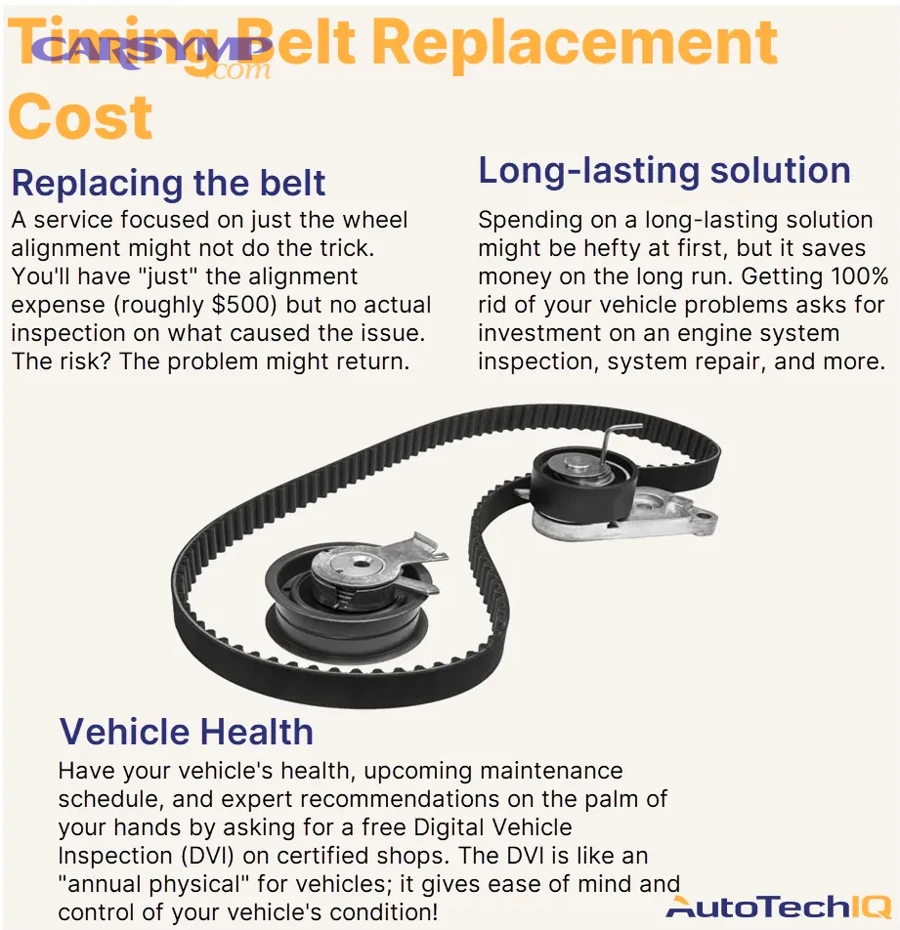
A timing belt kit is a bundled set of engine timing components — including the belt, tensioner, idler pulleys, and often a water pump — while a belt-only replacement is the narrower option of swapping just the rubber belt without touching any surrounding parts.

To better understand why this distinction drives every cost and risk conversation, it helps to examine exactly what each option puts on the table.
What Does a Timing Belt Kit Include?
A standard timing belt kit contains several components that function as a single integrated system inside your engine’s timing bay. The exact contents vary by kit tier and vehicle application, but most kits fall into one of two categories: a basic kit or a full kit with water pump.
- Basic timing belt kit includes: the timing belt, a spring or hydraulic tensioner, and one or more idler pulleys
- Full timing belt kit with water pump includes everything above, plus: a new water pump, water pump gasket, camshaft seals, and crankshaft seal
The logic behind bundling these parts is mechanical: every component in a timing belt kit operates in direct contact with — or is driven by — the timing belt itself. They share the same service interval of 60,000 to 100,000 miles and degrade at roughly the same rate. Replacing them together is the engineering-rational choice.
Brand selection also shapes what a kit includes and how much it costs. Aisin, the OEM supplier for many Honda and Toyota applications, produces kits that closely mirror factory specifications and typically range from $175 to $550. Gates and Dayco offer quality aftermarket alternatives between $80 and $300, though the water pump quality varies between brands. Unbranded kits available for under $100 online carry the highest risk of premature failure and should be avoided on any vehicle with an interference engine.
What Does Belt-Only Replacement Actually Cover?
Belt-only replacement covers exactly one part: the rubber timing belt. Every other component in the timing system — the tensioner, the idler pulleys, the water pump — remains in place from the previous service interval.
This sounds like a legitimate cost-saving strategy until you consider two critical realities. First, the labor required to access the timing belt is nearly identical whether you replace one component or six. The technician must remove the same covers, brackets, and accessories to reach the belt regardless of what gets replaced once they get there. Second, the tensioner, pulleys, and water pump have been running for the same 60,000 to 100,000 miles as the belt being replaced. They are worn components sitting next to a brand-new belt.
The belt-only path is a hyponym of the full kit service — it represents one slice of the same job, completed at virtually the same labor cost, but with significantly less protection for the engine going forward.
How Much Does a Timing Belt Kit Cost Compared to Belt-Only?
A timing belt kit service wins on total value: the parts cost gap between belt-only and a full kit is typically $100 to $300, but both options carry nearly the same $210 to $900 labor cost, making belt-only savings far smaller than most car owners expect.

Specifically, the cost comparison breaks down across three distinct layers — parts alone, labor alone, and the fully combined service total — and each layer tells a different part of the story.
What Is the Parts Cost for a Timing Belt Kit vs. Belt Only?
The parts cost is where the two options look most different at first glance, but the actual dollar spread is narrower than most people assume once quality-equivalent products are compared fairly.
The table below shows parts pricing across the main options available to car owners. Notice that the jump from belt-only to a full aftermarket kit is often $120 to $420 — a meaningful but not enormous difference when viewed against total service cost.
| Option | Parts Included | Typical Cost Range |
|---|---|---|
| Belt only | Rubber timing belt | $25 – $80 |
| Basic kit | Belt + tensioner + idler pulleys | $100 – $250 |
| Full kit (with water pump) | Belt + tensioner + pulleys + water pump + seals | $150 – $500 |
| OEM-equivalent kit (e.g., Aisin) | Full kit, factory-spec components | $450 – $600+ |
| Unbranded/counterfeit kit | Full kit appearance, unknown quality | Under $100 |
What makes the parts cost conversation more complex is quality. A $60 bare belt and a $60-equivalent belt inside an Aisin kit are not the same product. OEM-specification parts from Aisin or Gates are engineered to match the exact tolerances your engine requires. Counterfeit or ultra-budget kits may look identical in the box but carry bearings and belt compounds that fail well before the rated interval.
What Is the Labor Cost for Each Option?
Labor cost is the great equalizer in this comparison — and it is the primary reason belt-only replacement rarely makes financial sense.
Timing belt labor runs 3 to 6 hours depending on engine layout, with technicians typically billing $70 to $150 per hour. That produces a labor cost range of $210 to $900, and critically, this cost is almost identical whether the technician replaces one part or six.
The reason is straightforward: the same disassembly process is required to access the timing belt regardless of scope. The technician must remove the timing covers, related accessories, and in many transverse or V-layout engines, motor mounts and ancillary brackets. Once inside, adding the water pump swap adds only 0.5 to 1 additional labor hour in most applications — a cost of $35 to $150 extra, not another full labor bill.
This is the core mechanical argument against belt-only service: you are paying 90 to 95 percent of a full kit’s labor cost to replace only one of the five or six components that have worn equally.
What Is the Total Cost Difference Between a Full Kit and Belt-Only Service?
When parts and labor are combined into a total service cost, the real-world price gap between belt-only and a full kit replacement becomes surprisingly small — while the protection gap between the two options remains enormous.
The following table summarizes the total cost comparison based on typical pricing across independent shops and dealerships:
| Service Option | Parts Cost | Labor Cost | Total Estimated Cost |
|---|---|---|---|
| Belt only | $25 – $80 | $210 – $900 | $235 – $980 |
| Basic kit (no water pump) | $100 – $250 | $210 – $900 | $310 – $1,150 |
| Full kit (with water pump) | $150 – $500 | $245 – $950 | $395 – $1,450 |
| Dealer service (full kit, OEM) | $450 – $600 | $550 – $1,200 | $1,000 – $1,800+ |
This breakdown illustrates a critical point: the out-of-pocket difference between belt-only and a full kit service is frequently $100 to $200 in a real shop environment. Yet the full kit replaces every high-wear component in the timing system simultaneously — extending total service reliability by tens of thousands of miles.
According to pricing data compiled by Kelley Blue Book and corroborated by AutoZone’s service cost guides, the Average timing belt replacement cost for a full professional service ranges from $367 to over $1,000 depending on vehicle type and region, with labor representing the dominant share of that total in most cases.
Is It Worth Paying More for a Full Timing Belt Kit?
Yes, paying more for a full timing belt kit is worth it for virtually every car owner, for three primary reasons: it eliminates the double-labor trap, it replaces all components that wear on the same cycle, and it dramatically reduces the risk of catastrophic engine damage on interference engines.
However, understanding the reasoning behind each of these factors — and the narrow set of exceptions — helps you make a fully informed decision rather than a reflexive one.
What Are the Risks of Replacing Only the Timing Belt?
Replacing only the timing belt creates a specific and well-documented failure pattern: a brand-new belt surrounded by components that are already at or near the end of their service life.
The most common failure scenarios after a belt-only service include:
- Tensioner bearing failure: The tensioner maintains the correct belt tension. A worn bearing can seize or lose spring pressure, causing the belt to slip or jump timing — which on an interference engine means immediate valve-piston collision.
- Idler pulley seizure: A seized idler pulley will shred a brand-new timing belt within miles. The belt is destroyed, the labor must be paid again, and the engine may be damaged.
- Water pump failure: If the water pump is belt-driven (as it is on most Japanese and European applications), a leaking or failed pump contaminates the belt, causes overheating, and requires complete re-disassembly of the timing system.
Each of these failures triggers the same outcome: the full labor cost to access the timing belt must be paid a second time. The “savings” from belt-only replacement are consumed entirely — and then some — by that repeat labor bill.
The consequences of timing belt failure on interference engines are even more severe. When a belt slips or snaps on an interference engine, pistons and valves occupy the same cylinder space at the wrong moment. The result is bent valves, cracked pistons, and in serious cases, a destroyed engine block. Repair costs for this level of damage range from $3,000 to over $8,000, dwarfing any savings from the original belt-only choice.
When Does Belt-Only Replacement Make Financial Sense?
Belt-only replacement makes financial sense in a narrow set of specific circumstances where the full kit’s long-term value proposition breaks down.
The clearest case is a vehicle at the end of its useful life. If a car’s total market value is $1,500 and a full kit service costs $900, the return on investment is poor. Replacing only the belt for $300 to $500 may represent a reasonable short-term decision — though even here, skipping the water pump carries meaningful risk if the engine is belt-driven.
A second scenario is when individual components have been recently serviced. If tensioners and idler pulleys were replaced independently within the last 20,000 miles, leaving them in place during a belt service is defensible. Documentation of that prior service is essential.
A third case applies to non-interference engines, where belt failure does not automatically cause catastrophic engine damage. The risk calculus is different, though a stalled vehicle and repeat labor cost remain real consequences.
In all other situations — which describes the vast majority of vehicles on the road today — a full timing belt kit is the correct financial and mechanical choice.
Which Costs More — Dealer or Independent Shop for a Timing Belt Kit?
An independent shop wins on price for timing belt kit service: independent shops typically charge $200 to $600 less than dealerships for the same service, primarily due to lower labor rates and more flexible parts sourcing.

Meanwhile, dealerships offer OEM parts, factory-trained technicians, and service warranties that some car owners value enough to justify the premium. The comparison between the two comes down to what you prioritize: cost savings or institutional accountability.
A dealership timing belt service — particularly for Honda, Toyota, or Subaru vehicles — will typically use OEM-sourced parts billed at list price, with labor rates ranging from $110 to $180 per hour. Total dealer service costs commonly land between $1,000 and $1,900 for a full kit including water pump. An independent shop specializing in the same vehicle brand can perform the identical service using Aisin or Gates OEM-equivalent parts at $600 to $1,100 total.
The quality difference between these two outcomes is often minimal, provided the independent shop uses a verified OEM-equivalent kit rather than an unbranded alternative. According to community data gathered across Honda Pilot and Odyssey owner forums, multiple owners paid $600 to $950 at reputable independent Honda specialists using Aisin kits — representing savings of $400 to $800 compared to dealership quotes for identical component sets.
What Questions Should You Ask Before Approving a Timing Belt Quote?
Before approving any timing belt quote, ask these five specific questions to determine whether the service represents genuine value or a hidden risk:
- “Is this belt-only or a full kit?” — This one question separates a complete service from a partial one. Any shop that cannot answer immediately is a concern.
- “Does the kit include the water pump?” — A kit that excludes the water pump is a basic kit, not a full service. If the water pump is belt-driven on your vehicle, it should be included.
- “Which brand of kit are you using?” — Aisin, Gates, and Dayco are acceptable answers. “I’m not sure” or an unrecognized brand name warrants a follow-up or a second quote.
- “What is the warranty on parts and labor?” — A reputable shop will offer at minimum a 12-month or 12,000-mile warranty on timing belt service work.
- “Is the tensioner included, or quoted separately?” — Some shops quote the belt and tensioner as separate line items to make the initial quote look smaller. Get an itemized breakdown before authorizing any work.
These questions cost nothing to ask and can save hundreds of dollars in unexpected charges or future repeat repairs.
What Other Factors Affect the True Cost of Timing Belt Kit Service?
Beyond the kit vs. belt-only decision, four additional factors significantly affect the true timing belt replacement cost: vehicle make and model, parts brand selection, hidden add-on components, and the specific risk profile of interference engine designs.

Each of these variables can shift your final bill by hundreds of dollars in either direction, and understanding them before you walk into a shop puts you in a much stronger negotiating position.
Does Vehicle Make and Model Significantly Change the Timing Belt Kit Price?
Yes, vehicle make and model significantly affect timing belt kit pricing — both in parts cost and, more importantly, in labor hours, which represent the largest share of the total service cost.
Cost factors including engine layout and labor hours vary dramatically by vehicle:
- Compact cars with inline 4-cylinder engines (Honda Civic, Toyota Corolla, Mazda3): straightforward access, 3 to 4 labor hours, total service cost typically $400 to $900
- Transverse-mounted V6 engines (Honda Odyssey, Acura TL, Toyota Camry V6): requires more component removal, 4 to 6 labor hours, total cost $800 to $1,400
- Subaru horizontally-opposed engines: unique boxer layout requires additional disassembly steps, frequently 5 to 7 hours labor, cost $900 to $1,600
- European vehicles (VW, Audi, BMW): OEM-only parts are often required or strongly recommended, kit costs $400 to $1,000+, labor rates typically higher, total service $1,200 to $2,500+
The engine layout directly determines how many hours of shop time your vehicle requires — and since labor represents 60 to 75 percent of most timing belt bills, this is the single most impactful cost factor outside of kit selection.
How Does OEM vs. Aftermarket Kit Pricing Compare for Specific Brands?
OEM and OEM-equivalent kits cost more upfront than generic aftermarket alternatives, but they deliver substantially better component quality and failure resistance over the service interval — which translates directly to lower long-term cost.
The table below shows how the major kit brands compare across type, price, and key considerations:
| Brand | Type | Typical Price Range | Notes |
|---|---|---|---|
| Aisin | OEM-equivalent (Honda/Toyota) | $175 – $550 | Factory supplier; widely considered best value |
| Gates PowerGrip | Quality aftermarket | $100 – $300 | Strong for domestic and European applications |
| Dayco | Budget aftermarket | $80 – $250 | Acceptable belt quality; water pump varies |
| Unbranded/Amazon | Unknown | Under $100 | High failure risk; not recommended |
| Honda/Toyota OEM (dealer) | Factory original | $450 – $650 | List price; identical to Aisin in many cases |
The price gap between a quality aftermarket kit and a genuine OEM-equivalent like Aisin is often $100 to $200 — a difference that is easily justified given the consequences of a premature kit failure. The counterfeit kit category, while visually indistinguishable from legitimate products, uses bearings and belt compounds that frequently fail before the rated mileage interval.
Are There Hidden Costs That Can Increase a Timing Belt Kit Service Bill?
Yes — several additional service items are routinely recommended or required alongside a timing belt kit replacement, and each one adds to the final bill in ways that are not always disclosed upfront in an initial quote.
The most common add-ons include:
- Camshaft and crankshaft seal replacement: These rubber seals sit directly adjacent to the timing belt and are already exposed once the timing covers are removed. Replacing them adds $50 to $150 in parts and minimal additional labor. Skipping them risks an oil leak onto the new belt within months.
- Coolant flush: Required whenever the water pump is replaced, since the cooling system must be drained to swap the pump. Adds $50 to $100 to the bill.
- Serpentine/drive belt replacement: Many shops recommend replacing the accessory drive belt simultaneously, since it is accessible during the same service. Parts cost $30 to $80 extra.
- Valve adjustment: On Honda engines specifically, valve adjustment is recommended at the same mileage interval as timing belt service. This adds $150 to $300 but avoids a separate appointment later.
- Specialty timing tools: Some vehicles require camshaft locking tools or crankshaft alignment tools specific to that engine family. These may appear as shop supply fees of $15 to $50 on the invoice.
When requesting quotes, ask for a fully itemized list of every line item — parts and labor — so that none of these additions appear as surprises on the final invoice.
What Is the Cost Risk of Belt-Only Replacement in an Interference Engine?
The cost risk of belt-only replacement in an interference engine is catastrophic: a single belt-related failure can destroy the engine entirely, converting a $300 to $500 service shortcut into a $3,000 to $8,000 engine repair or replacement.
To understand why, it helps to define the term. An interference engine is one in which the pistons and valves occupy the same physical space inside the cylinder at different moments in the combustion cycle. Precise timing, maintained by the timing belt, ensures they never collide. A non-interference engine — the antonym in this context — is designed with enough clearance that a belt failure stops the engine without causing internal component damage.
Most modern engines are interference designs. Honda, Toyota, Subaru, Volkswagen, Audi, BMW, and the majority of current European and Japanese manufacturers produce interference engines as standard. This means the overwhelming majority of cars on the road today carry real engine-destruction risk if the timing belt system fails.
In an interference engine, the consequences cost of belt failure are not limited to the belt itself. When a belt slips, jumps a tooth, or snaps entirely, pistons strike open valves at high speed. The resulting damage typically includes:
- Bent or broken intake and exhaust valves
- Damaged valve seats and cylinder head
- Cracked or deformed pistons
- In severe cases, a broken connecting rod or cracked engine block
Repair costs for this damage start at $2,500 for a valve job on a simpler engine and escalate to $5,000 to $8,000 or more for a full engine replacement on a larger vehicle. Some engines — particularly high-revving four-cylinder designs — are considered total losses after a belt failure event because the repair cost exceeds the vehicle’s market value.
This is the ultimate argument for choosing a full timing belt kit over belt-only replacement. The $100 to $300 in additional parts cost that separates the two options is not just a price difference — it is the margin between a routine service and a potential total loss. Every worn tensioner, aging idler bearing, and leaking water pump left in place during a belt-only service represents a live failure point on an engine that cannot afford one.