


Tire humming noise is a low-frequency, continuous droning sound generated by the friction and vibration between your tire tread and the road surface. Unlike a sudden squeal or an occasional thump, a tire hum is persistent — it travels with you at every speed, growing louder as you accelerate, and it rarely disappears on its own. In most cases, the hum signals that something about the tire’s contact with the road has changed, whether through wear, pressure, or alignment. Understanding what tire humming noise actually is marks the essential first step toward diagnosing and eliminating it before it develops into a costlier problem.
The causes behind tire humming are more varied than most drivers expect. Uneven tread wear is by far the most common culprit, but misaligned wheels, imbalanced tires, low inflation pressure, and even the tread pattern design of certain tire types all contribute to road drone. Each cause produces a slightly different character of hum, which is why understanding the type of hum you are hearing is so valuable. Proper tire noise diagnosis begins not in the shop, but the moment you start paying attention to how the sound behaves at different speeds and in different steering positions.
Fixing tire humming noise requires more than simply masking the sound. Depending on the root cause, the solution may be as straightforward as a tire rotation or pressure adjustment, or it may require wheel alignment correction, rebalancing, or full tire replacement. Alignment issues causing tire noise are particularly insidious because the wear they create continues silently until the hum becomes undeniable — by which point the damage to the tread is often irreversible. Knowing which fix applies to which cause prevents wasted effort and money.
What makes tire hum especially confusing is that it can sound nearly identical to a failing wheel bearing — a safety-critical component that demands immediate attention. Preventing tire noise with proper maintenance is always the most cost-effective path, but when the hum is already present, the most urgent task is separating a worn tire from a worn bearing. This article walks you through every dimension of tire humming noise: what it is, how to classify it, what causes it, how to diagnose it precisely, how to fix it, and when to suspect something beyond the tire itself.
What Is Tire Humming Noise?
Tire humming noise is a category of road noise characterized by a steady, low-pitched drone that increases in volume as vehicle speed rises, produced by the irregular or amplified vibration of tire tread against the pavement. It is not a single sound but a family of acoustically similar noises — often described interchangeably as tire hum, road drone, road roar, or tire whirr — all of which share the same root mechanism: the rhythmic, repetitive contact between tread blocks and the road surface generating vibration that travels through the wheel, suspension, and into the vehicle cabin.
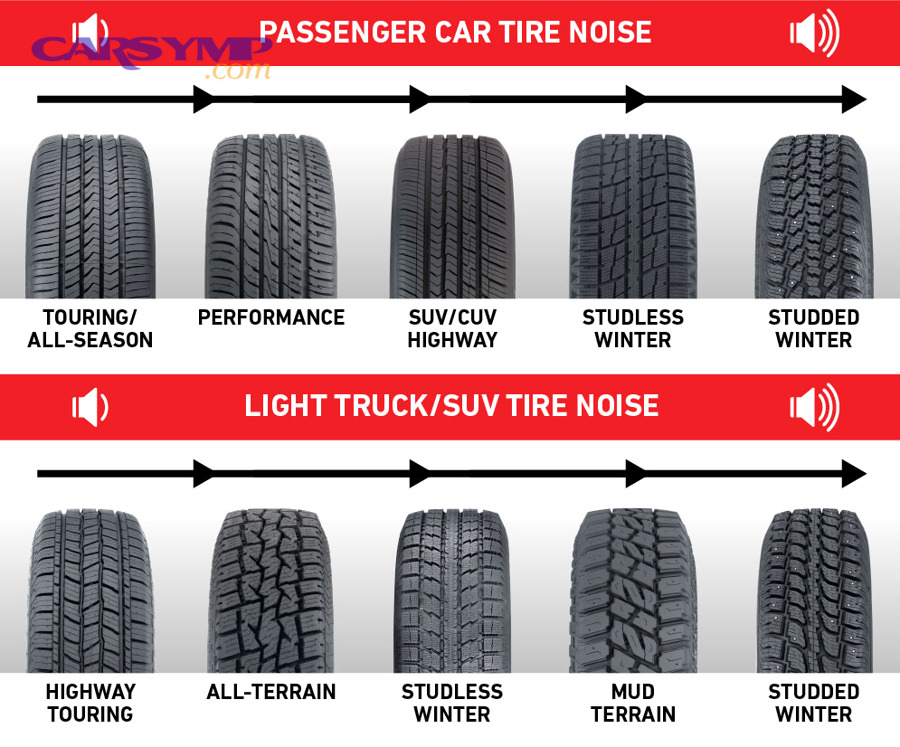
To better understand what distinguishes tire hum from other sounds, it helps to examine both how it sounds and what it is not.
What Does a Humming Tire Sound Like?
A humming tire produces a low-frequency, constant, and rhythmic sound that is most accurately described as a steady drone or growl rather than a sharp noise. Acoustically, it sits in a frequency range that resonates easily through a car’s floor and body panels, making it feel as much as it is heard.
Key acoustic characteristics of a humming tire include:
- Pitch rises with speed — the faster you drive, the higher and louder the hum becomes
- Consistent and uninterrupted — unlike a thump (which is rhythmic and punctuated) or a squeal (which is sharp and situational), a hum is continuous
- Speed-sensitive onset — most tire hum becomes clearly noticeable between 40 and 70 mph, where road vibrations amplify into the cabin most efficiently
- Directional feel — experienced drivers often sense the hum through the seat bottom or steering wheel, helping localize which corner of the vehicle it originates from
Comparing tire hum to other common tire noises clarifies exactly what drivers should be listening for. A squeal is high-pitched, abrupt, and usually tied to a specific action like turning or braking — it signals slipping tread rather than resonant vibration. A thump or “womp-womp” is rhythmic and chunky, associated with flat spots or separated belts. Tire hum, by contrast, is smooth, persistent, and speed-linked — a drone that fills the cabin rather than punctuates it.
Is Tire Humming the Same as Road Noise?
No — tire humming and road noise are not the same, though they often overlap and are frequently confused with one another. Road noise is a broad environmental phenomenon: rough, coarse, or aged pavement generates acoustic energy that any tire will transmit into the cabin to some degree. Tire hum, on the other hand, is a mechanical signal — it originates from the tire’s own condition rather than the road surface alone.
The clearest way to separate the two is through a simple test: drive the same route on a stretch of smooth, freshly laid asphalt. If the sound drops significantly or disappears, you are primarily experiencing road noise amplified by pavement texture. If the drone persists — or diminishes only slightly — the source is the tire itself. Road noise is environmental and largely unavoidable; tire hum is mechanical and always addressable.
What Are the Types of Tire Humming Noise?
There are four main types of tire humming noise — wear-related hum, alignment and imbalance hum, tread-pattern hum, and low-pressure hum — each classified by the specific mechanism causing the vibration between tire and road. Understanding which type you are dealing with is the foundation of effective tire noise diagnosis, because each type points to a different fix.
The table below summarizes the four types, their primary cause, and how each behaves on the road.
| Type of Tire Hum | Primary Cause | Behavior While Driving |
|---|---|---|
| Wear-related hum | Cupping, feathering, flat spots | Worsens over time; consistent across surfaces |
| Alignment/imbalance hum | Misaligned wheels or unbalanced tires | Peaks at specific speed range; may vibrate steering wheel |
| Tread-pattern hum | Aggressive M/T or A/T tread design | Constant by design; louder on smooth pavement |
| Low-pressure hum | Under- or over-inflated tires | Edge or center hum; changes with pressure correction |
What Is Uneven Wear Tire Hum?
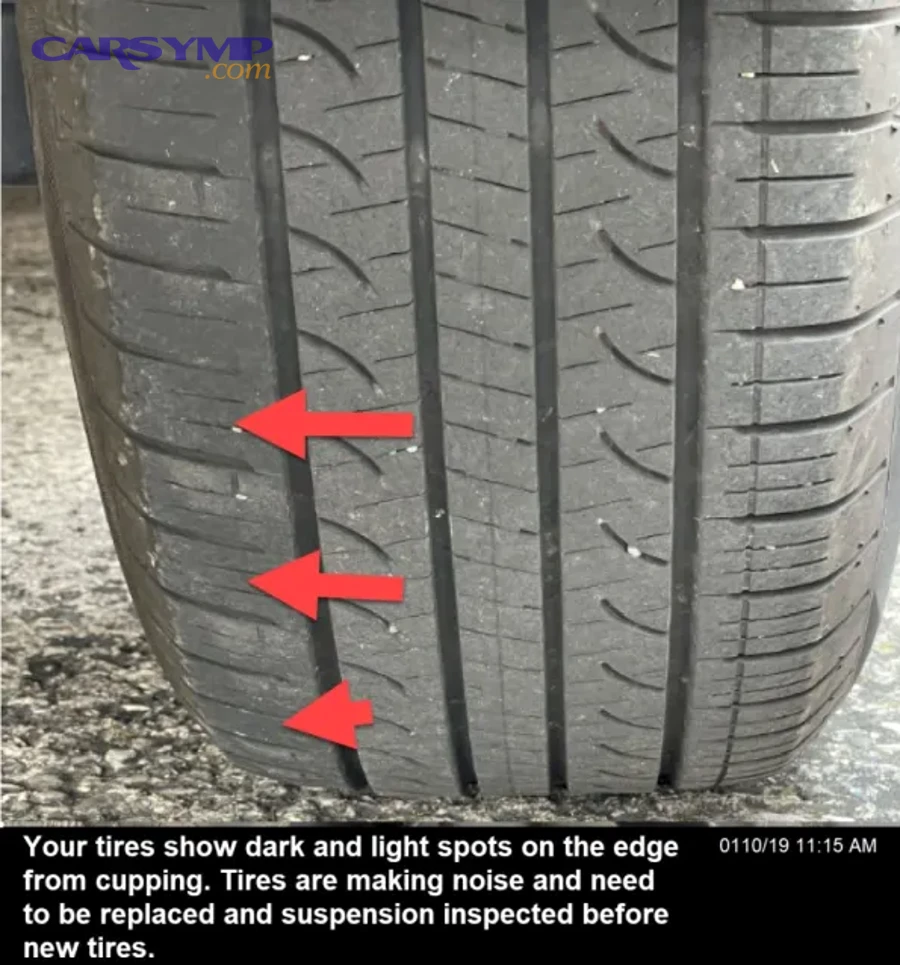
Uneven wear tire hum is the most common type of tire-generated drone, produced when cupping, feathering, or flat spots on the tread create an irregular surface that vibrates intensely as it rolls against the pavement. Cupping — also called scalloping — appears as a series of high and low spots around the tread circumference, caused most often by under-rotation, worn shock absorbers, or suspension irregularities. Feathering creates a sawtooth-like wear pattern across individual tread blocks, typically resulting from improper toe alignment.
What makes wear-related hum particularly frustrating is that it does not resolve itself. Once the tread surface has developed an uneven profile, that irregularity continues generating vibration with every revolution — and because the worn pattern is locked into the rubber, no amount of rotation or balancing will eliminate it entirely. The noise typically worsens progressively as the wear deepens, and it remains present regardless of road surface.
What Is Tire Hum Caused by Misalignment or Imbalance?
Alignment and imbalance hum represents one of the most misdiagnosed categories of tire drone because it often presents alongside other symptoms — particularly steering wheel vibration — that distract from the acoustic signal itself. Alignment issues causing tire noise work indirectly: when wheels are out of alignment, tires are forced to run at an angle to their direction of travel, which accelerates tread wear on specific zones of the tire and ultimately produces hum through that secondary wear.
Imbalance hum operates differently. An unbalanced tire creates a centrifugal wobble at speed — typically most pronounced between 55 and 70 mph — that introduces rhythmic vibration into the cabin. This vibration is felt through the steering wheel and floor, and it produces a low-frequency drone that is speed-dependent in a very specific way: it often peaks intensely at one speed range and may smooth out above or below it.
What Is Tread Pattern Tire Hum?
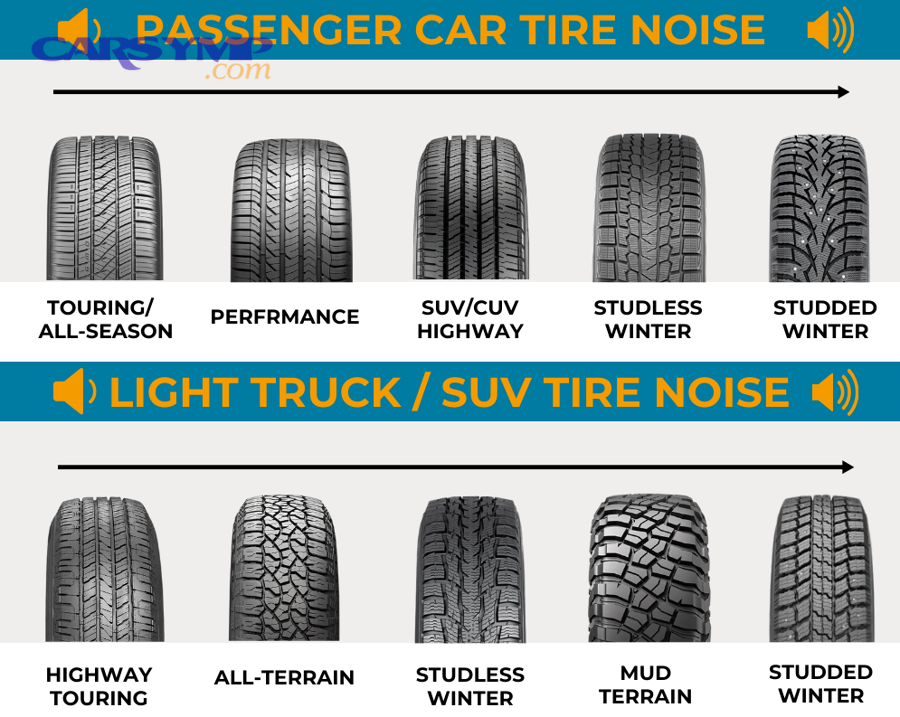
Tread pattern tire hum is a design-inherent type of road drone that occurs when a tire’s tread geometry generates more air-pumping noise and block-impact vibration than a standard touring or all-season tire. This type of hum is most common with mud-terrain (M/T) and all-terrain (A/T) tires, as well as high-performance summer tires with asymmetric or directional tread patterns featuring large void ratios.
The mechanism is straightforward: large tread blocks separated by wide voids compress and expel air rapidly as they contact the road — a process called air pumping noise — creating a resonant drone at highway speeds. Drivers who upgrade to larger or more aggressive tires and immediately notice a new cabin hum are almost always experiencing this type. Unlike wear-related hum, tread-pattern hum is not a warning sign — it is simply the acoustic cost of a tire designed for grip and durability over smoothness.
What Is Low Tire Pressure Hum?
Low tire pressure hum develops when a tire’s sidewalls are insufficiently inflated, causing the outer edges of the tread contact patch to flatten and spread beyond their designed footprint. This edge-overload condition wears the shoulder zones of the tire unevenly, and the deformed contact patch produces a characteristic humming or flapping resonance as the tire flexes excessively with each revolution.
Over-inflation is equally capable of producing hum through the opposite mechanism: a tire inflated beyond its recommended pressure runs predominantly on its center tread, which wears rapidly and creates a center-strip hum at speed. Both conditions are easily checked with a pressure gauge and corrected immediately — making a pressure check the logical first step in any tire noise diagnosis workflow before pursuing more involved mechanical causes.
What Causes a Humming Noise From Tires?
A humming noise from tires is caused by any condition that disrupts the smooth, even contact between the tread surface and the road — with uneven tread wear, improper alignment, tire imbalance, incorrect inflation, and aggressive tread design being the five most commonly identified root causes. Each cause introduces vibration into the tire-road interface at a frequency that resonates through the vehicle’s chassis and into the cabin as a persistent drone.
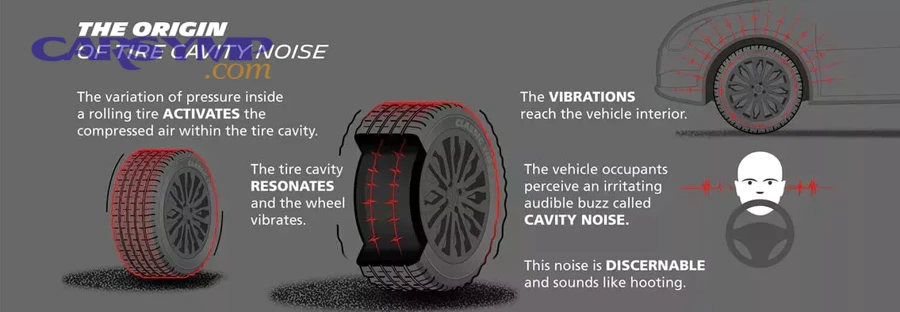
Understanding the full causal chain makes it easier to trace a hum back to its origin. In most cases, the hum itself is a downstream symptom — the actual upstream cause is a maintenance shortfall such as skipped rotations, ignored alignment, or chronic underinflation that has progressively altered the tire’s tread profile.
Does Uneven Tread Wear Always Cause Tire Hum?
Yes — uneven tread wear almost always causes tire hum once the wear pattern becomes pronounced enough to disrupt smooth tread contact with the road. The mechanism is consistent: any tread surface that presents high and low points with each revolution creates an oscillating impact pattern that generates vibration at a frequency drivers perceive as a hum.
The most reliable field test for wear-related hum requires no equipment — simply run a flat hand slowly around the full circumference of each tire’s tread surface. A smooth tread returns a consistent tactile sensation; a worn tread with cupping or feathering feels like a washboard or sawtooth pattern. Even subtle irregularities that are difficult to see visually can be detected easily by touch.
Rotation neglect is the single most common upstream cause of uneven wear leading to tire hum. Most manufacturers and tire specialists recommend rotating tires every 5,000 to 7,000 miles. Tires that remain in the same position for extended periods develop wear biases dictated by their axle — front tires on front-wheel-drive vehicles, for example, carry both steering and drive loads, causing them to wear faster at the shoulders. Once that asymmetric wear develops, the hum it generates is largely permanent until the tire is replaced.
Can New Tires Still Make a Humming Sound?
Yes — new tires can make a humming sound, and this is one of the more counterintuitive experiences a driver can have after investing in fresh rubber. There are three distinct reasons why a brand-new tire may produce road drone immediately after installation.
Break-in period resonance is the most benign explanation. New tires are manufactured with mold release agents on their surface — compounds applied during vulcanization to prevent the tire from bonding to the mold. These agents create a slightly different surface texture in the first 500 miles or so of driving, after which they wear away and the hum typically subsides. Drivers who return to the shop after a few days of driving and find the hum has diminished on its own have almost always experienced this phenomenon.
Mounting or balancing errors represent a more mechanical cause. If a tire is not seated correctly on the wheel bead, or if the balance weights are incorrectly placed, the resulting wobble or runout introduces hum immediately. This type of noise does not diminish with miles and warrants a return to the installer.
Tread design mismatch occurs when a driver upgrades from a quiet touring tire to an aggressive performance or all-terrain tire without expecting the acoustic difference. The new tire is technically functioning perfectly — it is simply louder by design. In these cases, the hum is a permanent characteristic of the tire choice rather than a fault.
How Do You Diagnose Tire Humming Noise While Driving?
Diagnosing tire humming noise while driving involves a systematic three-variable test using speed, steering direction, and vehicle position to isolate whether the hum originates from a tire, a wheel bearing, or a suspension component — with most cases resolved through the combined results of a speed-response observation, a gentle steering-weave test, and a rotation-swap evaluation.
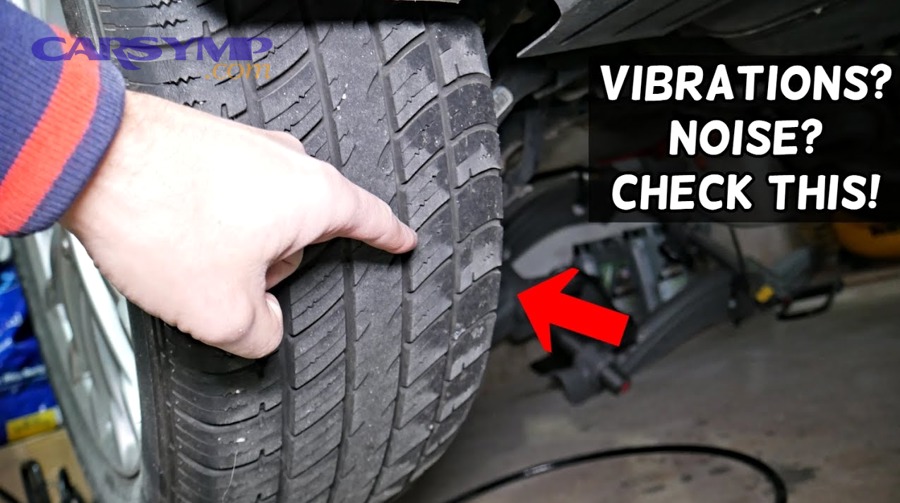
This structured diagnostic approach is what separates effective tire noise diagnosis from guesswork. Each variable narrows the field of possible causes independently, and together they point with high accuracy to the source of the drone.
How Does Vehicle Speed Affect Tire Hum?
Vehicle speed is the primary variable in tire hum diagnosis because tire-generated noise and bearing-generated noise respond to speed in distinctly different ways. Tire hum increases in both volume and pitch as speed rises, following a relatively smooth progression — drivers typically first notice it around 40 mph, and it grows steadily louder through highway speeds.
A wheel bearing, by contrast, produces a noise that increases in volume with speed but whose pitch remains largely constant. This distinction — pitch-rising vs. pitch-stable — is one of the most reliable acoustic differentiators between tire and bearing noise available to a driver without lifting the vehicle.
Speed range benchmarks for tire hum:
- Under 30 mph — most tire hum is inaudible or very faint
- 40–50 mph — hum typically becomes noticeable for the first time
- 55–70 mph — hum is at its most prominent; the range where most diagnosis should occur
- Above 70 mph — hum may become partially masked by wind and general road noise
How Does Steering Direction Change the Sound of Tire Hum?
The steering-direction test is the single most diagnostic field test available to a driver, because it exploits the physical difference between how tire wear and wheel bearing failure respond to lateral weight transfer. To perform it, drive at a steady 50–60 mph on a clear road and apply a gentle, gradual weave left and right — not a sharp turn, but a slow weight shift.
When the steering moves left, weight transfers to the right tires; when it moves right, weight transfers to the left. A failing wheel bearing will load or unload depending on which side it sits, causing the noise to clearly increase or decrease as weight shifts across it. Tire hum, however, comes from the tread surface rather than a rotating hub — it does not respond meaningfully to lateral weight transfer and stays largely constant through the weave.
This is the wheel bearing vs. tire noise comparison most mechanics rely on during a test drive before lifting the vehicle, because it costs nothing, takes under two minutes, and provides a high-confidence directional diagnosis. If the hum changes noticeably during a steering weave, inspect the bearings. If it stays consistent, focus the investigation on the tires.
How Do You Identify Which Tire Is Humming?
Identifying which specific tire is generating the hum involves two complementary techniques: cabin position listening and the rotation-swap diagnostic. Together, they localize the hum to a specific corner of the vehicle before any physical inspection begins.
Cabin position listening exploits the fact that road noise and vibration enter the cabin most strongly through the structural path closest to the source. A hum from a front tire typically resonates through the steering wheel and the front floor; a hum from a rear tire is felt more clearly through the seat bottom and rear floor. Asking a passenger to sit in the rear center seat while the driver maintains highway speed can dramatically clarify whether the hum is front- or rear-axle in origin.
The rotation-swap diagnostic provides confirmation. If the vehicle’s front and rear tires are the same size, swapping front tires to the rear and rear to the front then re-test driving will relocate the hum to where the previously offending tires now sit. If the hum migrates from front to rear after the swap, the tires are confirmed as the source. If the hum remains in the same vehicle corner regardless of which tire is there, a wheel bearing or suspension component is the more likely cause.
How Do You Fix Tire Humming Noise?
Fixing tire humming noise depends on its root cause, but the core repair pathway follows this sequence: correct inflation pressure first, then rotate and balance, then align, and finally replace if wear is already too severe to respond to maintenance. Each step addresses a specific cause, and attempting replacement before correction wastes both tires and money.
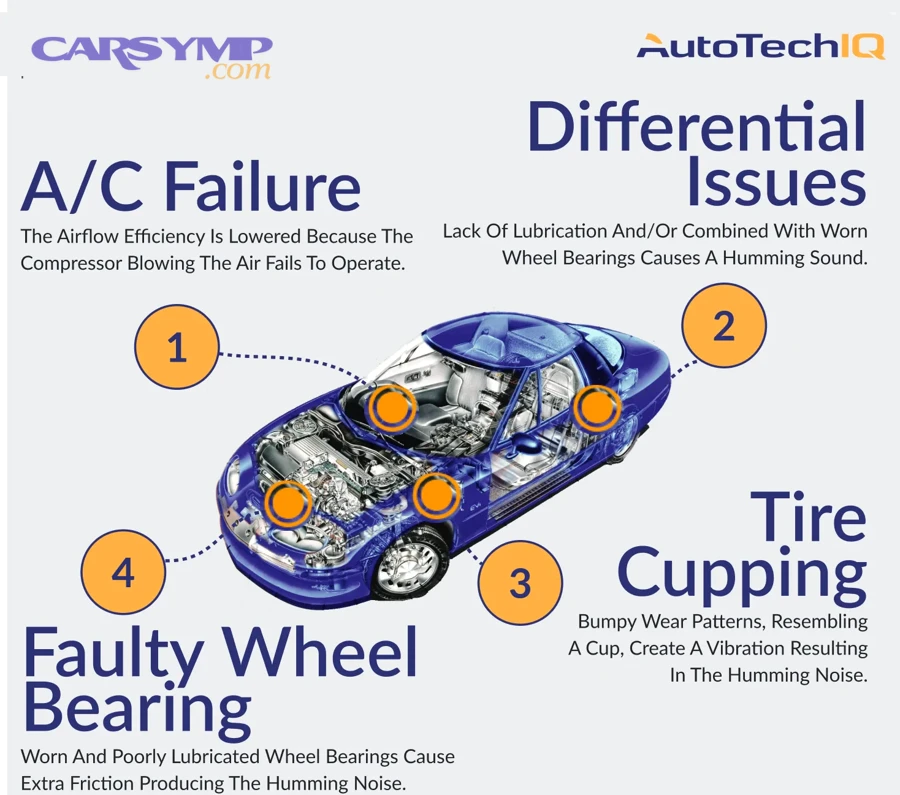
Preventing tire noise with proper maintenance is always more economical than reacting to it — but when the hum is already present, the following corrective steps apply in order of least to most invasive.
Does Rotating Tires Fix Humming Noise?
Yes — rotating tires can reduce or temporarily eliminate humming noise, but only when the wear pattern is mild enough that redistributing tire positions changes the noise dynamics. Rotation moves tires from high-wear positions (typically front axle on front-wheel-drive vehicles) to lower-wear positions, which gives the more worn areas a chance to stabilize and reduces the prominence of any cupping or feathering that has developed.
However, rotation treats the symptom rather than the cause when alignment or suspension issues are driving the uneven wear. If the underlying alignment is still incorrect after rotation, the freshly repositioned tires will simply begin developing the same wear pattern in their new location. For rotation to produce lasting noise reduction, it must be paired with a wheel alignment check. Rotation is recommended every 5,000 to 7,000 miles as a preventive measure — at this interval, wear biases rarely become severe enough to generate hum.
Does Wheel Alignment or Balancing Stop Tire Hum?
Yes — wheel alignment and balancing both address distinct causes of tire hum and are most effective when performed together as a paired service. Alignment corrects the directional and angular relationship between the wheels and the vehicle’s centerline, eliminating the uneven tread loading that causes wear-related drone. Balancing distributes mass evenly around the wheel-tire assembly, eliminating the centrifugal wobble that produces vibration-driven hum at highway speeds.
Alignment issues causing tire noise are corrected at the wheel angles — camber, caster, and toe — and the effects are immediate in terms of stopping the progression of wear, though the hum from existing wear may persist until the tires are rotated or replaced. Balancing addresses a different problem: an out-of-balance tire typically produces a speed-banded hum that peaks at a specific mph range and is accompanied by steering wheel vibration. Correcting the balance weight distribution eliminates this specific vibration pattern.
The key limitation of both services is that they correct the cause going forward — they cannot reverse wear that has already occurred. If a tire has developed significant cupping or feathering, alignment and balancing will stop it from worsening but will not smooth out the already-damaged tread surface.
When Should You Replace Tires to Eliminate Humming?
Tire replacement becomes the only effective fix for tire hum when the tread has developed wear patterns — particularly cupping or feathering — that are too pronounced to resolve through maintenance alone. Several indicators signal that replacement, not service, is the correct response.
Signs that tire replacement is necessary to eliminate hum:
- Tread depth at or below 2/32 inch — the legal minimum in most U.S. states, and a depth at which wear patterns are typically severe
- Visible cupping or scalloping — high and low spots that can be seen and felt across the tread circumference
- Persistent hum after rotation and alignment — if the hum remains after corrective maintenance, the tread surface itself is the irreversible cause
- Hum that has worsened progressively over months — this trajectory indicates the wear is compounding rather than stabilizing
When replacing tires to eliminate hum, replacing in axle pairs is the minimum recommended approach — mismatched tread depths between left and right on the same axle create differential rolling resistance and can introduce new noise or handling asymmetry. Replacing all four simultaneously provides the cleanest baseline for diagnosing any residual noise after installation.
Is That Humming Noise Your Tires or Your Wheel Bearings?
Tire hum wins in diagnosability at low cost through the steering-weave test; wheel bearing noise is best identified by its consistent pitch across speeds and its change in tone during directional steering input. The wheel bearing vs. tire noise comparison matters because one is a maintenance issue and the other is a safety emergency — confusing the two leads either to unnecessary tire replacement or to dangerously delayed bearing service.
This section marks the transition from diagnosing and fixing tire hum to the deeper question of what to do when standard tire fixes do not resolve the drone — and when the actual source may be a bearing rather than the rubber.
What Does a Bad Wheel Bearing Sound Like Compared to Tire Hum?
A bad wheel bearing produces a low growl or grinding drone that, unlike tire hum, does not rise in pitch proportionally with speed — its frequency stays relatively constant even as volume increases. More importantly, bearing noise responds to lateral weight transfer: it grows louder or changes character when you shift weight toward the failing bearing during a turn.
The following side-by-side comparison captures the most diagnostically useful differences:
| Characteristic | Tire Hum | Wheel Bearing Noise |
|---|---|---|
| Pitch behavior with speed | Rises with speed | Stays relatively constant |
| Response to steering input | No change | Clearly changes pitch/volume |
| Localization | Often diffuse, cabin-wide | Typically isolated to one corner |
| Associated vibration | Minimal | Sometimes felt in steering or floor |
| Safety urgency | Low to moderate | High — requires prompt repair |
| Resolves with tire rotation? | Sometimes | No |
Bearing noise is specifically a safety issue rather than a comfort issue. A wheel bearing that fails completely can seize the hub, causing sudden loss of wheel control. Any noise that changes character during a steering weave at highway speed should be inspected by a technician without delay.
How Do You Tell If It’s a Wheel Bearing or a Tire Making Noise?
You can tell the difference between a wheel bearing and a tire making noise through a sequence of three progressive tests: the speed observation, the steering-weave test, and the wheel-lift spin test — each of which adds a layer of diagnostic certainty before committing to a repair.
Step 1 — Speed observation: Drive at highway speed and listen carefully to whether the noise pitch rises with speed (tire) or holds constant (bearing). This alone provides a 70% confidence directional diagnosis for most drivers.
Step 2 — Steering-weave test: At 50–60 mph, gently weave the steering left and right. If the noise clearly intensifies when weight loads one corner, that corner’s bearing is suspect. If the noise is stable through the weave, return attention to the tires.
Step 3 — Wheel-lift spin test: With the vehicle safely raised on a jack stand, rotate each wheel by hand while placing the other hand on the suspension knuckle. A healthy bearing spins smoothly and silently. A worn bearing produces a roughness, grinding sensation, or audible growl during rotation. Comparing the sound and feel of each wheel makes even an early-stage bearing failure apparent.
If any of these tests suggests bearing involvement, professional inspection is the appropriate next step — not further tire diagnosis. Bearing play can also be checked by grasping the tire at the 12 and 6 o’clock positions and attempting to rock it; any detectable play confirms bearing wear.
Can Tire Hum Damage Wheel Bearings Over Time?
Yes — severe tire hum from pronounced cupping or uneven wear can accelerate wheel bearing deterioration over time by introducing sustained micro-vibrations into the hub assembly that exceed the bearing’s designed operational tolerances. This feedback loop between tire condition and bearing health is one of the most underappreciated dynamics in tire maintenance.
A cupped tire does not simply generate cabin noise — it delivers rhythmic impact loads to the wheel hub with every revolution. At highway speeds, a tire rotating at 800 or more revolutions per minute with even minor cupping subjects the bearing to thousands of impact cycles per minute beyond its normal smooth rolling load. Over months of driving on severely cupped tires, this accelerated stress can measurably shorten bearing service life.
This relationship underscores the urgency of addressing tire hum early. A drone that seems merely annoying at 50,000 miles may be silently degrading the wheel bearings, such that by 70,000 miles the driver faces both tire replacement and bearing replacement simultaneously — a significantly more expensive outcome than rotating tires at the first sign of hum.
Why Is Tire Hum Louder in Electric Vehicles?
Tire hum is noticeably louder in electric vehicles because the absence of a combustion engine removes the broadband acoustic masking that traditionally suppresses road noise in the cabin of a conventional car. In an internal combustion vehicle, engine vibration, exhaust resonance, and intake noise fill the cabin with a continuous low-frequency sound floor that partially masks tire drone. Remove that sound floor entirely, and even a modest hum from normal tires becomes acoustically prominent.
This acoustic exposure has driven significant innovation in EV-specific tire technology. Several premium tire manufacturers now produce tires equipped with acoustic foam inserts — a layer of polyurethane foam bonded to the inner liner of the tire that absorbs cavity resonance before it can transmit through the wheel into the chassis. This technology, marketed under names such as Pirelli’s Noise Cancelling System and Continental’s ContiSilent, reduces interior tire noise by a measurable margin compared to standard tires of equivalent tread design.
For EV drivers experiencing tire hum, the practical implication is that standard diagnostic thresholds — the point at which a hum becomes noticeable — are lower than for combustion vehicle drivers. A tire condition that would be inaudible in a conventional sedan may be clearly audible in an EV cabin, making proactive rotation and alignment schedules particularly valuable for electric vehicle owners who want to maintain the quiet ride their powertrain promises.